The online journal of Luke Dockery

Category: Bible Study (Page 33 of 40)

Bible Class: Bringing Teens and Parents Together

A couple of weeks ago I published a review of the book Sticky Faith, and described how much I liked it and how influential it has been in my thoughts about youth ministry. In that post, I mentioned that I had been teaching a Bible class on that book, and I wanted to briefly share some thoughts and information about that class.

What We Did

For a quarter (roughly the beginning of January to the end of March), we had our teens and their parents combined in one class together. Each family received a copy of Sticky Faith, and was encouraged to read one chapter each week in preparation for class.

When we met together each week, the class would be divided into smaller groups—sometimes we had parent groups and student groups, and sometimes we grouped families together. Each week we would review that week’s chapter and try to cover the main points which the book had presented, and then give discussion question to our small groups to talk about.

Our small groups would then share what they had discussed with the entire class.

What Was Good About It

At times I felt that our class struggled with continuity and momentum because we missed a few weeks because of bad weather, but on the whole, I felt that the class was very beneficial for our youth group and our parents. I am glad that we did it for at least a few reasons.

First, it helped our parents become much more informed about what was going on in our youth ministry. I spend a significant amount of time trying to communicate and publicize the things we are doing as a youth group (trips, devotionals, youth rallies, etc.):

  • Every week I write an article in our church bulletin which announces and emphasizes these events.
  • A calendar of upcoming events is posted on our youth group bulletin board.
  • Events are announced publicly in our worship assemblies.
  • I tell the students over and over and over again about upcoming events.
  • On a fairly regular basis, I send out text reminders to students and parents about certain events.
  • Less regularly, I post information on our youth group Facebook page.

Despite all of these efforts, I routinely have students and parents act like they have no idea what is going on. It is a frustrating thing. But those concerns were largely eliminated, at least for one quarter. It was nice each week to be able to mention upcoming events directly to parents when I had their attention, and I noticed increased participation as a result.

This was certainly not the purpose of the class and it’s not something that I can do every week, but it was a nice side effect.

Secondly, it was good for our parents and teens to learn practical ways to build a lifelong faith. That is what Sticky Faith is all about—practical things that parents and families can do each day that help to build a faith that lasts for a lifetime instead of getting shelved after high school.

As I mentioned in my book review, there is a ton of helpful information in Sticky Faith, and a class like this was a very helpful way to ensure that our teens and especially their parents were exposed to this material.

Third, it was good for our parents to hear from their kids. It’s no secret that it can be hard for parents and their teenage children to communicate with one another. One of the nice things about this class was that it provided an environment for that to happen. As our student small groups reported out the results of their discussion, parents got to hear about things that were important to their kids and learn more about how they think.

Fourth, it was good for our kids to hear from their parents. The reverse was also true. Teens do get to hear from their parents, but a lot of times it is in the form of a lecture after they’ve messed up somehow. Getting to hear their parents publicly express their love, concern, faults, and ideas was a powerful thing for our students.

Overall, this was a class model that I enjoyed, and I plan on using it again. It won’t become our primary educational model (there’s a lot to be said for developmentally appropriate, age-based instruction), but having our students and their parents learning side by side and learning from one another is an important thing, and one that we want to continue to develop as part of our educational program.

One final, but important note: lest you think that I came up with all of this on my own, I want to give full credit to my friend Joseph, who taught a similar class at his church and was gracious enough to give me pointers and share his (excellent) class notes and resources with me. Joseph is a great youth minister, and his thoughts have been helpful and influential for me.

Reaching Your Spiritual Potential: Introduction

Misunderstanding the Spiritual

The Gospel of John is one of my favorite books in the Bible. I took a course on it in undergrad and a second one in grad school. I’m also now teaching it for the second time.

One of the repeated themes in John’s Gospel, something that you see over and over, is the idea of misunderstanding—Jesus presents some form of teaching, and His audience completely fails to understand what He is talking about.

  • This is very apparent in John 3, where Jesus tells Nicodemus that he must be born again, and Nicodemus can’t understand Him because he’s trying to imagine a physical rebirth—re-entering his mother’s womb to be born again (which, admittedly, would be pretty difficult).
  • We see it again in John 4, when Jesus is talking to the Samaritan woman at the well; Jesus talks about “living water”, referring to something spiritual, but the woman assumes that He is talking about a special kind of water which can be seen, touched, and drunk.
  • Later on in John 6, Jesus says that He is the bread of life, and that those who eat His flesh and drink His blood have eternal life. This turns off a lot of the people, because they think He is literally talking about eating Him.

There are more examples that we could give, but I think you can see the point—over and over again in John’s Gospel, people misunderstand what Jesus is saying, and the reason for this is that Jesus is focused on spiritual teachings while His audience is locked in on the physical side of things.

You know, I think we have a very similar problem today.

Oftentimes I think we struggle to do the things that Jesus calls us to do and to live the way He expects us to live because we are so focused on the physical—what we can see and touch—that we tend to neglect the spiritual.

“Reaching your Potential”

There’s a lot of talk in our world today about “reaching your potential”.

You hear it a lot in the context of athletes and sports teams. A coach might talk about how his team has a lot of talent, but how they have to work to reach their full potential. You also hear it in the context of education—a particular student may have a lot of natural ability, but a lot of work is involved to be the best student he or she can be.

Potential involves raw talent and ability, but getting the most out of it requires hard work! No Hall of Fame athlete achieved that success without committing himself to long hours of exercise and practice. No Rhodes Scholar ever achieved that honor without committing herself to long hours of study and review.

I think the same thing is true in regards to spiritual potential.

For those of us who have committed our lives to Christ and have put Him on in the waters of baptism, it is our responsibility to mature and develop spiritually, to work to follow Jesus more closely and live increasingly holy lives. Another way of saying that is that it is our duty to reach our spiritual potential![1]

But how do we do that? I’d like to spend a few posts looking at practical ways in which we can develop our spiritual potential. These aren’t new or flashy ideas; they are simple steps which require hard work and diligence. But if followed, they are practices which will help us to reach our spiritual potential and serve God more effectively.


[1]Some readers will likely feel uncomfortable by some of the language in this paragraph which emphasizes our role in our spiritual growth and development. Isn’t it God’s work (though Christ) which saves us? Isn’t it God’s work (though the Spirit) which sanctifies us? Certainly. But neither of those truths eliminates the fact that we also have a role to play. Your own personal efforts can’t make you holy, but at the same time, the work of the Spirit won’t happen without your willingness and cooperation.

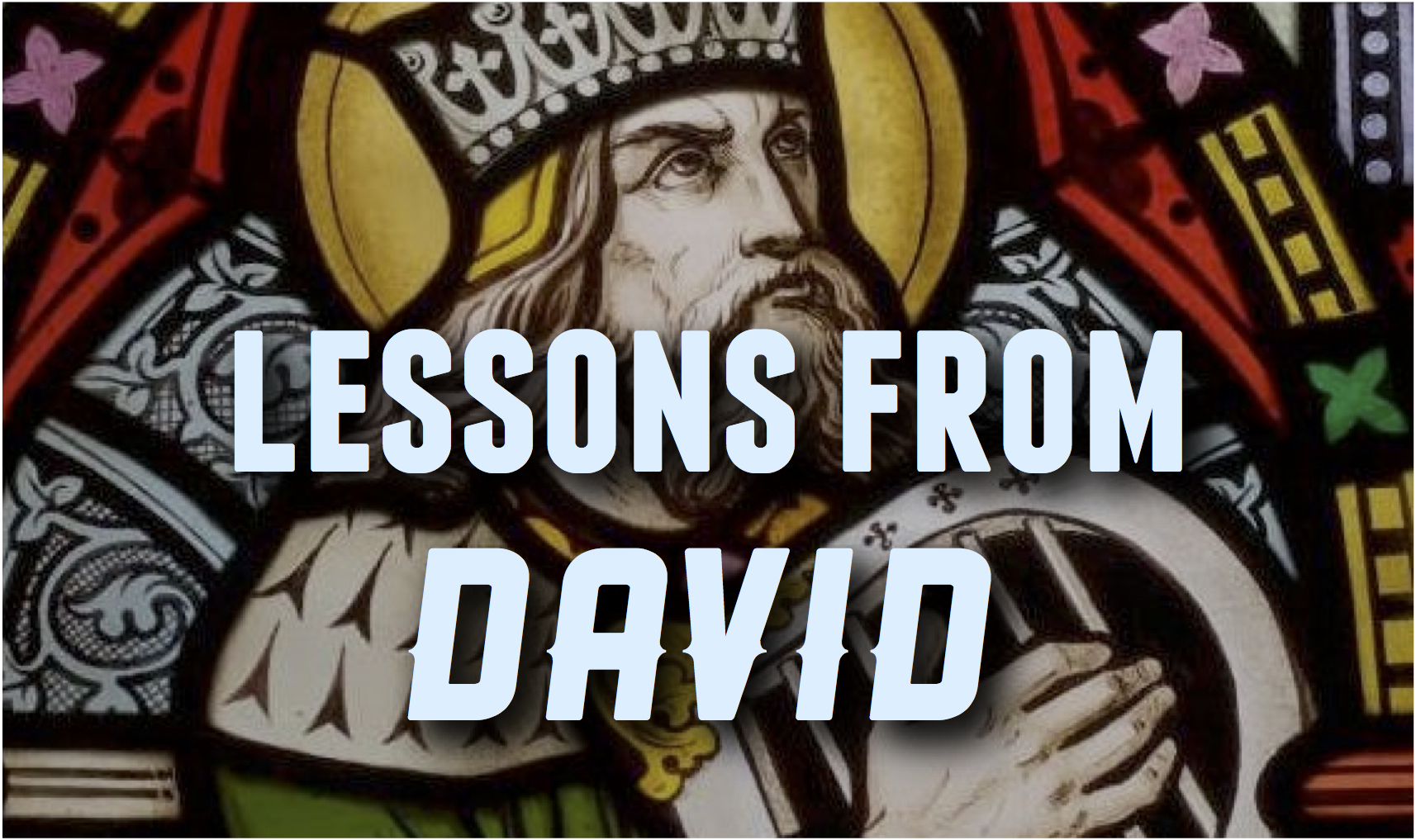
Lessons from David: Sin Can Be Forgiven

In our quick look at some of the many lessons that could be learned from the life of King David, we have noted that God Can Use Unlikely People To Accomplish His Will, and somewhat somberly, that Sin Has Consequences. Today we conclude this series on an upbeat note by pointing out one of Scripture’s central truths: Sin Can Be Forgiven.

David’s guilt was plain in the matter of Bathsheba and Uriah the Hittite: he lusted after Bathsheba, he committed fornication, he abused his power as king, and ultimately, he had Uriah killed to cover up what he had done.

But ultimately, God forgave David of his great sin:

“Then David said to Nathan, ‘I have sinned against the LORD.’ And Nathan said to David, ‘The LORD also has taken away your sin; you shall not die.’”

(2 Samuel 12.13)

The Book of Psalms records David’s words of repentance:

“Be gracious to me, O God, according to Your lovingkindness; According to the greatness of Your compassion blot out my transgressions. Wash me thoroughly from my iniquity and cleans me from my sin. For I know my transgressions, and my sin is ever before me.

Create in me a clean heart, O God. And renew a steadfast spirit within me. Do not cast me away from Your presence. And do not take your Holy Spirit from me. Restore to me the joy of Your salvation And sustain me with a willing spirit.”

(Psalm 51.1-3; 10-12)

God was willing to forgive David of his sins, and the good news for us is that He will do the same for us if we repent. Some of my favorite verses in all of the Bible speak to this truth:

“As far as the east is from the west, so far has He removed our transgressions from us.”

(Psalm 103.12)

“…If we walk in the light as He Himself is in the light, we have fellowship with one another and the blood of Jesus His Son cleanses us from all sin.”

(1 John 1.7)

That forgiveness doesn’t mean that all of the physical consequences of sin will necessarily go away. David’s child still died, no matter how hard he prayed about it. The drunk driver who takes a life will still face prison time, and will still have to deal with the guilt of having killed someone for the rest of his life. The pregnant teenage girl will still have to face the trials and stigma of being a single parent. No matter how hard the woman tries, she may never be able to completely undo the damage of hateful words.

But, the eternal, spiritual consequences can disappear.

Jesus died on the cross to bridge the gap that sin had created between us and God, and when He did that, He received the punishment for sin so that we would not have to. The Bible’s best-known verse, John 3.16, says, “For God so loved the world, that He gave His only begotten Son, that whoever believes in Him shall not perish, but have eternal life.”

As mentioned in the last post, our wages—what we deserve in return for our sin—is death. But thanks to Jesus, we don’t have to get what we deserve; we can have eternal life with Him instead.

New Resources Page for Free Downloads

I have been involved with youth ministry for over ten years now, and during that time I have put together a lot of devotionals, Bible class material, and other resources.

A while back, one of my good friends encouraged me to make some of these materials available on my blog for others to use. I thought this was a good idea, and have intended to do it for a while, but general busyness combined with the time it takes to edit and convert certain files into more downloadable formats has prevented me from doing so…until now.

If you look up in the navbar, you’ll see a link that says “Free Resources”. Under that page, you’ll find downloadable links to a youth ministry plan I developed, as well as a couple of Bible class lessons and one class series for teens.

I realize that there’s not a ton of stuff available right now, but I hope to add more in the future as time permits (see above comments on general busyness and the time-intensiveness of converting and uploading files).

When Faith Gets Tough, Part 2

In case you missed Friday’s post, you should go back and read it first.

An Older Story

So now you’ve heard my story, but I have another story I want to tell you. It’s a much older story; it happened about 2,600 years ago. And if you’ve grown up going to church, you’re probably pretty familiar with the story of Shadrach, Meshach, and Abednego already. You’ll find it in your Bibles in the Book of Daniel, chapter 3.

To start with, you need to know that Shadrach, Meshach, and Abednego were young Hebrew nobles who lived in the city of Jerusalem. These young men were faithful servants of God, but unfortunately, they lived in a time when most of the people around them were not faithful, and as a result, God allowed Jerusalem, His city, to be attacked and destroyed by the Babylonians.

When that happened, Shadrach, Meshach, Abednego, and a lot of other Hebrews were taken off into captivity in Babylon.

And this would have been a really difficult time for these young men. They would have had a lot of questions going on in their minds, because when Babylon conquered Jerusalem and destroyed the Temple, it struck at the very heart of the identity of the Hebrew people.

You see, as a Hebrew, your identity was tied up in the fact that God had made a covenant with Abraham that his descendants would become a great nation. And throughout history, God had shown protection for His people time and time again. He had rescued them from Egypt, and helped them to conquer the land of Canaan, and defeat nations more powerful than they were; over and over again, God came and saved His people.

With God on their side, the Israelites felt confident that they would never be conquered, and this feeling was reinforced by the presence of the Temple, God’s house, being in Jerusalem. The people of Jerusalem were especially confident that their city would never be overthrown, because surely God would never allow His Temple to be violated.

Now, certainly God had warned the Israelites that if they were unfaithful to Him they would be punished. And in the centuries leading up to the downfall of Jerusalem, the people were unfaithful—they didn’t obey God’s commandments and they worshipped other gods. But despite these warnings, the people couldn’t really bring themselves to believe that these bad things could happen to them (kind of like how we struggle to believe that we will suffer and go through hard times as Christians, even though the Bible tells us just the opposite!).

Regardless of their unbelief, that’s exactly what happened: the armies of Nebuchadnezzar came and conquered the city, and the best and brightest of the young Hebrew elite were dragged off to Babylon. And God stood by silently.

So this is the situation that Shadrach, Meshach, and Abednego find themselves in when they are taken into captivity to Babylon, and you can imagine some of the questions that must have been going through the minds of the Israelites at the time: why did God allow this to happen? Was He not powerful enough to stop it? Does He not care about us anymore?

These are important questions, and they’re not so different from the questions that run through our minds today when things get tough. Why did God allow might sweet Kinsley to have this horrible disease? Was He not powerful enough to prevent her from getting it? Does He not care about me, or about her, anymore?

In Daniel 3, King Nebuchadnezzar of Babylon decides to have a giant statue of gold built—90 feet high. Furthermore, he makes a decree that whenever music is played, all the people are supposed to stop whatever they’re doing and fall down and worship this golden statue, and anyone who fails to do so will immediately be cast into the furnace of fire and burned alive.

But there’s a problem: Shadrach, Meshach, and Abednego worship the true and living God, and they’re not about to fall down and worship some statue! Some of the Babylonians go to Nebuchadnezzar and tell him that the three young men are refusing to worship the statue. This enrages Nebuchadnezzar and he calls to have them brought before him and he threatens them:

Nebuchadnezzar responded and said to them, “Is it true, Shadrach, Meshach and Abed-nego, that you do not serve my gods or worship the golden image that I have set up? Now if you are ready, at the moment you hear the sound of the horn, flute, lyre, trigon, psaltery and bagpipe and all kinds of music, to fall down and worship the image that I have made, very well. But if you do not worship, you will immediately be cast into the midst of a furnace of blazing fire; and what god is there who can deliver you out of my hands?”

(Daniel 3.14-15)

 And I absolutely love the way the three friends respond to the king:

Shadrach, Meshach and Abed-nego replied to the king, “O Nebuchadnezzar, we do not need to give you an answer concerning this matter. If it be so, our God whom we serve is able to deliver us from the furnace of blazing fire; and He will deliver us out of your hand, O king. But even if He does not, let it be known to you, O king, that we are not going to serve your gods or worship the golden image that you have set up.”

(Daniel 3.16-18)

Did you hear what Shadrach, Meshach, and Abednego just said? A lot of times in this story I think we just pass over this without noticing it…we think that the three friends make an easy decision to refuse to worship the statue because they know that God is going to protect them.

But that’s not what these verse say. Listen again: “Our God whom we serve is able to deliver us from the furnace of the blazing fire; and He will deliver us out of your hand, O king. But even if does not, let it be known to you, O king, that we are not going to serve your gods or worship the golden image that you have set up.”

Shadrach, Meshach, and Abednego are confident that God can save them, and they’re hopeful that He will save them, but they don’t know that He will. And this is what makes their faith so impressive—they’re determined to be faithful to God even though they don’t know exactly what’s going to happen to them!

Remember, life in captivity in Babylon was an uncertain time for God’s people. God hadn’t protected them from Babylon; He had allowed them to be capture. And now, in these uncertain circumstances, Shadrach, Meshach, and Abednego find their lives threatened, and basically, they don’t care: “King Nebuchadnezzar, we serve God and Him alone, no matter what. No matter how bad things get. We’re not gonna bow down and worship your statue no matter what you do to us.”

Of course, we should mention briefly the rest of the story: as it turns out, God does protect Shadrach, Meshach, and Abednego, and even though the furnace burns 7 times hotter than normal, they’re not burned up, and as a result of the whole incident, Nebuchadnezzar glorifies God and changes the law.

But just because the story has a happy ending, I don’t want us to lose sight of the fact that Shadrach, Meshach, and Abednego didn’t know that everything would be okay. They still had to choose to be faithful to God despite uncertainty, despite the suffering.

Tough Faith

As a youth minister, I have a lot of teenagers who look up to me, but I actually look up to three teenagers, because the faith of Shadrach, Meshach, and Abednego blows me away. They were slaves in a foreign land and their very lives were threatened, but when times got tough, so did their faith.

I think God wants us to develop a tough faith. A faith that, regardless of whatever obstacles or circumstances we face, is determined to trust in Him no matter what happens.

Look, I don’t know what your life is going to look like. I don’t know if you’ll ever have to literally risk your life in order to follow God. I don’t know if you’ll ever deal with the heartbreak of miscarriage or the daily struggle of having a child with a horrible disease. I don’t know if you’ll have to struggle with some horrible disease yourself, or if you’ll have to fight to save your marriage.

I’m pretty confident though that at some point, things are going to get really tough for you. And I don’t say that because they’ve gotten tough for me, but because the Bible promises that it will happen!

So the real question is, when times get tough for you, will your faith be tough enough to handle it?

We talked about Shadrach, Meschach, and Abednego: their faith was tough enough. As it turned out, their story had a happy ending, but their faith was so tough that they were prepared for an unhappy ending.

Kinsley is now two and a half, and I wish I could tell you that there has been a happy ending and that everything is okay. And don’t get me wrong—Kinsley is awesome! She is a sweet, happy little girl. She is a huge blessing in our lives and she makes me so happy: I delight in her.

She has learned how to crawl and can even stand on her own sometimes. She understands some of the things we say to her. We’re confident that one day she’ll learn to walk and communicate via sign language and maybe, just maybe, she’ll learn to speak someday.

But she still has MEB, and she will continue to have it for the rest of her life unless there is a huge medical breakthrough or unless God miraculously heals her.

I pray for both of those things everyday, but even if they don’t happen, I will put my trust in God. He doesn’t ask me to understand why my sweet girl struggles with MEB; He just asks me to trust Him even though I don’t know how everything will turn out.

And He promises that even if everything is not okay here, even if everything doesn’t work out the way I want it to here, it will be okay Someday. Because Someday, Jesus will return, He’ll call His people home, and:

“He will wipe away every tear from [our] eyes, and death shall be no more, neither shall there be mourning, nor crying, nor pain anymore…”

(Revelation 21.4)

« Older posts Newer posts »

© 2026 The Doc File

Theme by Anders Noren — Up ↑