The online journal of Luke Dockery

Category: Christianity (Page 1 of 64)

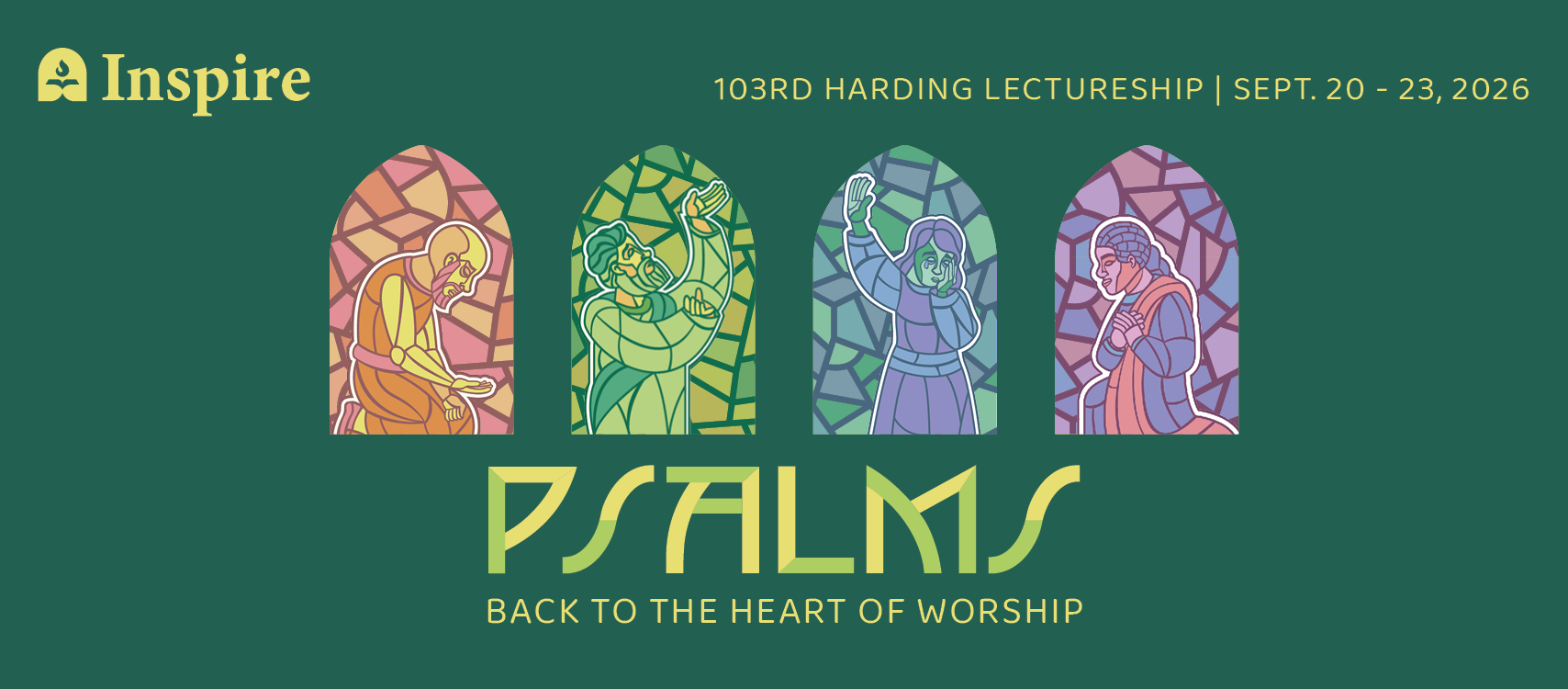
2026 Harding University Lectureship Recap

One of my yearly traditions on The Doc File is to write a post that recaps Harding’s annual Bible Lectureship, which occurs in late September. This year’s lectureship occurred early in my sabbatical, and soon after it was over my wife and I took a 20th anniversary trip and then I returned and was buried (in a delightful way) in research and writing on my sabbatical project and I just never got around to writing about the Inspire Lectureship. It is now late enough that what I write here is somewhat dated, but it is helpful for me to reflect on the things I heard, so I will proceed anyway. Maybe there will be something here to benefit others as well.

This year’s theme was Psalms: Back to the Heart of Worship, and there was a significant focus on, well, Psalms and worship. Before I jump into a recap of the sessions I attended, here are a few summary thoughts:

  1. After the controversy surrounding last year’s Lectureship, I really didn’t hear much at all this year. This was nice.
  2. I thought one of the great strengths of this year’s program was the exposition of a bunch of different individual psalms. I felt like I came away having heard a lot of valuable biblical teaching, and I think that those who attended several of these sessions received a really good feel for the book of Psalms.
  3. This year, they brought back morning keynotes and actively discouraged Lectureship attendees from going to student chapel (which was the same time as the morning keynotes). I thought this was a really unfortunate move. Especially for a Lectureship themed on worship, denying participants the option of worshiping in chapel seemed like an obvious misstep to me (there were likely good reasons for this of which I am unaware).
  4. This was the second year that there was a great emphasis on multi-session tracks rather than standalone sessions. I understand reasons for this, but I personally dislike it. There are a lot of topics that I am interested in for one session, and far fewer that I want to stay around and listen to for three hours. And, depending on how tightly coherent the different sessions are, if you miss the first one, it may not be worth it to go to others. In short, the multi-session tracks are great if there is a track you love and there is nothing else you really want to go to at the same time; if either of these things is not true, it is problematic.

Now, on to the main thing!


I got to attend a variety of lectures and classes, and in what follows I will provide a brief recap of what I went to, along with some takeaway points and meaningful quotations:

His Presence: Psalm 100, Ammar Saheli: I had never gotten to hear Saheli before, who has been a minister at the West Oakland Church of Christ for 25 years. I thought he did a great job of introducing the theme for the week and also the Psalter itself, the “hymn book of Israel.” Saheli said that the Psalter shaped the culture of Israel and shaped the culture of Jesus, and that it would be great if it shaped the culture of our churches as well. He then looked at Psalm 100 in more detail, and emphasized the importance of worship and being in God’s presence as we navigate the difficulties of life:

“Regardless of what is going on in my life, when I enter His presence, God is still good!”

“‘I’m just going to do me.’ You don’t know you!”

“We worship our way through our hurts.”

This was not a profound lecture because it taught something new, but because it taught something fundamental so well: God is still good despite my problems, and worship and gratitude help to orient us to this reality.

Fearfully and Wonderfully Made, Justin Bland: I spent Monday morning (other than the morning chapel keynote) attending three sessions by Justin, who teaches Exercise Science at Harding and is one of my best friends. Justin excels at blowing your mind with fascinating human physiology, and then making insightful theological connections. I took tons of notes and it is hard to sum up here what he talked about, but I’ll try to provide a brief overview of the three sessions:

  • From the Womb: This session focused on the way a mother’s entire physiology adapts to support another life and what can be learned from that:
    1. We are fearfully and wonderfully made.
    2. Self-sacrifice is built into the mother’s physiology.
    3. We are deeply connected.
    4. An appreciation for the “mother” language God uses (Exod 34.6; Matt 23.27).
  • Sustained by the Heart: This session focused the heart, which is the servant of the body. Many of these observations are physiological, but the theological and ecclesiological implications are clear and powerful:
    1. The heart develops through challenge and adversity.
    2. The heart has several redundant systems to ensure continued beating.
    3. The heart takes on new function at birth.
    4. The heart receives oxygen and nutrients during rest.
    5. The heart responds to the needs of the body.
    6. A diseased heart signals muscle wasting.
    7. When your heart is full, you will thirst no more.
    8. The physical embodiment of love is the servant of the body.
  • Made to Work: This final session focused on the physiology of work, and the fact that we were made to move and are shaped by movement. Again, a lot of good takeaways here:
    1. We do things that are hard to get better for the sake of something bigger.
    2. Discussions of stress and mental health must include exercise!
    3. Stress is the perception of a physical threat, and your perception is shaped by what we believe; what if we actually believed that Jesus is the Good Shepherd?
    4. I do not worship this body, but with this body I worship!
    5. The heart of worship is embodied loyalty.

Justin crushed it! I was so proud of him and am so blessed to be his friend.

His Love Endures Forever: Psalm 136, Mac Sandlin: Mac is one of the excellent professors in the College of Bible and Ministry at Harding. He introduced Psalm 136 by talking about music and how the chorus makes the song—the most powerful and popular songs are those with catchy and moving choruses. Mac challenged us with this question: “If you were to write a story song about God, what would the chorus be?” After weighing some different options—How God Gives Success, How God Makes Me Feel, God Rules Over All, How Bad Our Enemies Are, God Is Transcendent—he put forth his thesis from Psalm 136: the chorus of the story of God is “His love endures forever.” This is the heartbeat of Scripture.

“God’s love burns but never burns out.”

Worshipping the Goodness of God, Part 1: In Good Places–Rest and Righteousness, Evertt Huffard: I first knew Dr. Huffard as the Dean of Harding School of Theology when I began my graduate work there when the school was still in Memphis, and more recently, as a member of the church where I work! He is a long-time expert on missions and church dynamics, and has also had a career interest in studying the kavod (כָּבוֹד) of God (often translated “glory,” but which Huffard believes is better translated “honor”). I was only able to go to the first session, but Dr. Huffard was presenting some of the arguments from his new book. The basic argument as I understand it (I haven’t read his book yet), is that God’s kavod is about His goodness (His character) in addition to His greatness (His power). This is important, because as we seek to be like God, we actually cannot approximate Him in power, but we can seek to emulate Him in character. In this session, Huffard focused specifically on ideas of rest and righteousness from Psalm 23, and left me with the following takeaways:

  1. Restoration cannot come without submission to spiritual authority.
  2. God equips others with spiritual gifts to restore my soul.
  3. Through the consensus of those who care about me, God restores me.
  4. Constructive criticism can be a tool for learning and restoration.
  5. Working in a church under spiritual authority gives structure to my restoration.

These were helpful thoughts to reflect on in the midst of my sabbatical!

Stop Whispering! Psalm 107, Kristopher K. DarDar, Sr.: DarDar serves as the Senior Minister for the East Pointe Church of Christ in Fort Worth and delivered the Tuesday morning keynote. Focusing on Psalm 107 (“Give thanks to the LORD, for He is good…”), DarDar emphasized that the redeemed ought to say so (v.2)—there should be nothing quiet when we reflect on the goodness of God. He then emphasized all the different kinds of people that God has gathered (v. 3), but that none of us is better than another because God has given a seat to all of us.

Archaeology in the Psalms: Artifacts, Dale Manor: I try to listen to Dr. Manor teach whenever I can, and the opportunities are rarer now that he has moved from Searcy to Arizona. He was in his wheelhouse in this session, showing us pictures and actual artifacts of various elements referenced in the Psalms—weapons, footstools, cherubim, musical instruments, and more. He taught with his typical knowledge and humor, but also with poignancy: particularly moving was when he discussed God’s bottles to collect our tears (Psalm 56.8–9). Dr. Manor got choked up at this point, as he lost his dear wife earlier this year. I am always deeply moved when I see the humanity and courageous faith of men that I deeply respect and admire. Dr. Manor is in that category, and this was one of the most powerful moments of this year’s lectureship for me.

What Is A Doctrinally Sound Church of Christ, Erik Tryggestad: Tryggestand works with The Christian Chronicle and this was part of a series that stemmed from his observations from different events he had attended associated with different “branches” of Churches of Christ. There were some interesting tidbits here, but, honestly, what struck me most was that for someone who had taken on as a major project trying to take the pulse of the spectrum of Churches of Christ, he seemed surprisingly unaware of the terrain.

Breathing Underwater: Spirituality and the 12 Steps, Monte Cox and Rachel Wisdom: At last year’s Lectureship, Dr. Cox (the Dean of COBAM) and Wisdom (his daughter) did some amazing presentations from The Anxious Generation, and I made the major mistake of only going to one of them. This year, they teamed up to talk about Alcoholics Anonymous from a spiritual perspective. I confess that I don’t have great interest in the 12 Steps, but I went because I thought the presenters would be compelling. They were—their chemistry is incredible (maybe not surprising since they are father and daughter; or maybe even more surprising?), but I still didn’t love the content enough to stay for the other two sessions. The session I attended went over the first two steps, and was sufficient to accomplish what I suspect was a major goal of the track: If I was before, I am not now leery of AA, and I certainly see how churches that host AA meetings could use these as an opening for spiritual conversations and a bridge to faith.

How the Psalms Shaped Early Christian Proclamation, Kevin Burr: Kevin is another of my best friends, and is the newly appointed Assistant Dean of the College of Bible and Ministry. In this track he was actually speaking along with a couple of his students, which I thought was neat, though I only stayed for his session. He basically looked at how the Psalms resonate throughout Christian preaching in the New Testament, and took a special look at Peter’s sermon in Acts 2, which was carefully crafted using Old Testament allusions and quotations—including from Psalms—in order to make the point that Jesus is Lord. In fact, Jesus’s eternal kingship is the theme that runs throughout the New Testament, and the Psalms are employed repeatedly to teach this motif.

How Can We Sing the Songs of the LORD in a Foreign Land? Psalm 137, Monte Cox: The Tuesday night keynote was special as it was delivered by Monte Cox, who is retiring this year as Dean of COBAM. I had heard Dr. Cox preach from this text before, and it is one of my favorite sermons. The context of Psalm 137 is that God’s people are lamenting as they are taken away in exile to Babylon while their captors mock them, demanding that they “Sing us one of the songs of Zion!” How is this possible, though? How can we sing the songs of the LORD in exile? In a world where Christians increasingly feel (or should feel) like exiles, it is a pressing question, and it seems like there are a few different possible responses:

  1. Sing really loudly! Blow them away! This is kind of the culture war approach—fight for our rights and do everything we can through legislation to make Babylon look like we think it should.
  2. Retreat quietly, don’t bother anyone, and sing quietly. This might be akin to the rise of the “nones,” those who increasingly disaffiliate from faith communities, while remaining “spiritual but not religious.”
  3. Learn to sing the songs of Babylon. This is basically salt losing its saltiness—we just blend in with our surroundings and adopt the values of the world.
  4. Learn to sing the songs of the LORD in Babylon. This is hard, but is the way forward for those in exile. It is the practice of Daniel, Hananiah, Mishael, and Azariah, who faithfully served the king in Babylon but also remembered who they were as servants of the LORD, and knew what their limits were. It is the way of Jeremiah, who encouraged Israel to seek the peace and prosperity of the city (Jer 29.4–7).

“A cozy relationship between church and state is good for the state and bad for the church.” (G.K. Chesterton)

“You’re going to worship gods you have to carry instead of the God who carried you?”

“False gods never fail to fail.” (Chris Wright)

“The antidote for idolatry is always worship.”

I strongly believe Christian need to embrace the paradigm of exile to help us process our place and perspective in the current cultural moment, and there was a lot of good wisdom to chew on in this lesson.

Praying the Psalms with Bonhoeffer: Lord, Teach Us to Pray, Mac Sandlin: This year has had a bit of a Bonhoeffer flavor for me, as I have read three books that either focused on Bonhoeffer or significantly engaged with his works, so I was interested to check out this session. Really, though, this session was less about Bonhoeffer or the Psalms (though both were touched on) and more about the task of prayer itself as illumined by the Lord’s Prayer. The key takeaway from this session is that prayer is hard! When Jesus’s disciples came to Him and said, “Lord, teach us to pray,” it’s not like they had never prayed before—these were people who grew up praying! The very fact that they are asking points to the reality that prayer is difficult. Jesus tells them, “Pray like this…” We learn to talk by mimicking others who know how to talk, and we learn to pray by mimicking Jesus.

“Prayer is not emptying the heart to God, but learning how to talk to God whether the heart is full or empty.”

Falling in Love with God’s Law: Psalm 119, Kevin Youngblood: Dr. Youngblood is a brilliant scholar, and his topic focused on the longest Psalm (or chapter) of the Bible, and the Torah that it praises. There was a lot of good content here, but I thought Dr. Youngblood’s four main points were great:

  1. God is not a policeman, but a liberator (Ps 119.32).
  2. Torah is not a tightrope, but a freeway (Ps 119.32, 45).
  3. Obedience is not a drudgery, but a delight (Ps 119.24; “Delight occurs 9x in Ps 119).
  4. Our pain is not pointless, but purifying (Ps 119.23, 98, 121, 157, 161).

“Torah lenses help us to see better—if we don’t get Torah right, we won’t get the Gospel right.”

“Salvation by grace is first taught in the Pentateuch.”

“On the Mount of Transfiguration, Moses and Elijah help us to clearly see Christ’s brilliance.”

The Psalms and the Life of Jesus Christ, Peter Rice: Peter is the Dean of Harding School of Theology, is a good friend, and is my favorite preacher to listen to. I try to hear him whenever I can. Peter focused on Jesus’s use of Psalms in His life. Jesus quotes from or alludes to the Psalms a lot, but what really stood out was that in all but four or five cases, Jesus quotes the Psalms during Holy Week, roughly half of the references are during the crucifixion, and over half of the references discuss Jesus’s suffering and rejection. Jesus’s use of Psalms helps explain his relationship to David as He is the messianic king who must suffer, and who takes on the pain and humiliation of the Psalms as His own. From this, we can learn at least one really important lesson:

“The Psalms are a resource for the darkest times of life.”

God’s Favorite Scripture: Psalm 23, Anthony Walker: Walker preachers at the Hwy 231 S Church of Christ in Murfreesboro, TN and also works with Renew.org, and closed out Lectureship with the Wednesday night keynote, talking about the most famous psalm of all. Walker emphasized parallels between Psalm 23 and Luke 15 that I had never noticed before (shepherd, father, banquet) but found really interesting. I really enjoyed the way he worked through Psalm 23 itself, and will try to provide a sense of that below:

  • The LORD is my shepherd, I shall not want: I am a sheep and my security is found only in God, but God cares for each sheep.
  • He makes me lie down in green pastures; He leads me beside still waters: God provides and protects, and thus I can have peace. He leads me to water that will sustain me, not startle me.
  • He restores my soul; He leads me in paths of righteousness for His name’s sake: God brings me back, and I need Him to get back. God leads me in the right paths.
  • Yea, though I walk through the valley of the shadow of death, I will fear no evil: Valleys are on the path and they must be addressed and faced. Gethsemane is the valley in the shadow of Calvary.
  • For You are with me; Your rod and Your staff, they comfort me: God is here with us. He protects me from enemies and keeps me.
  • You prepare a table before me in the presence of my enemies. You anoint my head with oil. My cup overflows: God prepares a table before me, in spite of my enemies, and hours me in a special way like a special guest.
  • Surely goodness and mercy will follow me all the days of my life, and I will dwell in the house of the LORD forever: I am followed by goodness when I return, forever and into the future.

I really enjoyed ending Lectureship with these thoughtful reflections from the most famous psalm.

The Inspire Lectureship was a bit strange for me this year, as it fell near the beginning of my sabbatical, and I struggled a little bit with how to balance things. Still, I got to hear a lot of good sessions and connect with old friends and professors. In the midst of a season of blessings, Harding Lectureship was one of them.

Reflections on 25 Youth Ministry Summers

In August, I wrapped up my 20th year of youth ministry. When you take into account summer internships from my college days, though, that’s actually 25 years of youth ministry summers. As I am currently on sabbatical[1] from both ministry and teaching responsibilities, I have had some much-appreciated time for reflection on this ministry milestone.

What follows is, by definition, somewhat self-indulgent—these are reflections on my own life in ministry after all. I process things best by writing, though, and additionally, thought this might be of interest for those who know me, might be encouraging for others in youth ministry, and who knows, maybe my kids will read this one day!

Overview

It’s hard to believe now, but I never intended to go into ministry. My dad was a preacher when I was growing up. He was (and still is) an excellent preacher and I have the utmost respect for him, but I also saw the way that he carried stress from ministry and I didn’t want that in my life. I ignored promptings and encouragement from others to consider ministry and ultimately ended up double majoring in International Business and Spanish (I had no idea what I wanted to do). I did need work in the summer though, and the summer after my freshman year of college, I began doing youth ministry internships (the first of which I was offered based on my father’s reputation).

It’s not like I was immediately hooked on youth ministry from my first internship, and there were certainly some twists and turns in my journey, but the simplified summary is that I gradually began to discern a calling to ministry. What began as summer jobs to help me earn some money until my “real” career started actually ended up as my real career. Chronologically, that career has looked like this:

Youth Ministry Internships:

  • Farmington Church of Christ (2002)
  • Center Street Church of Christ (2003)
  • Farmington Church of Christ (2004–2006)

Youth Ministry (this is where the 20-year clock starts):

  • Farmington Church of Christ (August 2006–May 2019)
  • Cloverdale Church of Christ (June 2019–Present)

Things Change; Things Stay the Same

It’s interesting; a lot has changed in youth ministry over the last 25 years:

  • When I began, I had a flip phone, I hated teaching, I was single, my teens thought of me as a cool older brother, and I had no clue what I was doing (but didn’t realize it at the time).
  • Now, AI is trying to take over the world, teaching Bible class is one of my favorite things, I am married with three wonderful children, my teens think of me as some sort of hybrid uncle/professor/washed up athlete who is decidedly middle-aged and not-so-cool, and I know much more than I once did, but am also aware of how much I don’t know.
  • I spend less time cramming the calendar full of youth events, but the events that we have are much more focused and intentional.
  • I spend less time playing basketball with teens (though I still do!).
  • I spend more time trying to equip parents to disciple their kids.
  • I spend more time investing in younger youth ministers and college students who are training for ministry.

Other things are still very similar:

  • I still find myself sleeping on air mattresses and bunks at student retreats and weekend trips.
  • I still find myself riding roller coasters with students as part of my job (helping nervous students overcome their fear of thrill rides is something of a specialty at this point!).
  • I still find myself feeling so very privileged that I can point teens to Jesus on a regular basis and play a small part in their spiritual journeys.
  • I still love my students.
  • I still hate lock-ins.

Other Things I Might Have Done with My Life

By definition, when you spend your life doing a thing, you necessarily exclude other things that you could have done. I am a youth minister, I feel called to youth ministry, and I don’t regret the path that I have chosen (or, maybe more accurately, that I have found myself on). I have no current plan to leave youth ministry, and intend to do this as long as I believe God is calling me to do so.

At the same time, if I could clone myself, here are some other things I would have liked to do:

  • Remained as a youth minister at my first church: I worked for 13 years at the Farmington Church of Christ (not counting internships; see above), and I deeply love that church. Although our move to Searcy has been a blessing for our family in so many ways and we love the Cloverdale Church, I also wish that I could have stayed and continued this long-tenured and fruitful ministry.
  • Preaching: I used to greatly dislike preaching, but have come to enjoy it. It is such a special opportunity to plan and craft the biblical teaching that a family of believers receives on a regular basis, and it is a profound responsibility. There are aspects of the typical preaching job that are less appealing to me, and I do not currently feel called to preach, but maybe someday.
  • University Professor: It was once my life ambition to be a Bible Professor at Harding University. I now work at Harding part-time as an Adjunct Instructor of Youth Ministry, and I love the combination of doing youth ministry full-time and teaching a class on the side. But I could imagine myself as a full-time teacher in a college setting.
  • Full-Time Author/Publisher/Editor: Two significant side projects that I have devoted time to are Deeper Youth Ministry and Regnum Media. Essentially, both of these are publishing endeavors. Deeper works to provide resources and curriculum for youth ministries, while Regnum seeks to provide high-quality adult Bible class material for churches. I am humbled by the way God has used these efforts to bless so many churches, but cannot help but wonder how much greater the reach could be if I could devote myself to one or both of these efforts full-time.
  • Church Planting: By nature and personality, I tend to have strong views about the way things should be. In this regard, planting a church that I think aligns closely with biblical teaching and pulls from the best of the Christian tradition is something that has appealed to me for many years. Dispositionally, though, I think I would make a terrible church planter.
  • Associate Minister: I love congregational ministry and in addition to youth ministry or preaching, could see myself in some sort of Associate or “Third Minister” role (Education, Involvement, Administrative). In 20 years of ministry I have had opportunity to dabble in lots of different kinds of ministry and grow as an administrator. The combination of not having to leave my family for youth trips or receive the spotlight attention of preaching makes a role like this appealing.
  • Medicine/Medical Research: This is totally different from all the rest! I was always a really good student in school, but enjoyed subjects like history, geography, literature, and writing so much that I never really considered going into math or science fields. Now, having a daughter with a significant genetic illness has changed my perspective. Part of me wishes that I had stewarded the gifts God has given me differently and gone on to practice medicine or some sort of research that seeks to alleviate the suffering of people.
  • Second Baseman for the Atlanta Braves: Obviously.

A Special Summer

This summer, my 25th in youth ministry, was a special one. It was not easy, or always smooth. I like to tell my youth ministry students that some youth ministers live for the summer, and others hope to be alive at the end of the summer; I belong to the latter group! I enjoy extra time with my youth group students and some of the special things we get to do when they are out of school, but summer is also exhausting, it requires me to be absent from my family more than I would like, and it disrupts my regular routines that I have for the rest of the year (and miss when they are gone!).

It was special because we had a good summer doing the significant things that happen in a youth ministry summer: I got to work with and invest in two great interns, we got to go to camp, we got to host an outreach camp for kids in our community, we got to plug our teens into meaningful service and intergenerational connection, and we got to equip parents to disciple their own kids. All of these are great.

Additionally, there were some personal milestones this summer:

  • With my youth group, I got to summit Mt. Elbert, the tallest mountain in Colorado, and my very first 14er.
  • I learned to swim! People who know me well know that I never learned to swim as a kid, and this has brought me shame for my entire life. A youth group mom and family friend convinced me to let her give me lessons in her pool, and this was one of the greatest gifts of my life. We kept it a secret from the youth group, and surprised them at a pool party. When they saw me swim across the pool for the first time, I came up out of the water and they were all cheering—it was a special memory. (Note: I am still not good at swimming, and have a lot of work to do to improve. But I am in a fundamentally different category than I have been in for my entire life.)
  • I published another book, my first attempt at a devotional book.

Gratitude

The older I get, the more I am convinced that gratitude is the key to contentment in life. I have much to be grateful for, but as I reflect back on 25 youth ministry summers, here is a partial, imperfect list:

  • My parents, who raised me in faith and modeled a life of ministry for me.
  • A church that took a chance on an 18 year-old kid and kept inviting me back, and elders who gave me space and opportunity to grow and loved me despite my mistakes.
  • Thursday lunches in Fayetteville with my dad, Robb Hadley, and a rotation of others. I never realized it at the time, but these lunches where we would talk about life, ministry, and the challenges and frustrations of ministry (without ever a hint that we might leave ministry despite those challenges and frustrations) were a significant contributor to my longevity in ministry.
  • The excellent training I received at Harding School of Theology.
  • The two preachers I worked with at Farmington: Larry Krudwig and Mike Raine. Larry tried to convince me that I had gifts for ministry early on, but I did not have ears to hear. He also taught me how to deeply love a church. Mike is the most generous man I have ever met, and taught me so much about ministry.
  • Dear friends in Northwest Arkansas who we hated to leave.
  • My friend and current preacher, Karl McLarty, who (without me knowing it) prayed for me to come to Cloverdale to be their youth minister. The prayer of this righteous man availed much, and led to God funneling blessings in my life in new and unexpected ways.
  • My bosses at Harding who allow me to teach youth ministry.
  • The youth ministers I have helped train in class, and especially through internships and apprenticeships at Cloverdale. There are many now working in churches, and I am so proud of them.
  • Generations of youth group parents who have entrusted their kids to me.
  • Dear friends in Searcy, including old college friends that God in His grace has seen fit to bring back together, along with spiritual mentors that I didn’t know I needed.
  • An eldership that sees the value in giving sabbaticals to ministers.
  • My youth group students over the years: “I have no greater joy than to hear that my children are walking in the truth” (3 John 4). Special bonus to those students who have helped me bridge the difficult divide and have become friends in adulthood.
  • My wife Caroline, who has been my greatest encourager, supporter, rebuker, example, and co-worker. Whatever success I have had in youth ministry, she is significantly responsible for.

I have thought a lot recently about the song, “The Goodness of God.” As I reflect on the last 25 years and look at the list above (knowing that there is so much more in addition to this to be grateful for), I am overwhelmed by God’s goodness and benevolence in my life. Looking ahead, perhaps I will have another 25 youth ministry summers. Perhaps I will spend time in one or more of the other career paths I listed above. Either way, I will seek God’s leading and be thankful for His gracious provision. When has He not been faithful?


[1] At Cloverdale, ministers are eligible for sabbaticals after seven years. Our elders are also encouraged to take them. These are intended to be times of rest and renewal where we take a break from regular responsibilities and come back refreshed and ready for continued service. For ministers, we are encouraged to have a project we work on during sabbatical (it’s not just an extended vacation). In my specific case, I am using my 10-week sabbatical to do research and writing on a youth ministry textbook that I hope to publish next year.

The Joy Is Stronger (If I Have Eyes to See It)

Some things that bring me down:

  • AI-generated everything wherever I look
  • Spending time scrolling on social media
  • The division and malice throughout our society
  • When Christians don’t act like Jesus
  • Sickness and death

Some things that bring me joy:

  • Spending time with my wife and kids
  • Reading a good book
  • Baseball
  • When Christians remind me of Jesus
  • The sure hope of resurrection

The joy is stronger, and it is there, all around me, if I have the eyes to see it. Will you join me?

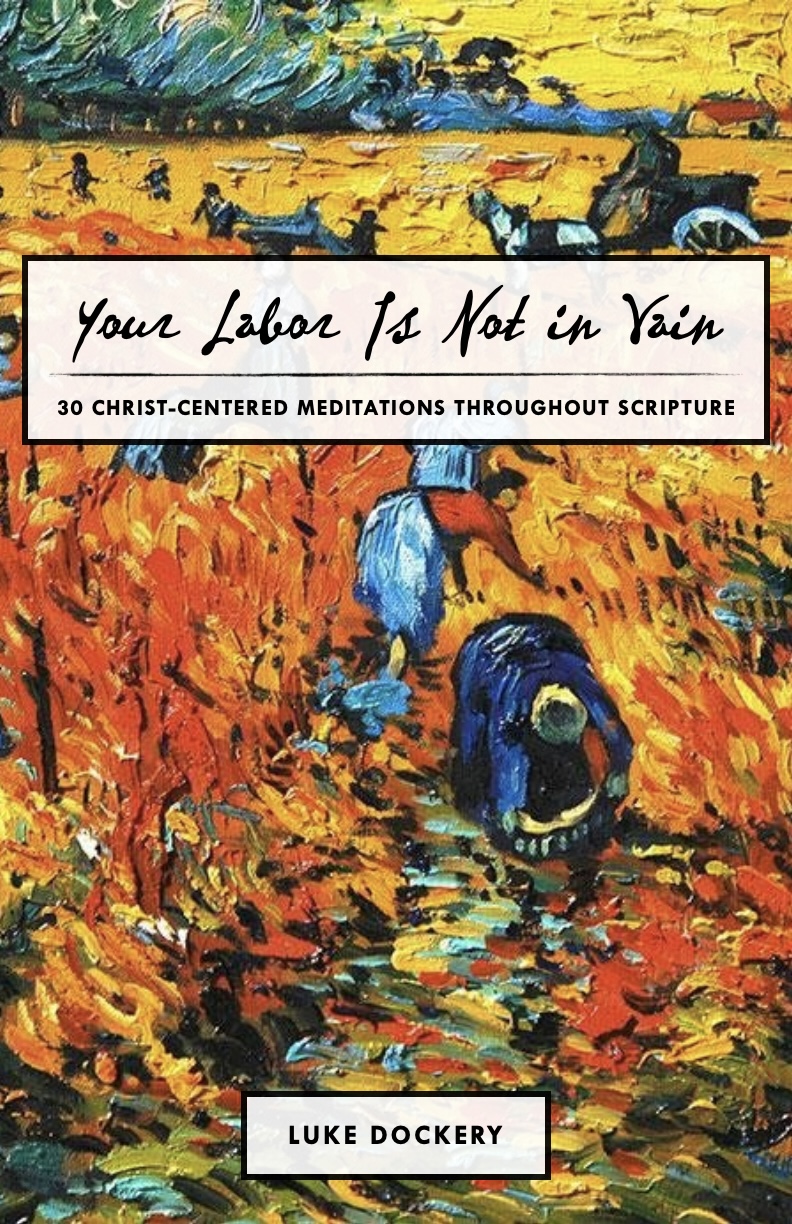
Your Labor Is Not in Vain: 30 Christ-Centered Reflections Throughout Scripture

I am excited to announce that I have a new book out—Your Labor Is Not in Vain: 30 Christ-Centered Meditations Throughout Scripture. In some ways, this was a project years in the making, as the meditations are actually a compilation of blog posts that were initially written for my Scripture Reflections series here on The Doc File. Those posts have been edited, supplemented, and compiled together to create a volume that is intended to be both interesting and spiritually formative. From the Preface of the book:

The Bible is such a fascinating masterpiece, written by dozens of authors over hundreds and hundreds of years, but also guided and woven together by a divine hand. Scripture is a bottomless treasure that reveals new delights on each journey through it, and my ongoing study of and reflection on it has truly been a delight for me and has helped me to know God better and grow closer to Him.

My hope is that my humble efforts in this book will similarly help you to become fascinated by Scripture, and to more deeply love the God to whom Scripture points.

From the back of the book:

What if the Bible is both more connected and more fascinating than you realize?

The Bible is not meant to be read as a loose collection of disconnected stories, teachings, and moral lessons. It is a unified story, woven together across centuries and pointing ultimately to Jesus. Once we begin to see those connections, familiar passages take on new meaning, and obscure passages can suddenly come alive.

Your Labor Is Not in Vain is a collection of thirty meditations drawn from Luke Dockery’s twenty years of writing and studying Scripture. Beginning in Genesis and moving through the biblical story, these reflections explore intriguing details, surprising connections, and overlooked themes that reveal the beauty and coherence of Scripture—and, again and again, point us toward Jesus.

What does Jacob’s ladder have to do with Jesus? Why does the Bible contain so many genealogies? How can death be both an enemy and a pathway to victory? What does the resurrection have to do with the ordinary work we do for the Lord? And what does it look like to live faithfully as a citizen of God’s kingdom?

These short meditations invite you to slow down, look again, and discover something new in familiar passages of Scripture. Reflection questions and prayer prompts at the end of each chapter make the book useful for personal devotion, small groups, Bible classes, and family conversations.

Above all, Your Labor Is Not in Vain is an invitation to become more fascinated by Scripture, to marvel at the way its story fits together, and to see Jesus more clearly throughout its pages. Whether you have been reading the Bible for decades or are just beginning to discover its story, these reflections will encourage you to read with fresh eyes—and to delight in the inexhaustible treasures of God’s Word.

If this intrigues you at all, I hope you will give it a look!

Purchase the Book

Paperback: Amazon $12.99

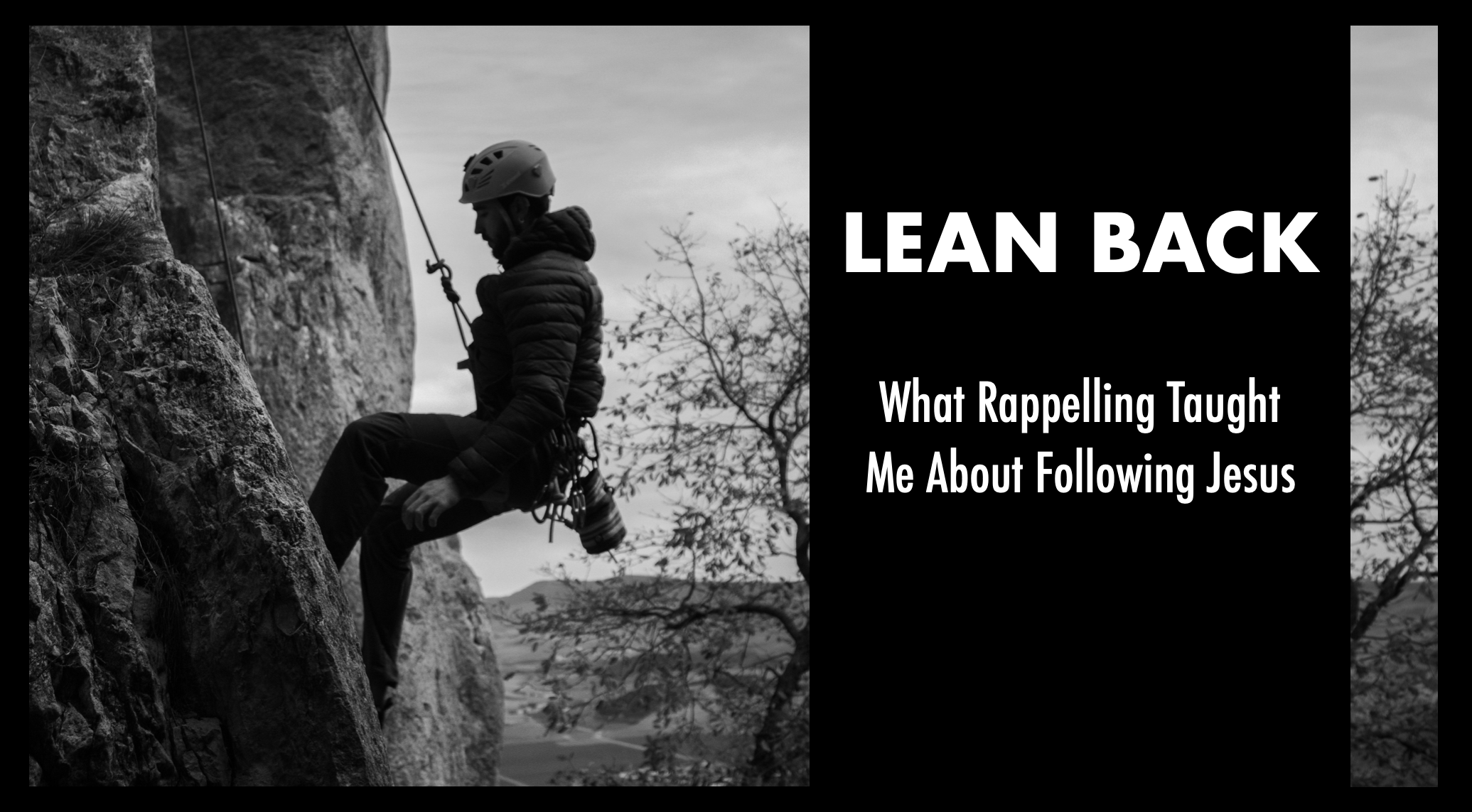
Lean Back: What Rappelling Taught Me About Following Jesus

Earlier this summer as part of a mountain trek trip with my youth group, I had the opportunity to go rappelling. Over the years, I have summited a few peaks in the Rockies and have always enjoyed rock-climbing walls, but I am not a mountain climber by any means. I have only rappelled from a cliff twice, and while I enjoyed it both times and did well for a novice, it’s not something I am comfortable doing and I am confident that there is a lot of room for improvement in my technique!

I was really proud of our teens, several of whom were terrified of heights and showed real courage in completing the task anyway. Later that evening as we gathered around a campfire, one of our guides helped us process the experience by prompting us to reflect on ways that rappelling is like the Christian life. I found it to be a rich metaphor, and have repeatedly returned to it over the last six weeks.

Here are four lessons that rappelling taught me about following Jesus:

The Necessity of Trust

You cannot rappel successfully without putting your trust in something beyond yourself. You have to trust that your rope and harness are going to hold your weight. You have to trust that the carabiners are not faulty. You have to trust that the belayer has secured you properly and knows what he or she is doing. Trust is absolutely necessary, and if you don’t have it, you’ll never make it off the cliff and never make it to your destination.

Trust is fundamental to following Jesus as well. A central aspect of the Christian story is that we are stuck in our sin, and are unable to get ourselves out of the mess we are in. We can only get to our desired destination if we put our faith—trust—in Jesus and rely on His power instead of our own.

My Instincts Can Be Wrong

Perhaps the most vivid lesson I learned from rappelling is that my instincts can be wrong. Rappelling only works if you lean back in your harness to let it catch your weight, putting your body in the proper position and giving the rope the appropriate tension for you to be able to work your way down the cliff. Here’s the problem with that: your instincts are screaming at you not to lean back in the harness! Hunching forward and holding onto the rope feels like the right thing to do, and leaning back feels like a good way to die quickly! But in this case, my instincts are wrong. I have to lean back if I want to make it off the cliff.

Scripture affirms that our instincts can point us in the wrong direction: “There is a way that seems right to a man, but its end is the way of death” (Proverbs 14.12). There are many instincts that I have—to seek vengeance when someone wrongs me, to hoard my possessions to make sure I have enough, to define what is good and evil for myself, to value myself above others, to take rather than give—that Jesus assures me are dead wrong. Just because my instincts point me in a certain direction is no guarantee that it is the direction in which I need to go.

The Importance of Listening to Others

When I am rappelling, it is really important that I listen to other people for at least two reasons. First, I’m not particularly skilled at what I am doing, so I need to listen to my belayer who is trying to coach me to have proper technique. Second, as I am rappelling down the mountain, I don’t actually have the best perspective on where I am, where I am going, or what potential obstacles are in my path. Someone calling up to me from down below can offer course corrections when I get off track, or help me avoid dangers in my way.

It’s important to listen to others when following Jesus as well. Sometimes that is because I am relatively unskilled as a disciple, and I need direction from someone who knows more than I do. Jesus is the Author and Perfecter of our faith (Hebrews 12.2), and is the perfect guide for me. The apostles offer invaluable guidance through the pages of Scripture, and fellow disciples throughout Christian history who have gone before me and even those still living who are further down the path can be of inestimable value. Other times I need to listen to others because I may have a limited perspective that has led me astray. Maybe I have wandered off the path without realizing it and I need a Christian brother to guide me back on. Maybe there is a danger ahead of me that I cannot see, but a sister in Christ can give me a warning and save me from peril. Listening to others is essential.

Waiting Longer Doesn’t Make It Easier

One final lesson that rappelling reminded me of was less about how we follow Jesus than when we choose to do so. When we were rappelling this time we had a large group and only two lines, so it took quite a while. Some students were eager to go, and I decided to wait in the shade, enjoy my lunch, cheer on others as they went, and maybe even pick up a few pointers by watching them. As I waited longer and longer, though, something curious began to happen: my inertia led to increased nervousness as I witnessed other people do this brave thing while I just sat there and did nothing. Instead of gathering confidence from watching others, their struggles, stumbles, and fears fed into my own anxiety. When it finally became my turn to go (after about two hours), I wasn’t eager to do it.

For various reasons, sometimes people decide to put off following Jesus. Maybe they think they will have more time in a later season of life. Perhaps there is some sin or struggle in life right now and they think if they can just take care of that little problem first, or maybe watch others for inspiration, they will be in a better position later. The reality is that the longer you spend not following Jesus, the easier it is to continue to not follow Him. You develop a sort of inertia as the choices and habits of years accumulate, slowly turning you into the kind of person who becomes less inclined to follow. I love the KJV rendering of the words of Ananias to Saul of Tarsus in Acts 22.16: “And now why tarriest thou? arise, and be baptized, and wash away thy sins, calling on the name of the Lord?” There’s no sense in waiting; it doesn’t make it any easier.

Ultimately, the hardest part of rappelling wasn’t descending the cliff; it was leaning back and trusting the rope. The same is often true when it comes to following Jesus.

« Older posts

© 2026 The Doc File

Theme by Anders Noren — Up ↑