The online journal of Luke Dockery

Category: Christian Living (Page 28 of 36)

Lessons from David: An Introduction

Lessons from David

David stands as one of the most famous and most popular characters of the entire Bible: He is a hero in both the Jewish and Christian faiths, and is famous both for his feats in battle prior to his kingship, and for arguably being Israel’s greatest king.

He is clearly a key figure in Scripture: in fact, more of the Bible is devoted to telling the life and actions of David than anyone other than Jesus and Moses.

Even in a culture such as ours which has become largely ignorant of the contents of Scripture, most people are at least somewhat familiar with the character of David. The famous story of David and Goliath has even become a cultural metaphor; in a sporting event (especially like the NCAA Basketball Tournament) when you have two teams playing each other where one team is perceived to be much better than the other, it will often be referred to as a David and Goliath matchup.

David’s life comprised an important link in the history of Israel and also the history of God’s redemption, but it also provides a lot of lessons which are good for us to remember. It was a life characterized by remarkable peaks and painful valleys, and over the next couple of weeks I’d like to take care of some of the lessons we can learn from it.

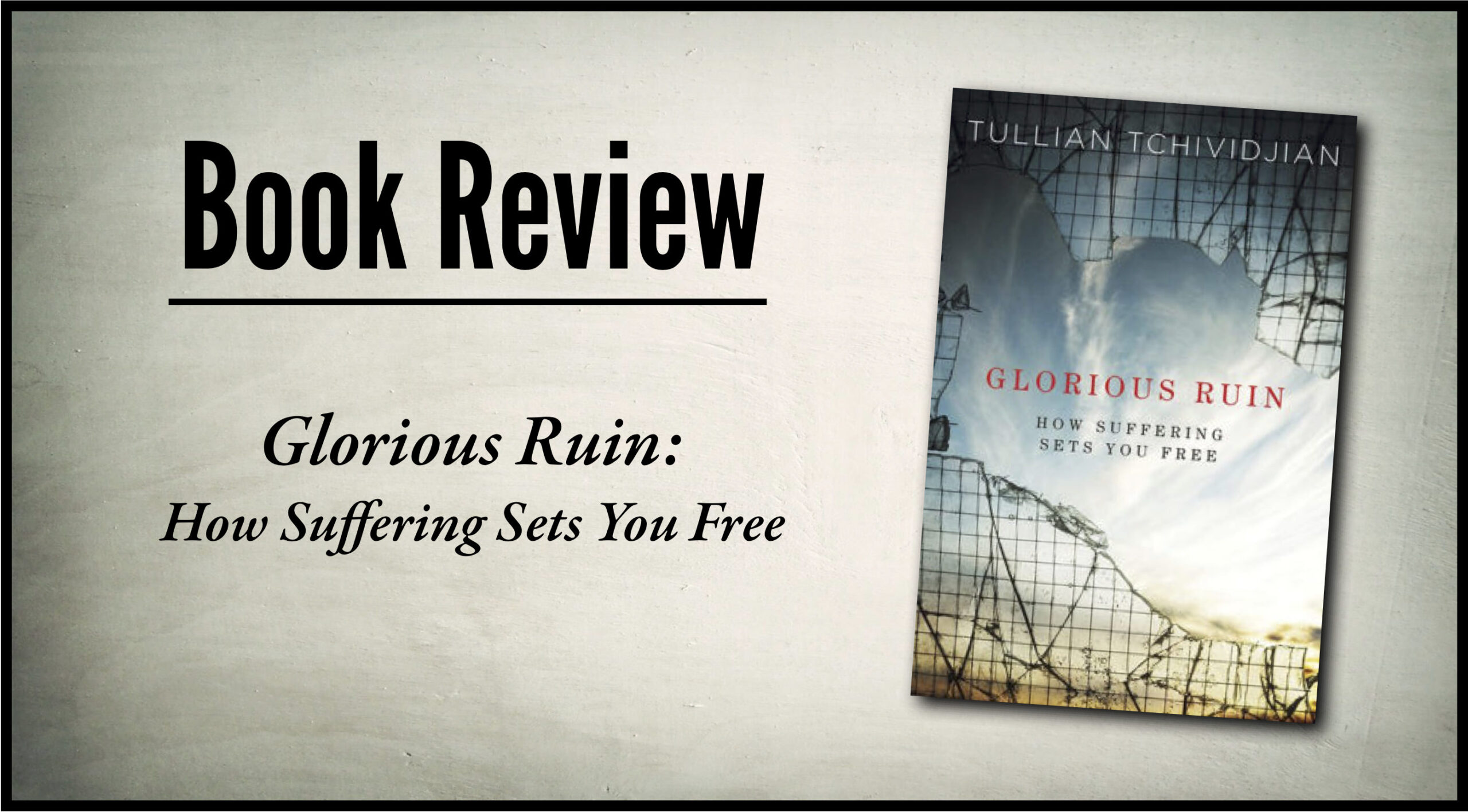
Book Review: Glorious Ruin

At the very end of last year, I read Tullian Tchividjian’s Glorious Ruin: How Suffering Sets You Free. The topic of suffering  has been on my mind a lot over the last year or so, and I was interested in seeing what Tchividjian (who is Billy Graham’s son-in-law, by the way) had to say.

In many ways, this was a challenging read for me that pushed my thinking, but I thought it was helpful. Again and again, Tchividjian (type that name five times fast!) argues that the answer to suffering is not stoicism or seeking some silver lining; rather it leaves us broken and therefore more open to meeting Jesus.

And here are some of my favorite quotations from the book [with my comments added in brackets]:

“The required cheerfulness that characterizes many of our churches produces a suffocating environment of pat, religious answers to the painful, complex questions that riddle the lives of hurting people.” (p.7) [Of all places, people should feel safe to share their hurts at church!]

“…This side of heaven, suffering often points to a deeper reality, an indicator of both personal and cosmic discord.” (p.8) [I think suffering is the only wake-up call that some people ever hear.]

“So what would a God who was present in suffering look like? First and foremost, He would be a God who suffers Himself. Maybe even dies. A God who meets people in their suffering, rather than on the other side of it. Pain might even be one of His primary avenues for reaching people.” (p.11)

“…The gospel is not ultimately a defense from pain and suffering; rather, it is the message of God’s rescue through pain.” (p.21)

“While God does indeed use the suffering in our lives, He is interested in much more than improvements in your personality or circumstantial happiness. He is interested in saving you.” (p.44)

“Contrary to popular belief, Christianity is not about good people getting better. If anything, it is about bad people coping with their failure to be good.” (p.51)

“The gospel is not a means to an end, it is an end in itself.” (p.52)

“When the bottom falls out of our lives, we don’t necessarily find it comforting when people try to cheer us up. No matter how well intended, such overtures create pressure that adds to our distress. Not only are we suffering, but we now feel bad about how we make those around us feel or, at least, about the disconnect between where they would like us to be and where we actually are.” (p.82) [From a pastoral perspective, this is huge: ministers (and anyone, really) need to take it easy on always trying to cheer up those who are suffering. Sometimes, we just need to let them grieve.]

“There’s nothing like suffering to remind us how not in control we actually are, how little power we ultimately have, and how much we ultimately need God. In other words, suffering reveals to us the things that ultimately matter, which also happen to be the warp and woof of Christianity: who we are and who God is.” (p.96) [Yes, absolutely.]

“The Lord mercifully put to death Job’s final idol—the idol of explanation. God liberated Job from the prison of Why. He liberated Job from himself. It was a glorious ruin.” (p.103)

“Brokenness precedes usefulness. It just does. Who reaches out to parents who have lost children to drunken driving accidents? Other parents who have lost children to drunken driving accidents. When we go through something painful and when God breaks us, it makes us both more useful to others and more willing to be used.” (p.120) [I am firmly convinced that we become better witnesses for God when we have suffering in our pasts.]

“Suffering…has a way of liberating us from the petty concerns and worries that bog down our everyday existence.” (p.121)

“Perhaps the only solace you can draw from suffering is that you begin to see that we were truly made for another world.” (p.132)

“And yet, our hope does not ultimately lie in our present liberation. There is no guarantee that we will experience relief from pain. I wish I could say there was. This life may feel like one long, painful death. All you can do is hang on, and sometimes you can’t even do that. Fortunately, the good news of the gospel is not an admonition to hang on to God with all your strength and willpower and you’ll be okay. The good news of the gospel is not some gnostic encouragement to view your suffering in the right way, or understand the theology of the cross more deeply. No, the good news is that God is hanging on to you. He’s not waiting for you to save yourself or mature into someone who no longer needs Him. He will not let you go, come what may. Jesus will never, ever leave you or forsake you.” (p.138) [He brings it all home here; this was really powerful to me.]

Sadly, we live in a fallen world, and as a result of that, suffering is all around us. Because of this, it is easy to find books on how to deal with suffering, or how to grow or improve yourself through suffering. What sets Glorious Ruin apart is that it suggests that, ultimately, suffering leads us to God, not a better version of ourselves.

Biblical Faith: Obedient Action

This is the final post in our series on biblical faith. Contrary to the way “faith” is typically defined in current conversation, I have tried to paint a more biblical picture of what the word means. Here are links to the previous entries in this series, in case you missed them or for review:

Biblical Faith: An Introduction

Biblical Faith: A Reasonable Leap

Biblical Faith: Trust

The Problem with Mental Assent

A lot of times, you’ll hear people say something like, “I believe that Jesus is God’s Son,” or “I believe what the Bible says,” but it becomes clear that those beliefs don’t really impact their daily lives in any real way: they don’t have anything to do with the church, they live their lives by their own moral code rather than that of the Bible they claim to believe in, they spend their lives chasing after the accumulation of material possessions, etc.

For people like this, what they really mean by believe is mental assent: “in my mind, I agree with the idea that Jesus is God’s Son,” or “I agree with the idea that the Bible is accurate in its claims.”

And to be fair, mental assent is one appropriate definition of the word “believe.” In fact, mental assent is exactly what I mean when I say something like, “I believe the 1927 Yankees were the greatest baseball team of all time.” I’m saying something like, “based on the information I have, I agree with the claim that the 1927 Yankees were the greatest baseball team of all time.”

But this idea of mental assent is not what the Bible is talking about when it talks about believing in something. It certainly involves agreeing with something (i.e. Jesus is God’s Son), but it involves much more than that: “Since I believe that Jesus is God’s Son, I will live my life according to his teachings and commandments.”

Biblical faith goes well beyond mental assent.

Faith vs. Works or Faith + Works?

Christians of different backgrounds have argued for hundreds of years over whether people are saved by faith or by works. To me, that’s an unfortunate argument, because the people who tend to dig their heels in around either element to the exclusion of the other are, well, wrong.

Look, the Bible teaches over and over again that we are incapable of saving ourselves through our good works. Isaiah 64.6 says that our righteous deeds are like filthy rags before God, and even bigger than that, if our salvation was accomplished by the good things we do, then there would have been no need for the atoning death of Christ in the first place.

It was in response to this erroneous viewpoint that the Reformers developed the mantra of “Faith Only”: we are saved by our faith in Jesus Christ, and nothing we do has anything to do with that.

But once again, this is not the biblical perspective. Biblical faith, by definition, includes works. Consider the following verses (emphasis added):

“What good is it, my brothers, if someone says he has faith but does not have works? Can that faith save him? If a brother or sister is poorly clothed and lacking in daily food, and one of you says to them, “Go in peace, be warmed and filled,” without giving them the things needed for the body, what good is that? So also faith by itself, if it does not have works, is dead.

But someone will say, “You have faith and I have works.” Show me your faith apart from your works, and I will show you my faith by my works.”

(James 2.14-18)

Or this passage from Ephesians 2, which is a favorite of faith-only types:

“For by grace you have been saved through faith. And this is not your own doing; it is the gift of God, not a result of works, so that no one may boast. For we are his workmanship, created in Christ Jesus for good works, which God prepared beforehand, that we should walk in them.”

(Ephesians 2.8-10)

Both of these passages fundamentally link faith to action. Are we saved by faith? Absolutely! But in the Bible, the very idea of faith includes works! Biblical faith involves taking action and obeying God’s commandments. If you take away the works, you’re left with something other than what the Bible commands.

Biblically, it is unthinkable to talk about faith separate and apart from the actions that result because of that faith.

Or in other words, if you say that you believe in Jesus but you don’t actually obey his teachings or attempt to follow his example in your life, then you don’t really have faith at all. At least, not in a biblical sense.

The Problem(s) With Worry

I’m in the process of reading Fit For The Pulpit: The Preacher & His Challenges, which covers several topics that preachers deal with in ministry (time, stress, criticism, family, etc.). I may or may not write a review when I finish the book, but I wanted to go ahead and share some really good words on worry (emphasis is mine):

“1. Worry is irreverent. It fails to recognize that God is still on his throne and works in the lives of his children (cf. Rom. 8:28).

2. Worry is irresponsible. It wastes energy and burdens us so that we cannot be engaged in constructive and creative problem solving.

3. Worry is irrelevant. It cannot change anything. It has been estimated that 50% of the things we worry about never happen, that 30% are about the past which we cannot change, that 12% are too petty to affect the future, and that just 8% legitimately deserve our concern.”

(p.48)

In addition to the characteristics of worry mentioned above, for me worrying is also easy, which is why I found these reminders to be so helpful.

Biblical Faith: Trust

In our series on faith, last week’s post discussed how biblical faith is not a blind leap based on no evidence; neither is it a certainty which can be proven. Instead, it is a reasonable faith, somewhere in the middle of those two extremes.

Today I want to discuss another characteristic of biblical faith: trust.

Teens and Youth Events

I am a youth minister, which means that I spend a good amount of time putting together a calendar of activities for my teens—youth rallies, service projects, retreats, summer trips, etc.—and then encouraging them to go on those events. With some students, it’s always a struggle to get them to go, while other students will eagerly sign up for any event as soon as they hear about it.

I have one student in particular who signs up for everything, but if it’s a new activity that we haven’t done before, he always wants to know beforehand as much information about it as possible: Where will we be staying? How many people are going to be there? Where will we eat? Who will be speaking? What will we be doing all day? What kinds of activities are planned? Why are we supposed to bring _____ with us?

This is one of my favorite kids I’m talking about, and it’s a part of who he naturally is: he wants to be informed and he wants to know what is going to happen. And usually I try to answer his questions. But once not too long ago, after a barrage of his questions, I took a different approach:

Luke: Over the years, in your experience with me and on all the trips you’ve taken with me, have I ever given you a reason not to trust me?

Student: Well…no.

Luke: Then you should be able to trust that I’ll tell you the information that you need to know and the rest of it you’ll just have to wait and see, and it will be okay, right?

Student: Well…yeah…I just wanted to know.

Luke: I understand that you want to know everything; I want you to realize that you don’t have to know everything, and that you can trust that I know what’s going on and that it will be alright.

Student: Well…okay.

At this point, I don’t even remember what the event was or what we did, but it turned out fine.

And then it occurred to me that this example illustrates what biblical faith is all about.

Learning to Trust

The word used for believe or faith in the New Testament is the Greek verb πιστευω (pisteuo). In many places, that word is indeed translated as “believe” or “faith” (if it is a noun) in our English Bibles, but in many, many places it is also translated as “trust”, because the Greek word conveys both meanings.

So, without getting too technical, the point that I’m trying to make is that in the New Testament, the ideas of “believe” and “trust” are linked very closely, in a way that is not immediately apparent in English: faith is inherently tied to trusting in God. 

One author puts it this way: when it comes to understanding faith, “…every decision, every thought, and every action comes down to this: in whom do I place my trust? Do I trust my instincts, my desires, my convictions, or do I trust in Christ?”[1]

In the winding road of life, there are a lot of things that happen pretty much as we expect, and then there are the curveballs that life throws at us when we expect them the least. We find ourselves in situations we didn’t choose, we are uncertain as to how we should proceed, and we worry and obsess about what is going to happen and what we should do.

And a lot of times, we think that if we could just know exactly what was going to happen and how everything would turn out, then we’d be okay. Or, to put it in other words, if we could just have all of the details of the upcoming youth trip, then we could look forward to it and put our minds at ease.

But God is not in the business of giving us detailed itineraries of our futures; instead, he asks us to trust that he will take care of our futures.

The old church hymn by Ira Stanpill sums it up perfectly:

“Many things about tomorrow I don’t seem to understand;

But I know who holds tomorrow, And I know who holds my hand.”

There are a lot of things in my life that I don’t understand and about which I am inclined to worry. But God doesn’t ask me to understand it all, and he certainly doesn’t ask me to worry.

But he does ask that I trust him to take care of it. Because trusting God is what biblical faith is all about.


[1]Kara E. Powell and Chap Clark, Sticky Faith: Everyday Ideas to Build Lasting Faith in Your Kids (Grand Rapids: Zondervan, 2011), 34.
« Older posts Newer posts »

© 2026 The Doc File

Theme by Anders Noren — Up ↑