
The online journal of Luke Dockery

Category: Discipleship (Page 14 of 23)

Politics From A Christian Perspective: Introduction

I tend to process my thoughts by writing, and for some time now, I have wanted to hash out my thinking related to the Christian faith and political engagement. It is not my goal in this (short) series to get at the who of voting (“As a Christian, which candidates should I be supporting?”), but rather, at the how of voting (“As a Christian, how should I interact with politics in general?”).

I should acknowledge at the outset that this is a complicated issue. There are some, for example, who would suggest that it is improper to even suggest that there is such a thing as a “Christian perspective” on politics. From Christian people, you will sometimes hear demands to, “Just teach what the Bible says and stay out of politics.”[1] Frankly, though, this is nonsense. The gospel message is fundamentally political because “Jesus is Lord” is an explicitly political statement. In the first century, Lord was a title used for Caesar, and the declaration that “Jesus is Lord” was simultaneously a declaration that Caesar was not. That is a political statement, and it had consequences for early believers.[2]


However, while the gospel of Jesus Christ is inherently political, it is not partisan. In the United States, we have a two-party system, and the reality is that there are aspects of both party platforms that are problematic from a biblical perspective. Of course, it should not surprise us in the least that worldly political parties look, well, worldly, but it does complicate things: preaching that Jesus is Lord has political ramifications, but we live in a context in which the political arena is gridlocked by opposing parties, neither of which adequately represents the Christian message.[3] This already complicated situation becomes even more problematic when Christians throw their support in with one party or the other and suggest that it is the Christian party.

Further complicating matters is the fact that we have to be careful about ripping biblical principles and policies out of their original context and applying them, wholesale, to our own. The reality is that when we examine this issue from a biblical perspective, we basically find principles that we can glean in three distinct contexts:

  • Theocracy: This is the situation we find in the Historical Books of the Hebrew Bible. God’s covenant people, the Israelites, were governed by Torah and its accompanying laws. This was true whether led by Moses, Joshua, one of the Judges, or monarchs. Human leaders were viewed to be leading God’s people under God’s own leadership, and the laws in place were put there by God Himself.
  • Exile: This describes the situation of God’s people living in a foreign land. When we hear “Exile” we especially think of the fall of Judah to the Babylonian Empire and the books of Daniel and Esther, but we could also think of people like Joseph in Egypt. In this context, God’s people are seeking to be faithful to His laws despite living in a land that is not governed by those laws.
  • Oppression by Foreign Power: This situation was true at various points in biblical history, but was certainly true of Jews (and early Christians) in the days of the New Testament, living under Roman authority. This context has some similarities to Exile; God’s people should live according to God’s law, but there is no pretense that God’s law is the dominant civil authority.

Really, none of these biblical contexts reflect our own context in the United States, where we are part of a free, self-governing civil society where citizens are given a legislative voice in who our leaders and, to a lesser extent, what our laws, will be. Still, though, if we are careful, there are principles from biblical contexts that we can use to inform our practices in our own context:

  • We may not live in a theocracy, but surely we can learn something about the way that God would govern by looking at the laws He put into place.
  • We may not live in literal exile in a foreign land, but in a very real sense, Christians are citizens of God’s kingdom living in a foreign land. What does it look like to live according to God’s principles in a land where those principles may not be valued?
  • We may not live as people who are oppressed by some foreign power, but if Jesus and the apostles gave instruction on how Christians should submit and respect even the barbarity of Rome, shouldn’t that have some implication for how we respond to our own government (which, riddled with problems as it may be, is no Rome)?

These are questions we will try to get to in our next post, as we look at biblical principles that can help us to construct a Christian perspective on politics.

Obviously, political discussions can be very divisive, and it is certainly not my goal in these posts to promote division. I do want to promote biblical principles, however, and just because it is a complicated and delicate subject doesn’t mean that Christians should retreat from reflecting on and discussing it. As Christians, we are citizens of another kingdom, and we long for Jesus’ kingdom to come on earth to the extent that it is in heaven, but we still live in this world, and we must do our best to live faithfully in it while waiting for Jesus’ return and the renewal of all things. In the words of Augustine:

“After crossing the Red Sea the Israelites are not given their homeland immediately, nor are they allowed carefree triumph, as though all their foes had disappeared. They still have to face the loneliness of the desert, and enemies still lurk along their way. So too after baptism Christian life must still confront temptations. In that wilderness the Israelites sighed after their promised homeland; and what else do Christians sigh for, once washed clean in baptism? Do they already reign with Christ? No; we have not reached our homeland yet, but it will not vanish; they hymns of David will not fail there. Let all the faithful listen and mark this; let them realize where they are. They are in the desert, sighing for their homeland.”[4]

Being a Christian doesn’t provide us with smooth sailing in life, and it doesn’t give us all the answers to life’s difficult questions. We still live in a broken world, and we seek to navigate that world as best as we can, remaining faithful to God while loving our neighbors. And, I think part of that is reflecting on what a “Christian perspective” on politics might look like.


Read the entire series:


[1]  By the way, you also hear the reverse idea frequently from secularists. If Christians are sometimes eager to keep politics out of the church, many nonreligious people are eager to keep the church out of politics and are quick to cite the principle of separation of church and state as support for that notion. There is some truth to that argument, but I think it’s worth pointing out that the First Amendment guarantees freedom of religion rather than freedom from religion. Historically, the point here was to establish that, in the United States, there would be no official church or religion that you are required to be a part of. On the contrary, you are free to believe whatever you choose to on matters of religion (including believing nothing at all!), and allow those beliefs to influence your actions.

[2]  Indeed, this is the argument that was made by Jewish religious leaders to Pilate: “If you do not crucify Jesus, then you are no friend of Caesar because Jesus makes a rival claim to authority.” Of course, the authority that Jesus claims as the King of Kings is not the same as simple civil and political authority; but it is not less than that, either.

[3] This assertion—that both dominant political parties in the US are problematic from a Christian perspective—could probably merit several posts on its own. However, this assertion seems so clearly self-evident for me that I have no desire to write such posts. For those who are looking for more on this idea, see Tim Archer’s short but helpful posts on “Why I Can’t Support the Left” and “Why I Can’t Support the Right.” Furthermore, the suggestion that neither party represents the Christian perspective is further reinforced by the fact that the broad spectrum of Christianity in the United States is all over the map politically. Mainline Protestant clergy and many of their members are devoted to political liberalism. Black churches tend to be as well, despite committed theological conservatism. Evangelicals have become closely associated with the Republican Party. Catholics are all over the place, distributed based largely on varying emphases on opposition to abortion, support of the poor, and more. See more in Tim Keller, “Justice in the Bible”, especially note 64.

[4]  Augustine, Exposition of the Psalms 72.5
Lament For A Son: The Demonic Awfulness Of Death

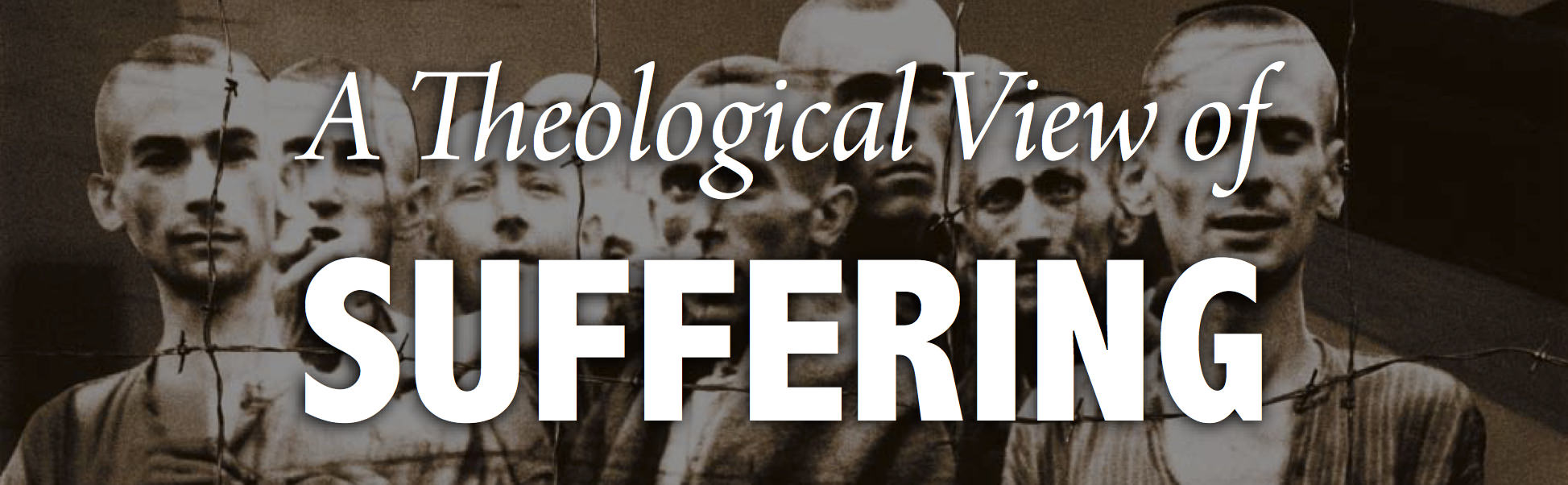
This is part of a sub-series of posts under a larger, loosely-united series entitled A Theological View of Suffering.


I have been writing some reflections on Nicholas Wolterstorff’s Lament For A Son. One of many elements of the book that I appreciated was Wolterstorff’s emphasis on the “demonic awfulness” of death (p. 54).

All too often, I think that Christians can lapse into a very naturalistic worldview where we say things like, “death is just a natural part of life.” We say this to help bring perspective to our circumstances, and in the sense that, yes, all humans die, this statement is true.

But it is decidedly untrue in the sense that death is not a part of God’s plan; it is not a feature of life as God envisioned it and is, thus, wholly unnatural. Death became a reality as a result of sin (this is, in fact, precisely what God warned Adam and Eve about). Paul describes death as the “last enemy to be defeated” and in John’s Revelation, Jesus is depicted in magnificent glory as the Living One who was dead but is now alive, and who holds the keys to Death and Hades: through His resurrection, Jesus has cracked open the tomb of Death and declared His mastery over this ancient enemy, and the Day will come when it will be no more.


From a Christian perspective, we can realize that Death does not have the last say because of the victory of Jesus and that the sting of death is minimized in the face of this reality, but Death is still an enemy. It is not something to be civilized or sanitized with platitudes about it being a “natural part of life”.

Referring to sentiments similar to this, Wolterstorff says:

“I find this pious attitude deaf to the message of the Christian gospel. Death is here understood as a normal instrument of God’s dealings with us. “You have lived out the years I’ve planned for you, I’ll just shake the mountain a bit. All of you there, I’ll send some starlings into the engine of your plane. And as for you there, a stroke while running will do nicely.”

The Bible speaks instead of God’s overcoming death. Paul calls it the last great enemy to be overcome. God is appalled by death. My pain over my son’s death is shared by his pain over my son’s death. And, yes, I share in his pain over his son’s death.” (67)

But, although death is awful, Jesus tells His disciples, startlingly, “Blessed are those who mourn, for they shall be comforted.” From the perspective of a society that champions youth, achievement, and happiness, and where people put on a smile and declare that things are “fine” while they are dying inside, this seems like a bizarre statement from Jesus. Why would He say such a thing?

“Who then are the mourners? The mourners are those who have caught a glimpse of God’s new day, who ache with all their being for that day’s coming, and who break out into tears when confronted with its absence. They are the ones who realize that in God’s realm of peace there is no one blind and who ache whenever they see someone unseeing. They are the ones who realize that in God’s realm there is no one hungry and who ache whenever they see someone starving. They are the ones who realize that in God’s realm there is no one falsely accused and who ache whenever they see someone imprisoned unjustly. They are the ones who realize that in God’s realm there is no one who fails to see God and who ache whenever they see someone unbelieving. They are the ones who realize that in God’s realm there is no one who suffers oppression and who ache whenever they see someone beat down. They are the ones who realize that in God’s realm there is no one without dignity and who ache whenever they see someone treated with indignity. They are the ones who realize that in God’s realm of peace there is neither death nor tears and who ache whenever they see someone crying tears over death. The mourners are aching visionaries.

Such people Jesus blesses; he hails them, he praises them, he salutes them. And he gives them the promise that the new day for whose absence they ache will come. They will be comforted.

The Stoics of antiquity said: Be calm. Disengage yourself. Neither laugh nor weep. Jesus says: Be open to the wounds of the world. Mourn humanity’s mourning, weep over humanity’s weeping, be in agony over humanity’s agony. But do so in the good cheer that a day of peace is coming.” (84-86)

Death is awful. It is an enemy, and it should drive us to mourn. But as Christians, we mourn with the knowledge that the days of death are numbered, and the Day will come when mourning will be no more.

Death is awful. It is an enemy, and it should drive us to mourn. But as Christians, we mourn with the knowledge that the days of death are numbered, and the Day will come when mourning will be no more. Share on X

Scripture Is Like The Ocean

Scripture is like the ocean.

People appreciate the ocean at all different levels of depth:

  • For some, simply seeing the beautiful array of blue colors in the water and being near the waves is enough. Some take vacations to the beach to be near the water, but never actually get into it.
  • Others get into the water and play in the shallow surf. As a non-swimmer, this is what I like to do when traveling to the beach: I spend hours on a bodyboard, riding the waves and making sure that I don’t get too deep.[1]
  • Some enjoy getting in deeper water, where they can swim in the ocean. They may use goggles and a snorkel to see all kinds of fish that aren’t visible from the surface of the water. Safely navigating deeper water requires skill, and hours of practice are necessary to develop that skill.
  • For those who have put in a lot of hours of training and receive certification and have access to the right equipment, scuba diving allows you to go even deeper, and make all sorts of discoveries that most of us will never get to see in person.
  • And for the very, very few who have incredibly specialized training or, perhaps, VIP access to those who do, a trip in a deep-sea submarine allows glimpses of all sorts of amazing things near the ocean floor. Even so, the reality is that the vast majority of the ocean remains unexplored.[2]


The doctrine of the perspicuity of Scripture basically holds that you don’t have to be a theologian or scholar to understand the Bible’s teaching on salvation: in His Grace, God has made the revelation of His will clear enough for us to understand. I believe that this is true, but at different times in my life, I have heard a more simplistic version of this doctrine that I do not believe to be true: that Scripture is easy to understand.

I have basically spent my adult life studying Scripture and seeking to understand it better. I have learned so much doing so, and I understand it so much better than I did twenty, ten, or even five years ago. But the better I come to understand the Bible’s teachings, the more clearly I realize that I will never fully understand it.

In one sense, that is incredibly frustrating; you are pursuing a goal that you know you will never obtain. Furthermore, as you learn more, you uncover more and more things that you don’t know; paradoxically, the learning process seems to reveal your own ignorance in exponential ways.

Yesterday, though, it struck me: Scripture is like the ocean.

Yes, it is vast and mysterious, and in our human limitations, there are areas that we will never explore, indeed, huge territories of which we are totally ignorant. But also like the ocean, you don’t have to be in a deep-sea submarine to appreciate it:

  • We can admire its beauty—the powerful stories it shares, the moral vision it puts forth, and the revelation of the nature of God through Jesus—even from a distance.
  • We can also wade into the shallow waters of Scripture, and clearly and safely enough, learn how God calls us to respond to His work in the world, how we can receive His grace, and how we can live as His children.
  • It takes more work, but we can go deeper. We can dive in and swim, learning about biblical history and biblical genres. Tools like concordances, Bible dictionaries, and commentaries are like snorkels that help us to see things that weren’t visible on the surface.
  • Like scuba diving, a relative few are able to put in a lot of hours of training. That training involves all sorts of elements—learning biblical languages, studying ancient culture and history to learn about the contexts in which Scripture came to be, reading about Christian interpretation of Scripture and doctrine throughout the centuries, etc.—and with the new skills it provides and with access to the right equipment, new frontiers for personal learning and discovery are opened up.[3]
  • And for the very, very few, who have been gifted with brilliant minds and have devoted themselves to decades of study, occasionally new discoveries (or, more accurately, the discovery of things that were once known, but had been forgotten or lost over the years) are made, and our collective understanding is expanded. Like with those who plumb the ocean depths in a submarine, these sorts of discoveries may be inaccessible to us in a first-hand way, but we can still receive benefits from what is learned.

I do not believe that every Christian is called to learn Hebrew and Greek, to understand how the creation story of Genesis compares to those of Israel’s neighbors in the Ancient Near East, or to be able to explain textual criticism. In fact, Paul’s teaching in 1 Corinthians 12 about how Christians are all part of the Body of Christ and how we have different roles and perform different functions would seem to speak directly against the notion that all of us are supposed to be biblical scholars. God has gifted us in different ways and expects us to use our gifts to His glory, but not everyone has the gift of learning Hebrew and Greek (especially after the first few years of life!).

However, that reality is not an excuse for a lack of study or a sense of complacency. We have different aptitudes and different opportunities, so of course, we won’t all interact with the biblical ocean in the same way. But the call of Christian discipleship prompts each of us to stretch ourselves and gradually go deeper so that we can better understand what God has revealed to us, rather than to remain all of our lives where we are comfortable. Put differently, not all Christians are called to be scholars, but all are called to be students.

Not all Christians are called to be scholars, but all are called to be students. Share on X

That is a challenging process. It takes a lot of work and it can be disconcerting, but it is also valuable and wonderful.

Scripture is like the ocean.

It is beautiful and comforting, but also vast and mysterious. We will never fully explore or understand it, but we will find unsettling and thrilling adventure in our lifelong exploration of it, and untold blessings at each new level of depth.


[1]  Did you know that I can’t swim? I’m not sure if I’ve ever mentioned it on The Doc File. This is a great source of shame for me, and I am determined to remedy this.

[2]  Andrea Mustain, “Mysteries of the Oceans Remain Vast and Deep,” Live Science, June 8, 2011.

[3]  For what it’s worth, in this extended metaphor I would consider myself to be a novice scuba diver.

Jimmy Allen (1930-2020)

I was saddened to hear that Jimmy Allen, well-known evangelist and long-time Bible professor at Harding University, passed away early yesterday morning. He had been in poor health for some time, so his passing was not a surprise, but still, I feel that the world has been made a dimmer place by his absence.

Allen was best known as an evangelist, and specifically, was a revivalist in the style of Billy Graham. In the 1960s and 1970s, he held a series of citywide gospel meetings, preaching to thousands and thousands in coliseums and sports stadiums. It is estimated that his evangelistic efforts led to over 10,000 baptisms.

Within the Harding community, however, Allen was also well-known as a Bible professor, and it was in that role that I knew him best. Dr. Allen was one of three absolutely outstanding Bible teachers that I had at Harding who made a profound impact upon my life (another was Neale Pryor, who I wrote about after his passing in 2011). By the time I came to Harding in the early 2000s, Allen’s style of fiery preaching was not popular with college students, but he seemed to be universally loved by those who had him as a teacher, and this despite the fact that he was notorious for rarely giving out A’s (the running joke was that the Apostle Paul couldn’t swing better than a B+ in Allen’s Romans class).

When I took Allen’s Romans class (and, also, when I read his autobiography, Fire In My Bones), I learned so much. Here are some lessons that have stayed with me:

Burden for the Lost

The driving passion of Jimmy Allen’s life was telling people about Jesus. He did not hide the fact that he had lived a prodigal sort of life before giving his life to Christ, but once he made Jesus the Lord of his life, he was obsessed with telling others about Him. There are so many stories of Allen taking advantage of “captive audiences” (friends in his fishing boat, even hitchhikers in his car!) and converting them to Christ. Allen didn’t consider himself to be a preacher (he would say, “I’m not a preacher, I’m a school teacher!”), but he felt that it was his mission to share his faith and it was unfathomable to him that so many other Christians didn’t seem to feel the same way.

Biblical Interpretation

I well remember an idea that Allen repeated often:

“You don’t learn anything about a Bible subject by reading a verse where it is not mentioned.”

This, perhaps, seems obvious, but people neglect this sound advice all the time. For example, if you want to know what baptism accomplishes, you need to read the various passages that talk about baptism and what it does. It is poor biblical interpretation to read passages that don’t mention baptism and then infer ideas about baptism from its absence.

Believing the Best of Others

I don’t remember the specific context, but it was in his Romans class that Allen said these words that I’ll never forget:

“If I hear something bad about someone, I never believe it. If it comes to the point that I have no choice but to believe it, I do not delight in it.”

These words have become a standard for my life. I do not always abide by them perfectly, but this is the goal that I seek. In an increasingly graceless cancel culture that pounces on the misdeeds of others and seeks to write them off, these words obviously represent a different path, but I believe it to be a path of profound wisdom.

Continual Learning

In Fire In My Bones, Allen shares several areas in which his views have changed over the years. He introduces that chapter with these words:

“A brother who says, “I haven’t changed any of my Biblical views in the last twenty five years,” has not had his head in the Bible. Furthermore, he would make a stagnant, mosquito-infested, mud hole look like fresh water! In teaching others, we are continually asking them to change from error to truth. We should be willing to practice the same.” (201)

This idea has played out in my own life: the more I study Scripture, the more my understanding of it grows. Some beliefs are anchored more deeply, others are nuanced and refined, and still others are changed significantly, as I learn new things that I didn’t know before. Like Allen, I am deeply suspicious of those who hold their never-changing ideas up as some sort of badge of pride.

Hope of Resurrection

In his younger days, Allen was an impressive athlete. I remember he used to tell us that when he was in college, he could run the 100-yard dash in 10 seconds flat, and there are all sorts of stories about his exploits on faculty teams in intramural sports. When I had him as a teacher, he was in his 70s, but I would still see him jogging outside.

In Romans class, I well remember his exposition of Romans 8.18-25, and his discussion of the resurrection body. Well aware of his own decaying body that no longer could do the things it once did, he eagerly anticipated “the redemption of our bodies” (v. 23), and the splendid and powerful body that he would have post-resurrection. His emphasis on bodily resurrection as the center of Christian hope was re-orienting for me, and remains influential in my own views; his teaching on the redemption of creation (from the same passage) was a significant influence in my understanding of eschatology that has developed over the last several years.

In addition to what I mentioned above, Allen was also noteworthy for his teaching on grace at a time when that had not been properly emphasized, his commitment to racial equality in a time of segregation and racial tensions, and his dedication to a nonsectarian Restoration ideal. In short, he was an impressive and inspirational man in a lot of ways.


For a man who was so active and had such a brilliant mind, I cannot imagine how frustrating the last few years must have been: from what I understand, he was confined to a nursing home, in declining physical and cognitive health.

Echoing the words of the Apostle Paul, we can truly say that for a man whose life was Christ, his death is gain: Jimmy Allen is now with Jesus, and he awaits the resurrection. But at the same time, we can lament, for death is never a good thing; it is not a part of God’s plan. It is an enemy, indeed, the last enemy to be defeated. But as Christians, we believe that it will be defeated, that our bodies will be raised, and our lowly, corruptible bodies will be transformed and become like Christ’s glorious, incorruptible body. Jimmy will enjoy that; he has long anticipated it.

Lament For A Son: Speaking Into Suffering

This is part of a sub-series of posts under a larger, loosely-united series entitled A Theological View of Suffering.


I have been writing some brief reflections on Nicholas Wolterstorff’s excellent Lament For A Son. One aspect of this little book that I really enjoyed was Wolterstorff’s discussion of what we should say to people when they are suffering.

Hopefully, many of us have heard and heeded the warnings to not be like Job’s friends, who sat with him in comfort for several days and then began to talk, only to make matters much worse. I would wager that anyone who has experienced significant pain and loss has also dealt with “miserable comforters” like Job’s friends.

And yet, while we should be careful about what we say to those who are suffering, we should not let the fear of saying the wrong thing prevent us from saying anything or from avoiding the suffering person altogether.

“What do you say to someone who is suffering? Some people are gifted with words of wisdom. For such, one is profoundly grateful. There were many such for us. But not all are gifted in that way. Some blurted out strange, inept things. That’s OK too. Your words don’t have to be wise. The heart that speaks is heard more than the words spoken. And if you can’t think of anything at all to say, just say, “I can’t think of anything to say. But I want you to know that we are with you in your grief.”

Or even, just embrace. Not even the best of words can take away the pain. What words can do is testify that there is more than pain in our journey on earth to a new day. Of those things that are more, the greatest is love. Express your love. How appallingly grim must be the death of a child in the absence of love.” (34)

While Wolterstorff offers grace to those who blurt our “strange, inept things,” he does offer a caution for the sort of thing that should not be said:

“But please: Don’t say it’s not really so bad. Because it is. Death is awful, demonic. If you think your task as comforter is to tell me that really, all things considered, it’s not so bad, you do not sit with me in my grief but place yourself off in the distance away from me. Over there, you are of no help. What I need to hear from you is that you recognize how painful it is. I need to hear from you that you are with me in my desperation. To comfort me, you have to come close. Come sit beside me on my mourning bench.” (34)

And, finally:

“Some say nothing because they find the topic too painful for themselves. They fear they will break down. So they put on a brave face and lid their feelings—never reflecting, I suppose, that this adds new pain to the sorrow of their suffering friends. Your tears are salve on our wound, your silence is salt.” (35)

This brings us back to what I said in the beginning. While care should certainly be used in what we say to those who are suffering, ignoring the sufferer out of concern that we may say something hurtful is, itself, a hurtful act. In many ways, it may feel like just being with those who are suffering and expressing our love for them is “the least we can do”, but in a very real sense, it’s also the most we can do.

It reminds me of a Swedish proverb that I have come to love: “Shared joy is a double joy; shared sorrow is half a sorrow.”

Increasingly, I have come to realize how much we live in a society that seeks to avoid and minimize death as much as possible. In such an environment, the sort of meaningful presence that Wolterstorff suggests does not feel natural, and is something that we may be tempted to avoid. But as followers of Jesus, we must seek to “bear one another’s burdens” (Galatians 6.2); we must speak into the suffering, whether we use words or not.

« Older posts Newer posts »

© 2026 The Doc File

Theme by Anders Noren — Up ↑