
The online journal of Luke Dockery

Category: Christianity (Page 30 of 64)

Spiritual Growth in the New Year

The beginning of a new year is a natural time for people to make goals and resolutions, and I think this is a good and healthy practice. If you are a resolution-making type of person, I hope you have included some spiritual goals in your plans for self-improvement in 2020.Ā Briefly, I wanted to point you to a few resources that I have used or am currently using to help with my own spiritual growth this year.

Bible Reading

Making a habitual practice of reading Scripture is a tried and true method of spiritual growth. Of course, Christians do not read the Bible just forĀ information,Ā but forĀ transformation:Ā God’s Spirit works within us to bring about His fruit in our lives.

This is the Bible Study Plan that we are using in 2020 at the Cloverdale Church of Christ. It only a few minutes of time each day, but by the end of the year, it will take you through the entire New Testament. This plan encourages you to find a partner with whom you will spend time each week discussing and reflecting on what you have read.

The Read Scripture app is another great way to develop the practice of reading your Bible daily. This can all be done on your phone, and in addition to providing a reading plan and the text of Scripture itself, it also includes awesome videos fromĀ The Bible Project that help to overview and explain each biblical book as well as other important biblical concepts. This is a really great tool for helping to increase your understanding of Scripture.

Prayer

Prayer is another incredibly important practice for people of faith. Speaking for myself, I struggle with doing as well at prayer as I do reading my Bible, and this is a growth area that I am trying to emphasize in 2020.

Prayer, In Practice is a really good and practical resource that I read through at the end of last year that I am planning to use heavily in the new year. It is a workbook that teaches different ideas and methods of prayer and then has you do those, right then. I highly recommend it.

Biblical Worldview

This last category may sound strange compared to the other two, but the basic point is this: in our current day and age, we are constantly bombarded by messages from TV, social media, print media, and other sources. We are ā€œplugged inā€ almost all the time. The vast majority of these messages are not from a biblical worldview, and rather than filling us with the peace that passes understanding, they fill us with fear, anxiety, and outrage.

I have become personally convinced that I need to be careful about the content of the messages I am taking in. The reality is that I am not a hermit and cannot cut everything negative out, but IĀ canĀ intentionally take in as much edifying, helpful, and faith-strengthening content that I can. Part of that is accomplished by reading Scripture, but finding helpful things to listen to while I drive or exercise has been a huge blessing for me, and I want to recommend two podcasts that I think you will find interesting and which will certainly help to keep you centered on a biblical worldview.

The Bible Project Podcast has been a game-changer for me. Tim Mackie has become one of my favorite biblical scholars, and I learn so much from the podcasts and videos. The general format of these is that they will tackle a biblical topic in several parts, but will focus specifically on what the Bible teaches, the important cultural and historical contexts of the teaching, and how these teachings affect our lives.

I started listening to the After Class Podcast more recently, but have really enjoyed it so far. Put out by three professors at Great Lakes Christian College (and thus, my Restoration Movement cousins), these guys bring a lot of biblical knowledge, a generous spirit of dialogue, and a lot of playful banter to the table. Their podcast tends to be topical as well, and they generally discuss the different issues from their own scholarly backgrounds (in Hebrew Bible, New Testament, and theology).

It is such a worthwhile practice to reflect on ways we need to improve in our lives and make plans to do so, and this is especially true when it comes to our lives as disciples of Jesus. May 2020 be a year of rich spiritual blessings for you.
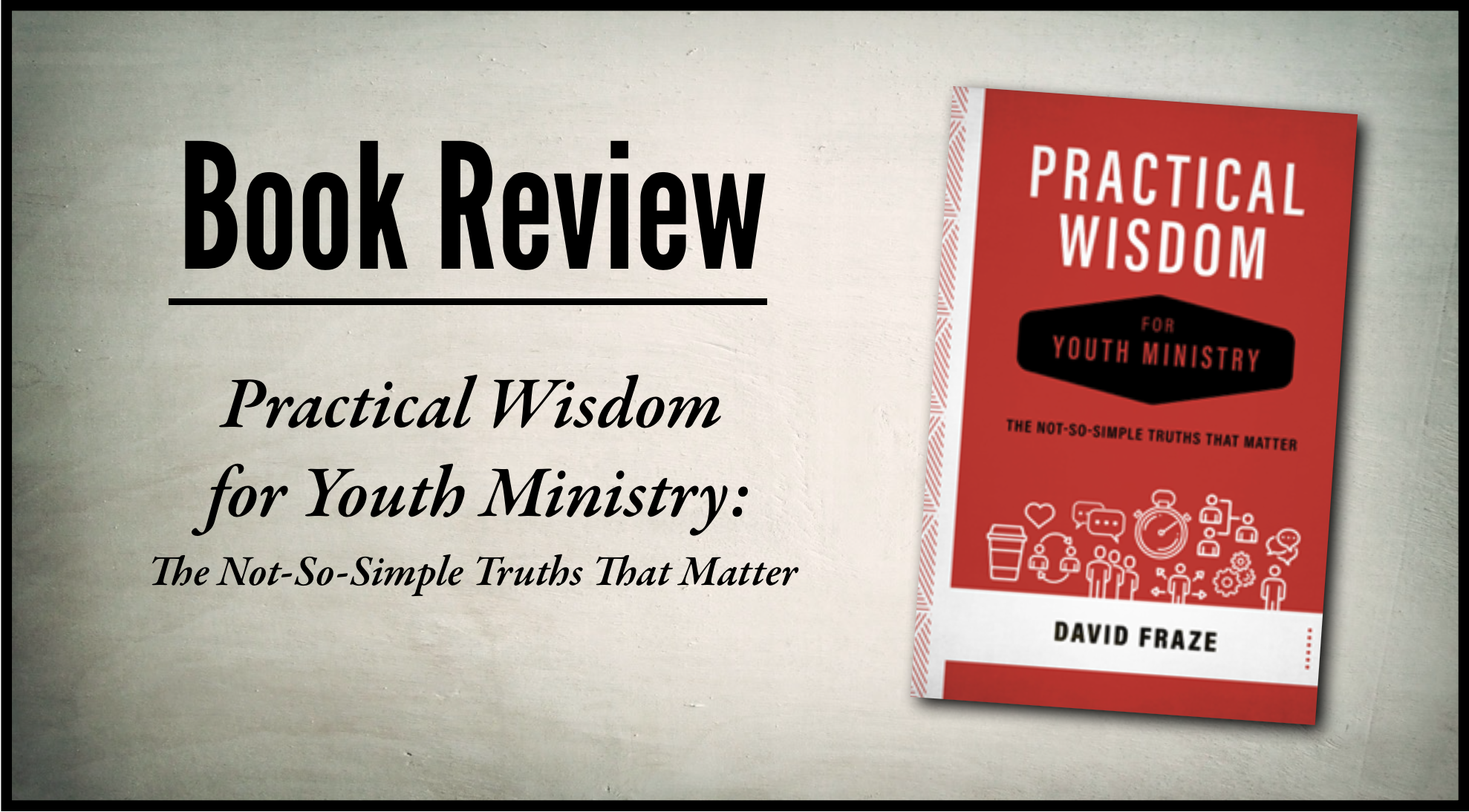
Book Review: Practical Wisdom for Youth Ministry

Recently, I was taking advantage of a sale from Leafwood PublishersĀ when I happened upon David Fraze’s Practical Wisdom for Youth Ministry: The Not-So-Simple Truths that Matter, and decided to buy it. I am so glad that I did! Simply put, this book was outstanding; it is the youth ministry book that I was planning to write one day, and now I don’t have to (which is good, becauseĀ Practical Wisdom for Youth Ministry is better than what I would have produced!).

The book is split into 22 chapters of different concepts and aspects of youth ministry that matter. It is a diverse list, including topics ranging from The Bible, to Office Hours, to Sexual Purity, to Volunteers, and beyond. Each chapter is short, and contains three sections: ā€œWhy?ā€, ā€œHow?ā€, and ā€œNow?ā€ In the ā€œWhy?ā€ section, Fraze discusses why a given topic matters, engaging the biblical text and providing theological justification for his point. In the ā€œHow?ā€ section, he then offers practical tips to improve your ministry in that area, and in the ā€œNow?ā€ section, he offers first steps for improvement moving forward.

There were a lot of ideas in the book that I found to be very helpful, but here were some of my favorite quotations:

ā€œAdult involvement is a key factor in measuring youth ministry success. In fact, adults are one of the main reasons students stay involved with the church after graduation.…To be most effective, youth ministers need to work to get the entire congregation involved in youth ministry.ā€ (43-44)

ā€œMarriage is intended to be a reflection of the intimate love, devotion, and sacrifice Christ has for the church. Therefore, a youth minister’s marriage is one of the greatest, if not the greatest, testimonies and tools he has to impact the lives of teenagers with the gospel of Jesus.ā€ (80)

ā€œRegarding Mondays after a weekend trip, most of the jobs your parents and adult volunteers work at expect that office hours be kept with excellence and responsibility. Regardless of whether they sponsored a weekend you retreat, they will be at work, on time, the next day. I expect the same type of office hours out of my employees. If it is not a day off, then get to work, on time.ā€ (101-02)

ā€œIf your students and adults do what you do, would there be any outreach happening in your student ministry?ā€ (121)

ā€œWhile important, the events of youth ministry in and of themselves do not possess the life-changing power often bestowed on them by youth ministers. The events possess life-changing power to develop and support relationships with God’s people. The relationships are what matter.ā€ (136)

It is really hard for me to overstate how much I enjoyed this book. While it does not offer an in-depth look at any of the topics included, it is an excellent introductory work for youth ministry. It would provide an invaluable resource to new youth ministers, but also is a helpful refresher for youth ministry veterans like myself, and also a way for me to reflect upon and improve in areas where I am weaker. I strongly recommend this book for anyone involved in youth ministry work (youthĀ ministers, youth ministry students, youth deacons and elders, youth volunteers, etc.).

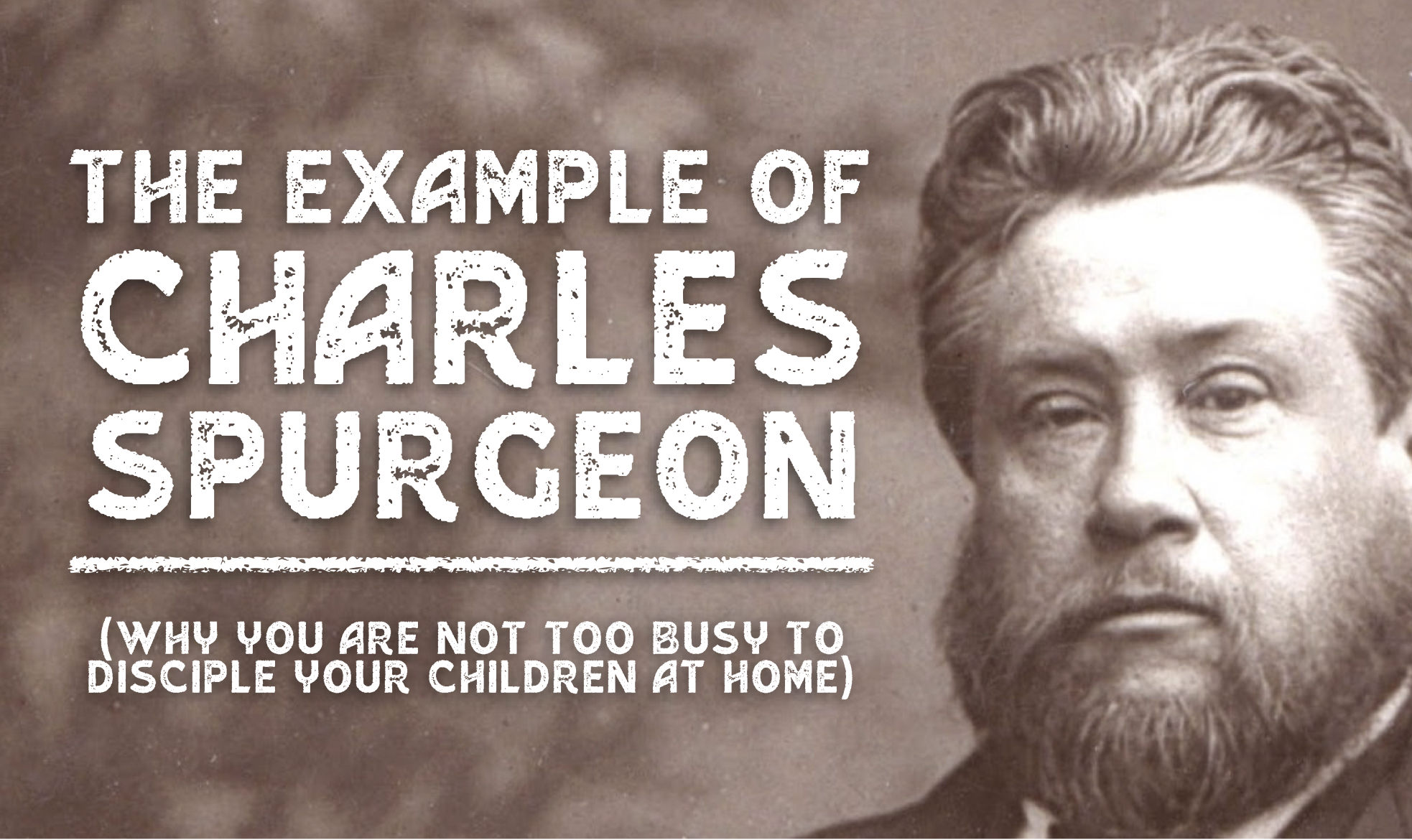
The Example of Charles Spurgeon (Why You are Not Too Busy to Disciple your Children at Home)

I write and speak frequently about the importance of parents intentionally working to pass on their faith to their children, because parents are the primary spiritual influences in the lives of their kids. Certainly churches and youth ministries should partner with parents and provide additional teaching and instruction in this regard, but the reality is that this should beĀ extra: the primary spiritual training a child receivesĀ shouldĀ come in the home.

That can be challenging, though, because we live in a time when everyone is busy, and extreme busyness can almost become a badge of honor. In addition to this being out of place with the biblical principle of Sabbath and the importance of rest, I think it is also problematic because it is frequently used as an excuse for why we do not do the things that we know we should. For example, Christian parents know that theyĀ should regularly read Scripture, pray, and talk about God with their children, but our lives are just so busy that these important tasks can get pushed aside by other urgent-but-significantly-less-important tasks.

But this excuse is just that: an excuse. The reality is that we can make time for the things we truly believe are important. I was reading a book a while back, and the example of the famous 19th-century preacher Charles Spurgeon impressed this reality upon me (the quotation below came from a footnote, but was so amazing to me that I wanted to feature it in this post):

Some may think Spurgeon lived in a much simpler era that afforded him more time to practice family worship than Christians would have today. I’ve conducted a great deal of PhD research on Spurgeon’s life and pastoral ministry, and can confirm this isn’t so. Spurgeon’s autobiography, as well as many first-hand observers, tell us that Spurgeon (1) Ā pastored the largest evangelical church in the world at that time (with more than six thousand active members), (2) preached almost every day, (3) edited his sermons for weekly publications, and thereby (4) produced (in the sixty-four volumeĀ Metropolitan Tabernacle Pulpit) the largest collection of works by any single author in English, (5) wrote an additional one hundred and twenty books (one every four months throughout his entire adult life), (6) presided over sixty-six different ministries (such as the pastors’ college he founded), (7) edited a monthly magazine (The Sword and the Trowel), (8) typically read five books each week, many of which he reviewed for his magazine, and (9) wrote with a dip pen five hundred letters per week. God gave Spurgeon an extraordinary capacity for work and productivity. And yet, despited the ceaseless, crushing demands of his schedule, at six each evening, setting aside a to-do list that few could match today, he gathered his wife, twin boys, and all other present in his home at the time for family worship.[1]

This is absolutely mind-blowing to me, and convicts me of at least two things: (1) I need to pray that God expands my capacity and increases my efficiency so I can do more work in His kingdom, and (2) if Charles Spurgeon could make time to pray and read Scripture with his children, then I certainly can as well. We all can—we just have to truly believe that it is important.


[1]Donald S. Whitney,Ā Family WorshipĀ (Wheaton, IL: Crossway, 2016): 73-74.

2019 Harding University Lectureship Recap

I am a little late posting this, but IĀ wanted to provide a quick recap of Harding University’s 96th annual Bible Lectureship, which was September 29-October 2. The theme for this year was ā€œFan the Flame—Acts: Renewed by the Power of the Holy Spirit.ā€ This was my third time to take part as a presenter at Lectureship (I was part of a panel for young ministers), but this was my first time to take part as a resident of Searcy, so it was nice to be able to enjoy the many sessions and also sleep in my own bed. šŸ™‚

I was privileged to attend several good lectures and classes, and here is a brief recap of what I went to:

  • Restoring an Acts 2 Church, David Young: David is the preacher at the North Boulevard Church of Christ in Murfreesboro, TN, and kicked off Lectureship with this keynote on Sunday night. This was a highpoint for me. I was reading Young’s book,Ā New Day: Restoring the Revolutionary Mission of Christ’s Church before and during Lectureship, and was really tracking with much of what he had to say. Short version: Churches of Christ (and churches across the spectrum) are declining in the US, and the solution is to get serious about making disciples and planting churches. Another helpful takeaway: as a church (or an individual, I guess), you can seek to be comfortable, or you can seek to be awesome; there is no overlap between the two. In addition to this keynote, I also attended Young’s two class sessions on Monday, which further covered similar material.
  • Devoted to the Apostles’ Doctrine,Ā Scott Adair:Ā Dr. Adair is on the Bible faculty at Harding, and recently has been developing a proposal for unity by identifying the central tenants of the Christian faith by mining the practice of baptism. In this lesson, he used the sermon material from the Book of Acts to highlight these same central beliefs: (1) Jesus Christ is Lord, Son of God; (2) A Belief in One God, who is Father, Son, and Spirit; (3) The Death and Resurrection of Jesus; (4) The Church as the Assembly of the Saints; (5) Forgiveness of Sins; (6) The Gift of the Holy Spirit; (7) Resurrection of the Dead. There is still more to work out beyond these beliefs (each has ethical demands that goes along with it), but I do think this is a helpful framework for trying to distinguish between preferences, important convictions, and foundational gospel matters.
  • Resurrection Preaching,Ā Fate Hagood: Fate is a preacher from California, and presented a really stirring message during Monday evening’s keynote session on the nature of resurrection preaching from the Book of Acts. While he said a lot of good things, his closing was incredibly powerful for me, as he used Paul’s reasoning from his block of teaching in 1 Corinthians 15 to encourage us that our labor for the Lord is not in vain.
  • Devoted to the Breaking of Bread,Ā B. Chris Simpson: Ā B. Chris has been a great speaker for as long as I have known him, and the depth and quality of his content just gets better and better. He presented a thoughtful and powerful lesson emphasizing that if we wish to resemble the Acts 2 church, we must be similarly devoted to food and fellowship, and the radical hospitality they practiced.
  • Intentional Connections with Parents and Teens,Ā Brent Wilhite:Ā Brent is one of the youth ministers at the College Church of Christ here in Searcy, and talked about current trends for teenagers both in the church and in the culture at large, and also tips for building resilient faith within teens. Brent had a lot of good content, and I felt like he could have gone for another thirty minutes.
  • Devoted to Fellowship, Harold Shank: I had heard of Harold Shank before, who is well known in Oklahoma Christian circles, but I had never heard him speak. I enjoyed his Tuesday night keynote, where he discussed why the early church was devoted to fellowship, and dreamed aloud what Acts 2 churches might look like in modern contexts.
  • Devoted to Prayer, Juan Meza: Juan was a former classmate of mine, and serves as the Latino Minister at the Church of Christ at White Station in Memphis. I thought he did a good job discussing how prayer builds our relationship with God, its power, and its purpose. It was all the more impressive to me because he was presenting in a second language!
  • A Dialogue on Two Views of Heaven, Dan Chambers and Ralph Gilmore: This was a discussion on the nature of eternal life: will eternity be spent with God in a spiritual heaven (ā€œup thereā€ somewhere), or will it God come to dwell with His people on a renewed earth (ā€œdown hereā€ somewhere)? On the whole, I was disappointed in this. The two men had not shared their notes ahead of time, and I thought this was a mistake as it lead to a disjointed conversation, where Chambers was presenting his perspective on a renewed earth, while Gilmore tried to anticipate Chambers’ arguments and refute them rather than actually present his own perspective on heaven. On the positive side, the two men repeatedly affirmed their love and respect for one another and were adamant that this was not a fellowship issue, or something to be divisive about. I appreciated that.
  • Artifacts and Acts, Part 3: The Flame in Jerusalem,Ā Dale Manor:Ā Dr. Manor is a treasure—a classically-trained archaeologist with a wealth of information about the ancient world, and I try to catch one of his lectures each year. This one focused on some archaeological finds and background information from Corinth, Ephesus, Jerusalem, and Caesarea.
  • This Is Us, Part 3: Spiritual Ancestry of Churches of Christ, Monte Cox:Ā Dr. Cox is another favorite of mine, and I thought he had some good things to say about the history of Churches of Christ and our future. He talked about the early days of the Restoration Movement (focusing on Thomas and Alexander Campbell and Barton W. Stone) and their strong emphasis on unity. In the 20th century, the (unofficial) list of essential doctrines grew longer and longer, and a unity movement became increasingly fractured. He concluded by posing the question: are Churches of Christ inĀ crisis,Ā or are we experiencing aĀ reorientationĀ toward Christ at the center?
  • Boldness In Adversity, Jesse Robertson: Jesse is a New Testament professor at Harding, and also a deacon at Cloverdale (where I work), and is someone I have come to deeply respect and appreciate. He closed out Lectureship on Wednesday by focusing on the boldness that we witness in the Book of Acts: it is something the apostles repeatedly prayed for and then evidenced in their lives. Jesse passionately implored us to pray for courage as we seek to tell the world about Jesus. As he pointed out insightfully: it takes one kind of courage to speak truth to your enemies; it takes another kind of courage to speak truth to your friends.

As always, Lectureship was a blessing for me and I greatly enjoyed it. Ā I wouldĀ highly recommend taking part in this next year if you are able!

Imitating the Devil

Introduction

A central Christian teaching is that for those who are in Christ, our lives are spent in the process of sanctification—in conjunction with our own efforts and desires, God’s Spirit works in us to transform our lives into conformity with that of Jesus Christ. In short, we seek to imitate Christ, and the Spirit helps us to do that.

While this is the goal, the sobering reality is that if we aren’t careful, we can find ourselves imitating someone very different—the Devil. That perhaps seems like a sensationalistic claim—what Christians actually set out to imitate the Evil One? ByĀ intention,Ā it may not happen, but byĀ action,Ā it happens all too frequently. Let me explain.

Titles, Not Names

It will be surprising to some to hear that the Evil One mentioned in Scripture isĀ nowhere given a name.Ā Instead, he is repeatedly given titles and descriptions: theĀ dragon,Ā theĀ serpent,Ā theĀ devil,Ā theĀ father of lies,Ā etc. Even Satan is not a name—in the original language, it is used with the definite article (ā€œthe Satanā€).[1]

What I think is helpful about realizing that this murky character is only described with titles is that these titles tell us something about his character—a character that Christians can emulate if we are not careful.

The Father of Lies

You are of your father the devil, and your will is to do your father’s desires. He was a murderer from the beginning, and does not stand in the truth, because there is no truth in him. When he lies, he speaks out of his own character, for he is a liar and the father of lies.

(John 8.44)

This one is pretty obvious: the Evil One is a liar. We see it in his deception of Adam and Even in the Garden, and we see it on a regular basis as he whispers to us that the ways God has laid out for us aren’t really theĀ best ways, or that we are too broken to be loved by our Creator and to be used by Him. He is a liar and the father of lies.

And here is the scary part: when we lie, not only do we fail to imitate Christ, but we are actively imitating the father of lies. Being people of integrity is such a fundamental characteristic of Jesus’ disciples that He specifically addressed it in the Sermon on the Mount (Matthew 6.33-37), but we easily resort to being people of evasion, partial truths, and outright dishonesty. When we do this, we may not be intentionally imitating the Devil, but in our lack of careful intention to be people of absolute integrity, we imitate him nonetheless.

The Devil

This one may be less obvious to us because we tend to associateĀ devilĀ with a red creature with horns and a pitchfork, but really, the Greek word that is translatedĀ devilĀ is Γιαβολος (from which we get our word diabolical), which means ā€œthe slanderer.ā€ Obviously, this term is also related to the notion of dishonesty, but slander is more specific. Slander is ā€œthe utterance of false charges or misrepresentations which defame and damage another’s reputation.ā€[2]

Interestingly, this same word is used in Scripture to describe people:

Their wives likewise must be dignified, not slanderers, but sober-minded, faithful in all things.

(1 Timothy 3.11)

But understand this, that in the last days there will come times of difficulty. For people will be lovers of self, lovers of money, proud, arrogant, abusive, disobedient to their parents, ungrateful, unholy, heartless, unappeasable, slanderous, without self-control, brutal, not loving good, treacherous, reckless, swollen with conceit, lovers of pleasure rather than lovers of God, having the appearance of godliness, but denying its power. Avoid such people.

(2 Timothy 3.1-5)

Depending on translation, this Greek word can be rendered as ā€œslanderersā€ or ā€œmalicious gossips,ā€ but the basic idea is clear enough: talking bad about people is diabolical. The Evil One is a slanderer. He is the Devil.

And here is the scary part: when we slander, when we talk badly or share untrue statements about people, we do not imitate Christ, but we are actively imitating the Devil. Being people who consistently speak in God-honoring ways is a huge challenge for followers of Jesus, and Scripture is full of admonitions regarding how we use our tongues and words (Ephesians 4.15; Colossians 4.6; James 3.6). This does not mean that we can never say anything negative about another person, but I do think it means that we should refrain from saying thingsĀ aboutĀ people that we wouldn’t sayĀ toĀ them, that we should make sure that what we say isĀ true,Ā and that we should make sure that what we say is said inĀ love.Ā 

The Satan

This one may be the hardest of all for us to see initially because we are so used to thinking ofĀ Satan as a name. But it is actually a title.Ā Ha satanĀ (×”Ö·×©ÖøÖ¼×‚×˜Öø×Ÿ) literally means ā€œthe adversaryā€ or ā€œthe accuserā€. It can be used in a general sense:

And the LORD raised up anĀ adversary against Solomon, Hadad the Edomite.

(1 Kings 11.14a)

The Angel of Yahweh is referred to this way:

But God’s anger was kindled because he went, and the angel of the LORD took his stand in the way as hisĀ adversary.

(Numbers 22.22a)

But when the term is used with the definite article (ā€œtheā€) before it, it specifically refers to the rebellious spiritual being who has set himself in opposition to the will of God. This is how he is described at the beginning of the Book of Job, as he brings the case of Job before God and stands as an adversary against Job, accusing him of possessing a love for God that is shallow and deficient. We see a similar characterization in the Book of Revelation, where the evil creature described as the great dragon, the ancient serpent, the devil, and Satan hurls accusations against God’s people day and night (Revelation 12.9-10). The Evil One is an adversary of God’s people, who lobs accusations against them.

And here is the scary part: when we oppose and accuse God’s people, we are not imitating Christ, but rather, are actively imitating the Satan. This is challenging for me. There are a lot of believers who are different from me in various ways. Some of these differences are significant, and at times it is tempting for me to magnify the differences and question the hearts and motives of people with whom I disagree. But this is dangerous spiritual ground to occupy. I am sometimes humbled by the words of Jesus in Mark 9.40: ā€œFor the one who is not against us is for us.ā€Ā I struggle at times to know how to apply these words, but I know that my perspective is often closer to that of the disciples than Jesus. And I know that I don’t want to be an accuser or adversary of God’s people. I don’t want to imitate the Satan.

Conclusion

This has not been an exhaustive post—there are other titles of the Evil One (like, for example, ā€œEvil Oneā€!) that we could look at, but I think the general point has been established. Rather than talking about an evil figureĀ named Satan, Scripture uses lots of titles toĀ describe this character. These descriptions let us know what he is like and what his motives are, and should also provide conviction for us that, if we are not careful, we can in a very real sense imitate the Father of Lies, the Devil, the Satan. For those of us who are instead called to be imitators of Christ, this obviously will not do.

Father of mercies,
Forgive us our sins and shortcomings.
May your Spirit,
Day by day,
Transform us into the image of your Son, Jesus Christ.
Amen.


[1]I don’t have issues with people usingĀ Satan as a name; I am just pointing out that this is not a name in Greek or Hebrew, and is not how biblical authors used it.

[2]https://www.merriam-webster.com/dictionary/slander

« Older posts Newer posts »

© 2026 The Doc File

Theme by Anders Noren — Up ↑