The online journal of Luke Dockery

Category: Culture (Page 14 of 14)

What Ails Baseball


In an article written yesterday, Hank Aaron, Major League Baseball’s All-Time Home Run King (that’s right, Barry Bonds doesn’t count) suggested that Braves rookie Jason Heyward can help “what ails baseball.”


Heyward, a five-tool rookie sensation who some are touting as the best Braves prospect since Aaron himself, can certainly help what ails the Braves—a lack of production from the outfield—but what about Hank’s comments regarding baseball as a whole?

The “ailment” that Aaron refers to is the growing concern in certain circles that there are too few African-Americans in the Major Leagues.

While I agree with Aaron that the emergence of a young African-American superstar like Heyward (and as a Braves fan, I certainly hope that he develops into a superstar) could encourage more African-American youths to play baseball, I wonder: how big of an issue is this? Is it necessary/important for ethnic groups to be properly represented in major sports? If so, shouldn’t we be concerned about the lack of Caucasians in the NBA? Shouldn’t the lack of Asian-Americans in the NFL be a cause for great alarm?

After all, it’s not the 1940s anymore, and thanks to Jackie Robinson, neither African-Americans nor any other ethnic group are being systematically excluded from the Major Leagues. So that begs the question: why are African-Americans choosing sports other than baseball?

There have been many proposed answers, from the inherent expense involved in playing baseball to the lack of inner city baseball programs to the overall decline in baseball’s popularity compared to other sports.

I think the most interesting theory that I’ve heard (which would also explain baseball’s general decline in popularity) is suggested by political science professor Diana Schaub. Schaub argues that baseball is an “acquired taste,” the love of which is best passed on from fathers to their children. The increase in the number of children (and especially African-American children) raised without fathers has led to a generation of children with no love for baseball.

I don’t know if Schaub has stumbled upon the answer or not, but I recommend the article; it’s a fascinating read.

In the meantime, through one Major League game, Jason Heyward is batting .400 with a home run (hit in his first career at bat) and 4 runs batted in. Here’s hoping that, at the very least, he can help with what ails my beloved Braves.

“An Eternal Oxymoron”

Here is a very good article on the ever-growing intersection between Christianity and pop culture.

I really liked the following excerpts:

“At this point in history, American evangelicals resemble the Israelites at various dangerous moments in the Old Testament: They are blending into the surrounding heathen culture, and having ever more trouble figuring out where it ends and they begin.

It’s always been a stretch to defend Christian pop culture as the path to eternal salvation. Now, they may have to face up to the fact that it’s more like an eternal oxymoron.”

The article is only a couple of pages long, and is well worth the time it takes to read. You’ll still have plenty of time to catch Dancing With The Stars.

A Titanic Joke

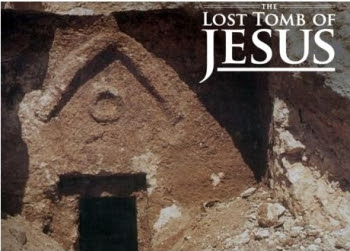
There has been a big uproar over the last few days about an upcoming documentary by filmmaker James Cameron which airs on the Discovery Channel this Sunday night and chronicles the discovery of the supposed tomb of Jesus of Nazareth. Cameron is famous for directing the highest-grossing film of all time, Titanic, which told the story of a big boat that sunk after a collision with an iceberg tore a gaping hole in it.

His new film, The Lost Tomb of Jesus, is somewhat similar, but this time, it’s Cameron’s unfounded theory that’s filled with holes.

Self-billed as the “Archaeological Discovery of the Millennium,” the documentary focuses on the 1980 discovery of a tomb in the Talpiot neighborhood of Jerusalem. This tomb contained ten ossuaries, which are basically limestone boxes that contain skeletal remains. Six of the ten ossuaries are inscribed with significant New Testament names, and according to the documentary, this supposedly proves it to be the family tomb of the Jesus of the New Testament.

I’m not really interested in going into great detail debunking the Cameron crew’s ridiculous claims in The Lost Tomb; that has already been done by people who are much more knowledgeable than I am, and there will be even more debunking after the documentary appears on TV.

I do, however, want to make a few quick observations that I’ve had about the Talpiot Tomb issue:

The “evidence” supporting Cameron’s claim is laughable.

Once again, I don’t want to go into great detail on this, but here is an example of the type of scientific reasoning used to back this theory:

One of the ossuaries has the name “Matthew” on it. The problem with this is that we don’t know of any person related to Jesus named Matthew. Rather than come to the explanation that a Matthew has no place in the family tomb of Jesus of Nazareth, and maybe this tomb belongs to some other Jesus, the Cameron bunch instead use this as evidence that the tomb must be authentic, because after all, Jesus of Nazareth did know a guy named Matthew! That must prove it!

Similarly, one of the boxes has a variation of the name “Mary” on it. DNA evidence has shown that this person was not related to the person in the “Jesus” ossuary. So what conclusion does the documentary make? This “Mary” must be Mary Magdalene, who we now plainly see must have been Jesus’ wife! Never mind the fact that, outside of fictional novels, there is no evidence that Jesus was ever married!

According to the circular logic of the Lost Tomb theorists, the presence of an unrelated Mary in the tomb proves that she is the wife of Jesus, and the fact that the now-proven wife of Jesus is found in the tomb proves that it really is the authentic tomb.

Don’t worry; it’s not just you. It really doesn’t make any sense.

This is too big to just ignore.

The implications of the “discovery” are massive: if the skeletal remains of the Jesus of the New Testament were to be found, it would show the Resurrection to be a sham. And as the Apostle Paul pointed out, if Christ was not raised from the dead, then our faith (and, consequently, Christianity) is worthless.

I’ve heard some people say that this isn’t really an issue, because people who really believe aren’t going to be shaken by such pseudo-science and will reject the claims, while people who don’t believe are just going to use it as another reason for why they don’t.

I agree, but what about people who haven’t made up their minds yet? There are undoubtedly some people who won’t give Christianity an honest hearing because they have been turned off by “scientific proof.” I mean, just look at the repercussions of The DaVinci Code—and it even claimed to be a work of fiction!

As Christians, we can’t just completely ignore this. Just because we recognize it as foolishness, doesn’t mean that other well-meaning people won’t be deceived by it.

James Cameron’s ability to annoy me has reached new heights.

I accounted for about $7.50 of the $600,000,000+ that Titanic roped in, and honestly, I didn’t regret it at the time. Sure, the first half of the movie was painful, dominated by a cheesy love story, and yes, I did cheer when the Leonardo DiCaprio character finally froze to death, but the whole sinking ship part was pretty cool.

Of course, then the movie received a bazillion awards, James Cameron was all over TV being full of himself, Earth’s female population under the age of 16 became Leonardo-obsessed, and I got really tired of the movie.

But none of that compares to my annoyance with the man now.

See, if James Cameron was actually seeking truth, or even if he hated Christianity and really wanted to disprove it somehow, I could accept him making the documentary. I still wouldn’t like it, but I could accept his motives. But I don’t think he’s doing it for either of those reasons; it’s all about recognition and money. If it wasn’t, he wouldn’t be releasing a Resurrection-denying documentary in the middle of Lent, a month before Easter, and we would be hearing more about the actual archaeologists who worked on the project rather than just the man who made the movie about them.

Making a documentary that denies the Resurrection and unleashing Celine Dion’s My Heart Will Go On on an unsuspecting world. Yep, this guy is going to have a lot to answer for.

Double Standards

Double Standards are, by definition, unfair, which I suppose is why most people don’t like them.

I, too, dislike double standards, though I’ll admit that sometimes, my ire towards injustice is slow to awaken when I belong to the party that is benefitting from it. For example, when I was at Harding, I was never too concerned about violating curfew, because I knew that since I was a guy, it wouldn’t be that big of a deal. Had I been a girl, it would’ve been a different story; I would’ve been in trouble.

That was a double standard, but since I was a guy, it didn’t bother me too much.

Former NBA star Tim Hardaway’s statements this past week have made me think about a couple of double standards concerning homosexuality. For those of you who aren’t familiar with Hardaway’s comments, he said the following during a radio interview after being asked how he would deal with a gay teammate:

“First of all I wouldn’t want him on my team. Second of all, if he was on my team I would really distance myself from him because I don’t think that’s right and I don’t think he should be in the locker room when we’re in the locker room.”

When the interviewer was critical of Hardaway’s remarks, and referred to them as bigoted and homophobic, Hardaway responded:

“Well, you know, I hate gay people. I let it be known I don’t like gay people. I don’t like to be around gay people. I’m homophobic.”

The fallout following Hardaway’s words has been considerable: he was removed from All-Star Weekend activities, barred from future NBA appearances, and fired from his job as the Chief Basketball Operations Advisor of the CBA Indiana Alleycats. And he’s been publicly condemned by just about everyone.

First off, let me start of by saying that I don’t condone Hardaway’s words. While I can understand his concerns about undressing and showering around homosexuals in the locker room, he was way overboard in saying that he hates them. Even if his hatred stems from a belief that homosexuality is wrong, the Bible is pretty clear that we’re not supposed to hate anyone.

That being said, the degree of the outcry against Hardaway serves as evidence of the politically correct culture that we live in.

What I mean is this: if he had made basically the same statement, but about Christians instead of homosexuals, do you think he would face the same consequences? No way.

The truth is, there are some things in our society that are okay to publicly criticize without fear of serious repercussions, while other things like homosexuality (or Islam, or whatever is politically correct at the time) are completely taboo.

That’s a double standard, and I don’t like it.

The second double standard hits a little closer to home for me.

As a Christian, I absolutely believe that homosexuality is wrong, but the Tim Hardaway interview reminds me that sometimes we (Christians) tend to look at it from a skewed perspective.

From the way many Christians talk and act, you would think that homosexuality is some sort of unforgivable sin and that gay people are a group to whom we owe nothing. Some people who claim to follow Christ even seem to believe that His command to love our neighbors doesn’t apply to homosexuals, and live their lives in ways that could be summed up by Hardaway’s comments.

We’re understanding with people who lie, or are greedy, or even steal or commit adultery, but we treat gay people as if they are irreedemable, as if there is no hope for them.

That’s also a double standard, and I don’t like it either.

The truth is that all forms of sin—including homosexuality, but also including things like lying, gossiping and adultery—separate us from God, and make us deserving of death.

Thankfully, Christ was willing to experience death in our stead, and bridge the gulf that our sins had created between us and God. That death gives the hope of redemption to liars, gossips, thieves and adulterers. Homosexuals too.

Home Sweet Home Alabama


My wife’s great-grandmother passed away earlier this week, so Thursday morning, Caroline and I drove 10 hours to Huntsville, Alabama for the funeral.

With both Alabama and Arkansas being southern states and also located fairly close to each other, many people, especially over-generalizing Yankees*, would probably think that they were very similar. I am sure there are many similarities, but there are also some glaring differences, and I’m going to briefly mention a few I noticed over the past few days.

1. There are way more southern accents in Alabama. Now, Fayetteville might be somewhat of a high-brow locale compared to much of the rest of Arkansas, but I’ve also lived in more rural Searcy, Arkansas, and there is still no comparison: the southern twang is much more prevalent in Alabama.

2. Apparently, there are Old School, non-Supercenter Wal-Marts in Alabama. In my part of Arkansas at least, this is not the case.

3. Funerals are way different. Not only was the funeral at a local funeral home instead of the church that Caroline’s great-grandmother attended, but the family also sat up on a stage off to the side, out of sight of everyone else. Once the funeral was over, a curtain closed over the stage; I guess so the family could have privacy while looking at the casket. Different.

4. The Alabama/Auburn rivalry is way intense. Being from Arkansas, where the Razorbacks get top-billing in everything, this is completely foreign to me. I think it’s neat having the vast majority of the state unified in support of a team, but coming from a state with no real rival, the intense rivalry thing seems pretty cool too.

5. According to a sign we passed, in Alabama, coon dogs are apparently a very, very big deal. At least, more so than they are here.

*Yes, the ironic word choice was intentional.

Newer posts »

© 2026 The Doc File

Theme by Anders Noren — Up ↑







