The online journal of Luke Dockery

Category: Family (Page 6 of 13)

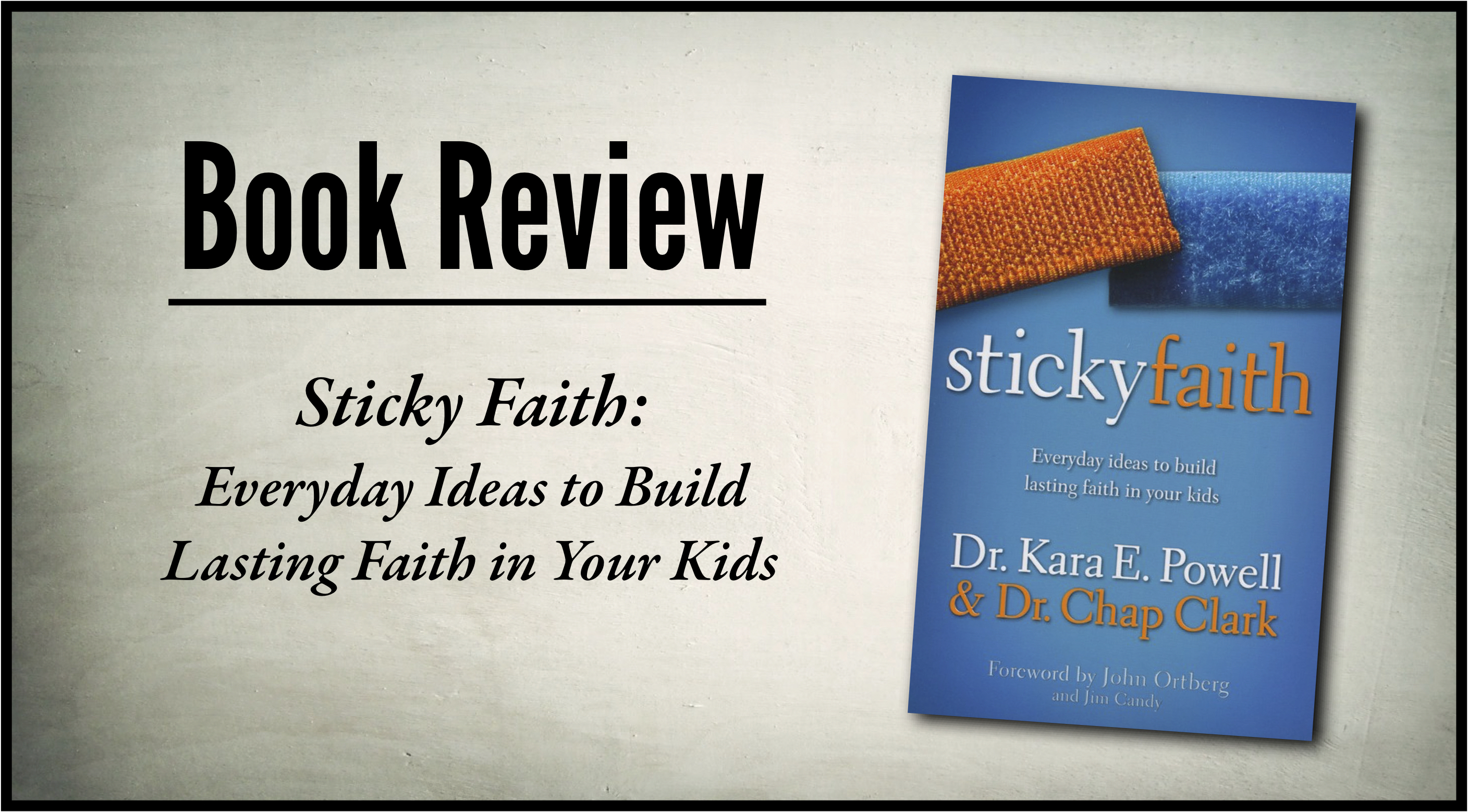
Book Review: Sticky Faith

I have just finished reading Sticky Faith: Everyday Ideas to Build Lasting Faith in Your Kids for the second time. Looking back, I was surprised that I hadn’t reviewed it here on my blog previously (though I have referenced it several times), so I thought I would quickly do so today. Quite simply, Sticky Faith is an outstanding book, and it’s one that I think all parents should read. I’m actually co-teaching a class on it right now at church, and along with 2-3 other sources, it forms the core of my youth ministry library.

Sticky Faith is written for parents (though there are other versions for youth workers and students), and is all about helping you to instill a lasting faith (or a faith that “sticks”, hence the title) in your children. And I’m sure there are a lot of books like that, but what I really like about Sticky Faith is that (1) it is based on extensive research, and (2) it offers incredibly practical suggestions of tangible things you can do to help faith development in your kids.

Like any book, there are some ideas and suggestions in Sticky Faith that I disagree with, and I’m sure it will be that way for you too. But that doesn’t change the fact that, overall, it is an incredibly helpful resource for Christian parents.

Here are some of my favorite quotations from the book [my comments are added in brackets]:

“…Our conclusion is that 40 to 50 percent of kids who graduate from a church of youth group will fail to stick with their faith in college…only 20 percent of college students who leave the faith planned to do so during high school. The remaining 80 percent intended to stick with their faith but didn’t.” (pp. 15-16) [There are a lot of other alarming statistics which they gather from their research. These helpful numbers describe a big problem, which the rest of the book then sets about trying to address.]

“How you express and live out your faith may have a greater impact on your son or daughter than anything else.” (p. 25)

“…A performance-based Christianity can last only so long.” (p. 36)

“The greatest gift you can give your children is to let them see you struggle and wrestle with how to live a lifetime of trust in God.” (p. 46)

“If I had to choose between living out my faith or talking about my faith in front of my kids, I’d choose the former every time. But I don’t have to choose. And neither do you. We can do both.” (p.70)

“The closest our research has come to that definitive silver bullet is this sticky finding: for high school and college students, there is a relationship between attendance at church-wide worship services and Sticky Faith.” (p. 97) [Parents, this should make you think twice before missing church for a hunting trip, or a baseball tournament, or some other family outing. It matters. Youth ministers, this should make us think twice before frequently removing our youth groups from our congregational worship gatherings. A big part of being the Body of Christ is being present with the Body of Christ.]

“Over and over, students have told us that the first two weeks at college are when they make key decisions about drinking and other high-risk behaviors, right along with choosing whether to go to church or to a campus ministry.” (p. 151)

“It’s okay to go through periods of doubt and distrust and disillusionment. It’s okay to go through periods of questioning and confusion. Don’t run away from them. At the same time, don’t go off the deep end. Do the intellectual and spiritual soul searching within the context of a secure community of people who truly love you.” (p. 172) [This quote actually came from a student who was part of the research study—a lot of wisdom here!]

“But [kids] soon come to know that faith is ultimately meaningless unless they choose it for themselves.” (p. 179) [Yes. We must own our faith, rather than simply inherit the faith of our parents.]

“Especially during their lowest times, your kids need to know that, above all else, you are there for them, regardless of what they are going through.” (p. 180)

“If your family has served Christ through much of your child’s life, the seeds you have planted are potent and real.” (p. 187)

I could go on and on—large sections of my copy of Sticky Faith are highlighted or underlined—but these quotations should give you an idea of what the book is like. In short, I would recommend it to any Christian parent, or anyone who works closely with teens.

When Faith Gets Tough, Part 2

In case you missed Friday’s post, you should go back and read it first.

An Older Story

So now you’ve heard my story, but I have another story I want to tell you. It’s a much older story; it happened about 2,600 years ago. And if you’ve grown up going to church, you’re probably pretty familiar with the story of Shadrach, Meshach, and Abednego already. You’ll find it in your Bibles in the Book of Daniel, chapter 3.

To start with, you need to know that Shadrach, Meshach, and Abednego were young Hebrew nobles who lived in the city of Jerusalem. These young men were faithful servants of God, but unfortunately, they lived in a time when most of the people around them were not faithful, and as a result, God allowed Jerusalem, His city, to be attacked and destroyed by the Babylonians.

When that happened, Shadrach, Meshach, Abednego, and a lot of other Hebrews were taken off into captivity in Babylon.

And this would have been a really difficult time for these young men. They would have had a lot of questions going on in their minds, because when Babylon conquered Jerusalem and destroyed the Temple, it struck at the very heart of the identity of the Hebrew people.

You see, as a Hebrew, your identity was tied up in the fact that God had made a covenant with Abraham that his descendants would become a great nation. And throughout history, God had shown protection for His people time and time again. He had rescued them from Egypt, and helped them to conquer the land of Canaan, and defeat nations more powerful than they were; over and over again, God came and saved His people.

With God on their side, the Israelites felt confident that they would never be conquered, and this feeling was reinforced by the presence of the Temple, God’s house, being in Jerusalem. The people of Jerusalem were especially confident that their city would never be overthrown, because surely God would never allow His Temple to be violated.

Now, certainly God had warned the Israelites that if they were unfaithful to Him they would be punished. And in the centuries leading up to the downfall of Jerusalem, the people were unfaithful—they didn’t obey God’s commandments and they worshipped other gods. But despite these warnings, the people couldn’t really bring themselves to believe that these bad things could happen to them (kind of like how we struggle to believe that we will suffer and go through hard times as Christians, even though the Bible tells us just the opposite!).

Regardless of their unbelief, that’s exactly what happened: the armies of Nebuchadnezzar came and conquered the city, and the best and brightest of the young Hebrew elite were dragged off to Babylon. And God stood by silently.

So this is the situation that Shadrach, Meshach, and Abednego find themselves in when they are taken into captivity to Babylon, and you can imagine some of the questions that must have been going through the minds of the Israelites at the time: why did God allow this to happen? Was He not powerful enough to stop it? Does He not care about us anymore?

These are important questions, and they’re not so different from the questions that run through our minds today when things get tough. Why did God allow might sweet Kinsley to have this horrible disease? Was He not powerful enough to prevent her from getting it? Does He not care about me, or about her, anymore?

In Daniel 3, King Nebuchadnezzar of Babylon decides to have a giant statue of gold built—90 feet high. Furthermore, he makes a decree that whenever music is played, all the people are supposed to stop whatever they’re doing and fall down and worship this golden statue, and anyone who fails to do so will immediately be cast into the furnace of fire and burned alive.

But there’s a problem: Shadrach, Meshach, and Abednego worship the true and living God, and they’re not about to fall down and worship some statue! Some of the Babylonians go to Nebuchadnezzar and tell him that the three young men are refusing to worship the statue. This enrages Nebuchadnezzar and he calls to have them brought before him and he threatens them:

Nebuchadnezzar responded and said to them, “Is it true, Shadrach, Meshach and Abed-nego, that you do not serve my gods or worship the golden image that I have set up? Now if you are ready, at the moment you hear the sound of the horn, flute, lyre, trigon, psaltery and bagpipe and all kinds of music, to fall down and worship the image that I have made, very well. But if you do not worship, you will immediately be cast into the midst of a furnace of blazing fire; and what god is there who can deliver you out of my hands?”

(Daniel 3.14-15)

 And I absolutely love the way the three friends respond to the king:

Shadrach, Meshach and Abed-nego replied to the king, “O Nebuchadnezzar, we do not need to give you an answer concerning this matter. If it be so, our God whom we serve is able to deliver us from the furnace of blazing fire; and He will deliver us out of your hand, O king. But even if He does not, let it be known to you, O king, that we are not going to serve your gods or worship the golden image that you have set up.”

(Daniel 3.16-18)

Did you hear what Shadrach, Meshach, and Abednego just said? A lot of times in this story I think we just pass over this without noticing it…we think that the three friends make an easy decision to refuse to worship the statue because they know that God is going to protect them.

But that’s not what these verse say. Listen again: “Our God whom we serve is able to deliver us from the furnace of the blazing fire; and He will deliver us out of your hand, O king. But even if does not, let it be known to you, O king, that we are not going to serve your gods or worship the golden image that you have set up.”

Shadrach, Meshach, and Abednego are confident that God can save them, and they’re hopeful that He will save them, but they don’t know that He will. And this is what makes their faith so impressive—they’re determined to be faithful to God even though they don’t know exactly what’s going to happen to them!

Remember, life in captivity in Babylon was an uncertain time for God’s people. God hadn’t protected them from Babylon; He had allowed them to be capture. And now, in these uncertain circumstances, Shadrach, Meshach, and Abednego find their lives threatened, and basically, they don’t care: “King Nebuchadnezzar, we serve God and Him alone, no matter what. No matter how bad things get. We’re not gonna bow down and worship your statue no matter what you do to us.”

Of course, we should mention briefly the rest of the story: as it turns out, God does protect Shadrach, Meshach, and Abednego, and even though the furnace burns 7 times hotter than normal, they’re not burned up, and as a result of the whole incident, Nebuchadnezzar glorifies God and changes the law.

But just because the story has a happy ending, I don’t want us to lose sight of the fact that Shadrach, Meshach, and Abednego didn’t know that everything would be okay. They still had to choose to be faithful to God despite uncertainty, despite the suffering.

Tough Faith

As a youth minister, I have a lot of teenagers who look up to me, but I actually look up to three teenagers, because the faith of Shadrach, Meshach, and Abednego blows me away. They were slaves in a foreign land and their very lives were threatened, but when times got tough, so did their faith.

I think God wants us to develop a tough faith. A faith that, regardless of whatever obstacles or circumstances we face, is determined to trust in Him no matter what happens.

Look, I don’t know what your life is going to look like. I don’t know if you’ll ever have to literally risk your life in order to follow God. I don’t know if you’ll ever deal with the heartbreak of miscarriage or the daily struggle of having a child with a horrible disease. I don’t know if you’ll have to struggle with some horrible disease yourself, or if you’ll have to fight to save your marriage.

I’m pretty confident though that at some point, things are going to get really tough for you. And I don’t say that because they’ve gotten tough for me, but because the Bible promises that it will happen!

So the real question is, when times get tough for you, will your faith be tough enough to handle it?

We talked about Shadrach, Meschach, and Abednego: their faith was tough enough. As it turned out, their story had a happy ending, but their faith was so tough that they were prepared for an unhappy ending.

Kinsley is now two and a half, and I wish I could tell you that there has been a happy ending and that everything is okay. And don’t get me wrong—Kinsley is awesome! She is a sweet, happy little girl. She is a huge blessing in our lives and she makes me so happy: I delight in her.

She has learned how to crawl and can even stand on her own sometimes. She understands some of the things we say to her. We’re confident that one day she’ll learn to walk and communicate via sign language and maybe, just maybe, she’ll learn to speak someday.

But she still has MEB, and she will continue to have it for the rest of her life unless there is a huge medical breakthrough or unless God miraculously heals her.

I pray for both of those things everyday, but even if they don’t happen, I will put my trust in God. He doesn’t ask me to understand why my sweet girl struggles with MEB; He just asks me to trust Him even though I don’t know how everything will turn out.

And He promises that even if everything is not okay here, even if everything doesn’t work out the way I want it to here, it will be okay Someday. Because Someday, Jesus will return, He’ll call His people home, and:

“He will wipe away every tear from [our] eyes, and death shall be no more, neither shall there be mourning, nor crying, nor pain anymore…”

(Revelation 21.4)

When Faith Gets Tough, Part 1

when faith gets tough

I am a minister and a theology graduate student…and the parent of a special needs child. My wife has an excellent blog about our sweet Kinsley, but for some time I have intended to write about my journey and its struggles from a theological perspective, but have had a hard time making myself do so. However, last week this was my topic at the Deeper Youth Conference, so I was given added motivation. Here is the first part of what I presented there, largely without editing.

Introduction

I have a difficult but important topic to discuss. The purpose of our gathering and studying this weekend is for the purpose of developing a deeper faith, but as a person of faith, what do you do when bad things happen in life? What do you do when things don’t turn out the way you plan, and your life is marred by heartache?

Let’s begin by looking at some Scripture:

“Not only that, but we rejoice in our sufferings, knowing that suffering produces endurance, and endurance produces character, and character produces hope, and hope does not put us to shame, because God’s love has been poured into our hearts through the Holy Spirit who has been given to us.”

(Romans 5.3-5)

“Count it all joy, my brothers, when you meet trials of various kinds, for you know that the testing of your faith produces steadfastness. And let steadfastness have its full effect, that you may be perfect and complete, lacking in nothing.”

(James 1.2-4)

“Indeed, all who desire to live a godly life in Christ Jesus will be persecuted…”

(2 Timothy 3.12)

”Blessed are those who are persecuted for righteousness’ sake, for theirs is the kingdom of heaven. Blessed are you when others revile you and persecute you and utter all kinds of evil against you falsely on my account. Rejoice and be glad, for your reward is great in heaven, for so they persecuted the prophets who were before you.”

(Matthew 5.10-12)

What do all of those Scriptures have in common? Though different words are used—sufferings, trials, persecution—they all speak of the idea of suffering. And more than that, they all speak of suffering not as a possibility to be considered, but a certainty to be prepared for.

So when the Bible promises us that the Christian life won’t be easy and that suffering will be a part of it, why do we think that if we try to devote ourselves to God we won’t have any problems?

Sure, we might claim that we don’t really feel this way, but deep down, aren’t we a little surprised when hard times come? Since we’ve given our lives to God, if we’re honest, don’t we feel like we deserve something better from Him?

My Story

Some of you know me pretty well; some of you don’t know me at all. I am a youth minister, and have been for several years. My dad is a preacher and has been for my entire life, which means that I grew up as a PK (preacher’s kid).

I certainly was not perfect as a teenager, but I was a pretty good kid. I made good grades; I tried to avoid doing bad things. I went to church all the time, and I was the kind of kid that youth ministers love: I answered questions in class, I went to youth activities, and I tried to be a good example to younger kids.

After I graduated I went off to a Christian college, and while there I grew in my faith in a lot of ways. I became more serious about a lot of things. I didn’t really plan on going into full-time ministry, but ultimately I felt like God was leading me on that path, and here I am, several years later, a full-time youth minister. I spend my life studying God’s word, trying to teach it to teenagers, and trying to help them develop a faith that will last a lifetime (and messing up in all of those areas)

With the career path that I’ve chosen, I’ll never be rich; I’ll never be famous. But I think I’m doing what God wants me to do.

And so, it came as a surprise to me (although it shouldn’t have; see scriptures above) when my life got really tough.

I met my wife, Caroline, in college, and we got married in 2006. My wife is awesome. She is my best friend. We have fun playing together, and working together, and dreaming together, and even arguing with one another.

And as married people generally do, we decided that we wanted to have kids (she actually decided that before I did, but she eventually convinced me) and in early 2011, we learned that we were expecting. And that was great and we were really excited…but that excitement quickly turned to sorrow when Caroline had a miscarriage and we lost the baby early in the pregnancy on January 9, 2011.

What an awful, dark, black time that was for us! We felt helpless and powerless—there was nothing we could do. And what’s worse, a lot of people didn’t know anything about it because we hadn’t even told many people that we were pregnant yet. And it’s always harder to go through difficult times on your own.

With time, things got better. It still hurts—I can still remember that horrible feeling—but it became more of a dull ache than a sharp pain.

Within a few months, we learned that we were pregnant again. And we were excited again, but oh so nervous. We prayed and tried not to worry, but we couldn’t help but be concerned that the same thing might happen again and that the pregnancy might end in miscarriage.

But praise God! It didn’t, and our sweet daughter Kinsley was born in December 2011. She was big and healthy and we spent the next few months trying to figure out how to be parents to a newborn. It was exhausting and awesome.

But after a few months, my wife started getting concerned. You see, babies as they develop start to do certain things at certain ages (roll over from their front to their back, hold their heads up, push up, babble, crawl, etc.). Those are called milestones. And although it’s not an exact science, we have a pretty good idea of how old babies should be when they achieve certain milestones.

The problem was that Kinsley was way behind on her milestones. She couldn’t hold her head up like other babies did. When she was on the ground she wouldn’t really try to push up or move around or look around; she would just lay there.

So over a period of several weeks we took her to get a bunch of different kinds of tests done: a physical therapy evaluation to see how far behind she was, and an EEG and an MRI to see if there was anything physically wrong with her brain. After what seemed like a long time, we finally got the results on November 20, 2012. And it wasn’t good news. Kinsley had significant problems in her brain which indicated that she had a very rare kind of disease that would severely affect her life and limit what she would be able to do.

Again the darkness settled in over our lives.

It took some genetic testing and a lot more waiting before we got an actual diagnosis: Kinsley has a rare form of congenital muscular dystrophy called Muscle Eye Brain Disease (MEB). This is a genetic disorder—Kinsley got it because the genes she got from Caroline and the genes she got from me combined to form a mutation which causes her brain (and as a result her muscles and her eyes) to not work the way they are supposed to.

Children with MEB usually have a hard time learning to crawl or walk, most of them are non-verbal (they are unable to speak), and they are more vulnerable to a lot of health problems which can lead to a shortened lifespan.

Boy, talk about tough news! It all seemed like a cruel trick! After our miscarriage, we had been so concerned all during Kinsley’s pregnancy because we were afraid that it might happen again. When it didn’t and Kinsley was born without problems, we thought we were out of the woods and that everything would be fine…and then her diagnosis hit us like a ton of bricks.

It didn’t seem fair. After all, thousands upon thousands of healthy babies are born everyday, many of them to people who aren’t Christians at all. Some of them are born to teenagers who aren’t even married and don’t even want to have a child in the first place!

And here I am, a minister, someone who is trying his best to live a life in God’s service, and it’s my baby who is cursed with this terrible disease.

C’mon, God. Don’t I deserve better than that?

More to come…

Slow Down

Icy roads, basketball games, running errands.

Studying, taking tests, writing sermons.

Planning events, loving teenagers, weekend travel.

Life passes by.


Growing daily, too-small clothes, new milestones.

Fun games, singing songs, sneezing and laughing.

Random sleeping, daily medicine, therapy and therapy and therapy and therapy.

Her life passes by.


Pause. Stop. STOP. Deep breath.

Watch her. Listen. Enjoy.

Time won’t slow down, so you must.


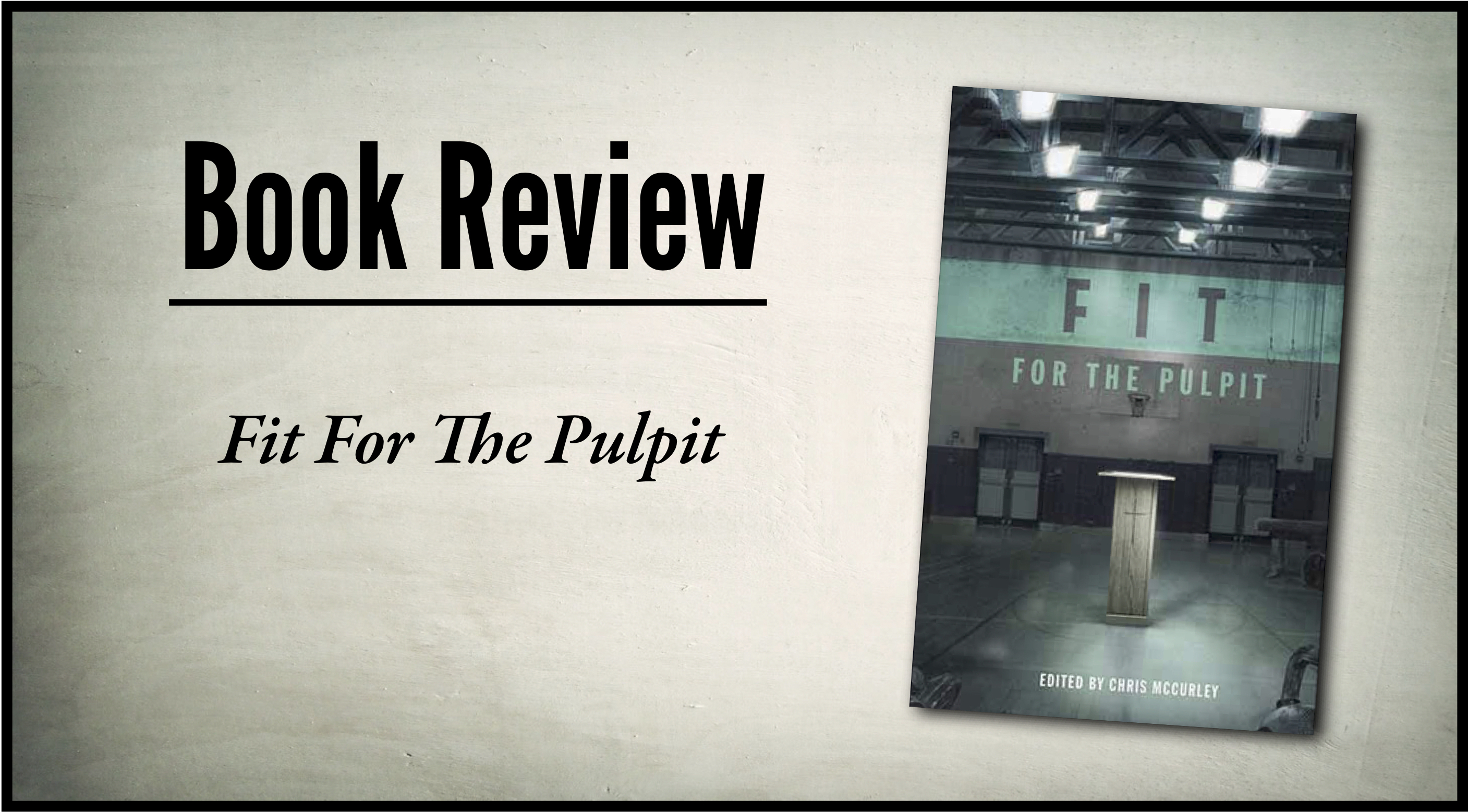
Book Review: Fit for the Pulpit

I recently finished reading Fit For The Pulpit: The Preacher & His Challenges, a book written for preachers, by several preachers, and edited by Chris McCurley.

As the title would indicate, this little volume (138 pages of actual text) focuses on different challenges faced by preachers, and offers guidance and advice on how to deal with each. The topics of time management, relationships, discouragement, stress, criticism, family, finances, sin, attitude, laziness, and the “core” of the preacher are covered.

Technically, I am not a “preacher,” but I am a minister who preaches on occasion, and virtually all of this material applied to me in some way. I have read a lot of books on ministry of one sort or another, and while I wouldn’t consider this to be a great book (more on that below), it is still a good book, and fits in well alongside other books on ministry.

I’ll share three gentle criticisms of this book that I had, and then share some good quotations.

First, the book is an anthology, with ten different ministers writing the eleven chapters. I’m sure the idea was to get the voices and perspectives of several different experienced preachers on the various topics which were covered, but honestly, the cumulative effect for me was that the writing was somewhat choppy and disjointed. Some chapters are better than others in large part because some writers were better than others. Also, one particular biblical story regarding Elijah was used as an illustration in three different chapters, which seemed pretty repetitive. I don’t think this would happen with one author.

Secondly, there is a very practical chapter on the preacher and his family which provides some valuable suggestions and insights on how a preacher can care for and be the spiritual leader of his family. This was definitely a needed chapter: there are a lot of good, well-meaning men who have devoted their lives to ministry but who forgot to devote much of anything to their families and as a result, have a variety of tragic issues to deal with (divorce, faithless children, addiction, etc.). What I disliked about this chapter was that I thought it too easily glossed over the inherent tension between our devotion to Jesus and our devotion to our families. Jesus said some tough things about the importance of our families relative to Him, and part of the true difficulty of being a minister is identifying those things which are “just” work and should therefore be a lower priority than our families, and those things which are directly tied to our answer to the call of Christ and therefore are of the utmost importance. Certainly not everything in ministry should come before our families, but I think the clear biblical teaching is that some things should. Unfortunately, this chapter didn’t address this crucial topic.

Finally, on a book about preaching, I wish there would have been a chapter devoted directly to the practice of Bible study and putting a sermon together. Look, preachers do a lot of things and wear a lot of hats in their jobs, but none of them compares to the public proclamation of God’s word. Unfortunately, we have gotten to the point where too often, the preacher is so busy with other things that he has to squeeze in his sermon preparation into a couple hours at the end of the week, which is just not enough. Even worse, the ready availability of hundreds or thousands of free sermons online has made it easy for some preachers to frequently skip Bible study altogether. This is a real problem, and though the importance of preaching and Bible study was mentioned multiple times throughout the book, a good chapter explicitly focused on the centrality of preaching and the task of sermon preparation would have been a good feature.

Here are some of the good quotations from the book [with my comments added in brackets]:

“The local preacher’s primary responsibility is to preaching; therefore, he must give the proper amount of time and attention to study of God’d Word.” (p.13) [As you can surmise by my statements above, I am in full agreement with this quotation. I just wish it would have been fleshed out more in a full chapter devoted to sermon preparation.]

“Time management must include the ability to say “No!” to some things…Many things are important, but not everything is a priority or a must.” (p.20) [This is a ministry lesson I am still learning!]

“…In establishing a long stay with a church, the preacher should also choose his battles carefully. Every issue that arises in ministry is not worth “going to the mat” for.” (p.51)

“[Preachers] live with the realization that everyone who accomplishes anything worthwhile will face criticism.” (p.60)

“We are rich in our country, and we were not blessed to increase our comfort, but to bless others.” (p.85)

“Watching for Satan starts with knowing our personal weaknesses.” (p.97)

“We can seek to restore New Testament Christianity in our worship, our leadership structures, or in any other category. But if we don’t have love, we have no legitimate claim to be the “of Christ” designation on our church signs.” (p.107) [It would probably benefit me, and you too, to read this statement every day of our lives.]

Despite the criticisms I mentioned above, Fit For The Pulpit is a good book with helpful, practical advice. I would recommend it to other ministers, but also to church members, who would do well to get a better idea of “what the preacher does all week” and the challenges he faces.

« Older posts Newer posts »

© 2026 The Doc File

Theme by Anders Noren — Up ↑