The online journal of Luke Dockery

Category: Books (Page 25 of 27)

The Power And The Glory

The Power and the Glory is considered by many to be Graham Greene’s finest work, and after reading it myself, I can see why.

The story centers on a nameless “whiskey priest” who is being persecuted by a ruthless government in a Mexican state in the 1930s. The priest makes an interesting protagonist, and is the vehicle used by Greene to examine the nature of sin, repentance, faith and other deep issues.

If any of these issues interest you, I highly recommend The Power and the Glory. It’s great.

I’ll leave you with one quote I liked a bunch:

“It was for this world that Christ had died; the more evil you saw and heard about you, the greater glory lay around the death. It was too easy to die for what was good or beautiful, for home or children or a civilization—it needed a God to die for the half-hearted and the corrupt.”

The Catcher Was A Spy

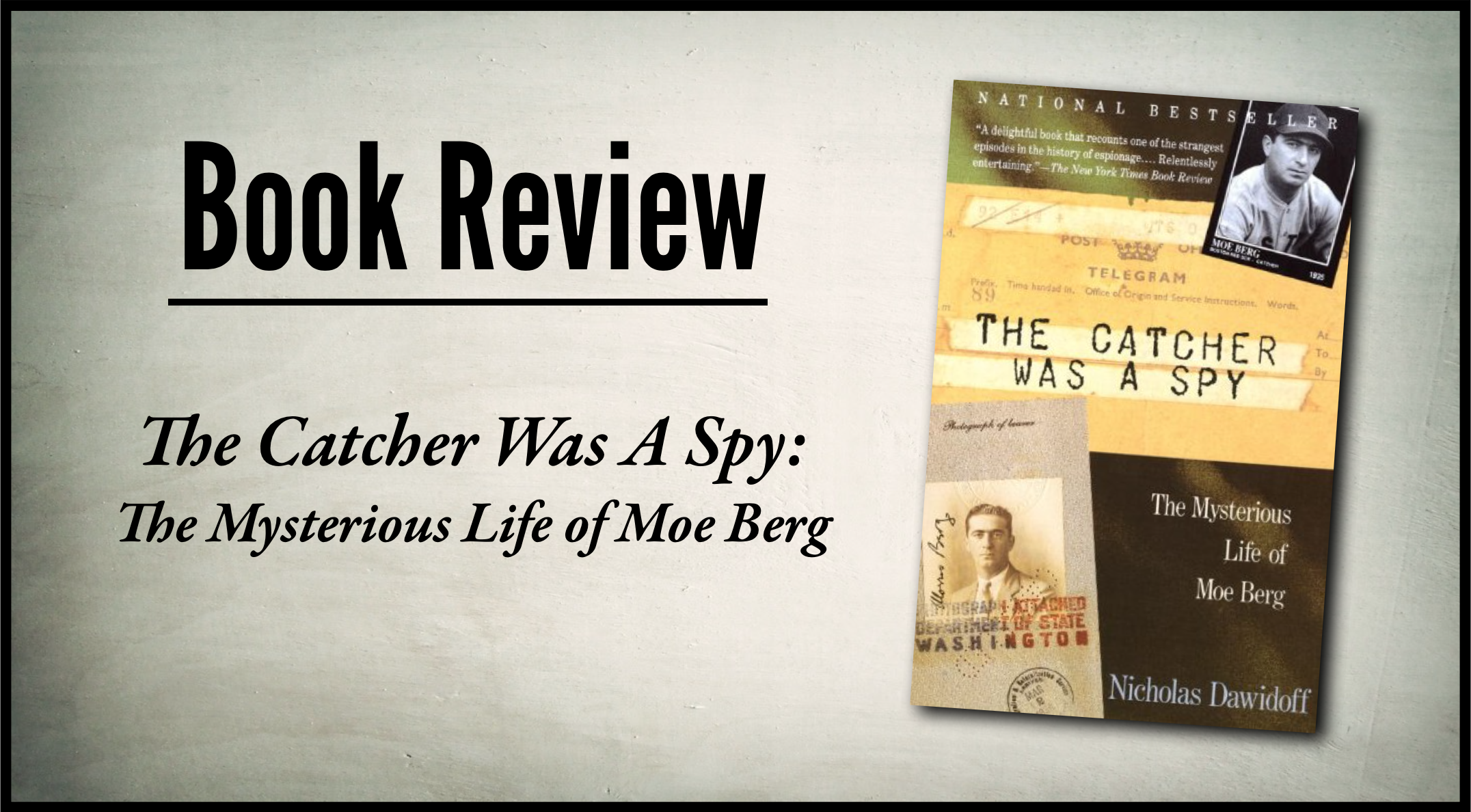
For a while I’ve been meaning to write a post on Nicholas Dawidoff’s The Catcher Was A Spy.

The story focuses on the life of Moe Berg, a back-up Major League catcher who later became a spy for the OSS (precursor to the CIA) during World War II.

I received the book over 11 years ago on my 14th birthday (Seriously? That was 11 years ago?!), but after a previous false start back in 1997, didn’t get around to reading it until this past Christmas.

Part of the reason for it taking me so long to get around to reading the book was a poor assumption on my part. When I tried to read it the first time around, I abandoned the book at the point when Berg retired from baseball, not realizing that his work as a spy would be considerably more fascinating than his life as a ballplayer.

Rather than post a series of quotes from the book, I’ll leave off with the main effect that the story of Moe Berg produced in me.

Sometimes, I feel like I live a small life. My work can seem unimportant and unnoticed, my life unspectacular and relatively obscure. I think a lot of people feel the same way.

As a professional athlete and an undercover spy, Berg experienced not one, but two, exciting, storybook careers. He was an immensely-talented individual who had a number of famous friends and acquaintances and his own share of fame as well. In short, Moe Berg had the type of life that most people dream about having.

Despite all that, the portrait that Dawidoff paints is of a largely unhappy man who never really fit in anywhere and was never able to develop deep long-lasting relationships with anyone.

The Catcher Was A Spy is a fascinating biography that I would recommend to anyone with an interest in baseball, espionage or nuclear physics (Berg’s WWII spy work centered on the Nazi Atomic Bomb project), but that wasn’t why I liked it so much.

I liked it because, at least for me, it served as an invaluable reminder about what really matters in life.

One of my personal goals for 2008 was to spend more time reading. I was successful in this goal, thanks in large part to the fact that I started going to bed earlier, and read before going to sleep (rather than my previous habit of staying up late watching television). Without further ado, I present my reading list for 2008:

  1. The Last Battle, C.S. Lewis
  2. The Screwtape Letters, C.S. Lewis
  3. The House on the Cliff, Franklin W. Dixon
  4. Angel of Darkness, Caleb Carr
  5. To Kill a Mockingbird, Harper Lee
  6. The Ministry of Fear, Graham Greene
  7. Life of Pi, Yann Martel
  8. The Return of Mr. Campion, Margery Allingham
  9. The Jungle, Upton Sinclair
  10. Why is the Foul Pole Fair?, Vince Staten
  11. The Teammates, David Halberstam
  12. Ordinary Men, Christopher Browning
  13. Heir to the Empire, Timothy Zahn
  14. Dark Force Rising, Timothy Zahn
  15. The Last Command, Timothy Zahn
  16. Shadows of the Empire, Steve Perry
  17. The Adventures of Tom Sawyer, Mark Twain
  18. The Holy Spirit: Unraveling the Mystery, Bobby Dockery
  19. Adventures of Huckleberry Finn, Mark Twain
  20. The Worst Hard Time, Timothy Egan
  21. The Catcher in the Rye, J.D. Salinger
  22. The Master of Ballantrae, Robert Louis Stevenson
  23. The Witchmaster’s Key, Franklin W. Dixon
  24. The Man Who Was Thursday, G.K. Chesterton
  25. Our Man in Havana, Graham Greene
  26. Fire in my Bones, Jimmy Allen
  27. Mere Christianity, C.S. Lewis
  28. Yukon Ho, Bill Watterson
  29. The Catcher Was A Spy, Nicholas Dawidoff

I’m a little embarrassed by some of my guilty pleasures (Star Wars and Hardy Boys books), proud of some books which I re-read and was better able to appreciate (Tom Sawyer, Huckleberry Finn, and The Man Who Was Thursday in particular) and was able to find a few books that I really, really liked (Thursday, Life of Pi, The Teammates).

I read 29 books in all, which comes out to a little more than a book every two weeks. That isn’t too bad, but I’m hoping to do better in 2009, and already have a stack of books picked out to read (and am always open to suggestions for more).

I’ll have to get on the ball though. Between being sick for the first week of the year (I typically don’t read at all when I’m sick) and moving to a new house for the past week (and misplacing the book I was in the process of reading), I’m not off to a good start at all.

Mere Christianity

So I’m a little embarrassed to admit that I just finished reading Mere Christianity by C.S. Lewis for the first time. I was disappointed with parts of it, and completely blown away by other parts of it. It certainly is a very quotable book, and I thought that rather than offer any sort of in-depth review, I would instead share a good quotation from time to time.

One of my favorite quotations in the book actually comes from the preface, where Lewis explains that his purpose in writing the book isn’t to get people to join a particular church, but rather to accept the basic tenets of Christianity. To make his point, he describes Christianity as a hall with several rooms, and says that his goal is to get people to enter the hall, and to figure out which room to enter on their own.

On choosing which “room” to enter into, he says:

“And above all you must be asking which door is the true one; not which one pleases you best by its paint and paneling. In plain language, the question should never be: ‘Do I like that kind of service?’ but ‘Are these doctrines true: Is holiness here? Does my conscience move me towards this?’ When you have reached your own room, be kind to those who have chosen different doors and to those who are still in the hall. If they are wrong they need your prayers all the more; and if they are your enemies, then you are under orders to pray for them. That is one of the rules common to the whole house.”

I like that a lot.

Youth Ministry and The Catcher In The Rye

A while back, I finished reading The Catcher In The Rye. Once the most censored and challenged books in America, The Catcher In The Rye is a common staple in high school English classes, and by today’s standards, is really fairly tame (which I guess is sad, but I digress).

I think the book is pretty good, but not brilliant, and if it hadn’t been so widely censored and criticized, I doubt it would be nearly as popular and well thought of as it is. Nevertheless, I do like the passage in the book that generates the title.

One of the main themes of the book is the loss of innocence, and the main character, Holden Caulfield, is distressed by the idea of children growing up and becoming “phony.”

In one scene, he imagines himself saving them from that:

“Anyway, I keep picturing all these little kids playing some game in this big field of rye and all. Thousands of little kids, and nobody’s around—nobody big, I mean—except me. And I’m standing on the edge of some crazy cliff. What I have to do, I have to catch everybody if they start to go over the cliff—I mean if they’re running and they don’t look where they’re going I have to come out from somewhere and catch them. That’s all I do all day. I’d just be the catcher in the rye and all. I know it’s crazy, but that’s the only thing I’d really like to be.”

As a youth minister, I can sympathize with his feelings. Part of being a youth minister is encouraging kids to stay away from stuff that’s not good for them, physically and spiritually.

But unfortunately, as Holden realizes, you can’t catch kids before they fall off the cliff. They’re going to be exposed to things you were wish they weren’t and they’re going to fail and make poor decisions.

The key then is to prepare them to be the kind of people who make good decisions more often than not, and to try to “catch” them until then.

That’s good youth ministry, I think.

« Older posts Newer posts »

© 2026 The Doc File

Theme by Anders Noren — Up ↑