The online journal of Luke Dockery

Category: Reading (Page 28 of 33)

Book Review: Jesus and Jonah by J.W. McGarvey

In an earlier post, I mentioned that I wanted to do a better job in 2012 of writing about some of the books I read. I’m not sure how well I will stick to that goal for the year, but here’s a brief review of one book I read last month.

Jesus and Jonah was published by J. W. McGarvey in 1896, and was actually a compilation of several articles he wrote in The Christian Standard. McGarvey is a well-known author and scholar within the Restoration Movement (and close associate of Robert Graham), and was one of the first conservative scholars to actively oppose the trends of liberal theology and higher criticism that were growing in popularity around the turn of the 20th century.

In Jesus and Jonah, McGarvey argues against a “symposium” of scholars who had denied the historicity of the biblical account of Jonah.

The book isn’t exactly a page-turner—McGarvey spends the majority of the book examining the arguments of the scholars he disagrees with, and as those scholars basically all use some form of the same 2-3 arguments, McGarvey’s responses quickly become repetitive. Nevertheless, McGarvey’s argument is sound—since Jesus certainly seems to consider the Jonah account to be historical in Matthew 24.38-39, those who argue that it isn’t are basically forced to hold to one of two positions:

  • Jesus spoke of the events of Jonah as if they were historic when He knew they were not, in which case He was being deceptive (McGarvey makes this point especially well).
  • Jesus spoke of the events of Jonah as if they were historic because He thought they were, but was mistaken. This position raises lots of questions about the nature of Jesus and the knowledge He possessed while on earth (these are questions which are easily dismissed by a lot of liberal scholars today who question or reject the divinity of Christ, but would not be as easily dismissed by the less radical scholars McGarvey was addressing in Jesus and Jonah).

A third possibility that the book didn’t really address might be that Jesus wasn’t being deceptive because both He and His audience might have had a shared understanding of Jonah as some sort of satirical fable. With that common understanding, Jesus could have referred to Jonah as if he were a real character in order to prove a point (kind of like I might refer to Robin Hood or Scrooge McDuck) and His audience would have followed right along. It seems that a lot of work would need to be done to establish that this is what was happening, though.

All in all, Jesus and Jonah was a worthwhile read—a short book which, in my opinion, successfully argued for the historicity of Jonah and also provided an interesting analysis of the biblical Jonah story.

Reading in 2011

Something I started doing a few years ago and have greatly enjoyed is keeping track of the books I read each year.

Here is my reading list for 2011:

  1. The Speed Of Trust: The One Thing That Changes Everything, by Stephen M. R. Covey
  2. The Historical Books (Interpreting Biblical Texts Series), by Richard D. Nelson
  3. Joshua to Chronicles: An Introduction, by Antony F. Campbell
  4. The Art of Biblical History, by V. Philips Long
  5. A Biblical History of Israel, by Iain Provan, V. Philips Long, and Tremper Longman III
  6. God’s Potters: Pastoral Leadership and the Shaping of Congregations, by Jackson W. Carroll
  7. Crossing the Wire, by Will Hobbs
  8. Leading the Congregation: Caring for Yourself While Serving the People, by Roger Heuser and Norman Shawchuck
  9. Accompany Them With Singing: The Christian Funeral, by Thomas G. Long
  10. The Alchemist, by Paulo Coelho
  11. Crucifixion, by Martin Hengel
  12. Crazy Love, by Francis Chan
  13. The Dawkins Delusion? Atheist Fundamentalism and the Denial of the Divine, by Alister McGrath and Joanna Collicut McGrath
  14. 1776, by David McCullough
  15. A Little History of the World, by E.H. Gombrich
  16. The Soul of Baseball: A Road Trip Through Buck O’Neil’s America, by Joe Posnanski
  17. Kingdom Come: Embracing the Spiritual Legacy of David Lipscomb and James Harding, by John Mark Hicks and Bobby Valentine
  18. Show Us How You Do It: Marshall Keeble and the Rise of Black Churches of Christ in the United States, 1914-1968, by Edward J. Robinson
  19. Reviving The Ancient Faith: The Story of Churches of Christ in America, by Richard T. Hughes
  20. The Death Collector, by Justin Richards
  21. The Problem of Pain, by C.S. Lewis
  22. The Greenest Island, by Paul Theroux
  23. Night, by Elie Wiesel
  24. Convicted: A Scientist Examines the Evidence for Christianity, by Brad Harrub
  25. The Restoration Movement in Northwest Arkansas, by Virginia Lynn Vego
  26. Baseball in Blue and Gray: The National Pastime During the Civil War, by George B. Kirsch
  27. The Way of Life: Church History, Reformation and Modern, by Everett Ferguson
  28. Gorky Park, by Martin Cruz Smith
  29. Pea Ridge and Prairie Grove, by William Baxter
  30. Youth: A Narrative, by Joseph Conrad
  31. The Conquest of the North and South Poles, by Russell Owen
  32. A History of Arkansas College: 1850-1860, by Robert Dockery
  33. Early Christians Speak: Faith and Life in the First Three Centuries, by Everett Ferguson
  34. Undenominational Christianity, by J.N. Armstrong
  35. The Spy Who Came in from the Cold, by John Le Carré
  36. My Turn at Bat: the Story of My Life, by Ted Williams (with John Underwood)
  37. The Third Man, by Graham Greene
  38. The Fallen Idol, by Graham Greene
  39. More Strength for the Journey: A Daily Devotional Guide, by Danny Boggs, Kirk Brothers, Bobby Dockery, and Neal Pollard

Once again, I did a poor job of writing reviews of the books I read this past year, and that’s something I hope to improve upon in 2012. Regardless of my lack of reviews, there were a few books I read that I thought were great. The Art of Biblical History and A Biblical History of Israel were both excellent, and I would readily recommend them to anyone with an interest in biblical history. Other favorites for the year included 1776 (fascinating reading on the early days of the American Revolution), Night (gut-wrenching, personal account of the Holocaust), and The Soul of Baseball, which was possibly the best baseball book I have ever read (which is saying a lot). In the category of fiction, Gorky Park and The Spy Who Came in from the Cold were both very enjoyable.

On the flip side, The Death Collector was undoubtedly the worst book I read this year (the dangers of choosing young adult audio books for my drives to and from Memphis). The only other real disappointment for the year was The Alchemist, which I had high hopes for but ended up being weird and uninspiring.

Sadly, my overall book total decreased (down to 39 from 41 in 2010). Part of this was caused by an unproductive January, and also by the fact that I took one less reading-intensive graduate course this year. Hopefully I’ll reverse the trend and be back up over 40 books in 2012.

As always, I have some books set aside to read in 2012, but I always like recommendations for good stuff. Any ideas?

(For comparison’s sake, you can see the books I read in 2010, 2009, and 2008).

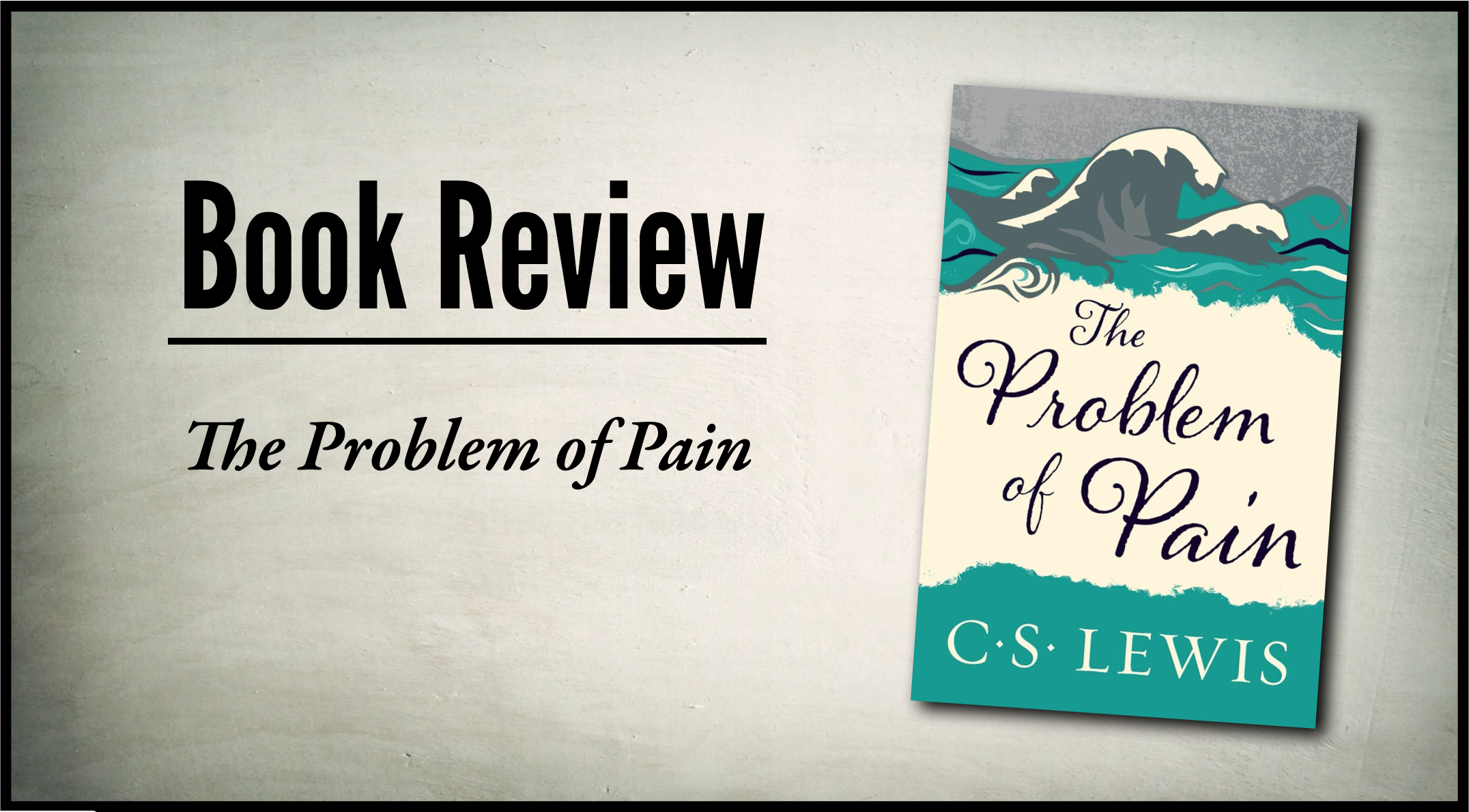
Book Review: The Problem of Pain

I just finished reading C.S. Lewis’s The Problem of Pain, and rather than wait six months to write about a book like I normally do, I thought I’d go ahead and post some brief thoughts.

Compared to some of his other works (Narnia, Mere Christianity, The Screwtape Letters), The Problem of Pain really wasn’t my favorite—parts of it are somewhat hard to follow, there’s a semi-weird chapter on animals, to an extent, Lewis seems to undermine the doctrine of the Fall, and he also suggests a Christology that is lower than I am comfortable with.

Nevertheless, it’s still C.S. Lewis, which means that there is a lot of good stuff in The Problem of Pain. Below are some quotations that I particularly enjoyed.

Free will necessitates suffering.

“Try to exclude the possibility of suffering which the order of nature and the existence of free wills involve, and you find that you have excluded life itself.” (25)

On what we wish God was like:

“What would really satisfy us would be a God who said of anything we happened to like doing, ‘What does it matter so long as they are contented?’ We want, in fact, not so much a Father in Heaven as a grandfather in heaven—a senile benevolence who, as they say, ‘liked to see the young people enjoying themselves’, and whose plan for the universe was simply that it might be truly said at the end of each day, ‘a good time was had by all’.” (31)

One of the more famous C.S. Lewis quotes that I had heard and like before but never knew where it came from is found in The Problem of Pain:

“A man can no more diminish God’s glory by refusing to worship Him than a lunatic can put out the sun by scribbling the word ‘darkness’ on the walls of his cell.” (46)

Lewis suggests and then explains what he calls “the humility of God”:

“…It is a poor thing to strike out colors to God when the ship is going down under us; a poor thing to come to Him as a last resort, to offer up ‘our own’ when it is no longer worth keeping. If God were proud He would hardly have us on such terms: but He is not proud, He stoops to conquer, He will have us even though we have shown that we prefer everything else to Him, and come to Him because there is ‘nothing better’ now to be had…It is hardly complimentary to God that we should choose Him as an alternative to Hell: yet even this He accepts.” (95-96)

Is it suffering of good people the hardest thing to explain? For Lewis, the answer is “no”:

“The sacrifice of Christ is repeated, or re-echoed, among His followers in very varying degrees, from the cruellest martyrdom down to a self-submission of intention whose outward signs have nothing to distinguish them from the ordinary fruits of temperance and ‘sweet reasonableness’. The causes of this distribution I do not know; but from our present point of view it ought to be clear that the real problem is not why some humble, pious, believing people suffer, but why some do not.” (104)

On the Christian’s submission of his own will:

“Christian renunciation does not mean stoic ‘Apathy’, but a readiness to prefer God to inferior ends which are in themselves lawful. Hence the Perfect Man brought to Gethsemane a will, and a strong will, to escape suffering and death if such escape were compatible with the Father’s will, combined with a perfect readiness for obedience if it were not.” (113)

An allusion to the “least of these” passage in Matthew 25 and the ethical implications of following Jesus:

“In the fullest parabolic picture which He gave of the Judgement, Our Lord seems to reduce all virtue to active beneficence: and though it would be misleading to take that one picture in isolation from the Gospel as a whole, it is sufficient to place beyond doubt the basic principles of the social ethics of Christianity.” (114)

And in reference to the flak that Christians often take for their hope of heaven (I love this quote):

“We are very shy nowadays of even mentioning heaven. We are afraid of the jeer about ‘pie in the sky’, and of being told that we are trying to ‘escape’ from the duty of making a happy world here and now into dreams of a happy world elsewhere. But either there is ‘pie in the sky’ or there is not. If there is not, then Christianity is false, for this doctrine is woven into its whole fabric.” (149)

Of course, there are other good parts to the book, but the excerpts above at least give a taste of the book’s contents.

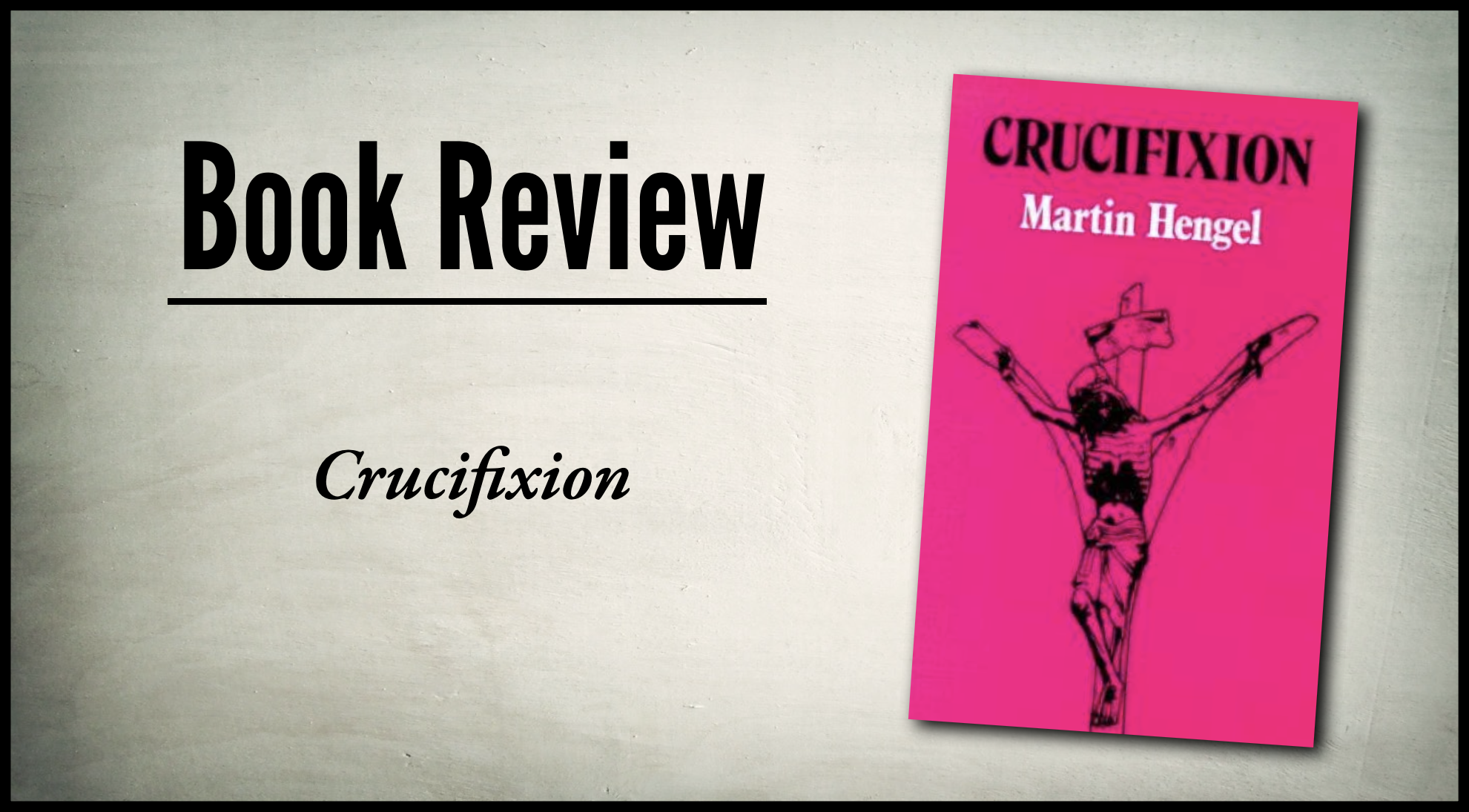
Book Review: Martin Hengel’s Crucifixion

A while back, I read Martin Hengel’s Crucifixion, which is a short little book that gives scholarly treatment to the practice of crucifixion in the ancient world. In some ways, I was a little disappointed—I had hoped for more of a detailed description of what a “historically accurate” crucifixion looked like, and Hengel didn’t really provide that (largely because crucifixion was a widespread practice in the ancient world that differed depending on time, location, and whim). That being said, the book was very interesting, specifically in three respects:

(1) Crucifixion as a Deterrent

In the Roman Empire, crucifixion was rarely used on Roman citizens and was primarily used on criminals of the lowest classes and slaves. This is pretty common knowledge, and Hengel supports it. What is particularly fascinating is the degree to which Hengel argues that the use of crucifixion on slaves was a means of stirring up fear among the enslaved in hopes of preventing any sort of rebellion. In places like Rome, where the slave population outnumbered those who were free, the fear of rebellion was real, and keeping the slaves paralyzed with the fear of crucifixion was seen as necessary.

(2) Crucifixion as Taboo

Hengel also makes the argument that crucifixion was so horrific, so feared, and so reviled, that it was essentially the sort of thing that was not spoken of or written about. This leads to what may seem like a surprising lack of references to it in ancient sources. This lack of references doesn’t mean that the use of crucifixion wasn’t widespread (it was), but simply that it was so horrible that people avoided writing about it:

“Crucifixion was widespread and frequent, above all in Roman times, but the cultured literary world wanted to have nothing to do with it, and as a rule kept quiet about it.”

(Hengel, p. 38)

(3) Crucifixion (of Jesus) as Folly

The overarching claim of Hengel’s book is that the Apostle Paul’s claim in 1 Corinthians 1.18 that the “word of the cross is folly” to unbelievers is a reflection of the repeated reception that Paul would have received as he went about preaching the message of a crucified Christ.

Crucifixion was so hated and despised that, for the ancient world, following and worshipping someone who had been crucified was sheer madness—it was not a message that easily attracted followers. This part of the message has been downplayed somewhat today (largely because we fail to grasp the level of shame and horror associated with crucifixion) but at its core, the message of the gospel is completely shocking:

“…In the death of Jesus of Nazareth God identified himself with the extreme of human wretchedness, which Jesus endured as a representative of us all, in order to bring us to the freedom of the children of God…This radical kenosis of God was the revolutionary new element in the preaching of the gospel. It caused offense, but in this very offense it revealed itself as the centre of the gospel.”

(Hengel, p.89)

This last point alone makes Crucifixion worth the read, as Hengel seeks to reclaim the scandal of Christianity as central to the message of the Gospel—God loved us so much that Jesus identified with the lowest extreme of humanity in order to reclaim us.

And, of course, this is why the day that the Son of God was murdered can be called Good Friday: Jesus has fundamentally transformed the meaning of the cross, despising its shame in order to bring about reconciliation and overcoming the condemnation of death in His resurrection.

This is why the day that the Son of God was murdered can be called Good Friday: Jesus has fundamentally transformed the meaning of the cross, despising its shame in order to bring about reconciliation. Share on X

David McCullough on George Washington

From the book 1776 (which is quite good, by the way):

“He was not a brilliant strategist or tactician, not a gifted orator, not an intellectual. At several crucial moments he had shown marked indecisiveness. He had made serious mistakes in judgment. But experience had been his great teacher from boyhood, and in this his greatest test, he learned steadily from experience. Above all, Washington never forgot what was at stake and he never gave up.”

Clearly, there’s a lot to be said for never giving up.

« Older posts Newer posts »

© 2026 The Doc File

Theme by Anders Noren — Up ↑