The online journal of Luke Dockery

Category: Reviews (Page 14 of 16)

The Hitchhiker’s Guide To The Galaxy

I’d heard countless references to Douglas Adams’ The Hitchhiker’s Guide To The Galaxy during my lifetime, and I knew it had something of a cult following, but I really didn’t know anything about it until I read it a few weeks ago.

Now having read it, the only thing I can really say is:

It stinks. I think it might be the most mind-numbingly stupid, plotless book I have ever read.

It did succeed in getting me to laugh a couple of times, but since it tried to get me to laugh dozens and dozens of times, this doesn’t seem like much of a success either.

I know it’s a popular book, but really, I don’t get its popularity at all. If you’re a Hitchhiker fan, I hope I haven’t offended you, but maybe you can explain to me why it shouldn’t be considered a strong contender for The Worst Book Ever Written?

The Power And The Glory

The Power and the Glory is considered by many to be Graham Greene’s finest work, and after reading it myself, I can see why.

The story centers on a nameless “whiskey priest” who is being persecuted by a ruthless government in a Mexican state in the 1930s. The priest makes an interesting protagonist, and is the vehicle used by Greene to examine the nature of sin, repentance, faith and other deep issues.

If any of these issues interest you, I highly recommend The Power and the Glory. It’s great.

I’ll leave you with one quote I liked a bunch:

“It was for this world that Christ had died; the more evil you saw and heard about you, the greater glory lay around the death. It was too easy to die for what was good or beautiful, for home or children or a civilization—it needed a God to die for the half-hearted and the corrupt.”

The Catcher Was A Spy

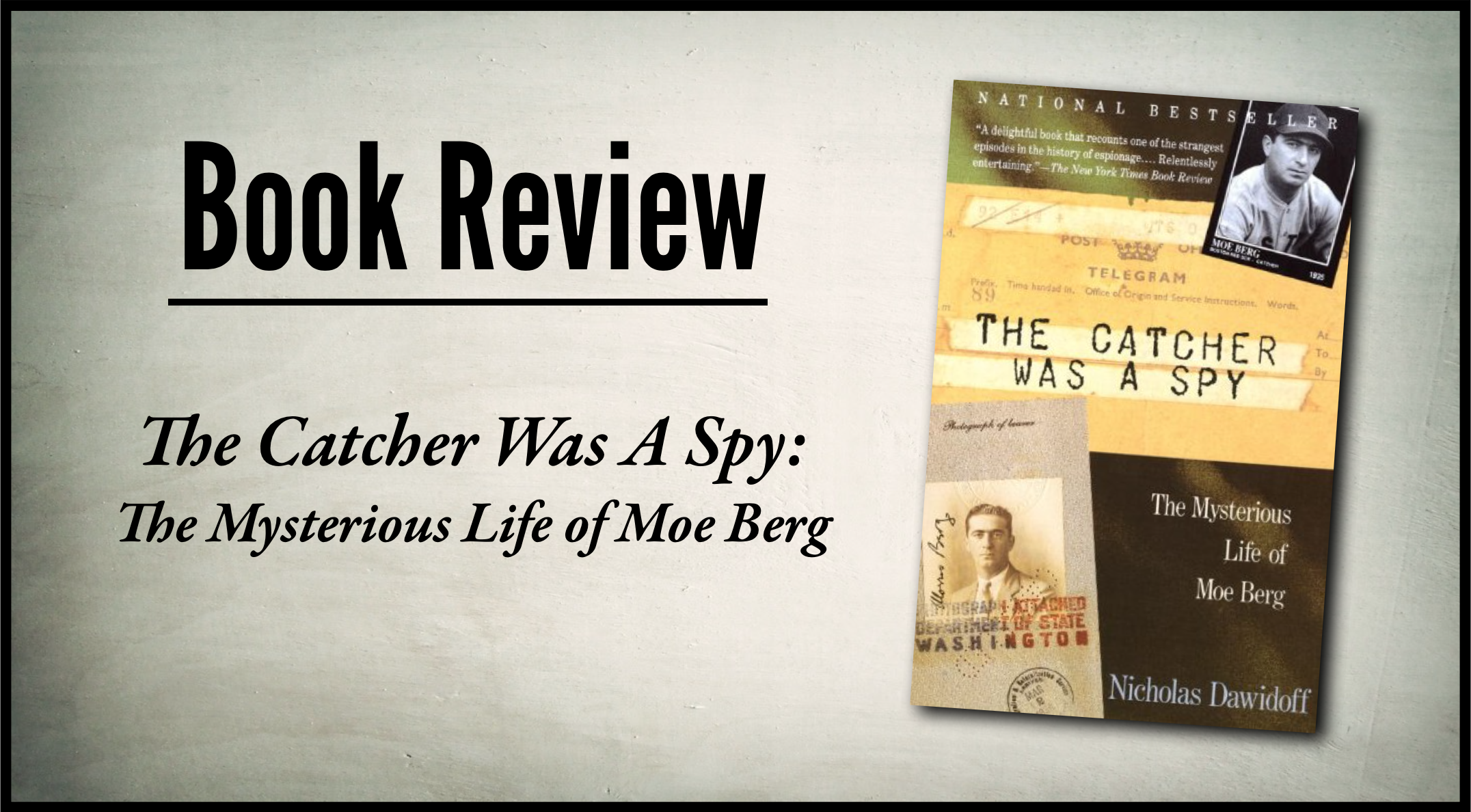
For a while I’ve been meaning to write a post on Nicholas Dawidoff’s The Catcher Was A Spy.

The story focuses on the life of Moe Berg, a back-up Major League catcher who later became a spy for the OSS (precursor to the CIA) during World War II.

I received the book over 11 years ago on my 14th birthday (Seriously? That was 11 years ago?!), but after a previous false start back in 1997, didn’t get around to reading it until this past Christmas.

Part of the reason for it taking me so long to get around to reading the book was a poor assumption on my part. When I tried to read it the first time around, I abandoned the book at the point when Berg retired from baseball, not realizing that his work as a spy would be considerably more fascinating than his life as a ballplayer.

Rather than post a series of quotes from the book, I’ll leave off with the main effect that the story of Moe Berg produced in me.

Sometimes, I feel like I live a small life. My work can seem unimportant and unnoticed, my life unspectacular and relatively obscure. I think a lot of people feel the same way.

As a professional athlete and an undercover spy, Berg experienced not one, but two, exciting, storybook careers. He was an immensely-talented individual who had a number of famous friends and acquaintances and his own share of fame as well. In short, Moe Berg had the type of life that most people dream about having.

Despite all that, the portrait that Dawidoff paints is of a largely unhappy man who never really fit in anywhere and was never able to develop deep long-lasting relationships with anyone.

The Catcher Was A Spy is a fascinating biography that I would recommend to anyone with an interest in baseball, espionage or nuclear physics (Berg’s WWII spy work centered on the Nazi Atomic Bomb project), but that wasn’t why I liked it so much.

I liked it because, at least for me, it served as an invaluable reminder about what really matters in life.

Mere Christianity

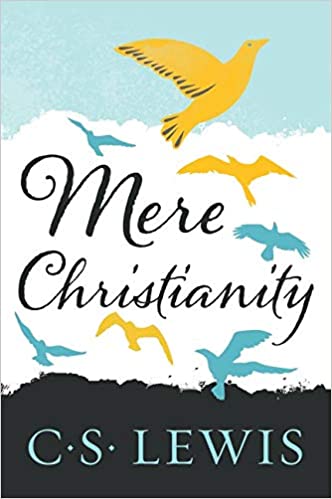
So I’m a little embarrassed to admit that I just finished reading Mere Christianity by C.S. Lewis for the first time. I was disappointed with parts of it, and completely blown away by other parts of it. It certainly is a very quotable book, and I thought that rather than offer any sort of in-depth review, I would instead share a good quotation from time to time.

One of my favorite quotations in the book actually comes from the preface, where Lewis explains that his purpose in writing the book isn’t to get people to join a particular church, but rather to accept the basic tenets of Christianity. To make his point, he describes Christianity as a hall with several rooms, and says that his goal is to get people to enter the hall, and to figure out which room to enter on their own.

On choosing which “room” to enter into, he says:

“And above all you must be asking which door is the true one; not which one pleases you best by its paint and paneling. In plain language, the question should never be: ‘Do I like that kind of service?’ but ‘Are these doctrines true: Is holiness here? Does my conscience move me towards this?’ When you have reached your own room, be kind to those who have chosen different doors and to those who are still in the hall. If they are wrong they need your prayers all the more; and if they are your enemies, then you are under orders to pray for them. That is one of the rules common to the whole house.”

I like that a lot.

Youth Ministry and The Catcher In The Rye

A while back, I finished reading The Catcher In The Rye. Once the most censored and challenged books in America, The Catcher In The Rye is a common staple in high school English classes, and by today’s standards, is really fairly tame (which I guess is sad, but I digress).

I think the book is pretty good, but not brilliant, and if it hadn’t been so widely censored and criticized, I doubt it would be nearly as popular and well thought of as it is. Nevertheless, I do like the passage in the book that generates the title.

One of the main themes of the book is the loss of innocence, and the main character, Holden Caulfield, is distressed by the idea of children growing up and becoming “phony.”

In one scene, he imagines himself saving them from that:

“Anyway, I keep picturing all these little kids playing some game in this big field of rye and all. Thousands of little kids, and nobody’s around—nobody big, I mean—except me. And I’m standing on the edge of some crazy cliff. What I have to do, I have to catch everybody if they start to go over the cliff—I mean if they’re running and they don’t look where they’re going I have to come out from somewhere and catch them. That’s all I do all day. I’d just be the catcher in the rye and all. I know it’s crazy, but that’s the only thing I’d really like to be.”

As a youth minister, I can sympathize with his feelings. Part of being a youth minister is encouraging kids to stay away from stuff that’s not good for them, physically and spiritually.

But unfortunately, as Holden realizes, you can’t catch kids before they fall off the cliff. They’re going to be exposed to things you were wish they weren’t and they’re going to fail and make poor decisions.

The key then is to prepare them to be the kind of people who make good decisions more often than not, and to try to “catch” them until then.

That’s good youth ministry, I think.

« Older posts Newer posts »

© 2026 The Doc File

Theme by Anders Noren — Up ↑