The online journal of Luke Dockery

Category: Sports (Page 16 of 16)

34 Years Ago Today

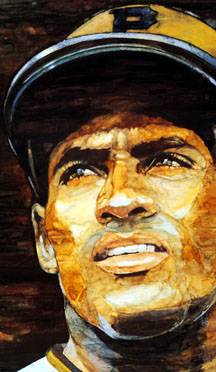
Baseball legend Roberto Clemente died 34 years ago today.

Born into humble circumstances on August 18, 1934 in San Juan, Puerto Rico, Clemente was a gifted athlete with a passion for baseball, and by the time he was 17, he was playing for the Santurce Crangejeros, a Puerto Rican minor league team. Clemente was a real talent who could do it all; he could hit to all fields with power, he was a great baserunner, and he had an incomparably strong throwing arm.

While playing for Santurce, he was discovered and drafted by the Dodgers, signed to play for the same AAA Montreal Royals that Jackie Robinson played for, and experienced many of the same types of racial discrimination. On top of that, because he was a bonus baby, Clemente had to fight through the Dodgers’ efforts to hide his talents. Not wanting other clubs to discover how good he really was, the Royals’ manager would keep Roberto, a right-handed batter, out of the lineup against left-handed pitching, and would bench him enough to prevent him from getting into any sort of rhythm with his swing. But some talents cannot be hidden, and realizing how good Roberto could be, the Pittsburgh Pirates signed him after the 1954 season for $4,000.

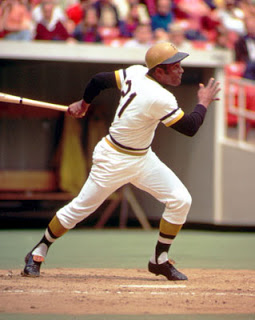
After a mediocre rookie season (he only hit .255), Clemente hit .311 in 1956 and began to form his reputation as one of the best players in the game. In the field, he made spectacular catches and threw out runners all over the basepaths with his incredibly strong and lethally accurate arm (Vin Scully once said that Clemente could field the ball in New York and throw out a guy in Pennsylvania), and at the plate, he hit to all parts of the field and came up with big hits in clutch situations.
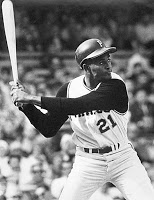
But not all was perfect in Pittsburgh. Clemente felt out of place and isolated there, living in a city with no Hispanic community to speak of. Proud of his Latino heritage, he bristled when sportswriters called him “Bobby”, and was constantly accused by the media and fans alike of being a hypochondriac, despite the fact that he played in constant back pain from a spinal injury he suffered in a car accident during his rookie season, and played 152 games during the 1965 season while suffering from an attack of malaria.

Roberto also felt under-appreciated as a Latino star playing for the small-market Pirates, as he received little nationwide attention despite leading Pittsburgh to a World Series title in 1960 and winning batting titles in 1961 and 1964. Even after a dazzling 1966 season that won him the National League MVP award, he was still not as well-known as other stars like Hank Aaron and Willie Mays.

By 1971, Clemente was a veteran of 16 seasons in the Major Leagues and was undoubtedly one of the very top players in the game, but still didn’t receive much national attention. But in 1971, the Pirates played the Baltimore Orioles in the World Series, finally putting Roberto in the national spotlight, and he made the most of it. He played inspired baseball, hitting .414 for the series with 12 hits and two home runs while playing his usual spectacular defense in the outfield. Pittsburgh won the series four games to three, and Clemente won the MVP award for the series.

The next fall, on September 30, 1972, Clemente doubled off of Jon Matlack of the New York Mets. It was the 3,000th hit of his illustrious career. It would also turn out to be his last.

After the end of the season, on December 23, 1972, a severe earthquake hit the city of Managua, Nicaragua, killing over 7,000 people and leaving over 250,000 homeless. Roberto, who had previously traveled to Nicaragua and had many friends there, was affected very deeply, and, according to his wife, said over and over, “Something has to be done! Somebody has to do something!”

What he did was to work furiously over the next few days collecting supplies and donations for the earthquake victims. He worked close to 20 hours a day, sleeping very little, and not even taking the time to open Christmas presents. But his work was a success, as he collected over $150,000 and more than 26 tons of clothing, food, and medicine.
Roberto hired an old DC-7 airplane to take some of the supplies down to Nicaragua on December 31, but the plane was barely in the air when one of the engines began to vibrate and caught fire. After a series of explosions, the plane fell to the Atlantic Ocean, within a mile of the Puerto Rican coast. There were no survivors, and the bodies of Clemente and the other four passengers were never recovered.

In 1973, Clemente became the second Latin American to be elected to the Baseball Hall of Fame. Baseball commissioner Bowie Kühn waived the mandatory five-year waiting period, saying it wasn’t necessary “because of how great Clemente was as a player, how great he was as a leader and how great he was as a humanitarian.”

Kühn also said:

“[Clemente] gave the term ‘complete’ a new meaning. He made the word ‘superstar’ seem inadequate. He had about him the touch of royalty.”

Apart from being a Hall of Fame-caliber player, Roberto Clemente was a pioneer, whose excellence in the Big Leagues opened the door for the Latin American players of the future. Due in large part to his accomplishments, Latin Americans dominate today’s game as never before.

But Clemente was more than that. In his life, he was the pride of Latin America, and a hero and example for his teammates, his fans, and his family. In his death, he was the pride of the whole world, and was a hero and example for all of us.

Roberto Clemente’s life made him famous; his death made him a legend.


Sources for this post include The Baseball Almanac, BaseballLibrary.com, El Pelotero Online, Latino Sports Legends, and Baseball Reference.
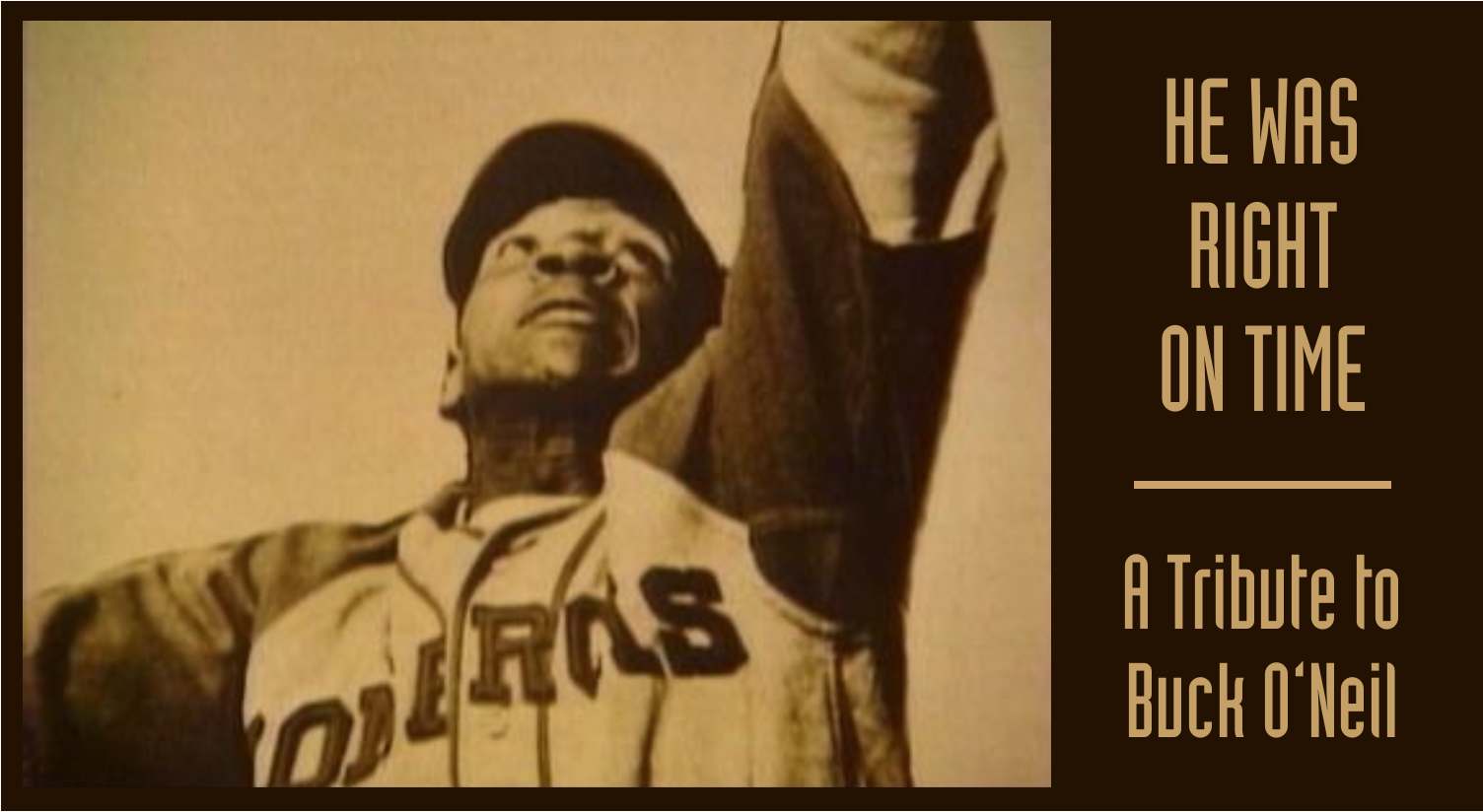
He Was Right on Time

I discovered from reading another blog the other day that one of my heroes, Buck O’Neil, was posthumously awarded the Presidential Medal of Freedom. O’Neil passed away back in October at the age of 94, after being involved with baseball for over 70 years.

Having already played some semi-pro ball, Buck O’Neil broke into the Negro Leagues in 1937, 10 years before Jackie Robinson would integrate the Major Leagues. His best years came with the Kansas City Monarchs, where he won two batting titles, played in four East-West All-Star games, and won several championships.

O’Neil was past his prime by the time that Robinson suited up for the Dodgers, so he never got the chance to play in the Major Leagues, but he remained very active in organized baseball, taking over managing duties for the Monarchs and leading them to two more championships.

After leaving the Monarchs, O’Neil became a successful scout for the Chicago Cubs (he signed future Hall of Famer Lou Brock), and in 1962 became the first black coach in the Major Leagues (also with the Cubs). He stayed with the Cubs a long time, and later scouted for the Kansas City Royals.

I first heard of Buck O’Neil the same way that most of the world did, when he appeared in Ken Burns’ 1994 documentary, Baseball. In the film, O’Neil gleefully recalled his days in the Negro Leagues and introduced America to a side of its national pastime that it had mostly forgotten about. And as he described his life as a baseball player who was systematically excluded from the Major Leagues because of the color of his skin, he did so graciously, without a hint of bitterness

In 1994, O’Neil’s tireless work led to the creation of the Negro Leagues Hall of Fame in Kansas City, Missouri, and also to the Baseball Hall of Fame Veterans’ Committee voting in many Negro Leaguers that would have otherwise been forgotten.

Despite all this, O’Neil was himself forgotten on too many ballots back in July, when he missed being elected to the Hall of Fame by a single vote, on what was widely rumored to be the last vote on which Negro Leaguers would be inducted. It appeared that Buck had missed out again.

But you wouldn’t think so to hear his reaction:

“God’s been good to me. They didn’t think Buck was good enough to be in the Hall of Fame. That’s the way they thought about it and that’s the way it is, so we’re going to live with that. Now, if I’m a Hall of Famer for you, that’s all right with me. Just keep loving old Buck. Don’t weep for Buck. No, man, be happy, be thankful.”

Maybe that’s not such a surprising statement from a man that Ken Burns described this way, in O’Neil’s autobiography, I Was Right on Time:

“John Jordan O’Neil is a hero, not in the superficial sporting sense of a man who homers in the ninth to win a game, but in the human sense of a man we all should look to and strive to be more like. His life reflects the past and contains many of the bitter experiences that our country reserved to men of his color, but there is no bitterness in him; it’s not so much that he put that suffering behind him as that he has brought gold and light out of bitterness and despair, loneliness and suffering. He knows that he can go farther with generosity and kindness than with anger and hate…He is my hero, my friend, my mentor; he is, like Abraham Lincoln and Jackie Robinson, what human progress is all about.”

It seems like Buck O’Neil was always coming at the wrong time: he was too old to make it to the Majors, missed out on the last HOF induction for Negro Leaguers by a single vote, and was awarded the Medal of Freedom after he had passed away.

But as Buck himself would be quick to point out, he was right on time. He was right on time to play alongside some of the greatest baseball players in history. He was right on time to witness and take part in the changing of millions of hearts and attitudes. He was right on time to keep the memories of the Negro Leagues alive and to pass its heritage on. And he was right on time to remind us, like Ken Burns said, that we can go farther with generosity and kindness than with anger and hate. Thanks Buck, for being right on time.

Thanks for signing that baseball I sent you too.

It’s (Past) Time to Make a Change

From the very beginning of the Razorbacks’ surprisingly good season, I’ve been a big Mitch Mustain fan. Sometimes when he plays, he looks like an 18 year old kid (which he is) but every now and then you see the flashes of brilliance that made him the top high school quarterback in the nation last year and the biggest recruit Arkansas has landed in a long time.

Despite having a record of 7-0 as a starter, Mustain was inconsistent, and after a bad game against Louisiana-Monroe, was pulled after throwing an INT on his first passing attempt against South Carolina.

Casey Dick, who went 2-2 as a freshman starter at the end of last season, came in to replace Mustain, and had a big game, throwing for 228 yards and a touchdown, as Arkansas held on to win the game. Dick played well, and Mustain had been struggling, but I thought pulling Mustain, undefeated as a starter, after one pass (albeit an INT), was possibly premature.

Although, Arkansas won the next two games under Dick, who played well against Tennessee and poorly against Mississippi St, they lost to LSU today, thanks in no small part to an absolutely inept performance by Dick. Dick started bad and got worse as the game went on, but was left in for the entire game, despite proving time after time a complete inability to throw to his intended receiver. For the game, Dick was 3-17 for 29 yards, 1 TD (on a remarkable catch and run by Marcus Monk) and one back-breaking INT.

When you compare the two quarterbacks, it seems clear to me that it’s time to go back to Mustain:

1. Experience: This has always been one of the main reasons given as to why Dick replaced Mustain as a starter. What kind of experience are we talking about here? Most college games watched? Because if we’re talking about starts, Mustain actually has more, and certainly had more at the time when he was pulled for Dick. Besides, most of Dick’s starts were last season, and while they were all against SEC opponents, they weren’t exactly in pressure situations, as Arkansas was 2-5 when Dick took over the helm, with no real expectations for the end of the season.

That being said, Dick has had more practice reps than Mustain, and since he did play last year, is more familiar with the Arkansas offense than is Mustain.

Even if Dick was much more experienced than Mustain (which he really isn’t), in some ways this is a stupid argument. After all, the older guy will always have more experience until the younger guy actually gets to play.

2. Performance: As a starter, Mustain is 8-0. Dick is 4-3. Even if you take away the South Carolina game (which is fair; Mustain started but Dick was the one who helped win the game), Mustain is 7-0 and Dick is 5-3 (3-1 this season).

Their season statistics are fairly similar. Both are completing just over 50% of their passes (Dick has completed 51.7%, Mustain 52.5%). Neither is amassing a great deal of yardage: Dick is averaging 8.37 yards per pass attempt while Mustain is at 6.99. Dick has a better ratio of touchdowns to interceptions (he has 8 TDs and 3 INTs, Mustain has 10 and 8), but none of Mustain’s picks on the season was as bad as the one thrown by Dick today.

When at their best, the two are similar, though Mustain is a little better. In the Hogs’ SEC opener on the road at Vanderbilt, Mustain earned National Freshman of the Week Honors by completing 13 of 20 passes for 224 yards and 3 touchdowns in a 21-19 victory over the Commodores. In Dick’s breakout game in the 26-20 victory over South Carolina, he completed 11 of 19 passes for 228 yards and a touchdown. Both of these were big SEC road victories for the Razorbacks, but Mustain’s performance was really the more impressive of the two, as Heisman candidate Darren McFadden ran for 219 yards in Dick’s big game against the Gamecocks, but he had one of his worst games of the season against Vandy, running for just 71 yards on 19 carries. This means that Mustain had his biggest game at a time when he needed to, while Arkansas’ top player was struggling.

Both have big wins on their season resumés; Mustain played solidly, running the team well in a 27-10 upset at #2 ranked Auburn, and Dick had a good performance in a 31-14 trouncing of Tennessee.

Both Mustain and Dick have been inconsistent, and when they’ve been bad, they’ve been really bad. Against Alabama, Mustain was 7-22 for 97 yards, with one touchdown and three interceptions. Dick’s worst game was today against LSU, when he was 3-17 for 29 yards and one touchdown and one interception. Of course the big difference here is that during his worst game, Mustain still played his best when the game was on the line, giving the Hogs the win with a touchdown pass on 4th down in double OT. On the other hand, Dick eliminated any chance of winning that Arkansas had against LSU by throwing four consecutive incomplete passes to end the game.

It seems that Mustain has performed better over the course of the season, and this is even more impressive when you realize that he is running an offense which is completely different from the no huddle, pass-oriented offense he ran last year at Springdale High School. On the other hand, Dick is running a very similar offense to what he ran last year; why isn’t his “experience” paying off?

3. Potential: This area goes to Mustain, pretty much hands-down. Picked by some publications as last year’s High School Player of the Year, for Mustain, the sky is the limit. Dick is a solid back-up quarterback, and has done some good things for Arkansas over the last two seasons, but anyone who thinks that he is more of a talent than Mustain in the long term is just plain nuts.

4. Intangibles: I saved this area for last, because I think it is the most important. When it comes down to it, Mustain is simply a winner. Since he was in 8th grade, Mustain has a record of 60-2 as a starter. 60-2. He is a guy who finds a way to win, and as I mentioned before, even in his worst game of the season when he couldn’t complete a pass to anyone, he throws the big touchdown in OT to win the game.

Dick has shown himself to be a gritty player and really helped out Arkansas last year by giving up a year of eligibility and taking the helm from an overwhelmed Robert Johnson, but as a starter, he has lost more games over the last 13 months than Mustain has since he was 13 years old.

Conclusion: Mustain should have replaced Dick during the 3rd quarter today; Dick certainly was given more leeway than Mustain ever got. Arkansas deserved to lose today, because Casey Dick couldn’t run the offense, and Houston Nutt refused to do anything about it. Houston, it’s (past) time to make a change.

Newer posts »

© 2026 The Doc File

Theme by Anders Noren — Up ↑







