The online journal of Luke Dockery

Category: Theology (Page 1 of 58)

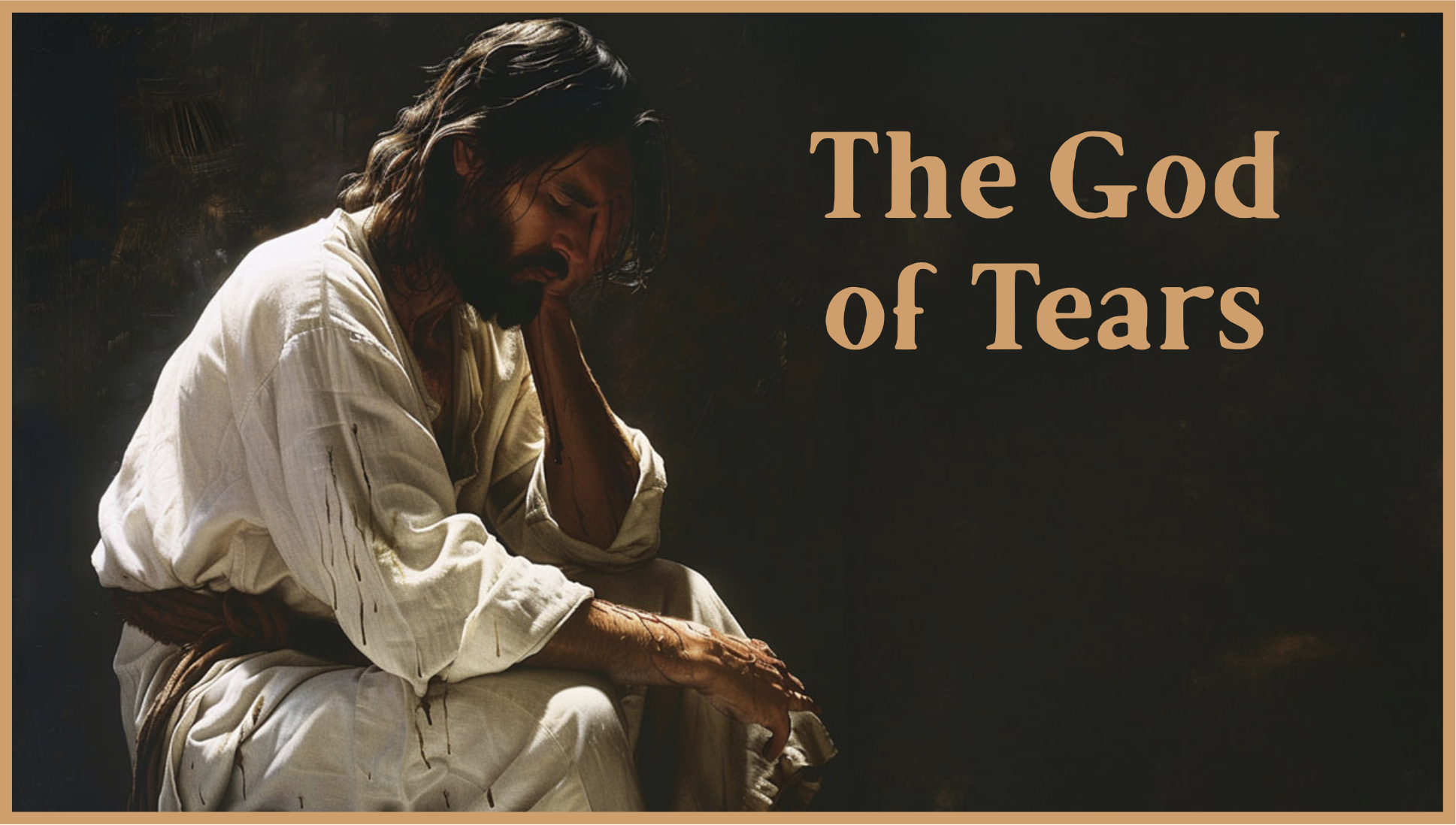
The God of Tears

Psalm 56 is accredited to King David, and in the title description,[1] it is mentioned that he wrote this when the Philistines seized him in Gath (1 Samuel 21.10-15). This is a time period when David is on the run from King Saul, and he flees to Saul’s enemies, the Philistines, looking for asylum. There, too, he finds himself surrounded by enemies.

He then proceeds with a lament psalm, bringing before God the injustices and difficulties of his life:

1 Be gracious to me, O God, for man tramples on me;
    all day long an attacker oppresses me;
2 my enemies trample on me all day long,
    for many attack me proudly.
3 When I am afraid,
    I put my trust in you.
4 In God, whose word I praise,
    in God I trust; I shall not be afraid.
    What can flesh do to me?

5 All day long they injure my cause;
    all their thoughts are against me for evil.
6 They stir up strife, they lurk;
    they watch my steps,
    as they have waited for my life.
7 For their crime will they escape?
    In wrath cast down the peoples, O God!

(Psalm 56.1-7)

This is all done in a context of great trust in God, who David believes to be his ally and more powerful than his enemies (Psalm 56.11). Then, David says something interesting:

8 You have kept count of my tossings;
    put my tears in your bottle.

(Psalm 56.8)

The first part of verse 8, that God sees David and is aware of the wanderings and abuse he has suffered at the hands of Saul, reminds us of the repeated theme that God sees what is happening to His people and will act accordingly.[2]

The second idea in this verse is intriguing: David imploring God to put his tears in His bottle. The idea here is that David wants God to take account of his tears and remember them, but it prompted me to reflect on the idea of God being a “God of tears.”

The God of the Bible is not a cold, unmovable, impassive deity.[3] This seems clear from reading the Hebrew Bible, where God is frequently moved to emotion—including sorrow—by the actions of His people. But it is most clearly seen in Jesus. Jesus is prophetically described as a “man of sorrows” (Isaiah 53.3). He describes those who mourn as blessed (Matthew 5.4). He famously wept at the tomb of His friend Lazarus. On the night of His betrayal, Jesus wept tears like blood in the Garden of Gethsemane. Surely the tears of the Son, the Messiah from the line of David, were kept in the Father’s bottle as well.

God stores up these tears, not because He delights in them, but because He is determined to do something about them—He will wipe them away:

4 He will wipe away every tear from their eyes, and death shall be no more, neither shall there be mourning, nor crying, nor pain anymore, for the former things have passed away.

(Revelation 21.4)

Our heavenly Father is not a cold, unmovable, impassive deity. He is a God of Tears. He takes not of them now, and promises to remove them in the future.


In this loose series of Scripture Reflections, I am sharing brief thoughts spurred on by my Bible reading. By way of reminder, my goal for these brief posts is two-fold:

(1) To remark on aspects of the biblical text that I find to be of interest that the reader may or may not have thought about previously.

(2) When possible, to point to the work and person of Jesus Christ. I believe the Bible is a unified story that points to Jesus, which means that He is frequently alluded to or foreshadowed in some way throughout the biblical canon.


[1] Scholars debate how to interpret the titles given to various psalms. Tremper Longman III, How to Read the Psalms (Downers Grove, IL: IVP Academic, 1988), 38-42, takes a moderate position: “After all the evidence has been surveyed, it is best to treat the titles as noncanonical, but reliable early tradition.” In other words, it is reasonable to assume that Psalm 56 is a psalm of David, and is connected to the historical context it claims.

[2] Examples of this abound in the biblical record: God sees the plight of the desperate Hagar in the wilderness in Genesis 16 and she calls Him “the God who sees.” When the people of Israel find themselves enslaved in Egypt, “God saw the people of Israel—and God knew.” When Hannah desperately prays to God for a son, God sees her plight, etc.

[3] The doctrine of the impassibility of God is complicated (and disputed), but properly understood, it does not suggest that God is devoid of emotion.

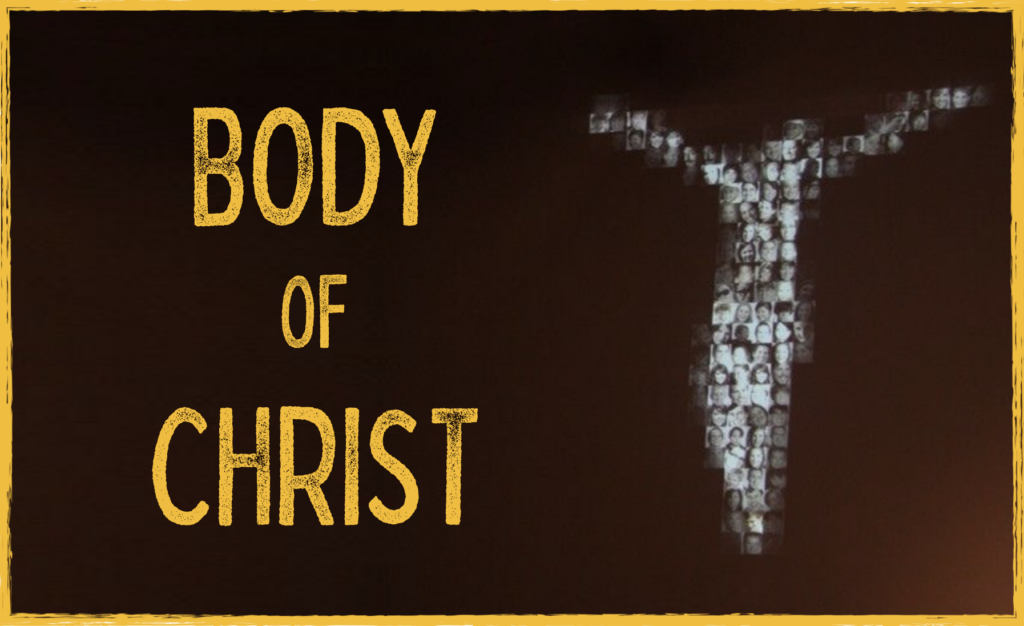
Body of Christ

The idea of the church as the body of Christ is a metaphor that Paul particularly enjoys, and he uses it in various ways in several passages. In Romans 12, Paul connects the idea of being parts of a body to giftedness and how we serve in the church. In 1 Corinthians 12, there is a similar idea. First, in 1 Corinthians 12.4-11, Paul begins by talking about spiritual gifts. It is clear that the Christians at Corinth were struggling with their spiritual gifts and the way that they evaluated and ranked certain gifts (and the people who had them) above others, because Paul spends the better part of three chapters (1 Corinthians 12–14) addressing this specific problem. He says in 1 Corinthians 12 that God gives a variety of gifts to different people, and how it is important for the church to have them all. Then, he goes on to use the body metaphor:

12 For just as the body is one and has many members, and all the members of the body, though many, are one body, so it is with Christ. 13 For in one Spirit we were all baptized into one body—Jews or Greeks, slaves or free—and all were made to drink of one Spirit. 14 For the body does not consist of one member but of many. 15 If the foot should say, “Because I am not a hand, I do not belong to the body,” that would not make it any less a part of the body. 16 And if the ear should say, “Because I am not an eye, I do not belong to the body,” that would not make it any less a part of the body. 17 If the whole body were an eye, where would be the sense of hearing? If the whole body were an ear, where would be the sense of smell? 18 But as it is, God arranged the members in the body, each one of them, as he chose. 19 If all were a single member, where would the body be? 20 As it is, there are many parts, yet one body.

21 The eye cannot say to the hand, “I have no need of you,” nor again the head to the feet, “I have no need of you.” 22 On the contrary, the parts of the body that seem to be weaker are indispensable, 23 and on those parts of the body that we think less honorable we bestow the greater honor, and our unpresentable parts are treated with greater modesty, 24 which our more presentable parts do not require. But God has so composed the body, giving greater honor to the part that lacked it, 25 that there may be no division in the body, but that the members may have the same care for one another. 26 If one member suffers, all suffer together; if one member is honored, all rejoice together. 27 Now you are the body of Christ and individually members of it.

(1 Corinthians 12.12-27)

Obviously, the contexts of Romans 12 and 1 Corinthians 12 were somewhat different, but it is interesting that Paul uses a similar strategy to deal with issues he is facing in either context.

The church in Corinth was plagued by factions. The church is divided along multiple fronts: social class, doctrinal disagreements, and party loyalty. It seems clear that there is a problem in Corinth with the wealthy looking down on the poor. Further, the church is in disagreement over a host of doctrinal issues. And, it seems that different groups have arisen within the church at Corinth who are expressing their loyalties to different Christian leaders (1 Corinthians 1.12-16). And to these Christians with divided loyalties, Paul emphasizes their diversity, their unity, and their interdependence.

Later, when Paul is writing Romans (although Romans appears first in our New Testaments, 1 Corinthians was actually written before Romans), he is writing to a church made up of Jews and Gentiles, and it is clear from the things he emphasizes throughout the book that tensions have arisen from these ethnic differences. So, to a divided church in Rome, Paul emphasizes their unity as a body.[1]

So, we have different contexts here, but still a very similar strategy; what can we learn from these texts about the church as the body of Christ?

A Body is Made Up of Different Parts

The metaphor that Paul uses of the church as a body is not one that he makes up. In fact, he “adapts an image commonly used for the Roman state or for the universe and applies it to the church.” At one point, when the plebians, the lower social class in Rome, was considering revolt, the upper classes convinced them not to do this, arguing that were all joined together in Roman society as part of a body. The lower class might have a less noticeable role, like the stomach, but was still important.[2] This argument was largely just a rhetorical device to keep the massive poor class in its place—the rich and powerful don’t want revolt!—but Paul adapts this image for his use. He is not concerned about the lower-class members of the church revolting, but rather that the so-called superior members will act with arrogance and disregard for those who they consider inferior.[3]

As we have already mentioned, in both Romans 12 and 1 Corinthians 12, Paul ties the imagery of the body to different spiritual gifts. Specifically, in 1 Corinthians 12.11-13 and following, the idea is that when we are baptized into Christ, we become a part of the body, and the Holy Spirit gifts us in such a way that we can be useful as part of the body.[4]

But, those gifts are not all the same—different body parts have different roles, and different Christians are gifted to serve differently within the church. This diversity that exists within the church is absolutely essential: “The point is that the body is one not despite its diversity, but is one body only by virtue of its diversity; without that diversity the body would be a monstrosity.”[5] What would a body look like if it was just a bunch of ears or eyes? That would be pretty scary, and it’s not really a body.

The diversity of people, gifts, and roles within the church is absolutely essential. In the body of Christ, we don’t all have the same function, but we all have some function.

In the Romans passage, in 12.3, Paul encourages his audience to be sober-minded and think clearly about the gifts they have been given by God. “[This] “sober judgment” not only excludes an exaggerated opinion of oneself, but also warns us not to underestimate the abilities God has given us.”[6]

This is a really important idea: there is no place for arrogance or shame about the gifts God has given us or the ways in which we serve within the church.

There is no place for arrogance or shame about the gifts God has given us or the ways in which we serve within the church. Share on X

We’ve all been around people who are really good at something, and they go out of their way to make sure that everyone else knows that they’re really good at it too. Those people are frustrating to be around, and when it comes to the gifts that God gives us, Paul says that it is absolutely ludicrous for us to be prideful about those things—we did nothing to deserve them! They were a gift from God! That’s what he says earlier in 1 Corinthians 4.7: “What do you have that you did not receive?” All that we have is a gift from God; a gift is something that we do not deserve, it is something we receive because of the grace of the giver, and Paul’s point here is that since these are gifts, it is absurd and ungrateful for us to take any sort of credit for them or be prideful about them.

But there can also be a danger in not valuing our gifts enough: thinking that we have nothing to offer or contribute. The clear teaching of Scripture is that God has gifted all of us as parts of the body to aid in the work of His church. It may seem like a modest thing to claim that you have nothing to offer, but it is actually a faithless response: you are denying the gifts of God! Sometimes a false modesty may be just as detrimental to the church as pride.[7]

Earlier in 1 Corinthians 12 and later in 1 Corinthians 14, Paul discusses how different people have different spiritual gifts. Apparently in the Corinthian church, some gifts were more desired than others, and some people were jealous of the gifts of others. The body parts that Paul references in 1 Corinthians 12 are likely significant: ““Eye” and “head” are transparent metaphors for those in leadership roles, who are likely to be more affluent and better educated. The “hands” and “feet” represent the laboring class or slaves.”[8] It is not hard to imagine that the Christians in Corinth were evaluating one another based on their social location and also their giftedness.

But Paul makes the point that in the church, just like in a physical body, different members have different roles. God gifts us with different talents and abilities, and it’s our responsibility to use these for the good of the church. Paul rejects the Corinthians’ practice of competing over which gifts they have, because he says that all of these gifts are empowered by the Holy Spirit who gives them to people as He chooses. So it is not our place to elevate some people over others because of the gifts they have, or to be jealous of someone else who has a gift that we would like to have: it is the Holy Spirit who bestows these gifts, and He knows what He’s doing. There are different roles for each of us to fill.

There is diversity in a body: different parts have different functions.

A Body Works When Its Parts Work Together

This idea is an extension of the previous point: a body is made up of different parts, but those parts must work together for the body to truly function as a body. Paul begins by emphasizing the diversity of the members of the body (v. 14-20); his focus then shifts to the interdependence of the members of the body (v. 21-26).[9]

In our physical bodies, each part has its own job to do, but in a healthy body, “all the parts function harmoniously and independently for the good of the whole body. So should it be in the church, which is the body of Christ.”[10] The parts of my physical body don’t resent each other or get jealous of each other; they are not suspicious of one another or refuse to work together. What if my different body parts fought and quarreled with each other? What if, while working on some project, one body part got mad at the other, and decided never to work with it again? Just the suggestion of that is ridiculous when we think in terms of our physical bodies! 

It should be similarly ridiculous for members of Christ’s body to resent one another, be jealous of one another, be suspicious of one another, or refuse to work with each other. We are to use our gifts for the benefit of the whole body, for the common good, without any envy or jealousy of the gifts that others may have.[11] We are to work together for the good of the body of Christ.

Paul goes on in his body metaphor to emphasize that, in the body of Christ, our diversity is actually directly connected to our interdependence: instead of separating us from one another, the variety of gifts brings us closer together when we see how much we depend on one another:[12]

22 On the contrary, the parts of the body that seem to be weaker are indispensable, 23 and on those parts of the body that we think less honorable we bestow the greater honor, and our unpresentable parts are treated with greater modesty, 24 which our more presentable parts do not require. But God has so composed the body, giving greater honor to the part that lacked it, 25 that there may be no division in the body, but that the members may have the same care for one another.

(1 Corinthians 12.22-25)

Paul is using a euphemism here. As parents of small children know, one of the challenges of parenting (and sometimes a very humorous challenge) is impressing upon our kids that there are certain body parts that require special honor and protection. They are private parts, and need to be treated with respect, not because they are shameful or unimportant, but because they are very important![13] In the same way, Paul is arguing here that it is God’s plan that those in the church who appear to have less honor should receive special honor.[14]

So here is the point: no matter how humble my gift may be or seem, every other member of the body depends on it, and no matter how honorable my gift may be or seem, I am dependent upon and blessed by the humblest contribution from every other member.[15]

No matter how humble my gift may be or seem, every other member of the body depends on it. No matter how honorable my gift may be or seem, I am dependent upon and blessed by the humblest contribution from every other member. Share on X

Too often in the church, when we talk about our gifts, I think we are too limited in our thinking. God bestows a variety of gifts and abilities on a variety of people, and they can all be used for the good of the church. We shouldn’t put people on a pedestal because they are good at delivering a sermon or leading worship. Those gifts are needed, but the gifts of everyone are needed and important:

  • One of the very basic tasks of the church is to take care of those of our number who are struggling. How difficult would it be for the church to properly care for those of our number who are sick or grieving without the help of all those who have the ability to prepare food for them? Or without those who are willing to visit those who are sick and struggling?
  • A lot of the work of the church—whether we’re talking about benevolence, or local outreach, or global missions, or paying the preacher’s salary so he can dedicate his life to study and the work of the church, or just keeping the lights and air conditioner on—a lot of the work of the church requires a great deal of money. How difficult would it be for the church to continue to function without those who have been blessed financially and with generous hearts help support the work?
  • Or what about fellowship meals? A lot of times I don’t think we give fellowship meals their due respect. What was called the “love feast” is an ancient Christian practice. Table fellowship is a very important part of who we are. Having said that, I am a terrible cook. Can you imagine how dreadful meals would be if people like me were the only ones to prepare food? (Well, it looks like we’ve got some cereal over here…and there’s some toast…and oh! You warmed up a couple dozen Hot Pockets…greeeeaaat. I think I’ll pass.) What a blessing it is to have people with the talent and desire to prepare food for one another! These are not unimportant contributions!
  • Or what about those folks who are friendly and outgoing and always seeking out visitors to talk to? That’s not me. I am not friendly and outgoing; I have to give myself a pep talk every time I even go talk to people I know and like! People with this gift are so valuable to the work of the church.
  • Or what about those who have been gifted with a spirit of encouragement? You know, the ones who always seem to be able to cheer you up or offer a kind word when you are down? Without people like that and the constant encouragement they provide, there would be some Christians who would just be ready to give up.

We could go on and on, but you see the point: God gives a variety of gifts and talents which are vital for the work of the church to be successful, even if some of those gifts and talents are not the ones we generally think about or honor. All of it is important. That’s Paul’s point. All of those gifts matter. You know what you’re good at—use your gifts and glorify God with them by helping other people and building up the church. When we use the gifts that God has given us to glorify Him, the church works the way it’s supposed to, and it’s a beautiful thing.

A body only functions properly when its parts work together.

A Body is Directed by Its Head

In a physical body, you make decisions with your head, with your brain. Based on what the head decides, the body acts accordingly, moving in a certain way or performing a certain task. The church works the same way, and the Bible tells us that Christ is the head of the church.

This is an important truth, but it is not one that is taught explicitly in either of the two texts that we’ve been looking at. We know from experience that bodies have heads, and Paul says that we “are the body of Christ and individually members of it” (1 Cor. 12.27). There is much in these passages about how it is God who is appointing gifts and organizing the members of the body,[16] so it is implied, but this idea is plainly stated in other writings from Paul:[17]

“And [Jesus] is the head of the body, the church; He is the beginning and the firstborn from among the dead, so that in everything He might have the supremacy.” 

(Colossians 1.18)

“And God placed all things under [Jesus’] feet and appointed Him to be head over everything for the church, which is His body, the fullness of Him who fills everything in every way.”

(Ephesians 1.22-23)

So, here is the big idea: Jesus is our Head. He tells us what to do, and it is our job to do that! Now, we have a lot of Jesus’ teaching preserved in Scripture for us, but we could sum up those teachings with the Great Commandments and the Great Commission: we are to love the Lord our God with everything we have and love our neighbors as ourselves, and we are to go into all the world, making disciples of all the nations, baptizing them in the name of the Father, Son, and the Holy Spirit, and teaching them to observe all the commandments, of Jesus, our Head. Now, exactly what it looks like for us to carry out those commandments in our specific context, both as a church and individually, requires some discernment and allows for some freedom, but the directives are clear—this is what we must be about.

Not only does this idea mean that the body must submit to the authority of Jesus, it also means that for a member to be connected to the head, it must be a part of the body. What that means is that this teaching—that Christ is the head of the church—is unpopular in modern Christianity (at least as practiced in the United States) for two very different reasons.

For some, this teaching is problematic because they are interested in the Head, but don’t want to be a part of the body. This would be the folks who say things like, “I like Jesus, but not the church.” That is a problematic idea, and this is not the place to fully critique that, but using our metaphor, you don’t get to be a free agent arm or liver connected to the Head. It is through our belonging to the body that we are connected to Jesus, our Head. 

For others, this teaching is problematic because they may be quite willing to be a part of a body, a community of self-styled Christians, but they’re not willing to listen to the Head when He says things they don’t like. Jesus says hard things about all sorts of idols like money, sex, and power to which we can be tempted to devote our lives. We don’t always like the things He says; but the reality is that we don’t get to be a part of Christ’s body if we refuse to listen to the Head.

Jesus says hard things about all sorts of idols like money, sex, and power. We don’t always like the things He says; but the reality is that we don’t get to be a part of Christ’s body if we refuse to listen to the Head. Share on X

A body is directed by its head.

A Body Takes Care of Its Parts

This idea is implied in Paul’s teaching about the unity and interdependence of the body and the way that we treat certain parts with special honor, but it’s also clearly stated in 1 Corinthians 12.26: “If one member suffers, all suffer together; if one member is honored, all rejoice together.”

What happens when you are hammering a nail and the hammer slips and you hit your finger, or maybe you shut your finger in a drawer? Your whole body reacts—you rush to protect the finger…you may start jumping up and down…your mouth may start exclaiming all sorts of things.

Over 15 years ago, I hurt my thumb dunking on a student in my youth group on an 8-foot basketball goal. I must have done some actual damage to ligaments in my thumb that never healed properly, because now, if I bang that thumb or if it gets pulled in the wrong way, it hurts a lot. What’s interesting is that, over time, my body has learned that my thumb is weak and seeks to protect it. Without even thinking, I carry things and move around in a way that protects my injured thumb.

An injury to a body part can “absorb the entire body’s energy and attention.” Paul contends that this is how things are in the church, as well: “the body really is diminished and pained by the suffering of any of its members.”[18] 

When one of our members or one of our families suffers, we should all suffer together—we surround and protect them and show concern. And the flip side is also true: when one member is honored in some way or celebrates something, we all celebrate together. We are all part of one body—we are not jealous of one another; if something good happens for one of us, it happens for all of us![19] As Paul says a little later on in Romans 12: “Rejoice with those who rejoice, weep with those who weep.” (Romans 12.15). 

A body takes care of its parts.

Conclusion

Scripture teaches that the church as the Body of Christ, and a body is made up of different parts, a body works when its parts work together, a body is directed by its head, and a body takes care of its parts.

So, what do we do with this? Here are a few questions to reflect on:

  • Are you part of Christ’s body? As taught in 1 Corinthians 12.13 and several other places, it is through baptism that we are added to the church and become a member of Christ’s body. If you haven’t received baptism, that is the next step (and I’d love to talk to you about that!).
  • Are you using your gifts for the good of the body? There is so much work to be done, and the body only works well when its parts work together. Are you part of a local church, and are you using your gifts for the good of that body?
  • Who can you rejoice or weep with? If you are plugged into a local church, there are all sorts of people who are carrying heavy burdens, and all of these are real, tangible opportunities for you to rejoice or weep with someone. Marriages, births, sicknesses, surgeries, and deaths—these present need within the body and give us opportunity to step into those needs and serve.

“Now you are the body of Christ and individually members of it…”


[1] Joseph A. Fitzmyer, Romans: A New Translation with Introduction and Commentary, The Anchor Bible, 646.

[2] Craig Keener, The IVP Bible Background Commentary: New Testament, 485; James. D.G. Dunn, Romans 9-16, Word Biblical Commentary, 733.

[3] David E. Garland, 1 Corinthians, Baker Exegetical Commentary on the New Testament, 594.

[4] Richard E. Oster, Jr., 1 Corinthians, The College Press NIV Commentary, 300.

[5] Dunn, Romans 9-16, Word Biblical Commentary, 725.

[6] Jack Cottrell, Romans, Volume 2, The College Press NIV Commentary, 319. 

[7] Cottrell, 319. 

[8] Garland, 595. Oster, 304: “This seems to be a clear instance of the social stratification of urban Corinth penetrating the ranks of the church, resulting in some believers assuming a posture of superiority in terms of gifts. It is surely not an accident that in Paul’s social setting where manual labor was judged inferior in the minds upper crust people, that it was hands and feet that were being snubbed. While eyes and head reflected the body parts more symbolized by affluence and educational elitism, hands and feet were the essential body parts for the mass of urban lower classes and slaves.”

[9] Richard B. Hays, First Corinthians, Interpretation, 215.

[10] F.F. Bruce, The Epistle of Paul to the Romans, Tyndale New Testament Commentaries, 227.

[11] Fitzmyer, 647; William Barclay, Letters to the Corinthians, The Daily Study Bible, 127; William Barclay, The Letter to the Romans, The Daily Study Bible, 172; Garland, 597 (quoting Luther), “These gifts are from God; I did not confer them upon myself. One should not be puffed up on their account. If someone else does not have the gifts I have, then he has others. If I exalt my gifts and despise another’s, that is pride.”

[12] Cottrell, 322.

[13] Ben Witherington III, Conflict & Community in Corinth: A Socio-Rhetorical Commentary on 1 and 2 Corinthians, 259: “God composed the body by giving the parts that were lacking in appearance even more honor, bestowing on them the most crucial of functions, that is, reproduction.”

[14] Oster, 305.

[15] Cottrell, 322.

[16] Oster, 303, says the church in Corinth “is a manifestation of divine arrangement.…all believers and their God-given gifts, irrespective of their prestige in human eyes, are a work of God and belong exactly where God has placed them.”

[17] Bruce, 228.

[18] Hays, 216.

[19] Hays, 216; Oster, 306.
Two Pictures of Humanity

Creation Stories

It is commonly understood that the first two chapters of Genesis give us two creation accounts, but there is not much consensus as to how these two accounts are to be understood in relation to one another.

Some have suggested that these two accounts are from two different sources, presented side-by-side by a later editor, perhaps Moses or someone else. Of those who hold this view, some find the two accounts to be complementary, while others see them in great tension with one another. Others see the two accounts as coming from a single source and meshing seamlessly together, but with two different purposes: Genesis 1 takes the 30,000 foot view, providing a summary of the seven days and describing how God fashioned a good creation out of what was previously “formless and void”, while Genesis 2 zooms in, describing the creation of humanity in more detail.

I incline toward the latter view, though I don’t claim to know for certain. What I do feel confident about is that Genesis 1 and 2 give us two different perspectives on humanity that need to be held together in tension if we are to understand who we are.

In Genesis 1, humanity is presented as the pinnacle of God’s creation, formed on the sixth day. Male and female are “created in God’s image”, a theologically pregnant term that conveys great meaning. To be Imago Dei, means that we resemble our Father and that we are His representatives to rule over His creation in His name as He would have us to do. Creation is good, but when God reflects on humanity, He rates us as very good. What a glorious status we possess—God-imaging creatures.

But Genesis 2 tells us another aspect of the story, because humans are also…dirt. God forms the man out of the dust of the ground. This is actually where the name Adam comes from; he is formed from the ground (Hebrew: adamah). And what is it that humanity is called to do? If Genesis 1 gives us the lofty idea of ruling creation, in Genesis 2 it looks a lot more like…gardening. We are reminded of our earthy, creaturely nature, and it is fitting that, drawn from the dust of creation itself, we should be called to minister and serve in the context of that creation.[1]

In summary, we might say that Genesis 1 presents the grandeur of humanity, while Genesis 2 reminds us of our humility. If Genesis 1 raises us up to the heavens, Genesis 2 brings us back down to earth. This is the odd paradox of humanity—fashioned in the image of the Creator of the universe, but fashioned from dirt.

Genesis 1 presents the grandeur of humanity, while Genesis 2 reminds us of our humility. If Genesis 1 raises us up to the heavens, Genesis 2 brings us back down to earth. Share on X

Adam’s Story, Our Story, Christ’s Story

As we reflect on the nature of humanity, we can see this truth for ourselves, right? We catch glimpses of the glory of humanity—the capacity for extraordinary generosity or sacrifice, stunning creativity or beauty—but also of human frailty, failure, and folly. There are moments where we see marvelous things that other people accomplish, and we can feel immensely proud: “One of us did that!” But then there are other moments when we hang our heads in shame at the depths of human depravity.

In Prince Caspian, C.S. Lewis captures this seeming paradox in a conversation between Aslan and the young Caspian:[2]

“You come of the Lord Adam and the Lady Eve,” said Aslan. “And that is both honour enough to erect the head of the poorest beggar, and shame enough to bow the shoulders of the greatest emperor on earth. Be content.”

As the Narnia books so often do, this idea reflects biblical teaching. As the psalmist puts it in Psalm 84.4-6:

4 What is man that you are mindful of him,
and the son of man that you care for him?
5 Yet you have made him a little lower than the heavenly beings
and crowned him with glory and honor.
6 You have given him dominion over the works of your hands;
you have put all things under his feet…

Ultimately, this paradox, this tension baked into the creation narratives of Genesis 1-2, points ahead to and is fulfilled in Jesus Christ. This is made helpfully clear when the Hebrews writer takes the psalm quoted above and applies it directly to Jesus in Hebrews 2:

9 But we do see Jesus, who was made lower than the angels for a little while, now crowned with glory and honor because he suffered death, so that by the grace of God he might taste death for everyone.

Paul makes a similar point in Philippians 2.5-11, borrowing from what is believed by many to be an ancient Christian hymn:

5 Have this mind among yourselves, which is yours in Christ Jesus, 6 who, though he was in the form of God, did not count equality with God a thing to be grasped, 7 but emptied himself, by taking the form of a servant, being born in the likeness of men. 8 And being found in human form, he humbled himself by becoming obedient to the point of death, even death on a cross. 9 Therefore God has highly exalted him and bestowed on him the name that is above every name, 10 so that at the name of Jesus every knee should bow, in heaven and on earth and under the earth, 11 and every tongue confess that Jesus Christ is Lord, to the glory of God the Father.

Jesus perfectly images the Father, showing us exactly what it looks like to carry out our God-given vocation. But He does so as a lowly human, made of dust, subject to pain, fatigue, grief, and suffering.

Or, to use the words of Lewis once more: “The Son of God became a man to enable men to become sons of God.”[3]


In this loose series of Scripture Reflections, I am sharing brief thoughts spurred on by my Bible reading. By way of reminder, my goal for these brief posts is two-fold:

(1) To remark on aspects of the biblical text that I find to be of interest that the reader may or may not have thought about previously.

(2) When possible, to point to the work and person of Jesus Christ. I believe the Bible is a unified story that points to Jesus, which means that He is frequently alluded to or foreshadowed in some way throughout the biblical canon.


[1] Many scholars have pointed out that the “gardening” task of humanity is also a priestly task, and that Adam and Eve are given the job of ministering in the “Temple” of Eden. Indeed, the words translated “to work” (Hebrew: ‘abad) and “to keep” (Hebrew: shamar), are commonly used in religious contexts related to the ministerial work of priests and Levites. See Shara Drimalla and BibleProject Team, “Were Adam and Eve Priests in Eden?” BibleProject, April 12, 2021, https://bibleproject.com/articles/were-adam-and-eve-priests-eden/

[2] C.S. Lewis, Prince Caspian (New York: HarperTrophy, 1951), 233.

[3] C. S. Lewis, Mere Christianity (New York: HarperOne, 1952), 178.

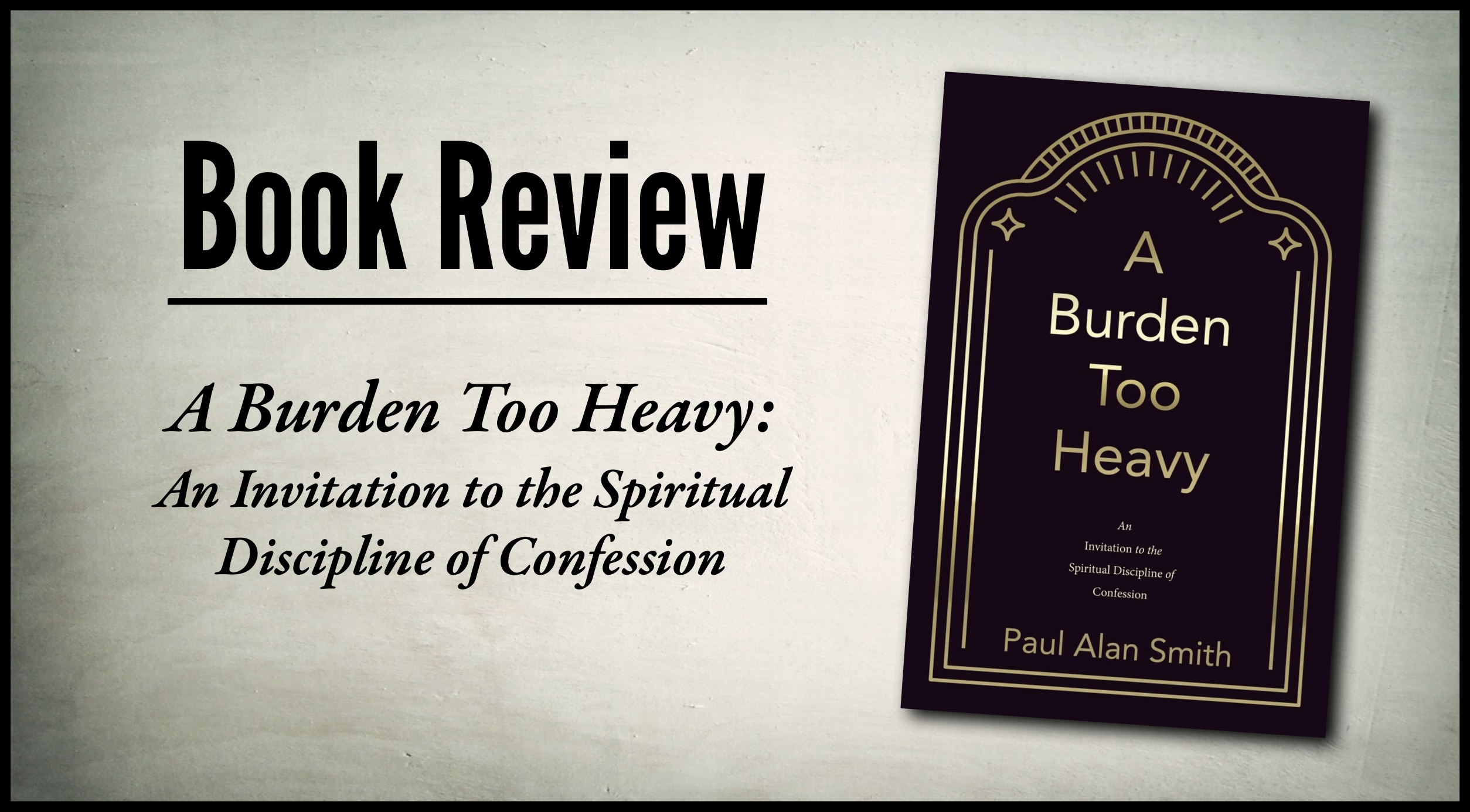
Book Review: A Burden Too Heavy

A while back, I was contacted by Paul Smith, who asked if I would be interested in reading and reviewing a book that he had recently written. I’ve never met Paul in person, but have interacted with him over the years on the web and have enjoyed his writing, so I was happy to agree. And I was not disappointed—his book, A Burden Too Heavy: An Invitation to the Spiritual Discipline of Confession, was an enjoyable read and offers needed corrective teaching to the church.

The word “confession” brings to mind different ideas, so Smith begins by helpfully defining what he means by the term:[1]

I believe the concept of “confession” has at least four applications found in Scripture.…First there are declarative confessions: adoration and praise to God, the declaration of faith in God, and the profession of the truth of a proposition. Second, there is the offering of thanksgiving and gratitude. Third, there is a recognition of physical and spiritual hardship, yet assertion of hopeful faith, through lamentation. Finally, there is a negative connotation of the acknowledgement of sin. In addition to these biblical usages of the word confession, there is another meaning of the word, that of a specific Confession of Faith, which serves to give identity to one assembly of Christians as distinct from others who observe a different confession of faith. (pp. xiv-xv)

Ultimately, what Smith hopes to impress upon the reader is the necessity of developing a confessional lifestyle, characterized by “a pervasive sense of the power of confession and an acceptance of the practices of confession” (xv). The book is structured in three parts.

Smith ministers and lives within the context of Churches of Christ, and those in Churches of Christ are the primary audience of the book, so in Part 1, he offers a brief (but excellent) history of the Stone-Campbell Restoration Movement (chapter 1) followed by an analysis of why the peculiarities that history made Churches of Christs resistant to the spiritual discipline of confession (chapter 2). To put it succinctly, a movement centered on the idea that we could perfectly restore God’s church through human effort led to a pride and arrogance that minimized the transcendence of God and made the admission of mistakes or errors very difficult—both elements of a confessional posture. This section of the book makes evident that the critiques offered by Smith throughout the book come from a place of deep affection for Churches of Christ and admiration for the spiritual ancestors of the Stone-Campbell Movement.[2]

Part 2 is comprised of three chapters. Chapter 3 provides a survey of the Bible, and examines how praise, thanksgiving, lament, and confession of sin are present in Scripture, particularly in the Psalms, but also in other places in the Old and New Testaments. Chapter 4 surveys confessional literature outside of Scripture, from the Early Church Fathers through the Medieval Period and Reformation and up through the Modern and Postmodern periods. Sadly, Churches of Christ have often been guilty of “neglecting the wisdom of the Christian centuries” (80), which means that strong historical emphasis on confessionalism has largely been missed. The historical record, however, is clear:

“The uniform message from many different theological perspectives promoting all forms of confession is an indication that confession has always been a critical component of any Christian theology.” (80)

Chapter 5 takes up the example of Dietrich Bonhoeffer as a case study. Although Bonhoeffer has no direct connection to the Stone-Campbell Movement, this chapter, in addition to being a fascinating survey study of Bonhoeffer in its own right,[3] serves to illustrate what a confessional lifestyle looks like “on the ground,” and how it would benefit Churches of Christ.

Part 3 is where things get practical: what is looks like for the principles emphasized in the book to be played out in life, and Paul addresses this by looking at confessionals in the life of the individual disciple (chapter 6) and the church (chapter 7). Chapter 6 reads much like a standard book on spiritual disciplines, with discussion of Lectio Divina, Meditation Prayer, Ignatius’s Spiritual Exercises, Fasting, and using a Spiritual Director.[4] Chapter 7 looks at how the “acts of worship” can shape a church confessionally, and helpfully examines the connection between confession and the Lord’s Supper, congregational prayer, singing, preaching, and giving.

A Burden Too Heavy ends with a conclusion summarizing the book’s key arguments, and especially why this matters for Churches of Christ:

“The twenty-first-century Churches of Christ share a unique opportunity and problem. The opportunity is to present the vision of men such as Elias Smith, Abner Jones, Barton W. Stone, and Thomas and Alexander Campbell to a culture where the reality of a divided Church is a stumbling block to accepting the gospel of Christ. The problem is that for over two centuries the vision of a restored and united Church has been distorted. It has been distorted by a number of issues, but primary among them has been the lack of a clear, focused and intentional theology of confession. A disposition toward arrogance, numbers acrimonious divisions, and a crippling identity crisis are all results of this lack of a confessional theology.” (146-47)

In addition to the quotations included above, there were several noteworthy quotations throughout the book that I thought were worth sharing (my own thoughts are added in bold):

“…This hermeneutic [command, example, necessary inference] elevated the human deductive reasoning that Thomas Campbell sought to minimize in the Declaration and Address. With the addition of “necessary implication” or “necessary inference” as a part of this restoration hermeneutic, Moses Lard negated the intent of Thomas Campbell to wean Christians off dependency on “the wisdom of men.” (12-13) This point might be a bit technical for some, but as a Restoration History hobbyist, I thought it was profound: basically, within 50 years, a key original tenet of the Restoration Movement was turned on its head.

“Praise is fundamentally an act of confession: a confession that someone or something is higher than the one offering the praise.” (44)

“…Confession is the antidote to the number one impediment of the life of faith—human pride.” (62)

“A church that has no sense of its history cannot own the positive features of its history nor can it confess the errors of its history.” (78) This is such a good point—when we don’t know our history, we truly do not know who we are. We can neither draw from our strengths or learn from our weaknesses.

“…If a preacher is unable to address his own joy and thanksgiving, as well as his doubts and fears, in the most intimate of worship settings, it will be impossible for his congregation to move toward a fully confessional lifestyle.” (131) This is an important reminder that leaders must actually lead. You cannot impart what you do not possess.

“A confessional theology is a theology that has the ability to admit its own failings. Confession praises God’s perfection and simultaneously acknowledges human weakness.” (142)

I really enjoyed A Burden Too Heavy. It was not a lengthy read (just under 150 pages), but Smith accomplished much in a short space: a penetrating analysis of the Stone-Campbell Movement, a survey of Biblical literature and the Christian tradition, a review of the life and theology of Dietrich Bonhoeffer, a summary of spiritual disciplines, and practical advice for congregational worship. And, most impressively of all, all of these seemingly disparate elements fit together as part of a coherent and forceful argument: the spiritual discipline of confession is a vital element that is largely missing in the ecclesiology of Churches of Christ and the individual lives of its members.

Smith’s work is a valiant attempt to reclaim that missing element. I fear—for the same reasons he mentions in his analysis of Churches of Christ—that many will be resistant to the sort of changes he proposes. But perhaps some will listen, and for that reason, I hope this book enjoys the widest possible readership.


[1] In this post, I will post page numbers in parentheses after quotations, and reserve footnotes for purposes of explanation. The italics in the following quotations are from the original.

[2] I point this out because it has been my experience that sometimes authors speak of the Restoration Movement with thinly veiled contempt, which I find to be off-putting. Smith is clearly writing this book out of a desire to help a fellowship that he loves and to which he is indebted.

[3] Bonhoeffer has long been a personal hero and area of study for Smith, so I was delighted (but not surprised!) to see this chapter in the book. Interestingly, I had just finished reading Bonhoeffer’s Life Together when I read this, and this summary helped emphasize some of the key ideas in Life Together.

[4] After talking about Spiritual Direction, Smith includes a section on “Redeeming the Role of Spiritual Director Within the Churches of Christ,” where he addresses the Boston Movement/International Churches of Christ, and issues of spiritual abuse in the past, and explains how different spiritual direction is from these abusive practices. This is a helpful section and I am glad it was included, but I fear it will be insufficient to soothe the concerns of those with direct experience with this movement.

Christmas Carol Theology: “The Little Drummer Boy”

This is part of an ongoing series based on the simple premise that some of the carols we sing during the Christmas season have important theological lessons to teach us. You can see an index of the entire series here. As I am publishing this post on Christmas Eve, it will be the last installment for 2025, but I hope to add to the series in Christmas seasons to come.

“The Little Drummer Boy” may seem like an odd entry in this series. Far from seeming like a trove for theological insight, it’s often dismissed as laughable and anachronistic: “Oh, a drum solo? Yes, I’m sure that’s what Mary wanted for her newborn baby.” Additionally, it seems to get the chronology wrong, as the Little Drummer Boy accompanies the Wise Men, who didn’t visit Jesus when he was a newborn in the manger.

Originally, the song was called “Carol of the Drum,” and it was written in 1941 by Katherine Kennicott Davis, an American classical music composer who wanted to produce music for children’s choirs. The narrator of the song relates how he was summoned by the Magi to the visit the baby Jesus. The Magi famously bring gold, frankincense, and myrrh (their “finest gifts”), but the drummer boy is poor and gift-less, and with Mary’s approval, plays his drum for the Infant King instead:

Come they told me, pa rum pum pum-pum
A newborn King to see, pa rum pum pum-pum
Our finest gifts we bring, pa rum pum pum-pum
To lay before the king, pa rum pum pum-pum
Rum pum pum-pum Rum pum pum-pum
So to honor Him, pa rum pum pum-pum
When we come

Little baby, pa rum pum pum-pum
I am a poor boy too, pa rum pum pum-pum
I have no gift to bring, pa rum pum pum-pum
That’s fit to give our King, pa rum pum pum-pum
Rum pum pum-pum Rum pum pum-pum
Shall I play for you, pa rum pum pum-pum
On my drum?

Mary nodded, pa rum pum pum-pum
The ox and lamb kept time, pa rum pum pum-pum
I played my drum for Him, pa rum pum pum-pum
I played my best for Him, pa rum pum pum-pum
Rum pum pum-pum Rum pum pum-pum
Then He smiled at me, pa rum pum pum-pum
Me and my drum


What are we to learn from the laughably ahistorical song? Actually, something really important.

The Little Drummer Boy found himself before a King he wanted to honor and surrounded by others who were offering fine, impressive gifts. He didn’t have anything like that (and seemed embarrassed by the fact), but he offered the best of what he had: “I played my drum for Him/I played my best for Him.”

This points to a profound lesson that is demonstrated in different places and multiple ways throughout Scripture: as Christians, there are all sorts of ways that we can serve and honor our King. God does not expect our service to Him to look just like someone else’s; He expects us to serve Him as best we can with the talents and opportunities we have:

  • This is Paul’s point when he discussed that the Body of Christ is made up of many different parts: we don’t all have the same function, but we all have some function. We are to do the best we can in our position in the Body.
  • We see this with the Widow and her two mites. The size of her gift, relative to others, is not what matters, but her devotion to the Lord with what she has.
  • In the Parable of the Talents, different servants are given different amounts of money based on their respective abilities. They are not expected to all act identically, but they are expected to do the best they can with what they have been given.
  • Jesus’s own parents offered two turtledoves when they presented Him at the Temple. This substitute offering of turtledoves instead of a lamb was a provision for the poor built into the Law of Moses, and represents a clear demonstration that rather than expecting the same from everyone, God expected the best they could afford.

As we live the Christian life, it can be easy to see the talents and abilities of others and see the difference they are making for God’s kingdom and feel discouraged by the fact that it seems that we are able to do little by comparison. As we look at the brokenness of the world around us, it can feel overwhelming and we can think that we can never do enough.

But God doesn’t ask us to be like someone else, and He doesn’t ask us to fix all the problems of the world. He asks us to be faithful with the talents, blessings, and opportunities that He gives us.

He asks us to play our best for Him.

Pa rum pum pum-pum.

God doesn’t ask us to be like someone else, and He doesn’t ask us to fix all the problems of the world. He asks us to be faithful with the talents, blessings, and opportunities that He gives us. Share on X
« Older posts

© 2026 The Doc File

Theme by Anders Noren — Up ↑