The online journal of Luke Dockery

Category: Theology (Page 43 of 58)

Wise Words I Once Heard…and Bobby Petrino

If you pay any attention to sports at all, you are likely aware that Arkansas Razorback football coach Bobby Petrino was in a serious motorcycle wreck eight days ago, and that as more details of the incident came to light, it was revealed that a female passenger on the bike turned out to be an employee with whom Petrino was having an inappropriate relationship.

The national media has been quick to pick up on this story and has been decidedly anti-Petrino (a quick Google search on ‘Bobby Petrino’ will confirm this). Perhaps neither of those facts is very surprising—our culture (and by extension, the media) is always interested in a juicy story about the misdeeds or failure of public figures, and Bobby Petrino has never been very popular with the media anyway (ESPN’s Pat Forde has been on a personal crusade against him for years).

I don’t know if Petrino will be fired or not, and I have mixed feelings about whether or not he should be. I am disappointed in him and embarrassed by his actions, but at the same time, he has been the most successful football coach that Arkansas has had in my lifetime (or at least, in my memory), and I was never under the impression that he was hired because of his reputation for upstanding character.

All of this—the initial report of the accident, the rumors flying around after that report, the revelation of Petrino’s female passenger and his relationship with her, and the response of the national media—has reminded me of some wise words I once heard from Jimmy Allen.

Jimmy Allen is well-known within Church of Christ circles as an evangelist, and additionally, within the Harding University community as a Bible professor. It’s in the latter role that I know him best, as I took his outstanding class on the Book of Romans during my time at Harding. It was in that class (I don’t remember the specific context) that he said these words which I’ll never forget:

“If I hear something bad about someone, I never believe it. If it comes to the point that I have no choice but to believe it, I do not delight in it.”

I’m not entirely sure what it is about us as humans that makes us crave and delight (cf. Proverbs 18.8) in hearing of the failings of others. It likely stems from our own insecurities, and our tendency to feel better about ourselves when we see the shortcomings of others. But that craving and delighting is all closely related to the sin of gossip, which is a topic that the Bible has an awful lot to say about.

In the case of Bobby Petrino, I’m not delighting in the story like a lot of people in the National media and fans of other programs are, but if I’m honest, a lot of the reason for that is because he’s the coach of my team, and I don’t like the ramifications of all this for me. When it comes to hearing gossip about someone I might not like as much, I don’t always do a very good job of following Dr. Allen’s words.

Instead of gleefully focusing on the failings of others, the Apostle Paul suggests an alternative course of action in Philippians 4.8:

“Finally, brothers, whatever is true, whatever is honorable, whatever is just, whatever is pure, whatever is lovely, whatever is commendable, if there is any excellence, if there is anything worthy of praise, think about these things.”
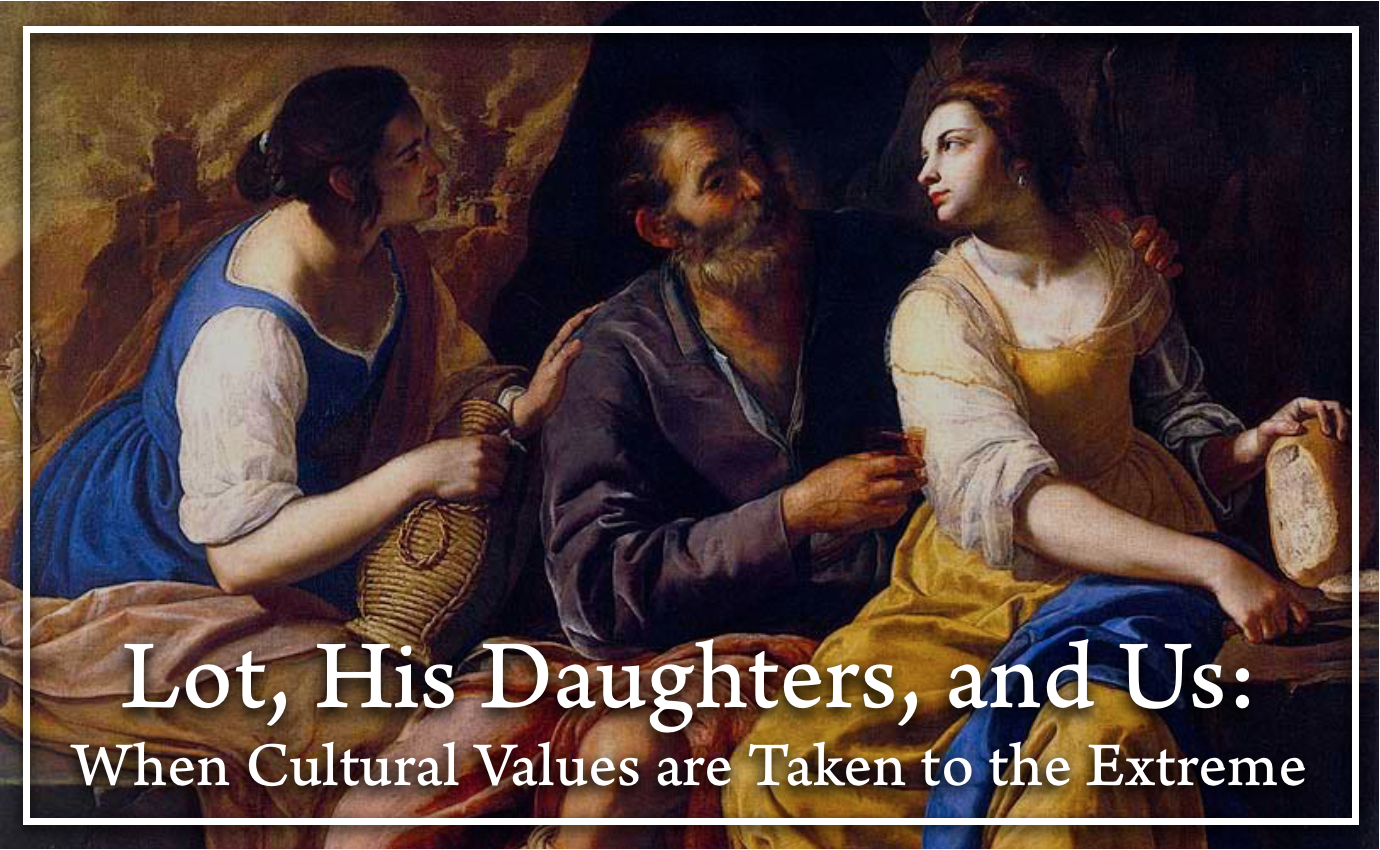
Lot, His Daughters, And Us: When Cultural Values are Taken to the Extreme

I’ve been encouraging my High School Bible Class to read through the narrative portions of Scripture this year and have been giving them a daily schedule to help. I think this is a good thing to do for many reasons, but one reason is that there are certain parts of the Bible which are often passed over in Bible classes and sermons, but it’s still important for people to know they are there (especially teens, who should be in the process of developing their own faith rather than relying on the faith of their parents).

When they made it to Genesis 19, I got a lot of questions, and as I discussed their questions with them, it struck me how often certain values that a culture emphasizes (which may be good in and of themselves) can be taken to dangerous and often sinful extremes.

The Importance of Hospitality

Genesis 19 covers the destruction of Sodom, which was something they were vaguely familiar with, but there were a couple of details that they had missed out on. Two angels, appearing as men, come to Sodom and stay with Lot, and the wicked men of the city bang on Lot’s doors and demand that Lot hand over the two men to them so they can engage in sexual relations with them. Lot’s response is shocking to our modern ears:

“Lot went out to the men at the entrance, shut the door after him, and said, ‘I beg you, my brothers, do not act so wickedly. Behold, I have to daughters who have not known any man. Let me bring them out to you, and do to them as you please. Only do nothing to these men, for they have come under the shelter of my roof.’”

Lot doesn’t seem to be in the running for any Father of the Year awards here, as he offers his daughters to the would-be rapists rather than his guests. That’s hard to understand unless you realize that the idea of hospitality and taking good care of one’s guests was of paramount importance in many ancient cultures (and some modern ones). It’s not that Lot was eager to give up his daughters—I’m sure he wasn’t—it’s just that hospitality was such an important cultural value that it led him to an extreme (and I would suggest, sinful) action. Fortunately for Lot’s daughters, the two angels intervene and strike the wicked men with blindness.

A Woman’s Value Through Child-Bearing

Another example of this phenomenon actually comes from the same chapter of Genesis. Ultimately, only Lot and his two daughters escape the destruction of Sodom, as his sons-in-law remained in the city and his wife was turned into a pillar of salt when she looked back on the destruction of the city.

Lot and his daughters flee to the hills and live in a cave, and here, another shocking development is recorded:

“And the firstborn said to the younger, ‘Our father is old, and there is not a man on earth to come in to us after the manner of all the earth. Come, let us make our father drink wine, and we will lie with him, that we may preserve offspring from our father.’ So they made their father drink wine that night. And the firstborn went in and lay with her father. He did not know when she lay down or when she arose.

The next day, the firstborn said to the younger, ‘Behold, I lay last night with my father. Let us make him drink wine tonight also. Then you go in and lie with him, that we may preserve offspring from our father.’ So they made their father drink wine that night also. And the younger arose and lay with him, and he did not know when she lay down or when she arose. Thus both the daughters of Lot became pregnant by their father.”

So a few days after Lot offers his daughters to rapists, they now get him drunk in order to sleep with him—Lot’s family seems to be the picture of dysfunction, right? Once again though, I think what we have here is a cultural value taken to an unhealthy extreme. In this case it seems that (as was often the case in many ancient cultures, and even some cultures today) for Lot’s daughters, their entire value as humans was derived from their ability to carry on the family line of their father through the bearing of children. With their husbands-to-be destroyed in the obliteration of Sodom and thus their means of child-bearing suddenly removed from them, Lot’s daughters turn to a sinful and (I imagine) undesirable last resort.

What About Us?

With a little careful reflection on the cultural forces that pulled on Lot and his daughters, I think their actions are a little more understandable. That being said, I don’t think these stories show us that the influences of culture validates sinful behavior—not at all. On the contrary, I believe one thing these stories do show us is how, if we’re not careful, the ideals we value as a culture can push us to do unthinkable things.

For example, in American society, one of our most sacred values is individual freedom. Many of the people who colonized the United States came here out of the desire to find freedom of one type or another. The American Revolution was fought because the descendants of those colonists felt that they should be free to govern themselves. The importance of liberty was hammered first into the Declaration of Independence and later into the U.S. Constitution, primarily through the Bill of Rights. As Americans, we pride ourselves on being free people.

But how could freedom be a bad thing? Well, it is the cultural value of freedom that, when taken to an extreme, is used to justify the yearly destruction of hundreds of thousands of unborn infants in the U.S. As a society, we are engaged in an ongoing genocide against our own unborn, but we pretend it is okay because supposedly, the mother should be free to do whatever she wants with her own body. It is cast as an issue of freedom and personal rights.

Clearly, our cultural values can cause moral blind spots for us today just as they did for Lot and his daughters some 4,000 years ago. Perhaps in the distant future, people will look back on our society and shake their heads in shame at the plague of abortion that we have embraced. And perhaps they will be able to somewhat understand our sin because of the cultural values that influence us and that we use to justify it.

But it will still be sin.

Influence and…Faux Hawks

The Idolatry of Solomon, by Franz Francken II, 1622
Influence is a powerful force—both the influence that we have on other people and the influence that others have on us. This is by no means a new or ground-breaking statement, but it is an idea that was hammered home to me last night in an unusual way.
I was standing in front of the bathroom mirror after taking a shower, when I realized that the way my hair was laying pretty closely resembled a faux hawk. And here’s the shocking part: I caught myself thinking, “You know, that really doesn’t look too bad.” This completely blew me away, because when faux hawks first became popular a couple of years ago, I thought they were irredeemably stupid. I don’t ever remember consciously changing my opinion on the matter, but apparently, seeing one faux hawk after another for the last couple of years gradually influenced me to think of it as a normal and acceptable haircut (Don’t worry, I have since returned to my senses and there is no danger that you will see me sporting a faux hawk—ever.).
This shocking event illustrates an important point about influence—you can gradually, subtly be influenced to completely change the way you think about a certain behavior, practice, or way of life, and it can happen without you even realizing it. Sometimes you might change your mind about something relatively innocent or unimportant (like a hairstyle), but influence can also change us in much more significant (and sometimes negative) ways.
I’m currently reading a book called Sticky Faith, which addresses the alarming rate at which Christian teenagers tend to drop out of the church about the time they graduate from high school. There are a lot of reasons why this happens, but a major one is influence—when teens leave home and move off to college, they are largely freed from the greatest influence in their lives (parents), and are especially susceptible to new influences that they encounter. Often, these new and different influences push them to places where they never thought they would end up—most faithful Christian teenagers don’t plan to go to college, drop out of church, and become involved in a lifestyle of binge-drinking and sexual promiscuity, but it happens as they are influenced to change the way they look at things and to fit in with their surroundings.
Although this phenomenon always seems to be surprising to youth ministers and parents when they witness it in individual cases, it’s really shouldn’t surprise us at all, because the Bible explicitly teaches us that the influences of others can lead us to sin:
  • King Solomon was influenced by his foreign wives and concubines to turn away from following God and build places of worship to idols instead (1 Kings 11.1-13).
  • Herod’s stepdaughter was influenced by her mother to ask that John the Baptist be beheaded (Matthew 14.1-12).
  • In Galatians 2.11-21, Paul describes how certain men had influenced Peter and Barnabas to withdraw from fellowshipping with Gentiles.
  • In 1 Corinthians 15.33, Paul comes right out and says, “Do not be deceived: ‘Bad company ruins good morals.’”
The good news is that influence works both ways—good influences have a lot of power as well:
  • “You are the light of the world. A city set on a hill cannot be hidden. Nor do people light a lamp and put it under a basket, but on a stand, and it gives light to all in the house. In the same way, let your light shine before others, so that they may see your good works and give glory to your Father who is in heaven.” (Matthew 5.13-16)
  • “Let no one despise you for your youth, but set the believers an example in speech, in conduct, in love, in faith, in purity.” (1 Timothy 4.12)
  • “Keep your conduct among the Gentiles honorable, so that when they speak against you as evildoers, they may see your good deeds and glorify God on the day of visitation.” (1 Peter 2.12)
Ultimately, when talking about influence, I think it all boils down to a couple of important points:
(1) All of us are susceptible to outside influences, so it is important that we monitor those influences closely. What kind of people do you surround yourself with? What music do you listen to? What movies or TV shows do you watch? If you are a parent, answer those same questions about your children. Don’t be naive—if you surround yourself with bad influences, no matter who you are, they are affecting you negatively.
(2) All of us influence others as well, so it is important that we are aware of the kind of example we are setting. You never know who might be watching you and who might be influenced by what you do. As a youth minister I do a lot of things, but I have long thought that the most important thing I can do is to be a good example of Christian living for the young people I minister to. Certainly I don’t always succeed, but I always try to be aware that I am broadcasting an influence—for good or bad— at all times.

Being a Christian Without Being Part of the Church?

It’s a popular notion today that one can be a Christian without being a part of the Church. It’s also a thoroughly unbiblical notion.

In The Prodigal God, Timothy Keller has some good thoughts in this regard:

“Christians commonly say that they want to “get to know Jesus better.” You will never be able to do that by yourself. You must be deeply involved in the church, in Christian community, with strong relationships of love and accountability. Only if you are a part of a community of believers seeking to resemble, serve, and love Jesus will you ever get to know him and grow into his likeness.”

I have known plenty of people who were in one sense or another actively involved with the Church who did not particularly resemble Jesus. That’s a common enough claim, and shows that just “going to church” or being involved in church activities doesn’t necessarily transform someone to the image of Christ.

Of course, at the same time, I haven’t known anyone who resembled Jesus who wasn’t also deeply devoted to the Church. Jesus loved the Church enough that he paid for it with his blood (Acts 20.28); to think that one can somehow be a Christian without belonging to that Body is absurd.

The Old Testament and Immigration

It’s always potentially controversial to mix the Bible and politics, but as Christians, shouldn’t our political views be informed by Scripture? If they are not, isn’t that a problem?

I have written some brief thoughts on the issue of immigration before, but in general, it is surprising and disappointing to me how frequently Christians endorse anti-immigrant political views considering the repeated and consistent witness of the Old Testament.

Consider the following scriptures:

“You shall not wrong a sojourner or oppress him, for you were sojourners in the land of Egypt.” (Exodus 22.21) 

“When a stranger sojourns with you in your land, you shall not do him wrong. You shall treat the stranger who sojourns with you as the native among you, and you shall love him as yourself, for you were strangers in the land of Egypt: I am the Lord your God.” (Leviticus 19.33-34) 

“He executes justice for the fatherless and the widow, and loves the sojourner, giving him food and clothing.” (Deuteronomy 10.18) 

“‘Cursed be anyone who perverts the justice due to the sojourner, the fatherless, and the widow.’ And all the people shall say, ‘Amen.’” (Deuteronomy 27.19) 

“For if you truly amend your ways and your deeds, if you truly execute justice one with another, if you do not oppress the sojourner, the fatherless, or the widow, or shed innocent blood in this place, and if you do not go after other gods to your own harm, then I will let you dwell in this place, in the land that I gave of old to your fathers…” (Jeremiah 7.5-7) 

“You shall allot it as an inheritance for yourselves and for the sojourners who reside among you and have had children among you. They shall be to you as native-born children of Israel. With you they shall be allotted an inheritance among the tribes of Israel.” (Ezekiel 47.22) 

“Thus says the Lord of hosts, Render true judgments, show kindness and mercy to one another, do not oppress the widow, the fatherless, the sojourner, or the poor, and let none of you devise evil against another in your heart.” (Zechariah 7.9-10) 

“Then I will draw near to you for judgment. I will be a swift witness against the sorcerers, against the adulterers, against those who swear falsely, against those who oppress the hired worker in his wages, the widow and the fatherless, against those who thrust aside the sojourner, and do not fear me, says the Lord of hosts.” (Malachi 3.5)

A few brief observations based on those verses:
First, someone will probably be quick to say something like, “All of those scriptures are from the Old Testament; Christians live under the New Testament” (because someone is always quick to say something like that). Of course, in a sense, they would be correct—as a Christian, I am not bound by all of the rules and regulations of the Law of Moses. At the same time, that doesn’t mean that consistent ethical principles from the Old Testament aren’t also meant to apply to Christians today (cf. Micah 6.8; Matthew 5.17).
Secondly, someone might point out that, while we are supposed to be kind and welcoming to immigrants (based on the verses above), according to Romans 13.1-7, we are to be subject to the laws of our land which means that we shouldn’t be supportive of illegal immigrants. And that might be true—I’m not really suggesting that Christians should develop an Underground Railroad to smuggle immigrants into the country illegally. However, if the consistent witness of Scripture is to suggest an “Open Arms” policy toward immigrants, then Christians probably do need to use their political influence to make immigration laws more immigrant-friendly (and thereby enable Christians to be subject to the laws of the land and also loving to immigrants).
Third, it should be remembered that these Old Testament directives were given to the Israelites, a people who were, as a general rule, supposed to remain ethnically pure as a means of ensuring faithfulness to Jehovah (when the people would intermarry with the surrounding peoples, it invariably led to the adoption of idolatry). Despite this, the Israelites were still supposed to be welcoming to foreigners. This is important to keep in mind, as a common objection to immigration has been a fear of the mixing of races or the influence of different religious beliefs.
Finally, a practical argument in favor of immigration has been that the United States is, fundamentally, a country of immigrants—how can we (American citizens) reject immigrants when the vast majority of us are here only because of the immigration of our ancestors? Interestingly, this is a repeated rationale of Scripture as well—how can the Israelites mistreat sojourners, when they themselves were sojourners in Egypt?
I have a hard time identifying closely with either major political party because, I believe, they both fail to consistently embrace biblical principles. When it comes to immigration, I think the rhetoric from the Right (and therefore, from a lot of Christians) often fails to live up to the biblical standard.

« Older posts Newer posts »

© 2026 The Doc File

Theme by Anders Noren — Up ↑