The online journal of Luke Dockery

Category: Theology (Page 50 of 58)

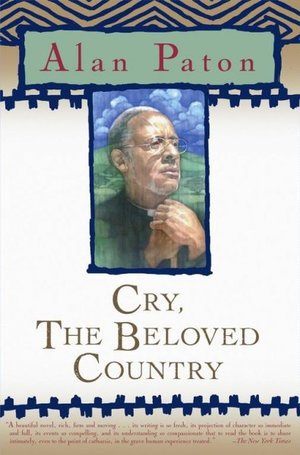
Cry, The Beloved Country

I read Alan Paton’s Cry, The Beloved Country at the beginning of the summer and meant to write about it long before now, but then the summer busyness that comes with youth ministry set in and I’m just now getting around to it.

Simply put, this is one of my all-time favorite books. I love Paton’s poetic style of writing, and I thought the story was incredibly moving and powerful.

Cry, The Beloved Country is set in South Africa in the late 1940s, before apartheid, but certainly in a time of profound racial strife. The main character in the book is Umfundisi Kumalo, an elderly Anglican priest (“umfundisi” is Afrikaans for “parson”) who leaves his native village to go to the great city of Johannesburg in search of his son Absalom, who he hasn’t seen or heard from in a long time. Kumalo has never really been away from his village before, and the old priest is completely overwhelmed by the size of the city, and the different customs and behaviors he sees there.

The book touches on several heavy themes—racism, theology, politics, the breakdown of the native village, crime, environmental concerns, and others—but I just want to focus on one quotation that I really liked.

While in Johannesburg, Kumalo becomes close friends with Umfundisi Msimangu, a younger priest who helps him in his search and comforts him as he endures one heartbreaking discovery after another. Time and time again, Msimangu goes out of his way to help Kumalo in any way that he can.

At one particular moment in the book, the old priest is so moved by the overwhelming love and kindness that the younger priest shows him that he begins to pay him a compliment. Kumalo tells Msimangu that he has never known anyone like him, but before he can go on, the young priest interrupts his compliment and rebukes him, saying, “I am a weak and sinful man, but God put His hands on me, that is all.”

I think there’s profound meaning there. Often, I think the world can be put off by Christianity because people assume that Christians consider themselves to be better than everyone else (and certainly some do). Instead, we should have the attitude of Msimangu. He wasn’t willing to take credit for his good deeds, but instead said that it was God’s influence in his life that made those deeds possible. That’s how we should be. We should strive to show the world that any difference or “betterness” on our part isn’t because of us—it’s because Jesus changes our hearts and allows us to be different.

“I am a weak and sinful man, but God put His hands on me, that is all.”
In The Midst Of A Busy Week…

The following words seemed appropriate:

“The endless cycle of idea and action,
Endless invention, endless experiment,
Brings knowledge of motion, but not of stillness;
Knowledge of speech, but not of silence;
Knowledge of words, and ignorance of the Word.
All our knowledge brings us nearer to our ignorance,
All our ignorance brings us nearer to death,
But nearness to death no nearer to God.
Where is the Life we have lost in living?
Where is the wisdom we have lost in knowledge?
Where is the knowledge we have lost in information?”

—T.S. Eliot

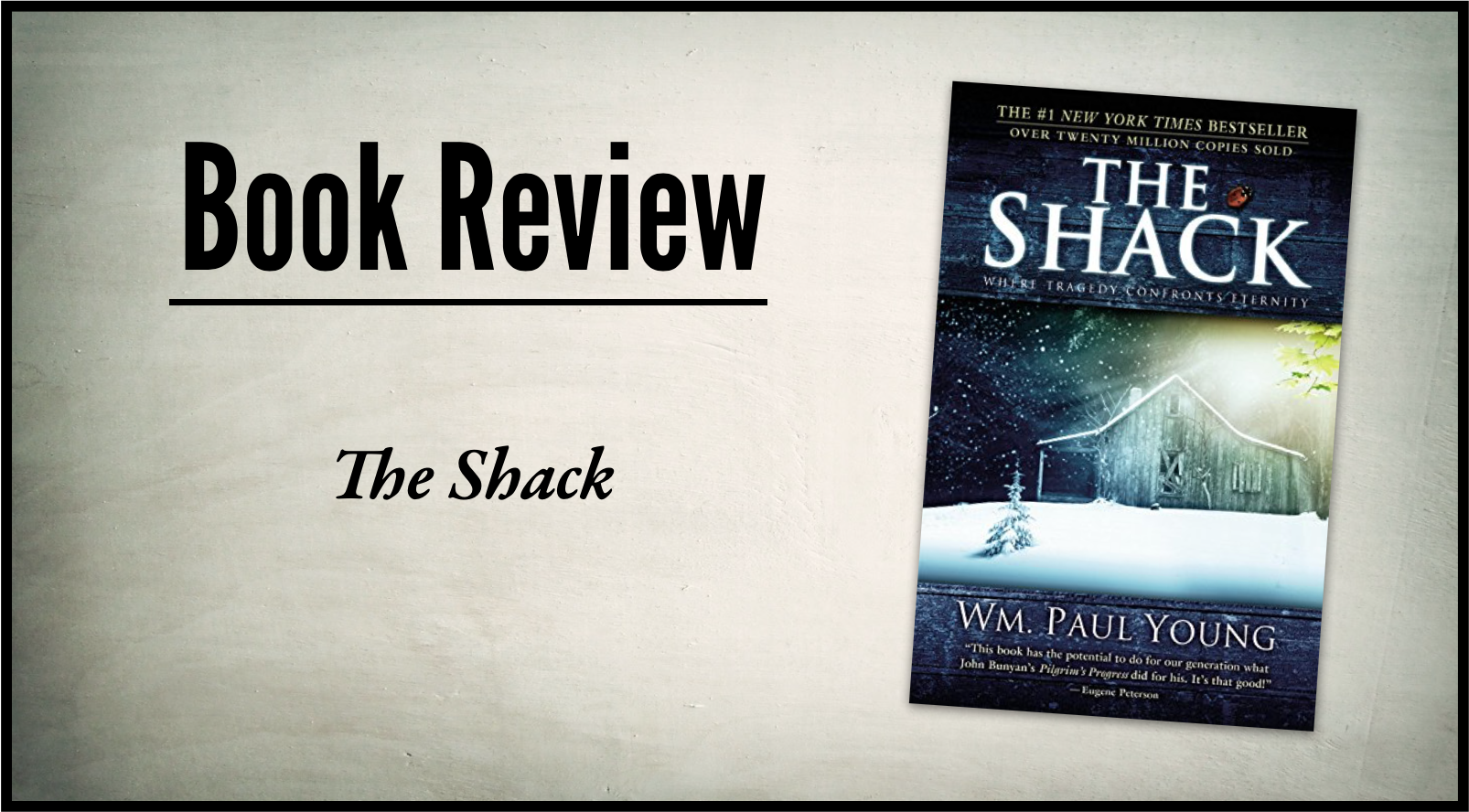
Book Review: The Shack


If you haven’t read The Shack, the wildly popular Christian fiction book by William P. Young, you’ve probably heard about it. I had certainly heard about it quite a bit, from several different sources, and finally decided to read it

Put very basically, the story is about a father who experiences a horrific family tragedy, and whose faith in God is shaken as a result. He is invited to spend a weekend with God at a remote shack where God (personified in various forms) works on healing his wounds and his relationship with the Creator.

My reaction to the book was pretty much what I expected: The Shack is written by a well-meaning author who is attempting to help people through difficult times, but it is a book which, upon close examination, has some serious theological problems. Young seems to espouse an unorthodox view of the Trinity (the kind that makes Muslims think that Christians are polytheistic), the Incarnation (he implies that God the Father became human as well as Christ), and he downplays the holiness of God, at one point having God claim that He doesn’t need to punish sin. And perhaps my biggest problem with The Shack, at least from a practical standpoint, is that it seems to suggest that it’s necessary to have some sort of miraculous, face-to-face interaction with God to get through rough times. For people reading the book looking for comfort, I would think that suggestion would be less than helpful.

As I said before, I think Young is well-meaning, and I tend to think that by trying to simplify the nature of God into understandable human characters, he ends up making implications that he himself doesn’t actually believe. Simply put, it’s hard to simplify the concept of God without distorting who He is in some way.

For all the negatives though, there were a few times when I thought The Shack hit the nail on the head.

On the death of Jesus on the cross (this makes more sense if you know that Young is portraying God as a motherly-type woman in this scene):

“Mack struggled for the words to tell her what was in his heart. ‘I’m so sorry that you, that Jesus, had to die.’
She walked around the table and gave Mack another big hug. ‘I know you are, and thank you. But you need to know that we aren’t sorry at all. It was worth it.’”

On how we change into being who God wants us to be:

“This whole thing is a process, not an event. All I want from you is to trust me with what little you can, and grow in loving people around you with the same love I share with you. It’s not your job to change them, or to convince them. You are free to love without an agenda.”

And on God causing (or not) bad things to happen:

“Mack, just because I work incredible good out of unspeakable tragedies doesn’t mean I orchestrate the tragedies. Don’t ever assume that my using something means I caused it or that I need it to accomplish my purposes.”

I probably won’t be recommending The Shack to many people, and I certainly won’t hold my breath waiting for Young to come out with a new book, but I was glad to find some good points in a book that wasn’t one of my favorites.

Gideon’s 300

The Battle of Thermopylae is one of the most famous military engagements in history.

In 480 BC, desperate to halt the advance of the Persian empire into Greece, 300 Spartans (along with another couple thousand Greeks who are generally forgotten about) rushed to the mountain pass of Thermopylae.

There they met the immense Persian army head on—no one knows for sure how big of an army it was, but even modern, conservative estimates suggest that it was at least 200,000 men, or a ratio of 100 Persians to every Greek.

This was possible because the Spartans were amazing warriors. From childhood, Spartan males were trained and hardened, and by adulthood, they were the world’s best fighting machines. The Spartans also employed good strategy in the battle, occupying the narrow pass of Thermopylae where the massive Persian army couldn’t overwhelm them all at once.

King Leonidas of Sparta and his men held the pass for three days against overwhelming numerical odds, but were eventually defeated when the Persians discovered a mountain path that led behind Greek lines.

Ultimately, the battle was a success—the Spartans’ three-day stand delayed the advance of the Persian army and afforded Athens the time it needed to prepare for the decisive naval battle which would end up determining the outcome of the war—but every Spartan was killed.


Some 700 years prior to the Battle of Thermopylae, during the Old Testament period of the Judges, God appeared to a man named Gideon and told him to defeat the Midianites who had been oppressing Israel for seven years.

There would be some similarities between this battle and the Battle of Thermopylae. Like the Persians, the Midianites had a vast army—as numerous as the sand on the seashore (Judges 7.12). On the other hand, the Israelite army was tiny, as God had Gideon trim it down from an original size of 32,000 to just 300.

Although the Israelite army was outnumbered like the Spartan army would be hundreds of years later, the similarities pretty much stopped there. The Israelites weren’t the world’s best soldiers—they were mainly farmers, and it seems possible that many of them had never fought before at all. Furthermore, their battle plan seemed to be lacking, as they entered into battle armed with only trumpets and torches.

But most different of all was the outcome of the battle. There was no way the Israelites should have won, but they did. The Bible says that when the Israelites blew their trumpets, God caused confusion in the Midianite camp, and they panicked and turned on each other. Israel left the battlefield victorious.


In the Battle of Thermopylae, Sparta, the world’s best warriors, against great odds managed an amazing accomplishment, but they ended up losing the battle and every man was killed in the process. Meanwhile Gideon and his ragtag army defeated the Midianites with ease. Why the different results?

I think the lesson to be learned by comparing these two stories is that human ability can lead to amazing achievement, but ultimately, it falls short.

Isaiah 40.28-31 is one of my favorite Old Testament passages:

“Do you not know? Have you not heard?
The Everlasting God, the LORD, the Creator of the ends of the earth
Does not become weary or tired.
His understanding is inscrutable.
He gives strength to the weary,
And to him who lacks might He increases power.
Though youths grow weary and tired,
And vigorous young men stumble badly,
Yet those who wait for the LORD
Will gain new strength;
They will mount up with wings like eagles,
They will run and not get tired,
They will walk and not become weary.”

When times get tough, where do you turn? Do you rely on your own strength and abilities? On other people? Sooner or later, all of those things will fail you. But if God is the source of your strength, you’ll never run out.

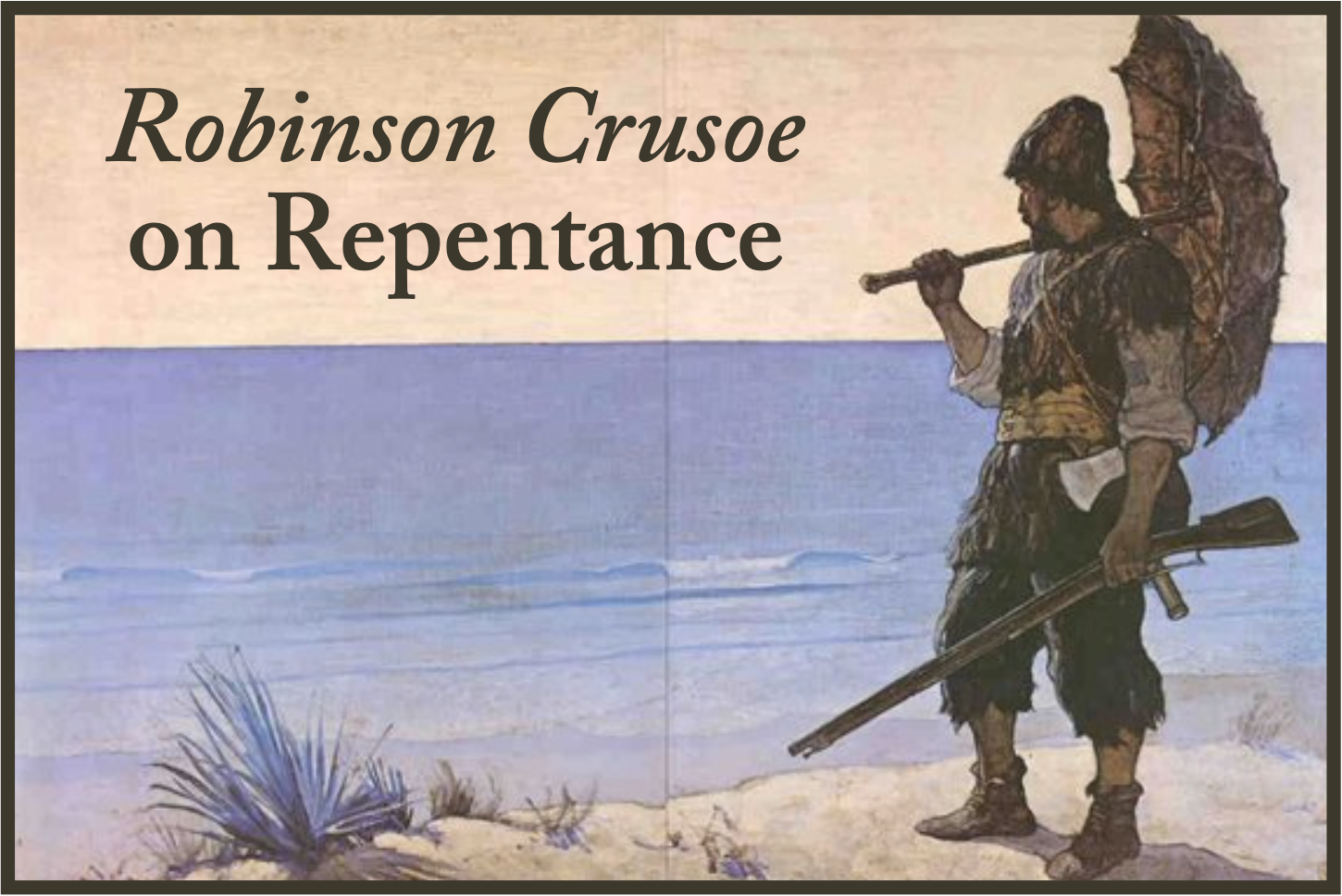
Robinson Crusoe On Repentance

I read a children’s version of Daniel Defoe’s Robinson Crusoe when I was a kid, and I remembered the story being interesting enough that I wanted to try the real thing. Considered by many to be the first novel written in English, Robinson Crusoe is an interesting tale of a man (who the book is named after) who lives for over 20 years by himself on a deserted island after being shipwrecked there.

One thing that surprised me a little was how much of the book was dedicated to Robinson’s thoughts on theology. He considers a few topics—sin, repentance, providence, the extent to which God reveals Himself in nature vs. revelation in Scripture— and over the course of his time on the island, becomes very devout in his desire to follow God.

Unfortunately, these religious passages grow a little tedious, as Crusoe basically makes the same arguments over and over. However, I liked the following thoughts on sin and repentance:

“…I have since often observed how incongruous and irrational the common temper of mankind is, especially of youth, to that reason which ought to guide them in such cases—namely, that they are not ashamed to sin, and yet are ashamed to repent; not ashamed for the action for which they ought justly to be esteemed fools, but are ashamed of the returning, which only can make them be esteemed wise men.”

I think he’s right on target here. So often we fail to admit that we’re in the wrong because of how it will make us look. We don’t generally have the same qualms when we misbehave in the first place.

« Older posts Newer posts »

© 2026 The Doc File

Theme by Anders Noren — Up ↑