The online journal of Luke Dockery

Category: Youth Ministry (Page 2 of 24)

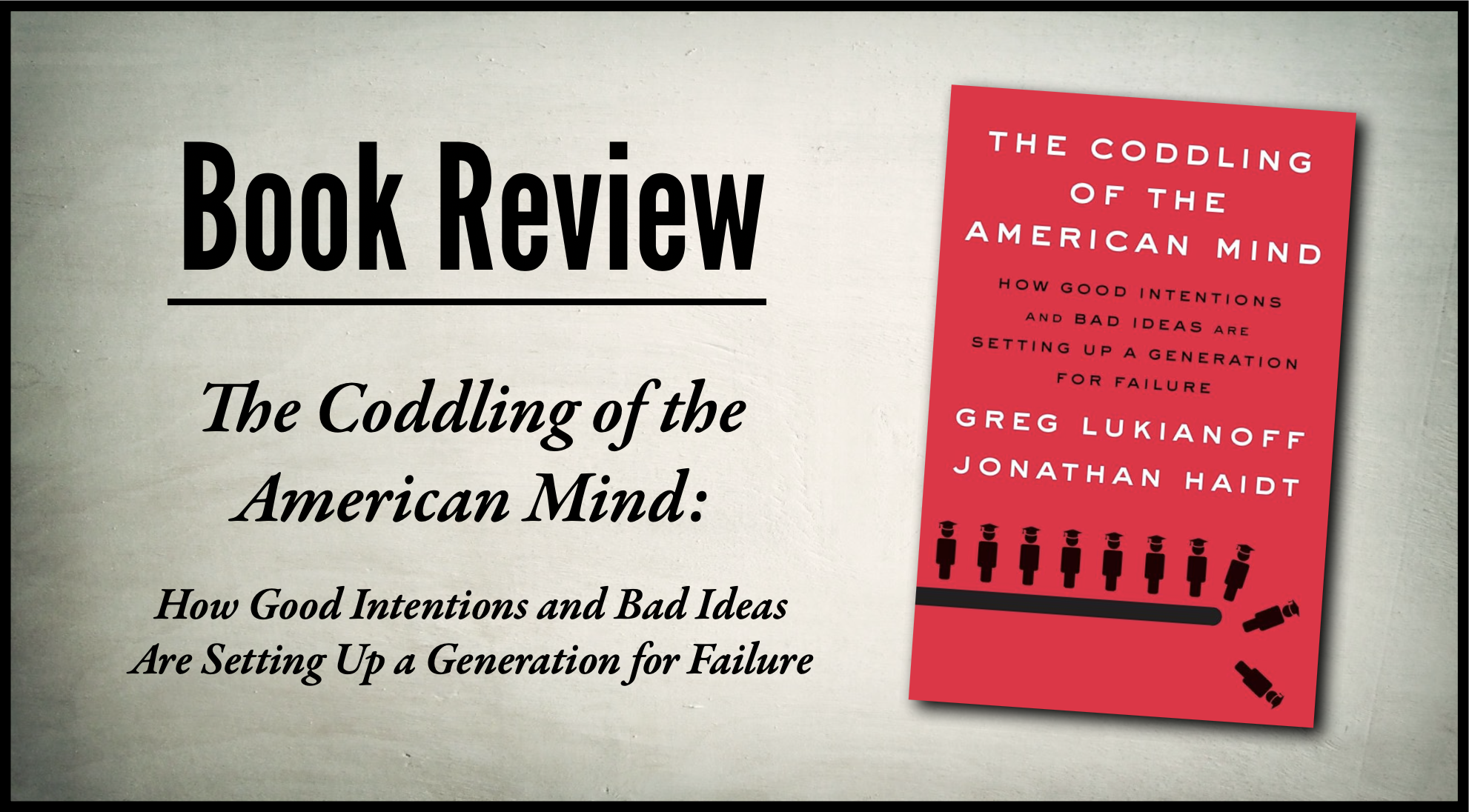
Book Review: The Coddling of the American Mind

Recently in my college youth ministry class, I was sharing research on current teenagers and college students, and while sharing some main ideas from The Coddling of the American Mind by Greg Lukianoff and Jonathan Haidt, I realized that I had never reviewed the book here on The Doc File. Earlier this year, I wrote a review of Haidt’s The Anxious Generation, and I shared how much I have benefitted from Haidt’s work, and how The Coddling of the American Mind was one of my top books in 2021.

But I want to share more about it, here. The Coddling of the American Mind is, I believe, a really helpful book. It is based on extensive research of the two authors, who come from different professional backgrounds (Lukianoff is an attorney and Haidt is a social psychologist). Politically, they would likely be described as moderate liberals, or centrists or something like that, and they do not write from a religious perspective (I am unsure about Lukianoff, but Haidt is an atheist). I mention that, because some of the central claims of their book resonate with conservative Christians like myself, but they are distinctly not writing from that perspective.

Their research is focused particularly on the culture of college campuses and the characteristics of Gen Z students. The basic premise of the book is that there are three widely-held false beliefs—Lukianoff and Haidt call them untruths—among this generation. To be clear, they are not blaming this generation for holding these beliefs; rather, they are “proposing that today’s college students were raised by parents and teachers who had children’s best interests at heart” but who ultimately raised them in some unhelpful ways.[1]

Part I, which I consider to be the best part of the book, examines these three untruths in great detail:

(1) The Untruth of Fragility: What Doesn’t Kill You Makes You Weaker

This is the basic idea that people are fragile and need to be protected from things that harm them. Not just actual, physical dangers, but also the perception of danger or ideas that they disagree with. Lukianoff and Haidt have major issues with this, however.[2]

First, children are antifragile. Their brains require a wide range of inputs from their environments in order to configure themselves for those environments. Similar to an immune system, children must be exposed to challenges and stressors (within limits, in age-appropriate ways), or they will fail to mature into strong and capable adults, able to productively engage with people and ideas that challenge their beliefs and moral convictions.

Second, concepts like “trauma” and “safety” have expanded so far since the 1980s that they are often employed in ways that are no longer grounded in legitimate psychological research. Grossly expanded conceptions of trauma and safety are now used to justify the overprotection of children of all ages—even college students, who are sometimes said to need safe spaces and trigger warnings lest words and ideas put them in danger. 

Finally, L&H discuss safetyism, or the cult of safety, an obsession with eliminating threats (both real and imagined) to the point where people become unwilling to make reasonable trade-offs demanded by other practical and moral concerns. Safetyism deprives young people of the experiences that their antifragile minds need, thereby making them more fragile, anxious and prone to seeing themselves as victims.[3]

To be clear, the three untruths discussed in Coddling of the American Mind are based on research from the social sciences rather than biblical teaching or some sort of Christian worldview. However, part of the reason this resonates with me so deeply and I teach this material in a college Bible class is because it coheres so well with biblical teaching:

[1] Therefore, since we have been justified by faith, we have peace with God through our Lord Jesus Christ. [2] Through him we have also obtained access by faith into this grace in which we stand, and we rejoice in hope of the glory of God. [3] Not only that, but we rejoice in our sufferings, knowing that suffering produces endurance, [4] and endurance produces character, and character produces hope, [5] and hope does not put us to shame, because God’s love has been poured into our hearts through the Holy Spirit who has been given to us.

(Romans 5.1-5)

Scripture doesn’t teach that hard times in life are tragedies to be avoided at all costs; on the contrary, God works through the suffering in our life to help us grow and mature.

(2) The Untruth of Emotional Reasoning: Always Trust Your Feelings

The basic idea here is that we that we often allow our emotions to be the ultimate interpreter of reality for us. This is problematic for several reasons, though:[4]

One of the most universal insights in the world’s wisdom traditions across time and culture is that what really frightens and dismays us is not external events themselves as much as the way in which we think about them. Put in other words, the things that we worry about tend to be less damaging than the fact that we worry about them!

L&H discuss Cognitive Behavior Therapy at some length, which is a very effective form of therapy that basically involves identifying common cognitive distortions (inaccurate, unhealthy thoughts) and then changing patterns of thinking. I am not a psychologist and this is not a book primarily about psychology, but the point here is that there is an entire branch of psychotherapy based on the understand that our thoughts and emotions can mislead us.

Finally, they discuss the practice of disinviting speakers from giving talks on college campuses due to the claim that these speakers will cause harm to students with their words. The Coddling of the American Mind was written back in 2018 when this practice was increasingly spreading to ridiculous proportions. In some of the fallout and cultural reaction to overreach from the left in the last few years, this practice of disinviting speakers is probably less than it was, but it is still a reality. Here’s the problem, though: feeling a negative emotional response because you disagree with someone is not the same as being harmed by them, and it actually diminishes and disregards real, actual harm when we pretend like it does (this also goes back to fragility).

Of course, none of this means that our emotions are bad or that we should ignore them. Indeed, our emotions are a gift from God. At the same time, our own emotional perceptions of things should not be final judge of reality. Again, this is a very biblical idea:

[12] There is a way that seems right to a man, but its end is the way to death.

(Proverbs 14.12)

[26] Whoever trusts in his own mind is a fool, but he who walks in wisdom will be delivered.

(Proverbs 28.26)

We should be skeptical of our emotions, and it is foolish to base our understanding of the world solely on our own thoughts and feelings.

(3) The Untruth of Us Versus Them: Life Is a Battle Between Good People and Evil People

The basic idea here is that our current cultural context emphasizes Common-Enemy Identity Politics: we identify a person or group that we classify as “evil” and then unite with others in opposition to that “evil” person or group. This should be readily apparent to anyone who pays any attention to public discourse—just think of the labels we use to vilify groups of people with whom we disagree: Trump-supporters, Marxists, Racists, Leftists, Anti-Vaxxers, etc. Again, this is problematic.[5]

It does seem to be true that the human mind functions in such a way that it readily divides the world into us/them categories. Haidt’s earlier work, The Righteous Mind, delves into this more, but if you spend much time with kids, you know how easily and naturally they divide into groups and teams to compete with each other (boys vs. girls, cops and robbers, etc.). L&H are not championing this reality and are not saying it’s something we should seek to amplify, but are simply acknowledging that it is a reality.

It becomes concerning, though, when it naturally leads to Common-Enemy Identity Politics (used both by those on the far right and the far left), which tries to unite a coalition against the “other” group. We determine our identity by what distinguishes us from those other people, who are, of course, inferior to us and quite likely evil to the core. This idea is quite different from Common-Humanity Identity Politics, which was used by people like Dr. Martin Luther King, Jr. MLK humanized his opponents and appealed to their common humanity, rather than demonizing them and emphasizing their differences as enemies.

Common-Enemy Identity Politics produces a call-out culture where almost anything can result in public shaming, which causes people to engage in self-censorship because they are afraid of what will happen if they say what they think (think: cancel culture). In a college context, call-out cultures are detrimental to students’ education and bad for their mental health. Additionally, call-out cultures and us-versus-them thinking are incompatible with the educational and research missions of universities, which require free inquiry, dissent, evidence-based argument, and intellectual honesty. 

And, again, this notion that life is a battle between good people and evil people is not a biblical idea, either. The Bible teaches that all humans are created good, in God’s image, but that all of us are tainted by sin and susceptible to its influence:

[10] Finally, be strong in the Lord and in the strength of his might. [11] Put on the whole armor of God, that you may be able to stand against the schemes of the devil. [12] For we do not wrestle against flesh and blood, but against the rulers, against the authorities, against the cosmic powers over this present darkness, against the spiritual forces of evil in the heavenly places.

(Ephesians 6.10-12)

It’s not that I am good and you are evil, or vice versa—it’s that the battle between good and evil is being waged within our own hearts, as we seek to resist evil spiritual influences

To be clear, what I have shared so far is not the entire book—it’s just Part I! This is the part that I found most helpful in terms of its cultural analysis and bringing clarity to some of what seems to have gone so wrong in our current context, but there are three other sections:

  • Part II looks at what these bad ideas actually look like in action, detailing various recent examples and case studies of events that show the negative effects of living out these ideas in the real world. This is very helpful in establishing that the untruths from Part I truly are widespread and damaging.
  • Part III provides an historical overview of how we go to this point, touching on topics of polarization, anxiety and depression, paranoid parenting, decline of free play, the problems of safetyism, and the quest for justice. Readers of Haidt’s The Anxious Generation and The Righteous Mind will find a lot of familiar territory here. This section is really helpful from an orientation perspective, especially for those who look at the untruths and how they are impacting our society and are scratching their heads: “How did we get here?”
  • Part IV seeks to offer some suggestions for a better way forward, and focuses those suggestions in three areas, helping to form Wiser Kids, Wiser Universities, and Wiser Societies. This section is practical, and provides some ideas for improvement for pretty much anyone, regardless of your context or influence.

I think this is a really helpful book, and I strongly recommend it. It has been overshadowed by the overwhelming popularity of The Anxious Generation (which is great and a must-read), but if you enjoyed that book, there’s likely a lot here for you as well.


[1] Greg Lukianoff and Jonathan Haidt, The Coddling of the American Mind: How Good Intentions and Bad Ideas Are Setting Up a Generation for Failure (New York: Penguin Press, 2018), 31.

[2] Lukianoff and Haidt, 19-32.

[3] Haidt further develops this idea significantly in The Anxious Generation.

[4] Lukianoff and Haidt, 33-51.

[5] Ibid., 53-77.

Origin Story featured in The Christian Chronicle

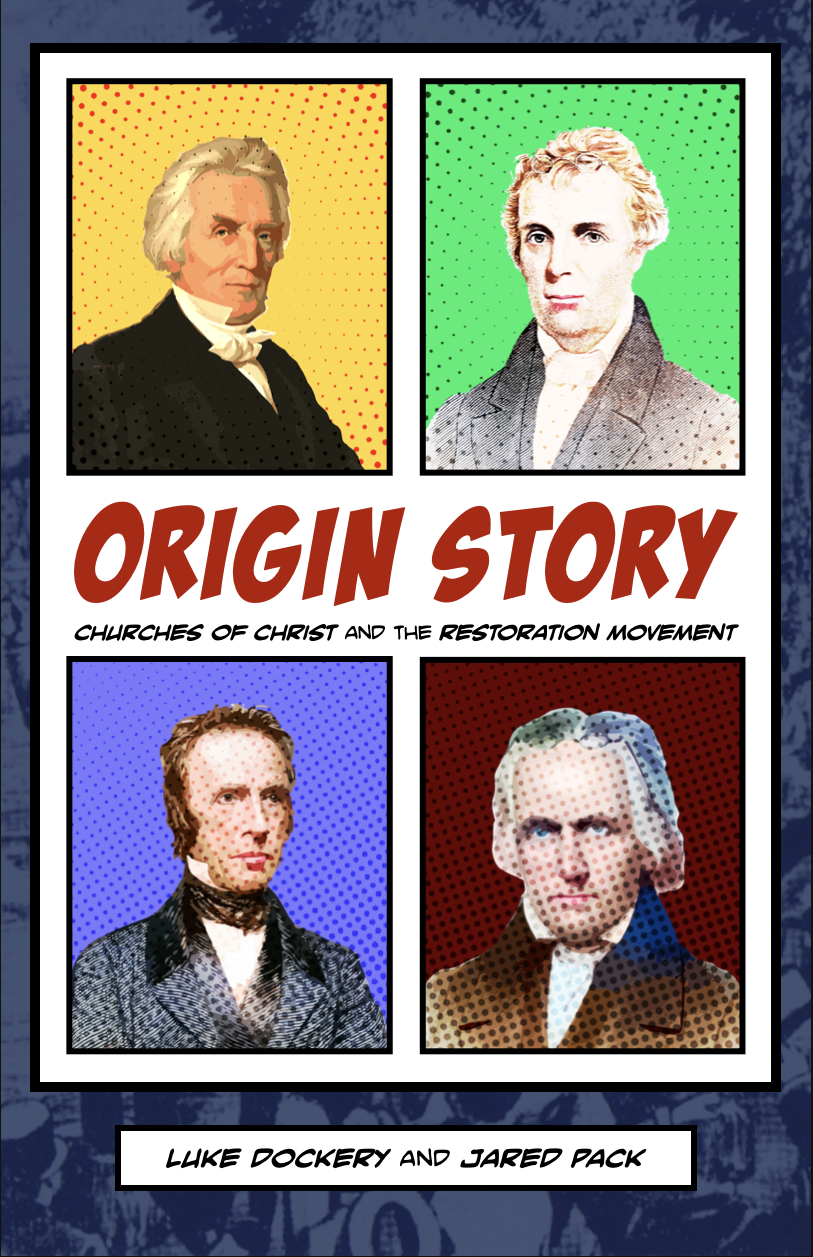
Back in March, I wrote about the release of Origin Story: Churches of Christ and the Restoration Movement. This book, which I co-authored with my good friend Jared Pack, is, as far as I know unique in that is seeks to present a history of Churches of Christ specifically geared towards teenagers. Published by Deeper Youth Ministry, the book has sold pretty well and received some good reviews, but I was pleasantly surprised when The Christian Chronicle reviewed it in a recent issue.

The reviewer, Zack Martin, is an instructor of historical theology and dean of students at Heritage Christian University in Florence, Alabama, and had several kind things to say:

[Dockery and Pack] are honest about how unity and restoration are in tension with one another in the life of a Christian; however, that should never stop one from seeking to live in balance with these two biblical ideas.

Due to the struggle between the two ideas, the Restoration Movement has consistently favored one over the other throughout its history. The results have not always been pretty, but the authors do not shy away from the unpleasant aspects of the movement, such as the presence of controversial figures or issues like segregation.

Also important is the book’s examination of the Restoration Movement within the broader context of church history. Churches of Christ will often start in the first century and then skip to 19th century America. But this book reminds the reader that historical events and movements do not happen in a vacuum.

This book is written and designed with young people in mind. But it can also be used for an adult Bible class or personal study for adults who want to learn more about their spiritual heritage and identity.

I am very thankful for Dockery and Pack and for this project. I hope that our fellowship supports this work not only because it is presented in an entertaining format, but also because it will help reshape Churches of Christ in the way of the true restoration plea.

I am thankful for the kind review, and the broader exposure given to the book. For the record, I don’t make a penny off any of these book sales; my motivation is simply to see more churches and students within Churches of Christ learn something about our history in the Restoration Movement, and appreciate the value of the restoration plea: the desire to bring about unity among God’s people by adhering to the clear teachings of Jesus and the apostles and the practices of the early church.

You can order the book from Amazon here, or read the full review at The Christian Chronicle here.

So You Want to Hire a Youth Minister…

(About the picture: no, we don’t all look like this!)

On a fairly regular basis, I will have a church reach out to me to say something like this: “We are looking for a youth minister…I don’t suppose you would be interested? If not, is there someone good you can point us to or send our way?”

I tend to have several of these interactions because there are lots of churches looking for youth ministers, I have been a youth minister for a long time so there is an assumption that I am aware of potential candidates, and a lot of people know that I teach youth ministry at the college level and actively work to train youth ministry apprentices. Unfortunately, I usually don’t have great news for them. The reality is that there are more churches looking for youth ministers than there are youth ministers looking for churches. Our Christian colleges are seeking to train ministers and greatly incentivize students to study Bible and ministry, but there simply aren’t enough students to meet the demand. In my own case, in the six years I have been at my current position, I have mentored six young men who have all landed youth ministry jobs—the demand is so high that the last two accepted jobs months before they had graduated and finished with their apprenticeships!

In such a landscape, it is hard to find good candidates. The traditional approach of posting your job to some sort of listing service and then critically sifting through a stack of resumes to find the perfect fit isn’t likely to work anymore. I have witnessed even large, 1000+ member flagship congregations with impressive histories and reputations wait a year to find someone to fill their open positions. It is even harder for churches that are looking for a youth minister with significant experience—most of the youth ministry veterans I know are either well established at their churches and not interested in leaving, are transitioning to another kind of ministry, or are getting out of ministry altogether.


All of this may sound discouraging, but it’s important for churches to have a realistic understanding of the current landscape. Hiring a youth minister is not easy, but it is important, and it is a process that should be bathed in prayer. With all of that in mind, here are four strategies for churches in need of a youth minister:

(1) Keep the Youth Minister You Already Have

This may sound like a cop-out, and honestly it doesn’t apply to churches that already have a vacancy, but there is an important truth here that needs to be heard both by those looking to hire someone new and others who may be less than enthused with what they have and might wonder if the grass is greener elsewhere. There are exceptions to this, but churches tend to not have a great track record in how they treat ministers, and it is even worse for youth ministers, who tend to be younger, less experienced, and get paid less. There was a time when churches could burn through ministers confident that they could easily find the next guy to come along. That is not the case anymore.

If you have a youth minister who is struggling in various ways but is a loyal disciple of Jesus who loves kids, do everything you can to hold onto him. Provide him with mentoring or opportunities for further education to help him work on his weak areas. Encourage him by affirming the things he does well. Make sure to show that he is appreciated by paying him well (vacation, retirement, and insurance are parts of a compensation package too!). It is much easier to invest in the youth minister you already have and help him improve than to run him off and roll the dice on a new hire.

(2) Find Someone Good and Lure Them Away

So, I don’t feel great about this, because it kind of sounds like I am encouraging stealing good ministers from sister congregations! Certainly, that doesn’t seem like a very kingdom-minded approach. That’s not quite what I mean, though. Basically, this is where you try to use personal contacts of people in your congregation to reach out to youth ministers they know and respect who they think would do a good job and might have some incentive to move.

Perhaps it is not that they are unhappy in their current location, but maybe a move to your congregation would bring them closer to family, provide better opportunities for their own family, or give them the ability to grow and multiply their ministries. It is always risky to leave one successful ministry to go to another, but if there are some personal connections in place already, it can make the leap of faith more manageable.

(3) Alter Your Expectations

Look, everyone wants to find someone with good experience who is already married, has a couple of kids, and a wife who is eager to serve in 17 church ministries. But the reality is there aren’t many people like that out there who are looking, and if they are, everyone will be trying to hire them! Chances are that if you are a smaller church (100-200 people), you’re facing a youth ministry rebuild, or you have a track record of burning through youth ministers quickly, you are not the congregation they are going to choose.

Instead, be prepared to change your expectations somewhat. After all, the very best youth ministers in the world had to start somewhere, without experience. Jesus and Paul were not married, but most would argue that they did some decent ministry work in their day! Rather than setting your sights on an established “All-Star,” seek a younger minister who is eager to learn and grow into the role. A minister like this would need mentoring, perhaps additional schooling, and would need to be shown a great deal of patience, but the payoff can be huge![1]

It can be hard for a congregation that seems to be doing well and considers itself to be successful to accept the reality that they might have to “settle” for an inexperienced rookie, but again, the landscape is not what it once was. The good news is that especially if you are willing to hire someone younger, you can align your minister search with college graduation cycles and potentially hire someone before they graduate. Depending on how close they are geographically, they might even be able to come and do some events with your church and youth group between now and the time they graduate.[2]

(4) Raise Up Someone from within Your Congregation

Is there someone at your church that has a gifting or interest in working with teenagers? Affirm the giftedness you see within them (a key part of a calling to ministry is the testimony and affirmation of fellow believers), encourage them to consider the position, and provide them with the training they need to do the job. This could be on a part-time basis, but for the right person, it might represent a full career transition. I have known multiple people who have done this successfully. An advantage to this is that you potentially get the maturity that you are looking for, and someone who already knows the culture of the congregation and fits well within it (which is a major element of successful ministry). All they need is more focused biblical and youth ministry training, and that is readily available.

For the record, I think our churches in general need to start shifting toward this mindset of actively identifying people of character and passion within the congregation to raise up as ministers (whether preachers, youth ministers, children’s ministers, etc.) and equip them to do so. As mentioned above, our colleges simply cannot produce enough trained graduates to meet the great need on their own.

Hiring a youth minister is challenging in the best of circumstances, and these aren’t the best of circumstances. It requires patience, resilience, and a great deal of prayer. But if I found myself as a church leader or part of a search committee at a church that was looking, these are the strategies I would adopt.


[1] I’m biased because this was my own story. I’ll always be grateful to the Farmington Church of Christ, which took a chance on a young, untrained minister without experience and provided me space and grace to grow, and supported me going back to school for additional training.

[2] My last apprentice was hired last spring by a church even though he won’t graduate until this coming December. So, the church is having to wait several months for him, but he was able to work there over summer break. By the time he starts in January, he will already have had a full three-month stint working with the church and leading the youth group under his belt.

Book Review: The Anxious Generation

Jonathan Haidt is one of several scholars I have benefited from over the last few years who do not write from a faith perspective but end up saying many things that resonate well with a Christian worldview.[1] I first encountered Haidt when I read and enjoyed The Righteous Mind after a friend recommended it to me in 2020, and The Coddling of the American Mind was one of my favorite reads in 2021. Ever since then, I have paid attention anytime I see an article shared by Haidt, and I was so convicted by his article in The Atlantic on the damage caused by social media to teen girls that I discontinued our youth group Instagram account.

The Anxious Generation: How the Great Rewiring of Childhood is Causing an Epidemic of Mental Illness was published in 2024 and made an immediate splash, but I was slow to read it myself because I was already familiar with a lot of Haidt’s work, had heard multiple presentations on this book in particular, and there were a lot of other books on my to-read list. So, I have been slowly working my way through The Anxious Generation this year and finished it earlier this week. In short, Haidt’s work is a tour de force, and I think it is essential reading for anyone living today who has any significant interaction with or influence over kids and teens.

The current generation of teens and young adults—Generation Z—is widely known to be the most mentally unwell of all generations with off-the-charts instances of anxiety, depression, and other mental health issues. Haidt’s basic contention in the book is that two factors, the decline of a “play-based childhood” (kids running around their neighborhoods exploring, creating games and entire worlds with friends and returning home for meal times or when it gets dark) coupled with the rise of a “phone-based childhood” (kids staying indoors and staring at screens especially on their smartphones and spending hours and hours on social media platforms) have led to the devastating mental health outcomes that we see in members of Gen Z. Haidt’s book has some three major strengths that I want to highlight.

First, Haidt does an excellent job laying out his case. He sets the landscape by identifying the mental health epidemic facing Gen Z, then offers his background narrative of how we got here. He then interacts with tons of research that indicates how a phone-based childhood disrupts child development in four key ways: (1) sleep deprivation, (2) social deprivation, (3) attention fragmentation, and (4) addiction.

Second, Haidt offers actionable advice regarding what we can do about this crisis. It is common for authors to spend the vast majority of their books describing a problem and then to offer a few pages of how we can respond to the problem at the very end. Haidt, however, offers a substantial Part 4, “Collective Action for Healthier Childhood” with dozens of ideas and examples of tangible things that governments and tech companies, schools, and parents can do now to address this problem and turn the tide of the mental health crisis. These suggestions fall into four foundational reforms: (1) No smartphones before high school, (2) No social media before age 16, (3) Phone-free schools, and (4) Far more unsupervised play and childhood independence.

Third, the book is written in such a way that it is really easy to come away with the main thrust of his arguments without getting lost in the weeds. The book is 300 pages long with another 40 pages of footnotes. To me that’s very manageable and I thought it was an enjoyable read, but I realize that is not the case for everyone. Never fear! At the end of each chapter, Haidt has an “In Sum” section where he offers a bulleted list of the main ideas of the chapter. This means that you could spend half an hour reading the summary sections at the end of each chapter and come away with a really solid understanding of his argumentation in the book—this is a great feature!

The book is so well done; I don’t think there are any major weaknesses. Haidt can come across a little strong at times (especially in the sense that his explanation is the explanation for the mental health epidemic), but he works hard to establish his claims, feels passionately about them, and honestly acknowledges places where his conclusions aren’t yet supported by rigorous research or where others disagree. Additionally, as I mentioned above, Haidt writes from a secular perspective and as part of that, he taps heavily into evolution as the explanation for how kids are naturally supposed to develop and how a phone-based childhood disrupts that. This can be frustrating at times, especially when he says things about how evolution designs certain characteristics, but ultimately, I was still able to appreciate the point he was making and attribute the element of human nature in question to the design work of a Creator, whether brought about through evolution or some other process.

Normally I like to share quotations, but there are simple too many noteworthy observations in the book to include here; I have highlights on almost every page. The Anxious Generation will definitely make my Top-10 list for 2025; I highly recommend it.


[1] See also Tom Holland, Jordan Peterson, and Louise Perry.

Origin Story: Churches of Christ and the Restoration Movement

I wrote a while back that I had taught a series of lessons to the students in my youth group regarding the Stone-Campbell Restoration Movement and how it affects our heritage and identity in Churches of Christ. I am pleased to announce that this study has now been compiled and formatted as a book that is now available in print and digitally. I won’t go into detail here why I think a study like this is need (I did that in the previous post), but I do want to say a couple of things and share some more detail about the book, before concluding with the summary information from the back cover.

First, this is a special project to me because it was done in conjunction with my good friend Jared Pack, and in many ways represents our friendship and the fruitful years of ministry we shared together. Jared is a historian by training and serves as Associate Professor of History and Chair of the History Department at York University in York, NE. I am a youth minister by trade and am decidedly not a trained historian, but I am an amateur enthusiast of Restoration History. Early in our friendship, Jared and I discovered a similar interest in the Restoration Movement and how it affects us today, and we co-taught a class together with our young adults group at the Farmington Church of Christ. Later, after I had moved to work with my current congregation, Jared taught the class again and added and expanded it. When I taught the material to my own students last year, I refined it further.

What all of that means is that this current product truly represents our combined work over a decade. Jared and I work so well together and think so similarly in many ways that with much of this book, at this point we are not sure who wrote which part! In many ways, this book is a perfect representation of and tribute to our friendship.

Second, this was a challenging project because I really was trying to push my creativity. Sadly, most teenagers do not find history to be an enthralling subject, and so I worked hard to make these lessons engaging. One way I sought to do this was by providing relevant discussion questions throughout the lessons to break up the lecture portions, but also, as the title suggests, I tried to tap into the notion of the origin story, a motif that has become very well understood in our society over the last twenty years with the proliferation of various movie franchises that center characters with remarkable abilities and comparing backstories (think MCU, the Harry Potter series, Star Wars, etc.). With this idea being central, Origin Story very much has the feeling of a comic book, completed with AI-generated images of the authors as superheroes!


Here is the Table of Contents, to give you an idea of the layout of the series:

Series Introduction

(1) Why Study the Restoration Movement?

(2) Background: Early Church to Reformation

(3) Background: European and American Influences

(4) The Big Four

(5) Unity and Division

(6) Churches of Christ after the Split

(7) Restoration Movement Slogans and Theology

(8) The Restoration Plea and Legacy

Appendix A: A Brief Overview of Calvinism

Appendix B: A Brief Overview of Millennialism


Purchase the Book

Paperback: Amazon $12.99

Digital: Deeper Youth Ministry $10


You can see the cover below, as well as some sample pages to give you a feel for the book (including the silly image of me as a superhero!).


From the back of the book:

Origin stories provide the background narrative that explains why characters are the way they are. When you know a character’s origin story, you also know important things about their feelings and motivations for why they do what they do. Churches of Christ have historical roots in the Stone-Campbell Restoration Movement, but teens in Churches of Christ tend to be largely ignorant about any of this history. This is a problem, because in a real sense, if we don’t know our history, we don’t know who we are.

The early Restoration leaders desired to bring about unity among God’s people by adhering to the clear teachings of Jesus and the apostles and the practices of the early church. In a world of bitter division and incredibly shaky notions of truth, that is a compelling idea, and one that is worth communicating to teenagers.

Origin Story is an eight-lesson series written specifically for teens.

“Teaching Restoration Movement history is tricky business, especially in church contexts. How best can we communicate the ups and downs, the successes and shortcomings, of our religious predecessors in a way that deepens rather than destroys faith? A lack of accessible educational resources for young Christians only compounds the problem. Fortunately, Luke Dockery and Jared Pack demonstrate both ministerial concern and scholarly acumen in this short volume which will help anchor the youth of the Churches of Christ more fully in their religious heritage and, even more importantly, point them back to the cross.”

—John Young, Associate Professor in the Turner School of Theology at Amridge University and historian of the Stone-Campbell Movement

« Older posts Newer posts »

© 2026 The Doc File

Theme by Anders Noren — Up ↑