The online journal of Luke Dockery

Tag: Abraham

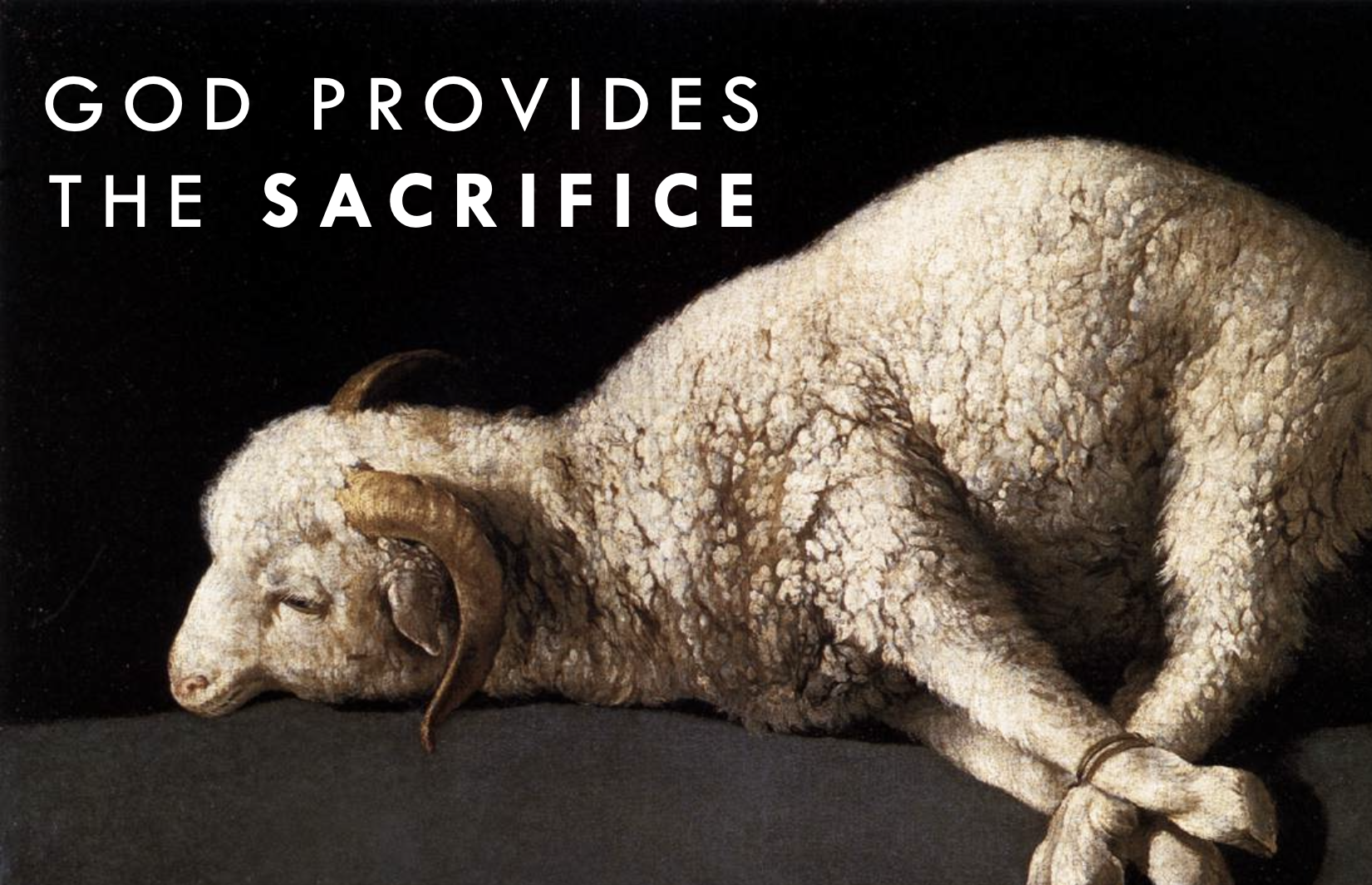
God Provides the Sacrifice

Genesis 22 is one of the most moving and haunting chapters of Scripture; it recounts the story of Akedah, or the Binding of Isaac, as Abraham is commanded to take his son and offer him as a sacrifice on an altar on Mount Moriah.

1 After these things God tested Abraham and said to him, “Abraham!” And he said, “Here I am.” 2 He said, “Take your son, your only son Isaac, whom you love, and go to the land of Moriah, and offer him there as a burnt offering on one of the mountains of which I shall tell you.”

(Genesis 22.1-2)

This must have been an agonizing task for Abraham, as he is called to offer his beloved son, the one for whom he had so long waited, the one on whom all his future hopes rested. The narrative is told slowly, with painstaking detail, heightening the tension and the growing sense of tragedy.

3 So Abraham rose early in the morning, saddled his donkey, and took two of his young men with him, and his son Isaac. And he cut the wood for the burnt offering and arose and went to the place of which God had told him. 4 On the third day Abraham lifted up his eyes and saw the place from afar. 5 Then Abraham said to his young men, “Stay here with the donkey; I and the boy will go over there and worship and come again to you.” 6 And Abraham took the wood of the burnt offering and laid it on Isaac his son. And he took in his hand the fire and the knife. So they went both of them together. 7 And Isaac said to his father Abraham, “My father!” And he said, “Here I am, my son.” He said, “Behold, the fire and the wood, but where is the lamb for a burnt offering?” 8 Abraham said, “God will provide for himself the lamb for a burnt offering, my son.” So they went both of them together.

9 When they came to the place of which God had told him, Abraham built the altar there and laid the wood in order and bound Isaac his son and laid him on the altar, on top of the wood. 10 Then Abraham reached out his hand and took the knife to slaughter his son. 11 But the angel of the LORD called to him from heaven and said, “Abraham, Abraham!” And he said, “Here I am.” 12 He said, “Do not lay your hand on the boy or do anything to him, for now I know that you fear God, seeing you have not withheld your son, your only son, from me.” 13 And Abraham lifted up his eyes and looked, and behold, behind him was a ram, caught in a thicket by his horns. And Abraham went and took the ram and offered it up as a burnt offering instead of his son. 14 So Abraham called the name of that place, “The LORD will provide”; as it is said to this day, “On the mount of the LORD it shall be provided.”

(Genesis 22.3-14)

But, as tragic as this story could have been, things turn out okay: Isaac is not offered as a sacrifice because God steps in and provides another sacrifice, a ram that had been caught in a thicket. The father did not have to witness the death of his beloved son.

Abraham looks around and calls the name of that place, “The LORD will provide.”


We fast forward hundreds of years to a very similar mountain[1] on another altar of sorts, where Jesus, the beloved Son, the One for whom the world had so long waited, the One on whom all future hopes rested, hangs on a cross.

But this time, there is no alternative sacrifice. The Father does witness the death of His beloved Son because Jesus Himself is the alternative. The LORD did provide, and He provided the Lamb slain from the foundation of the world…to take the place of Isaac…to take the place of each of us.

Unlike with Isaac, this time, there is no alternative sacrifice. The Father does witness the death of His beloved Son because Jesus Himself is the alternative. Share on X

God provides the sacrifice because God Himself is the sacrifice, absorbing the darkness of the world into Himself.


In this loose series of Scripture Reflections, I am sharing brief thoughts spurred on by my Bible reading. By way of reminder, my goal for these brief posts is two-fold:

(1) To remark on aspects of the biblical text that I find to be of interest that the reader may or may not have thought about previously.

(2) When possible, to point to the work and person of Jesus Christ. I believe the Bible is a unified story that points to Jesus, which means that He is frequently alluded to or foreshadowed in some way throughout the biblical canon.


[1] Scholars debate the relative locations of Mount Moriah and Golgotha, but many believe them to be the same place.

Abraham Bargains With God

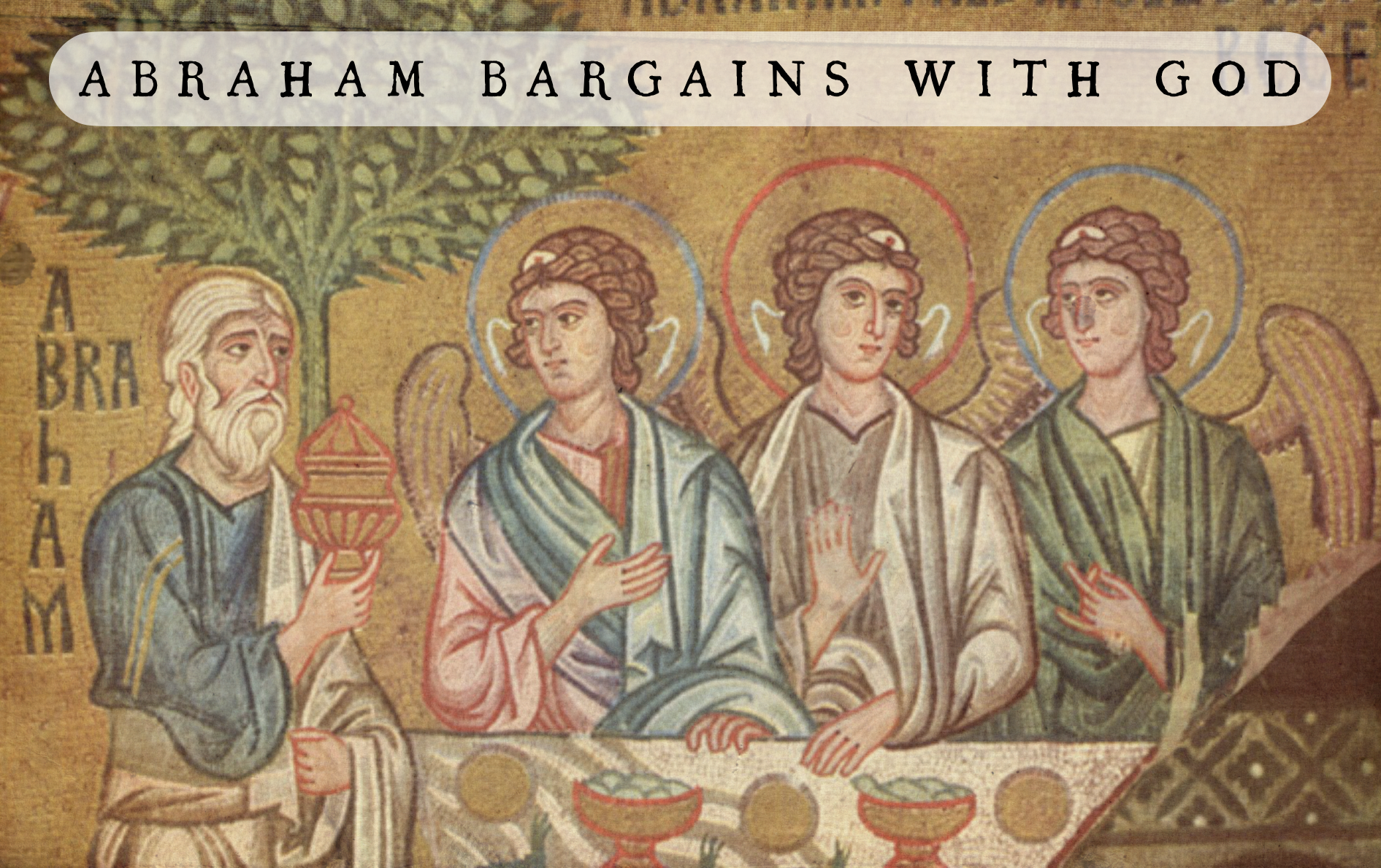
The end of Genesis 18 contains an interesting interaction between Abraham and God: after Abraham learns that God intends to destroy the wicked city of Sodom, he decides to intercede for Sodom, asking the LORD, “Will you indeed sweep away the righteous with the wicked?”, implying that there are some righteous people in Sodom who don’t deserve to be destroyed with the rest of the city.

And so, a bargaining process begins (my paraphrase of Genesis 18.24-32):

Abraham: God, will you destroy Sodom if there are 50 righteous people in it?

God: If there are 50, I will spare the city.

Abraham: Hmm, it’s not my place to tell you how to do things, but what if there are 45 righteous people? Five can’t make much of a difference, right?

God: If there are 45, I will spare the city.

Abraham: What about 40?

God: If there are 40, I will spare the city.

Abraham: Don’t be angry with me for haggling, God, but what if there are 30 righteous people?

God: If there are 30, I will spare the city.

Abraham: Be patient with me: what about 20?

God: If there are 20, I will spare the city.

Abraham: OK, let me ask one more time: what if there are 10 righteous people?

God: If there are 10 righteous, I will spare the city.

And at that point, the haggling comes to an end.

This episode is interesting to me for at least three reasons.

First, it is interesting to me that in Genesis 18.23, Abraham seems to mildly reprove God for being willing to destroy an entire city that might contain righteous people, and yet, it seems that Abraham’s mercy was exhausted before God’s was. At least, Abraham quit asking to lower the bar for how many righteous people would save the city. Would God have been willing to spare the city if five righteous people were found? Or three? Or one person? We don’t know, because Abraham quit asking before God quit agreeing. It’s a helpful reminder to me that God is always more merciful than I am.

Related to the first point, the things we ask of God have the potential to change His plans. Depending on where you are on the spectrum of how God’s sovereignty works this is a debatable point, but a straightforward reading of the text certainly indicates that Abraham’s requests were influencing God’s plans regarding the destruction of Sodom. And again, it seems possible that Abraham could have continued to bargain with God until He relented from destroying the city altogether. So this is helpful as well, because it brings about a certain degree of resolve in my life: if the deep desires of my heart are denied to me, it won’t be because I am not asking God for them.

And finally, I’m left to wonder: why is it that we assume that God grows impatient with our repeated requests of Him? Abraham certainly assumed and feared God’s impatience: four times he apologized or asked for patience in some way. I think we often do the same thing. But over and over again God tells us to come to Him in prayer, and in the New Testament, Jesus praises the persistence of a widow and uses her as an example of how we should repeatedly come to the Father in prayer. So I am also reminded by this narrative that I should not project my impatience on God: he patiently (and eagerly) hears my repeated requests. 

I love this narrative episode, because it is so revealing of the nature of God: as Father, God is merciful toward His children, influenced by their desires, and wants to hear their requests. I am a father, and this totally makes sense to me when I think of my own children, but when I see these characteristics portrayed in the Creator of the universe, I am driven to my knees in praise and thanksgiving.

God is a Father: He is merciful toward His children, influenced by their desires, and wants to hear their requests. Share on X

In this loose series of Scripture Reflections, I am sharing brief thoughts spurred on by my Bible reading this year. By way of reminder, my goal for these brief posts is two-fold:

(1) To remark on aspects of the biblical text that I find to be of interest that the reader may or may not have thought about previously.

(2) When possible, to point ahead to the work and person of Jesus Christ. I believe the Bible is a unified story that points to Jesus, which means that He is frequently alluded to or foreshadowed in some way throughout the biblical canon.

There Is A Sea

I’ve never sung this song, but I love its words and the sentiment behind it:

“There is a sea which day by day
Receives the rippling rills,
And streams that spring from wells of God,
Or fall from cedared hills;
But what it thus receives it gives
With glad unsparing hand;
A stream more wide with deeper tide,
Flows on to lower land.

There is a sea which day by day
Receives a fuller tide;
But all its store it keeps, nor gives
To shore nor sea beside
Its Jordan stream, now turned to brine,
Lies heavy as molten lead;
Its dreadful name doth e’er proclaim
That sea is waste and dead.

Which shall it be for you and me,
Who God’s good gifts obtain?
Shall we accept for self alone,
Or take to give again?
For He who once was rich indeed
Laid all His glory down;
That by his grace, our ransomed race
Should share His wealth and crown.”

Lula Klingman Zahn, 1921

The song describes the Sea of Galilee and the Dead Sea, and personifies both: one alive and boisterous, passing on what it has received; the other, listless and dead, storing up all it receives and never passing it along. 

A few years ago when studying Abraham and God’s appearance and promises to him in Genesis 12, I was struck by the purpose God gives for blessing him:

1 Now the LORD said to Abram, “Go from your country and your kindred and your father’s to the land that I will show you. 2 And I will make of you a great nation, and I will bless you and make your name great, so that you will be a blessing. 3 I will bless those who bless you, and him who dishonors you I will curse, and in you all the families of the earth shall be blessed.”

(Genesis 12.1-3)

God tells Abraham that he will be blessed, not for his own sake, but so that he could be a blessing to others. We ultimately see this in Jesus coming from Abraham’s descendants, but more than this, Israel was always meant to be a blessing. They were supposed to be a light to the nations around them that pointed those nations to the one true God.

I was struck by this notion of being blessed in order to be a blessing. At my last congregation, we actually used the phrase “blessed to bless” one fall for a fundraising initiative where we send school supplies and money to a Christian school in Malawi. Later, we used the same slogan for our yearly theme for the entire congregation, and viewed that year’s events through the lens of seeking to bless others because we have been so richly blessed by God.

We live in a world beset by all sorts of problems. I think the answer to those problems is Jesus, but it is easy to say that in a way that is becomes just a cliche that doesn’t lead to anything tangible. So here is something a little more tangible, that is also clearly tied to the way of Jesus and love of neighbor: we are blessed in order to be a blessing.

All of our blessings come from God. To echo the words of Paul in 1 Corinthians 4.7, “What do you have that God hasn’t given you?” Your opportunities, your career, your influence, your wealth, your platform, whatever—what do you have that God hasn’t given you?

Are you sharing those gifts with others? Are you blessing others with what God has blessed you?

Or, in the words of Lula Klingman Zahn,

Which shall it be for you and me,
Who God’s good gifts obtain?
Shall we accept for self alone,
Or take to give again?

© 2026 The Doc File

Theme by Anders Noren — Up ↑







