The online journal of Luke Dockery

Tag: Adam and Eve (Page 2 of 2)

The Fall of Man and the Sociological Consequences of Sin

In our continuing discussion of the Fall of Man in Genesis 3 and the widespread devastation of sin, we have already covered the theological and personal consequences of Adam and Eve’s misdeed; in this post we turn to the sociological fallout of that sin, or the way that sin affects our relationships with one another.

Returning to our text, we can see this dimension clearly played out in verses 11-13:

“[God] said, ‘Who told you that you were naked? Have you eaten of the tree of which I commanded you not to eat?’ The man said, ‘The woman whom you gave to be with me, she gave me fruit of the tree, and I ate.’ Then the Lord God said to the woman, ‘What is this that you have done?’ The woman said, ‘The serpent deceived me, and I ate.’”

People were created to live in community with one another. Specifically, Eve was created to be the perfect partner for Adam (Genesis 2.18-25). But when God confronts Adam and Eve with their sin, something very significant (and unfortunate) happens: the unity that had previously existed between Adam and Eve is shattered as Adam immediately blames his wife for the sin which they had committed together.

This brings a conflict and disharmony between them that would be passed down over time (Genesis 3.16), and we can see it unfold in the pages of Genesis in the accounts of numerous broken relationships—Cain’s murder of his brother, the depraved society of Sodom and Gomorrah, the distorted relationships between Sarah and Hagar, Jacob and Esau, Jacob and Laban, Joseph and his brothers, and more. But the problems certainly don’t stop there—this same conflict and disharmony continue to darken and distort our world today.

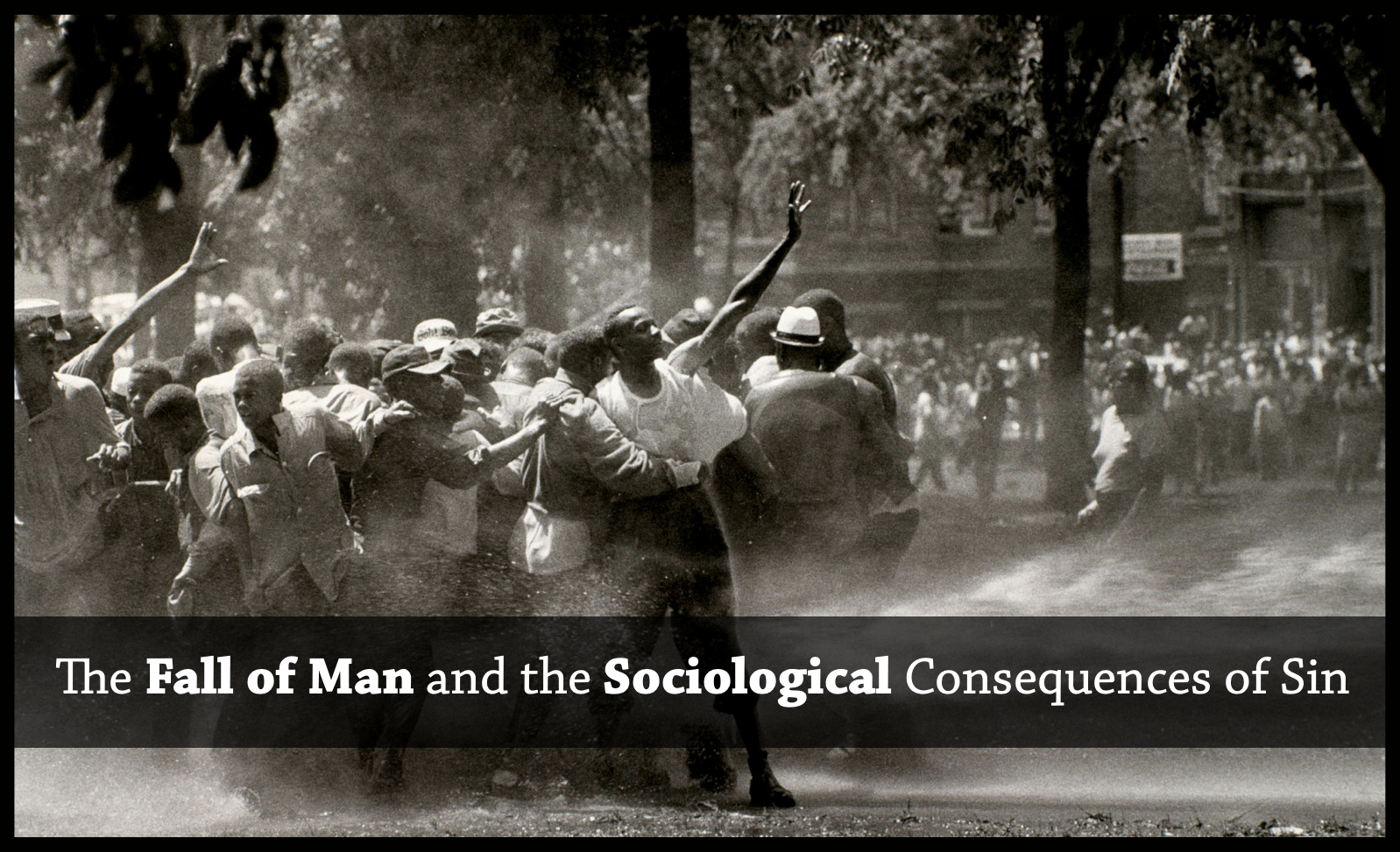
Our world is deeply flawed by sin, and this manifests itself everyday sociologically, as we treat one another in a wide array of horrible, messed up ways:

  • On an international level, countries wage war and kill because of conflict over ideology or resources.
  • Systemic evils such as poverty, abortion, racism, sex trafficking, government corruption, lotteries, and more stem from our exploitation of our neighbors in order that we might obtain our own selfish desires.
  • Horrific acts of incomprehensible violence fill our news cycles. Mass shootings at elementary schools, the use of passenger airliners as terrorist missiles, bombings at marathon finish lines and incomprehensible barbarity at soccer matches shock and dismay us and cause us to weep.
  • Our interpersonal relationships are also a mess. Dishonesty, reckless ambition, and violence abound. The (supposedly) lifelong bonds of marriage are broken on a whim.

And the sum result: our society as a whole stagnates and decays, as people live lives marked by self-interest and fear of one another. The community for which we were created is broken.

Sin destroys our relationships with one another.
The Fall of Man and the Personal Consequences of Sin

As I discussed in the introduction to this series, Genesis 3 relates the story of the Fall of Man, where Adam and Eve commit sin in the Garden of Eden by eating fruit from the tree of knowledge of good and evil after God had specifically commanded them not to.

A whole host of negative effects befall Adam and Eve (and consequently, the rest of us) as a result of their disobedience, and the point of this series is to examine some of those effects in more detail. Basically, sin messes everything up.

In the last post, we focused on the theological consequences that came about as the result of Adam and Eve’s sin: our relationship with God is destroyed and we become slaves to sin instead.

Next, we want to turn our attention to the personal consequences of sin (which, as well shall see, are closely related to the theological consequences). Returning to our text in Genesis 3, this aspect of sin’s destructiveness is hinted at in Genesis 3.7, 10-11 where Adam and Eve realize they are naked, sew together fig leaves to make loincloths and then, because of their nakedness, hide from God when He enters the garden.

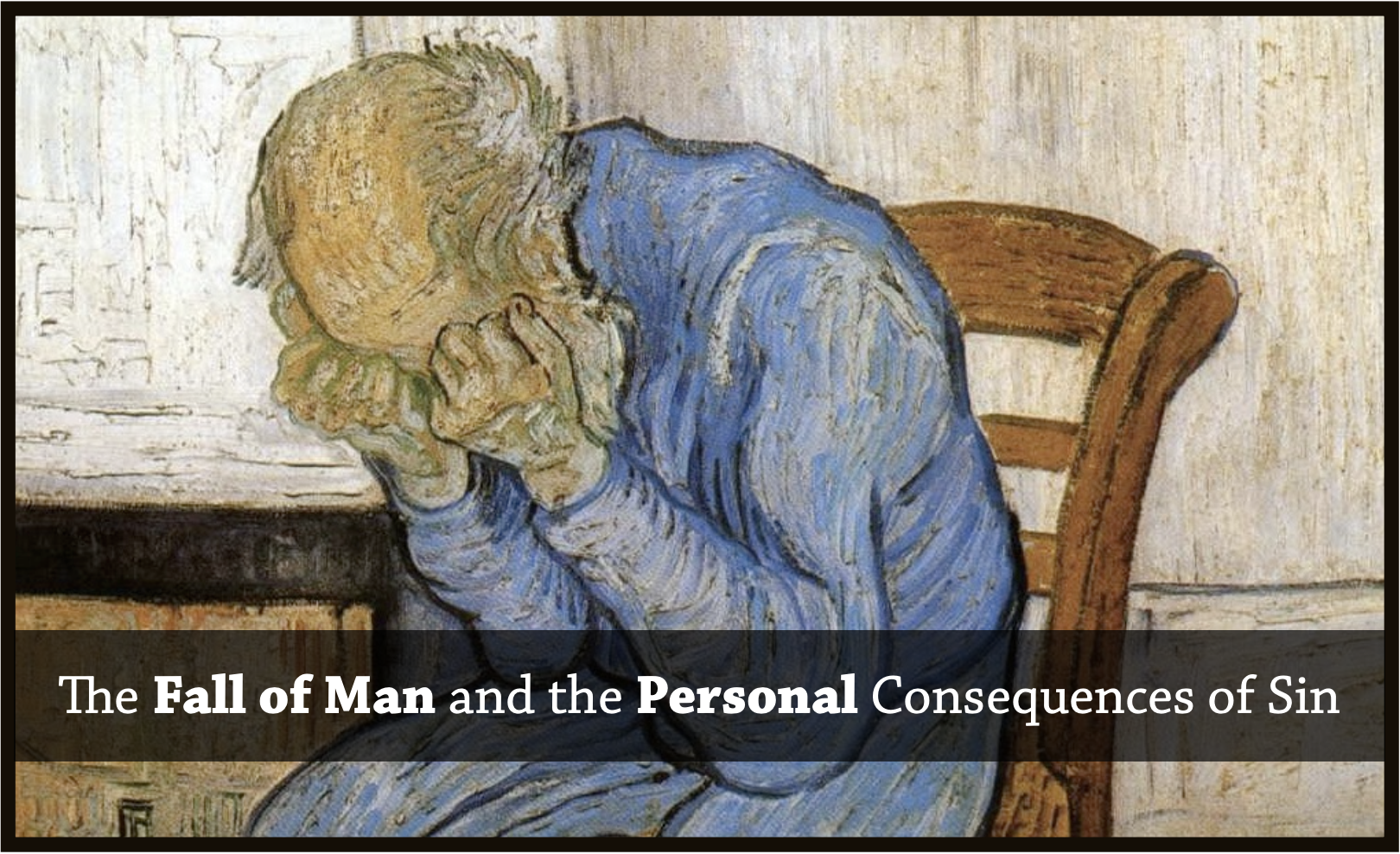
What was so bad about Adam and Eve being naked? After all, it was the way God had created them, so clearly He had no problem with it! The problem came from Adam and Eve themselves: after they sin by eating the forbidden fruit, they become self-conscious and immediately feel that there is something wrong with them, and they are ashamed of themselves.* Ever since then, men and women have felt the same way: we exist in a state of inner conflict, lacking the self-confidence and self-acceptance that we should have as God’s creatures.

Basically, the process looks something like this:

  1. Humans were created for the purpose of living in relationship with God.
  2. Sins distorts and destroys that relationship.
  3. Without a relationship with God, we are inherently unfulfilled, because we are not living out the purpose for which we were created.
  4. We feel bad about ourselves and follow all sorts of false avenues looking for fulfillment.

Just consider our world today. People desperately want to feel happy or significant or fulfilled, so they are willing to try anything: fame, fortune, career accomplishment, relationships, children, sex, drugs, sports, whatever. Why do you think the self-help industry generates billions of dollars each year? It’s because deep down, we all feel like there’s something wrong with us. We struggle with self-confidence and self-image, and we are convinced that we are deeply flawed.

And, biblically speaking, people are messed up; we are deeply flawed. But flatter abs, a more secure retirement, or a better relationship with your boyfriend won’t provide the answer. Oh sure, you might feel a little better about yourself for a while, but it won’t last. We were created to live in relationship with God, and only in the context of that relationship can we find the solution to our deep flaws.


*It is important to note that, according to the biblical account, Adam and Eve are ashamed of their nakedness, not of their sin (it should have been the other way around). Sin had fundamentally changed the way they viewed themselves.

The Fall of Man and the Theological Consequences of Sin

As I discussed in the introduction to this series, Genesis 3 relates the story of the Fall of Man, where Adam and Eve commit sin in the Garden of Eden by eating fruit from the tree of knowledge of good and evil after God had specifically commanded them not to.

A whole host of negative effects befall Adam and Eve (and consequently, the rest of us) as a result of their disobedience, and the point of this series is to examine some of those effects in more detail. Basically, sin messes everything up.

In the first post, I mentioned five different categories of consequences that came about as the result of Adam and Eve’s sin: theological, personal, sociological, ecological, and physical. Those categories come from a reading of the biblical text in Genesis 3:

  • Genesis 3.8-10: Adam and Eve hide from God because they are afraid (theological effects).
  • Genesis 3.10-11: Adam and Eve realize they are naked (personal effects).
  • Genesis 3.12-13, 16: Adam and Eve refuse to take responsibility and their relationship is changed (sociological effects).
  • Genesis 3.17-19: Creation itself becomes cursed (ecological effects).
  • Genesis 3.22-23: Adam and Eve are kicked out of the garden and separated from the tree of life (physical effects).

In this post, I want to look in more detail at the theological consequences of sin. This category probably won’t require as much explanation as some of the others, since this (along with physical effects) tends to be the area we hone in on.

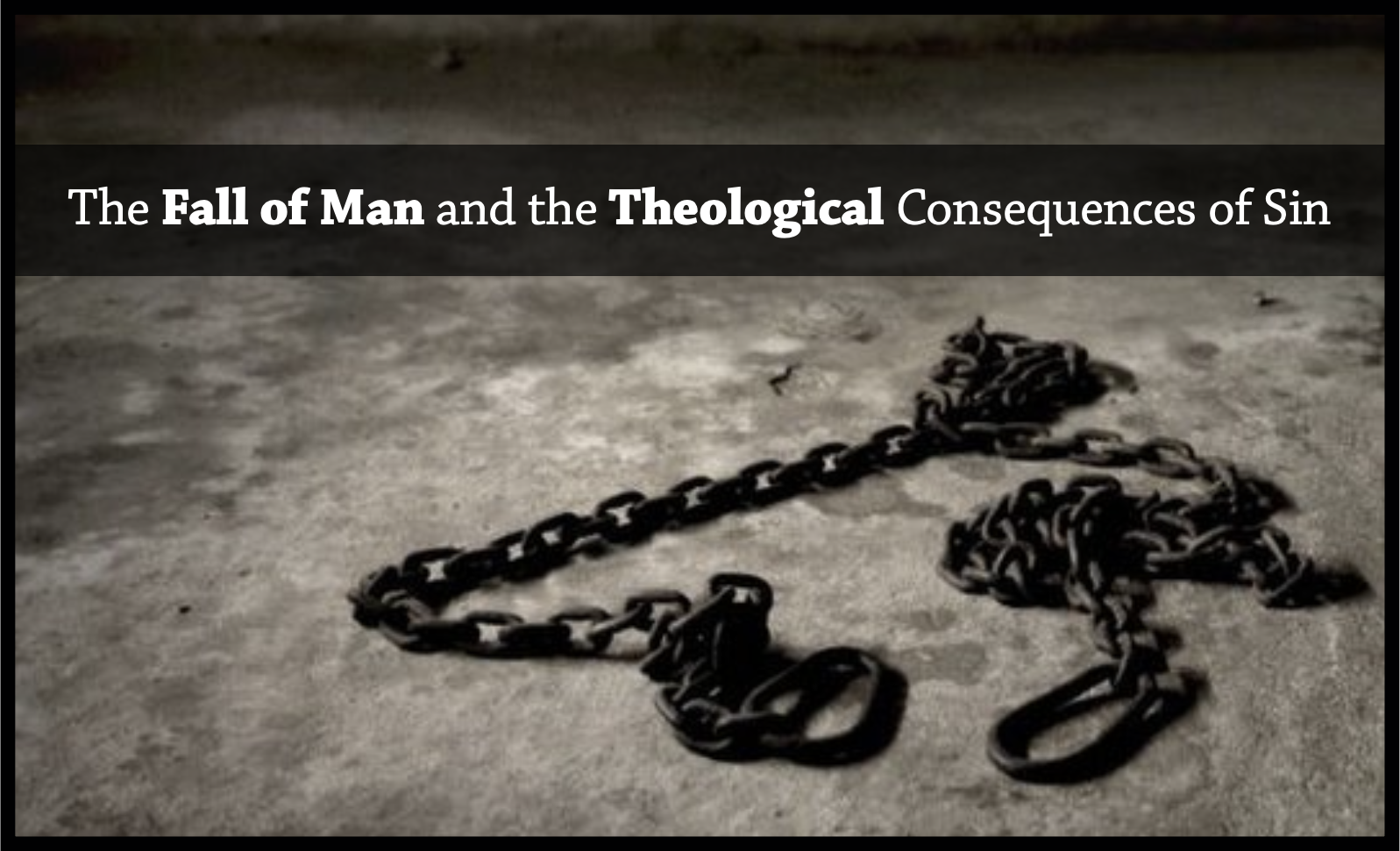
Simply put, what I mean by “theological consequences” is that sin affects our relationship with God. Just as Adam and Eve hide from the presence of God after eating the fruit when they hear Him walking through the garden, so we too are unfit for God’s presence. Scripture repeatedly affirms that our sin separates us from God (Isaiah 59.2; Romans 3.23), and this is a big deal, because we were specifically created to live in relationship with God. With that intended relationship destroyed, people desperately seek out all sorts of ways of living out their desires in order to find meaning and fulfillment in life.

In the process, we become enslaved to sin (John 8.34; Romans 6), which is a powerful and disturbing image—the very desires that we follow after in hopes of finding fulfillment become our masters, and on our own, we are powerless to escape their bondage. It’s a desperate situation to be in, and in large part accounts for a society where there are so many people who are completely lost without any hope or direction in life.

Sin destroys our relationship with God.

The Fall of Man and the Widespread Devastation of Sin: An Introduction

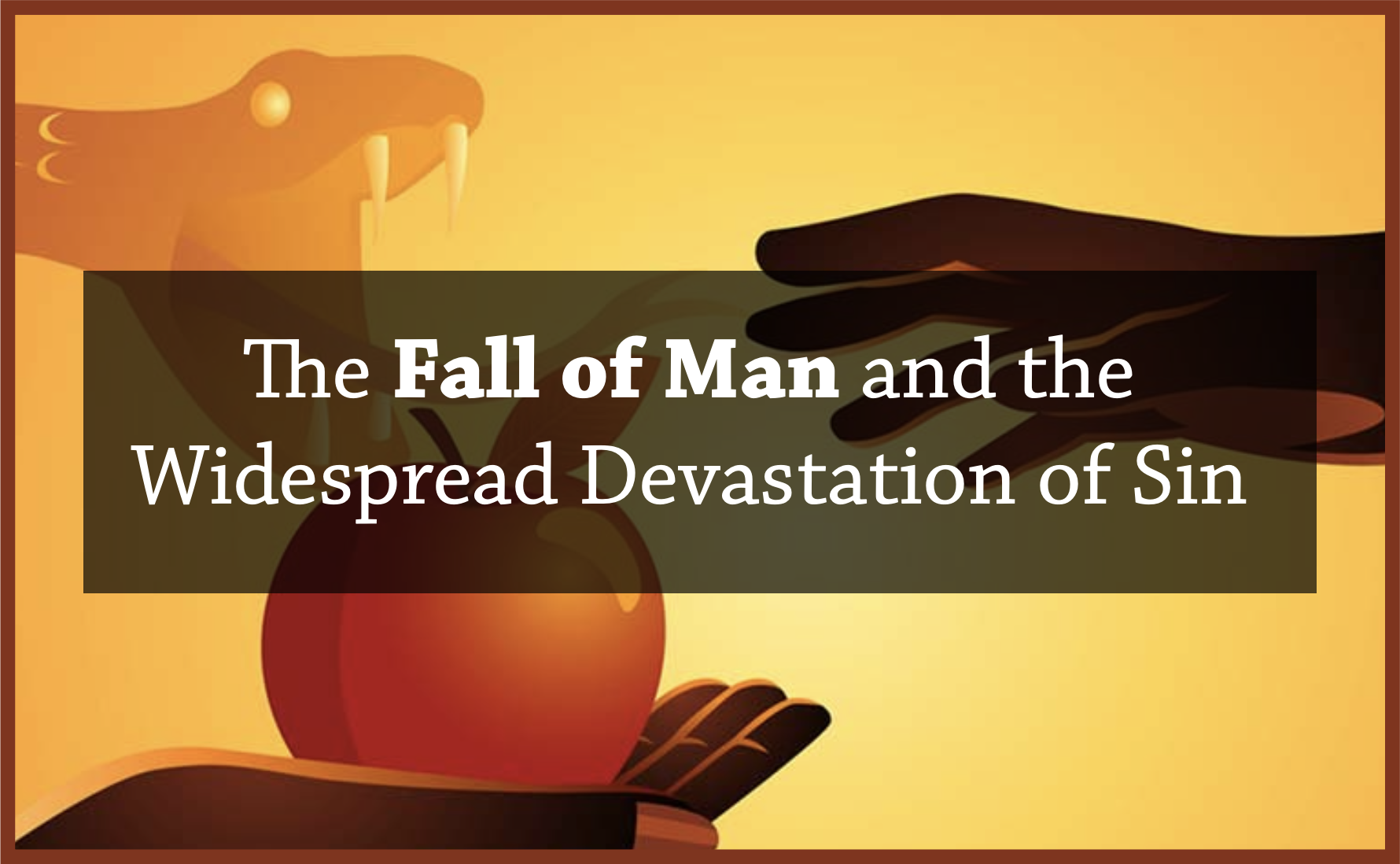
Most Christians are generally familiar with the story of the Fall of Man as related in Genesis 3. Adam and Eve are placed in a garden paradise to live with only one prohibition: they are not to eat from the tree of knowledge of good and evil (Genesis 2.16-17). But then, the crafty serpent, who elsewhere in the Bible is equated with Satan,[1] comes along and entices Eve to disobey God and eat the forbidden fruit. Eve shares the fruit with her husband, and Adam violates the command of God as well.

Usually, when we talk about this event, we focus on it in a couple of predictable ways: the disobedient act of eating the fruit represents the first human sin, and as a result, the spiritual relationship between humanity and God is ruptured, and physical death comes to mankind as a result.

Both of those things—the disruption of our relationship with God and our mortality—are important, and are certainly framed as results of Adam and Eve’s sin in Genesis 3. But the consequences of sin don’t stop there; they are widespread, and affect all areas of life. To put it another way, sin messes everything up, and as a result, we live in a messed-up world.[2]

Over the next few posts, I’d like to look at the theological, personal, sociological, ecological, and physical consequences of sin,[3] and these categories come directly from the account in Genesis 3:

  • Genesis 3.8-10: Adam and Eve hide from God because they are afraid (theological effects).
  • Genesis 3.10-11: Adam and Eve realize they are naked (personal effects).
  • Genesis 3.12-13, 16: Adam and Eve refuse to take responsibility and their relationship is changed (sociological effects).
  • Genesis 3.17-19: Creation itself becomes cursed (ecological effects).
  • Genesis 3.22-23: Adam and Eve are kicked out of the garden and separated from the tree of life (physical effects).

Hopefully, this series will help us take sin more seriously, and see how all-destructive it is.


[1] See, for example, Revelation 12.9.

[2] One of the biggest problems I have with folks who consider Genesis 1-11 to be allegorical rather than historical (i.e., they don’t believe that the first 11 chapters of Genesis relate actual, historical events) is that such a view strips away the Bible’s explanation for the reason why our world is the way it is. The Bible repeatedly affirms that sin is a huge problem, and our own observations repeatedly affirm that our world in its current state is fundamentally jacked up. Genesis 3 provides the biblical explanation for the enormity of sin, and a groaning creation (cf. Romans 8.22).

[3] This series of posts is based in considerable part on the lectures of Dr. Mark Powell in his Systematic Theology class which I took at Harding School of Theology.

Newer posts »

© 2026 The Doc File

Theme by Anders Noren — Up ↑