The online journal of Luke Dockery

Tag: Barack Obama (Page 1 of 3)

Book Review: Reclaiming Hope

Over the summer, I read Michael Wear’s Reclaiming Hope: Lessons Learned in the Obama White House about the Future of Faith in America. Wear directed faith outreach for President Obama’s 2012 re-election campaign and was one of the youngest White House staffers in modern American history. In addition to that, he is a pro-life, evangelical Christian.

In some ways, Wear is representative of a lot of young evangelicals who, though not traditionally supporters of the Democratic party, found Barack Obama’s 2008 campaign very appealing with its emphasis on hope, change, and bipartisan cooperation.

I never voted for President Obama and have written before of profound disagreements I have with him. Having said that, I have respected his devotion to his family and the way that he conducted himself while in office, and I was interested in hearing an insider’s take on the Obama presidency (and especially from an insider who operates from a belief system at least somewhat similar to my own).

In many ways, Reclaiming Hope is a memoir of Wear’s time of service for President Obama. Wear clearly has deep admiration for Obama, and this shines through so clearly that, after the first few chapters, I was afraid the whole book was going to be nothing more than an extended argument for how great Obama was.

But it wasn’t that. After beginning by emphasizing policies and accomplishments of the Obama administration of which Wear was very proud, he reflects on the things he found to be very frustrating. These frustrations include the change in tone of the Democratic party that he witnessed between 2008-2012, his cynicism over Obama’s change in policy regarding gay marriage, and ultimately, what he regarded as the great failure of Obama’s presidency: rather than bringing about  change in Washington and bipartisan cooperation, it only furthered the partisan divide that plagues our nation.

Wear concludes the book on a high note, strongly emphasizing that, from a Christian perspective, hope is not to be found in any political system or figure but in the working of a God who wants justice in His world. 

Here are a few good quotations:

“Politics is causing great spiritual harm and a big reason for that is people are going to politics to have their inner needs met. Politics does a poor job of meeting inner needs, but politicians will suggest they can do so if it will get them votes.” (xxix)

“In 2009, our diversity demanded we accept that there will be voices we disagree with in public spaces. In 2013, diversity required us to dispel dissent. In 2009, we had true pluralism and the big American tent. In 2012, at the Democratic convention, we had a pretense of including and magnanimity for political gain. In 2013, with our last four years in hand and the “weight of history on our side” that pretense went out the window. Now the Democratic Party was about consolidation.” (188)

“When our little hopes are disappointed, we find ourselves situated between the harshness of despair and the daunting, unusual existence of real hope.” (192)

“The arc of the moral universe does not bend toward justice because of a political program or the unassailable motives of humans, but because of a God who wills justice.” (197)

“There is indeed an arc to the moral universe, but it is not a matter of humanity progressing toward justice; rather, it is the God of justice who is moving toward us.” (197)

“People who place their hope in politics are idealists who then become cynics.” (205)

Somewhat startling to me considering Wear’s narrative throughout the book (and his own political disillusionment that he describes) was his chastisement toward Americans who feel represented by neither party and thus, become independents. Wear argues that being an independent is to “check out of the system” and forfeits one’s ability to be an influence (210-211).  I reject this notion, however: supporting a party that does not represent your values in hopes that that party will influence the system according to your values is logically absurd, and speaking for myself, I expect my future political involvement to remain somewhat tepid.

Regardless, I enjoyed Wear’s book: it gave me a look behind the scenes of an historical presidency, helped me to see other perspectives, and provided a strong reminder that all people of faith need to hear: the hope for our world lies not in politics, but in the God who created all things and holds all things together.
When Nero Was On The Throne

It has been interesting to me over the last 12 hours or so to read Facebook status updates and tweets from my Christians friends about yesterday’s presidential election. The fact that some of these Christians are celebrating the reelection of President Obama while others are lamenting it tell me that either:

  1. Applying Christian values to voting is a difficult and murky process.
  2. Christians aren’t very aware of what “Christian values” actually are.
  3. Both 1 and 2 are partially true.

But I digress. If your candidate won yesterday, be happy, be thankful, and try not to gloat too much. If your candidate did not win yesterday (and if you are in this group, you are the real audience for this post), remember that as a Christian, you can glorify God by showing respect to the one who is in authority, even if he wasn’t your choice:

“Let every person be subject to the governing authorities. For there is no authority except from God, and those that exist have been instituted by God. Therefore whoever resists the authorities resists what God has appointed, and those who resist will incur judgment. For rulers are not a terror to good conduct, but to bad. Would you have no fear of the one who is in authority? Then do what is good, and you will receive his approval, for he is God’s servant for your good. But if you do wrong, be afraid, for he does not bear the sword in vain. For he is the servant of God, an avenger who carries out God’s wrath on the wrongdoer. Therefore one must be in subjection, not only to avoid God’s wrath but also for the sake of conscience. For because of this you also pay taxes, for the authorities are ministers of God, attending to this very thing. Pay to all what is owed to them: taxes to whom taxes are owed, revenue to whom revenue is owed, respect to whom respect is owed, honor to whom honor is owed.”

(Romans 13.1-7)

Paul’s words here are pretty hard to swallow for Christians who struggle to respect and submit to their leaders. When we think about leaders that we don’t like much, it can be difficult for us to affirm statements like, “the authorities are ministers of God” and that resisting them means that we are resisting “what God has appointed”. But that’s exactly what Paul says.

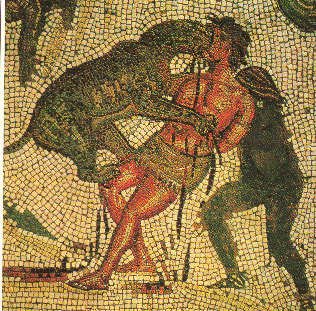
Mosaic depicting a Christian martyr

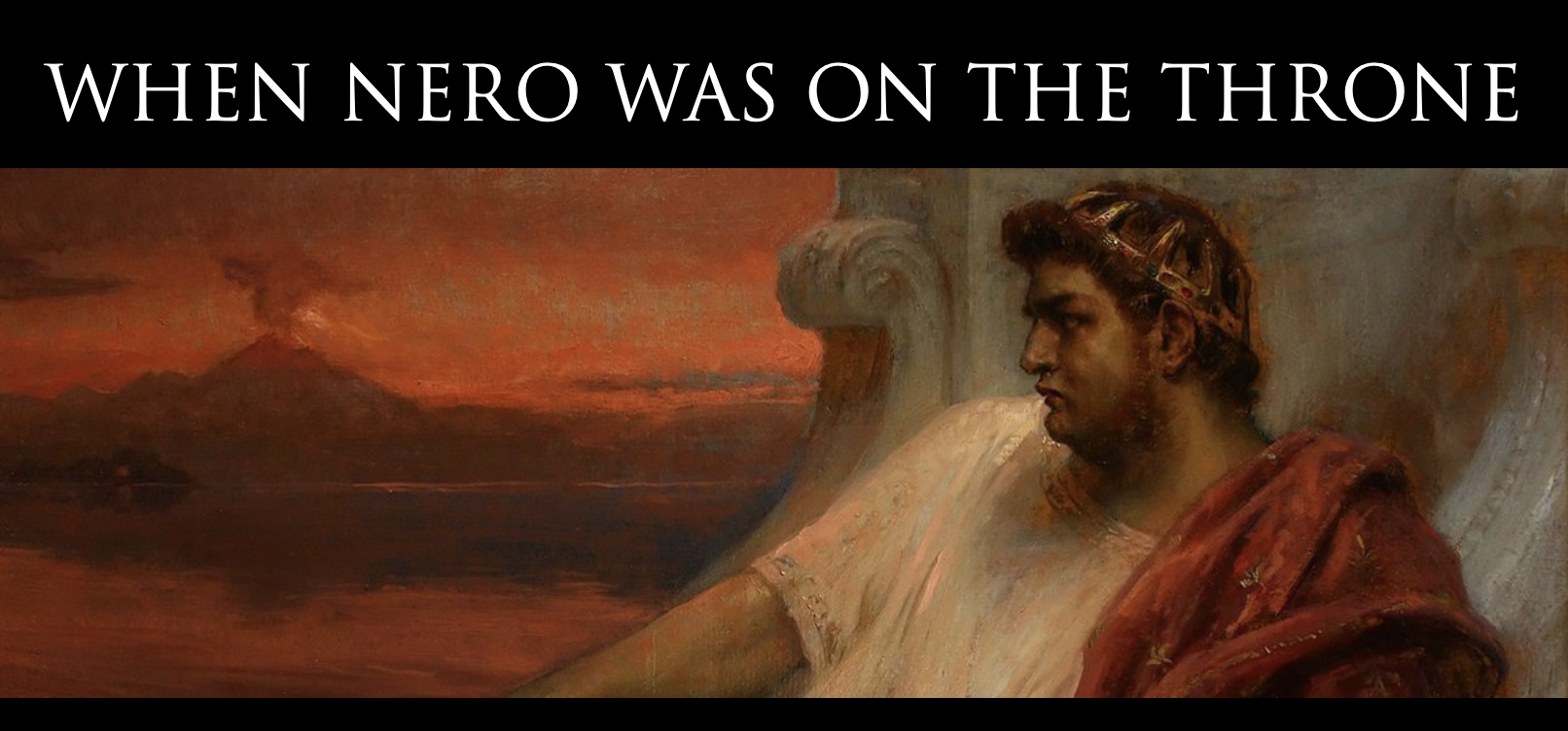
And to those who are inclined to think that Paul just didn’t understand about bad leaders, realize that he wrote these words to the Christians in Rome while Nero was Emperor. Nero was a vile man and a dedicated persecutor of Christians who was known for using the bodies of captured Christians as fuel for the fires which lit his garden at night. No President that our nation has ever had could hold a candle to Nero when it comes to sheer wickedness*, and it was most likely during the reign of Nero that Paul himself was executed. And yet, to a man such as this, Paul urges Christians to be in subjection.

If your candidate didn’t win yesterday, it’s okay to be disappointed. It’s okay to disagree with the policies of the current President, and it’s okay to hope for a better outcome next time. But respect your President, and be in subjection to him. Even if it is hard.


*Please do not interpret this to mean that I am suggesting that President Obama is somehow equivalent to Nero. I am not.

President Obama, Band of Brothers, and Respect

It used to frustrate me a lot to hear people constantly running down George W. Bush when he was in office. It wasn’t the people who had differences of opinion with him on policy that bothered me—it was those who felt it was appropriate for them to launch ceaseless personal attacks against the President of the United States.

Fast forward a few years, Barack Obama is in office, and the personal attacks continue (albeit, from a different portion of the population). Instead of calling him stupid (which they did with Bush), people call Obama a Muslim or a Communist, or accuse him of hating America. As with Bush, a basic lack of respect is shown for the President on a daily basis. I think that is unfortunate, but maybe not particularly surprising when you consider that people treating one another with respect isn’t really a defining characteristic of our culture these days.

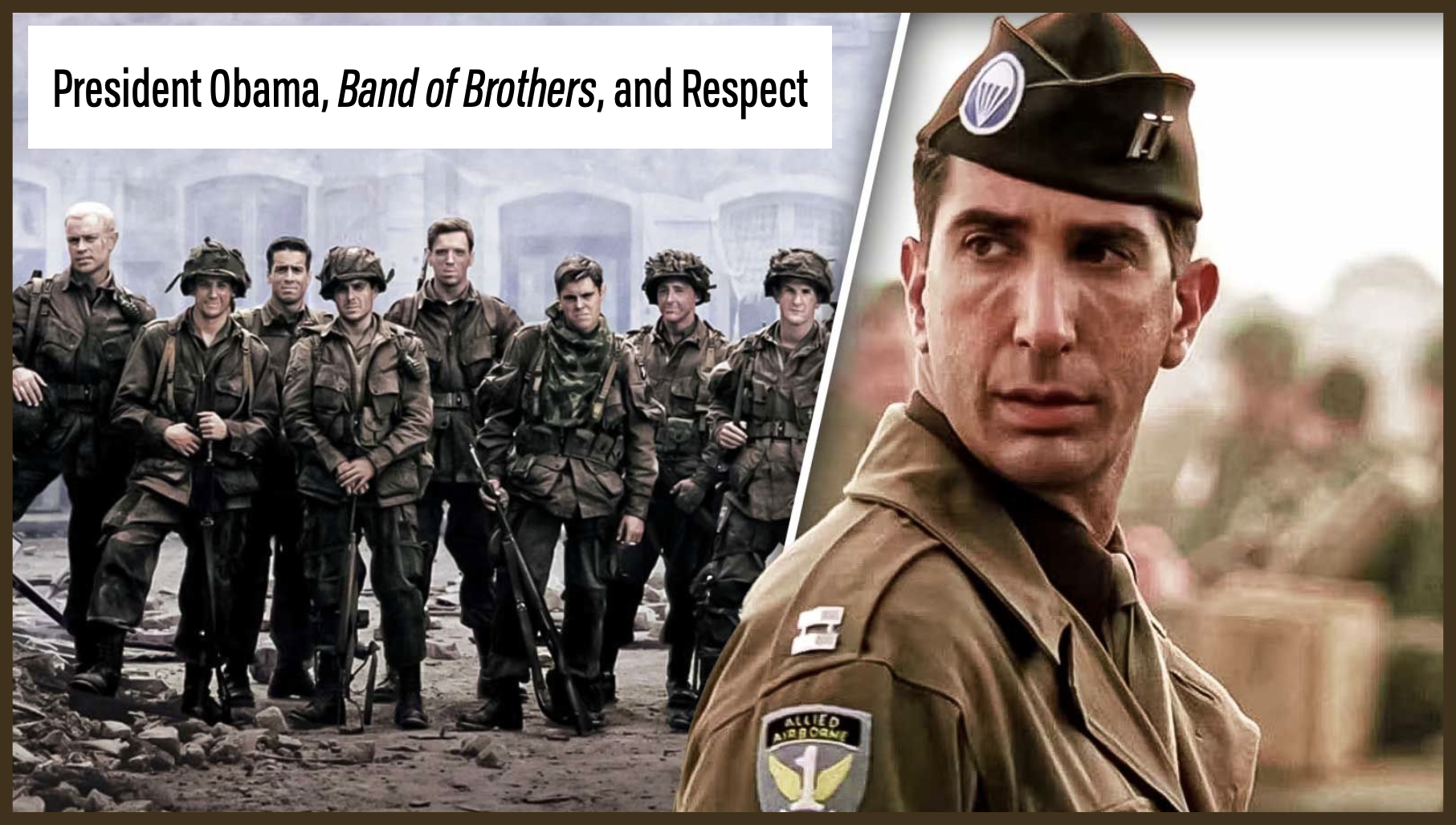
One of my favorite scenes in Band of Brothers (which, by the way, I highly recommend) revolves around an interaction between Major Richard Winters and Captain Herbert Sobel.

At the beginning of the series, Sobel had been Winters’ commanding officer during training camp, and he was a difficult officer to work with—cruel, vindictive, and incapable of reading a field map. There was no love lost between Sobel and Winters, his executive officer. As time progressed, Sobel proved himself to be an inept officer and was transferred out of the unit, while Winters received one promotion after another, eventually becoming a major and a battalion commander.

Later on, Winters and Sobel cross paths again, but now, Winters, and not Sobel, is the senior officer. Sobel tries to walk past Winters without really acknowledging him or saluting, but then Winters forces him to do so and says something I absolutely love: “We salute the rank, not the man.”

Winters’ point is well taken, and ultimately, it’s one that I believe applies to Presidents as it does to superior officers—we owe them respect, not because of what we think about them personally, but because of the office they occupy (of course, it’s easier to respect admirable people, which is one reason why I think personal character is an important issue when it comes to choosing leaders).

Interestingly enough, this is a biblical idea as well. In Romans 13, in the context of talking about the Christian’s relationship with the government, the Apostle Paul says in verse 7:

“Pay to all what is owed to them: taxes to whom taxes are owed, revenue to whom revenue is owed, respect to whom respect is owed, honor to whom honor is owed.”

Later, in a similar context, the Apostle Peter conveys a similar message in 1 Peter 2.17:

“Honor everyone. Love the brotherhood. Fear God. Honor the emperor.”

I point out these scriptures because, unfortunately, Christians—from both sides of the political aisle— are often just as guilty of treating the President with disrespect as anyone else. I have some profound idealogical differences with our current President, and occasionally I’ll speak about those differences, but if I ever do so in a way that is disrespectful, I need to hear about it. Because it’s not right.

Honor the emperor, whether you like him or not.

Waterboarding And Abortion

Ken Blackwell has written an interesting article pointing out the irony that the same Obama administration that claims to be morally horrified at the idea of waterboarding mass murderers also approves of Partial Birth Abortion.

A couple of interesting tidbits:

“The purpose of the Geneva Convention was to give warring nations a strong, positive incentive to behave according to international norms and not to engage in conduct that “shocks the conscience.” When we give Al Qaeda or Taliban terrorists prisoner of war status and Geneva Convention coverage—without demanding anything of them in return—we abandon one of the great achievements of the Geneva Convention.”

“Our new president abhors torture, unless it is the torture of the unborn. In that case, it is not torture at all, but simply inducing fetal demise. This great international uproar over what is and is not torture has been generated because of the treatment of three known mass murderers. The slaughter of innocents in their thousands elicits no international outrage. This is part of what Justice Breyer sees as evolving international standards of decency.”

I’m not dismissing the torture of captured terrorists as a non-issue (although I think the discussion of whether or not waterboarding constitutes torture is a valid one).

I’m just saying that the torture issue, in scale and severity, doesn’t compare to abortion.

The Presidential Bracket

ESPN has been buzzing the last couple of days about President Obama filling out an NCAA Tournament bracket, and have been showing his picks on a segment of Sportscenter.

Leader of the Free World or not, I don’t think President Obama’s bracket is a very good one (after all, his Final 4 is identical to mine!). Nevertheless, I think it’s neat that the same March Madness that appeals to so many people apparently interests our Commander-in-Chief as well, and I think it was a good PR move for him to release his bracket publicly.

Some people are complaining about Obama taking time out from dealing with the serious issues facing our country to do something as unimportant as fill out a basketball bracket, but I think that’s a little ridiculous, considering that it probably only took him about 10 minutes.

Of course, if President Obama spends as much time watching this year’s tournament as I am planning to, then we might have something to talk about.

You can see all of his picks here.

« Older posts

© 2026 The Doc File

Theme by Anders Noren — Up ↑