The online journal of Luke Dockery

Tag: Bible Reading (Page 1 of 2)

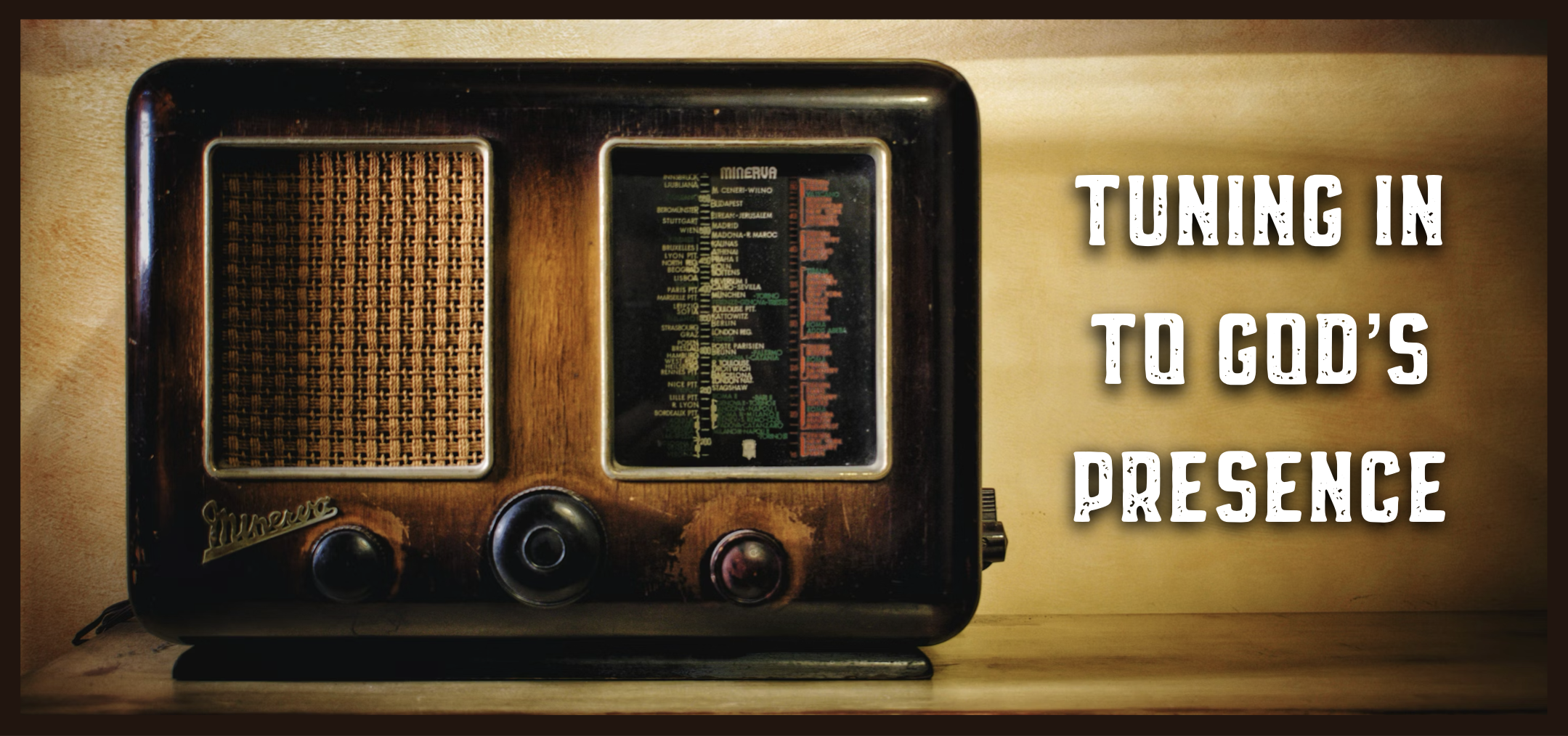
Tuning in to God’s Presence

As humans, we are constantly being influenced—or discipled—by the content and messaging we take in. That is true for all of us: children, teens, and adults.

A metaphor I have been using recently to help reflect on this reality is the idea of two volume controls. You might imagine that one volume control is labeled “God,” and this is the control that channels God’s truth into our lives. We turn up the God volume in our lives when we engage in practices like reading Scripture, praying, worshipping, spending time with Christian mentors and examples, reading thoughtful Christian books and listening to Christian music, and spending time in creation. The other volume control is labeled “World,” and this is the control that either distracts us from God or distorts our Christian worldview. This content may or may not be bad in and of itself, but it doesn’t help us align our lives with God’s mission.

The tension between these two volume controls has always existed, but a particular challenge in our current context is that the World control is turned up so loud—the messaging infiltrates our lives at every turn because of the ubiquity and constant connectivity of digital technology. By default, if you don’t take steps to prevent this, the God volume will tend to be low, while the World volume will be very high. Disciples of Jesus need to be thoughtful and intentional about how to reverse this—we cannot allow ourselves to float along in the current of the mighty stream of culture with the World volume blaring all along the way.

What this means for most of us is probably a combination of turning down the World volume and turning up the God volume. The former task—turning down the volume of the World—is essential. Depending on who you are, that may look like:

  • Watching and listening to less of the political content that makes your heart anxious and makes you suspicious of your neighbors.
  • Spending less time doomscrolling on social media and allowing algorithms to plan the trajectory of your thoughts and attention.
  • Cutting out music and shows in your life that promote behaviors and worldviews that are incompatible with Christianity.
  • Lowering the importance of things that are not necessarily bad—like devotion to a sports team—on the priority list of your life.

As you reflect on your own life, you probably have some specific ideas of how you might do this, and I encourage you to spend some time working on turning the World volume down. But that’s not actually the point of this post; instead, I want to reflect a bit on turning up the God volume, or to mix metaphors just a bit, tuning in to God’s presence.

I am in my 20th year of congregational ministry, and it may not surprise you to hear that, in many ways, the God volume has generally been pretty loud in my life. I spend quite a bit of time reading Scripture, teaching Bible classes, spending time with other believers, and having conversations about faith. But it is also true that many of those activities, while good, can easily trend toward the intellectual side of faith. I naturally gravitate toward learning and thinking, and there is nothing wrong with that, but following Jesus is ultimately relational, and staying firmly planted on the intellectual side of things is to miss a significant part of the picture.

With all that in mind, in 2026, I wanted to more intentionally tune in to God’s presence. Not just to know more about God, but to know Him better, and to approach this goal through repeated spiritual rhythms. Here are three practices that have become a significant part of my life this year.

Morning Renewal

Early in the year when I was at NCYM, I went to a session led by Dr. Jeremy Smith and Dr. Brandon Fredenburg from the Vocati Program, which is essentially a summer retreat for teens that leans heavily into spiritual practices. In this session, we learned a Morning Renewal, a daily prayer to be said (ideally) right when you wake up.

I have adapted their prayer slightly for my own use:

O LORD, open my lips, and my mouth will proclaim Your praise.
Open my ears to hear Your voice.
Open my eyes to see Your works.
Open my hands to wield Your strength.
Open my heart to embrace Your world.

Father God, you are here. Lord Jesus, you are here. Holy Spirit, you are here. And I am here.

I breathe today as one dead to sin and alive to God in Christ Jesus. I am here to do your will, O God.

For you are our compassionate, gracious God, slow to anger, abounding in steadfast love and faithfulness to all created things, in all ways, at all times.

Glory be to the Father, and to the Son, and to the Holy Spirit. As it was in the beginning, is now, and forever shall be—worlds without end. Amen.

Remembering to say this prayer first thing in the morning is still a work in progress for me, but I do say it most days early in the day, and it has been a helpful practice:

  • It starts my day by orienting my mind toward God and what He has already prepared for me to do.
  • It reminds me that God is already present in my life and in my world; I don’t have to seek Him out as much as I just need to pay attention.
  • It is a pledge that my purpose in life is to do God’s will.
  • It reminds me of the gracious character of the God I serve.

Beginning the day with the Morning Renewal helps me to start the day with purpose, encouragement, and determination.

Daily Remembrances

In early 2025 at the Harding Youth Ministers Workshop, I heard an excellent presentation on summer internships by Justin Hammond.[1] Although it wasn’t the main point of the presentation, Justin shared that he had written a “Personal Manifesto” of important truths that he needs to remember that he reads to himself every day. He has the student interns he works with engage in the same practice.

Inspired by this, I decided to make my own list. I call it my “Daily Remembrances,” and each day when I am in the office, I pray through the list. Here is my current list, with some comment/explanation:

  • Every day is a gift. I firmly believe that this statement is at the core of a contented life. My life is not a right; it is a gift. I need to remember to begin each day with gratitude and with wonder that I have been given another day to make the most of.
  • God is a generous giver. He has given me enough time, money, energy, and resources to accomplish what is needed. I have a busy life with a lot of accumulated responsibilities. I am inclined toward fatigue and anxiousness, concerned that I will never be able to do everything I need to do. However, I firmly believe that God is a generous Father, and because of that, I need to remember to live out of an abundance mindset rather than a scarcity mindset: God has given me what I need in order to accomplish what He wants me to do. It is enough.
  • It is a tremendous privilege to work with teens and point them toward Jesus. I have been a youth minister for 20 years. Sometimes, it can become routine. Sometimes, my students can get on my nerves and I can be cranky with them. Sometimes, I just want to do something else. I need to remember what a blessing and honor it is to do what I get to do.
  • I will choose to be positive and grateful rather than negative and complaining. People who know me well can tell you that I tend to fall on the pessimistic side. Being a negative complainer accomplishes nothing and benefits no one. It discourages others and saps my own resilience. I need to remember that when I am positive and grateful, I lighten the loads of those around me and foster contentment that allows for long-term sustainability.
  • I will be a strong, gentle, and supportive husband and father. I am confident that I am not the only one who is often not at my best around those I love the most. Too often I am tired and stressed by other things which means I can be passive, cranky, and withdrawn with my family. I need to remember that God has given me the sacred duty of leading my family, and that it is my responsibility to love them like Jesus does.
  • I will work hard AND value sabbath. I rarely need to be reminded to work hard; indeed, I am something of a workaholic (a familial trait). Sabbath is more of a struggle for me, however. I need to remember that sabbath is a gift and a commandment from God, and that I will do my work better and longer if I rest sufficiently.
  • God is good regardless of my emotions or circumstances in the moment. I am so limited in my perspective, bound by time and hostage to the emotions of the moment. Wrapped up in my own problems and my inability to perceive reality, sometimes God seems distant, arbitrary, or uncaring. I need to remember that God’s goodness is not dependent upon my emotional status, but is revealed in His faithful love throughout history.
  • Because of the resurrection of Christ, my labor is not in vain. Sometimes, I feel like a failure. My best efforts don’t seem to amount to much. Others seem to be so much more effective than I am. I want to give up. I need to remember Paul’s assurance that the resurrection of Christ has fundamentally altered the operating principles of the universe and that everything I do for Him always matters.

When I remember these truths, it transforms the trajectory of my day, making me more intentional, more resilient, more grateful, more content, and more loving.

Monthly Psalter

I mentioned earlier that Bible reading has generally been a big part of my life. Despite that, I have to confess that the reading of Psalms has been more peripheral. Of course, I had read through Psalms many times, but I never felt that I really appreciated the Psalms. And more than that, I felt that I was the worse for it—there was something I was missing out on until I improved my relationship with the Psalms.

So, this year I determined to change that. I purchased a nice, leather-bound Psalter and then began following a daily reading plan that goes through all 150 psalms each month. As I write this in late July, I have read through the Psalms six times so far this year and am nearing completion of a seventh, and I think I now have enough of a vantage point to say that this has been a deeply formative practice:

  • First, I generally read from Psalms in the morning and evening, and this has been an excellent way to bracket my day. The combination of the Morning Renewal, Daily Remembrances, and reading from Psalms has been such a significant way to “turn up the God volume” at the start of my day in a way that lingers throughout.
  • Second, it has helped me to greatly grow in the language of praise. It seems obvious to say that Christians should be good at praising God, but the reality is that this has been an area of needed growth for me for a long time, and the practice of reading through the Psalms over and over again has helped with this.
  • Third, the Psalms is a deep wellspring of biblical wisdom, and it’s like I am getting continual injections of a needed supplement in my life. I am constantly reminded of the goodness of God and His Word, the brevity of my life, and the necessity of turning over all vengeance and negative feelings to God.
  • Fourth, and perhaps most simply, I like the Psalms now. I don’t have all of the Psalms memorized or anything like that, but many of them have become like old friends that I look forward to seeing again on the next read-through. 

I’m not saying I will read through the Psalter every month for the rest of my life, but I do intend to continue the practice of regularly and repeatedly reading through the Psalms. I’ve simply seen too many benefits to stop.


I don’t want to give the impression that I have now spiritually arrived and that if you will follow the three life hacks I have outlined above, you, too, can become as spiritually advanced as I am! Far from it. I still have a long way to go, and by God’s grace, His Spirit will work within me to continue to transform me into the person He wants me to be. But these simple, repeatable practices have helped me to tune in to the presence of God in my life, and to orient myself to His purposes. My hope is that you will find something here to benefit your life of discipleship as well.


[1] Justin Hammond, “Purposeful Summer Internships,” presentation at the 2025 Youth Ministers Workshop, Harding University Center for Ministry, January 31, 2025, https://scholarworks.harding.edu/youth-conf/3


Scripture As Story

One of the significant developments in the field of biblical studies over the last few decades that I have witnessed becoming increasingly widespread (especially on a popular level) over the last several years is a narrative approach to Scripture: reading the Bible as literature, and specifically, as literature that is telling a grand, overarching story about who God is and what He is doing in the world.

For some, hearing about the Bible being literature or story immediately sets off warning alarms in your head, because sometimes we hear the words “literature” and “story” and assume that they refer to things that are not true, and if we apply those words to Scripture, doesn’t that negate or diminish the truth of it?

Well, no.

Certainly I want to affirm that the Bible is true, and we want to read it in ways that reinforce our confidence in its truth and reliability, but it’s worth pointing out that stories can be true. In fact, we talk about “true stories” all the time. Sometimes we’ll tell someone a story and maybe there’s a bit in there that is hard to believe, and so we say, “True story!” to reassure our listeners that what we are telling them really happened. Sometimes we go to the movies and before the film begins it might say, “Based on a true story,” which means that they have taken Hollywood liberties and added some details and twists to make it more exciting, but it’s based on something that actually happened.

Well, with Scripture, what we have is not based on a true story; it is the true story! It’s the truest story of all! But it’s still revealed to us as a story, and we read it more accurately and more faithfully if we read it as a story.

And that’s what I want to do in this series. For several posts, I want to look at Scripture As Story. We will look at the grand, overarching story that the Bible is telling, and we will also look at various ways in which the biblical authors use literary techniques to reveal truth about God, and how we can read the Bible better and more faithfully if we understand and look for these techniques.

I hope you will join in and follow these posts. For me, coming to appreciate the literary nature of Scripture and the story that the Bible is telling has deepened my respect for and interest in the biblical text, my wonder at the nature of inspiration, and my own sense of mission and purpose in God’s world. In short, it has helped my faith to grow.[1]

It is my hope that this series will, in a small way, help others similarly.

Other posts in this series:


[1]There are a ton of resources out there now on a literary approach to Scripture. A few that I will highlight include The Art of Biblical History by V. Philips Long, which was very influential to me personally, and The Art of Biblical Narrative by Robert Alter, which was kind of a game-changer in the field. Also, The Bible Project Podcast has done some good work on this as well, including “Setting in Biblical Narrative,” (March 25, 2018), and “Design Patterns,” parts 1-4 (April 2-23, 2018).

My Favorite Bible Reading Methods

It’s the start of a new year, which is generally the time that many people begin their goal of reading through the Bible in a year. This is, of course, a worthwhile goal, but it is one I have mixed feelings about in the sense that frequently, people get behind in their reading plans and because they feel like they can’t catch up, give up instead. This is wrong-headed, I think, since the real point of Bible reading plans is to cultivate the regular practice of reading Scripture rather than finishing the whole Bible in 365 days.

At the same time, reading through the entire Bible is a very worthwhile goal, and it always amazes me when I hear of people who have been Christians for years and years but have never read the Bible from cover to cover (if you are reading this and fit into that category, I am not trying to make you feel guilty or ashamed, just keep reading). Simply put, if you don’t read the entire Bible, you tend to miss out on some important and recurring ideas.

For the last several years I have read through the Bible using different plans and methods, and for those who might be interested in reading through the Bible in 2018 (it’s not too late to start!), I thought it might be helpful to share of the different methods that I have enjoyed and what I liked about them:

  • The Daily Bible: This Bible attempts to place the books of the Bible in chronological order, and divides it into 365 readings to make it easy to know exactly how much you need to read per day. It also includes helpful introductory material to each book.
  • The Message: This is a simple “method”—I just read through the Message one year. This is not a common translation for me, which meant that I was constantly reading passages in new language, which led to new reflections and new insights. I’m sure some editions now come with Bible reading plans, or you can simply divide the 1189 chapters in the Bible (or the total page numbers in the edition you are using) into 365 portions.
  • ESV Journaling Bible: The ESV is the primary translation I use, and I really liked being able to write a lot of notes and reflections as I read through in the journaling space. Also, I really liked the reading plan that came along with it, which included a daily selection from the Old Testament, the New Testament, and the Psalms.
  • The Listener’s Bible: Two years ago, I did my Bible “reading” in the car by listening to audio CDs that were recorded by Max McLean. Not only did this allow me to make the most of time in which I was otherwise unproductive, it also allowed me to hear Scripture instead of read it, which is the same way that the original audiences would have been exposed to it. Bonus feature: your road rage tends to decrease when you drive around listening to God’s word.
  • ReadScripture App: Last year, I used the Bible Project’s free ReadScripture app on my iPhone (also available on Android), and absolutely loved it. Having everything on your phone is incredibly handy, the Bible Project videos that introduce each biblical book are incredible, and the emphasis on the Bible as one unified story that points to Jesus is very helpful.
  • Bibliotheca: This year, I am using Bibliotheca for my Bible reading. This approach is novel for a couple of reasons. First, everything about Bibliotheca has been carefully designed to enhance the reading experience: from removing the verse and chapter numbers, to the craftsmanship of the books themselves, to even the specially-designed font. Second, Bibliotheca uses an updated version of the incredibly literal American Standard Version. So far, I have not loved the stilted style of this translation, but the novelty of it and some of the word choices it uses has caught my attention several times and has helped me to see things in a new light (similar to what I said about the Message above, except from the opposite perspective).
  • Whole Books at a Time: This process is described here and is my tentative plan for next year. This is not truly a daily Bible reading plan, as you basically set aside one large block of time per week to read entire books in one sitting, but I can certainly see great potential value in reading the individual books as unified wholes.

If you are currently trying to read through the Bible this year, I applaud you on your goal, and maybe one of these methods will be helpful to you. But remember, more important than completing the entire Bible in an arbitrary amount of time is establishing the practice of regularly spending time in God’s word and seeking the transformation that comes from doing so.

Reaching Your Spiritual Potential: Read Your Bible!

This is the third post in an ongoing series (which I have neglected for a few weeks). See Part 1 and Part 2.

Bible Study in the Bible

Probably I don’t need to go into great detail about Bible study being a biblical idea, but briefly:

  • We know that Jesus had great command of Scripture.
  • He amazed the crowds, scribes, and religious leaders with His teaching  (even at a young age).
  • His beautiful Sermon on the Mount interacted significantly with the Law of Moses.
  • When He was tempted by Satan in the wilderness, He answered every temptation with Scripture.

Elsewhere in the Bible, we see an emphasis on the importance of studying, meditating upon, and teaching God’s Word:

  • Deuteronomy 11.18-23: “You shall therefore lay up these words of mine in your heart and in your soul, and you shall bind them as a sign on your hand, and they shall be as frontlets between your eyes. You shall teach them to your children, talking of them when you are sitting in your house, and when you are walking by the way, and when you lie down, and when you rise. You shall write them on the doorposts of your house and on your gates, that your days and the days of your children may be multiplied in the land that the Lord swore to your fathers to give them, as long as the heavens are above the earth. For if you will be careful to do all this commandment that I command you to do, loving the Lord your God, walking in all his ways, and holding fast to him, then the Lord will drive out all these nations before you, and you will dispossess nations greater and mightier than you.”
  • Joshua 1.8: “This Book of the Law shall not depart from your mouth, but you shall meditate on it day and night, so that you may be careful to do according to all that is written in it. For then you will make your way prosperous, and then you will have good success.”
  • Psalm 119.105: “Your word is a lamp to my feet and a light to my path.”
  • Acts 17.10-12: “The brothers immediately sent Paul and Silas away by night to Berea, and when they arrived they went into the Jewish synagogue. Now these Jews were more noble than those in Thessalonica; they received the word with all eagerness, examining the Scriptures daily to see if these things were so. Many of them therefore believed, with not a few Greek women of high standing as well as men.”
  • 2 Timothy 2.15: “Be diligent (KJV: study) to present yourself approved to God as a workman who does not need to be ashamed, accurately handling the word of truth.
  • 2 Timothy 3.16-17: “All Scripture is inspired by God and profitable for teaching, for reproof, for correction, for training in righteousness; so that the man of God may be adequate, equipped for every good work.”

There are a lot of other passages we could look at, but I think these give the idea: the Bible presents itself as a book of teaching that needs to be read, studied, and obeyed by the people of God.

Clueless Christians

I think perhaps that the greatest problem in American Christianity today is that Christians claim to live their lives according to the teachings of a book that, frankly, they know very little about!*

I truly believe that a lot of the division that exists in Christianity and a lot of the false teaching that abounds would be taken care of if people would simply spend more time reading God’s Word.

This is absolutely true in the Christian world as a whole and I believe it is also true within the fellowship of Churches of Christ. In classes I teach and in biblical discussions I have, I am firmly convinced that the vast majority of people who call themselves Christians are pretty ignorant when it comes to what the Bible actually teaches.

And if you know your history about the fellowship of Churches of Christ, that is both ironic and sad. Churches of Christ have direct historical ties to the American Restoration Movement, which occurred in the early 1800s in the United States when several men, independently and simultaneously, decided that they wanted nothing more and nothing less than to be members of the Church purchased by the blood of Christ and established by His apostles in the first century.

Men like Barton W. Stone and Alexander Campbell didn’t want to be called Baptists or Presbyterians or Methodists anymore; they just wanted to be known as Christians. These men didn’t want to have anything to do with manmade creeds or traditions; they wanted their beliefs and practices to be determined by the teachings of Scripture. They didn’t want people following them; they wanted people to follow Christ.

So, examining Scripture, these men came to the conclusion that local congregations should be organized under Elderships, that worship to God should consist of a cappella singing, that the Lord’s Supper should be observed every Sunday, and that baptism involves being immersed in water for the remission of sins. If you attend a church of Christ, that should all sound pretty familiar to you.

As I said earlier, the lack of biblical knowledge that we have today is ironic, because, in Churches of Christ, our big thing, our defining characteristic is supposed to be that we make every effort possible to be the New Testament Church, and to live our lives according to the teachings of the Bible. But how can we hope to do that if so many of us know so little about what the Bible actually teaches?

The simple truth is that there’s no way that we can become mature Christians and reach our spiritual potential if we are ignorant of the teachings of Scripture!

We believe that the Bible is a special book because it is God-breathed; it’s the only book that we have that came from God! What could be a more important use of your time than devoting yourself to the reading and study of such a book?

Unfortunately, somehow we’ve developed the idea that it’s the Church’s job to teach us all the Bible we need to know. Certainly part of the Church’s job is to teach Christians, but if the only exposure to the Bible you’re getting is at Church, it’s just not enough! At the congregation where I work, we have roughly 80 minutes of Bible class time per week. Add to that another 60 minutes of sermon time per week and then do the math, and it comes out to about 120 hours, or 5 days of biblical instruction per year. That, on it’s own is not nearly enough, and that assumes that you never miss a single class or sermon!

What all this means is that if we’re going to grow to become mature Christians and reach our spiritual potential, it is going to require that we read and study the Bible outside of church.

I realize that what I’m saying doesn’t apply to everyone who is reading this; there are some who have studied the Bible for decades, and who continue to make Bible reading a part of their daily lives. But for many of us, there is a lot of room for improvement.

I read the Bible a lot, but it had been several years since I had systematically read the entire Bible through in one year. I decided to do that this year, and have been astounded by the results: so often I will be reading something else or talking to someone about a biblical topic, and I’ll think to myself, “I just read that the other day!” It has been a tremendous blessing to see different parts of my life interconnected and woven together in the shadow of the Word of God.

Let me encourage you: make a commitment today to be a person whose life is characterized by a dedication to the reading and study of Scripture. Your spiritual growth and potential depends on it.

Read your Bibles!

*I say “perhaps” because sometimes I think that the greatest problem in American Christianity is the way that we spend our money. But maybe there’s no real disagreement here: if we actually read our Bibles and listened to what Jesus said about money, it might take care of that problem too.

Being Humble About Our “New Interpretations”

Some more good stuff from Jonathan Pennington’s Reading the Gospels Wisely on the importance of studying the history of the interpretation of the biblical text:

“Any time we think we have come up with a new and insightful interpretation, the odds are that someone has already had this insight and expressed it better; conversely, if we do arrive at an entirely new interpretation, then chances are, if none of the tens of thousands of students of Scripture have ever seen things that way, that interpretation may have serious weaknesses and blind spots.”

So basically, if you’re reading Scripture and feel like you’ve come upon a new and brilliant interpretation of a verse or passage that you’ve never heard before, do a little research: most likely someone else has already developed that same interpretation and has done so in a better and more thorough way. And that’s a good thing, because it leads to a deeper understanding of the Bible.

And it’s also possible (though unlikely) that your research will show that you have, indeed, come up with a new interpretation that no one else has ever thought of before. If that’s the case, your new interpretation is most likely flawed.

Either way, I think researching and reading the interpretive views of others is helpful in determining accuracy, and also leads to humility as well. Both are good things.

« Older posts

© 2026 The Doc File

Theme by Anders Noren — Up ↑







