The online journal of Luke Dockery

Tag: Caesar

A Different King Named Jesus

Today’s reflection comes from Acts 17, where Paul and Silas travel to Thessalonica as part of the Second Missionary Journey. As was Paul’s custom, they head first to the synagogue and tell the Jews there about Jesus, using the Hebrew Bible. This method is successful, at least with some:

“Some of the Jews believed Paul and Silas and joined them. In the synagogue there were many Greeks. They worshiped the one true God. There were also many important women. They joined Paul and Silas too.

(Acts 17.4, IEB)

But there are also some Jews who reject Paul and Silas’s message and who, out of jealousy (v.5), hire some men to stir up trouble against them. A mob ensues, and cries out:

”[These men] do things against the laws of Caesar. They say that there is a different king named Jesus.”

(Acts 17.7b)

This proclamation (from a mob, no less!) highlights one of the central truths of Scripture, but one that needs to be carefully nuanced: Jesus is the King of the world.

This idea, that Jesus is King, is what the most popular titles used for Jesus are getting at. When we say that Jesus is Messiah or Christ (the same term in two different languages), the idea is that He is the promised king from the line of David, the One to whom the narrative of the Hebrew Bible points. When we say that Jesus is Lord, we are moving from Hebrew to Roman thought: Lord was the title given to Caesar, the presumed king of the known world. To say that “Jesus is Lord” is to necessarily imply that Caesar is not.

And, indeed, this is the very notion proclaimed in the verse quoted above—the mob was right. Jesus is the King of the world, seated at the right hand of God the Father since His resurrection and ascension. Followers of King Jesus owe ultimate allegiance to Him, and this will invariably put them at odds with various other would-be kings from time to time. For those who are desperate to cling to worldly power and demand ultimate allegiance from their subjects, citizenship in God’s kingdom is an inherent threat. May we never forget that King Herod sought to eliminate the baby Jesus who He viewed as a rival, that Jesus was ultimately crucified with “King of the Jews” nailed above His head as the charge of which He was guilty, and that Peter and Paul would ultimately be martyred under the authority of a rival king (Nero) because of their allegiance to Jesus.

But, the mob was also wrong. While Jesus is certainly King, He is a different kind of king. He wasn’t seeking Herod’s throne, control of the Jewish establishment in Jerusalem, or even the overthrow of the Roman Empire. Such prizes were much too petty for the rightful King of the Universe. This is why Jesus can clearly state that His kingdom is not of this world and that His followers will not use violence to bring it about. It is why early Christians were at pains to show that they were good citizens who sought the welfare of the communities in which they lived (cf. Jeremiah 29.7), loved their neighbors, and submitted to government authorities.

The nuanced kingship of Jesus must lie at the center of the lives and identity of Christians today. On the one hand, Christians should be the best neighbors and citizens around. We are willing to help and sacrifice for our communities because we love others (including our enemies!). We seek to be at peace with all people, so we avoid controversies and quarrels. We appreciate the value of submission, so we obey the laws of our land whenever we can do so in good conscience, even when we find those laws irksome.

On the other hand, our ultimate allegiance is to King Jesus, and our primary citizenship lies in His kingdom, not in whatever earthly nation that we happen to inhabit. This means that we are all-too-aware of the fallenness of our earthly nations. We should not hesitate to critique them when they are in the wrong, and we should not be surprised when they demand from us more allegiance than they have a right to (after all, this is what fallen earthly kingdoms invariably do).

And if and when we are ever placed in a position where we must choose where our loyalties lie, there is no choice: our allegiance is to a different King, and His name is Jesus.

If and when we are ever placed in a position where we must choose where our loyalties lie, there is no choice: our allegiance is to a different King, and His name is Jesus. Share on X

The point of this post—that Jesus is the King of the universe and it is to Him that Christians owe ultimate allegiance—may seem like an obvious point, and, indeed, I think it should be obvious. Sadly, though, research proves otherwise. Consider the following survey results (sourced at the bottom of the graphic):
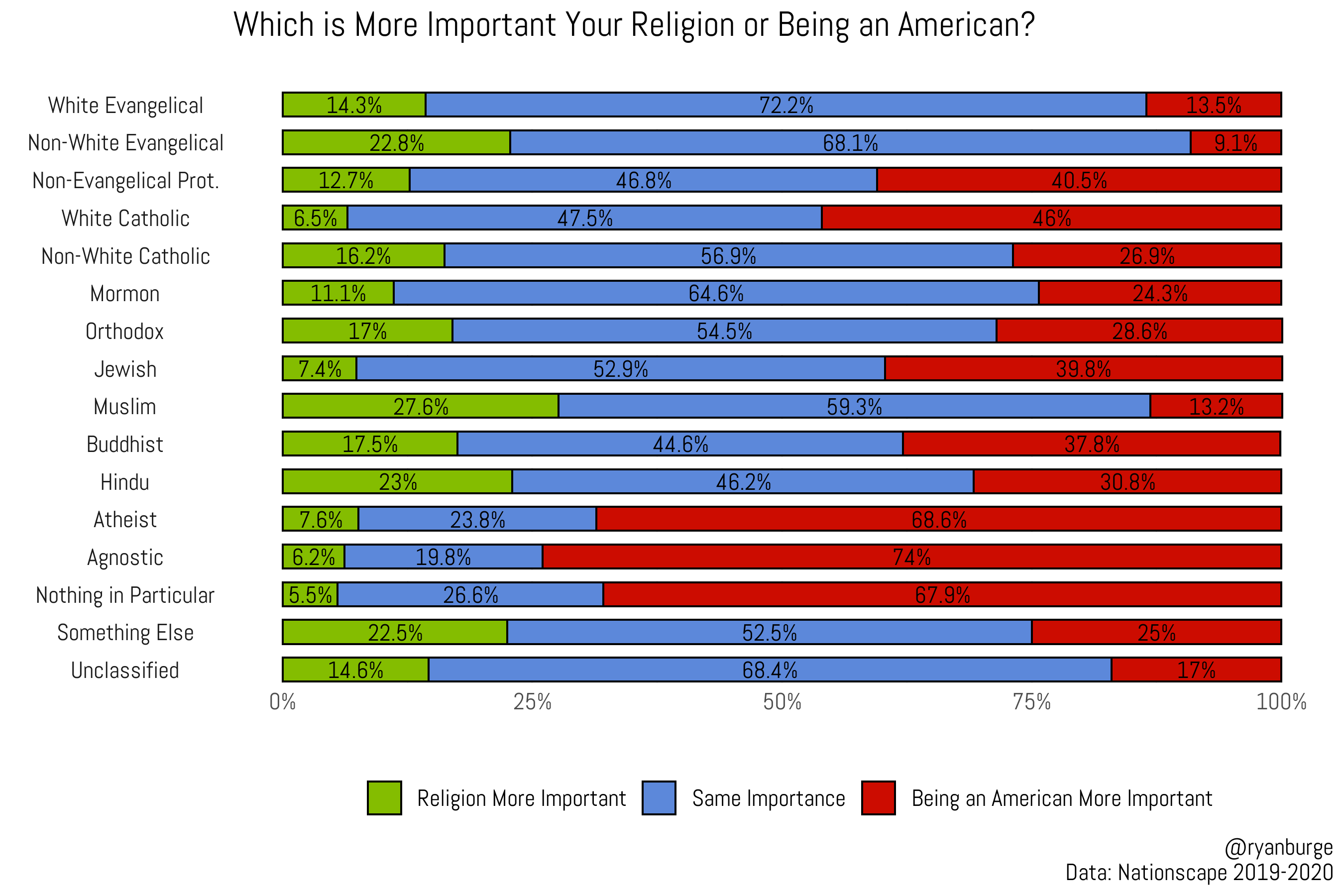
Obviously, there are many, many people who claim to be “Christian”, but do not embrace the reality at the center of the Christian faith: Jesus is Lord, and that means that no one else is.
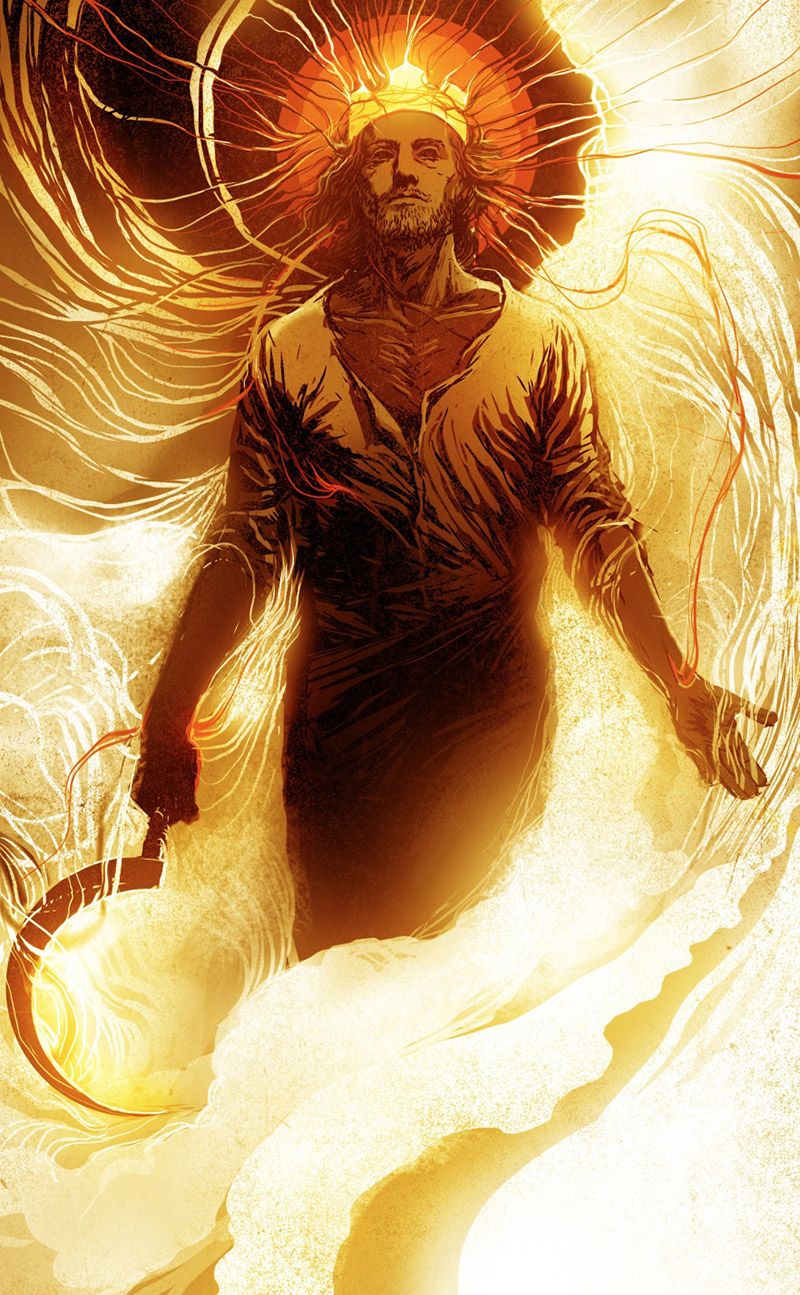

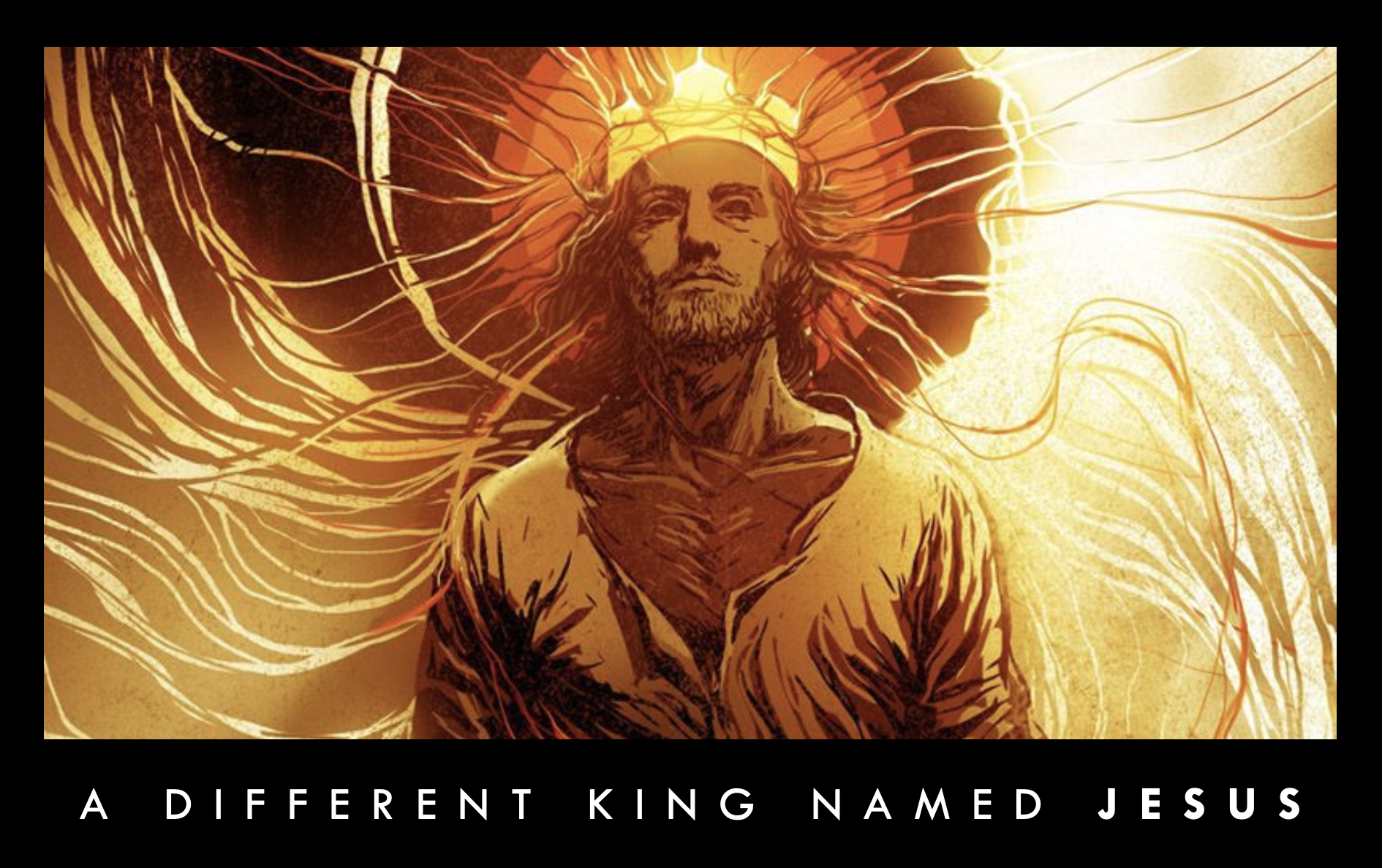
This image, drawing inspiration from the book of Revelation, is one of my favorite images depicting Jesus as King. The artist is Chris Koelle, and it comes from a graphic novel of the Book of  Revelation that I highly recommend.


In this loose series of Scripture Reflections, I am sharing brief thoughts spurred on by my Bible reading this year. By way of reminder, my goal for these brief posts is two-fold:

(1) To remark on aspects of the biblical text that I find to be of interest that the reader may or may not have thought about previously.

(2) When possible, to point ahead to the work and person of Jesus Christ. I believe the Bible is a unified story that points to Jesus, which means that He is frequently alluded to or foreshadowed in some way throughout the biblical canon.
The Very Political Book of Revelation

Recently at Cloverdale, our preaching minister completed an excellent series of lessons on the Book of Revelation. Not only was the series well done, it was also incredibly encouraging in a very difficult season (the worst statistical days of the pandemic and the bitter presidential election and its aftermath).

Revelation is somewhat of an infamous book: as an example of apocalyptic literature, to modern readers it comes across as strange, unfamiliar, and notoriously difficult to understand. Efforts at understanding the book have been further complicated by long traditions of treating Revelation as some sort of crystal ball that gives detailed geopolitical predictions about the time period of the interpreter in question. This has led to all sorts of fantastical claims—Christians needing to support the modern nation of Israel in building a third Temple to hasten the return of Jesus, references in Revelation to the USSR, or the COVID-19 vaccine being the mark of the beast—that would have been absolutely unimaginable to John, the author of Revelation, or the first-century Christians to whom he was writing.

Although the imaginative imagery and apocalyptic genre of Revelation are challenging to us as modern readers, it remains an intelligible book if we seek to understand it on its own terms. John is writing to seven congregations of Christians in Asia Minor about things that actually would have been relevant to them in their time and place. He peels back the curtain to allow his audience to see the spiritual realities that lay behind their daily experiences.

Specifically, he addresses the pressure that Rome, the great beast (itself under the influence of Satan, the great dragon), is placing upon Christians to deny their allegiance to King Jesus and instead succumb to the social, economic, and religious demands of Caesar. To those faithfully resisting Roman pressure, John encourages them to persevere with the assurance that Jesus has already claimed the victory over Satan, and that His followers will be vindicated. To those who have already compromised their faith and acquiesced to the demands of Rome, John’s message is one of warning and judgment: they must repent before they are destroyed along with the rest of God’s enemies.

The message of Revelation would have come across as strikingly political to the original audience. Share on X

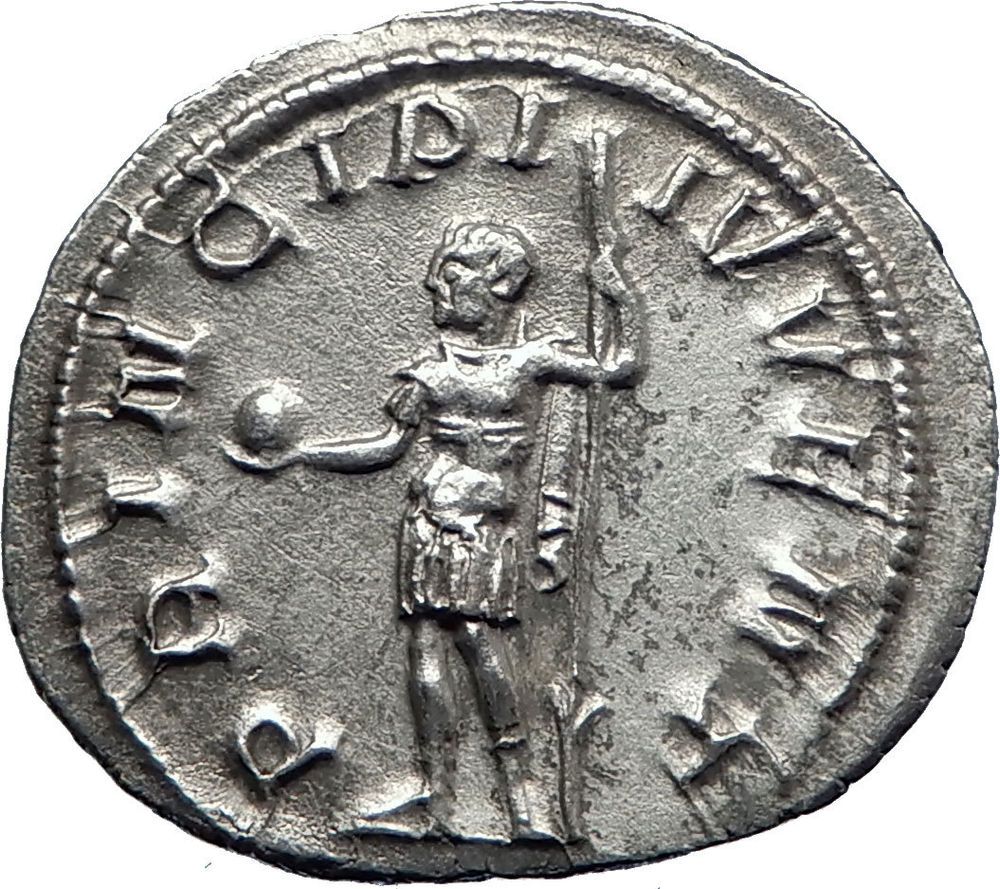
A third-century Roman coin (AD 244) depicting Emperor Philip II holding the earth in the palm of his hand.

Though challenging to us, this message would have been easily understood by John’s original audience(s), and it would have come across as strikingly political. After all, the Mediterranean world of the New Testament time period was all about Rome. Propaganda proclaimed that Rome was good news (“gospel”) for the world and the bringer of peace. Rome deified its emperors and depicted them as omnipotent rulers whose dominion extended over the entire earth. So interconnected was Roman government, Roman religion, Roman military might, and Roman society that it was impossible to be considered a good citizen or a good neighbor if one resisted the expectation to sacrifice to the gods or pledge allegiance to Caesar above all else. And in such a context, John depicts Rome as a hideous beast under the influence of evil spiritual forces! This is a deeply political text.

In light of this reality—the evil and corruption of the world around them, what are Christians to do? Before we answer that question, we should first note what they are not encouraged to do:

  • They are not encouraged to obsess over how beastly Rome is and constantly rail against it because of this. After all, it should be expected that beasts will act in beastly ways. Rome is a beast, not the Bride of Christ! 
  • Furthermore, they are not encouraged to “Make Rome Great Again”, hearkening back to some fictitious history when the beast was somehow not a beast. 
  • On the other hand, neither are they encouraged to revolt against Rome or tear down all the pillars upon which society is built and work to create a utopian society where justice reigns.

Instead, John encourages those to whom he is writing to remain faithful to Jesus, their Lord, at all costs. Keeping with the political nature of Revelation, as I have discussed before, the statement “Jesus is Lord” is an inherently political claim:

“Lord” is an interesting word; to us, it is almost exclusively a religious term. We tend to think of it as a synonym for “God”, but really, “Lord” was a favorite title of Jesus in the early church. And it’s not primarily a religious title, either; it was a title with distinctly political overtones. “Lord” was the official title for the Roman Emperor: laws, edicts and decrees were signed “Lord Caesar.” This means that when early Christians called Jesus “Lord”, they were making a political statement: by saying that Jesus was Lord, they were simultaneously saying that Caesar was not. Jesus was the One who had absolute authority over their lives, He set the standards by which they were to live, He was the One to whom they owed primary allegiance, and it was He who sat on the throne of the universe.

The Book of Revelation may not tell us when Jesus will return or what will happen in the Middle East next year, but it is incredibly relevant. It makes the striking political claim to Christians that, rather than worry about the kingdoms of this world—which are beastly and will one day come to nothing—we are to “return to our first love” and live out the confession that Jesus is Lord in our daily lives. Instead of trying to reform or uphold or overthrow the society in which we live in order to make it better, our focus should be on living as citizens of God’s kingdom, the better reality that already exists. It is a kingdom that will never be destroyed and will one day supplant and replace all earthly kingdoms. It is a kingdom that subverts worldly understandings of power and wealth, led by a King who laid down unparalleled power and unimaginable wealth to live as a servant and die as a sacrifice to save His subjects.

I have frequently said that I am not a very political person, but that is not technically accurate. Certainly, I am not very political in the sense that I do not focus on partisan loyalties in the American political spectrum, but I confess that Jesus is Lord, and seek to place my allegiance to Him at the center of my life.

As the Book of Revelation shows us, that is a very political claim.

I confess that Jesus is Lord, and seek to place my allegiance to Him at the center of my life. As the Book of Revelation shows, that is a very political claim. Share on X

© 2026 The Doc File

Theme by Anders Noren — Up ↑







