The online journal of Luke Dockery

Tag: Christmas Music

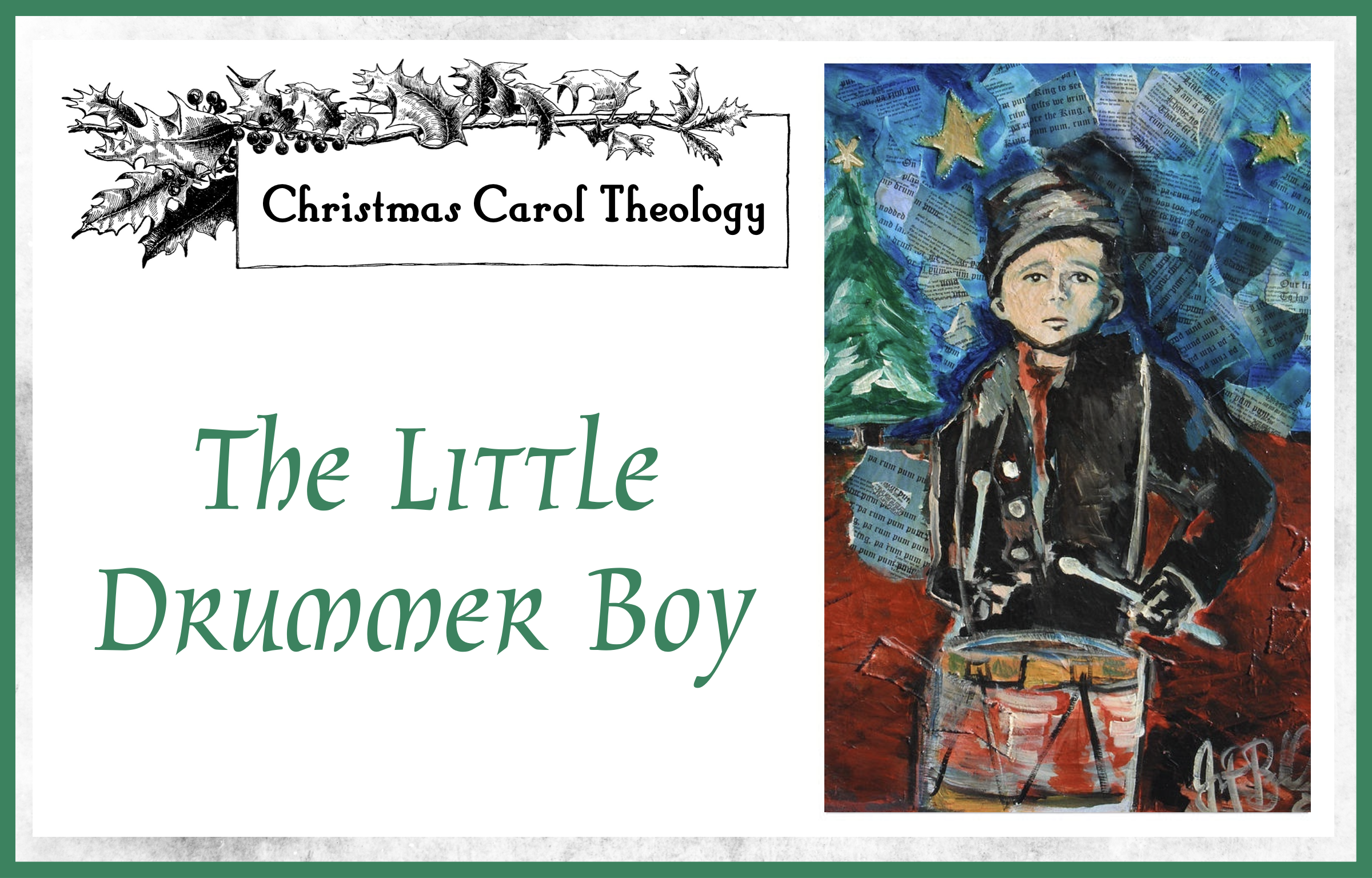
Christmas Carol Theology: “The Little Drummer Boy”

This is part of an ongoing series based on the simple premise that some of the carols we sing during the Christmas season have important theological lessons to teach us. You can see an index of the entire series here. As I am publishing this post on Christmas Eve, it will be the last installment for 2025, but I hope to add to the series in Christmas seasons to come.

“The Little Drummer Boy” may seem like an odd entry in this series. Far from seeming like a trove for theological insight, it’s often dismissed as laughable and anachronistic: “Oh, a drum solo? Yes, I’m sure that’s what Mary wanted for her newborn baby.” Additionally, it seems to get the chronology wrong, as the Little Drummer Boy accompanies the Wise Men, who didn’t visit Jesus when he was a newborn in the manger.

Originally, the song was called “Carol of the Drum,” and it was written in 1941 by Katherine Kennicott Davis, an American classical music composer who wanted to produce music for children’s choirs. The narrator of the song relates how he was summoned by the Magi to the visit the baby Jesus. The Magi famously bring gold, frankincense, and myrrh (their “finest gifts”), but the drummer boy is poor and gift-less, and with Mary’s approval, plays his drum for the Infant King instead:

Come they told me, pa rum pum pum-pum
A newborn King to see, pa rum pum pum-pum
Our finest gifts we bring, pa rum pum pum-pum
To lay before the king, pa rum pum pum-pum
Rum pum pum-pum Rum pum pum-pum
So to honor Him, pa rum pum pum-pum
When we come

Little baby, pa rum pum pum-pum
I am a poor boy too, pa rum pum pum-pum
I have no gift to bring, pa rum pum pum-pum
That’s fit to give our King, pa rum pum pum-pum
Rum pum pum-pum Rum pum pum-pum
Shall I play for you, pa rum pum pum-pum
On my drum?

Mary nodded, pa rum pum pum-pum
The ox and lamb kept time, pa rum pum pum-pum
I played my drum for Him, pa rum pum pum-pum
I played my best for Him, pa rum pum pum-pum
Rum pum pum-pum Rum pum pum-pum
Then He smiled at me, pa rum pum pum-pum
Me and my drum


What are we to learn from the laughably ahistorical song? Actually, something really important.

The Little Drummer Boy found himself before a King he wanted to honor and surrounded by others who were offering fine, impressive gifts. He didn’t have anything like that (and seemed embarrassed by the fact), but he offered the best of what he had: “I played my drum for Him/I played my best for Him.”

This points to a profound lesson that is demonstrated in different places and multiple ways throughout Scripture: as Christians, there are all sorts of ways that we can serve and honor our King. God does not expect our service to Him to look just like someone else’s; He expects us to serve Him as best we can with the talents and opportunities we have:

  • This is Paul’s point when he discussed that the Body of Christ is made up of many different parts: we don’t all have the same function, but we all have some function. We are to do the best we can in our position in the Body.
  • We see this with the Widow and her two mites. The size of her gift, relative to others, is not what matters, but her devotion to the Lord with what she has.
  • In the Parable of the Talents, different servants are given different amounts of money based on their respective abilities. They are not expected to all act identically, but they are expected to do the best they can with what they have been given.
  • Jesus’s own parents offered two turtledoves when they presented Him at the Temple. This substitute offering of turtledoves instead of a lamb was a provision for the poor built into the Law of Moses, and represents a clear demonstration that rather than expecting the same from everyone, God expected the best they could afford.

As we live the Christian life, it can be easy to see the talents and abilities of others and see the difference they are making for God’s kingdom and feel discouraged by the fact that it seems that we are able to do little by comparison. As we look at the brokenness of the world around us, it can feel overwhelming and we can think that we can never do enough.

But God doesn’t ask us to be like someone else, and He doesn’t ask us to fix all the problems of the world. He asks us to be faithful with the talents, blessings, and opportunities that He gives us.

He asks us to play our best for Him.

Pa rum pum pum-pum.

God doesn’t ask us to be like someone else, and He doesn’t ask us to fix all the problems of the world. He asks us to be faithful with the talents, blessings, and opportunities that He gives us. Share on X
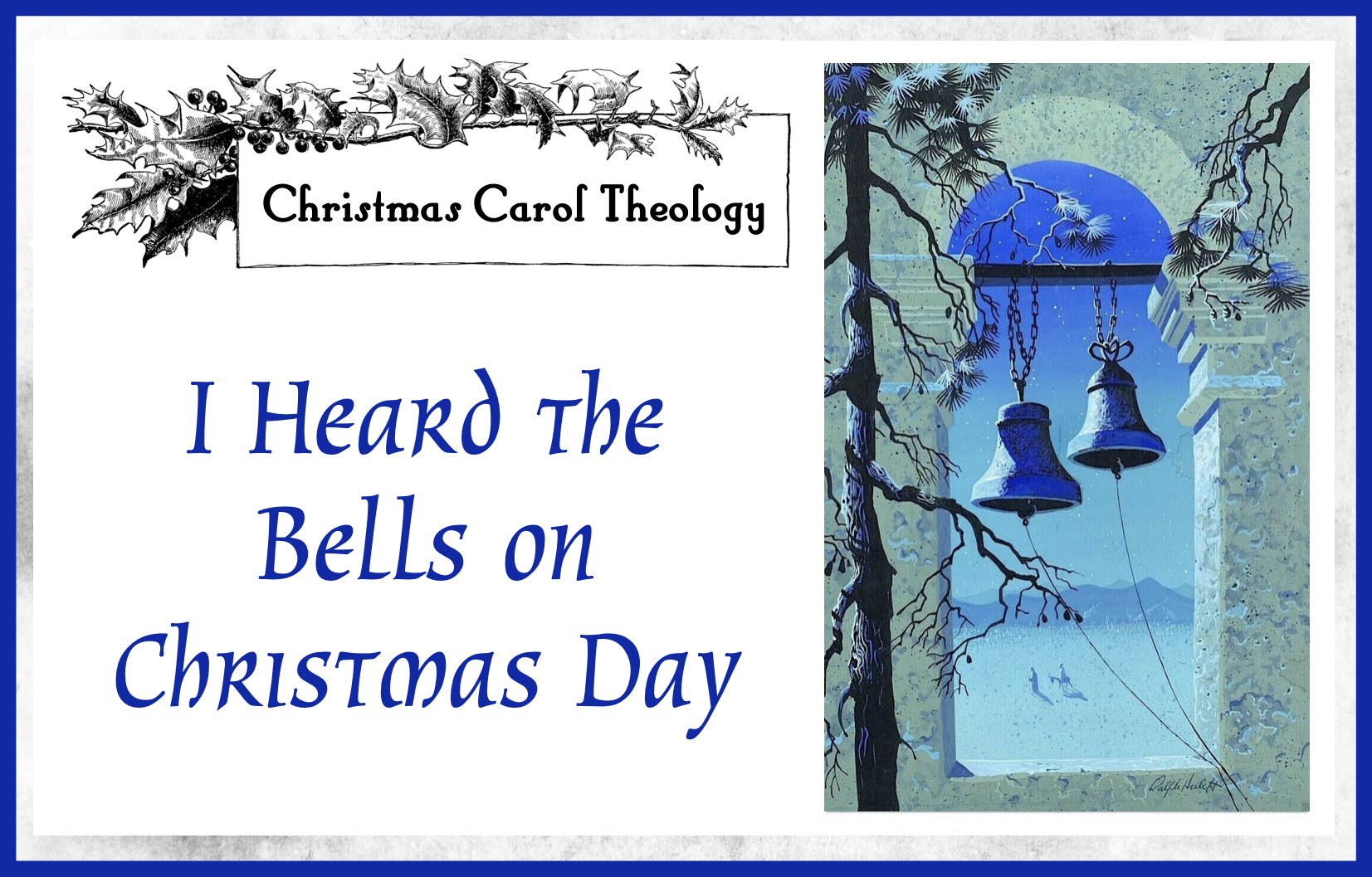
Christmas Carol Theology: “I Heard the Bells on Christmas Day”

As I mentioned in the first post of this series, I am a big fan of Christmas music, and Christmas carols (especially theologically thoughtful ones) are my favorite. Last time we examined “Good King Wenceslas” and saw how it tells the story of a good king that ultimately points us to the Good King, Jesus.

There are several more carols I’d like to look at and I’m sure I won’t get them finished before Christmas, which means that this will likely be a multi-year series. Having said that, one song I wanted to make sure to cover this year, “I Heard the Bells on Christmas Day”, was actually suggested by someone in response to the first post. This is a song I didn’t know well until recent years. I often have not had the patience to listen to more than the first verse or two, and some of the original seven verses are usually omitted, which is too bad because it strips the song of its historical context and some of its poignancy.

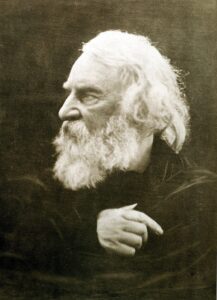
Henry Wadsworth Longfellow

The song is based on the poem, “Christmas Bells” by Henry Wadsworth Longfellow, who was the most popular poet of his day and is perhaps most famous for writing, “Paul Revere’s Ride.” “Christmas Bells” was written on Christmas day in 1863, and stemmed from Longfellow’s personal tragedy: his wife had died two years earlier (his second wife to have died), and his son had been severely wounded in combat in the Civil War earlier in the year. Indeed, it was not a Merry Christmas for Longfellow that year. The poem was later set to music (in various arrangements) and became popular in the 1950s when recorded by Bing Crosby, but by then it was common practice to abbreviate the number of verses. But originally, there were seven stanzas:

I heard the bells on Christmas Day
Their old, familiar carols play,
And wild and sweet
The words repeat
Of peace on earth, good-will to men!

And thought how, as the day had come,
The belfries of all Christendom
Had rolled along
The unbroken song
Of peace on earth, good-will to men!

Till ringing, singing on its way,
The world revolved from night to day,
A voice, a chime,
A chant sublime
Of peace on earth, good-will to men!

Then from each black, accursed mouth
The cannon thundered in the South,
And with the sound
The carols drowned
Of peace on earth, good-will to men!

It was as if an earthquake rent
The hearth-stones of a continent,
And made forlorn
The households born
Of peace on earth, good-will to men!

And in despair I bowed my head;
“There is no peace on earth,” I said;
“For hate is strong,
And mocks the song
Of peace on earth, good-will to men!”

Then pealed the bells more loud and deep:
“God is not dead, nor doth He sleep;
The Wrong shall fail,
The Right prevail,
With peace on earth, good-will to men.”


With the full complement of verses, the historical context becomes quite clear. The narrator hears the bells playing carols on Christmas day, proclaiming the message “Peace on earth, good-will to men!” (Luke 2.14, KJV). This is not an isolated incident, but something that has been repeated by church bells across Christendom. Indeed, this is a core Christian proclamation: that Christ, the Prince of Peace, has come into the world and has fundamentally altered reality.

The problem, though, is that a bloody Civil War is raging. Down South, the black cannons thunder, reminding the hearer of war and drowning out the Christmas bells. This war has divided the country in two: “it was as if an earthquake rent/The hearth-stones of a continent.” Even households have been divided, and the country has been deprived of peace and good will.

Verse six is poignant, and reveals this to be a song of lament, in keeping with the best tradition of the Psalms: looking around, the narrator’s experience doesn’t match the biblical proclamation: where is this supposed peace on earth? Nowhere that he can see! And this begins to dial up the tension and make us a bit uncomfortable. This is very different from the glitzy and glamorous notion that Christmas is the most wonderful time of the year. What if, in reality [in a halting, whispered voice], Christmas is actually all a sham? There is no peace on earth.

And honestly, don’t we also feel the tension between the biblical proclamation and our lived experience? I know that often, frequently, the words are true for me: “And in despair I bowed my head; ‘There is no peace on earth,’ I said.” Russia is still at war with Ukraine. The Israeli-Palestinian conflict remains a tinder box. There is a devastatingly steady stream of mass shootings. Our society is divided ideologically, and the most powerful people in our country seem to be actively opposed to promoting peace and good will. I want to lament as well.

But it is okay to lament—more than okay, it is righteous and faithful to do so. Lament itself is a language of faith. Roughly 40% of the Book of Psalms are lament psalms, and when we examine these psalms, we generally find four common characteristics:

  1. They are addressed to God recognizing that He is the One who is in control.
  2. They involve a complaint; something is wrong in the life of the one who is lamenting.
  3. They contain a request: the lamenter wants God to do something about the complaint.
  4. Usually, the laments close with confidence and praise: having turned their request over to God, the lamenter is confident that God is in control, and praises Him for His watchful care.

Seeing these elements shows that lament is different from just whining and complaining: lament is not about pouting because we don’t get our way. Instead, lament is what occurs when deep faith confronts deep suffering: we suffer, and in our faith, we turn to the Only One who can do anything about our suffering: the Father who sits on the throne and loves us deeply.

Lament is what occurs when deep faith confronts deep suffering: we suffer, and in our faith, we turn to the Only One who can do anything about our suffering: the Father who sits on the throne and loves us deeply. Share on X

“I Heard the Bells on Christmas Day” follows the pattern of a lament psalm pretty closely. God is not specifically addressed, but I think it is implied; the song certainly occurs against a backdrop of faith. Clearly there is a complaint: there is a violent war going on that is shaking the foundations of the entire nature, and the request, though implied, is clear enough: we want the peace that God has proclaimed!

And then, the closing words of confidence.

The bells peal louder and deeper, drowning out the noise of cannon fire, and reassuring that God is not absent, and is not oblivious to all the violence, evil, and injustice in the world. God hears it all, He knows what is occurring, and He will ultimately set the world to rights.[1]

This is a song of deep faith, and also of truth telling. It doesn’t seek to deaden the pain of the world with a hectic calendar of holiday parties, the obsessive giving and receiving of material gifts, or the gluttonous consumption of Reese’s Christmas trees.[2] Instead, it acknowledges the very real suffering that exists in our broken world, but trusts in God anyway; He is still in control, and He is working all things for good. Christmas is not a sham, after all. It’s our eyes that deceive us, and indeed, the Prince of Peace has come, has fundamentally altered reality by doing so, and will come again.


[1] Indeed, we already see elements of this now. For all the wickedness and suffering we see in our world today, it is a world that has been fundamentally changed by the coming of the Prince of Peace into the world. The ancient world took for granted the reality of constant warfare, infanticide, slavery, and general savagery. These things still exist today at certain times in certain places, but we assume that it is wrong that it does. The reality is that Jesus has fundamentally altered our sense of the way things are supposed to be. This is a central claim of Tom Holland’s excellent book, Dominion: How the Christian Revolution Remade the World.

[2] OK, that was a low blow.

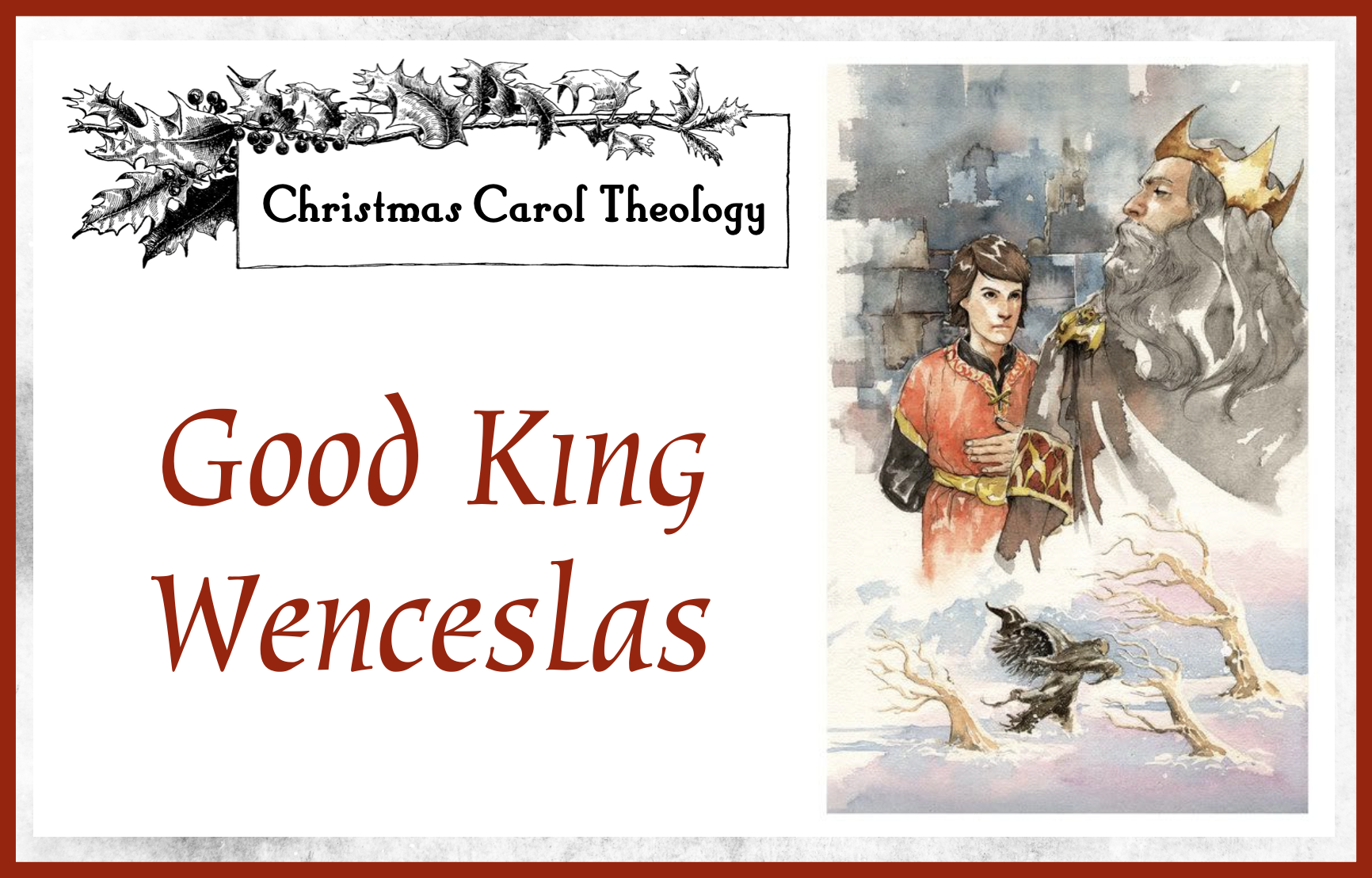
Christmas Carol Theology: “Good King Wenceslas”

I’m a big fan of Christmas music. I’ve enjoyed it for as long as I can remember, and I tend to start listening to it in early November each year. I like the children’s classics, the traditional mid-century standards, and even some of the more recent additions. But my favorite Christmas music is in the form of carols or those songs that are religious in nature, teach theology, and focus on the coming of Christ into the world.

I remember from when I was a kid that my dad’s favorite Christmas carol was “Good King Wenceslas,” which he would sing sometimes. I have one particular memory of him singing it outside while we were working, and I thought it was a silly song because of the hard-to-pronounce name of the king and some of the cadence of the song. It is with some regret that I inform you that it was not until 30+ years later (i.e. now) that I actually looked up the lyrics to the song and read them all for the first time. I enjoyed them so much that I decided to actually kick off a series on Christmas Carol Theology, and let this carol bat leadoff, so to speak.

The good king in the song is based on the 10th-century Wenceslaus I of Bohemia, and tells of his journey through harsh winter weather to give alms to a poor peasant on the Feast of Stephen, which falls on the second day of Christmas (December 26).

In 1853, John Mason Neale wrote the lyrics:

Good King Wenceslas looked out
on the feast of Stephen,
when the snow lay round about,
deep and crisp and even.

Brightly shone the moon that night,
though the frost was cruel,
when a poor man came in sight,
gathering winter fuel.

Hither, page, and stand by me.
If thou know it telling.
yonder peasant, who is he?
Where and what his dwelling?

Sire, he lives a good league hence,
underneath the mountain,
right against the forest fence
by Saint Agnes fountain.

Bring me flesh, and bring me wine.
Bring me pine logs hither.
Thou and I will see him dine
when we bear the thither.

Page and monarch, forth they went,
forth they went together
through the rude wind’s wild lament
and the bitter weather.

Sire, the night is darker now,
and the wind blows stronger.
Fails my heart, I know not how.
I can go no longer.

Mark my footsteps my good page,
tread thou in them boldly.
Thou shalt find the winter’s rage
freeze thy blood less coldly.

In his master’s step he trod,
where the snow lay dented.
Heat was in the very sod
which the saint had printed.

Therefore, Christian men, be sure,
wealth or rank possessing,
ye who now will bless the poor
shall yourselves find blessing.


The king sees a poor man illuminated by the bright moon, and calls a page to ask if he knows who the peasant is and where he stays. When the page tells the king that he recognizes and knows where he lives, Wenceslas has the page gather food and firewood so they can take it to the poor man.

The boy and his king, “page and monarch”, venture out into the cold night, but with the deep snow, howling wind, and bitter cold, the young page is soon overwhelmed. The kind king encourages him to follow in his footsteps so the going will be easier, and indeed, it is: “heat was in the very sod which the saint had printed.” And then the final stanza offers a word of exhortation: those who bless the poor will find themselves blessed in the process.

This is a good song! It tells a story, setting the scene, describes a problem, it has rising and falling action, a resolution, and then a moral at the end. And from a theological perspective, it has much to teach us:

(1) The Blessedness of Giving

This lesson is fairly obvious in the song, as it is told in the concluding stanza (but I suspect many never make it that far into the song!). This is a bedrock Christian value, based on the teaching of Jesus Himself (Acts 20.35), and exemplified by His life and actions. Christians believe that we are blessed by God not some we can store up and hoard those blessings, but so that we can share them with others, and that we are ourselves blessed when we do so.

(2) The kenosis of Good King Wenceslas

The Greek word kenosis (κένωσις) refers to the willing self-emptying of the Son, who left His lofty position in heaven to come and live as Jesus of Nazareth, fully experiencing the lows of human existence and taking the form of a servant for the sake of humanity (Philippians 2.6-11). Good King Wenceslas experiences a kenosis of a sort, as he leaves his palace on a feast day and undergoes suffering in the bitter cold to seek out a poor man so that he, too, can join in the feast, which has strong echoes of Jesus’s parables emphasizing His desire to invite others to join him at great feasts or wedding banquets (Matthew 22; Luke 14).

(3) The Safety of the King’s Footsteps

The page, seeking to follow his king on the mission of mercy, finds himself overwhelmed by the difficulties of the journey. His heart fails him, and he wants to give up! But the good king reassures the boy: he knows the way, and will make a way that the page can follow. What would be impossible on his own is doable if he follows in the steps of the king. As Christians, we often find ourselves buffeted by the winds and difficulties of life, and left to our own devices, it can seem impossible to go on. But the remedy is close at hand: we are to fix our eyes on our Good King, Jesus, the “pioneer and perfecter of faith” (Hebrews 12.2, NIV). What is impossible on our own is achievable if we just follow His footsteps.[1]

As you can see, this is a song with good theology to share! I regret that I neglected it for so much of my life, but I will seek to remedy that moving forward. May you be blessed by the story of a good king, who points us to the Good King!


[1] The “pioneer” language calls to mind a sort of trailblazer, who braves the harsh conditions and makes it easier for those who follow, as Wenceslas did in the snow.

Christmas Carol Theology Index

I enjoy Christmas music, but I am especially fond of Christmas carols, because they serve as a rich source of theological reflection. And so, this series, “Christmas Carol Theology,” will seek to do just that: examine some Christmas carols to see how they can better inform our understanding of the Christian faith, and encourage us to follow Jesus more faithfully.

I anticipate that this will be an ongoing series where I add a few posts each year, so this post will function as an index of the different songs I have written about:

© 2026 The Doc File

Theme by Anders Noren — Up ↑