The online journal of Luke Dockery

Tag: Churches of Christ (Page 6 of 7)

Curriculum Confusion Part 1: Different Approaches to Bible Class Material for Teens

If you are in youth ministry or are involved with organizing Bible class curriculum at church, you are likely aware of how difficult it is to select quality Bible class material for teenagers (in fact, I’ve actually written a bit about this before). If you find yourself in this situation, you basically have three different options:

The “Do It Yourself” Model

This option is actually pretty self-explanatory: you want Bible class curriculum for your teens? Write it yourself.

There are several advantages to this approach:

  • Theoretically, you should know your teens pretty well, so you ought to have a good idea of what they need to study, and on what level they need to study it (generally speaking, 12th graders are completely different than 7th graders and need to be taught differently).
  • If you are producing the material, you can be confident in the content—you don’t have to worry about something being taught that you disagree with or think is unbiblical.
  • This is a cheap way to go about acquiring Bible class material—aside from the small cost of making copies of handouts, basically the only cost is your time.

But there are significant problems to this as well:

  • It is very time-consuming to write every lesson for your teenagers from scratch. I have written lots of Bible class material for my youth group and invariably, it takes a lot of time. If you happen to have a lot of excess time, that’s great, but I don’t: realistically, with other ministry responsibilities, grad school, and family concerns on my plate, there are only a few quarters a year when I have time to produce original Bible class material.
  • Your Bible class material will only be as good as you are. What I mean is that if you are great at doing research, writing lessons, and putting together attractive powerpoint presentations, then your students will be in for a treat…but if this just isn’t one of your strengths, then subjecting your students to quarter after quarter of mediocre material is less than ideal. 

The “Least Common Denominator” Model

This option involves purchasing curriculum from a large company which specializes in producing it. I use the term “Least Common Denominator” because usually, in an effort to appeal to as many potential customers as possible, this material presents a very generalized, inter-denominational Christianity that offends no one.

Purchasing material from a large company like this does have its advantages:

  • Curriculum like this is written by professionals, and is usually well planned and very professional. It will usually come with supplemental materials like activities related to the Bible lesson or videos for your students to watch.
  • Sometimes it will be planned so well that it integrates with children’s and adults’ curriculum as well; it is a neat thing to have everyone in the church studying the same lessons at the same time.
  • By its inter-denominational nature, this approach it tends to focus on “big picture” biblical themes that everyone basically agrees with (Jesus, grace, sin, etc.) and which really do need to be emphasized to and understood by teens.

Although this is a very popular model, it comes with multiple problems as well:

  • It is usually very expensive: a quarter’s worth of material could cost hundreds of dollars, and if you follow an entire curriculum plan, it could be thousands of dollars each year. A lot of churches (mine included) simply don’t have the education budget to afford this year-round.
  • There are a lot of disagreements within Christianity (about things like salvation, the relationship between faith and works, the way the Bible should be read, the way we should worship, etc.), but the Least Common Denominator approach tries to ignore all of them by presenting a simplified Christianity that few find objectionable. Maybe that sounds idyllic, but ultimately, a diet of only this type of material produces students who haven’t thought deeply about (and potentially aren’t even aware of) any of these issues. To me, that’s a significant problem.
  • Also (and related to the last point), going along with the Least Common Denominator approach, oftentimes these studies are topical rather than textual, and focus on moral issues that virtually all Christians agree about: the dangers of drinking, drugs, premarital sex, etc. While these topics are important and need to be discussed, too much focus on them leads to the already-too-prevalent idea (among teenagers and the church as a whole) that being a Christian is nothing more than following a particular moral Do’s and Don’ts List rather than living a redeemed life as part of the Kingdom of God. In other words, curriculum should focus on the Gospel, which includes, but is much bigger than, the fact that Christians should behave in a certain way.

The “Brotherhood Material” Model

The third option is to purchase material from within your particular religious fellowship. In churches of Christ, we don’t like being referred to as a “denomination”, so we tend to refer to publications put out by members or companies affiliated with churches of Christ as “brotherhood material”.

Advantages to this approach include:

  • Theoretically, getting material from within your own fellowship should mean that it is doctrinally agreeable.
  • Usually, the cost for this type of curriculum is considerably less than the Least Common Denominator model.

But once again, there are multiple problems:

  • A lot of times, these materials are produced by smaller companies, and frankly, the quality is sometimes lacking.  In my experience, I have found this to be especially true on the presentation side (i.e., it doesn’t look that good), but it can also be weak on content as well.
  • Even “brotherhood” publishing companies want to make money and sell lots of their products, so they too can fall victim to the temptations to publish very general material that appeals to as many people as possible. When this happens, it is subject to the same problems as the Least Common Denominator model mentioned above.

So each of these models, although possessing strengths, is also characterized by significant disadvantages. I guess the major takeaway from all of this analysis is this: it is a challenge to find quality Bible class material for teens. So what is the solution? More on that in the second half of this discussion…

Viewing Your Church Leaders as More than the Customer Service Department

We live in a consumer culture which, among other things, means that we are constantly buying things, using them up, and then buying more. In a consumer culture, the idea of customer satisfaction and the practice of customer service is incredibly important—if you want customers to purchase and consume your product or use your service instead of those of your competitors, then you either have to focus on having a better or cheaper product/service than they do, or treating your customers better than they do (or, ideally, both!).

As a consumer, I value customer service highly. I’ve mentioned before how I love Amazon because of their outstanding customer service. They make it easy (and usually free) to return items and they’ve even paid the shipping before for me to return items even when it was my fault.

And there’s nothing wrong with any of that.

The problem though is that we take our consumer mindset and try to apply it to church as well. You see this all the time: when looking for a new congregation to be a part of, families “shop” around for a church and compare different congregations like they would products in a store.

And to a degree, that’s a necessary thing—when looking for a church, you need to find one you agree with theologically, and you need to find a community of believers where you can fit in and form relationships. But it can also be a dangerous thing, I think, when churches are evaluated only from the perspective of what they have to offer you (as a consumer), rather than you asking yourself how your gifts and talents could be added to make the work of a particular congregation more effective (to paraphrase JFK: “Ask not what your church can do for you; ask what you can do for your church.”).

Another part of this consumer mindset in the church is that it basically turns church leadership into the customer service department. In his book, A Church That Flies: A New Call to Restoration in the Churches of Christ, Tim Woodroof says something that I think is incredibly important (even though it’s not at all the focus of the book). Basically, he says that it’s amazing how many church members are willing to voice their opinions and complain to their elders* but are very reluctant to listen and learn from them. In my experience, this is absolutely true—church members are very quick to run to elders with their complaints, but very slow to seek their counsel and advice. And that’s a shame.

We have four elders at Farmington, and I know all of them well. None of them are perfect, and they all have flaws (as they would freely admit). But all of them are good, mature Christian men who deeply care about the spiritual well-being of the flock they oversee. As a group, they complement one another well, and would be a valuable resource to any church member who is struggling.

And probably the same could be said for the leadership at your church, which means they deserve more than to be treated like the church customer service department. Think about that the next time you have a complaint.

*One of the distinctive marks of churches of Christ is that we seek to follow a model of church leadership, found in the New Testament, where each congregation or church is autonomous and led by a group of men known as elders (or shepherds, or bishops, or overseers).

Friday Summary Report, November 2

Today’s installment will be brief, as I am in the midst of a particularly busy day:

(1) Yesterday, Harding University (my alma mater) announced that Bruce McLarty has been selected as the next President of the school. It has been interesting to me to read the array of responses from various parties about the announcements. I think Bruce firmly grasps Harding’s identity in the context of Churches of Christ, Christian colleges, and education in general, and it is my belief that he will continue to steer Harding on the unique course which it has chosen. In general, my feeling is this: if you love what Harding is, then I think Bruce is a great choice; if you are critical of Harding, then probably he is not your ideal candidate. Personally, I am excited.

(2) Here is an outstanding post from Scott Bond on “Why Little Girls Need Their Dad.” As a fairly recent father of a little girl, the post was especially meaningful for me, but I think it’s a good read for any Christian father.

(3) Last month set an all-time record in traffic here at The Doc File. This was a pleasant surprise, as my school workload really slowed down my posting after the first few days of the month. Thanks to all who continue to read!

(4) This post on Hashtag Media has gotten some attention. If you haven’t read it yet, check out the good things that these guys are doing.

God Is The One Upon Whom We Should Rely: Lipscomb On Human Government

David Lipscomb was a very influential leader within Churches of Christ in the late 19th and early 20th centuries. Lipscomb served as a minister, an educator (a co-founder of the Nashville Bible School, which exists today as Lipscomb University), and an editor of the very influential Gospel Advocate.

Lipscomb was also a pacifist, and in some sense, a Christian anarchist: he believed that Christians had no business interacting with government, including voting in elections or serving on juries. My own views on government are not as extreme as Lipscomb’s, but I do think his thoughts serve as a helpful corrective to what I see from a lot of people.

It has been distressing to me during this election cycle to see so many Christians who (based on their comments on Facebook or Twitter) seem to be placing so much of their hope for the betterment of our world in political candidates (regardless of which party they happen to support). To these folks, Lipscomb offers some helpful words:

“Everyone who honors and serves the human government and relies upon it, for good, more than he does upon the Divine government, worships and serves the creature more than he does the Creator.”

On Civil Government, 50

With all due respect to Lipscomb, I believe that it is appropriate for Christians to vote and that, ideally, Christians should use their vote to reinforce the values of the Kingdom. And sometimes it can be easy to get pretty wrapped up in the political process because those values can mean a lot to us.

But I think he is right on the money about this: let us never think that the president we elect or the government we put into place is the ultimate source to which we should look for guidance, protection, or good. Those things come from God, and He still sits firmly on His throne, in control of all the things we debate and worry about.

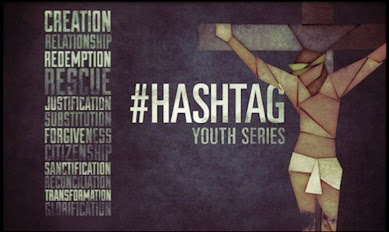
Review: Hashtag Youth Series

Our youth group recently finished up the Hashtag Youth Video Series, which served as the summer curriculum for our Wednesday night Junior and Senior High Bible Class (we were gone a few Wednesday nights because of special activities, so we ended up getting behind and finishing in September).

Some dedicated youth ministers from Churches of Christ (primarily in Tennessee) put a lot of work into the conception and production of Hashtag, and I thought I would take a few moments to review the series now that we have completed it.

Strengths

To start with, I should mention that the Hashtag Youth Series was entirely free. Thirteen videos, usually 10-15 minutes in length, and all accompanied by discussion guides and manuscripts, all were available for download free of cost. If you have any experience in finding and ordering Bible class material, you know that it can be very expensive, especially if you’re looking for videos.

Furthermore, Hashtag is incredibly easy to use. Summer can be a crazy time for youth ministers. With students out of school, it seems to be a time for constant activity, ranging from summer camps, to mission trips, to Vacation Bible School, to summer fun trips, and all of that on top of all the regular activities a youth group participates in. In the midst of all the busyness, it’s nice to be able to show a video series where you don’t have to put a ton of time into preparation and basically are able to just focus on leading a group discussion based on the video which was seen. The ease of use is also a huge benefit when it comes to finding substitute teachers—I had to be away a couple of weeks for travel or to speak elsewhere, but it was easy to find someone to take my spot, show the videos, and lead the class in discussion.

Finally, the videos themselves were of high quality. Watching the videos, it didn’t seem like you were using a free product at all. The graphic design and typography was awesome, and the video production was very good too. Nothing about the videos seemed amateurish at all.

Suggestions for Improvement

The videos were basically in the format of a summer series, where each week you have a different speaker focus on a certain topic. What I have generally found to be true with summer series also applied to Hashtag: the speakers were somewhat hit and miss. The video topics included some theologically deep concepts (see the banner at the top of this post for the topics which were covered), and although most (if not all) of the speakers were youth ministers, some did a much better job of communicating the topic at a teenage level than others.* Furthermore, the basic format of the videos was lecture: the speakers sat in a room talking to a camera. Generally, the speakers who provided visual aids or incorporated a narrative style into their lessons were better received by the audience (at least, in our case).

Also, some of the discussion guides were better than others. Some of the guides were great, providing interesting ice-breakers to introduce the videos and excellent questions for discussing them. At other times, I felt like the majority of the questions were unhelpful as discussion starters and I had to basically generate my own questions.

Overall Assessment

All in all, I think the Hashtag Video Series was a significant accomplishment, and I would definitely recommend it to those who are looking for Bible class curriculum for teens. I’m sure that the work required to coordinate a project involving so many different ministers was extensive, and the developers should be proud of the completed project.

That the series was available free of charge meant that many congregations were able to use it which wouldn’t have been able to otherwise. The ease of use likely helped many youth ministers catch a breath in the middle of busy summers while still providing a quality Bible class (I know that was the case for me). And lastly, the technical quality of the videos went a long way towards keeping the attention of the audience—shoddy videos are easy to immediately write off, but the professional quality of the Hashtag series earned respect and attention.

Even those areas where there is some room for improvement should not be barriers to those who are considering using the videos. While some of the speakers were better than others, none of them were bad, and a few of them really were excellent. And although some of the discussion guides need work, it’s really not hard to flesh out that part of the lesson yourself, especially when you are mindful of the fact that you got all of the material at no cost in the first place.

Overall, I’m thankful that I stumbled upon Hashtag at the beginning of the summer, and am very grateful to those whose diligent work made it happen.


*To be fair, I know from personal experience that communicating at a “teenage level” is incredibly difficult. Middle schoolers who are 12 or 13 operate on a completely different level than juniors or seniors in high school. Something that is on the level of one group may not (and often won’t be) on the level of the other. Our youth group is currently skewed young, and I felt like some of the series speakers were talking over their heads.

« Older posts Newer posts »

© 2026 The Doc File

Theme by Anders Noren — Up ↑