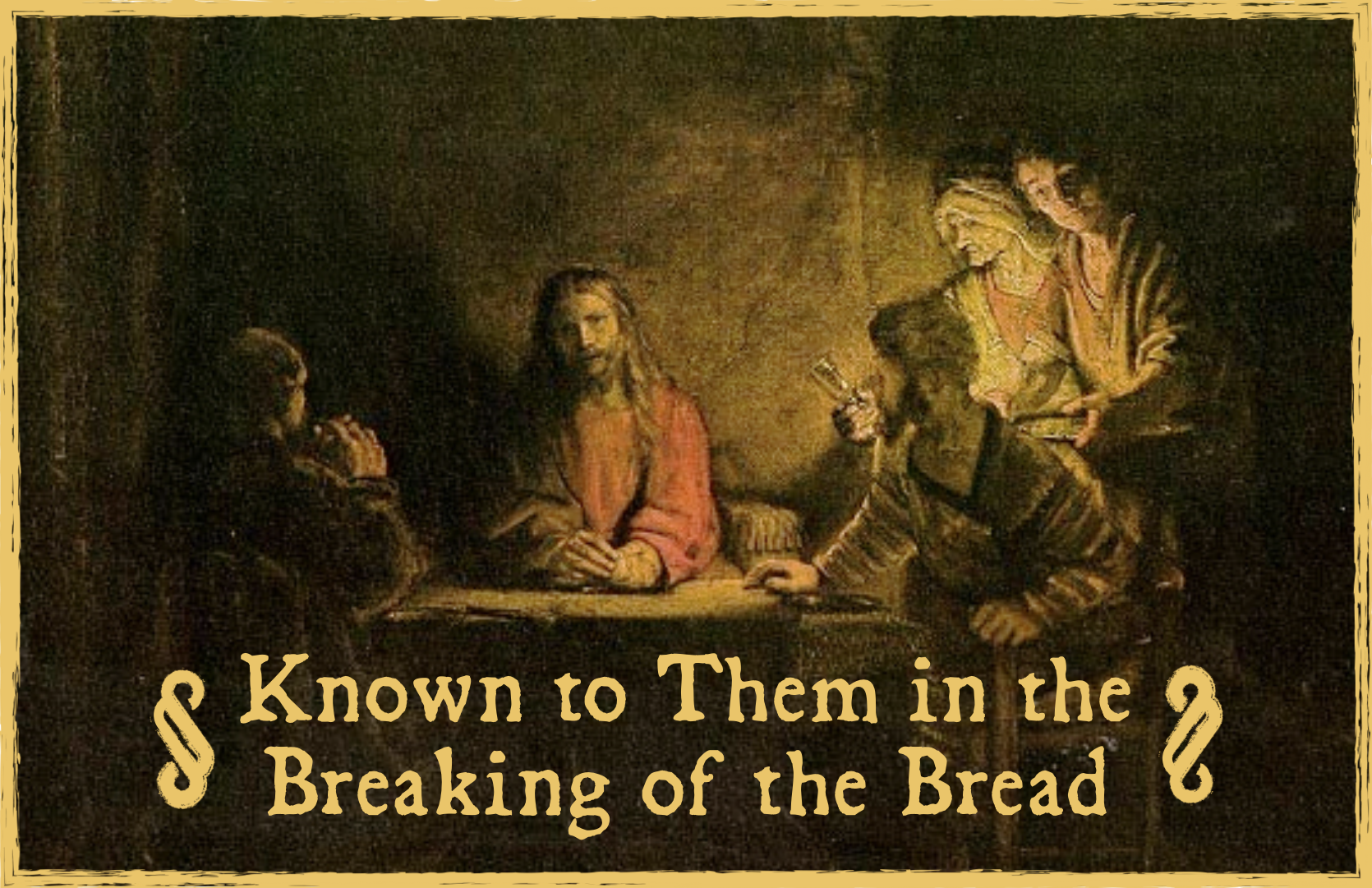
Luke 24.13-35 recounts the story of Jesus appearing to two disciples on the road to Emmaus following His resurrection.
These two disciples were downcast and dejected. Jesus appears to them and begins walking with them, but they are kept from recognizing Him. When He asks them what is wrong, they respond by explaining the events that had recently occurred in Jerusalem: the Jesus who they had believed to be the Messiah and in whom they had placed their hopes had been killed. Adding to their confusion, there was now a report from some of the women in their group that Jesus’ tomb was empty, and an angel had reported that He had risen from the dead.
The unrecognized Jesus chides them, and then begins to explain how all of the Hebrew scriptures pointed to Himself, and revealed that He must suffer, die, and be raised. The disciples are blown away by the teaching, and invite this mysterious stranger to stay with them once they reach their destination.
Jesus does so, and when they gather around the table, he takes the bread, blesses it, breaks it, and gives it to them. And suddenly they recognize Him. Jesus vanishes, and the two disciples return to Jerusalem to tell the apostles that Jesus is risen and had appeared to them:
Then they told what had happened on the road, and how he was known to them in the breaking of the bread.
(Luke 24.35)
The post-resurrection appearances of Jesus are interesting. It is clear that Jesus is different than He previously was, but also, He is…the same. He still has holes in His hands and sides. He is recognizable at times. He eats, and has flesh and bones.
But at other times, He is not recognizable. He suddenly appears in the midst of His disciples despite locked doors, and and at other times, He disappears. In Luke 24, He walks with two of His disciples for a long time and teaches them, but it is only in the breaking of the bread that they recognize Him.
Jesus is a multi-faceted character who did and accomplished much, and if we are not careful, we can focus on some of those characteristics and accomplishments and miss out on really knowing Jesus.
Jesus was certainly a wise teacher, but He was more than that. He was a miracle worker, but He was more than that. He was a religious leader and a brilliant theologian, but He was more than that. He was a leader of men, but He was more than that. He was a political theorist (though not in the way we would use that term), but He was more than that.
Jesus was the Son of God, who emptied Himself, and came to live as a servant. He was obedient to the Father’s will and was willing to suffer on the cross, and on the cross, overcame the dark power of sin. Through His resurrection, He defeated the power of death.
Sometimes, we don’t recognize Jesus. Sometimes, we look at the world around us, and we fail to see Him. Sometimes, we do not see Him in our circumstances; indeed, God feels very distant at times. Sometimes, we may catch glimpses of God in the beauty of Creation, but we don’t really know Him through that.
At the table, though, Jesus is made known to us. As we eat of the bread and drink of the cup, we are reminded that God’s Son came into this world and lived as one of us. He stepped into our suffering and experienced it for Himself. We remember that, through the cross, Jesus set us free from sin’s bondage and condemnation, and through His resurrection, He offers us victory over death.
When we pause our hectic lives and come together to take of the bread and the cup, we are able to see Jesus most clearly, and to recognize what He has done, and what He will do.
 In this loose series of Scripture Reflections, I am sharing brief thoughts spurred on by my Bible reading. By way of reminder, my goal for these brief posts is two-fold:
(1) To remark on aspects of the biblical text that I find to be of interest that the reader may or may not have thought about previously.
(2) When possible, to point to the work and person of Jesus Christ. I believe the Bible is a unified story that points to Jesus, which means that He is frequently alluded to or foreshadowed in some way throughout the biblical canon.

 Discerning the Body (PDF): In 1 Corinthians 11, Paul seeks to correct the selfish way in which some of the Christians in Corinth are observing the Lord’s Supper by reminding them of its vertical and horizontal dimensions.
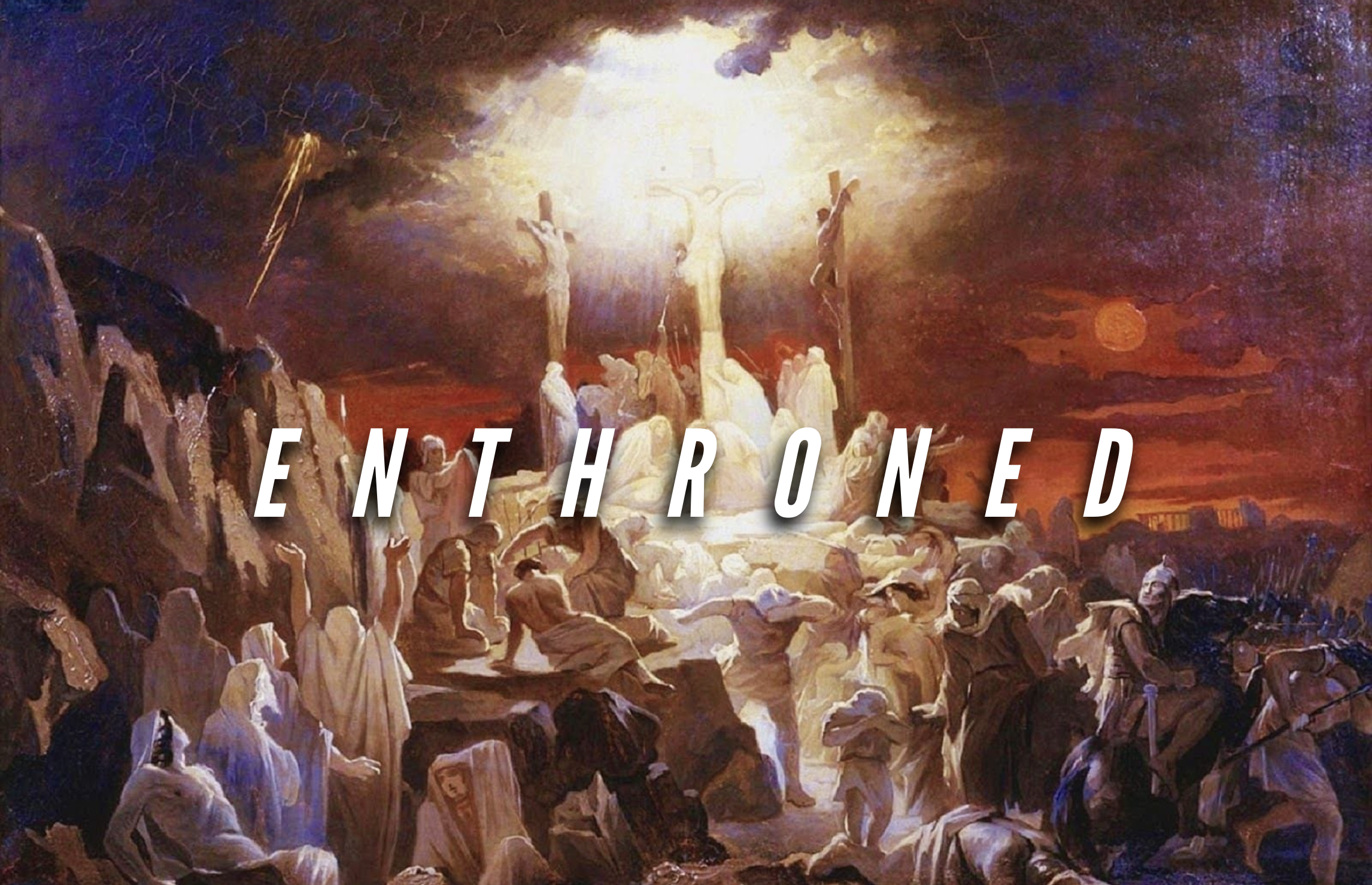 Enthroned (PDF): The crucifixion of Jesus was a subversive exaltation. The enthronement of the King of the Jews casts doubt upon the ways in which the world elevates and seeks to accumulate power.
 God Provides the Sacrifice (PDF): The Binding of Isaac in Genesis 22 foreshadows another sort of offering, on another sort of altar. In both instances, it is God who provides the sacrifice, but the Son is not always spared.
 Reconciliation through the Cross (PDF): In a bitterly-divided world, the observance of the Lord’s Supper can seem impractical and disconnected. Really, though, nothing could be more needed or relevant.