The online journal of Luke Dockery

Tag: Crucifixion (Page 1 of 2)

Jonah Naps in a Boat

The importance of Bible reading was impressed upon me from a young age, so I had the benefit of reading through the entire Bible several times before I graduated from high school. Of course, this is a good practice, but reading the Bible for yourself can be an unsettling experience. When you read Scripture for yourself, you learn that there are parts of the Bible that are rough around the edges, parts that are entirely foreign to modern ideas, and parts that are certainly not meant for young readers. Furthermore, you learn that a lot of biblical characters who are often presented as heroes in children’s storybooks and Sunday school classes aren’t very heroic at all!

I remember the first time I read the book of Jonah for myself as a kid and moved beyond a storybook understanding of Jonah. Far from the simplistic “good guy makes a mistake but then repents and obeys God” storyline, Jonah is a more complex book, and Jonah himself is a less likable character than what is often assumed. I find this book to be fascinating, and I have actually written about Jonah several times over the years.

As I was reading through Jonah again recently, I was struck by this episode, which occurs after Jonah ignores God’s command to preach to Nineveh and instead boards a ship bound for Tarshish:

4 But the Lord hurled a great wind upon the sea, and there was a mighty tempest on the sea, so that the ship threatened to break up. 5 Then the mariners were afraid, and each cried out to his god. And they hurled the cargo that was in the ship into the sea to lighten it for them. But Jonah had gone down into the inner part of the ship and had lain down and was fast asleep. 6 So the captain came and said to him, “What do you mean, you sleeper? Arise, call out to your god! Perhaps the god will give a thought to us, that we may not perish.”

(Jonah 1.4-6)

What made this stand out to me was how closely it parallels with a similar event from the life of Jesus, where Jesus is on a boat with His disciples on the Sea of Galilee when a storm comes up (Matthew 8.23-27; Mark 4.35-41; Luke 8.22-25). Jesus’s disciples are alarmed, but Jesus takes a nap…just like Jonah did![1]

It’s easy to just dismiss these details as coincidence, but as I have written before, the Bible is a literary masterpiece, and we should should be suspicious of these seeming coincidences: usually, the author is trying to tell us something. In this case, there are many points of comparison between the two events. The following table comes from Kevin Youngblood’s excellent commentary, Jonah: God’s Scandalous Mercy:[2]

Jonah boards a ship bound for Tarshish in order to run away from God’s call to preach to Nineveh; Jesus appears to get on a boat in order to avoid the crowds pressing around Him. While on board their respective boats, both Jonah and Jesus fall asleep while violent storms threaten to sink them. The pagan sailors on board with Jonah and Jesus’s disciples both fear for their lives and awaken them to alert them of the danger and seek their assistance. Both of the protagonists know what to do in order to calm the storm and take appropriate action: Jonah has his shipmates toss him into the sea, while Jesus orders the waves to submit to His authority. Both sets of shipmates are awestruck by the divine power they have witnessed.

What are we to make of these similarities? Well, we should begin by noting that in the gospels, Jesus compares Himself to Jonah in multiple places. Here is one example:

38 Then some of the scribes and Pharisees answered him, saying, “Teacher, we wish to see a sign from you.” 39 But he answered them, “An evil and adulterous generation seeks for a sign, but no sign will be given to it except the sign of the prophet Jonah. 40 For just as Jonah was three days and three nights in the belly of the great fish, so will the Son of Man be three days and three nights in the heart of the earth. 41 The men of Nineveh will rise up at the judgment with this generation and condemn it, for they repented at the preaching of Jonah, and behold, something greater than Jonah is here.

(Matthew 12.38-41)

Jesus highlights a comparison, indicating that Jonah’s three days and nights in the “tomb” of the great fish is a foreshadowing of His own three days and nights in the tomb. But He also emphasizes a contrastin that, despite His greatness compared to Jonah, the generation to which He is preaching will not repent as the Ninevites did for Jonah.

With this in mind, the deep sleep that comes over Jonah and Jesus on their boats symbolizes the “death” and return that both will soon experience, and in the gospels, this episode paves the way for Jesus’s later teaching on the sign of Jonah.[3]

But the carefully crafted narrative is not just about emphasizing the similarities between Jesus and Jonah; the distinction between the two is of paramount importance. Jonah is sleeping on a boat ultimately as a symptom of his determination to escape God’s calling for his life. God wants to use Jonah as an instrument of His astounding mercy, and Jonah wants no part of that. He runs away, hides in sleep, and ultimately, calls his shipmates to throw him into the sea, confident that he will die, but that death would be better than preaching to the hated Ninevites.

Jesus, on the other hand, embraces His calling rather than seeking to escape it. Rather than whip up the popular fervor of the crowds and harness that frenzied energy into a typical messianic rebellion, Jesus leaves and boards a ship with his disciples. There, He is able to be calm, not only because He is the Master of raging tempests, but also because He knows His death is already set. It will not come in a boat, but rather will be characterized by three days in a tomb followed by a return (as with Jonah).

As Jesus awakens and calms the storm, His disciples are awestruck, asking one another, “Who is This?” (Mark 4.41). Jesus has just given them a key data point in their assessment of His identity and mission. Their ongoing journey to discover who Jesus is will be a winding and stumbling one, and they will only come to fully understand His identity after His death and resurrection. This is what the Father had called Him to do, and indeed, his calling and identity were fundamentally linked.[4]

And so they are for God’s people. We are defined by the calling that God places upon our lives to live as disciples of His Son and agents of reconciliation in His world. But there is a choice to make: like Jonah, we can ignore that calling and seek to escape it, or like Jesus, we can embrace that calling and become who we were always intended to be.


In this loose series of Scripture Reflections, I am sharing brief thoughts spurred on by my Bible reading. By way of reminder, my goal for these brief posts is two-fold:

(1) To remark on aspects of the biblical text that I find to be of interest that the reader may or may not have thought about previously.

(2) When possible, to point to the work and person of Jesus Christ. I believe the Bible is a unified story that points to Jesus, which means that He is frequently alluded to or foreshadowed in some way throughout the biblical canon.


[1] I think this is a wonderful narrative from which we can learn much, and have written on it in the past. See, “Why Are You Afraid?” and “Asleep in the Storm.”

[2] Kevin J. Youngblood, Jonah: God’s Scandalous Mercy, Hearing the Message of Scripture Commentary Series (Grand Rapids, MI: Zondervan, 2013), 90.

[3] Youngblood, 90.

[4] Youngblood, 91.
Mocking Jesus

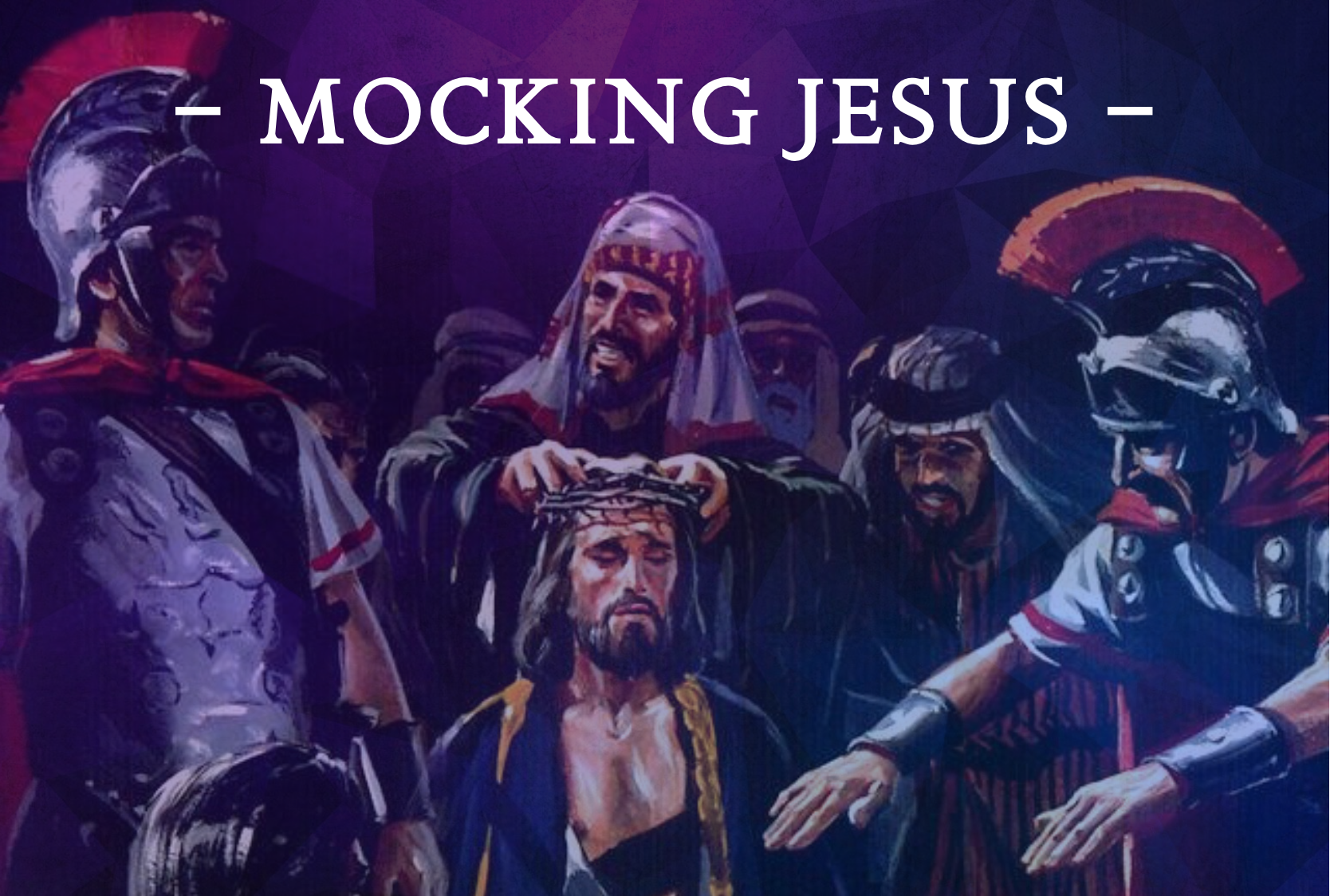
In Mark 15, in the narrative of the crucifixion of Christ, there is the following description of the Roman soldiers mocking Jesus:

And the soldiers led him away inside the palace (that is, the governor’s headquarters), and they called together the whole battalion. And they clothed him in a purple cloak, and twisting together a crown of thorns, they put it on him. And they began to salute him, “Hail, King of the Jews!” And they were striking his head with a reed and spitting on him and kneeling down in homage to him. And when they had mocked him, they stripped him of the purple cloak and put his own clothes on him. And they led him out to crucify him.

(Mark 15.16-20)

When I read these words and let my imagination drift back to that scene, one clear emotion springs to the surface of my thoughts: anger! I am outraged at the way my Savior is openly mocked by sinners for whom He is about to die! How dare these lowly soldiers make fun of God’s Son and spit in the face of the Creator of the universe? If they had any idea Who this was they were dealing with, surely they would not treat Him with such contempt!

But then, I begin to wonder…

The favorite title for Jesus in the early church was Lord (2 Corinthians 4.5). This was a title of ownership. The master of a slave or the owner of a vineyard was called Lord. It was also a title of authority. Army commanders and judges were called Lord. It was the official title of the Roman Emperor. All laws, edicts, and decrees were signed Lord Caesar.

Out of this background, we begin to understand what early Christians were saying when they spoke of Jesus as Lord. They meant that He was the absolute owner of their lives: He was the One who had the right to decide what they would be, what they would do, and where they would go. They meant that He was the final authority over every thought, emotion, and action of life. Above all, they meant that He was the King of Kings to whom they gave their highest loyalty and obedience.

That is what it means to call Jesus Lord.

Returning to the story from Mark 15, I am outraged when I read of these soldiers openly mocking Jesus. But then I wonder: do we mock Jesus any less than the Roman soldiers did when we call Him Lord but then comfortably ignore any demands He makes of our lives?

Jesus: “Why do you call me ‘Lord, Lord,’ and not do what I tell you?” (Luke 6.46)

Do we mock Jesus any less than the Roman soldiers did when we call Him “Lord” but then comfortably ignore any demands He makes of our lives? Share on X

In this loose series of Scripture Reflections, I am sharing brief thoughts spurred on by my Bible reading this year. By way of reminder, my goal for these brief posts is two-fold:

(1) To remark on aspects of the biblical text that I find to be of interest that the reader may or may not have thought about previously.

(2) When possible, to point ahead to the work and person of Jesus Christ. I believe the Bible is a unified story that points to Jesus, which means that He is frequently alluded to or foreshadowed in some way throughout the biblical canon.

The Full Tomb

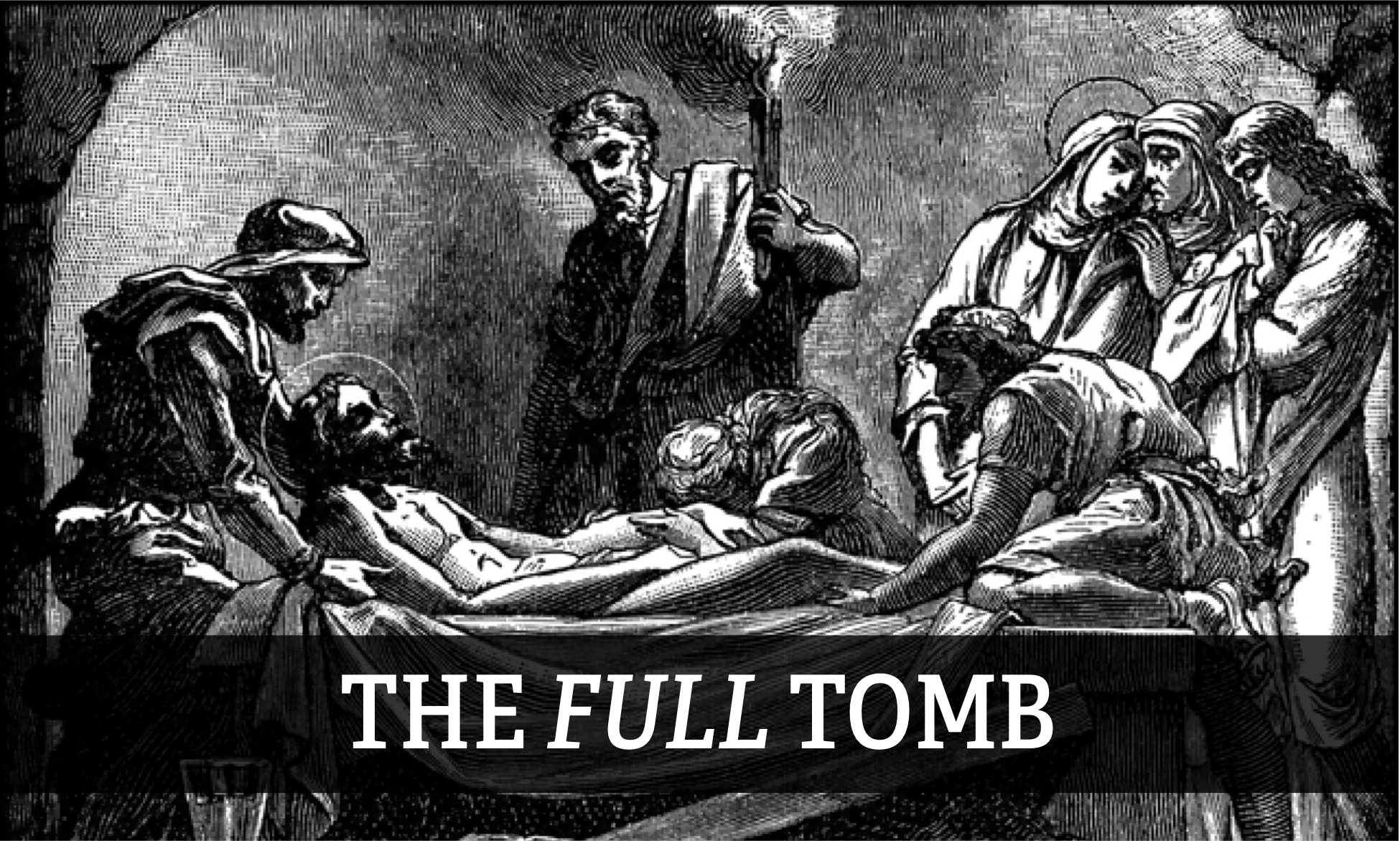
Christianity is, fundamentally, about an empty tomb. Following His crucifixion, Jesus was raised from the dead, and as I have written before, this changes everything. This is the central feature of the Christian faith, and the veracity of any of Christianity’s claims depend upon this, first. Paul says in 1 Corinthians 15 that if Jesus wasn’t raised from the dead, then our faith is worthless.

Having said all of that, I think we are sometimes so quick to emphasize the empty tomb that we fail to truly appreciate that there was a time—even if it was a relatively brief time—when the tomb wasn’t empty. It was occupied. It contained the beaten, battered body of Jesus, and the shattered hopes and dreams of His followers.

There was a time when the tomb wasn’t empty. It was occupied. It contained the beaten, battered body of Jesus, and the shattered hopes and dreams of His followers. Share on X

We like to rush from the crucifixion to the resurrection, and I guess that makes sense, because the in-between time wasn’t easy. For those who had left all they had to follow Jesus, a Jesus in the tomb meant that they had backed the wrong horse; they had gambled everything and lost. The One who they thought was the long-awaited Messiah was just another in a long line of failures.

We live in an in-between time, too, and it isn’t easy, either.

The resurrection of Jesus is the first-fruits of our own, and points ahead to a time when sin, Satan, and death will be defeated, and every tear will be wiped from our eyes. But in the present, many of us mourn beside tombs that are as full as the tomb of Jesus was prior to His vacating it. Many of us stumble through our days, staggering under the weight of shattered hopes and dreams.

Just as Sunday came for the disciples of Jesus, and Jesus Himself was vindicated as the risen Savior when it did, so, we, too, await the coming of a Someday when our faith will become sight, and all of God’s faithful will rise as Jesus did.

But until then, it is worth reflecting on the fact that there are many full tombs, that evil maintains a foothold in our world, and that we weep with those who weep.

Resurrection is coming, but you have to wade through the in-between time first.

Resurrection is coming, but you have to wade through the in-between time first. Share on X

When God Shows Up: The Delightful Surprise of Job

The Book of Job is one of my favorites in the Bible, and Elihu is one of my favorite characters within the book. I have written on Elihu at length, but here, I just want to focus on Elihu’s role in what I like to think of as the “delightful surprise” of Job.

For a little bit of context to those who are not intimately familiar with the structure of Job, it goes something like this:

  • Prologue (Job 1-2): We are introduced to Job, learn of the wager between God and Satan, and watch as Job is dealt one devastating blow after another.
  • Dialogue Between Job and Friends (Job 3-28): Job laments his condition and three of his friends offer their thoughts, ultimately making things worse.*
  • Job’s Closing Monologue (Job 29-31): Job presents his summary defense and, maintaining his innocence, longs for an audience with God.
  • Elihu’s Speeches (Job 32-37): Young Elihu enters the scene, corrects Job’s friends, and foreshadows the appearance of God.
  • God’s Speeches (Job 38-42.8): God appears and addresses Job (with Job’s brief responses).
  • Epilogue (Job 42.9-17): The story of Job is resolved and his fortunes are restored.

I have argued that the primary purpose that Elihu serves is that he seeks to take Job’s focus off of his own troubles and turn his thinking to God instead. He concludes his speeches in Job 37 with repeated reference to the majesty of God, as illustrated by the power seen in thunder, storms, lightning, and other aspects of God’s creation. Elihu concludes his thoughts on God’s majesty and indeed, his speeches, by basically telling Job (cf. Job 37.23): “God is beyond us. We cannot understand Him and He owes us no explanation…don’t expect Him to show up!” From a literary perspective, this is part of the masterpiece of Job and the deep irony of Elihu: simultaneously, his talk of God’s majesty prepare us for a God who appears out of a whirlwind while his concluding statement tells us not to expect any appearance at all!

Elihu disappears from the scene and then, the surprising and incredible thing happens. Contrary to Elihu’s expectations, and Job’s expectations, and the reader’s expectations, the God of majesty who shows His power in the wonder of creation, the God who is beyond us…shows up! 

When He does, he doesn’t give Job what he wants—He doesn’t give an explanation for why Job has suffered and why so many terrible things have happened to him. In this way, God’s response confirms what Elihu was saying: God is beyond Job, and doesn’t owe him an explanation for everything. But even better than God’s explanation is His presence! He appears before Job, and that response of presence is better than any explanation. It is enough for Job to continue on in faith, despite what he has experienced.

Reading Scripture from a Christological perspective, I think this appearance of God foreshadows His ultimate appearance in the incarnation: Jesus comes and lives as a man, dies a cruel death, and is then raised from the dead. Ultimately, Jesus does all of this not to answer all of our questions, but to show that He is truly with us. 

Better than God’s explanation is His presence:

  • In the incarnation, He is present with us in our very nature.
  • In the crucifixion, He is present with us in the experience of suffering.
  • In the resurrection, He gifts us the hope of His eternal presence.

And rather than explanation, it is God’s presence, seen through Jesus Christ, that gives us comfort even when life deals us inexplicable hardship and suffering!

*Many scholars would break this down further and some would remove Job 28 as a separate poem to wisdom. That level of specificity is beyond my purposes here.

Image Credit: Sean Heavey

The Shameful and Powerless Death of the Messiah

This fall, I am taking a graduate school class on the New Testament books of 1 and 2 Corinthians. I am getting to do a significant amount of reading related to those two books, and am really enjoying some of the commentaries which have been picked out for us to read, particularly, the volume on 1 Corinthians by Richard B. Hays.

What follows is the first of what I expect will be many quotations from my reading that I want to share:

“God has chosen to save the world through the cross, through the shameful and powerless death of the crucified Messiah. If that shocking event is the revelation of the deepest truth about the character of God, then our whole way of seeing the world is turned upside down. Everything has to be reevaluated in light of the cross.”

Richard B. Hays, 1 Corinthians, p. 27

« Older posts

© 2026 The Doc File

Theme by Anders Noren — Up ↑