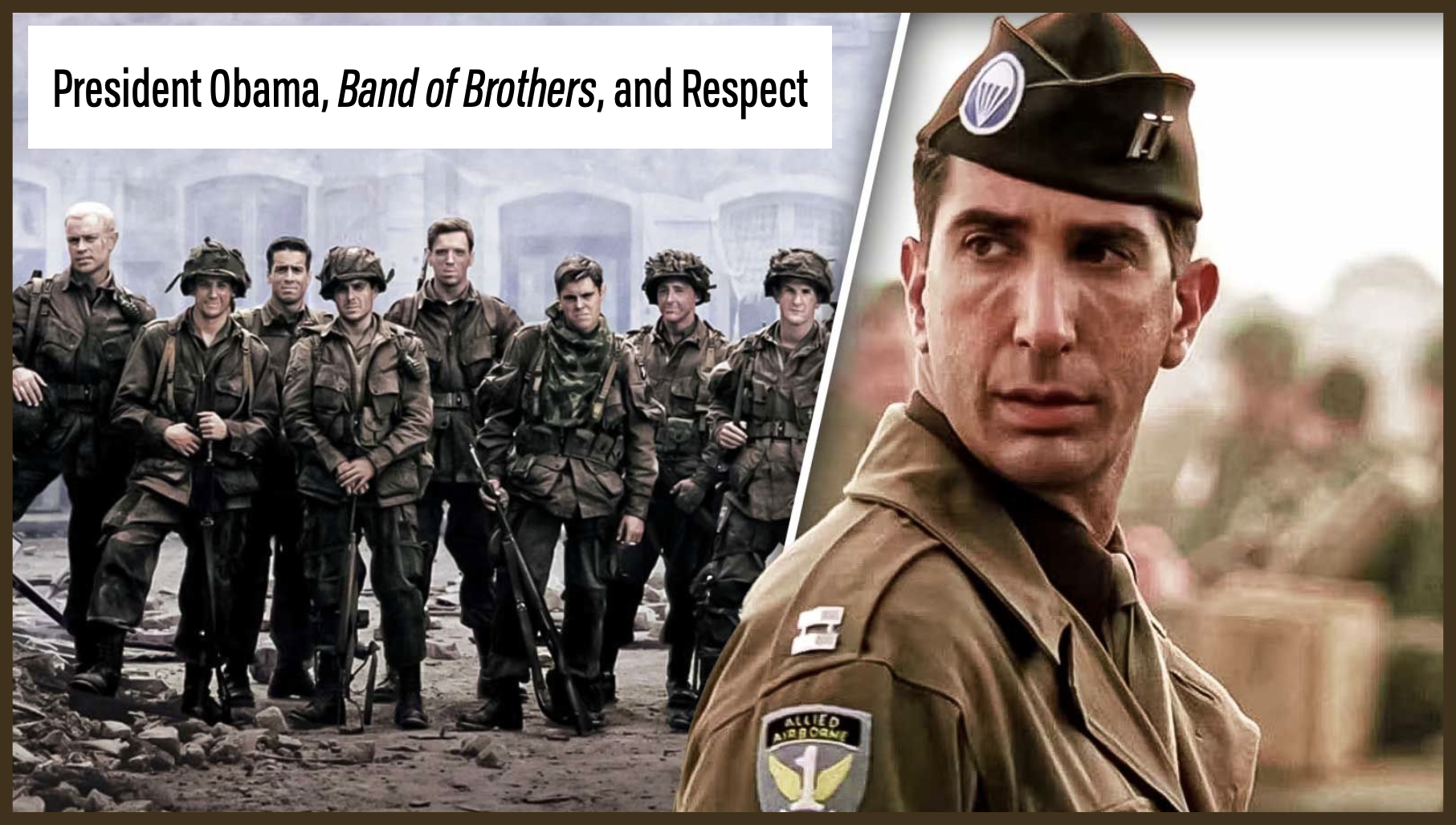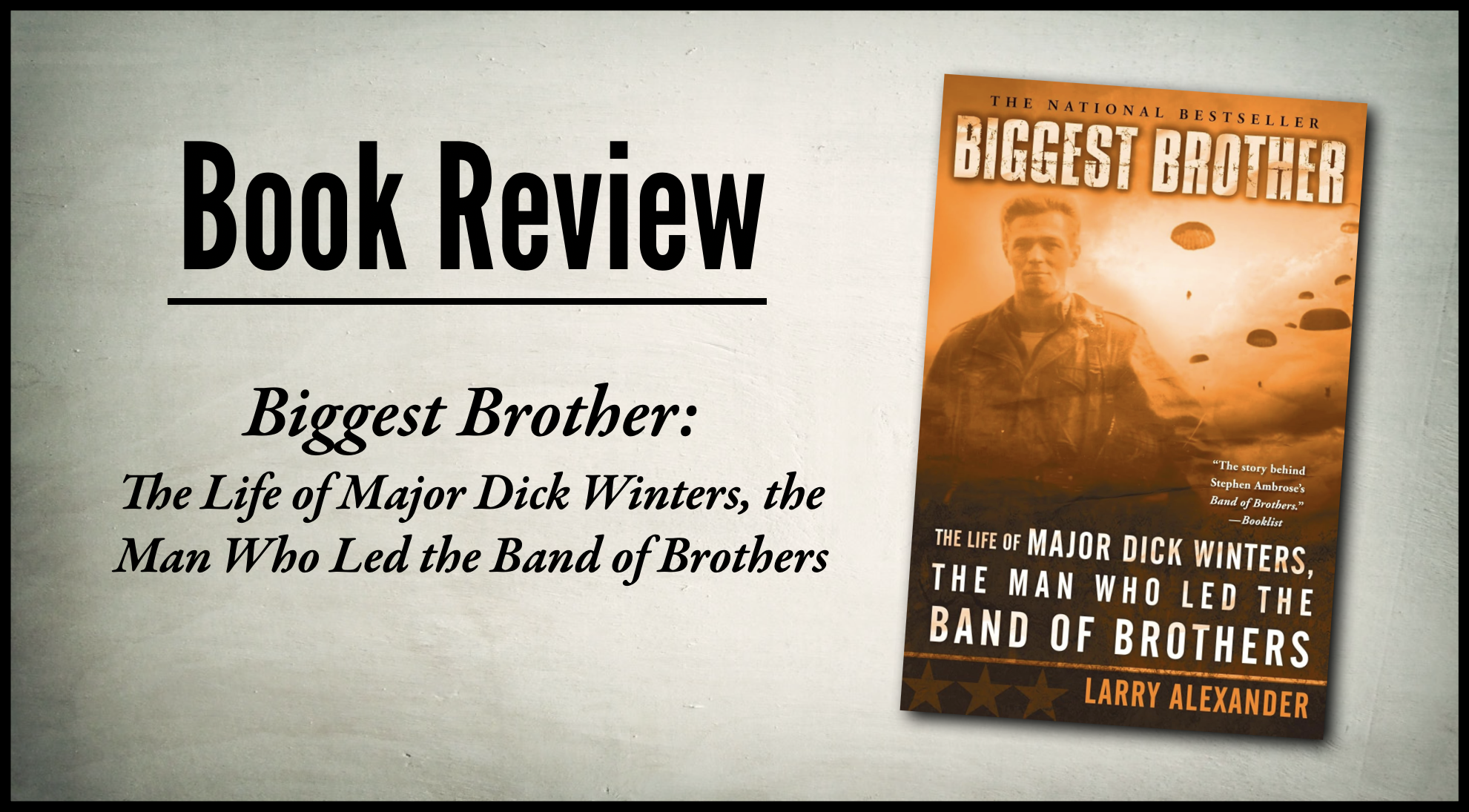
I recently finished reading Biggest Brother: The Life of Major Dick Winters, the Man who Led the Band of Brothers by Larry Alexander.
Winters is a main character in the Band of Brothers book written by Stephen E. Ambrose and the HBO miniseries of the same name produced by Steven Spielberg and Tom Hanks, and in Biggest Brother, Alexander goes beyond Winters’ time in WWII and gives a biographic account of his life.
All in all, I thought Biggest Brother was good, but I didn’t love it. First, the account of the most exciting part of Winters’ life—his time with Easy Company of the 101st Army Airborne—is fairly redundant if you have already read or seen Band of Brothers. Also, in Biggest Brother Winters loses a bit of his virtuous luster, holding old grudges and giving frank and sometimes very negative evaluations of his fellow soldiers and friends. It is certainly true that becoming aware of some of Winters’s faults and shortcomings makes him more human, but it was nice seeing him as the idyllic American hero.
Of course, Winters still was a hero, and I think my favorite parts of the book were quotations from his own writing which underscore how dutiful and responsible he was:
“In three years, I’ve aged a great deal. It seems as if the college days and the days of civilian life when I did as I pleased are long gone. It must have been a dream, a small, short, but beautiful part of my life. All I do is work to improve myself as an officer, and them as fighters and as men, make them work to improve themselves. As a result, I am old before my time. Not old physically, but hardened to the point where I can make the rest of them look like undeveloped high school boys. Old to the extent where I can keep going after my men fall over and go to sleep from exhaustion, and I can keep going like a mother who works on after her sick and exhausted child has fallen asleep. Old to the extent where if it’s a decision or advice needed, my decisions are taken as if the wisdom behind them was infallible. Yes, I feel old and tired from training these men to the point where they are efficient fighters. I hope it means some will return to that girl back home.”
After Germany surrendered, Japan continued to fight on, and Winters tried to explain to his mother why he felt like it was his duty to continue to fight, despite all of the work he had already done:
“I feel that God has been good enough to let me get through this war. As a result I am combat wise and in a position to do some good to help a lot of men. I know I can do the job, better than or as well as any of the rest. How can I sit back and watch others take men out and get them killed because they don’t know; they don’t have it? Maybe I’ll get hurt or killed for my trouble, but so what if I can make it possible for many others to go home. Their mothers want them too, the same as mine. So what else can I do and still hold my own self respect as an officer and a man?”
Especially in comparison to today’s society, where words like duty and responsibility are almost entirely foreign concepts, Winters’ character shines as an example to emulate.
While reading Biggest Brother, I was struck (somehow, for the first time) how young these guys were who went out and basically saved the world. For those who have seen Band of Brothers, here are the ages of some of the major characters on June 6, 1944 (D Day).
- Colonel Robert Sink–39 (who seemed so incredibly old in the movie)
- Major Dick Winters–26
- Captain Lewis Nixon–25
- First Lieutenant Harry Welsh–25
- Captain Ronald Speirs–24
- Second Lieutenant Carwood Lipton–24
- Staff Sergeant Denver “Bull” Randleman–23
- First Lieutenant Lynn “Buck” Compton–22
- Sergeant Donald Malarkey–22
- Staff Sergeant Bill Guarnere–21
- Staff Sergeant Darrell “Shifty” Powers–21