Psalm 56 is accredited to King David, and in the title description,[1] it is mentioned that he wrote this when the Philistines seized him in Gath (1 Samuel 21.10-15). This is a time period when David is on the run from King Saul, and he flees to Saul’s enemies, the Philistines, looking for asylum. There, too, he finds himself surrounded by enemies.
He then proceeds with a lament psalm, bringing before God the injustices and difficulties of his life:
1 Be gracious to me, O God, for man tramples on me;
all day long an attacker oppresses me;
2 my enemies trample on me all day long,
for many attack me proudly.
3 When I am afraid,
I put my trust in you.
4 In God, whose word I praise,
in God I trust; I shall not be afraid.
What can flesh do to me?5 All day long they injure my cause;
all their thoughts are against me for evil.
6 They stir up strife, they lurk;
they watch my steps,
as they have waited for my life.
7 For their crime will they escape?
In wrath cast down the peoples, O God!(Psalm 56.1-7)
This is all done in a context of great trust in God, who David believes to be his ally and more powerful than his enemies (Psalm 56.11). Then, David says something interesting:
8 You have kept count of my tossings;
put my tears in your bottle.(Psalm 56.8)
The first part of verse 8, that God sees David and is aware of the wanderings and abuse he has suffered at the hands of Saul, reminds us of the repeated theme that God sees what is happening to His people and will act accordingly.[2]
The second idea in this verse is intriguing: David imploring God to put his tears in His bottle. The idea here is that David wants God to take account of his tears and remember them, but it prompted me to reflect on the idea of God being a “God of tears.”
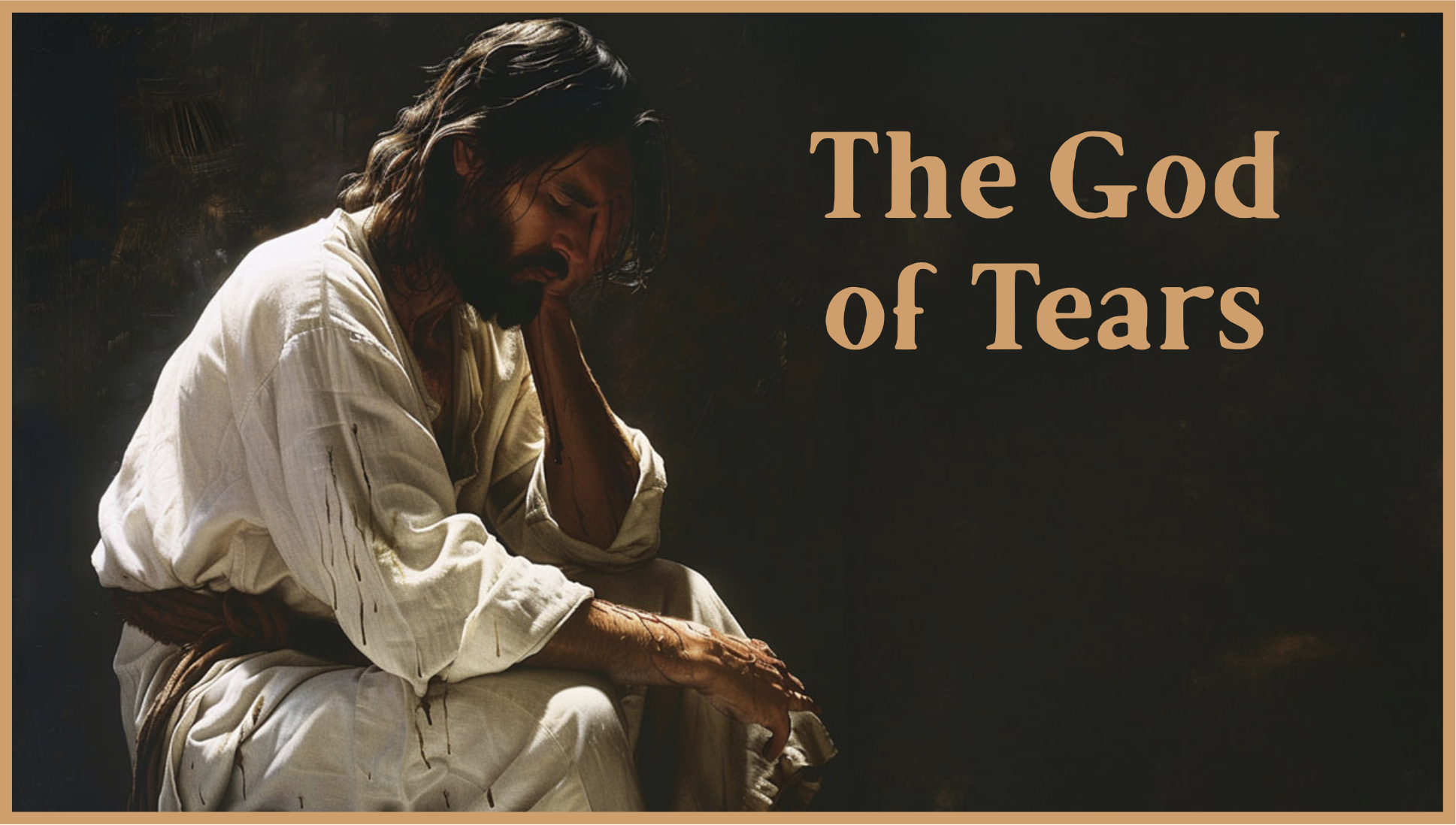
The God of the Bible is not a cold, unmovable, impassive deity.[3] This seems clear from reading the Hebrew Bible, where God is frequently moved to emotion—including sorrow—by the actions of His people. But it is most clearly seen in Jesus. Jesus is prophetically described as a “man of sorrows” (Isaiah 53.3). He describes those who mourn as blessed (Matthew 5.4). He famously wept at the tomb of His friend Lazarus. On the night of His betrayal, Jesus wept tears like blood in the Garden of Gethsemane. Surely the tears of the Son, the Messiah from the line of David, were kept in the Father’s bottle as well.
God stores up these tears, not because He delights in them, but because He is determined to do something about them—He will wipe them away:
4 He will wipe away every tear from their eyes, and death shall be no more, neither shall there be mourning, nor crying, nor pain anymore, for the former things have passed away.
(Revelation 21.4)
Our heavenly Father is not a cold, unmovable, impassive deity. He is a God of Tears. He takes not of them now, and promises to remove them in the future.
 In this loose series of Scripture Reflections, I am sharing brief thoughts spurred on by my Bible reading. By way of reminder, my goal for these brief posts is two-fold:
(1) To remark on aspects of the biblical text that I find to be of interest that the reader may or may not have thought about previously.
(2) When possible, to point to the work and person of Jesus Christ. I believe the Bible is a unified story that points to Jesus, which means that He is frequently alluded to or foreshadowed in some way throughout the biblical canon.
[1] Scholars debate how to interpret the titles given to various psalms. Tremper Longman III, How to Read the Psalms (Downers Grove, IL: IVP Academic, 1988), 38-42, takes a moderate position: “After all the evidence has been surveyed, it is best to treat the titles as noncanonical, but reliable early tradition.” In other words, it is reasonable to assume that Psalm 56 is a psalm of David, and is connected to the historical context it claims.
[2] Examples of this abound in the biblical record: God sees the plight of the desperate Hagar in the wilderness in Genesis 16 and she calls Him “the God who sees.” When the people of Israel find themselves enslaved in Egypt, “God saw the people of Israel—and God knew.” When Hannah desperately prays to God for a son, God sees her plight, etc.
[3] The doctrine of the impassibility of God is complicated (and disputed), but properly understood, it does not suggest that God is devoid of emotion.







