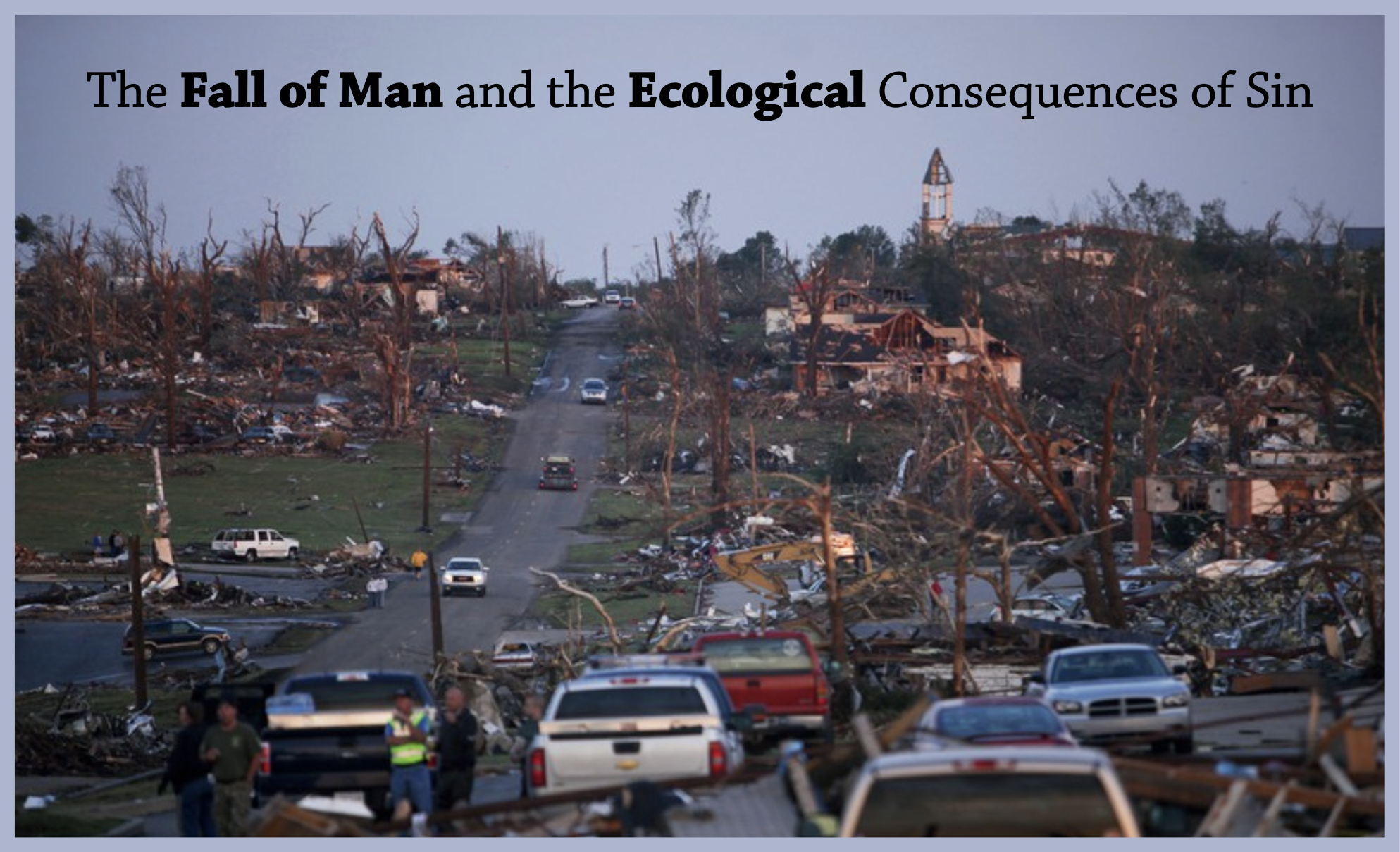
In the first post of this series on the Fall of Man in Genesis 3 and the widespread devastation of sin, I mentioned that we tend to focus on the theological and personal consequences of Adam and Eve’s sin while ignoring some of the other areas. I think the most ignored of those other areas is the ecological consequences associated with the sin in the Garden of Eden.
Men and women were created to live in relationship with God and with one another, and, in a sense, with creation as well. This is clear in the early chapters of Genesis. Genesis 1.26-30 recounts how Adam and Eve were to have dominion over creation, and Genesis 2.15 mentions that they were to work it and keep it. So in effect, Adam and Eve were to rule over creation, but to do so as stewards who would take care of what God had made.
But following their disobedience to God’s command to not eat of the forbidden fruit in Genesis 3, the ecological consequence is evident, as a curse is placed on creation in Genesis 3.17-19:
“And to Adam he said, ‘Because you have listened to the voice of your wife and have eaten of the tree of which I commanded you, ‘You shall not eat of it,’ cursed is the ground because of you;
in pain you shall eat of it all the days of your life; thorns and thistles it shall bring forth for you; and you shall eat the plants of the field.
By the sweat of your face you shall eat bread, till you return to the ground, for out of it you were taken; for you are dust, and to dust you shall return.’”
This curse makes it clear that the relationship between man and creation has been destroyed as well. And that’s pretty easy to see, right? Rather than embrace our role as stewards of God’s earth, we tend to exploit creation to satisfy our own selfish desires. There are countless examples of companies that have carelessly polluted in order to cut corners and maximize profits, and even “little” problems like widespread littering show a basic lack of respect for the home God has created for us.
And I think there is significant indication in Scripture that the problem isn’t all one-sided: creation itself doesn’t operate the way it was intended to. In Romans 8.20-22, Paul makes this point, speaking of creation in personified terms:
“For the creation was subjected to futility, not willingly, but because of him who subjected it, in hope that the creation itself will be set free from its bondage to corruption and obtain the freedom of the glory of the children of God. For we know that the whole creation has been groaning together in the pains of childbirth until now.”
A creation that is subjected to futility, bound to corruption and groaning in the pains of childbirth seems distinctly different from the creation that God made and called “good.” I suppose this is ultimately unprovable, but my personal opinion is that the natural disasters that plague our lives—tornadoes, hurricanes, earthquakes, tsunamis, etc.—are symptomatic of the problems Paul refers to, as creation lives out a cursed existence different from the one for which it was intended.[1]
In sum, sin has devastated this aspect of our existence as well. Creation is less than the good and hospitable home for humanity for which it was created to be, and we fail to care for it as we should.[2]
[1] If my thinking on this is correct, then it stands in judgment against the hurtful things that some religious people say in very public ways following a natural disaster such as “Hurricane Katrina was God’s judgment against the wickedness of New Orleans”. Natural disasters are a condition of our broken world, rather than God’s wrath against a specific people/place. Incidentally, I think the promise made to Noah following the flood (Genesis 9.8-17) that man and creation would not again be judged by a massive flood (and perhaps, by extension, other natural disasters) supports this idea.
[2] I mentioned the general neglect of this topic, and I think that neglect is itself evidence of the distorted relationship we have with creation. In a significant portion of Christendom, discussion of the creation care is considered to be a “political” or “liberal” idea, despite the fact that environmental stewardship is clearly a biblical principle!







