The online journal of Luke Dockery

Tag: Genesis (Page 3 of 4)

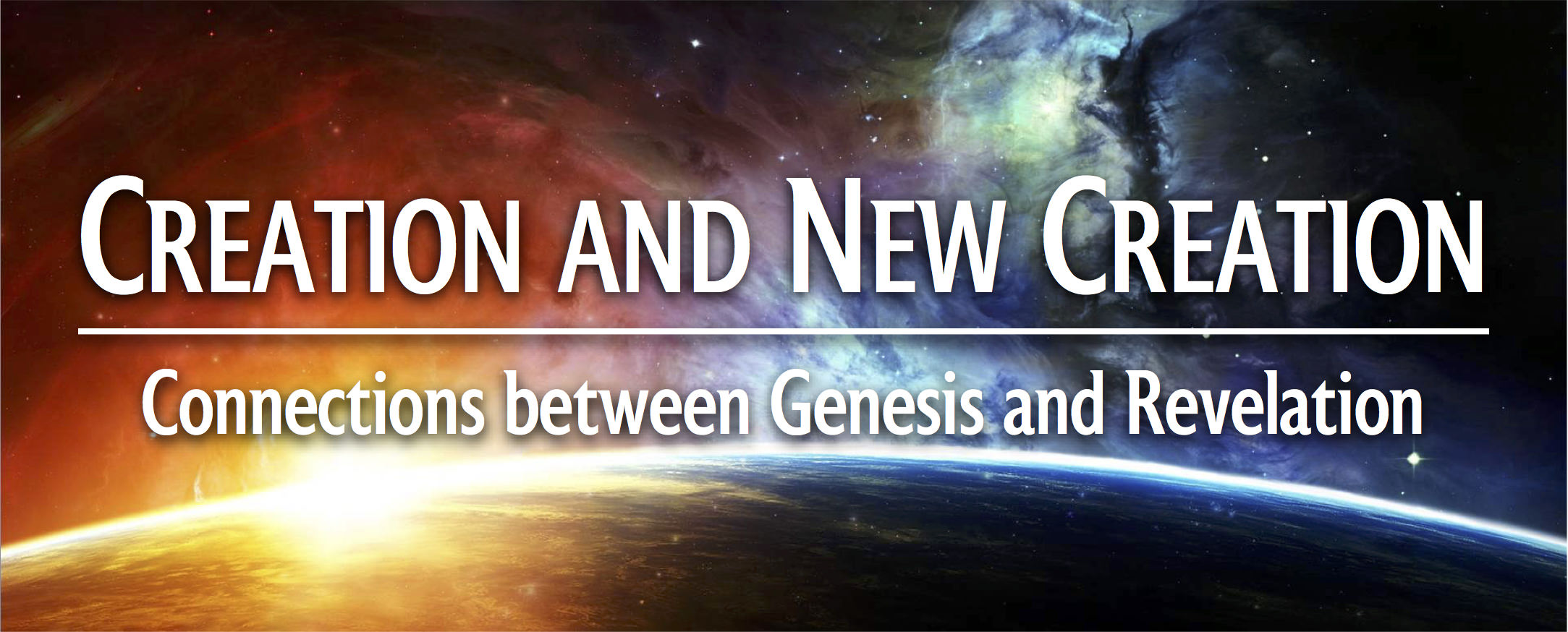
Creation and New Creation: Connections Between Genesis and Revelation

Introduction: The Bible as Literature

I recently preached a sermon in which I was discussing literary techniques that we see in Scripture. Sometimes people read the Bible in a flat, wooden sort of way, almost like they were reading a police report or something similar, where all you have is a list of facts and no sort of interpretation.

I think that is unfortunate, because the Bible is really a library of books all telling the same grand Story, and within that library, there are various types or genres of literature, and different genres of literature need to be read in certain ways if we are to understand and apply them faithfully. Much could be written both about different types of literature that we see in the Bible—wisdom literature, history, ancient biography, prophecy, poetry, apocalypse, epistles, etc.—and also different types of literary devices that biblical authors used to tell their stories in more powerful ways.*

Examining either of those in detail is beyond the scope of this post, but one literary technique that I do want to focus on here is what I call echoing, or the frequent practice of the authors of Scripture to refer back to an earlier event in the Bible by repeating certain language, or telling stories in similar ways, or comparing certain characters.


Creation and New Creation

One powerful example of echoing can be seen in a comparison between Genesis 1-3, which talks the Creation of the heavens and the earth, and Revelation 21-22, which talks about the New Creation of the New Heavens and New Earth. I shared this particular example in the sermon that I mentioned above, and considering the feedback I got from people who had never noticed these strong connections before, I thought it would be worth sharing here.

Simply put, in the description of the New Heavens and New Earth in Revelation 21-22, over and over again you have echoes of what occurred in the creation of the heavens and earth  Genesis 1-3:

  • In Genesis 1.4, there is a division of light and darkness; in Revelation 21.25, there is no night.
  • In Genesis 1.10, there is a division of land and sea; in Revelation 21.1, there is no more sea.
  • In Genesis 1.16, the rule of the sun and moon is described; in Revelation 21.23, we learn that there is no need for the sun or moon.
  • In Genesis 2.10, we are told about a river flowing out of the Garden of Eden; in Revelation 22.1, we are told about a river flowing from God’s throne.
  • Genesis 2.9 describes the Tree of Life in the midst of the garden; Revelation 22.2 describes the Tree of Life throughout the city.
  • Genesis 2.12 tells us that God and precious stones are in the land; Revelation 21.19 tells us that gold and precious stones are throughout.
  • God walks in the garden, among His creation as described in Genesis 3.8; Revelation 21.3 states that God’s dwelling will be with His people.
  • Following Adam and Eve’s sin, Genesis 3.17 states that the ground itself will be cursed; in the New Creation, there will be no more curse (Revelation 22.3).
  • As a result of sin and the curse, life in creation is characterized by pain and sorrow (Genesis 3.17-19); in the new creation, there will be no more sorrow, pain, or tears (Revelation 21.1-4).
  • Additionally, the sin results in death, described as a returning to the dust (Genesis 3.19); in the New Heavens and New Earth, there is no more death (Revelation 21.4).
  • Adam and Eve are banished from the garden, and cherubim guard the entrance to it (Genesis 3.24); angels actively invite into the city in Revelation 21.9.

There are actually many more points of comparison that could be made, but I think these are sufficient to prove the point: in Revelation, John is clearly describing the eternity that God’s people will spend with Him in the New Heavens and New Earth in language that echoes back to the story of creation and fall in Genesis 1-3.

In making these connections between Revelation and Genesis, John is making a significant and profound theological point: the creation that God created good but that was tainted by sin, He is going to redeem, recreate, and perfect!


*When I discuss Scripture as literature or as story, I am not suggesting that these characteristics somehow diminish its truth. I believe the Bible relates the truest Story of all, but it is still told as story, and employs a variety of literary techniques in the telling of it.

The Sin(s) of Sodom

Genesis 18-19 recounts the destruction of the cities of Sodom and Gomorrah, which God determined to destroy “Because the outcry against Sodom and Gomorrah is great and their sin is very grave” (Genesis 18.20). This verse makes it clear that these two cities were places of wickedness. The Bible doesn’t say much about Gomorrah specifically, but instead tends to focus on Sodom (cf. Genesis 13.12-13), probably because that was where Abraham’s nephew Lot decided to live with his family.

It may surprise you to learn that in recent years, the destruction of Sodom has become somewhat controversial because of its relation (or not) to the issue of homosexuality. In light of this, it is a worthwhile question to ask, “For what sin was the city of Sodom destroyed?”

The Traditional View

Under the traditional interpretation of the passage, the wickedness of Sodom is exemplified in the story of the two angels (who appeared as men) who came to visit Lot in Genesis 19. The men of the city of Sodom, both young and old, become aware of these visitors, surround Lot’s house, and demand that he send the visitors out to them so that they may have sex with them.

Lot tries to dissuade the men of Sodom from this course of action, instead offering his own virgin daughters to satisfy their carnal lusts, and ultimately the angels intercede, striking the men with blindness and then telling Lot and his family to evacuate the city before its imminent destruction.

In this understanding, the sin of Sodom was homosexual activity. This is the origin of the word sodomy, a word which isn’t used much anymore but is still used in legal codes in some countries.

The Revisionist View

In more recent times, as homosexual practice has become more widespread and there has been a push for the normalization of homosexuality as a lifestyle, there has been a corresponding effort in some circles to reinterpret portions of Scripture which apparently condemn it. Genesis 18-19 and the sin of Sodom is a prime example of this sort of revisionist interpretation.

Through this lens, it has been suggested that the sin for which Sodom was destroyed was a lack of hospitality. The angels visited the city intending to stay in the town square (Genesis 19.2). Instead, Lot invited them to stay in his house, but the men of the city prevented Lot’s efforts at hospitality and tried to rape the angelic visitors instead. Essentially, the men of Sodom violated sacred cultural values by being terrible hosts, and thus, deserved destruction.

Examining the Views

To interpret Scripture carefully and correctly, it is important to pay attention to context, and using this text as a test case, there are multiple types of context which need to be considered: the canonical context provided by the rest of Scripture, the material in surrounding chapters,  and the historical and cultural context of the incident in question:

  • The canonical context reveals that in several places in Scripture, both in the Old and New Testaments, the practice of homosexuality is condemned as sin. The story clearly reveals that the men of Sodom intend to commit this sin, and Lot’s insistence that the angelic visitors not stay in the public square perhaps suggests that this was habitual behavior on the part of his neighbors. It really does take an impressive display of interpretative gymnastics to argue that homosexuality was not at least part of the wickedness of Sodom for which it was condemned.
  • The context of the surrounding chapters as well as the historical and cultural context should cause us to pause before dismissing the lack-of-hospitality view as nonsense. We live in a society where people eat at restaurants and stay in hotels when they travel, and the concept of hospitality has been significantly minimized. In the Ancient Near East, however, the practice of hospitality was a major moral value. It was a significant part of the Law of Moses as well, as the Israelites were commanded to care for sojourners/travelers since they themselves had been sojourners in the Land of Egypt. In the immediate context, the hospitality of Abraham (Genesis 18.1-8) and of Lot (Genesis 19.1-3) to the angels is placed in sharp contrast to the inhospitality of the men of Sodom. That the travelers were not safe to stay in the city square, or even in the home of Lot, is an indictment against the entire city, and this sinful violation of a major cultural value was also part of the wickedness which led to Sodom’s destruction.

Removing the Safety of the Story

I think this case provides a good example of the problem that arises when we force either/or conclusions on a text that does not require them. Certainly there are texts with multiple possible but mutually exclusive interpretations where only one can be correct, but this is not one of them.

Rather than speaking of the sin of Sodom, it would be more precise to speak of the sins of Sodom, because based on the limited biblical information we have, there were many:

  • Homosexuality (the Traditional View)
  • Inhospitality (the Revisionist View)
  • Violence (trying to break into Lot’s house by force)
  • Rape (or at least attempted rape, but again, based on Lot’s behavior, this seems like repeated behavior)
  • Pride, Gluttony, and Neglect of the Poor and Needy (Ezekiel 16.49-50)

In other words, if you were taking a multiple choice quiz about the sins of Sodom, the answer would be “E. All of the Above”. It was a wicked place. No wonder God said that the outcry against it was very great.

To conclude, I think it is appropriate to look at the story of the destruction of Sodom and in it see the condemnation of the practice of homosexuality, but it is inappropriate to use it as proof that homosexuality brings out a particular or special form of judgment from God. Instead, the message of the story of Sodom is straightforward: Eventually, God will bring judgment on sin.

And so here is my point: a lot of times I think we look at the story of the destruction of Sodom and Gomorrah as a story of judgment against “them”—wicked people who commit sins that, perhaps, are far removed from our own experiences. That makes it a “safe” story. But if we are honest with the full context, I think it requires that we look at our own lives a little more carefully.

In the context of our churches and our families, we may not be engaged in homosexuality or rape or violence, but what about the sins of inhospitality, pride, gluttony, and neglect of the poor? Are we equally innocent of these? Suddenly, the story cuts a little closer to home. It’s not as “safe” anymore. Because as the story of the Sin(s) of Sodom shows us, they all bring judgment from God.

Book Review: The Epic of God


Last night I finished reading Michael Whitworth’s The Epic of God, which is a guide to the Book of Genesis (rather than a full commentary), and it was a really good book.

The Epic of God is not written to be a scholarly commentary, and there’s absolutely nothing wrong with that. In fact, I would argue that what Whitworth has done is equally if not more valuable: he has produced a text which is informed and supported by scholarship (it is a well-researched book) but is easily read and understood by the average Christian. This is an important accomplishment, and I am always appreciative of efforts that bridge the gap between the church and the academy.

Anyway, I wrote a somewhat more in-depth review on the book’s Amazon page, but here I just wanted to do what I enjoy—share good quotations! Here they are (with my comments in brackets):

“After Adam was created and placed in Eden, he was given the task of working and keeping the garden. Work is often though to be a consequence of the Fall, but notice that in the perfect world that God created, man was created to work as a means of glorifying the Lord.” (26) [Amen! Work is a good thing!]

“Sin is not a blunder we can flippantly dismiss with ‘Everyone makes mistakes.’ A mistake is wearing two socks that don’t match; sin is an offense and abomination against a holy God. Our sins cost God the life of his Son.” (79)

“There is never an excuse to be selfish with God’s blessings.” (120)

“The God of Abraham has fixed an appointed time, unknown to all but him, when all suffering will come to a fantastic end! It will be the moment when the Son comes to be glorified with his church and render awestruck all who have put their faith in him…knowing that our heartache will eventually give way to hallelujahs can help us bear the pain a little while longer. God sees. God knows. God cares. He has appointed a time when he will visit his people in their distress and bring with him the redemption of the ages!” (165) [One of the definite strengths of the book is the way the author ties the story of Genesis into God’s greater story of the redemption and salvation of his creation.]

“And this is the truth that Abraham discovered on that occasion, that God’s commitment to justice is greater than our own…But his commitment to mercy is equally greater than our own.” (167-68)

“The life of faith is an odyssey of unexpected twists and turns.” (190) [This has certainly been true in my life!]

“If you are having difficulty surrendering to God what is most valuable to you, perhaps you have never acknowledged it as coming from him to begin with.” (215) [Ouch.]

“Prayer is for our benefit, not God’s. Praying for something that is in the will of God shapes us spiritually in ways few other things can. God’s desires become our own, and we start to see things as he does.” (232-33)

“It is natural and healthy for parents to want their children to succeed in every area. But what shall it profit a child if he becomes a Rhodes scholar or wins the Heisman trophy, yet loses his soul? (303) [Yeah, I wish every youth group parent I have or will ever have would read this quote about three times a day.]

“It is not healthy, not does it deepen our faith, to play the what-if game…when we find ourselves in the throes of suffering and pain, we must refuse to play the what-if game. Ask instead, ‘What if God is greater than my current circumstances? If God is indeed working out a plan to bring Himself greater glory, how should I react?’ Then respond accordingly, confident that he can use our disappointments to deepen our faith and bring our lives into greater harmony with him.” (327) [This was very helpful for me to read, as I struggle with playing the what-if game.]

“We frail and pathetic humans have a bad habit of gauging God’s presence based on our circumstances…But veterans of the life of faith know that circumstances are no better a barometer of whether God is with you than overcast skies are proof that the sun has vanished completely.” (329) [Wow.]

I know that was a lot of quotations, but as I said, it was a really good book! The Epic of God will deepen your understanding of the Book of Genesis, but more importantly, it will deepen your faith as well!

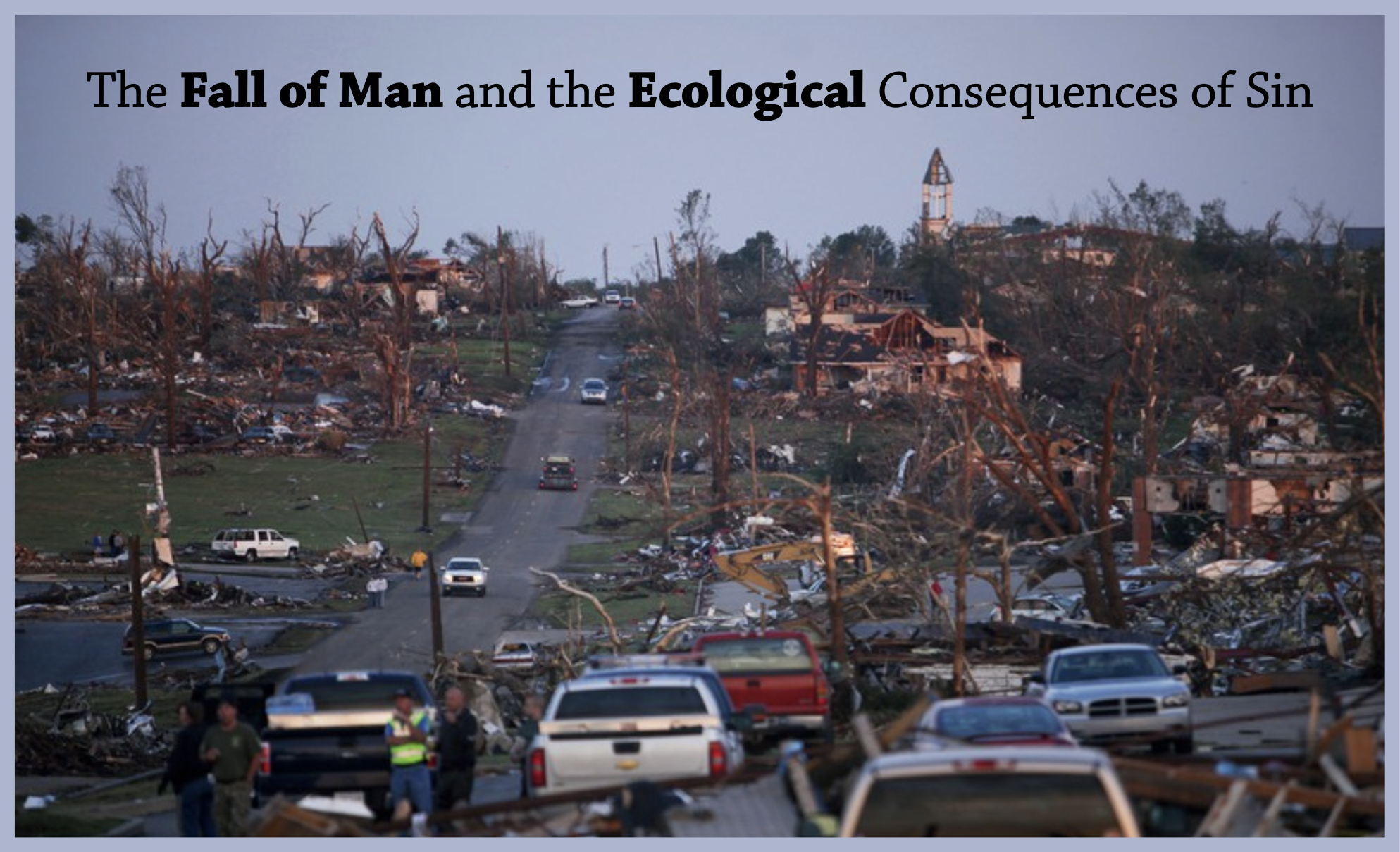
The Fall of Man and the Ecological Consequences of Sin

In the first post of this series on the Fall of Man in Genesis 3 and the widespread devastation of sin, I mentioned that we tend to focus on the theological and personal consequences of Adam and Eve’s sin while ignoring some of the other areas. I think the most ignored of those other areas is the ecological consequences associated with the sin in the Garden of Eden.

Men and women were created to live in relationship with God and with one another, and, in a sense, with creation as well. This is clear in the early chapters of Genesis. Genesis 1.26-30 recounts how Adam and Eve were to have dominion over creation, and Genesis 2.15 mentions that they were to work it and keep it. So in effect, Adam and Eve were to rule over creation, but to do so as stewards who would take care of what God had made.

But following their disobedience to God’s command to not eat of the forbidden fruit in Genesis 3, the ecological consequence is evident, as a curse is placed on creation in Genesis 3.17-19:

“And to Adam he said, ‘Because you have listened to the voice of your wife and have eaten of the tree of which I commanded you, ‘You shall not eat of it,’ cursed is the ground because of you; 

in pain you shall eat of it all the days of your life; thorns and thistles it shall bring forth for you; and you shall eat the plants of the field. 

By the sweat of your face you shall eat bread, till you return to the ground, for out of it you were taken; for you are dust, and to dust you shall return.’” 

This curse makes it clear that the relationship between man and creation has been destroyed as well. And that’s pretty easy to see, right? Rather than embrace our role as stewards of God’s earth, we tend to exploit creation to satisfy our own selfish desires. There are countless examples of companies that have carelessly polluted in order to cut corners and maximize profits, and even “little” problems like widespread littering show a basic lack of respect for the home God has created for us.

And I think there is significant indication in Scripture that the problem isn’t all one-sided: creation itself doesn’t operate the way it was intended to. In Romans 8.20-22, Paul makes this point, speaking of creation in personified terms:

“For the creation was subjected to futility, not willingly, but because of him who subjected it, in hope that the creation itself will be set free from its bondage to corruption and obtain the freedom of the glory of the children of God. For we know that the whole creation has been groaning together in the pains of childbirth until now.”

A creation that is subjected to futility, bound to corruption and groaning in the pains of childbirth seems distinctly different from the creation that God made and called “good.” I suppose this is ultimately unprovable, but my personal opinion is that the natural disasters that plague our lives—tornadoes, hurricanes, earthquakes, tsunamis, etc.—are symptomatic of the problems Paul refers to, as creation lives out a cursed existence different from the one for which it was intended.[1]

In sum, sin has devastated this aspect of our existence as well. Creation is less than the good and hospitable home for humanity for which it was created to be, and we fail to care for it as we should.[2]


[1] If my thinking on this is correct, then it stands in judgment against the hurtful things that some religious people say in very public ways following a natural disaster such as “Hurricane Katrina was God’s judgment against the wickedness of New Orleans”. Natural disasters are a condition of our broken world, rather than God’s wrath against a specific people/place. Incidentally, I think the promise made to Noah following the flood (Genesis 9.8-17) that man and creation would not again be judged by a massive flood (and perhaps, by extension, other natural disasters) supports this idea.

[2] I mentioned the general neglect of this topic, and I think that neglect is itself evidence of the distorted relationship we have with creation. In a significant portion of Christendom, discussion of the creation care is considered to be a “political” or “liberal” idea, despite the fact that environmental stewardship is clearly a biblical principle!

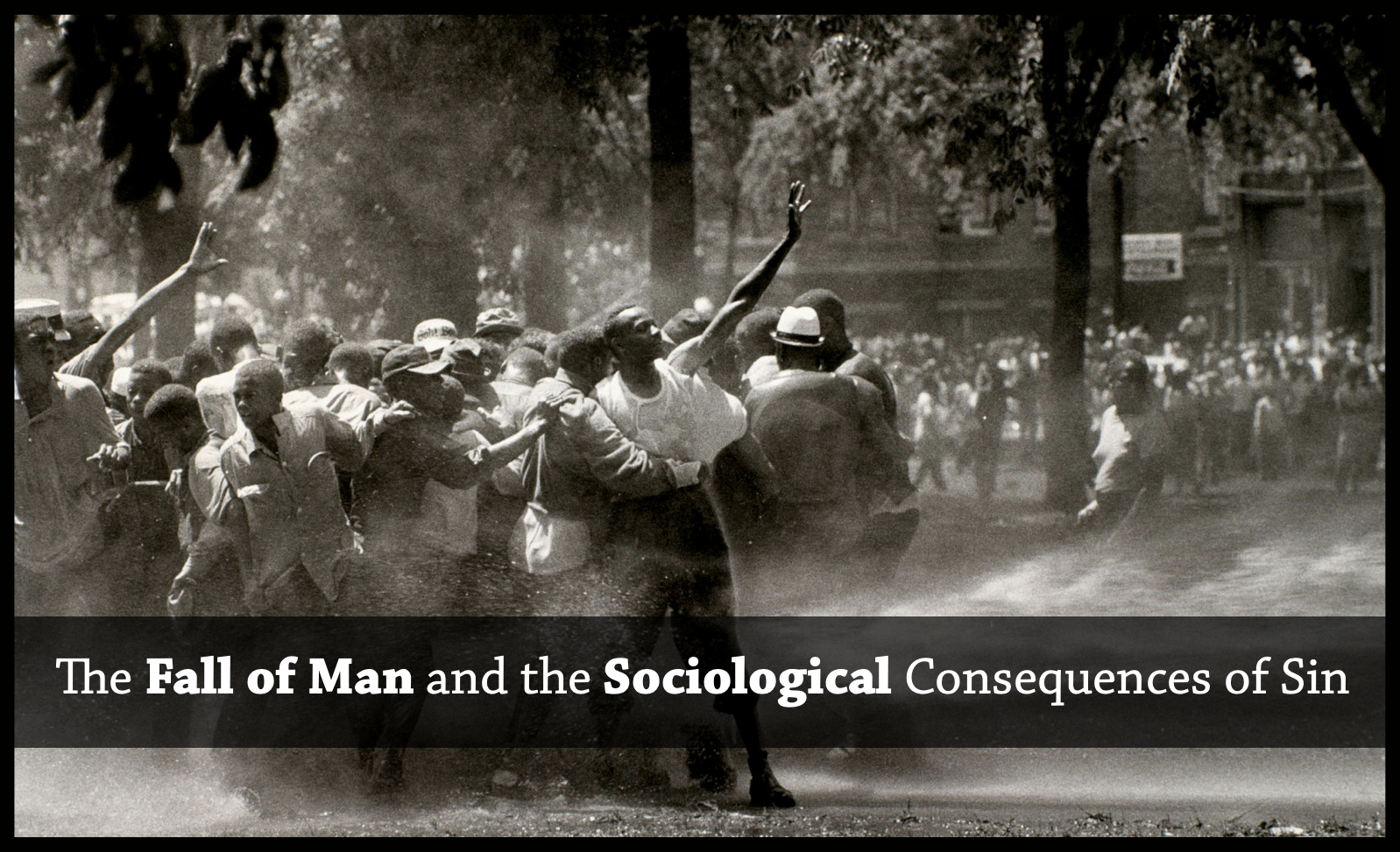
The Fall of Man and the Sociological Consequences of Sin

In our continuing discussion of the Fall of Man in Genesis 3 and the widespread devastation of sin, we have already covered the theological and personal consequences of Adam and Eve’s misdeed; in this post we turn to the sociological fallout of that sin, or the way that sin affects our relationships with one another.

Returning to our text, we can see this dimension clearly played out in verses 11-13:

“[God] said, ‘Who told you that you were naked? Have you eaten of the tree of which I commanded you not to eat?’ The man said, ‘The woman whom you gave to be with me, she gave me fruit of the tree, and I ate.’ Then the Lord God said to the woman, ‘What is this that you have done?’ The woman said, ‘The serpent deceived me, and I ate.’”

People were created to live in community with one another. Specifically, Eve was created to be the perfect partner for Adam (Genesis 2.18-25). But when God confronts Adam and Eve with their sin, something very significant (and unfortunate) happens: the unity that had previously existed between Adam and Eve is shattered as Adam immediately blames his wife for the sin which they had committed together.

This brings a conflict and disharmony between them that would be passed down over time (Genesis 3.16), and we can see it unfold in the pages of Genesis in the accounts of numerous broken relationships—Cain’s murder of his brother, the depraved society of Sodom and Gomorrah, the distorted relationships between Sarah and Hagar, Jacob and Esau, Jacob and Laban, Joseph and his brothers, and more. But the problems certainly don’t stop there—this same conflict and disharmony continue to darken and distort our world today.

Our world is deeply flawed by sin, and this manifests itself everyday sociologically, as we treat one another in a wide array of horrible, messed up ways:

  • On an international level, countries wage war and kill because of conflict over ideology or resources.
  • Systemic evils such as poverty, abortion, racism, sex trafficking, government corruption, lotteries, and more stem from our exploitation of our neighbors in order that we might obtain our own selfish desires.
  • Horrific acts of incomprehensible violence fill our news cycles. Mass shootings at elementary schools, the use of passenger airliners as terrorist missiles, bombings at marathon finish lines and incomprehensible barbarity at soccer matches shock and dismay us and cause us to weep.
  • Our interpersonal relationships are also a mess. Dishonesty, reckless ambition, and violence abound. The (supposedly) lifelong bonds of marriage are broken on a whim.

And the sum result: our society as a whole stagnates and decays, as people live lives marked by self-interest and fear of one another. The community for which we were created is broken.

Sin destroys our relationships with one another.

« Older posts Newer posts »

© 2026 The Doc File

Theme by Anders Noren — Up ↑