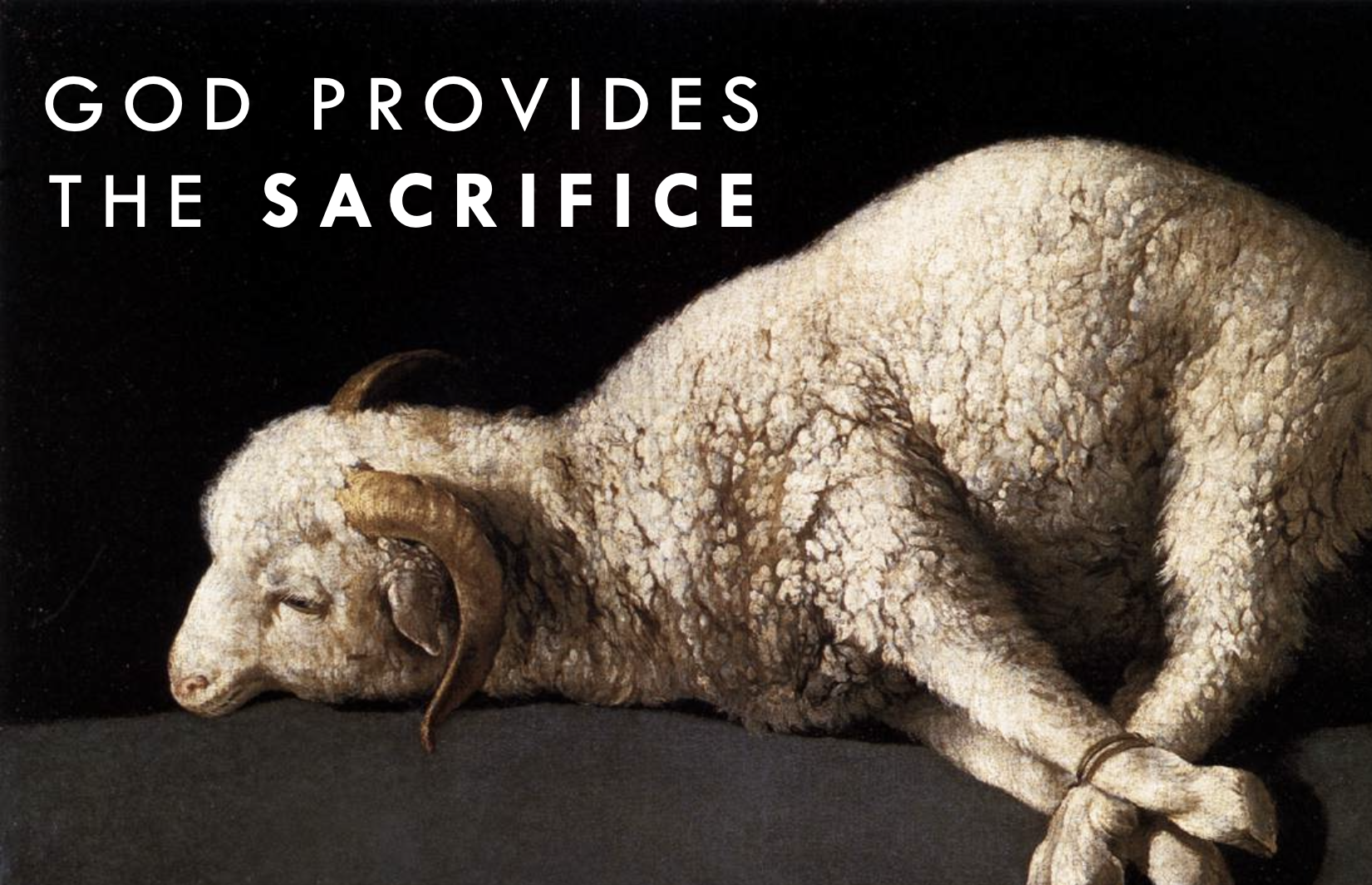
Genesis 22 is one of the most moving and haunting chapters of Scripture; it recounts the story of Akedah, or the Binding of Isaac, as Abraham is commanded to take his son and offer him as a sacrifice on an altar on Mount Moriah.
1 After these things God tested Abraham and said to him, “Abraham!” And he said, “Here I am.” 2 He said, “Take your son, your only son Isaac, whom you love, and go to the land of Moriah, and offer him there as a burnt offering on one of the mountains of which I shall tell you.”
(Genesis 22.1-2)
This must have been an agonizing task for Abraham, as he is called to offer his beloved son, the one for whom he had so long waited, the one on whom all his future hopes rested. The narrative is told slowly, with painstaking detail, heightening the tension and the growing sense of tragedy.
3 So Abraham rose early in the morning, saddled his donkey, and took two of his young men with him, and his son Isaac. And he cut the wood for the burnt offering and arose and went to the place of which God had told him. 4 On the third day Abraham lifted up his eyes and saw the place from afar. 5 Then Abraham said to his young men, “Stay here with the donkey; I and the boy will go over there and worship and come again to you.” 6 And Abraham took the wood of the burnt offering and laid it on Isaac his son. And he took in his hand the fire and the knife. So they went both of them together. 7 And Isaac said to his father Abraham, “My father!” And he said, “Here I am, my son.” He said, “Behold, the fire and the wood, but where is the lamb for a burnt offering?” 8 Abraham said, “God will provide for himself the lamb for a burnt offering, my son.” So they went both of them together.
9 When they came to the place of which God had told him, Abraham built the altar there and laid the wood in order and bound Isaac his son and laid him on the altar, on top of the wood. 10 Then Abraham reached out his hand and took the knife to slaughter his son. 11 But the angel of the LORD called to him from heaven and said, “Abraham, Abraham!” And he said, “Here I am.” 12 He said, “Do not lay your hand on the boy or do anything to him, for now I know that you fear God, seeing you have not withheld your son, your only son, from me.” 13 And Abraham lifted up his eyes and looked, and behold, behind him was a ram, caught in a thicket by his horns. And Abraham went and took the ram and offered it up as a burnt offering instead of his son. 14 So Abraham called the name of that place, “The LORD will provide”; as it is said to this day, “On the mount of the LORD it shall be provided.”
(Genesis 22.3-14)
But, as tragic as this story could have been, things turn out okay: Isaac is not offered as a sacrifice because God steps in and provides another sacrifice, a ram that had been caught in a thicket. The father did not have to witness the death of his beloved son.
Abraham looks around and calls the name of that place, “The LORD will provide.”
We fast forward hundreds of years to a very similar mountain[1] on another altar of sorts, where Jesus, the beloved Son, the One for whom the world had so long waited, the One on whom all future hopes rested, hangs on a cross.
But this time, there is no alternative sacrifice. The Father does witness the death of His beloved Son because Jesus Himself is the alternative. The LORD did provide, and He provided the Lamb slain from the foundation of the world…to take the place of Isaac…to take the place of each of us.
Unlike with Isaac, this time, there is no alternative sacrifice. The Father does witness the death of His beloved Son because Jesus Himself is the alternative. Share on XGod provides the sacrifice because God Himself is the sacrifice, absorbing the darkness of the world into Himself.
 In this loose series of Scripture Reflections, I am sharing brief thoughts spurred on by my Bible reading. By way of reminder, my goal for these brief posts is two-fold:
(1) To remark on aspects of the biblical text that I find to be of interest that the reader may or may not have thought about previously.
(2) When possible, to point to the work and person of Jesus Christ. I believe the Bible is a unified story that points to Jesus, which means that He is frequently alluded to or foreshadowed in some way throughout the biblical canon.
[1] Scholars debate the relative locations of Mount Moriah and Golgotha, but many believe them to be the same place.







