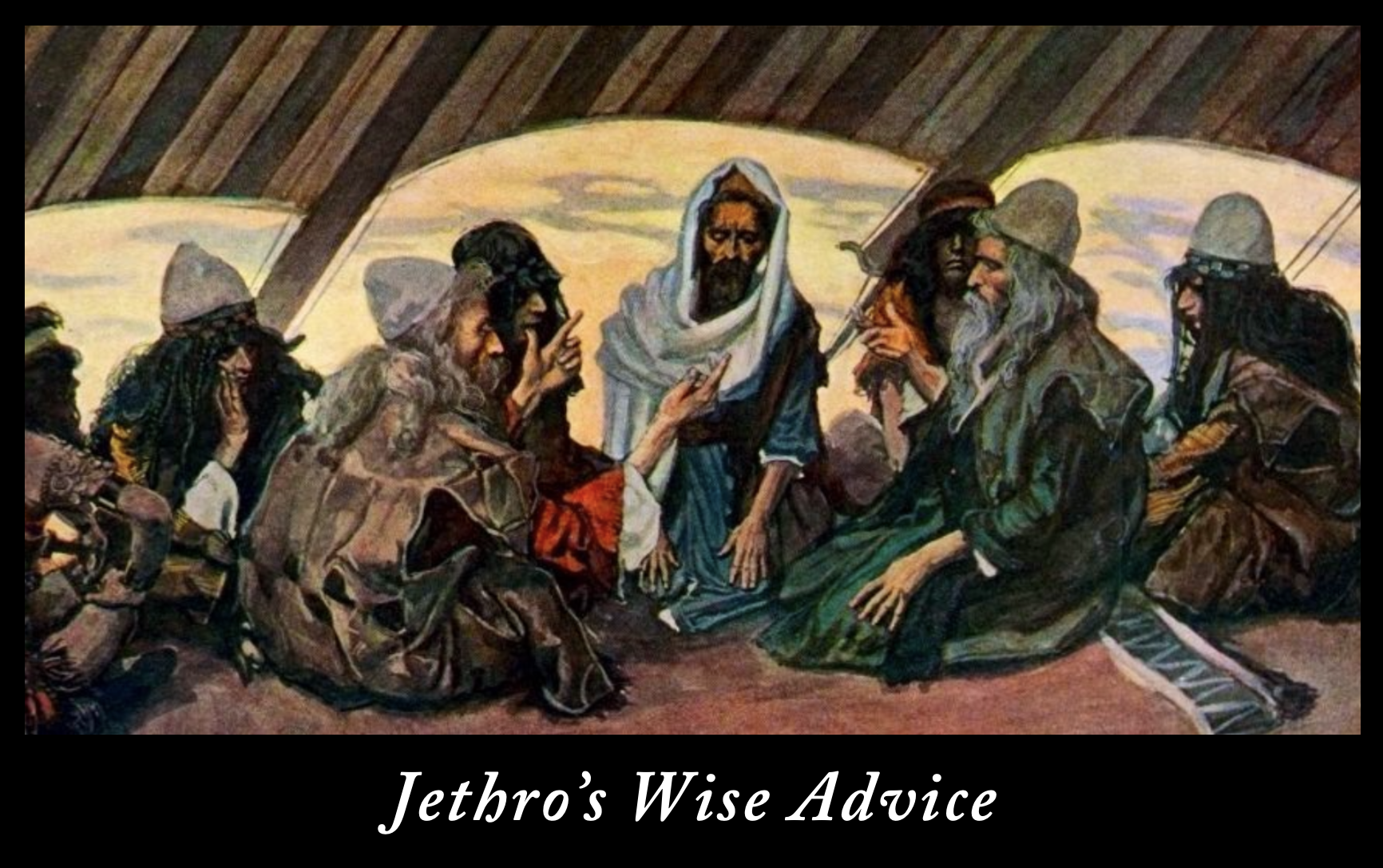
In Exodus 18, Moses has led the people of Israel out of Egypt. He has shown God’s power through the plagues on Pharaoh and the Egyptians, and through him, God has revealed His supremacy over the pantheon of Egyptian gods. Now, Moses is leading the nomadic nation of Israel through the wilderness.
Moses receives a visit from Jethro, his father-in-law, and tells him of all the amazing things that the LORD has done. Jethro is amazed, rejoicing over the kindness that God had shown to the Israelites, and praising His name: “Now I know that the LORD is greater than all gods” (Exodus 18.11).
The next day, Jethro witnesses Moses serving as a judge among the people: from morning to evening, people come before Moses bringing disputes before him, seeking a judgment or resolution. Jethro is troubled by this:
But Moses’ father-in-law said to him, “The thing you are doing is not right; you will surely wear yourself out, and these people as well. For the task is too heavy for you; you cannot do it alone. Now listen to me. I will give you counsel, and God be with you! You represent the people before God: you bring the disputes before God, and enjoin upon them the laws and the teachings, and make known to them the way they are to go and the practices they are to follow. You shall also seek out from among all the people capable men who fear God, trustworthy men who spurn ill-gotten gain. Set these over them as chiefs of thousands, hundreds, fifties, and tens, and let them judge the people at all times. Have them bring every major dispute to you, but let them decide every minor dispute themselves. Make it easier for yourself by letting them share the burden with you. If you do this—and God so commands you—you will be able to bear up; and all these people too will go home unwearied.”
Moses heeded his father-in-law and did just as he had said. Moses chose capable men out of all Israel, and appointed them heads over the people—chiefs of thousands, hundreds, fifties, and tens; and they judged the people at all times: the difficult matters they would bring to Moses, and all the minor matters they would decide themselves. Then Moses bade his father-in-law farewell, and he went his way to his own land.
(Exodus 18.17-27)
Jethro’s counsel reflects the wisdom and experience of an older man. Moses is certainly a capable leader, but trying to adjudicate every dispute himself is unsustainable and will ultimately result in burnout. Instead, Jethro suggests, Moses needs to assemble a team of others who can help share the load of handling these matters. Moses himself will continue on as a sort of Supreme Court to handle the most important cases, while others can handle the vast majority of easier and less significant disputes.
In addition to being wise advice that any successful leadership guru would approve of, this also reflects the practice of Jesus and the designed structure of His church:
- Although Jesus is, ultimately, the Judge of the world, He did not take it upon Himself to try to sort out every dispute (Luke 12.14).
- Jesus spent the bulk of His ministry not just doing everything Himself, but training the Twelve so that they could lead after Him.
- The leadership of the church is not entrusted to one person: instead, there are apostles, prophets, evangelists, shepherds, and teachers who share in that work (Ephesians 4.11ff). Furthermore, the church is the Body of Christ, and all members of the body have important roles to play (Romans 12).
- In discussions of Elders and Deacons (1 Timothy 3; Titus 1), there is never the hint of one person filling these roles, but always on a plurality or group of individuals.
Indeed, the basic advice of Jethro for Moses to “share the burden” with others (Exodus 18.22), reflects these same realities, as we are instructed to cast our burdens upon God (1 Peter 5.7), and for brothers and sisters in Christ to mutually share their burdens because doing so fulfills the law of Christ (Galatians 6.2). In other words, this is more than good advice: it is very much God’s design and will.
All of us have a variety of burdens in life—responsibilities, struggles, challenges, etc.—but God does not intend that we carry these burdens alone. Listen to Jethro: share the burden.
All of us have a variety of burdens in life—responsibilities, struggles, challenges, etc.—but God does not intend that we carry these burdens alone. Share on X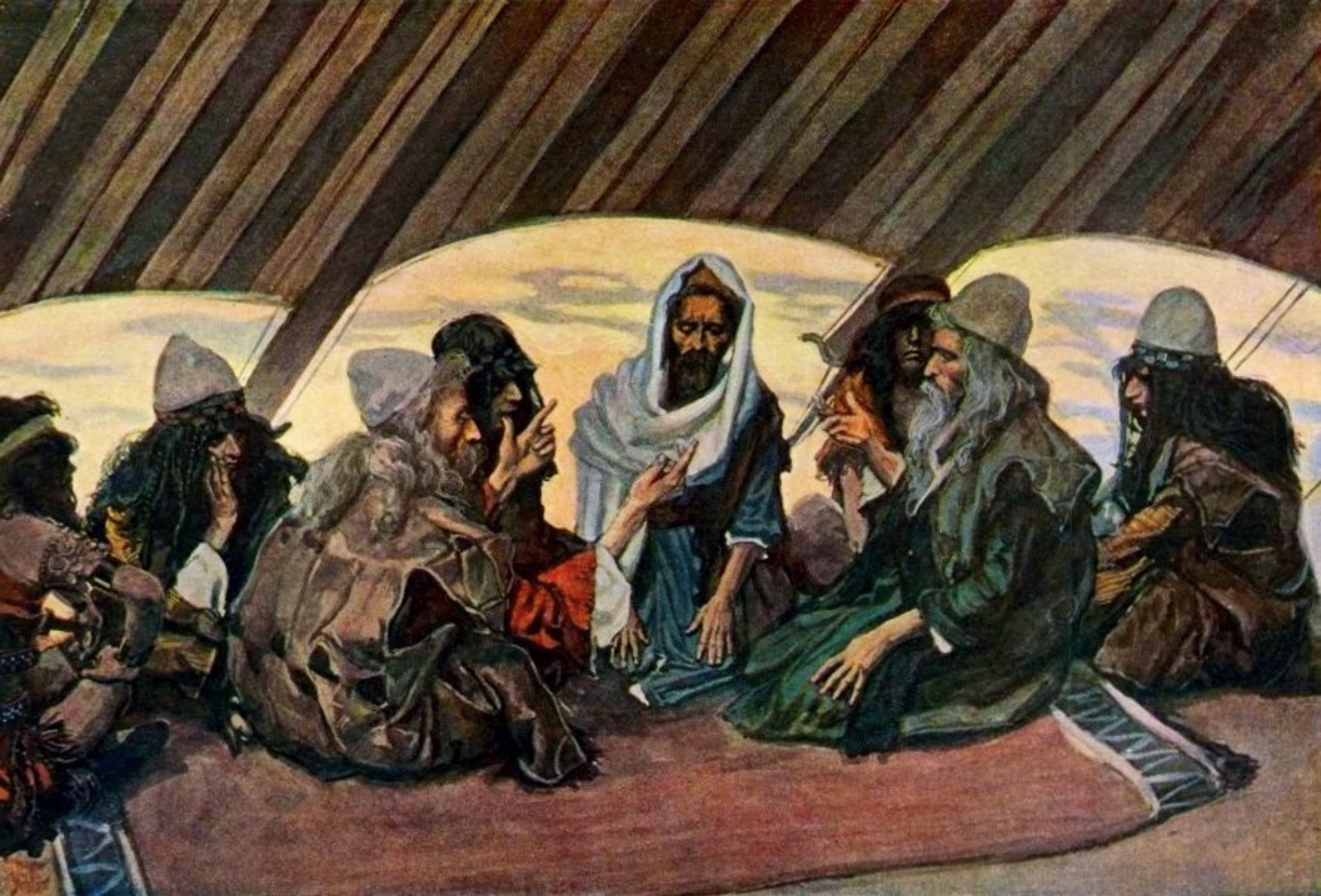
Jethro and Moses, watercolor circa 1900 by James Tissot
 In this loose series of Scripture Reflections, I am sharing brief thoughts spurred on by my Bible reading this year. By way of reminder, my goal for these brief posts is two-fold:
(1) To remark on aspects of the biblical text that I find to be of interest that the reader may or may not have thought about previously.
(2) When possible, to point ahead to the work and person of Jesus Christ. I believe the Bible is a unified story that points to Jesus, which means that He is frequently alluded to or foreshadowed in some way throughout the biblical canon.







