The online journal of Luke Dockery

Tag: Jonah (Page 1 of 2)

Jonah Naps in a Boat

The importance of Bible reading was impressed upon me from a young age, so I had the benefit of reading through the entire Bible several times before I graduated from high school. Of course, this is a good practice, but reading the Bible for yourself can be an unsettling experience. When you read Scripture for yourself, you learn that there are parts of the Bible that are rough around the edges, parts that are entirely foreign to modern ideas, and parts that are certainly not meant for young readers. Furthermore, you learn that a lot of biblical characters who are often presented as heroes in children’s storybooks and Sunday school classes aren’t very heroic at all!

I remember the first time I read the book of Jonah for myself as a kid and moved beyond a storybook understanding of Jonah. Far from the simplistic “good guy makes a mistake but then repents and obeys God” storyline, Jonah is a more complex book, and Jonah himself is a less likable character than what is often assumed. I find this book to be fascinating, and I have actually written about Jonah several times over the years.

As I was reading through Jonah again recently, I was struck by this episode, which occurs after Jonah ignores God’s command to preach to Nineveh and instead boards a ship bound for Tarshish:

4 But the Lord hurled a great wind upon the sea, and there was a mighty tempest on the sea, so that the ship threatened to break up. 5 Then the mariners were afraid, and each cried out to his god. And they hurled the cargo that was in the ship into the sea to lighten it for them. But Jonah had gone down into the inner part of the ship and had lain down and was fast asleep. 6 So the captain came and said to him, “What do you mean, you sleeper? Arise, call out to your god! Perhaps the god will give a thought to us, that we may not perish.”

(Jonah 1.4-6)

What made this stand out to me was how closely it parallels with a similar event from the life of Jesus, where Jesus is on a boat with His disciples on the Sea of Galilee when a storm comes up (Matthew 8.23-27; Mark 4.35-41; Luke 8.22-25). Jesus’s disciples are alarmed, but Jesus takes a nap…just like Jonah did![1]

It’s easy to just dismiss these details as coincidence, but as I have written before, the Bible is a literary masterpiece, and we should should be suspicious of these seeming coincidences: usually, the author is trying to tell us something. In this case, there are many points of comparison between the two events. The following table comes from Kevin Youngblood’s excellent commentary, Jonah: God’s Scandalous Mercy:[2]

Jonah boards a ship bound for Tarshish in order to run away from God’s call to preach to Nineveh; Jesus appears to get on a boat in order to avoid the crowds pressing around Him. While on board their respective boats, both Jonah and Jesus fall asleep while violent storms threaten to sink them. The pagan sailors on board with Jonah and Jesus’s disciples both fear for their lives and awaken them to alert them of the danger and seek their assistance. Both of the protagonists know what to do in order to calm the storm and take appropriate action: Jonah has his shipmates toss him into the sea, while Jesus orders the waves to submit to His authority. Both sets of shipmates are awestruck by the divine power they have witnessed.

What are we to make of these similarities? Well, we should begin by noting that in the gospels, Jesus compares Himself to Jonah in multiple places. Here is one example:

38 Then some of the scribes and Pharisees answered him, saying, “Teacher, we wish to see a sign from you.” 39 But he answered them, “An evil and adulterous generation seeks for a sign, but no sign will be given to it except the sign of the prophet Jonah. 40 For just as Jonah was three days and three nights in the belly of the great fish, so will the Son of Man be three days and three nights in the heart of the earth. 41 The men of Nineveh will rise up at the judgment with this generation and condemn it, for they repented at the preaching of Jonah, and behold, something greater than Jonah is here.

(Matthew 12.38-41)

Jesus highlights a comparison, indicating that Jonah’s three days and nights in the “tomb” of the great fish is a foreshadowing of His own three days and nights in the tomb. But He also emphasizes a contrastin that, despite His greatness compared to Jonah, the generation to which He is preaching will not repent as the Ninevites did for Jonah.

With this in mind, the deep sleep that comes over Jonah and Jesus on their boats symbolizes the “death” and return that both will soon experience, and in the gospels, this episode paves the way for Jesus’s later teaching on the sign of Jonah.[3]

But the carefully crafted narrative is not just about emphasizing the similarities between Jesus and Jonah; the distinction between the two is of paramount importance. Jonah is sleeping on a boat ultimately as a symptom of his determination to escape God’s calling for his life. God wants to use Jonah as an instrument of His astounding mercy, and Jonah wants no part of that. He runs away, hides in sleep, and ultimately, calls his shipmates to throw him into the sea, confident that he will die, but that death would be better than preaching to the hated Ninevites.

Jesus, on the other hand, embraces His calling rather than seeking to escape it. Rather than whip up the popular fervor of the crowds and harness that frenzied energy into a typical messianic rebellion, Jesus leaves and boards a ship with his disciples. There, He is able to be calm, not only because He is the Master of raging tempests, but also because He knows His death is already set. It will not come in a boat, but rather will be characterized by three days in a tomb followed by a return (as with Jonah).

As Jesus awakens and calms the storm, His disciples are awestruck, asking one another, “Who is This?” (Mark 4.41). Jesus has just given them a key data point in their assessment of His identity and mission. Their ongoing journey to discover who Jesus is will be a winding and stumbling one, and they will only come to fully understand His identity after His death and resurrection. This is what the Father had called Him to do, and indeed, his calling and identity were fundamentally linked.[4]

And so they are for God’s people. We are defined by the calling that God places upon our lives to live as disciples of His Son and agents of reconciliation in His world. But there is a choice to make: like Jonah, we can ignore that calling and seek to escape it, or like Jesus, we can embrace that calling and become who we were always intended to be.


In this loose series of Scripture Reflections, I am sharing brief thoughts spurred on by my Bible reading. By way of reminder, my goal for these brief posts is two-fold:

(1) To remark on aspects of the biblical text that I find to be of interest that the reader may or may not have thought about previously.

(2) When possible, to point to the work and person of Jesus Christ. I believe the Bible is a unified story that points to Jesus, which means that He is frequently alluded to or foreshadowed in some way throughout the biblical canon.


[1] I think this is a wonderful narrative from which we can learn much, and have written on it in the past. See, “Why Are You Afraid?” and “Asleep in the Storm.”

[2] Kevin J. Youngblood, Jonah: God’s Scandalous Mercy, Hearing the Message of Scripture Commentary Series (Grand Rapids, MI: Zondervan, 2013), 90.

[3] Youngblood, 90.

[4] Youngblood, 91.
Pity for Those Who Do Not Know: The Story of Jonah, Part 3

If you’re coming late to the party, be sure to check out Part 1 and Part 2.

So far, we’ve seen that Jonah was pretty mixed up about what was important—he valued a plant which provided him with shade more than he valued the lives of the people of the great city of Nineveh. We’ve also seen that as the people of God, we can get similarly mixed up.

God’s response to Jonah at the end of chapter 4 is an attempt to correct Jonah’s perspective on things. He says,

“You pity the plant, for which you did not labor, nor did you make it grow, which came into being in a night and perished in a night. And should not I pity Nineveh, that great city, in which there are more than 120,000 persons who do not know their right hand from the left, and also much cattle?”

God tries to get Jonah to see how He pities the people of Nineveh. A lot of time we have a negative connotation with the word “pity”, but it really just means to feel sorrow over someone else’s condition (The New American Standard Bible says “compassion”; The NIV uses “concern”). God points out how ridiculous it is that Jonah felt sorrow over the death of the plant, but feels no concern at all over the 120,000 people of Nineveh “who do not know their right hand from their left”—basically, people who don’t even realize how bad of a spiritual condition they are in.

It’s interesting—the Book of Jonah ends with God’s question. We don’t get to hear how Jonah responded; we don’t get to see if he corrected his attitude. But really, that makes sense, because the Book of Jonah isn’t really about Jonah—it’s about God…and God’s concern for all people…and God letting His people know about how much He is concerned for all people! So it makes sense that the book ends with God sharing that concern with Jonah.

It is our understanding of God’s pity for the lost—His feeling of sorrow for their condition—that can provoke a similar sense of concern in us. You know, a large part of Jonah’s problem was that he didn’t understand the value of the Ninevites. To him, they were worthless, less deserving of his concern than a plant which sprung up overnight.

What about us? Do we understand the value of those who are lost?

Most of my readers know that I am a huge baseball fan, and when I was younger, one of my favorite hobbies was collecting baseball cards. I would spend most of my allowance buying packs of cards, I would collect and trade for my favorite players, and I would spend a lot of time looking at and organizing my cards.

Another thing I would do with my baseball cards was try to figure out how much they were worth. They would put out price guides every month that would supposedly tell you the value of each card. I remember I would look up my cards and I would take them and brag about it to my dad: “Look Dad, this card is worth $2; this one is worth $5; this one is really rare—it’s worth $30!”

My dad was never impressed with my claims though, and I remember that he would always look at me and say:

“Son, that card is only worth what someone will pay for it.”

You know, that definition of value makes a lot of sense to me. And if the value of something is determined by what someone will pay for it, God made it abundantly clear for once and for all that the lost are worth more to Him than anything—because He paid for them with the death of Jesus on the cross.

That price was paid even for folks whom we don’t like very much, people who make us uncomfortable, or people who have hurt us in some way.

That price puts all of the distractions in our lives—the other things that seem so important to us—into perspective.

As I said at the beginning of this series, I’m really not a big fan of Jonah, because he reminds me too much of myself:

  • I’m not always eager to do what God wants me to do…
  • I make the mistake of thinking that I am somehow more worthy of God’s grace than someone else…
  • I get distracted by unimportant things and forgetting the value of the souls around me…

Maybe some of you can understand where I’m coming from.

Fortunately, the God who is gracious and merciful, slow to anger and abounding in love with the Ninevites is also that same way with me. Fortunately, that same God decided that my soul was worth enough for Jesus to come and die for it.

Pity for Those Who Do Not Know: The Story of Jonah, Part 2

In Part 1, we summarized the story of Jonah and noted that Jonah’s attitude toward his mission was very disappointing and not what we would expect from a prophet of God. Jonah was all mixed up about what was important.

But then I think: what about us?

There are over 7 billion people in the world today. Christianity is the world’s largest religion (though not the fastest-growing) with a little over 2 billion adherents. Now, even if we could take that number at face value, that means there are over 5 billion people—16 times the population of the United States—who don’t claim to have a relationship with Christ at all.

And of the 2 billion who claim to be Christians, a lot of those are people that you work with and go to school with and see everyday—people who say they are Christians, but who make no real attempt to be obedient to what God says in his Word. For them Christianity is not something that affects their daily lives, but is rather a box that they check on a census survey. We know that the number of real, faithful Christians is much, much smaller.

It is staggering when you realize just how many people in our world need a relationship with Jesus Christ.

And yet, for the vast majority of us, we hear those statistics, and perhaps we think things like, “That’s too bad” or “What a tragedy” or “I really should do something about that”, but that’s all we do. Why is that?

Maybe there are some people who we just aren’t concerned about. We talked about how the Ninevites were the enemies of Jonah and his people and how this affected his view of them. What about us? You might not have enemies in your life in a classic sense, but you certainly have people who you don’t care for as much. What about your boss at work who treats you unfairly and acts like a jerk? How motivated are you to share Jesus with that person? Or the person at school with a bad reputation, or perhaps the unpopular kid that no one likes—how likely are you to talk about your faith with that person? Let’s be honest—there are some people that we just don’t care about very much!

Maybe our culture has made us feel bad about sharing the Good News of Jesus. In a postmodern culture where people argue that there’s no such thing as absolute truth and that one person’s beliefs are just as valid as another’s, evangelism has almost become a dirty word. People who share their beliefs with others are regarded as pushy, nosy, Bible-thumpers. We’ve all heard the jokes about religious groups who go door to door to spread their faith—we don’t want people making jokes like that about us! It’s actually reached the point that most churches have to have a special Invite-a-Friend Day in order for their members to make much of an effort to reach out to others—what’s up with that? Do people have less of a need to hear the Gospel at other times? Or are we just so impacted by our culture that it takes a special occasion for us to work up the courage?

Maybe we get so distracted by other things that we just forget. You know, Jonah was so concerned about the precious plant that grew up over his head and gave him shade that he didn’t really have enough concern left over for the people of Nineveh! We as a people are so busy; we have so many things going on in our lives that it’s easy for us to get distracted and lose perspective. When we’re so concerned about issues going on at work, or our squabbles with our spouses, or our children’s athletic careers, how can we have concern left over for those who are lost?

As the people of God, I think we can get mixed up too. Just like Jonah was.

Part 3

Pity for Those Who Do Not Know: The Story of Jonah, Part 1

Jonah is not one of my favorite characters in the Bible, and I think it’s because he reminds me too much of myself.

The story of Jonah is a familiar one—it’s a story that many of us have known since childhood when we learned it in Sunday School.

God calls Jonah to go and preach to the Ninevites, but Jonah doesn’t want to, so instead he goes down to Joppa and hops on a boat bound for Tarshish in the other direction. Of course, the boat has trouble at sea, the sailors become afraid and go and wake up Jonah, who was taking a nap, and implore him to cry out to his God. Then they decide to cast lots to see whose fault it is that this storm has come upon them, and the lot falls to Jonah. Jonah confesses that he is running from Jehovah, the God of heaven who made the sea and the dry land. At this point, the men become terrified and they ask Jonah what they should do in order to make the sea quiet down. He tells them that they should throw him overboard into the sea, and after the men unsuccessfully attempt to row back to the land, they reluctantly throw Jonah overboard.

Then comes the most famous part of the story, where God appoints a great fish to come and swallow Jonah, and Jonah is stuck inside the belly of the fish for three days and three nights. There, Jonah prays to the Lord, and then God has the fish spit Jonah up on dry land.

And from there, Jonah goes to Nineveh, and preaches to the city, and the people believe him! They begin to fast and put on sackcloth and the king of Nineveh covers himself in sackcloth, sits in ashes, and commands that no man or beast be allowed to eat or drink. And when God sees the repentance of the Ninevites, He decides not to destroy them after all.

And you know, in Sunday School, that’s where we tend to stop…with a happy ending.

But that’s not the ending, and Jonah isn’t happy at all. Rather than being happy that his preaching has led to the repentance of the Ninevites and has saved them from destruction, he is angry—“exceedingly angry” the Scripture says.

So he prays to the LORD and says, “This is why I ran away in the first place, because I knew that you are a gracious and merciful God, slow to anger and abounding in love…I knew you would forgive them!” Then Jonah goes on to say that he is so upset that he would rather die than live.

And God asks Jonah an interesting question: “Do you do well to be angry?” And obviously, it’s the sort of question that isn’t meant to be answered, but is supposed to make Jonah think.

You know, people have wondered why this seems to make Jonah so angry. We know from 2 Kings 14 that Jonah was a prophet to the Northern Kingdom of Israel, and Assyria (of which Nineveh was the capital city) was a long-standing enemy of Israel. In fact, it would ultimately be Assyria who conquered Israel in 722 BC. So it makes some sense that Jonah would be hesitant for the Ninevites—his enemies—to be saved. He didn’t think they deserved it.

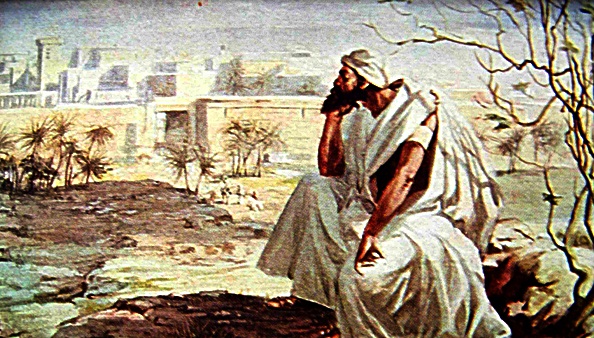
At this point, Jonah goes outside the city and makes a little booth for himself there so he can watch and see what happens. Perhaps he wanted to see if the Ninevites would remain faithful in their repentance or if they would turn back to evil and maybe God would still punish them. And while he is there watching, God appoints a plant to grow up over Jonah, so that it provided him with shade and made him comfortable. Scripture says that Jonah was exceedingly glad because of the plant.

But then the next day, God has a worm come to attack the plant so that it withered, and then a scorching east wind comes and beats upon the head of Jonah and Jonah is miserable again. Once again he tells God that it would be better for him to die than live, and once again God asks him a question: “Do you do well to be angry for the plant?”

And all of this language brings into clear comparison Jonah’s reactions to the salvation of Nineveh and the destruction of the plant:

  • Jonah was “exceedingly angry” about the salvation of Nineveh, but “exceedingly glad” about the appearance of the plant.
  • Both when the city was spared and when the plant withered, Jonah was so upset that he said it would be better for him to die than to live.
  • And after both episodes, God tried to get him to reflect on his attitude by asking him if he did well to be angry.

And this second time, Jonah answers the question, belligerently stating that he does do well to be angry, angry enough to die! The plant shaded him from the sun; its value is clear to him. But the Ninevites, on the other hand, why would God want to save them? They’re worthless!

What a disappointing attitude for a prophet of God to have!

Jonah is mixed up.

Part 2

“You! Jonah!”

You! Jonah!

by Thomas John Carlisle
 
And Jonah stalked
to his shaded seat
and waited for God
to come around
to his way of thinking.
And God is still waiting for a host of Jonahs
in their comfortable houses
to come around
to His way of loving.
« Older posts

© 2026 The Doc File

Theme by Anders Noren — Up ↑