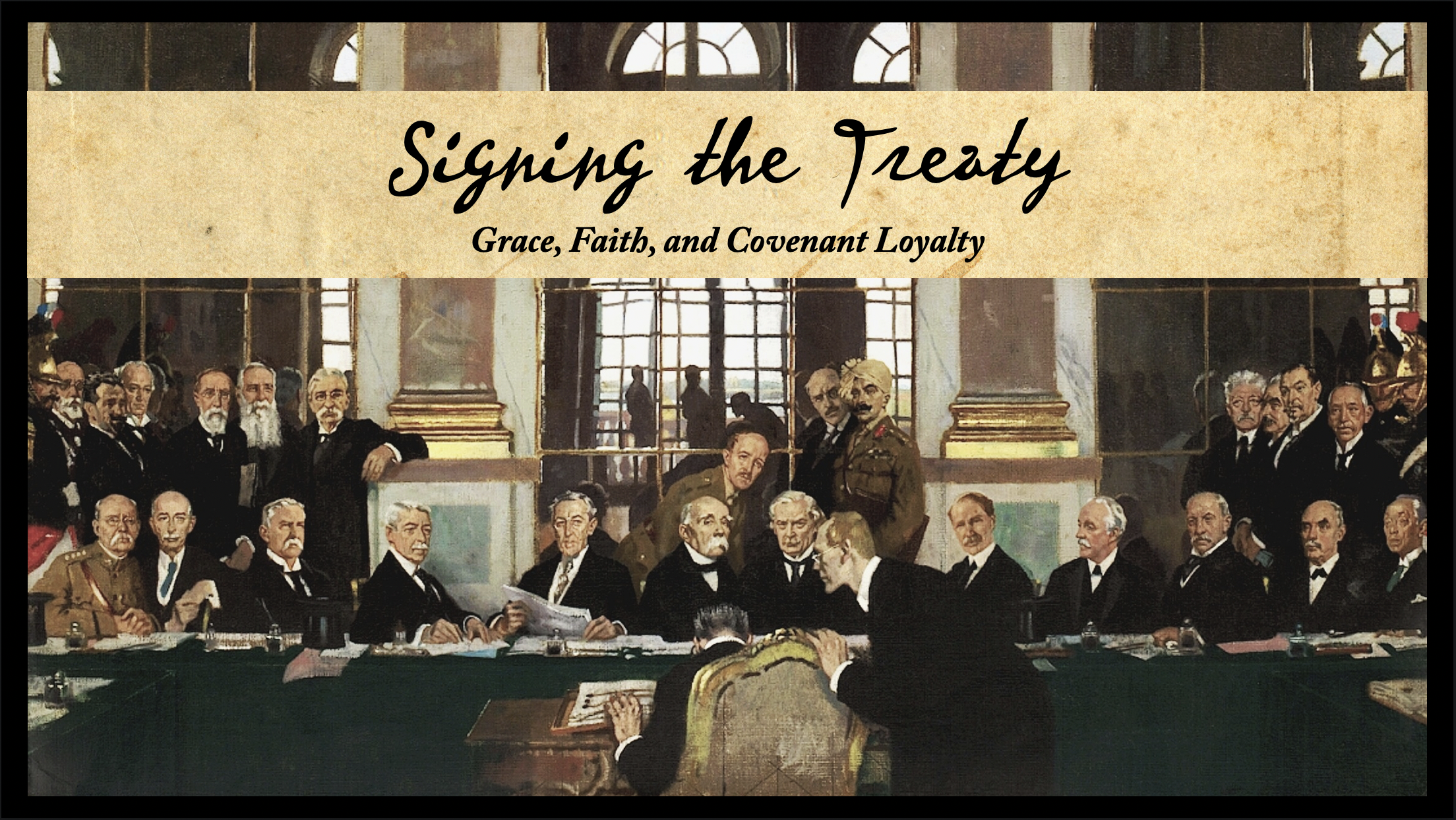
Introduction
Conflict and disagreement are inevitable consequences of humans being in close contact with one another, and a result of that is that we have developed a variety of ways to “make up” after we have had some sort of quarrel or falling out.
Occasionally, I’ll get into some sort of fight with my seven-year old son. Sometimes, this is because he is in trouble for something; sometimes, it is because he is in trouble but I am also in trouble because I haven’t handled the situation well because I have lost my temper or spoken to him too sharply. And we’ll say sorry, but it’s still a little tense…and then I’ll ask him, “Do you want to go play Legos?” We run upstairs, play Legos together, and make amends in the process.
After European settlers began to spend time with Native Americans, they became aware of the practice of “burying the hatchet,” where warring indigenous groups would literally put away or bury their weapons as an indication of peace. “Bury the hatchet” remains an English idiom that means “to make peace.”[1] We also have the expression “kiss and make up,” which conveys a similar sort of idea. I’ve never actually seen little kids told or forced to kiss each other, but I’ve absolutely seen kids told to hug each other or shake hands after a fight.
In his classic book, Peace Child, missionary Don Richardson shares a make-up custom from remote New Guinea. When neighboring villages were at war, the way to guarantee peace was through the “peace child”. The different villages would swap infants and raise them as their own. As long as these adopted children were taken care of, the peace between the two villages was secure.[2]
All of these different examples of making up after a fight or disagreement are, in a loose sense, a form of peace treaty, or we might even say “covenant.” These two words, broadly defined, are actually synonyms: a treaty or a covenant is an agreement between two parties, where each party commits to certain things.
I want to look at some different examples of covenants or treaties throughout history, to help us better understand the way that God approaches us relationally, and how He expects us to respond.
Suzerain/Vassal Treaties
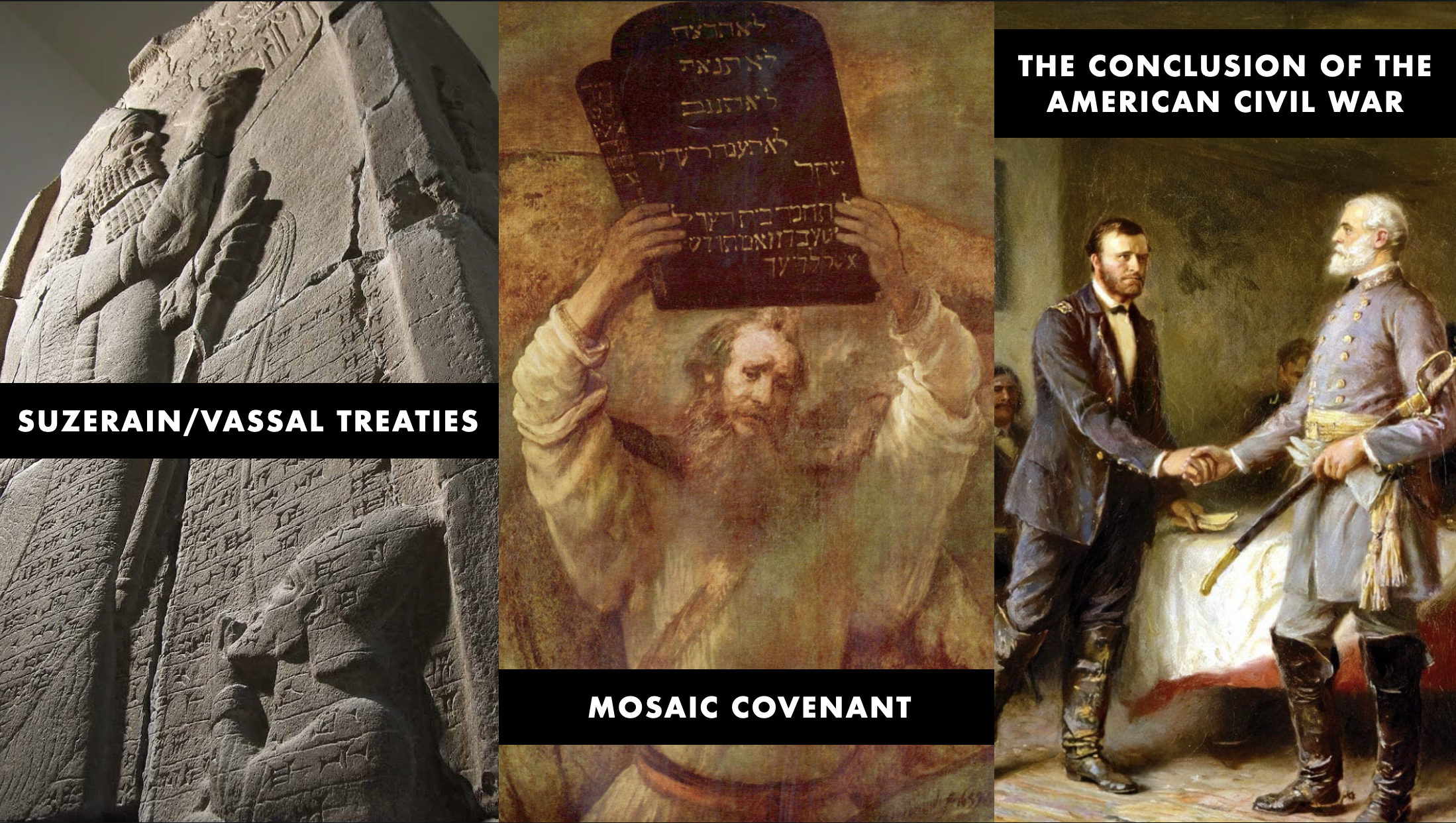
The first type of treaty comes from the Ancient Near East, in the Hittite Empire (modern day Turkey), and is called a Suzerain/Vassal treaty.[3] Basically, this is a treaty or covenant between unequal partners: you have a stronger king or nation (the Suzerain) that would establish a covenant or treaty with a weaker king or nation (the Vassal).
Each party would have certain requirements they had to keep in order to remain faithful to the treaty:
- The two parties would keep their own national borders and remain separate nations, but would become military allies. One would come to the aid of the other when needed. Specifically, since the suzerain was more powerful, this provided great security and military protection for the vassal state.
- In return, the vassal owed the suzerain financial tribute and loyalty—vassals could only have one suzerain (ancient records reveal that the suzerain was often referred to as “lord” or “father”). For a vassal to take another suzerain would be treasonous.
- Suzerains, on the other hand, would often have treaties with multiple vassals; if one vassal had an issue with another, they would bring it to the suzerain to resolve (This is similar to what happens when a brother and sister are having a fight; they complain to Mom and Dad in hopes of a resolution.).
Mosaic Covenant
Many people have never heard of a Suzerain/Vassal Treaty before, but are likely familiar with one if they have spent much time reading the Hebrew Bible/Old Testament: The Mosaic Covenant or the Law of Moses.
Basically, after Yahweh, the God of Abraham, Isaac, and Jacob calls Moses from the burning bush and rescues the Israelites out of Egypt (10 Plagues, Parting of the Red Sea, etc.), He calls Moses up to Mount Sinai in order to establish a covenant with the Israelites: He will be their God, and they will be His people.
And the way He structures the covenant closely matches as Suzerain/Vassal Treaty. This is not surprising—God comes near to humans in ways that we can understand (indeed, that is what the incarnation of Jesus is about!), and so it makes sense that when God wanted to establish a relationship with the nation of Israel, He does so in a way that they understood: as the much more powerful party (the Suzerain) He makes an agreement with them in a way that would be familiar to them:
- The covenant begins by introducing Yahweh as the suzerain: “I am Yahweh your God.” He then reminds them of their previous relationship, how He had rescued them from slavery in Egypt.
- Then, there are the requirements for the covenant—what it means for Yahweh to be their God and for Israel to be His people.
- There are provisions made for keeping the record of the treaty safe and reading it regularly to remind people of their obligations.
- Yahweh calls heaven and earth as witnesses to the covenant, and then there is an extensive list of blessings that will come from covenant faithfulness, and curses that will come if the people are unfaithful.
All of these are classic characteristics of suzerain/vassal treaties.
In rescuing Israel from Egypt and “signing a treaty” with them, Yahweh proclaimed Himself as their Lord and Father, and He required their loyalty in return. Yahweh would protect them and give them land, and in return, they were required to be loyal and obedient to Him. This meant that they would worship no other gods, and also that they would act in certain ways to demonstrate their loyalty and obedience to Him (for example, by loving their neighbors and taking care of the poor in their midst).
God offered this covenant out of His grace—He was the powerful party and had no obligation, but chose to offer a treaty. The loyal obedience of the people was required in response to the treaty.
The Conclusion of the American Civil War
The American Civil War, fought between 1861-1865, was awful. It was a bloody four-year conflict that claimed the lives of over 600,000 Americans, more than any other war. It was a war that divided the United States and pitted former countrymen against one another; states, towns, and even families were sometimes divided.
Even though it ended over 150 years ago, it is a conflict that left deep wounds and long scars, some of which have still not fully healed.
Interestingly, at the end of that conflict, there was no peace treaty that was signed, but there was a formal cessation of hostilities when General Robert E. Lee of the Army of Northern Virginia surrendered to General U.S. Grant, the commander of the Union Army at Appomattox, Courthouse on April 9, 1865.
There were still some similarities to treaties we have talked about, however:
- There was clearly a stronger and a weaker party—at that point, the Union Army was considerably superior to the Confederate Army, which is what led to the surrender in the first place.
- Also, certain provisions were granted to the surrendering soldiers: they were allowed to return home, to the land that they owned, and even allowed to keep their horses so they could use them to farm.
- In return, though, the defeated Confederate soldiers had to be loyal to the suzerain nation: they had to vow not to take up arms against the Government of the United States. Later, before former Confederate soldiers were allowed to vote, they had to take oaths of loyalty to the United States.
Have You Signed Your Treaty?
So far, we have focused on trying to get a clear picture of what a treaty or covenant basically is, in order to set up this question: have you signed your treaty?
That may seem like a strange question, but consider:
(1) Scripture teaches—in multiple places—that in our sin, we are enemies of God:
21 Once you were alienated from God and were enemies in your minds because of your evil behavior.
(Colossians 1.21)
8 But God demonstrates his own love for us in this: While we were still sinners, Christ died for us. 9 Since we have now been justified by his blood, how much more shall we be saved from God’s wrath through him! 10 For if, while we were God’s enemies, we were reconciled to him through the death of his Son, how much more, having been reconciled, shall we be saved through his life!
(Romans 5.8-10)
1 What causes fights and quarrels among you? Don’t they come from your desires that battle within you? 2 You desire but do not have, so you kill. You covet but you cannot get what you want, so you quarrel and fight. You do not have because you do not ask God. 3 When you ask, you do not receive, because you ask with wrong motives, that you may spend what you get on your pleasures. 4 You adulterous people, don’t you know that friendship with the world means enmity against God? Therefore, anyone who chooses to be a friend of the world becomes an enemy of God.
(James 4.1-4)
The idea here is that our sin places us in opposition to God. In a sense, if we commit sin, that puts us at war with God.
(2) But this is not what God wants: He wants peace and reconciliation, and in His grace, He offers us terms of peace…a treaty…a covenant.
- As in the suzerain/vassal treaty, our treaty with God is clearly not between two equal parties. God is far, far greater than we are.
- As in the suzerain/vassal treaty, God extends terms of peace to others as well: He wants all people to be saved and to be at peace with Him.
- As in the suzerain/vassal treaty, God is our Lord and Father, but He must be the only one—it would be treasonous to have any other Lord.
- As in the Mosaic covenant, God offers us peace based on what He has already done for us: while we were still sinners, Jesus died for us. God has already gone to great lengths to make peace possible.
- As in the Mosaic covenant, God offers the treaty to us based on His grace, not based on anything we have done. But once we have signed the treaty with Him and entered His covenant, He expects us to be faithful to the covenant.
- As in the conclusion to the American Civil War, we must surrender; we must lay down our arms and cease being enemies of God. We must pledge our loyalty to Him.
(3) God offers us a covenant, a peace treaty, a way to have our sin removed and to no longer be His enemy, and instead to become His servant—loyal subjects of our Lord and Father, our Suzerain King.
That covenant or peace treaty is offered in God’s grace and is made possible by the death of Jesus on the cross. And we respond to that offer of covenant, we sign the treaty with faith. Faith is a pretty common word, especially in church, but I have become convinced that the English word faith is not a very helpful word when it comes to translating the Greek word in our Bibles that often gets translated as “faith”. Usually when people hear the word “faith”, they either think of something like blind faith—wildly believing something based on little evidence, or they think of something that is exclusively or primarily going on inside your brain (like, mentally saying “yes” to something). In the Bible, however, the Greek word pistis/πιστις means something else: it’s more like fidelity, or loyalty, or faithfulness, or allegiance.[4]
Think in terms of other covenants we have discussed earlier, and how important loyalty and/or allegiance are—suzerain/vassal treaties, the Mosaic Covenant, the conclusion of the American Civil War—all of these require the act of loyalty.
So, how do we respond to God’s offer of a peace treaty? With “faith”, where faith means allegiance. And that involves multiple aspects:
- Certainly, allegiance involves mental assent. We do have to believe and understand some basic things about who God is and what He has done for us through Jesus.
- Allegiance also involves a public proclamation of loyalty. Christians publicly proclaim our allegiance to Jesus by confessing Him as Lord, and are being baptized as an expression of that allegiance.
- And allegiance also involves embodied loyalty, which just means that we must live out what we claim to believe. It’s not enough to just agree in your head that Jesus is Lord or to say it publicly; we have to live as loyal citizens of our King. Remember, we cannot have more than one Lord and King—if someone were to look at your life, would they see you as a loyal subject of King Jesus, or would they assume that you were a part of the kingdom of the world?
Conclusion
Here is a reminder of our situation: on our own, we are trapped by our own sin, and we are enemies of God. But that’s not what God wants, and He has gone to extraordinary lengths to make peace with us. Through the death and resurrection of the Son, God stands before us, offering an olive branch, a peace treaty…but it’s up to us to sign it:
- Do you know and believe the Gospel? Do you believe that Jesus the king preexisted with the Father, took on human flesh, fulfilling God’s promises to David, died for sins in accordance with the Scriptures, was buried, was raised on the third day in accordance with the Scriptures, appeared to many, is seated at the right hand of God as Lord, and will come again to judge?
- Have you publicly proclaimed your loyalty? Have you confessed Jesus as Lord and been baptized, having your sins washed away, and ending your enemy status?
- Are you living out your loyalty every day, showing by the things that you do and (and don’t do!) who your Lord is, and where your loyalty lies?
God stands before us with an offer of peace, but we must accept it!
[1] See https://en.wikipedia.org/wiki/Burying_the_hatchet
[2] Don Richardson, Peace Child: An Unbelievable Story of Primitive Jungle Treachery (Glendale, CA: G/L Regal Books, 1974).
[3] See Russ Meek, “The Suzerain Vassal Treaty (Covenant) in the Old Testament”, https://russmeek.com/2020/10/the-suzerain-vassal-treaty-covenant-in-the-old-testament/; Brian Keith Hudson, “The Suzerain/Vassal Covenants”, https://www.ancient-hebrew.org/culture/suzerain-vassal-covenants.htm
[4] For more on “faith” as “allegiance” and the three-part response of mental assent, public proclamation, and embodied loyalty, see Matthew Bates, Salvation By Allegiance Alone: Rethinking Faith, Works, and the Gospel of Jesus the King (Grand Rapids: Baker Academic, 2017).







