The online journal of Luke Dockery

Tag: Leadership

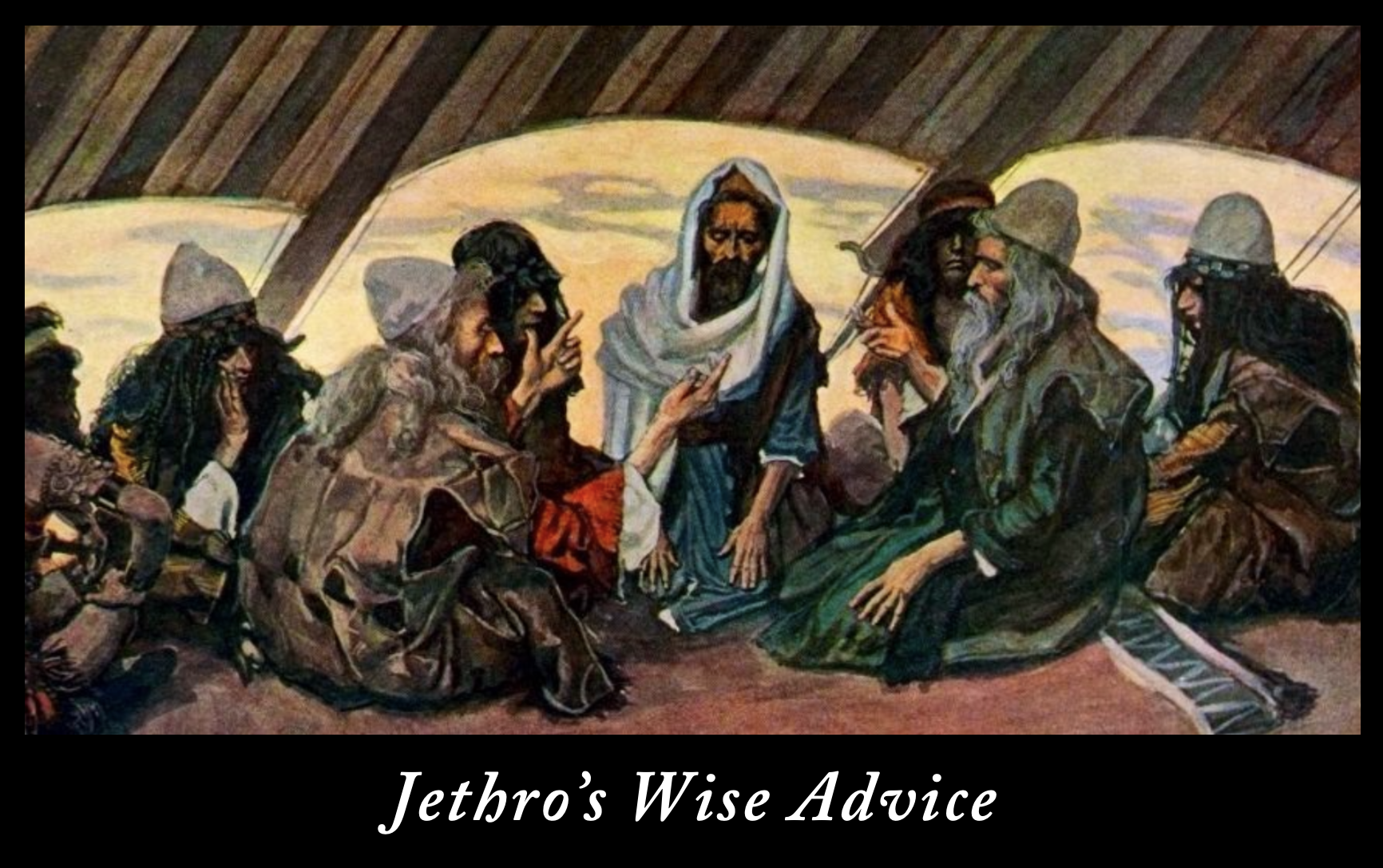
Jethro’s Wise Advice

In Exodus 18, Moses has led the people of Israel out of Egypt. He has shown God’s power through the plagues on Pharaoh and the Egyptians, and through him, God has revealed His supremacy over the pantheon of Egyptian gods. Now, Moses is leading the nomadic nation of Israel through the wilderness.

Moses receives a visit from Jethro, his father-in-law, and tells him of all the amazing things that the LORD has done. Jethro is amazed, rejoicing over the kindness that God had shown to the Israelites, and praising His name: “Now I know that the LORD is greater than all gods” (Exodus 18.11).

The next day, Jethro witnesses Moses serving as a judge among the people: from morning to evening, people come before Moses bringing disputes before him, seeking a judgment or resolution. Jethro is troubled by this:

But Moses’ father-in-law said to him, “The thing you are doing is not right; you will surely wear yourself out, and these people as well. For the task is too heavy for you; you cannot do it alone. Now listen to me. I will give you counsel, and God be with you! You represent the people before God: you bring the disputes before God, and enjoin upon them the laws and the teachings, and make known to them the way they are to go and the practices they are to follow. You shall also seek out from among all the people capable men who fear God, trustworthy men who spurn ill-gotten gain. Set these over them as chiefs of thousands, hundreds, fifties, and tens, and let them judge the people at all times. Have them bring every major dispute to you, but let them decide every minor dispute themselves. Make it easier for yourself by letting them share the burden with you. If you do this—and God so commands you—you will be able to bear up; and all these people too will go home unwearied.”

Moses heeded his father-in-law and did just as he had said. Moses chose capable men out of all Israel, and appointed them heads over the people—chiefs of thousands, hundreds, fifties, and tens; and they judged the people at all times: the difficult matters they would bring to Moses, and all the minor matters they would decide themselves. Then Moses bade his father-in-law farewell, and he went his way to his own land.

(Exodus 18.17-27)

Jethro’s counsel reflects the wisdom and experience of an older man. Moses is certainly a capable leader, but trying to adjudicate every dispute himself is unsustainable and will ultimately result in burnout. Instead, Jethro suggests, Moses needs to assemble a team of others who can help share the load of handling these matters. Moses himself will continue on as a sort of Supreme Court to handle the most important cases, while others can handle the vast majority of easier and less significant disputes.

In addition to being wise advice that any successful leadership guru would approve of, this also reflects the practice of Jesus and the designed structure of His church:

  • Although Jesus is, ultimately, the Judge of the world, He did not take it upon Himself to try to sort out every dispute (Luke 12.14).
  • Jesus spent the bulk of His ministry not just doing everything Himself, but training the Twelve so that they could lead after Him.
  • The leadership of the church is not entrusted to one person: instead, there are apostles, prophets, evangelists, shepherds, and teachers who share in that work (Ephesians 4.11ff). Furthermore, the church is the Body of Christ, and all members of the body have important roles to play (Romans 12).
  • In discussions of Elders and Deacons (1 Timothy 3; Titus 1), there is never the hint of one person filling these roles, but always on a plurality or group of individuals.

Indeed, the basic advice of Jethro for Moses to “share the burden” with others (Exodus 18.22), reflects these same realities, as we are instructed to cast our burdens upon God (1 Peter 5.7), and for brothers and sisters in Christ to mutually share their burdens because doing so fulfills the law of Christ (Galatians 6.2). In other words, this is more than good advice: it is very much God’s design and will.

All of us have a variety of burdens in life—responsibilities, struggles, challenges, etc.—but God does not intend that we carry these burdens alone. Listen to Jethro: share the burden.

All of us have a variety of burdens in life—responsibilities, struggles, challenges, etc.—but God does not intend that we carry these burdens alone. Share on X
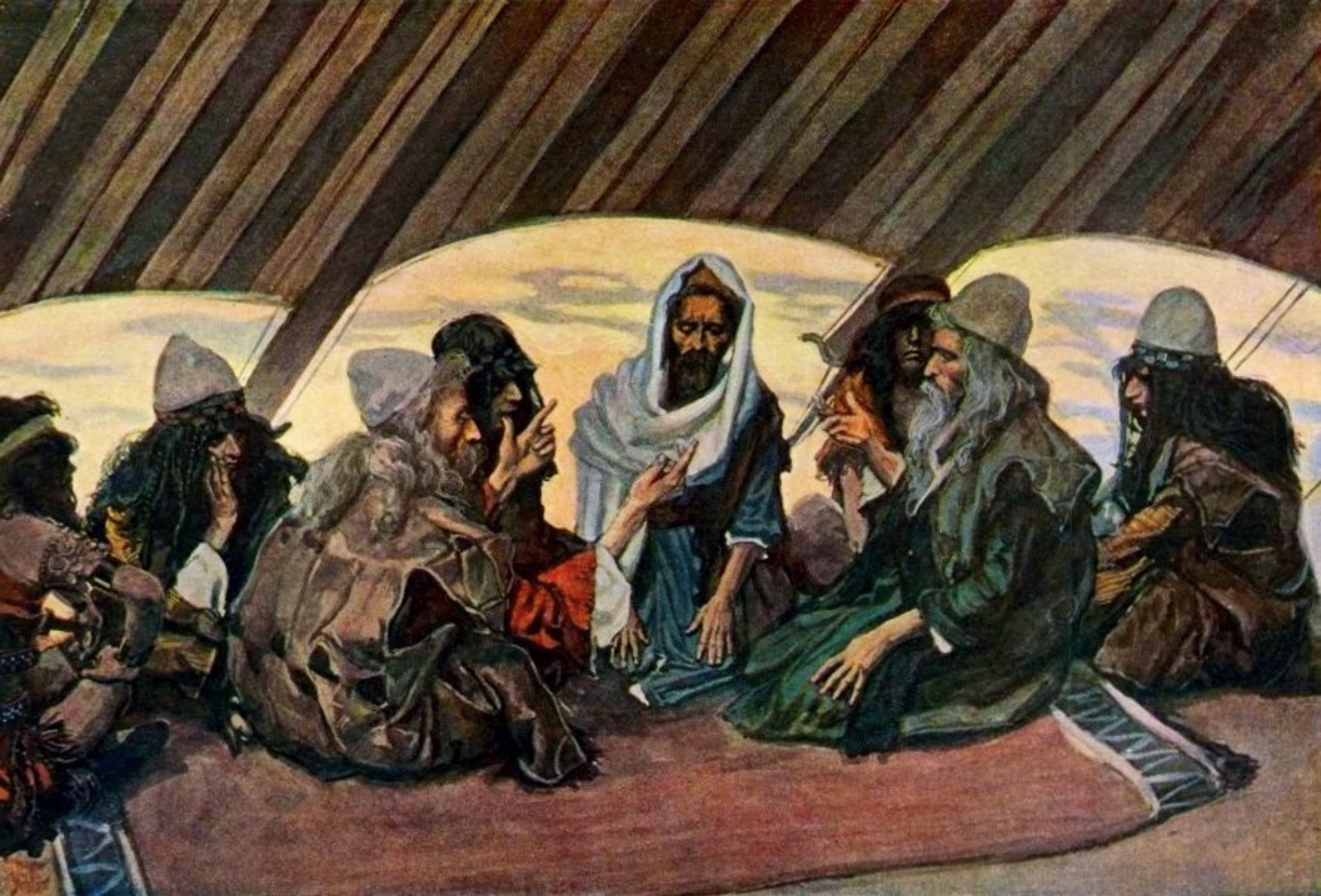
Jethro and Moses, watercolor circa 1900 by James Tissot


In this loose series of Scripture Reflections, I am sharing brief thoughts spurred on by my Bible reading this year. By way of reminder, my goal for these brief posts is two-fold:

(1) To remark on aspects of the biblical text that I find to be of interest that the reader may or may not have thought about previously.

(2) When possible, to point ahead to the work and person of Jesus Christ. I believe the Bible is a unified story that points to Jesus, which means that He is frequently alluded to or foreshadowed in some way throughout the biblical canon.
Book Review: In the Name of Jesus

Last month I posted my reading list for 2013, and in the comment section an old college friend recommended In The Name of Jesus: Reflections on Christian Leadership by Henri Nouwen. I was interested, because (a) it was on leadership, and (b) Nouwen, a Catholic priest, was a well-known writer whom I had never read before.

Furthermore, I was interested to read what he had to say because of what I assumed would be an interesting perspective. Nouwen was a respected professor at Notre Dame, Yale, and Harvard, but he chose to leave that behind to live and work with developmentally disabled people.

And I was correct—he did have an interesting perspective. In the Name of Jesus offers some radical views on Christian leadership, and by that, I mean that it takes seriously the things that Jesus says in Scripture.

Here are some quotations [my comments in brackets]:

“I am deeply convinced that the Christian leader of the future is called to be completely irrelevant and to stand in this world with nothing to offer but his or her own vulnerable self. That is the way Jesus came to reveal God’s love. The great message that we have to carry, as ministers of God’s word and followers of Jesus, is that God loves us not because of what we do or accomplish, but because God has created and redeemed us in love and has chosen us to proclaim that love as the true source of all human life.” (p. 18) [The message of irrelevance is hard to hear in our success-driven society. But to the degree that we emphasize and prop up our successes, how much do we alienate ourselves from the downtrodden who are most in need of God’s Good News?]

“Indeed, whenever we minister together, it is easier for people to recognize that we do not come in our own name, but in the name of the Lord Jesus who sent us.” (p. 36)

“We are not the healers, we are not the reconcilers, we are not the givers of life. We are sinful, broken, vulnerable people who need as much care as anyone we care for. The mystery of ministry is that we have been chosen to make our own limited and very conditional love the gateway for the unlimited and unconditional love of God.” (p. 37) [I love that—“the mystery of ministry.” As someone who is very aware of my own faults, I have certainly been struck by that irony before.]

“The way of the Christian leader is not the way of upward mobility in which our world has invested so much, but the way of downward mobility ending on the cross.” (p. 50) [Wow. Gut check.]

“Powerlessness and humility in the spiritual life do not refer to people who have no spine and who let everyone else make decisions for them. They refer to people who are so deeply in love with Jesus that they are ready to follow him wherever he guides them, always trusting that, with him, they will find life and find it abundantly.” (p. 50) [This is a helpful perspective: the Christian is not called to be listless or apathetic, but so trusting in God that we can appear to be unconcerned at times.]

“The task of future Christian leaders is not to make a little contribution to the solution of the pains and tribulations of their time, but to identify and announce the ways in which Jesus is leading God’s people out of slavery, through the desert to a new land of freedom.” (p. 54)

This was an easy read (only about 80 pages including a delightful personal story that was woven throughout the book), but it was also very challenging. There are a lot of leadership books out there, but not many of them follow the model of our Leader, who emptied Himself and became lowly on our behalf.

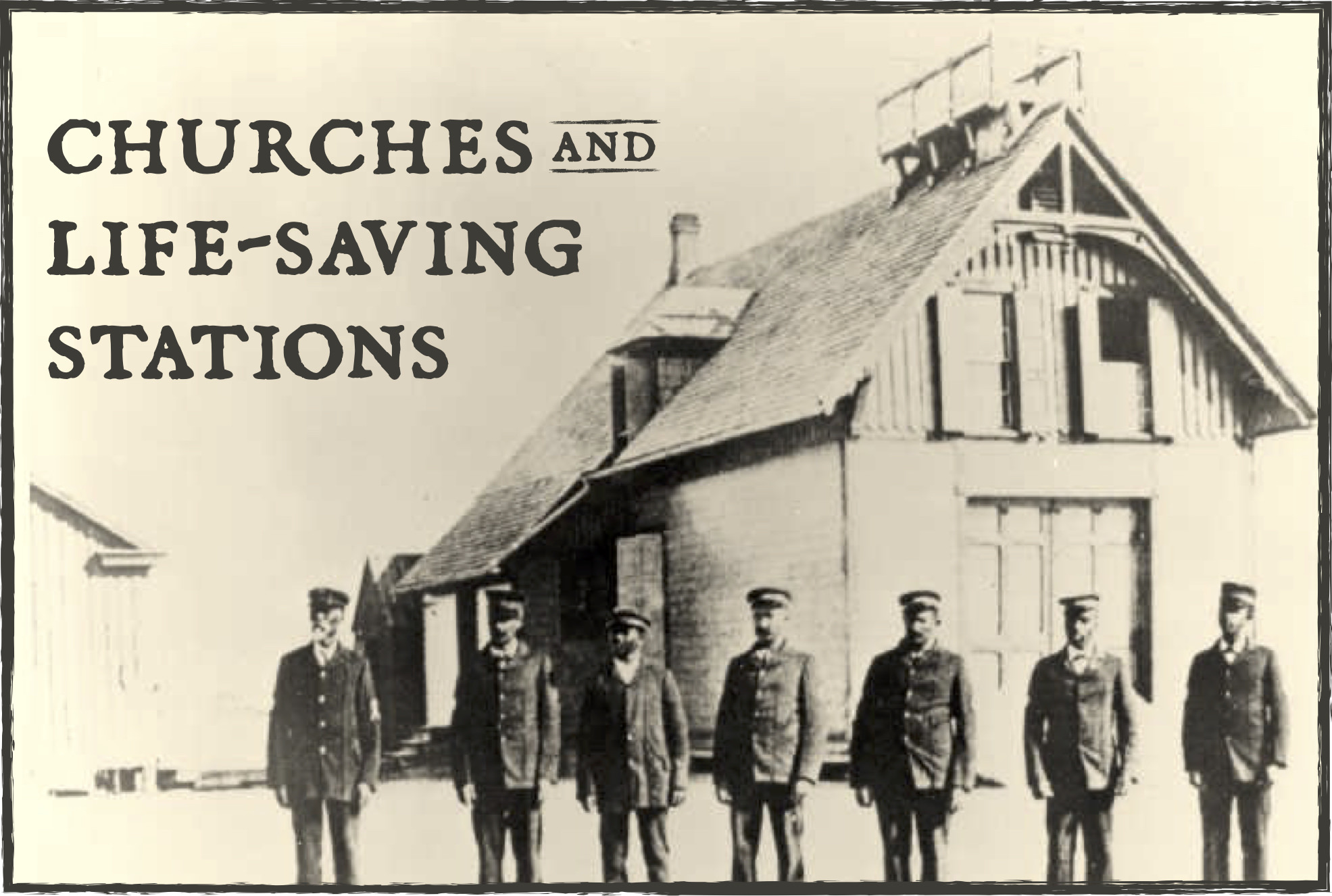
Churches and Lifesaving Stations

A cautionary parable from Managing the Congregation: Building Effective Systems to Serve People, by Norman Shawchuck and Roger Heuser, pp. 78-79:

On a dangerous seacoast where shipwrecks often occur there was once a crude little lifesaving station. The building was just a hut, and there was only one boat, but the few devoted members kept a constant watch over the sea, and with no thought of themselves went out day and night tirelessly searching for the lost. Many lives were saved by this wonderful little station, so that it became famous. Some of those who were saved, and various others in the surrounding area, wanted to become associated with the station and give of their time and money and effort for the support of its work. New boats were bought and new crews trained. The little lifesaving station grew.

Some of the members of the lifesaving station were unhappy that the building was so crude and poorly equipped. They felt that a more comfortable place should be provided as the first refuge of those saved from the sea. So they replaced the emergency cots with beds and put better furniture in the enlarged building. Now the lifesaving station became a popular gathering place for its members, and they decorated it beautifully and furnished it exquisitely, because they used it as a sort of club. Fewer members were now interested in going to sea on lifesaving missions, so they hired lifeboat crews to do this work. The lifesaving motif still prevailed in this club’s decorations, and there was a liturgical lifeboat in the room where the club initiations were held. About this time a large ship was wrecked off the coast, and the hired crews brought in boatloads of cold, wet, and half-drowned people. They were dirty and sick, and some of them had black skin and some had yellow skin. The beautiful new club was in chaos. So the property committee immediately had a shower house built outside the club where victims of shipwreck could be cleaned up before coming inside.

At the next meeting, there was a split in the club membership. Most of the members wanted to stop the club’s lifesaving activities as being unpleasant and a hindrance to the normal social life of the club. Some members insisted upon lifesaving as their primary purpose and pointed out that they were still called a lifesaving station. But they were finally voted down and told that if they wanted to save the lives of all the various kinds of people who were shipwrecked in those waters, they could begin their own lifesaving stations down the coast. They did.

As the years went by, the new station experienced the same changes that had occurred in the old. It evolved into a club, and yet another lifesaving station was founded. History continued to repeat itself, and if you visit that seacoast today, you will find a number of exclusive clubs along that shore. Shipwrecks are frequent in those waters, but most of the people drown!

Churches would do well to consider what happens when they lose their sense of purpose. Without a purpose and reason for existence, churches become nothing more than social clubs.

Friday Summary Report, September 7

I don’t have anything too exciting to report on this Friday morning, but here are some interesting/good/important links from around the worldwide web:

  1. First, a story from Louisiana, where, in the aftermath of Hurricane Isaac, a father and son teamed up to rescue 120 people over a 12-hour period with boats. Jesse Shaffer, the father, insisted that he and his son are not heroes, but their neighbors would disagree. A great story, and a glimpse of what Jesus meant by “Love thy neighbor.”
  2. Here’s a cool story (with picture) about Clemson wide receiver DeAndre Hopkins getting baptized after football practice.
  3. The last couple of weeks have been dominated by politics, with both the Republican and Democratic National Conventions taking place. I am not a fan of politics, in large part because it takes place in some weird twilight zone where the truth neither matters nor is really expected. I heard a ton of people raving about President Clinton’s speech, but was it accurate? Similar articles could probably be (and probably have been) written about every other speech that was given at either convention.
  4. Matt Dabbs wrote a really good blog post on the heinousness of abortion. The fact that abortion has been relegated to the political arena and has been turned into a mere talking point by both parties shows how warped and skewed our society has become. I mentioned this in the comments section of the blog I linked to above, but I’ll repeat it here: I am convinced that the legalized genocide against our own unborn is the greatest evil of our society. It is all too often discounted as ‘just another political issue’, but it far transcends politics. I sometimes wonder how long a nation that shows such little value for life will be allowed to continue.
  5. For those who are involved in youth ministry, here is a great post with some very practical suggestions for ways to get your students involved as leaders within your youth group. As Joseph points out, student leadership doesn’t have to be part of some big, elaborate, complicated program.

© 2026 The Doc File

Theme by Anders Noren — Up ↑