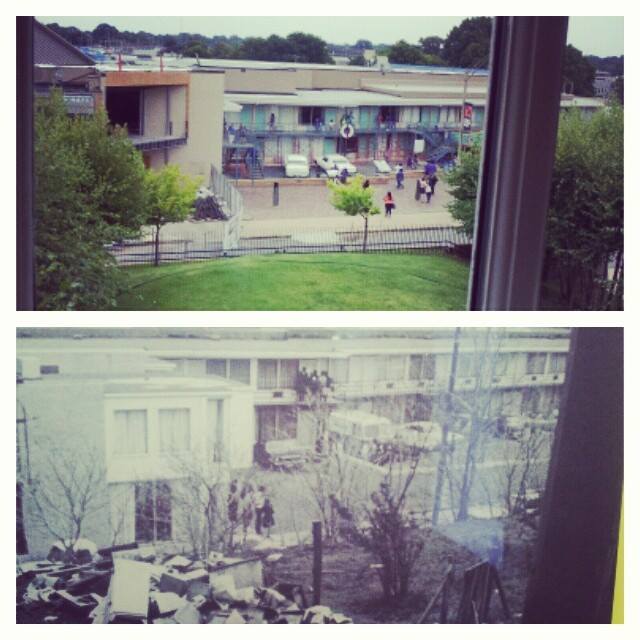
With today being Martin Luther King Jr. day, I thought it would be an appropriate time to post a review of one of the last (and best) books I read last year: A Call to Conscience: The Landmark Speeches of Dr. Martin Luther King, Jr., edited by Clayborne Carson and Kris Shepard. The book is a product of the King Papers Project, which seeks to share information about King’s life and ideas.
Of course, King is an iconic figure in our society, but like many Americans, I have probably been guilty of assuming that I know him better than I do, when really, I have just heard the “I Have a Dream” speech several times, read lots of quotations from him, and learned about him in school. This book, which provides the transcripts of eleven of his most significant speeches, represents the beginning of an effort on my part to better understand the life and thinking of this profoundly important and complex character.
One of the things that I liked about reading King’s speeches firsthand is that it reminded me that he was, first and foremost, a preacher. His speeches possess the rhythm and cadence of well-crafted sermons, and are saturated with biblical allusions and the prophetic call for justice. King’s speeches feature not only beautiful eloquence but profound theological insight.
Here are some of my favorite quotations; I will include the page numbers from the book, as well as the speech from which the quotations came (and I omitted any quotes from I Have a Dream; I figured they would be familiar already):
“And certainly, certainly, this is the glory of America, with all of its faults. This is the glory of our democracy. If we were incarcerated behind the iron curtains of a Communistic nation we couldn’t do this. If we were dropped in the dungeon of a totalitarian regime we couldn’t do this. But the greatest glory of American democracy is the right to protest for right.” (9, Address to the First Montgomery Improvement Association (MIA) Mass Meeting)
“The aftermath of nonviolence is the creation of the beloved community. The aftermath of nonviolence is redemption. The aftermath of nonviolence is reconciliation. The aftermath of violence are emptiness and bitterness. This is the thing I’m concerned about. Let us fight passionately and unrelentingly for the goals of justice and peace. But let’s be sure that our hands are clean in this struggle. Let us never fight with falsehood and violence and hate and malice, but always fight with love, so that, when the day comes that the walls of segregation have completely crumbled in Montgomery, that we will be able to live with people as their brothers and sisters. Oh, my friend, our aim must not be to defeat Mr. Engelhardt, not to defeat Mr. Sellers and Mr. Gayle and Mr. Parks. Our aim must be to defeat the evil that’s in them.” (32-33, The Birth of a New Nation)
“And this is the peace that we are seeking: not an old negative obnoxious peace which is merely the absence of tension, but a positive, lasting peace, which is the presence of brotherhood and justice. And it is never brought about without this temporary period of tension.” (35, The Birth of a New Nation)
“There is something in our Christian faith, at the center of it, which says to us that Good Friday may occupy the throne for a day, but ultimately it must give way to the triumphant beat of the drums of Easter.” (54, Give Us the Ballot)
“For nonviolence not only calls upon its adherents to avoid external physical violence, but it calls upon them to avoid internal violence of spirit. It calls on them to engage in that something called love. And I know it is difficult sometimes. When I say “love” at this point, I’m not talking about an affection emotion. It’s nonsense to urge people, oppressed people, to love their oppressors in an affectionate sense. I’m talking about something much deeper. I’m talking about a sort of understanding, creative, redemptive goodwill for all men.” (67, Freedom Rally in Cobo Hall)
“I believe that unarmed truth and unconditional love will have the final word in reality. This is why right, temporarily defeated, is stronger than evil triumphant.” (107, Nobel Prize Acceptance Speech)
“And so I plead with you this afternoon as we go on ahead: remain committed to nonviolence. Our aim must never be to defeat or humiliate the white man but to win his friendship and understanding. We must come to see that the end we seek is a society of peace with itself, a society that can live with its conscience. And that will be a day not of the white man, not of the black man. That will be the day of man as man.” (130, Selma to Montgomery March).
“What is needed is a realization that power without love is reckless and abusive, and that love without power is sentimental and anemic…it is precisely this collision of immoral power with powerless morality which constitutes the major crisis of our times.” (186-87, Where Do We Go From Here?)
“And the other thing is, I’m concerned about a better world. I’m concerned about justice; I’m concerned about brotherhood. I’m concerned about truth. And when one is concerned about that, he can never advocate violence. For through violence you may murder a murderer, but you can‘t murder murder. Through violence you may murder a liar, but you can’t establish truth. Through violence you may murder a hater, but you can’t murder hate through violence. Darkness cannot put out darkness; only light can do that.
And I say to you, I have also decided to stick with love, for I know that love is ultimately the only answer to mankind’s problems. And I’m going to talk about it everywhere I go. I know it isn’t popular to talk about it in some circles today. And I’m not talking about emotional bosh when I talk about love; I’m talking about a strong, demanding love. For I have seen too much hate. I’ve seen too much hate on the faces of sheriffs in the South. I’ve seen hate on the faces of too many Klansmen and too many White Citizens’ Councilors in the South to want to hate, myself, because every time I see it, I know that it does something to their faces and their personalities, and I say to myself that hate is too great a burden to bear. I have decided to love.” (191-92, Where Do We Go From Here?)
I know I shared a lot of quotations here, but really, it is only a taste: this is a rich collection of great thoughts from one of our nation’s most influential leaders.
For my reviews in 2019, I want to begin the practice of ending each one by giving a recommendation as to whether or not I think the book in question is one that I think others should check out. In the case of A Call to Conscience, I found it to be an emotional and profound read, and my verdict is an easy one: read it.
 Every year, one of the high points for our youth group is a summer trip. Generally, we combine some type of service project with some fun activities. This year, we went to Morrilton, Arkansas, and Memphis, Tennessee.