The online journal of Luke Dockery

Tag: Moses (Page 1 of 2)

“God Saw the People of Israel—and God Knew”

The early chapters of Exodus recount a dark period in the history of Israel.

Abraham’s descendants had arrived in Egypt through the influence of Joseph, who from his high position as Pharaoh’s right-hand man, had provided for the survival of his family (and many others) during a time of famine. Joseph’s brothers and their families stayed in Egypt, and grew and multiplied over time.

That was at the end of Genesis, but now, at the beginning of Exodus, a lot of time has passed and a new Pharaoh has come to power who doesn’t know Joseph or care about his family or descendants. This new Pharaoh is only concerned about the size and vigor of the Israelites, and so he decides to enslave them and force them into harsh labor. Even worse, he commands that Hebrew baby boys shouldn’t be allowed to live.

In Exodus 2, we have the famous story of the birth of Moses, and also the story of Moses killing an Egyptian when he grows up and then fleeing to the wilderness.

It is in this context that there is a brief note at the end of Exodus 2, as people find their servitude to be unbearable and, as a result, cry out to God:

During those many days the king of Egypt died, and the people of Israel groaned because of their slavery and cried out for help. Their cry for rescue from slavery came up to God. And God heard their groaning, and God remembered his covenant with Abraham, with Isaac, and with Jacob. God saw the people of Israel—and God knew.

(Exodus 2.23-25)

This is easy to overlook, but so powerful—the people cry out to God, and God hears their cry. He sees their suffering and is aware of what is going on. God saw the people of Israel—and God knew.

Of course, God responds to their problem by raising Moses to be his people’s great liberator. This plan would take time to develop, as we know that Moses spent 40 years in the wilderness before returning to Egypt, but the plan was in motion, and Moses would lead the Israelites from slavery to freedom. God saw the people of Israel—and God knew.

But, if you continue in the story of God’s people as told in the Hebrew Bible, you know that this is hardly the end of the people’s problems. There would be many more times in which the people would cry out to God and God would respond. The response wouldn’t always come in the way or the timeframe that the people expected, but God saw the people of Israel—and God knew.

Ultimately, though, we see this truth played out in the person of Jesus.

For generations, God’s people groaned under the burden of the consequences of their sinfulness: captivity in foreign lands, a lackluster return to their promised land, a temple and a nation that was a shell of their former glory, a persistent vulnerability to the pull of sin, and a desperate need for the Davidic descendant, the Messianic king for whom they had waited so long.

Deeply aware of humanity’s slavery to sin, in His own time and in His own way, God responded: the Son put on flesh and lived as a human. Through the incarnation of Jesus, God saw—and God knew in a new and special way, through His own experience of the human condition (Hebrews 4.15). While identifying with our human frailties, Jesus was different in that He lived without sin. He died to release us from our own captivity to sin, and was vindicated by the Father in His resurrection.

But there is more!

Before His crucifixion, Jesus told His disciples that He would be leaving, but that when He did, a Helper would come—God’s Holy Spirit—who would be with them (John 15). The Holy Spirit indwells followers of Jesus and, indeed, helps us in many ways. One of those ways is in our own communication with God:

Likewise the Spirit helps us in our weakness. For we do not know what to pray for as we ought, but the Spirit himself intercedes for us with groanings too deep for words.

(Romans 8.26)

Did you catch that? As we struggle through this life and our ongoing battle with sin, we are at times at a loss for what to pray. But the Spirit Himself intercedes for us with groanings too deep for words. The Israelites groaned to God for help; now, through the power of the Spirit, we don’t just groan to God, God groans in us…to Himself!

The Israelites groaned to God for help; now, through the power of the Spirit, we don’t just groan TO God, God groans IN us…TO Himself! Share on X

But still, there is more!

While we are assured that Jesus has defeated Satan, sin, and death, and the presence of the Spirit in our live serves as a down payment on our salvation, we continue to live in a broken world where there is still much about which we may rightly cry out to God. Against that reality, the promise of Scripture and the source of Christian hope is that Jesus will return one day, the cosmos will be redeemed, and every tear will be wiped from the eyes of God’s people.

The timeline may be different from what we expect, so we wait…and wait. But we can be confident, because God saw—and God knew.


In this loose series of Scripture Reflections, I am sharing brief thoughts spurred on by my Bible reading. By way of reminder, my goal for these brief posts is two-fold:

(1) To remark on aspects of the biblical text that I find to be of interest that the reader may or may not have thought about previously.

(2) When possible, to point to the work and person of Jesus Christ. I believe the Bible is a unified story that points to Jesus, which means that He is frequently alluded to or foreshadowed in some way throughout the biblical canon.


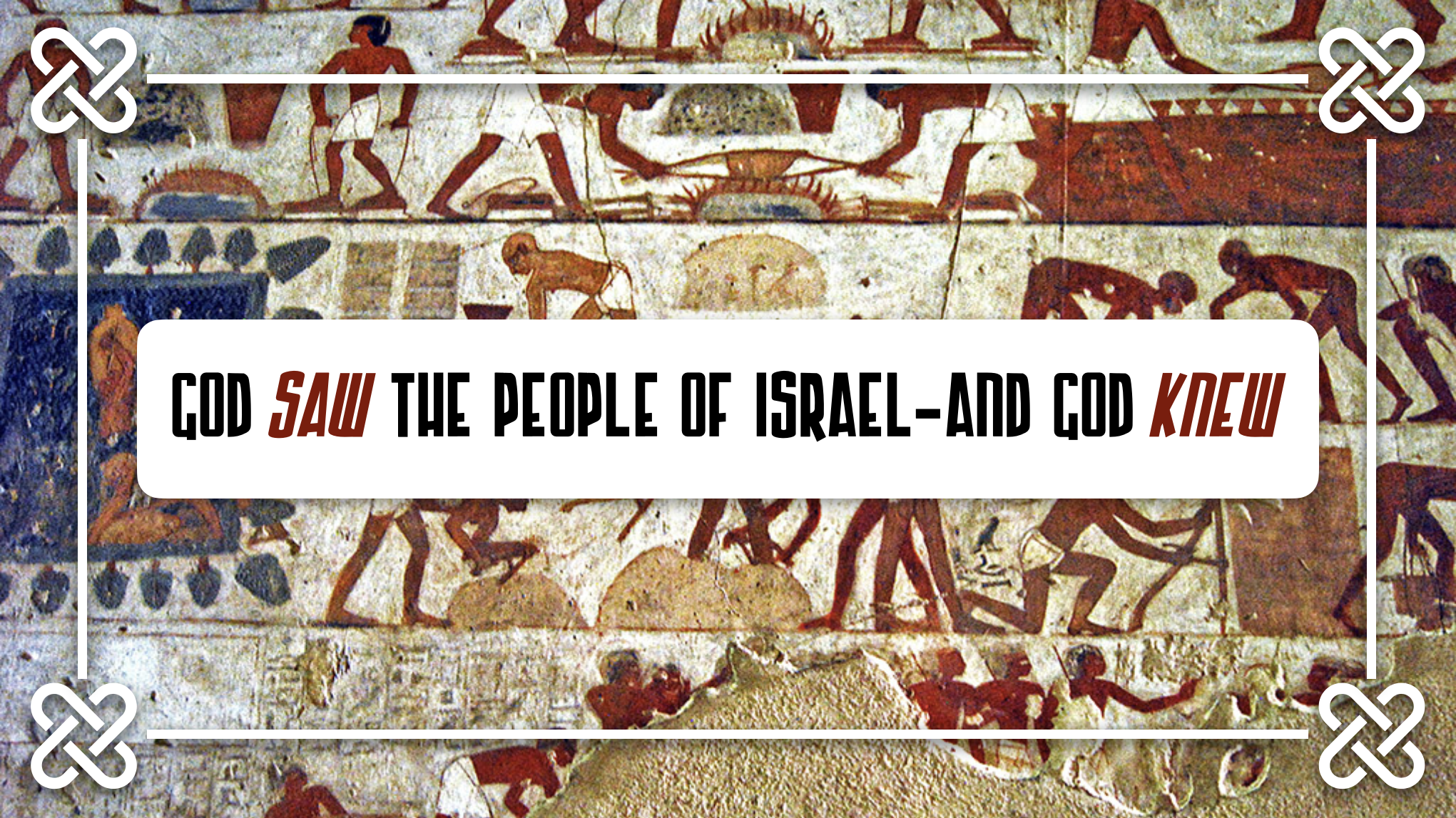
Photo Credit for the image above goes to Ferrell Jenkins. The image comes from the tomb of Vizier Rekhmire (ca. 1470-1445 BC), and depicts a brickmaking and building scene featuring slaves from the rough period of Israelite bondage in Egypt.

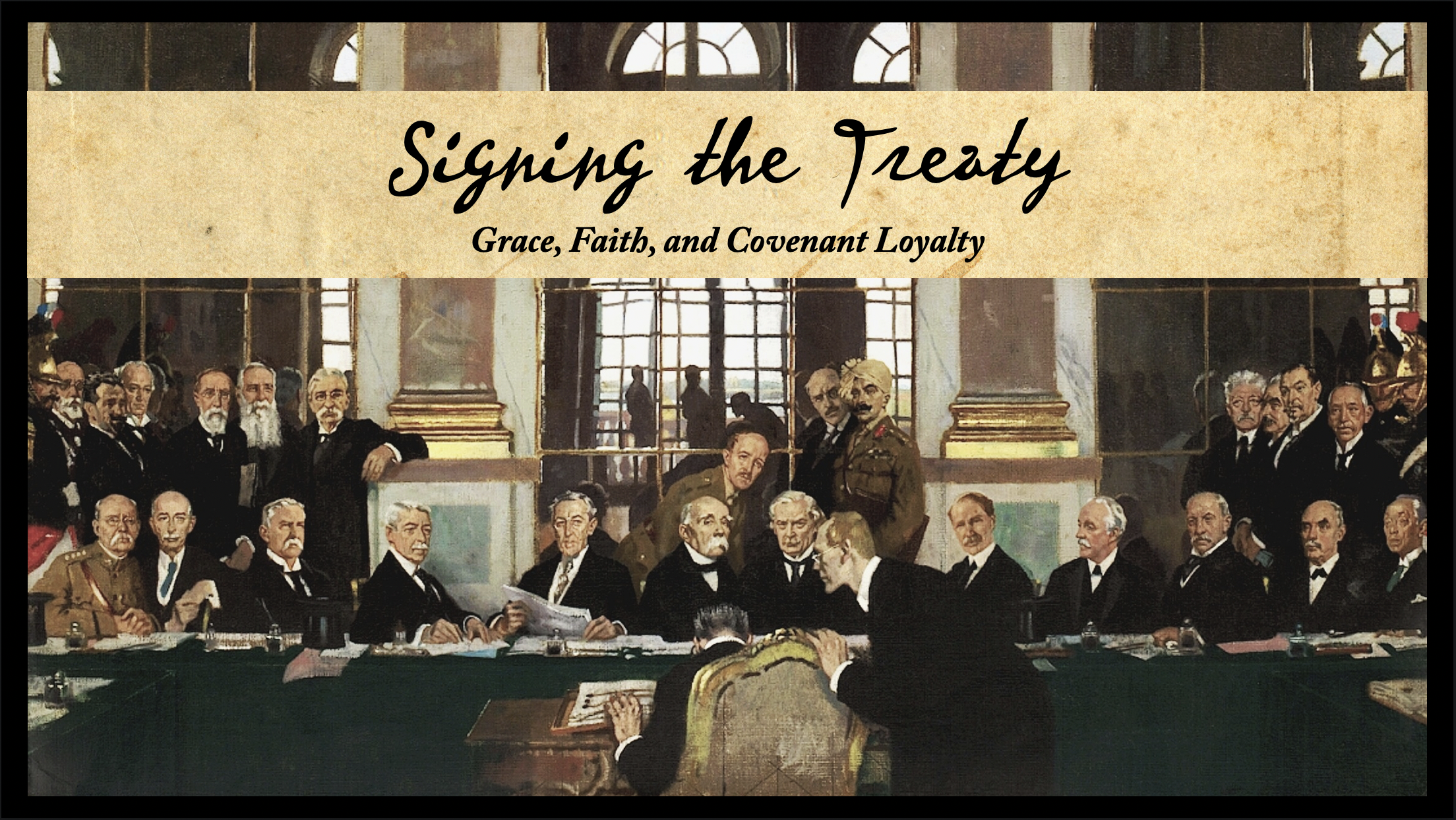
Signing the Treaty: Grace, Faith, and Covenant Loyalty

Introduction

Conflict and disagreement are inevitable consequences of humans being in close contact with one another, and a result of that is that we have developed a variety of ways to “make up” after we have had some sort of quarrel or falling out.

Occasionally, I’ll get into some sort of fight with my seven-year old son. Sometimes, this is because he is in trouble for something; sometimes, it is because he is in trouble but I am also in trouble because I haven’t handled the situation well because I have lost my temper or spoken to him too sharply. And we’ll say sorry, but it’s still a little tense…and then I’ll ask him, “Do you want to go play Legos?” We run upstairs, play Legos together, and make amends in the process.

After European settlers began to spend time with Native Americans, they became aware of the practice of “burying the hatchet,” where warring indigenous groups would literally put away or bury their weapons as an indication of peace. “Bury the hatchet” remains an English idiom that means “to make peace.”[1] We also have the expression “kiss and make up,” which conveys a similar sort of idea. I’ve never actually seen little kids told or forced to kiss each other, but I’ve absolutely seen kids told to hug each other or shake hands after a fight.

In his classic book, Peace Child, missionary Don Richardson shares a make-up custom from remote New Guinea. When neighboring villages were at war, the way to guarantee peace was through the “peace child”. The different villages would swap infants and raise them as their own. As long as these adopted children were taken care of, the peace between the two villages was secure.[2]

All of these different examples of making up after a fight or disagreement are, in a loose sense, a form of peace treaty, or we might even say “covenant.” These two words, broadly defined, are actually synonyms: a treaty or a covenant is an agreement between two parties, where each party commits to certain things. 

I want to look at some different examples of covenants or treaties throughout history, to help us better understand the way that God approaches us relationally, and how He expects us to respond.


Suzerain/Vassal Treaties

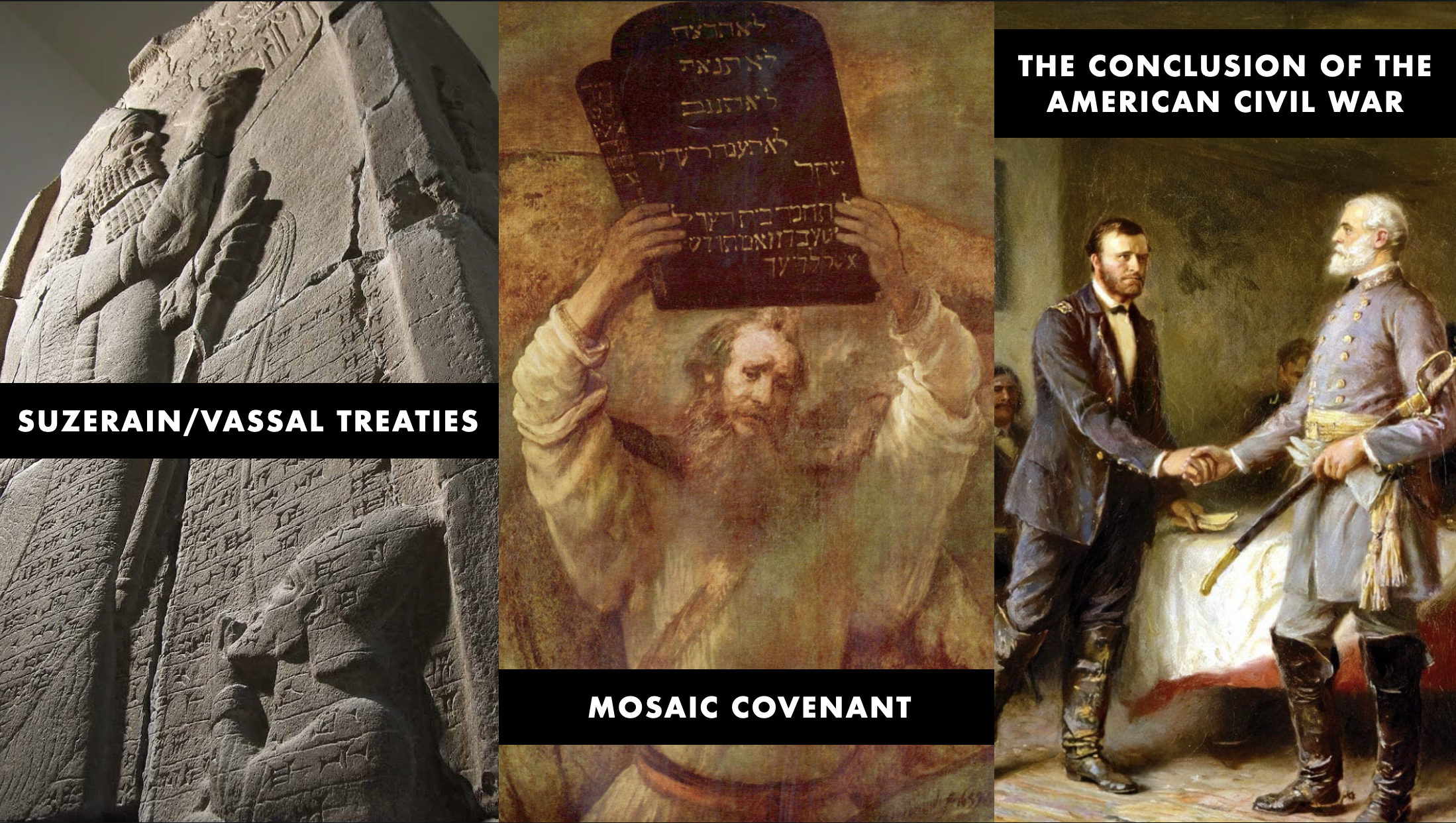
The first type of treaty comes from the Ancient Near East, in the Hittite Empire (modern day Turkey), and is called a Suzerain/Vassal treaty.[3] Basically, this is a treaty or covenant between unequal partners: you have a stronger king or nation (the Suzerain) that would establish a covenant or treaty with a weaker king or nation (the Vassal). 

Each party would have certain requirements they had to keep in order to remain faithful to the treaty:

  • The two parties would keep their own national borders and remain separate nations, but would become military allies. One would come to the aid of the other when needed. Specifically, since the suzerain was more powerful, this provided great security and military protection for the vassal state.
  • In return, the vassal owed the suzerain financial tribute and loyalty—vassals could only have one suzerain (ancient records reveal that the suzerain was often referred to as “lord” or “father”). For a vassal to take another suzerain would be treasonous.
  • Suzerains, on the other hand, would often have treaties with multiple vassals; if one vassal had an issue with another, they would bring it to the suzerain to resolve (This is similar to what happens when a brother and sister are having a fight; they complain to Mom and Dad in hopes of a resolution.).

Mosaic Covenant

Many people have never heard of a Suzerain/Vassal Treaty before, but are likely familiar with one if they have spent much time reading the Hebrew Bible/Old Testament: The Mosaic Covenant or the Law of Moses.

Basically, after Yahweh, the God of Abraham, Isaac, and Jacob calls Moses from the burning bush and rescues the Israelites out of Egypt (10 Plagues, Parting of the Red Sea, etc.), He calls Moses up to Mount Sinai in order to establish a covenant with the Israelites: He will be their God, and they will be His people.

And the way He structures the covenant closely matches as Suzerain/Vassal Treaty. This is not surprising—God comes near to humans in ways that we can understand (indeed, that is what the incarnation of Jesus is about!), and so it makes sense that when God wanted to establish a relationship with the nation of Israel, He does so in a way that they understood: as the much more powerful party (the Suzerain) He makes an agreement with them in a way that would be familiar to them:

  • The covenant begins by introducing Yahweh as the suzerain: “I am Yahweh your God.” He then reminds them of their previous relationship, how He had rescued them from slavery in Egypt.
  • Then, there are the requirements for the covenant—what it means for Yahweh to be their God and for Israel to be His people.
  • There are provisions made for keeping the record of the treaty safe and reading it regularly to remind people of their obligations.
  • Yahweh calls heaven and earth as witnesses to the covenant, and then there is an extensive list of blessings that will come from covenant faithfulness, and curses that will come if the people are unfaithful.

All of these are classic characteristics of suzerain/vassal treaties.

In rescuing Israel from Egypt and “signing a treaty” with them, Yahweh proclaimed Himself as their Lord and Father, and He required their loyalty in return. Yahweh would protect them and give them land, and in return, they were required to be loyal and obedient to Him. This meant that they would worship no other gods, and also that they would act in certain ways to demonstrate their loyalty and obedience to Him (for example, by loving their neighbors and taking care of the poor in their midst).

God offered this covenant out of His grace—He was the powerful party and had no obligation, but chose to offer a treaty. The loyal obedience of the people was required in response to the treaty. 

The Conclusion of the American Civil War

The American Civil War, fought between 1861-1865, was awful. It was a bloody four-year conflict that claimed the lives of over 600,000 Americans, more than any other war. It was a war that divided the United States and pitted former countrymen against one another; states, towns, and even families were sometimes divided. 

Even though it ended over 150 years ago, it is a conflict that left deep wounds and long scars, some of which have still not fully healed. 

Interestingly, at the end of that conflict, there was no peace treaty that was signed, but there was a formal cessation of hostilities when General Robert E. Lee of the Army of Northern Virginia surrendered to General U.S. Grant, the commander of the Union Army at Appomattox, Courthouse on April 9, 1865.

There were still some similarities to treaties we have talked about, however:

  • There was clearly a stronger and a weaker party—at that point, the Union Army was considerably superior to the Confederate Army, which is what led to the surrender in the first place.
  • Also, certain provisions were granted to the surrendering soldiers: they were allowed to return home, to the land that they owned, and even allowed to keep their horses so they could use them to farm.
  • In return, though, the defeated Confederate soldiers had to be loyal to the suzerain nation: they had to vow not to take up arms against the Government of the United States. Later, before former Confederate soldiers were allowed to vote, they had to take oaths of loyalty to the United States.

Have You Signed Your Treaty?

So far, we have focused on trying to get a clear picture of what a treaty or covenant basically is, in order to set up this question: have you signed your treaty?

That may seem like a strange question, but consider:

(1) Scripture teaches—in multiple places—that in our sin, we are enemies of God:

21 Once you were alienated from God and were enemies in your minds because of your evil behavior.

(Colossians 1.21)

8 But God demonstrates his own love for us in this: While we were still sinners, Christ died for us. 9 Since we have now been justified by his blood, how much more shall we be saved from God’s wrath through him! 10 For if, while we were God’s enemies, we were reconciled to him through the death of his Son, how much more, having been reconciled, shall we be saved through his life!

(Romans 5.8-10)

1 What causes fights and quarrels among you? Don’t they come from your desires that battle within you? 2 You desire but do not have, so you kill. You covet but you cannot get what you want, so you quarrel and fight. You do not have because you do not ask God. 3 When you ask, you do not receive, because you ask with wrong motives, that you may spend what you get on your pleasures. 4 You adulterous people, don’t you know that friendship with the world means enmity against God? Therefore, anyone who chooses to be a friend of the world becomes an enemy of God.

(James 4.1-4)

The idea here is that our sin places us in opposition to God. In a sense, if we commit sin, that puts us at war with God. 

(2) But this is not what God wants: He wants peace and reconciliation, and in His grace, He offers us terms of peace…a treaty…a covenant. 

  • As in the suzerain/vassal treaty, our treaty with God is clearly not between two equal parties. God is far, far greater than we are. 
  • As in the suzerain/vassal treaty, God extends terms of peace to others as well: He wants all people to be saved and to be at peace with Him.
  • As in the suzerain/vassal treaty, God is our Lord and Father, but He must be the only one—it would be treasonous to have any other Lord.
  • As in the Mosaic covenant, God offers us peace based on what He has already done for us: while we were still sinners, Jesus died for us. God has already gone to great lengths to make peace possible. 
  • As in the Mosaic covenant, God offers the treaty to us based on His grace, not based on anything we have done. But once we have signed the treaty with Him and entered His covenant, He expects us to be faithful to the covenant.
  • As in the conclusion to the American Civil War, we must surrender; we must lay down our arms and cease being enemies of God. We must pledge our loyalty to Him.

(3) God offers us a covenant, a peace treaty, a way to have our sin removed and to no longer be His enemy, and instead to become His servant—loyal subjects of our Lord and Father, our Suzerain King. 

That covenant or peace treaty is offered in God’s grace and is made possible by the death of Jesus on the cross. And we respond to that offer of covenant, we sign the treaty with faith. Faith is a pretty common word, especially in church, but I have become convinced that the English word faith is not a very helpful word when it comes to translating the Greek word in our Bibles that often gets translated as “faith”. Usually when people hear the word “faith”, they either think of something like blind faith—wildly believing something based on little evidence, or they think of something that is exclusively or primarily going on inside your brain (like, mentally saying “yes” to something). In the Bible, however, the Greek word pistis/πιστις means something else: it’s more like fidelity, or loyalty, or faithfulness, or allegiance.[4]

Think in terms of other covenants we have discussed earlier, and how important loyalty and/or allegiance are—suzerain/vassal treaties, the Mosaic Covenant, the conclusion of the American Civil War—all of these require the act of loyalty. 

So, how do we respond to God’s offer of a peace treaty? With “faith”, where faith means allegiance. And that involves multiple aspects:

  • Certainly, allegiance involves mental assent. We do have to believe and understand some basic things about who God is and what He has done for us through Jesus.
  • Allegiance also involves a public proclamation of loyalty. Christians publicly proclaim our allegiance to Jesus by confessing Him as Lord, and are being baptized as an expression of that allegiance.
  • And allegiance also involves embodied loyalty, which just means that we must live out what we claim to believe. It’s not enough to just agree in your head that Jesus is Lord or to say it publicly; we have to live as loyal citizens of our King. Remember, we cannot have more than one Lord and King—if someone were to look at your life, would they see you as a loyal subject of King Jesus, or would they assume that you were a part of the kingdom of the world?

Conclusion

Here is a reminder of our situation: on our own, we are trapped by our own sin, and we are enemies of God. But that’s not what God wants, and He has gone to extraordinary lengths to make peace with us. Through the death and resurrection of the Son, God stands before us, offering an olive branch, a peace treaty…but it’s up to us to sign it:

  • Do you know and believe the Gospel? Do you believe that Jesus the king preexisted with the Father, took on human flesh, fulfilling God’s promises to David, died for sins in accordance with the Scriptures, was buried, was raised on the third day in accordance with the Scriptures, appeared to many, is seated at the right hand of God as Lord, and will come again to judge?
  • Have you publicly proclaimed your loyalty? Have you confessed Jesus as Lord and been baptized, having your sins washed away, and ending your enemy status?
  • Are you living out your loyalty every day, showing by the things that you do and (and don’t do!) who your Lord is, and where your loyalty lies?

God stands before us with an offer of peace, but we must accept it!


[1] See https://en.wikipedia.org/wiki/Burying_the_hatchet

[2] Don Richardson, Peace Child: An Unbelievable Story of Primitive Jungle Treachery (Glendale, CA: G/L Regal Books, 1974).

[3] See Russ Meek, “The Suzerain Vassal Treaty (Covenant) in the Old Testament”, https://russmeek.com/2020/10/the-suzerain-vassal-treaty-covenant-in-the-old-testament/; Brian Keith Hudson, “The Suzerain/Vassal Covenants”, https://www.ancient-hebrew.org/culture/suzerain-vassal-covenants.htm

[4] For more on “faith” as “allegiance” and the three-part response of mental assent, public proclamation, and embodied loyalty, see Matthew Bates, Salvation By Allegiance Alone: Rethinking Faith, Works, and the Gospel of Jesus the King (Grand Rapids: Baker Academic, 2017).

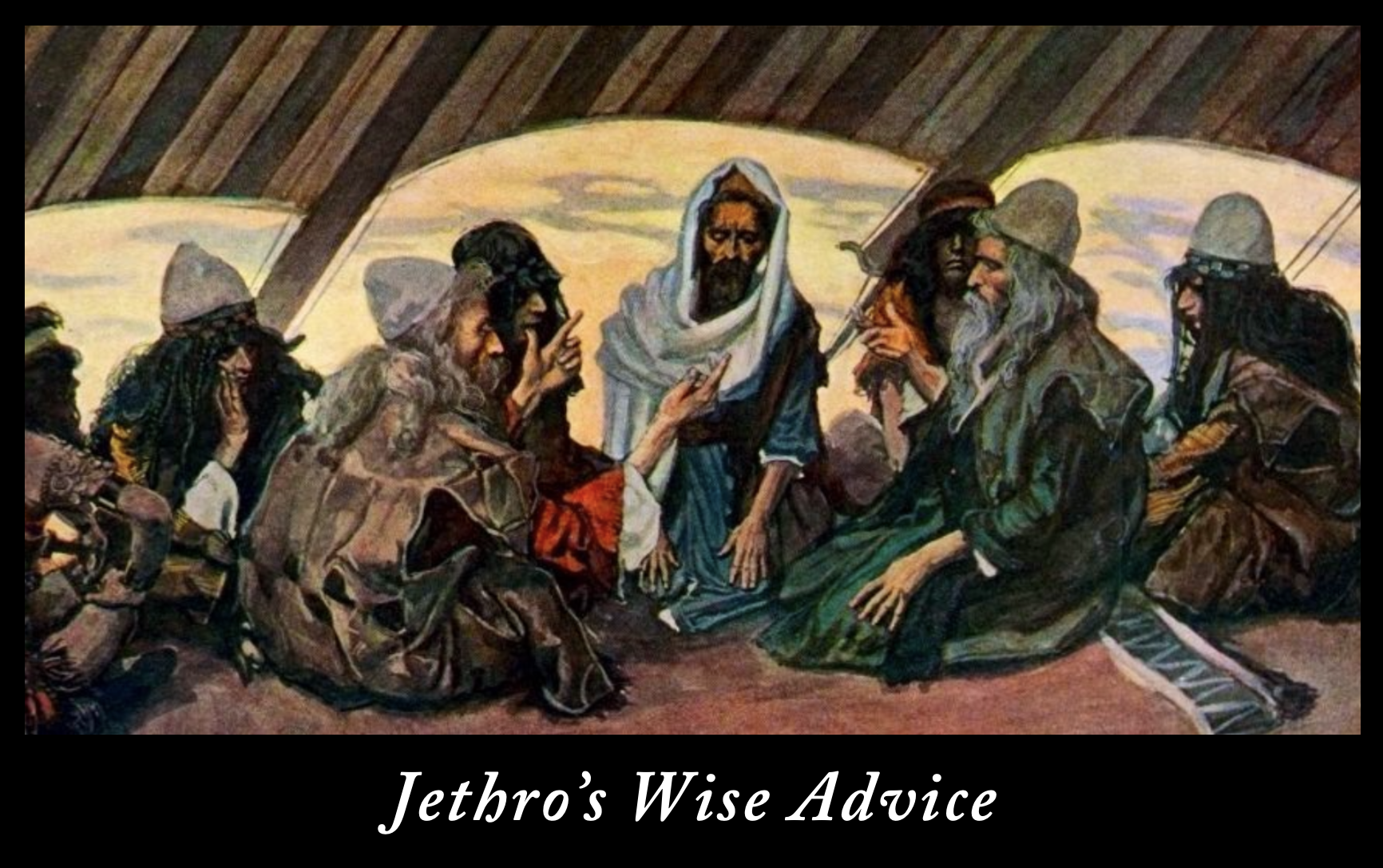
Jethro’s Wise Advice

In Exodus 18, Moses has led the people of Israel out of Egypt. He has shown God’s power through the plagues on Pharaoh and the Egyptians, and through him, God has revealed His supremacy over the pantheon of Egyptian gods. Now, Moses is leading the nomadic nation of Israel through the wilderness.

Moses receives a visit from Jethro, his father-in-law, and tells him of all the amazing things that the LORD has done. Jethro is amazed, rejoicing over the kindness that God had shown to the Israelites, and praising His name: “Now I know that the LORD is greater than all gods” (Exodus 18.11).

The next day, Jethro witnesses Moses serving as a judge among the people: from morning to evening, people come before Moses bringing disputes before him, seeking a judgment or resolution. Jethro is troubled by this:

But Moses’ father-in-law said to him, “The thing you are doing is not right; you will surely wear yourself out, and these people as well. For the task is too heavy for you; you cannot do it alone. Now listen to me. I will give you counsel, and God be with you! You represent the people before God: you bring the disputes before God, and enjoin upon them the laws and the teachings, and make known to them the way they are to go and the practices they are to follow. You shall also seek out from among all the people capable men who fear God, trustworthy men who spurn ill-gotten gain. Set these over them as chiefs of thousands, hundreds, fifties, and tens, and let them judge the people at all times. Have them bring every major dispute to you, but let them decide every minor dispute themselves. Make it easier for yourself by letting them share the burden with you. If you do this—and God so commands you—you will be able to bear up; and all these people too will go home unwearied.”

Moses heeded his father-in-law and did just as he had said. Moses chose capable men out of all Israel, and appointed them heads over the people—chiefs of thousands, hundreds, fifties, and tens; and they judged the people at all times: the difficult matters they would bring to Moses, and all the minor matters they would decide themselves. Then Moses bade his father-in-law farewell, and he went his way to his own land.

(Exodus 18.17-27)

Jethro’s counsel reflects the wisdom and experience of an older man. Moses is certainly a capable leader, but trying to adjudicate every dispute himself is unsustainable and will ultimately result in burnout. Instead, Jethro suggests, Moses needs to assemble a team of others who can help share the load of handling these matters. Moses himself will continue on as a sort of Supreme Court to handle the most important cases, while others can handle the vast majority of easier and less significant disputes.

In addition to being wise advice that any successful leadership guru would approve of, this also reflects the practice of Jesus and the designed structure of His church:

  • Although Jesus is, ultimately, the Judge of the world, He did not take it upon Himself to try to sort out every dispute (Luke 12.14).
  • Jesus spent the bulk of His ministry not just doing everything Himself, but training the Twelve so that they could lead after Him.
  • The leadership of the church is not entrusted to one person: instead, there are apostles, prophets, evangelists, shepherds, and teachers who share in that work (Ephesians 4.11ff). Furthermore, the church is the Body of Christ, and all members of the body have important roles to play (Romans 12).
  • In discussions of Elders and Deacons (1 Timothy 3; Titus 1), there is never the hint of one person filling these roles, but always on a plurality or group of individuals.

Indeed, the basic advice of Jethro for Moses to “share the burden” with others (Exodus 18.22), reflects these same realities, as we are instructed to cast our burdens upon God (1 Peter 5.7), and for brothers and sisters in Christ to mutually share their burdens because doing so fulfills the law of Christ (Galatians 6.2). In other words, this is more than good advice: it is very much God’s design and will.

All of us have a variety of burdens in life—responsibilities, struggles, challenges, etc.—but God does not intend that we carry these burdens alone. Listen to Jethro: share the burden.

All of us have a variety of burdens in life—responsibilities, struggles, challenges, etc.—but God does not intend that we carry these burdens alone. Share on X

Jethro and Moses, watercolor circa 1900 by James Tissot


In this loose series of Scripture Reflections, I am sharing brief thoughts spurred on by my Bible reading this year. By way of reminder, my goal for these brief posts is two-fold:

(1) To remark on aspects of the biblical text that I find to be of interest that the reader may or may not have thought about previously.

(2) When possible, to point ahead to the work and person of Jesus Christ. I believe the Bible is a unified story that points to Jesus, which means that He is frequently alluded to or foreshadowed in some way throughout the biblical canon.

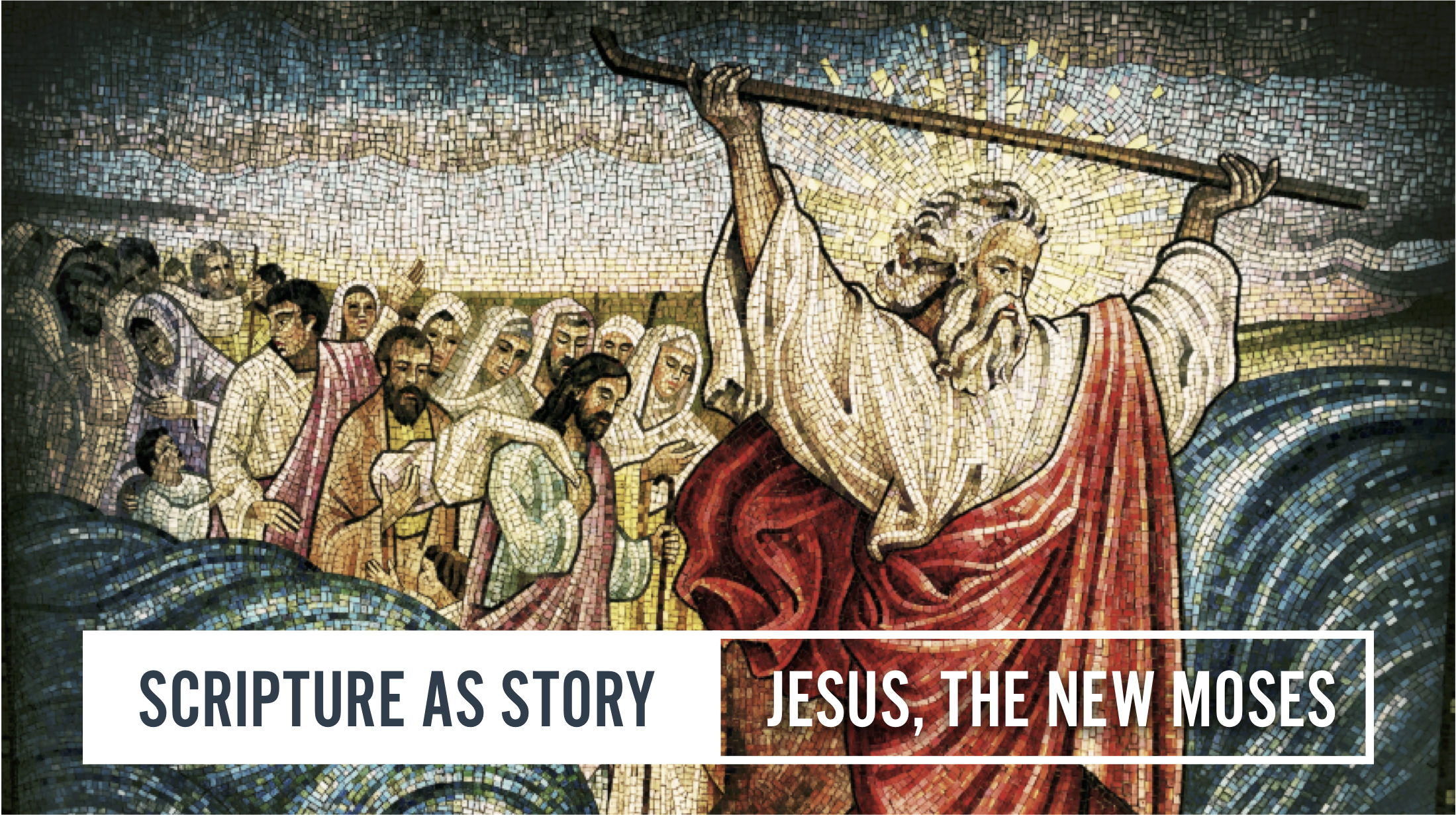
Scripture As Story: Jesus, the New Moses

Introduction

Today we continue our series on Scripture As Story, where we are emphasizing that the Bible is literature, and that we read the Bible better and more faithfully when we keep that in mind.

Last time, we looked at some specific techniques that we see the authors of Scripture using to help them tell their stories and share their teachings about God in a more compelling way. Today, I want to apply that understanding by using a case study to show how reading the Bible as literature and paying attention to the literary techniques that the Biblical authors use can actually help us to better understand the important lessons they are trying to teach us.

Specifically in this post, we are going to look at the connections that the writers of the Gospels (especially Matthew) make between Moses and Jesus, and what we can learn from those connections.[1] In Deuteronomy 18.15-16, Moses says that God was going to “raise up a prophet like me from among” Israel, and the Gospel writers go out of their way to connect Jesus to this prophecy, and claim that Jesus was, indeed, the prophet like Moses.

In John 1.21, 25, John the Baptist is asked if he is this prophet, and he says he’s not, but that he is preparing the way for Someone who is greater than he. In John 1.45, Philip tells Nathanael about Jesus, and says that He is the One “of whom Moses in the Law and also the prophets wrote.”

In Acts, Luke is even more explicit. In Acts 3.19-22:

“Repent therefore, and turn back, that your sins may be blotted out, that times of refreshing may come from the presence of the Lord, and that he may send the Christ appointed for you, Jesus, whom heaven must receive until the time for restoring all the things about which God spoke by the mouth of his holy prophets long ago. Moses said, ‘The Lord God will raise up for you a prophet like me from your brothers. You shall listen to him in whatever he tells you.”

Matthew doesn’t explicitly connect Jesus back to Deuteronomy 18, but he actually goes to greater lengths than the other Gospel writers to show the connections between Jesus and Moses. It is generally acknowledged that Matthew is writing to a primarily Jewish audience, and that He is concerned with connecting Jesus to the story of Israel, and one of the way’s he is going to do that is by repeatedly making comparisons between Jesus and Moses. 

Comparing Jesus and Moses

As we look at the way that Scripture presents the lives of Moses and Jesus, what are some similarities that we notice? I don’t claim that this is an exhaustive list, but take a look at the significant overlap between the way Scripture portrays their lives:

Moses Jesus
An evil king (Pharaoh) killed all the male Hebrew babies, but he was saved (Exodus 1.22) An evil king (Herod) tried to kill all the male babies around Bethlehem, but He was saved (Matthew 2.16)
He was hidden from Pharaoh (Exodus 2.2) An angel said to hide Him from Herod (Matthew 2.13)
Fled from Egypt, but later returned (Exodus 2.15; 4.18) Fled to Egypt, but later return to Israel (Matthew 2.13-23)
Gave up the riches and benefits of Egypt (Hebrews 11.24-26) Gave up the riches and benefits of Heaven (John 1.1-3; Philippians 2.5-8)
Became a shepherd (Exodus 3.1) Described Himself as the Good Shepherd (John 10.11)
His mission: redeem Israel from slavery to Egypt His mission: redeem humanity from slavery to sin
Often rejected by his own people Often rejected by His own people
Judged the people (Exodus 18.13-23) Will judge all people (Matthew 7.21-23; 25.31-46)
Goes up on a mountain to receive God’s law (Exodus 20-31) Goes up on a mountain to give God’s law (Matthew 5-7)
Fasted for 40 days on the mountain (Exodus 24.18) Fasted for 40 days in the wilderness (Matthew 4.2)
Performed signs/miracles Performed signs/miracles
Mediator of the covenant through the blood of young bulls (Exodus 24.8) Mediator of the covenant through His own blood (Matthew 26.28)
Delivers the five books of the Torah (Genesis-Deuteronomy) Delivers five extended sets of teaching/instruction (Matt. 5-7, 10, 13, 18, 24-25)
Lifted up the bronze snake in the wilderness (Numbers 21.9) In a similar way, He Himself was “lifted up” (John 3.14)
Commissions Joshua Commission disciples

Perhaps you find yourself thinking, “Well, that this is an interesting list, but what does it mean? How does this list of comparisons help us better understand who Jesus is?”

Why It Matters

What all of these comparisons help us to see is that, similar to Moses, Jesus is a multi-faceted character, and we better understand who Jesus is and what He came to accomplish if we can appreciate the many different roles that He fulfilled.

Liberator

The primary reason that we know about Moses in the first place is that God recruits him to liberate the people of Israel, who are helplessly trapped in the bonds of Egyptian slavery. Moses is a liberator.

Jesus, too, is a liberator, who came to earth on a mission to set people free from slavery, a slavery not from some oppressive foreign government or tyrant, but slavery from sin (Romans 6.6-7, 17-18).

Jesus liberates us from the power of sin.

Prophet

We actually began our discussion in Deuteronomy, where Moses says that a prophet like himself would come, and that this is Jesus.

Jesus was the ultimate prophet. A lot of times, when we hear the word “prophet” we think of someone who has a crystal ball or something and who can predict the future, but really, that is not a very helpful image when we talk about prophets in the Bible. Sure, at times, they predicted future events, and certainly Jesus did that, but the primary job of a prophet was to deliver a message to the people on behalf of God. Most of the time it wasn’t about the future; it was about what was going on right then that God wanted them to know.

And Jesus was the ultimate prophet; in a way that had never been done before or since, He fully revealed the message of God: who God is, what God is like, and what God wants from His people. 

Jesus was the prophet of prophets.

Lawgiver

Of course, one of the main things we associate with Moses is the giving of the 10 Commandments. God passed His law on to Moses on Mt. Sinai, and it was Moses’ job to share that with the people.

As we have already discussed, in Matthew 5, Jesus goes “up on a mountain” and there, He delivers teaching/instruction/law to His disciples.[2] He tells them that He did not come to abolish the Old Law but to fulfill it, and then He goes on to present Himself as the ultimate Lawgiver: “you have heard that it was said, but I say to you…”

Jesus is the One with authority—final authority—to interpret God’s Law. He is the Lawgiver—the One to whom we must listen.

Shepherd

Certainly Moses was literally a shepherd before God recruited him to lead the people of Israel, but after he became their leader he did so as a shepherd, willing to offer his own life up for them.

Similarly, Jesus is our Good Shepherd. He guides us, and provides for us, but also takes care of us and protects us, ultimately offering up Himself on our behalf.

Miracle Worker

Through the power of God, Moses accomplished great signs and wonders: the plagues in Egypt, the parting of the Red Sea, getting water from the rock. These were miracles that showed the great power of God, proved the identity of Moses as God’s representative, and brought about relief to suffering people.

Jesus, too, is presented as a great worker of miracles. He fed the hungry, healed the sick, cast out demons, stilled storms, and brought people back from the dead. These miracles showed God’s power, they testified to Jesus’ identity as the Messiah and Son of God, and they brought about relief to suffering people. They showed people what God’s kingdom was like, and they were a taste of New Creation.

Jesus was a Miracle Worker.

Intercessor

We noted earlier about Moses mediating the covenant through the blood of young bulls. More than that, after the people of Israel sinned by worshipping the Golden Calf and God wanted to wipe them out, Moses directly interceded with God on their behalf, offering to take punishment for them.

Jesus is portrayed as the ultimate intercessor. He mediates the covenant through the sacrifice of Himself and intercedes for us. The wages of sin is death (Romans 6.23), but Jesus takes that payment for us. As 2 Corinthians 5.21 says, “God made Him who knew no sin to be sin on our behalf…”

Jesus is the intercessor.

Commissioner

When I hear the word commissioner I think of the chief official of Major League Baseball or the NBA or NFL because that is the title that they use, but that’s not the idea here. A commissioner is someone who gives a commission—a task to be completed by those who come after.

At the end of his life, Moses commissions Joshua to carry on his mission. He tells Joshua to lead the people into the promised land and take possession of it and to keep the commandments when they are there. Joshua is assured that he can carry out this commission because God will be with him.

Jesus relays the ultimate commission. He tells His disciples to go into all the world—the Christian mission is a great one, it knows no geographical limits or bounds. As Christians, we are not told that we will inherit a small strip of land in Palestine, but rather, that we will inherit the earth. The kingdom of God is to be spread in all parts of the world. Further, Jesus tells them to observe all that He has commanded, and Jesus gives His disciples confidence that they can complete this mission, telling them that He Himself will be with them.

Jesus is the ultimate commissioner.

Judge

In Exodus 18, we have the story of Moses judging the people. When the people had a dispute, they would bring it before Moses and he would apply God’s law to these situations. But the task of judging the people is overwhelming for Moses, and his father-in-law Jethro actually advises him to get some help to share the burden.

Jesus is the judge in the ultimate sense—not settling the petty earthly disputes between people, but instead determining their eternal destinations. He says that not all who call Him Lord will enter the kingdom of heaven, but rather, they who do the will of God (Matthew 7.21). He further states that the way we treat other people, especially the “least of these”—the poor, the outcast, the oppressed—reflects how we treat Jesus, and affects our eternal destinies.

Jesus is the ultimate judge.

Conclusion

The Gospel writers—especially Matthew—go to great pains to make comparisons between Jesus and Moses. This is not a coincidence; by comparing Jesus to Moses, a man who fulfilled so many different roles in the early days of the history of the people of Israel, the New Testament shows us the many different roles Jesus plays.

There are many, many people in the world today who want to hold Jesus up as a great moral teacher or a man with brilliant insight, maybe even a prophet in some sense, but who want to stop at that point. But the Gospels go to great literary lengths to establish that Jesus is much more than this:

  • Jesus is the liberator who sets us free from the slavery of sin.
  • Jesus is the prophet who fully revealed the message of God.
  • Jesus is the lawgiver who has the final authority to interpret God’s law.
  • Jesus is the shepherd who guides us, provides for us, and lays down His life for us.
  • Jesus is the miracle worker who shows the power of God and brings relief to those who are suffering, giving them a taste of new creation.
  • Jesus is the intercessor who mediates the covenant for us, and receives the punishment that we deserve.
  • Jesus is the commissioner who extends to us the mission of expanding the borders of God’s kingdom throughout the world.
  • Jesus is the judge who determines the eternal destinies of all people.

In addition to all of these roles, the Bible goes even further: Jesus is God’s Son, God in the flesh Himself. In this sense, Jesus cannot be compared to Moses, nor to anyone else. He is absolutely unique.

In the Story of Scripture, this is the character of Jesus, and His characterization has radical implications for our lives: Jesus is God’s Son, He is the one who interprets God’s law, He died on our behalf, and He is the One who will judge how we have lived our lives and will determine our eternal destinies—how we respond to Jesus makes all the difference.


[1]I am by no means the first person to notice the connections between Jesus and Moses, and in fact, several books have been written on the topic.

Some articles that were helpful to me in the composition of this blog post include Garrett Best, “Jesus As The New Moses,” Ministry of Study, https://ministryofstudy.wordpress.com/2014/10/06/jesus-as-the-new-moses/ (accessed October 9, 2018); Cale Clarke, “Is Jesus a “Second Moses”?,” Catholic Answers, https://www.catholic.com/magazine/online-edition/is-jesus-a-second-moses (accessed October 9, 2018); “In what ways was Moses like Jesus?,” Got Questions, https://www.gotquestions.org/Moses-and-Jesus.html (accessed October 9, 2018).

[2]We typically translate the Hebrew word torah as “Law”, but a better translation would probably be something like “teaching” or “instruction.” It feels weird to say that Jesus was delivering “Law” in the Sermon on the Mount, but He was certainly giving teaching and instruction. Like Moses, He was delivering Torah.
Lessons from David: God Can Use Unlikely People

Lessons from David

As I mentioned last week, the life of King David provides some remarkable lessons for people of faith today. This will not be an exhaustive series (there’s much more that can be learned from David than what we are able to cover here), but I do want to highlight some of the most important ones.

Today I want to talk about a lesson that the Bible teaches over and over again: God uses unlikely candidates to accomplish His will.

After King Saul disobeyed God, God send His prophet Samuel to anoint a new king for Israel from the sons of Jesse the Bethlehemite. Samuel goes to Bethlehem and Jesse brings his sons out, one by one, for Samuel to see. When Eliab, Jesse’s oldest son, comes out, Samuel was impressed; apparently this man looked like a king:

“But the LORD said to Samuel, ‘Do not look at his appearance or at the height of his stature, because I have rejected him; for God sees not as man sees, for man looks at the outward appearance, but the LORD looks at the heart.’” (1 Samuel 16.7)

Samuel sees Jesse’s seven oldest sons, but God rejects them all as king.

Apparently, the thought of David—the baby, the shepherd boy—being the one God was interested in hadn’t even entered Jesse’s mind, because he wasn’t even there; he was out with the sheep. So Jesses sends for him, and sure enough, David is the one God chooses, and the one Samuel anoints to be the next king of Israel.

David goes on to defeat Goliath, become a mighty warrior, and as King, leads Israel in many successful military campaigns, but if it had been left up to Samuel, David would’ve just stayed in the field with the sheep.

For God sees not as man sees, for man looks at the outward appearance, but the LORD looks at the heart.

God spoke these words in reference to David, but they don’t just apply to him. The fact is that God can use anyone, no matter what they look like on the outside, to further His will. In fact, God has almost always used men and women from unimpressive circumstances on the outside to accomplish His goals:

  • Moses was a murderer and an exile, a man who was apparently afraid to even speak in public. And yet, with God’s help, Moses stood up to Pharaoh, likely the most powerful man in the world at that time, freed the children of Israel, and then led them in their trek through the wilderness.
  • Rahab was a lowly prostitute, but she hid the Israelite spies and was pivotal in the Israelites’ great victory over the walled city of Jericho, and thus, their occupation of the land of Canaan.
  • Esther certainly looked impressive on the outside: in fact, she became queen only because she had won a beauty contest. But she had no political aspirations and was afraid to even speak to the king, but God used her to save the Jewish people.
  • Peter was an uneducated (probably), coarse fisherman who, even despite spending a lot of time with Jesus, just seemed to mess up all the time. He was always sticking his foot in his mouth, and deserted Jesus when things got touch. But on the Day of Pentecost when the Church was established, Peter preached the first gospel sermon and 3,000 were added to the Church.
  • Paul was present at the stoning of Stephen. He persecuted Christians and threw them in jail, and would later refer to himself as the chief of sinners. But God used Paul to speak the gospel message to countless Gentiles, and Paul became the greatest missionary the world has ever known.

The examples go on and on, but the principle remains the same: God uses unlikely candidates to accomplish His will. This was true with David, it was true throughout the Bible, and it is true today.

You might see yourself as lacking talent or ability, but God sees you as someone who He can use to accomplish great things for His Kingdom:

“For we are His workmanship, created in Christ Jesus for good works, which God prepared beforehand so that we would walk in them.” (Ephesians 2.10)

That verse seems pretty clear to me. No matter what you think about yourself or what you think your shortcomings are, God designed you to be useful! There are things that you can do (and maybe that only you can do) for His cause!

God uses unlikely candidates to accomplish His will!

« Older posts

© 2026 The Doc File

Theme by Anders Noren — Up ↑