The online journal of Luke Dockery

Tag: Parables

The Department of Government Efficiency…and The Parable of the Weeds

I am generally hesitant to comment on political matters, partially because politics can be so divisive, and partially because I am generally not informed enough to do so with any credibility. On the other hand, I am all about discussing Scripture, and also discerning how the wisdom of Scripture can be brought to bear on the challenging issues of life. Thus, this post.

Over the last few weeks, the new Department of Government Efficiency (DOGE) has been rifling through the drawers of the federal government, seeking to identify and eliminate waste, significantly by cutting funding or eliminating jobs. We live in a wildly polarized society, so I shouldn’t be surprised by the wide gulf between the different responses I have observed to DOGE’s activities so far. And yet, I am: on social media, some of my friends are hailing all of this as a much-needed and valuable work, while others identify it as the onset of fascism and the harbinger of the downfall of our nation.

And all I can think about is Jesus’s Parable of the Weeds.


Found in Matthew 13, the Parable of the Weeds is one of Jesus’s many parables that focuses on the nature of God’s kingdom:

24 He put another parable before them, saying, “The kingdom of heaven may be compared to a man who sowed good seed in his field, 25 but while his men were sleeping, his enemy came and sowed weeds among the wheat and went away. 26 So when the plants came up and bore grain, then the weeds appeared also. 27 And the servants of the master of the house came and said to him, ‘Master, did you not sow good seed in your field? How then does it have weeds?’ 28 He said to them, ‘An enemy has done this.’ So the servants said to him, ‘Then do you want us to go and gather them?’ 29 But he said, ‘No, lest in gathering the weeds you root up the wheat along with them. 30 Let both grow together until the harvest, and at harvest time I will tell the reapers, “Gather the weeds first and bind them in bundles to be burned, but gather the wheat into my barn.”’”

36 Then he left the crowds and went into the house. And his disciples came to him, saying, “Explain to us the parable of the weeds of the field.” 37 He answered, “The one who sows the good seed is the Son of Man. 38 The field is the world, and the good seed is the sons of the kingdom. The weeds are the sons of the evil one, 39 and the enemy who sowed them is the devil. The harvest is the end of the age, and the reapers are angels. 40 Just as the weeds are gathered and burned with fire, so will it be at the end of the age. 41 The Son of Man will send his angels, and they will gather out of his kingdom all causes of sin and all law-breakers, 42 and throw them into the fiery furnace. In that place there will be weeping and gnashing of teeth. 43 Then the righteous will shine like the sun in the kingdom of their Father. He who has ears, let him hear.”

(Matthew 13.24-30; 36-43)

This is a parable about the kingdom of God growing in a hostile environment and some of the realities that come with that. A man sows seed in a field, but then an enemy comes and secretly sows weeds among the good seed. When the plants start to grow, it becomes apparent what has happened, and the servants, wanting to be helpful, ask their master if they should pull the weeds. The master, though acknowledging the existence of the weeds and the problem they represent, tells his servants not to pull up the weeds because they might cause damage to the wheat when they do so. In other words, the effort to root out the bad can actively harm the good. 

Sometimes the effort to root out the bad can actively harm the good. Share on X

Jesus goes on to explain the spiritual significance of this parable and there are some really important lessons there that I have discussed elsewhere.[1] I don’t want to pretend or suggest that this parable is somehow about what we see going on in our current political landscape, but I do think there is a principle here that applies.

I don’t think any fair-minded person would deny that the U.S. federal government operates on a massive scale, and that in such a vast and complicated structure, there is bound to be a significant amount of inefficiency and even incompetence. Put differently, there really are weeds in the field. But that doesn’t mean that the wise course of action is to rush in and start indiscriminately yanking up the weeds, because you likely are going to pull out a lot of good plants as well.

From my perspective, this is what DOGE has done. I know an increasing number of good, faithful civil servants who are losing employment because of sweeping cuts, as well as good, worthwhile programs that are being defunded. None of this is to suggest that the federal government is efficient, or that no cuts should be made—there really are weeds in the field! But it does suggest that when you have such a vast and complicated network of employees and programs with problems that have accumulated over decades, you’re probably not going to be able to wisely solve the problem within a few weeks.


[1] Jeremy Myers & Luke Dockery, Kingdom Parables: A Study of the Stories of Jesus (Springdale, AR, Deeper Youth Ministry, 2024), 29-31.

Recent Publications

I have not written as much in this space over the last few months as I would have liked. Part of that is related to the regular busyness of full-time ministry, adjunct teaching, and being a dad, but part of it is also tied to an increased amount of writing and editing that I have done this year:


Earlier this year, I announced the publication of a new book on the parables of Jesus, co-written with Jeremy Myers and published through Deeper Youth Ministry. This was a fun project to work on, and I think it is a really helpful and accessible resource for Bible classes. From the back of the book:

The parables of Jesus are beloved by many, but are not always well understood. It is commonly believed that Jesus taught with simple stories in order to make it easy for His audience to understand, but while the stories do tend to be simple, the parables of Jesus are often anything but easy. In fact, Scripture repeatedly records the confusion of Jesus’s audience when He teaches in parables, and even relates Jesus explaining that He speaks in parables specifically because He knows some of His audience won’t be able to hear and understand them.

Kingdom Parables guides students through a close study of Jesus’s parables, not with an expectation that they will be easy to understand, but that they will offer important teaching about the kingdom of God and how God expects citizens of His kingdom to live.

The book is available in paperback on Amazon, and in digital format on the Deeper Youth Ministry website.


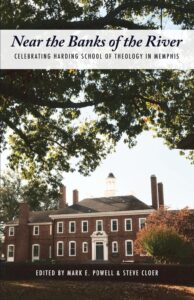
In April, Regnum media released a special volume to honor Harding School of Theology, which is moving from Memphis, TN to Searcy, AR this fall. Near the Banks of the River: Celebrating Harding School of Theology in Memphis was a tribute to the work of HST, and brought together excellent essays by several distinguished HST graduates in various fields. I helped to edit this volume, and also did the layout and design. From the back of the book:

For 66 years, from 1958-2024, Harding School of Theology in Memphis has had a national and global impact training over 1800 graduates and 4700 students. A large percentage of influential ministers, academic thought-leaders, and innovative practitioners in Churches of Christ trace their roots back to HST. As the school prepares to transition to Searcy, Arkansas in fall 2024, this collection of original essays celebrates the influence of HST in Memphis and looks to the future of theological education and missional leadership.

Near the Banks of the River is available in paperback on Amazon.


Just this month, Regnum released our most recent volume, Walking with Wisdom: A Study of Proverbs, by Lance Hawley. Dr. Hawley is an excellent professor at Harding School of Theology, and produced a scholarly yet accessible work. I worked on the editing, layout, and design of this project as well. From the back of the book:

The people of God may desire to make good and faithful decisions, but actually doing so takes wisdom and courage.The Book of Proverbs aims at cultivating wisdom, insight, and understanding in its readers, so that they will choose the way of God instead of the way of folly. It is ancient wisdom that wants all people to know the joys of Wisdom’s party.

In Walking with Wisdom, Lance Hawley guides readers through the book of Proverbs with a special emphasis on its significance for contemporary life. It is ideal for small group studies, Bible classes, and personal study. The book includes chapters on what Proverbs has to say about relationships, money, and wise speech, along with chapters on how to cultivate and celebrate wisdom.

Walking with Wisdom is also available on Amazon in paperback (Kindle version is forthcoming).


Now that my summer youth ministry grind is over, I hope to get back to writing here with some degree of regularity, but as you can see, I have managed to keep busy!

Kingdom Parables: A Study of the Stories of Jesus

I am excited to announce that I have a new book out—Kingdom Parables: A Study of the Stories of Jesus. This is the latest in the Deeper Youth Ministry Bible Study series, and is available for purchase in paperback on Amazon, or digitally on the Deeper Youth Ministry website.

This was a fun project to work on, partially because the parables of Jesus are incredibly interesting to study, and also because I wrote it with my good friend Jeremy Myers. Jeremy and I have worked together with Deeper Youth Ministry for several years and he now directs the annual Deeper Youth Conference, but this is the first time we wrote a book together. It was truly a collaborative project, and I was proud of the end result.

From the back of the book:

The parables of Jesus are beloved by many, but are not always well understood. It is commonly believed that Jesus taught with simple stories in order to make it easy for His audience to understand, but while the stories do tend to be simple, the parables of Jesus are often anything but easy. In fact, Scripture repeatedly records the confusion of Jesus’s audience when He teaches in parables, and even relates Jesus explaining that He speaks in parables specifically because He knows some of His audience won’t be able to hear and understand them.

Kingdom Parables guides students through a close study of Jesus’s parables, not with an expectation that they will be easy to understand, but that they will offer important teaching about the kingdom of God and how God expects citizens of His kingdom to live.

If you work with or teach teenagers, I hope you will give it a look—there are 18 lessons in total, including introductory and summary lessons.

Purchase the Book

Paperback: Amazon $12.99

Digital: Deeper Youth Ministry $10

Churches and Lifesaving Stations

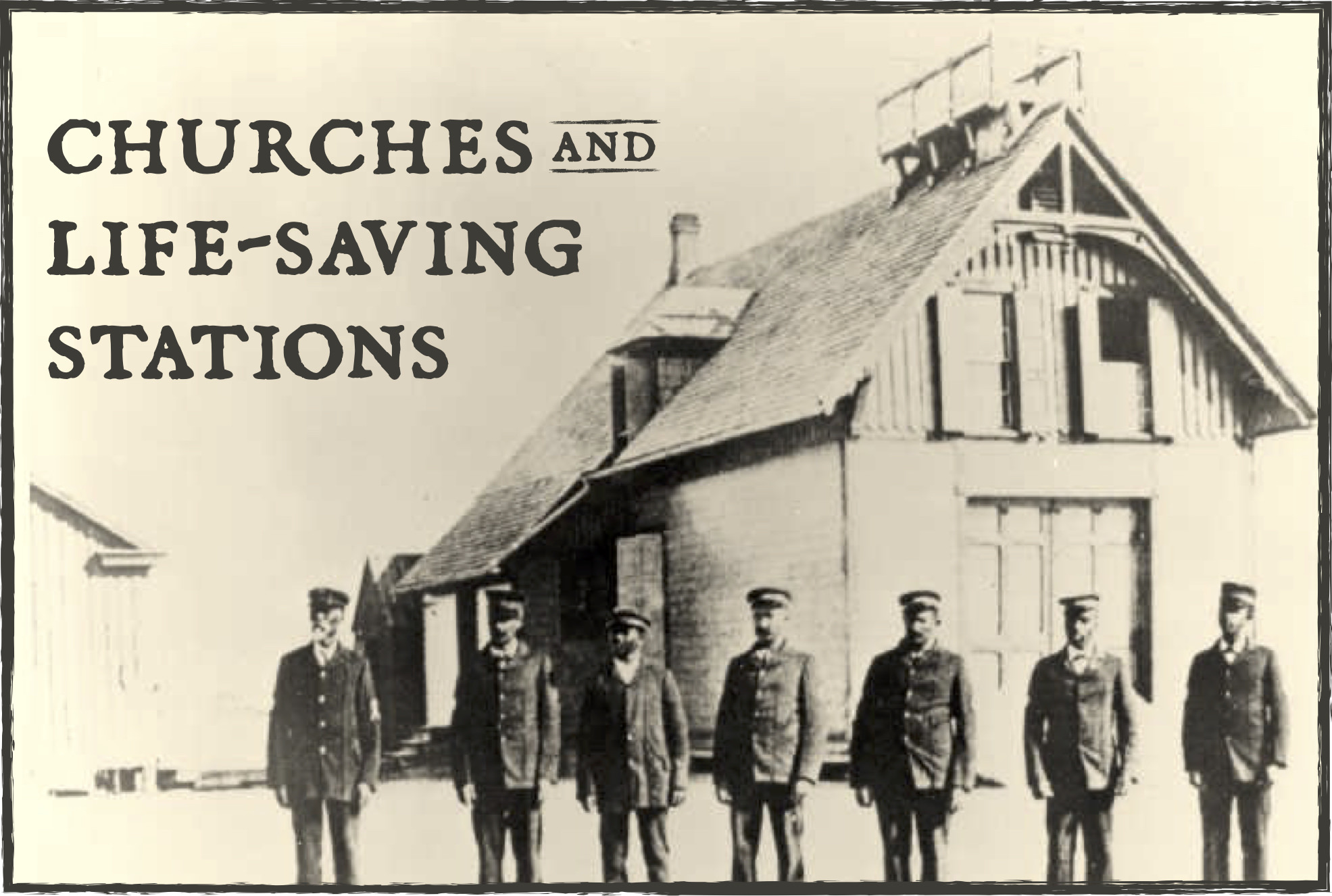
A cautionary parable from Managing the Congregation: Building Effective Systems to Serve People, by Norman Shawchuck and Roger Heuser, pp. 78-79:

On a dangerous seacoast where shipwrecks often occur there was once a crude little lifesaving station. The building was just a hut, and there was only one boat, but the few devoted members kept a constant watch over the sea, and with no thought of themselves went out day and night tirelessly searching for the lost. Many lives were saved by this wonderful little station, so that it became famous. Some of those who were saved, and various others in the surrounding area, wanted to become associated with the station and give of their time and money and effort for the support of its work. New boats were bought and new crews trained. The little lifesaving station grew.

Some of the members of the lifesaving station were unhappy that the building was so crude and poorly equipped. They felt that a more comfortable place should be provided as the first refuge of those saved from the sea. So they replaced the emergency cots with beds and put better furniture in the enlarged building. Now the lifesaving station became a popular gathering place for its members, and they decorated it beautifully and furnished it exquisitely, because they used it as a sort of club. Fewer members were now interested in going to sea on lifesaving missions, so they hired lifeboat crews to do this work. The lifesaving motif still prevailed in this club’s decorations, and there was a liturgical lifeboat in the room where the club initiations were held. About this time a large ship was wrecked off the coast, and the hired crews brought in boatloads of cold, wet, and half-drowned people. They were dirty and sick, and some of them had black skin and some had yellow skin. The beautiful new club was in chaos. So the property committee immediately had a shower house built outside the club where victims of shipwreck could be cleaned up before coming inside.

At the next meeting, there was a split in the club membership. Most of the members wanted to stop the club’s lifesaving activities as being unpleasant and a hindrance to the normal social life of the club. Some members insisted upon lifesaving as their primary purpose and pointed out that they were still called a lifesaving station. But they were finally voted down and told that if they wanted to save the lives of all the various kinds of people who were shipwrecked in those waters, they could begin their own lifesaving stations down the coast. They did.

As the years went by, the new station experienced the same changes that had occurred in the old. It evolved into a club, and yet another lifesaving station was founded. History continued to repeat itself, and if you visit that seacoast today, you will find a number of exclusive clubs along that shore. Shipwrecks are frequent in those waters, but most of the people drown!

Churches would do well to consider what happens when they lose their sense of purpose. Without a purpose and reason for existence, churches become nothing more than social clubs.

“No Longer Worthy”

Luke 15 is a favorite Bible chapter for many people because it contains one of the most famous parables of Jesus, The Prodigal Son.

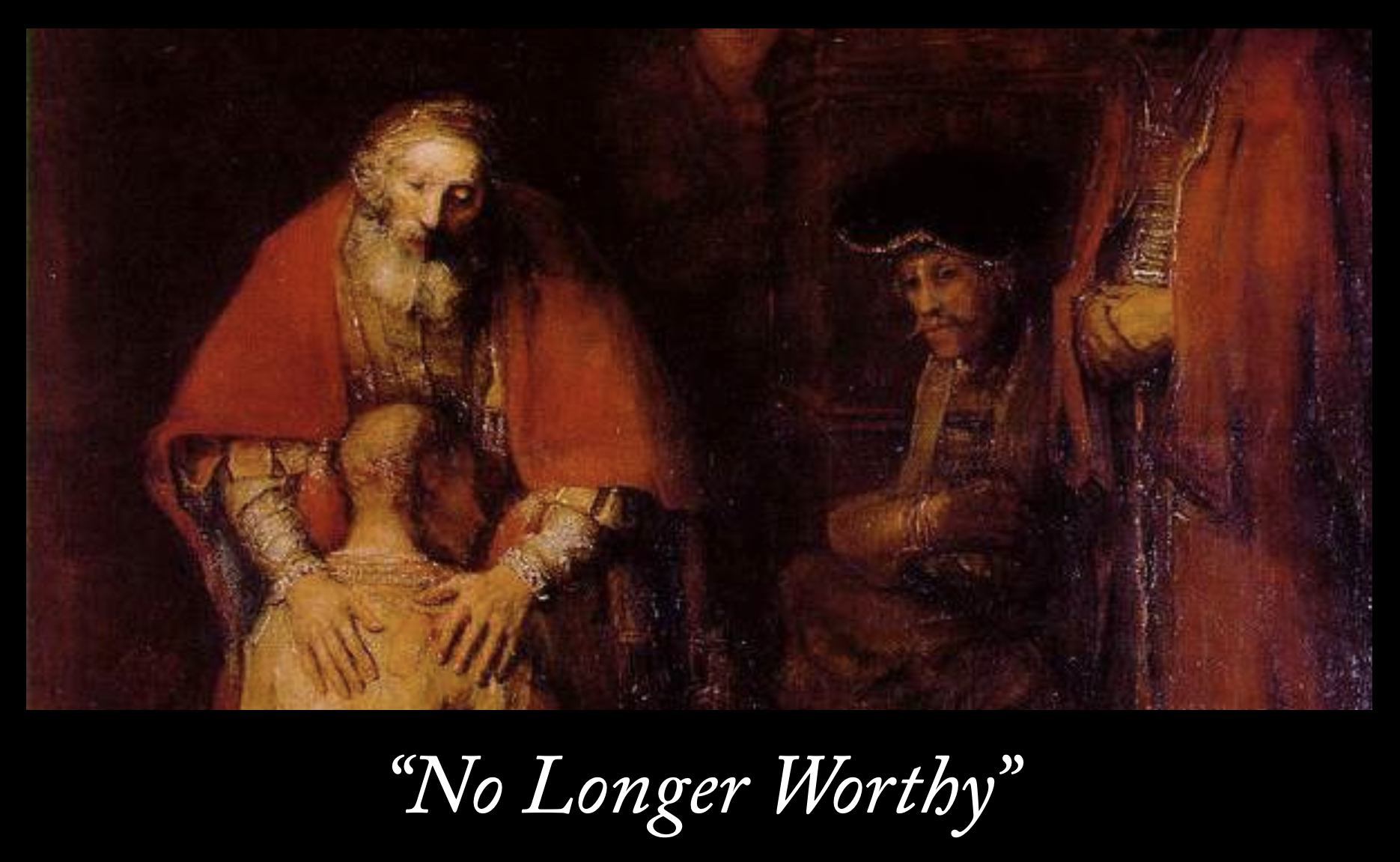
It’s a parable that many are familiar with. It begins with a father who has two sons. The younger son demands his portion of the inheritance while his father is still alive and then takes the money he receives, moves to a distant country, and squanders all he has on riotous living. With all his money gone, he is forced to take a job working with pigs until he finally comes to his senses and decides to return to his father, realizing that even the servants in his father’s house enjoy better lives than he currently has. But when the son returns home, his father greets him with open arms and celebrates his return with a feast. The older son resents the warm reception that his younger brother receives, and is rebuked by his father:

“My son,” the father said, “you are always with me, and everything I have is yours. But we had to celebrate and be glad, because this brother of yours was dead and is alive again; he was lost and is found.”

It’s a wonderful parable, and there are multiple lessons that can be learned from it: the freedom that God gives us to leave Him or follow Him, His eagerness to welcome us back and forgive our sins, the perils of being the older brother, the false promises of the “far country”, and more.

But a while back while reading the parable, I was struck by something I had never thought about before. In Luke 15.21, when the Prodigal returns to his father, he launches into the speech he has prepared:

“Father, I have sinned against heaven and against you. I am no longer worthy to be called your son.”

The son describes himself as “no longer worthy.”

I have felt similarly before at times when I run from God, when I commit sin and then return to Him.

But it’s not the proper mindset to have. Not because the unworthiness aspect is inaccurate—certainly we are unworthy of being God’s children. No, the inaccuracy comes from the words “no longer”, which imply that at some point we were worthy of being God’s children, and that simply isn’t true.

The Prodigal Son wasn’t a son because he somehow earned or deserved that relationship, but because he was born into it, and his father chose to treat him as a son whether he deserved it or not.

Similarly, our relationship with God doesn’t depend on our worthiness; it depends on His love. We are not his children based on how much good we’ve done, but based on His willingness to have a relationship with us at all.

We feel guilty when we stumble, and we rightly feel that we don’t deserve a relationship with our Heavenly Father. But we must remember that we never deserved that relationship in the first place.

That’s the great thing about God—He loves us despite our unworthiness.

© 2026 The Doc File

Theme by Anders Noren — Up ↑