The online journal of Luke Dockery

Tag: Psalms (Page 1 of 3)

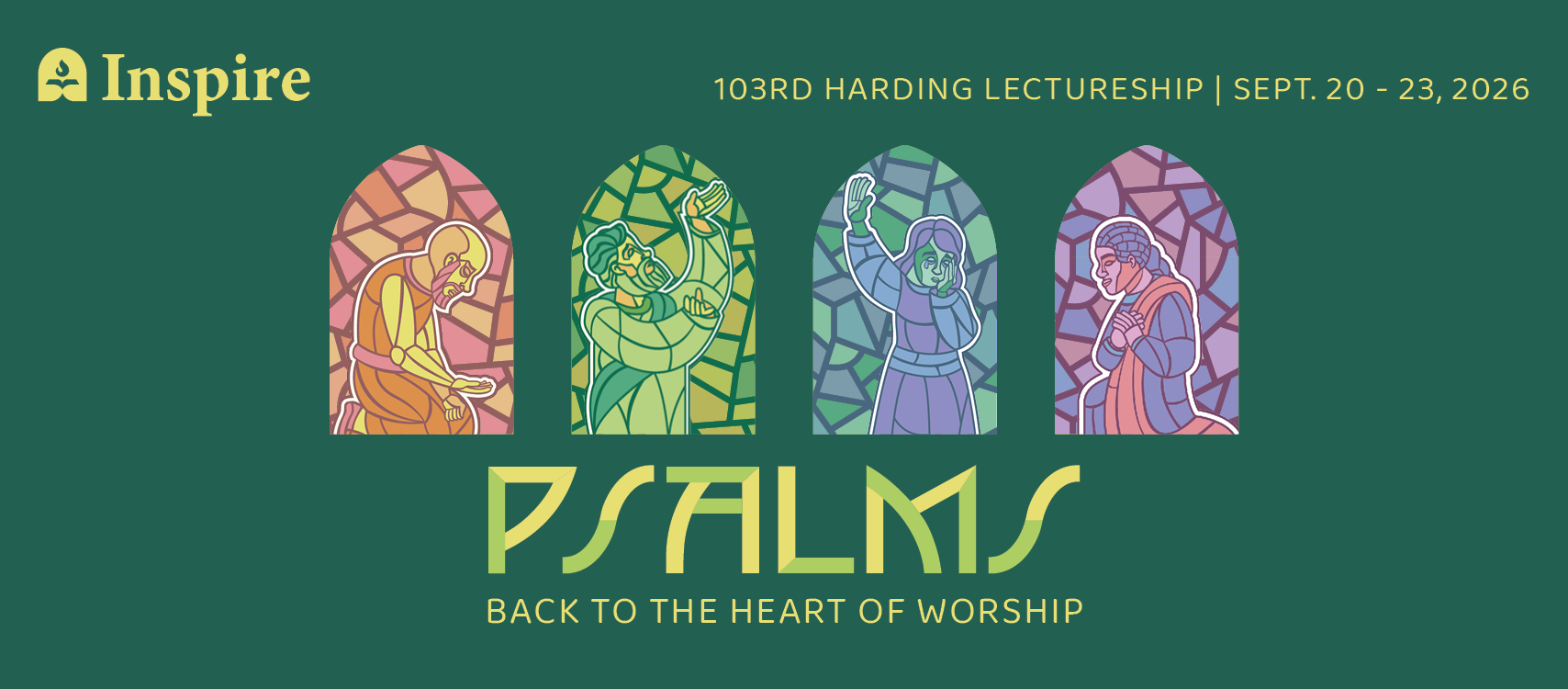
2026 Harding University Lectureship Recap

One of my yearly traditions on The Doc File is to write a post that recaps Harding’s annual Bible Lectureship, which occurs in late September. This year’s lectureship occurred early in my sabbatical, and soon after it was over my wife and I took a 20th anniversary trip and then I returned and was buried (in a delightful way) in research and writing on my sabbatical project and I just never got around to writing about the Inspire Lectureship. It is now late enough that what I write here is somewhat dated, but it is helpful for me to reflect on the things I heard, so I will proceed anyway. Maybe there will be something here to benefit others as well.

This year’s theme was Psalms: Back to the Heart of Worship, and there was a significant focus on, well, Psalms and worship. Before I jump into a recap of the sessions I attended, here are a few summary thoughts:

  1. After the controversy surrounding last year’s Lectureship, I really didn’t hear much at all this year. This was nice.
  2. I thought one of the great strengths of this year’s program was the exposition of a bunch of different individual psalms. I felt like I came away having heard a lot of valuable biblical teaching, and I think that those who attended several of these sessions received a really good feel for the book of Psalms.
  3. This year, they brought back morning keynotes and actively discouraged Lectureship attendees from going to student chapel (which was the same time as the morning keynotes). I thought this was a really unfortunate move. Especially for a Lectureship themed on worship, denying participants the option of worshiping in chapel seemed like an obvious misstep to me (there were likely good reasons for this of which I am unaware).
  4. This was the second year that there was a great emphasis on multi-session tracks rather than standalone sessions. I understand reasons for this, but I personally dislike it. There are a lot of topics that I am interested in for one session, and far fewer that I want to stay around and listen to for three hours. And, depending on how tightly coherent the different sessions are, if you miss the first one, it may not be worth it to go to others. In short, the multi-session tracks are great if there is a track you love and there is nothing else you really want to go to at the same time; if either of these things is not true, it is problematic.

Now, on to the main thing!


I got to attend a variety of lectures and classes, and in what follows I will provide a brief recap of what I went to, along with some takeaway points and meaningful quotations:

His Presence: Psalm 100, Ammar Saheli: I had never gotten to hear Saheli before, who has been a minister at the West Oakland Church of Christ for 25 years. I thought he did a great job of introducing the theme for the week and also the Psalter itself, the “hymn book of Israel.” Saheli said that the Psalter shaped the culture of Israel and shaped the culture of Jesus, and that it would be great if it shaped the culture of our churches as well. He then looked at Psalm 100 in more detail, and emphasized the importance of worship and being in God’s presence as we navigate the difficulties of life:

“Regardless of what is going on in my life, when I enter His presence, God is still good!”

“‘I’m just going to do me.’ You don’t know you!”

“We worship our way through our hurts.”

This was not a profound lecture because it taught something new, but because it taught something fundamental so well: God is still good despite my problems, and worship and gratitude help to orient us to this reality.

Fearfully and Wonderfully Made, Justin Bland: I spent Monday morning (other than the morning chapel keynote) attending three sessions by Justin, who teaches Exercise Science at Harding and is one of my best friends. Justin excels at blowing your mind with fascinating human physiology, and then making insightful theological connections. I took tons of notes and it is hard to sum up here what he talked about, but I’ll try to provide a brief overview of the three sessions:

  • From the Womb: This session focused on the way a mother’s entire physiology adapts to support another life and what can be learned from that:
    1. We are fearfully and wonderfully made.
    2. Self-sacrifice is built into the mother’s physiology.
    3. We are deeply connected.
    4. An appreciation for the “mother” language God uses (Exod 34.6; Matt 23.27).
  • Sustained by the Heart: This session focused the heart, which is the servant of the body. Many of these observations are physiological, but the theological and ecclesiological implications are clear and powerful:
    1. The heart develops through challenge and adversity.
    2. The heart has several redundant systems to ensure continued beating.
    3. The heart takes on new function at birth.
    4. The heart receives oxygen and nutrients during rest.
    5. The heart responds to the needs of the body.
    6. A diseased heart signals muscle wasting.
    7. When your heart is full, you will thirst no more.
    8. The physical embodiment of love is the servant of the body.
  • Made to Work: This final session focused on the physiology of work, and the fact that we were made to move and are shaped by movement. Again, a lot of good takeaways here:
    1. We do things that are hard to get better for the sake of something bigger.
    2. Discussions of stress and mental health must include exercise!
    3. Stress is the perception of a physical threat, and your perception is shaped by what we believe; what if we actually believed that Jesus is the Good Shepherd?
    4. I do not worship this body, but with this body I worship!
    5. The heart of worship is embodied loyalty.

Justin crushed it! I was so proud of him and am so blessed to be his friend.

His Love Endures Forever: Psalm 136, Mac Sandlin: Mac is one of the excellent professors in the College of Bible and Ministry at Harding. He introduced Psalm 136 by talking about music and how the chorus makes the song—the most powerful and popular songs are those with catchy and moving choruses. Mac challenged us with this question: “If you were to write a story song about God, what would the chorus be?” After weighing some different options—How God Gives Success, How God Makes Me Feel, God Rules Over All, How Bad Our Enemies Are, God Is Transcendent—he put forth his thesis from Psalm 136: the chorus of the story of God is “His love endures forever.” This is the heartbeat of Scripture.

“God’s love burns but never burns out.”

Worshipping the Goodness of God, Part 1: In Good Places–Rest and Righteousness, Evertt Huffard: I first knew Dr. Huffard as the Dean of Harding School of Theology when I began my graduate work there when the school was still in Memphis, and more recently, as a member of the church where I work! He is a long-time expert on missions and church dynamics, and has also had a career interest in studying the kavod (כָּבוֹד) of God (often translated “glory,” but which Huffard believes is better translated “honor”). I was only able to go to the first session, but Dr. Huffard was presenting some of the arguments from his new book. The basic argument as I understand it (I haven’t read his book yet), is that God’s kavod is about His goodness (His character) in addition to His greatness (His power). This is important, because as we seek to be like God, we actually cannot approximate Him in power, but we can seek to emulate Him in character. In this session, Huffard focused specifically on ideas of rest and righteousness from Psalm 23, and left me with the following takeaways:

  1. Restoration cannot come without submission to spiritual authority.
  2. God equips others with spiritual gifts to restore my soul.
  3. Through the consensus of those who care about me, God restores me.
  4. Constructive criticism can be a tool for learning and restoration.
  5. Working in a church under spiritual authority gives structure to my restoration.

These were helpful thoughts to reflect on in the midst of my sabbatical!

Stop Whispering! Psalm 107, Kristopher K. DarDar, Sr.: DarDar serves as the Senior Minister for the East Pointe Church of Christ in Fort Worth and delivered the Tuesday morning keynote. Focusing on Psalm 107 (“Give thanks to the LORD, for He is good…”), DarDar emphasized that the redeemed ought to say so (v.2)—there should be nothing quiet when we reflect on the goodness of God. He then emphasized all the different kinds of people that God has gathered (v. 3), but that none of us is better than another because God has given a seat to all of us.

Archaeology in the Psalms: Artifacts, Dale Manor: I try to listen to Dr. Manor teach whenever I can, and the opportunities are rarer now that he has moved from Searcy to Arizona. He was in his wheelhouse in this session, showing us pictures and actual artifacts of various elements referenced in the Psalms—weapons, footstools, cherubim, musical instruments, and more. He taught with his typical knowledge and humor, but also with poignancy: particularly moving was when he discussed God’s bottles to collect our tears (Psalm 56.8–9). Dr. Manor got choked up at this point, as he lost his dear wife earlier this year. I am always deeply moved when I see the humanity and courageous faith of men that I deeply respect and admire. Dr. Manor is in that category, and this was one of the most powerful moments of this year’s lectureship for me.

What Is A Doctrinally Sound Church of Christ, Erik Tryggestad: Tryggestand works with The Christian Chronicle and this was part of a series that stemmed from his observations from different events he had attended associated with different “branches” of Churches of Christ. There were some interesting tidbits here, but, honestly, what struck me most was that for someone who had taken on as a major project trying to take the pulse of the spectrum of Churches of Christ, he seemed surprisingly unaware of the terrain.

Breathing Underwater: Spirituality and the 12 Steps, Monte Cox and Rachel Wisdom: At last year’s Lectureship, Dr. Cox (the Dean of COBAM) and Wisdom (his daughter) did some amazing presentations from The Anxious Generation, and I made the major mistake of only going to one of them. This year, they teamed up to talk about Alcoholics Anonymous from a spiritual perspective. I confess that I don’t have great interest in the 12 Steps, but I went because I thought the presenters would be compelling. They were—their chemistry is incredible (maybe not surprising since they are father and daughter; or maybe even more surprising?), but I still didn’t love the content enough to stay for the other two sessions. The session I attended went over the first two steps, and was sufficient to accomplish what I suspect was a major goal of the track: If I was before, I am not now leery of AA, and I certainly see how churches that host AA meetings could use these as an opening for spiritual conversations and a bridge to faith.

How the Psalms Shaped Early Christian Proclamation, Kevin Burr: Kevin is another of my best friends, and is the newly appointed Assistant Dean of the College of Bible and Ministry. In this track he was actually speaking along with a couple of his students, which I thought was neat, though I only stayed for his session. He basically looked at how the Psalms resonate throughout Christian preaching in the New Testament, and took a special look at Peter’s sermon in Acts 2, which was carefully crafted using Old Testament allusions and quotations—including from Psalms—in order to make the point that Jesus is Lord. In fact, Jesus’s eternal kingship is the theme that runs throughout the New Testament, and the Psalms are employed repeatedly to teach this motif.

How Can We Sing the Songs of the LORD in a Foreign Land? Psalm 137, Monte Cox: The Tuesday night keynote was special as it was delivered by Monte Cox, who is retiring this year as Dean of COBAM. I had heard Dr. Cox preach from this text before, and it is one of my favorite sermons. The context of Psalm 137 is that God’s people are lamenting as they are taken away in exile to Babylon while their captors mock them, demanding that they “Sing us one of the songs of Zion!” How is this possible, though? How can we sing the songs of the LORD in exile? In a world where Christians increasingly feel (or should feel) like exiles, it is a pressing question, and it seems like there are a few different possible responses:

  1. Sing really loudly! Blow them away! This is kind of the culture war approach—fight for our rights and do everything we can through legislation to make Babylon look like we think it should.
  2. Retreat quietly, don’t bother anyone, and sing quietly. This might be akin to the rise of the “nones,” those who increasingly disaffiliate from faith communities, while remaining “spiritual but not religious.”
  3. Learn to sing the songs of Babylon. This is basically salt losing its saltiness—we just blend in with our surroundings and adopt the values of the world.
  4. Learn to sing the songs of the LORD in Babylon. This is hard, but is the way forward for those in exile. It is the practice of Daniel, Hananiah, Mishael, and Azariah, who faithfully served the king in Babylon but also remembered who they were as servants of the LORD, and knew what their limits were. It is the way of Jeremiah, who encouraged Israel to seek the peace and prosperity of the city (Jer 29.4–7).

“A cozy relationship between church and state is good for the state and bad for the church.” (G.K. Chesterton)

“You’re going to worship gods you have to carry instead of the God who carried you?”

“False gods never fail to fail.” (Chris Wright)

“The antidote for idolatry is always worship.”

I strongly believe Christian need to embrace the paradigm of exile to help us process our place and perspective in the current cultural moment, and there was a lot of good wisdom to chew on in this lesson.

Praying the Psalms with Bonhoeffer: Lord, Teach Us to Pray, Mac Sandlin: This year has had a bit of a Bonhoeffer flavor for me, as I have read three books that either focused on Bonhoeffer or significantly engaged with his works, so I was interested to check out this session. Really, though, this session was less about Bonhoeffer or the Psalms (though both were touched on) and more about the task of prayer itself as illumined by the Lord’s Prayer. The key takeaway from this session is that prayer is hard! When Jesus’s disciples came to Him and said, “Lord, teach us to pray,” it’s not like they had never prayed before—these were people who grew up praying! The very fact that they are asking points to the reality that prayer is difficult. Jesus tells them, “Pray like this…” We learn to talk by mimicking others who know how to talk, and we learn to pray by mimicking Jesus.

“Prayer is not emptying the heart to God, but learning how to talk to God whether the heart is full or empty.”

Falling in Love with God’s Law: Psalm 119, Kevin Youngblood: Dr. Youngblood is a brilliant scholar, and his topic focused on the longest Psalm (or chapter) of the Bible, and the Torah that it praises. There was a lot of good content here, but I thought Dr. Youngblood’s four main points were great:

  1. God is not a policeman, but a liberator (Ps 119.32).
  2. Torah is not a tightrope, but a freeway (Ps 119.32, 45).
  3. Obedience is not a drudgery, but a delight (Ps 119.24; “Delight occurs 9x in Ps 119).
  4. Our pain is not pointless, but purifying (Ps 119.23, 98, 121, 157, 161).

“Torah lenses help us to see better—if we don’t get Torah right, we won’t get the Gospel right.”

“Salvation by grace is first taught in the Pentateuch.”

“On the Mount of Transfiguration, Moses and Elijah help us to clearly see Christ’s brilliance.”

The Psalms and the Life of Jesus Christ, Peter Rice: Peter is the Dean of Harding School of Theology, is a good friend, and is my favorite preacher to listen to. I try to hear him whenever I can. Peter focused on Jesus’s use of Psalms in His life. Jesus quotes from or alludes to the Psalms a lot, but what really stood out was that in all but four or five cases, Jesus quotes the Psalms during Holy Week, roughly half of the references are during the crucifixion, and over half of the references discuss Jesus’s suffering and rejection. Jesus’s use of Psalms helps explain his relationship to David as He is the messianic king who must suffer, and who takes on the pain and humiliation of the Psalms as His own. From this, we can learn at least one really important lesson:

“The Psalms are a resource for the darkest times of life.”

God’s Favorite Scripture: Psalm 23, Anthony Walker: Walker preachers at the Hwy 231 S Church of Christ in Murfreesboro, TN and also works with Renew.org, and closed out Lectureship with the Wednesday night keynote, talking about the most famous psalm of all. Walker emphasized parallels between Psalm 23 and Luke 15 that I had never noticed before (shepherd, father, banquet) but found really interesting. I really enjoyed the way he worked through Psalm 23 itself, and will try to provide a sense of that below:

  • The LORD is my shepherd, I shall not want: I am a sheep and my security is found only in God, but God cares for each sheep.
  • He makes me lie down in green pastures; He leads me beside still waters: God provides and protects, and thus I can have peace. He leads me to water that will sustain me, not startle me.
  • He restores my soul; He leads me in paths of righteousness for His name’s sake: God brings me back, and I need Him to get back. God leads me in the right paths.
  • Yea, though I walk through the valley of the shadow of death, I will fear no evil: Valleys are on the path and they must be addressed and faced. Gethsemane is the valley in the shadow of Calvary.
  • For You are with me; Your rod and Your staff, they comfort me: God is here with us. He protects me from enemies and keeps me.
  • You prepare a table before me in the presence of my enemies. You anoint my head with oil. My cup overflows: God prepares a table before me, in spite of my enemies, and hours me in a special way like a special guest.
  • Surely goodness and mercy will follow me all the days of my life, and I will dwell in the house of the LORD forever: I am followed by goodness when I return, forever and into the future.

I really enjoyed ending Lectureship with these thoughtful reflections from the most famous psalm.

The Inspire Lectureship was a bit strange for me this year, as it fell near the beginning of my sabbatical, and I struggled a little bit with how to balance things. Still, I got to hear a lot of good sessions and connect with old friends and professors. In the midst of a season of blessings, Harding Lectureship was one of them.

Tuning in to God’s Presence

As humans, we are constantly being influenced—or discipled—by the content and messaging we take in. That is true for all of us: children, teens, and adults.

A metaphor I have been using recently to help reflect on this reality is the idea of two volume controls. You might imagine that one volume control is labeled “God,” and this is the control that channels God’s truth into our lives. We turn up the God volume in our lives when we engage in practices like reading Scripture, praying, worshipping, spending time with Christian mentors and examples, reading thoughtful Christian books and listening to Christian music, and spending time in creation. The other volume control is labeled “World,” and this is the control that either distracts us from God or distorts our Christian worldview. This content may or may not be bad in and of itself, but it doesn’t help us align our lives with God’s mission.

The tension between these two volume controls has always existed, but a particular challenge in our current context is that the World control is turned up so loud—the messaging infiltrates our lives at every turn because of the ubiquity and constant connectivity of digital technology. By default, if you don’t take steps to prevent this, the God volume will tend to be low, while the World volume will be very high. Disciples of Jesus need to be thoughtful and intentional about how to reverse this—we cannot allow ourselves to float along in the current of the mighty stream of culture with the World volume blaring all along the way.

What this means for most of us is probably a combination of turning down the World volume and turning up the God volume. The former task—turning down the volume of the World—is essential. Depending on who you are, that may look like:

  • Watching and listening to less of the political content that makes your heart anxious and makes you suspicious of your neighbors.
  • Spending less time doomscrolling on social media and allowing algorithms to plan the trajectory of your thoughts and attention.
  • Cutting out music and shows in your life that promote behaviors and worldviews that are incompatible with Christianity.
  • Lowering the importance of things that are not necessarily bad—like devotion to a sports team—on the priority list of your life.

As you reflect on your own life, you probably have some specific ideas of how you might do this, and I encourage you to spend some time working on turning the World volume down. But that’s not actually the point of this post; instead, I want to reflect a bit on turning up the God volume, or to mix metaphors just a bit, tuning in to God’s presence.

I am in my 20th year of congregational ministry, and it may not surprise you to hear that, in many ways, the God volume has generally been pretty loud in my life. I spend quite a bit of time reading Scripture, teaching Bible classes, spending time with other believers, and having conversations about faith. But it is also true that many of those activities, while good, can easily trend toward the intellectual side of faith. I naturally gravitate toward learning and thinking, and there is nothing wrong with that, but following Jesus is ultimately relational, and staying firmly planted on the intellectual side of things is to miss a significant part of the picture.

With all that in mind, in 2026, I wanted to more intentionally tune in to God’s presence. Not just to know more about God, but to know Him better, and to approach this goal through repeated spiritual rhythms. Here are three practices that have become a significant part of my life this year.

Morning Renewal

Early in the year when I was at NCYM, I went to a session led by Dr. Jeremy Smith and Dr. Brandon Fredenburg from the Vocati Program, which is essentially a summer retreat for teens that leans heavily into spiritual practices. In this session, we learned a Morning Renewal, a daily prayer to be said (ideally) right when you wake up.

I have adapted their prayer slightly for my own use:

O LORD, open my lips, and my mouth will proclaim Your praise.
Open my ears to hear Your voice.
Open my eyes to see Your works.
Open my hands to wield Your strength.
Open my heart to embrace Your world.

Father God, you are here. Lord Jesus, you are here. Holy Spirit, you are here. And I am here.

I breathe today as one dead to sin and alive to God in Christ Jesus. I am here to do your will, O God.

For you are our compassionate, gracious God, slow to anger, abounding in steadfast love and faithfulness to all created things, in all ways, at all times.

Glory be to the Father, and to the Son, and to the Holy Spirit. As it was in the beginning, is now, and forever shall be—worlds without end. Amen.

Remembering to say this prayer first thing in the morning is still a work in progress for me, but I do say it most days early in the day, and it has been a helpful practice:

  • It starts my day by orienting my mind toward God and what He has already prepared for me to do.
  • It reminds me that God is already present in my life and in my world; I don’t have to seek Him out as much as I just need to pay attention.
  • It is a pledge that my purpose in life is to do God’s will.
  • It reminds me of the gracious character of the God I serve.

Beginning the day with the Morning Renewal helps me to start the day with purpose, encouragement, and determination.

Daily Remembrances

In early 2025 at the Harding Youth Ministers Workshop, I heard an excellent presentation on summer internships by Justin Hammond.[1] Although it wasn’t the main point of the presentation, Justin shared that he had written a “Personal Manifesto” of important truths that he needs to remember that he reads to himself every day. He has the student interns he works with engage in the same practice.

Inspired by this, I decided to make my own list. I call it my “Daily Remembrances,” and each day when I am in the office, I pray through the list. Here is my current list, with some comment/explanation:

  • Every day is a gift. I firmly believe that this statement is at the core of a contented life. My life is not a right; it is a gift. I need to remember to begin each day with gratitude and with wonder that I have been given another day to make the most of.
  • God is a generous giver. He has given me enough time, money, energy, and resources to accomplish what is needed. I have a busy life with a lot of accumulated responsibilities. I am inclined toward fatigue and anxiousness, concerned that I will never be able to do everything I need to do. However, I firmly believe that God is a generous Father, and because of that, I need to remember to live out of an abundance mindset rather than a scarcity mindset: God has given me what I need in order to accomplish what He wants me to do. It is enough.
  • It is a tremendous privilege to work with teens and point them toward Jesus. I have been a youth minister for 20 years. Sometimes, it can become routine. Sometimes, my students can get on my nerves and I can be cranky with them. Sometimes, I just want to do something else. I need to remember what a blessing and honor it is to do what I get to do.
  • I will choose to be positive and grateful rather than negative and complaining. People who know me well can tell you that I tend to fall on the pessimistic side. Being a negative complainer accomplishes nothing and benefits no one. It discourages others and saps my own resilience. I need to remember that when I am positive and grateful, I lighten the loads of those around me and foster contentment that allows for long-term sustainability.
  • I will be a strong, gentle, and supportive husband and father. I am confident that I am not the only one who is often not at my best around those I love the most. Too often I am tired and stressed by other things which means I can be passive, cranky, and withdrawn with my family. I need to remember that God has given me the sacred duty of leading my family, and that it is my responsibility to love them like Jesus does.
  • I will work hard AND value sabbath. I rarely need to be reminded to work hard; indeed, I am something of a workaholic (a familial trait). Sabbath is more of a struggle for me, however. I need to remember that sabbath is a gift and a commandment from God, and that I will do my work better and longer if I rest sufficiently.
  • God is good regardless of my emotions or circumstances in the moment. I am so limited in my perspective, bound by time and hostage to the emotions of the moment. Wrapped up in my own problems and my inability to perceive reality, sometimes God seems distant, arbitrary, or uncaring. I need to remember that God’s goodness is not dependent upon my emotional status, but is revealed in His faithful love throughout history.
  • Because of the resurrection of Christ, my labor is not in vain. Sometimes, I feel like a failure. My best efforts don’t seem to amount to much. Others seem to be so much more effective than I am. I want to give up. I need to remember Paul’s assurance that the resurrection of Christ has fundamentally altered the operating principles of the universe and that everything I do for Him always matters.

When I remember these truths, it transforms the trajectory of my day, making me more intentional, more resilient, more grateful, more content, and more loving.

Monthly Psalter

I mentioned earlier that Bible reading has generally been a big part of my life. Despite that, I have to confess that the reading of Psalms has been more peripheral. Of course, I had read through Psalms many times, but I never felt that I really appreciated the Psalms. And more than that, I felt that I was the worse for it—there was something I was missing out on until I improved my relationship with the Psalms.

So, this year I determined to change that. I purchased a nice, leather-bound Psalter and then began following a daily reading plan that goes through all 150 psalms each month. As I write this in late July, I have read through the Psalms six times so far this year and am nearing completion of a seventh, and I think I now have enough of a vantage point to say that this has been a deeply formative practice:

  • First, I generally read from Psalms in the morning and evening, and this has been an excellent way to bracket my day. The combination of the Morning Renewal, Daily Remembrances, and reading from Psalms has been such a significant way to “turn up the God volume” at the start of my day in a way that lingers throughout.
  • Second, it has helped me to greatly grow in the language of praise. It seems obvious to say that Christians should be good at praising God, but the reality is that this has been an area of needed growth for me for a long time, and the practice of reading through the Psalms over and over again has helped with this.
  • Third, the Psalms is a deep wellspring of biblical wisdom, and it’s like I am getting continual injections of a needed supplement in my life. I am constantly reminded of the goodness of God and His Word, the brevity of my life, and the necessity of turning over all vengeance and negative feelings to God.
  • Fourth, and perhaps most simply, I like the Psalms now. I don’t have all of the Psalms memorized or anything like that, but many of them have become like old friends that I look forward to seeing again on the next read-through. 

I’m not saying I will read through the Psalter every month for the rest of my life, but I do intend to continue the practice of regularly and repeatedly reading through the Psalms. I’ve simply seen too many benefits to stop.


I don’t want to give the impression that I have now spiritually arrived and that if you will follow the three life hacks I have outlined above, you, too, can become as spiritually advanced as I am! Far from it. I still have a long way to go, and by God’s grace, His Spirit will work within me to continue to transform me into the person He wants me to be. But these simple, repeatable practices have helped me to tune in to the presence of God in my life, and to orient myself to His purposes. My hope is that you will find something here to benefit your life of discipleship as well.


[1] Justin Hammond, “Purposeful Summer Internships,” presentation at the 2025 Youth Ministers Workshop, Harding University Center for Ministry, January 31, 2025, https://scholarworks.harding.edu/youth-conf/3

The God of Tears

Psalm 56 is accredited to King David, and in the title description,[1] it is mentioned that he wrote this when the Philistines seized him in Gath (1 Samuel 21.10-15). This is a time period when David is on the run from King Saul, and he flees to Saul’s enemies, the Philistines, looking for asylum. There, too, he finds himself surrounded by enemies.

He then proceeds with a lament psalm, bringing before God the injustices and difficulties of his life:

1 Be gracious to me, O God, for man tramples on me;
    all day long an attacker oppresses me;
2 my enemies trample on me all day long,
    for many attack me proudly.
3 When I am afraid,
    I put my trust in you.
4 In God, whose word I praise,
    in God I trust; I shall not be afraid.
    What can flesh do to me?

5 All day long they injure my cause;
    all their thoughts are against me for evil.
6 They stir up strife, they lurk;
    they watch my steps,
    as they have waited for my life.
7 For their crime will they escape?
    In wrath cast down the peoples, O God!

(Psalm 56.1-7)

This is all done in a context of great trust in God, who David believes to be his ally and more powerful than his enemies (Psalm 56.11). Then, David says something interesting:

8 You have kept count of my tossings;
    put my tears in your bottle.

(Psalm 56.8)

The first part of verse 8, that God sees David and is aware of the wanderings and abuse he has suffered at the hands of Saul, reminds us of the repeated theme that God sees what is happening to His people and will act accordingly.[2]

The second idea in this verse is intriguing: David imploring God to put his tears in His bottle. The idea here is that David wants God to take account of his tears and remember them, but it prompted me to reflect on the idea of God being a “God of tears.”

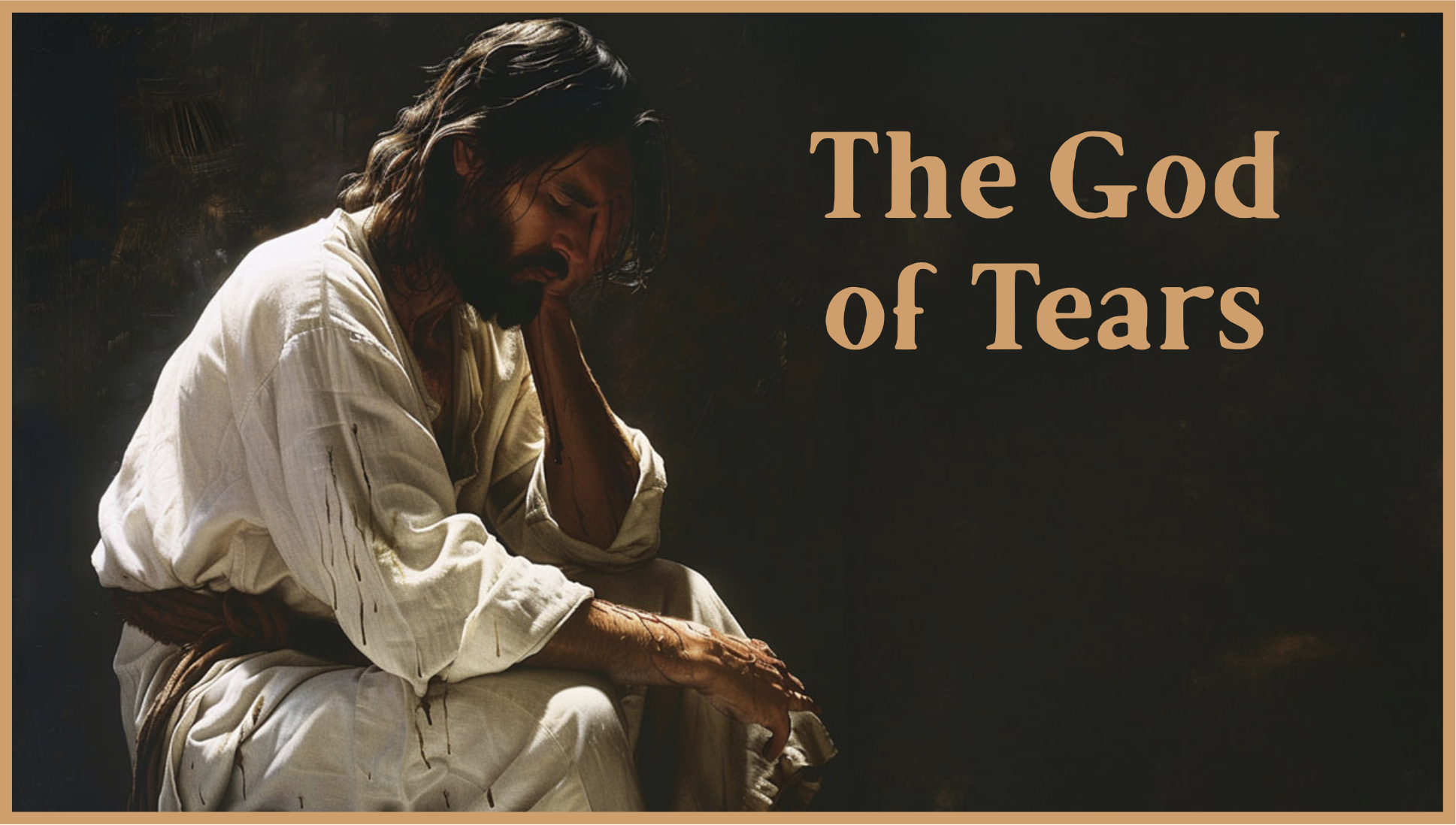
The God of the Bible is not a cold, unmovable, impassive deity.[3] This seems clear from reading the Hebrew Bible, where God is frequently moved to emotion—including sorrow—by the actions of His people. But it is most clearly seen in Jesus. Jesus is prophetically described as a “man of sorrows” (Isaiah 53.3). He describes those who mourn as blessed (Matthew 5.4). He famously wept at the tomb of His friend Lazarus. On the night of His betrayal, Jesus wept tears like blood in the Garden of Gethsemane. Surely the tears of the Son, the Messiah from the line of David, were kept in the Father’s bottle as well.

God stores up these tears, not because He delights in them, but because He is determined to do something about them—He will wipe them away:

4 He will wipe away every tear from their eyes, and death shall be no more, neither shall there be mourning, nor crying, nor pain anymore, for the former things have passed away.

(Revelation 21.4)

Our heavenly Father is not a cold, unmovable, impassive deity. He is a God of Tears. He takes not of them now, and promises to remove them in the future.


In this loose series of Scripture Reflections, I am sharing brief thoughts spurred on by my Bible reading. By way of reminder, my goal for these brief posts is two-fold:

(1) To remark on aspects of the biblical text that I find to be of interest that the reader may or may not have thought about previously.

(2) When possible, to point to the work and person of Jesus Christ. I believe the Bible is a unified story that points to Jesus, which means that He is frequently alluded to or foreshadowed in some way throughout the biblical canon.


[1] Scholars debate how to interpret the titles given to various psalms. Tremper Longman III, How to Read the Psalms (Downers Grove, IL: IVP Academic, 1988), 38-42, takes a moderate position: “After all the evidence has been surveyed, it is best to treat the titles as noncanonical, but reliable early tradition.” In other words, it is reasonable to assume that Psalm 56 is a psalm of David, and is connected to the historical context it claims.

[2] Examples of this abound in the biblical record: God sees the plight of the desperate Hagar in the wilderness in Genesis 16 and she calls Him “the God who sees.” When the people of Israel find themselves enslaved in Egypt, “God saw the people of Israel—and God knew.” When Hannah desperately prays to God for a son, God sees her plight, etc.

[3] The doctrine of the impassibility of God is complicated (and disputed), but properly understood, it does not suggest that God is devoid of emotion.

Two Pictures of Humanity

Creation Stories

It is commonly understood that the first two chapters of Genesis give us two creation accounts, but there is not much consensus as to how these two accounts are to be understood in relation to one another.

Some have suggested that these two accounts are from two different sources, presented side-by-side by a later editor, perhaps Moses or someone else. Of those who hold this view, some find the two accounts to be complementary, while others see them in great tension with one another. Others see the two accounts as coming from a single source and meshing seamlessly together, but with two different purposes: Genesis 1 takes the 30,000 foot view, providing a summary of the seven days and describing how God fashioned a good creation out of what was previously “formless and void”, while Genesis 2 zooms in, describing the creation of humanity in more detail.

I incline toward the latter view, though I don’t claim to know for certain. What I do feel confident about is that Genesis 1 and 2 give us two different perspectives on humanity that need to be held together in tension if we are to understand who we are.

In Genesis 1, humanity is presented as the pinnacle of God’s creation, formed on the sixth day. Male and female are “created in God’s image”, a theologically pregnant term that conveys great meaning. To be Imago Dei, means that we resemble our Father and that we are His representatives to rule over His creation in His name as He would have us to do. Creation is good, but when God reflects on humanity, He rates us as very good. What a glorious status we possess—God-imaging creatures.

But Genesis 2 tells us another aspect of the story, because humans are also…dirt. God forms the man out of the dust of the ground. This is actually where the name Adam comes from; he is formed from the ground (Hebrew: adamah). And what is it that humanity is called to do? If Genesis 1 gives us the lofty idea of ruling creation, in Genesis 2 it looks a lot more like…gardening. We are reminded of our earthy, creaturely nature, and it is fitting that, drawn from the dust of creation itself, we should be called to minister and serve in the context of that creation.[1]

In summary, we might say that Genesis 1 presents the grandeur of humanity, while Genesis 2 reminds us of our humility. If Genesis 1 raises us up to the heavens, Genesis 2 brings us back down to earth. This is the odd paradox of humanity—fashioned in the image of the Creator of the universe, but fashioned from dirt.

Genesis 1 presents the grandeur of humanity, while Genesis 2 reminds us of our humility. If Genesis 1 raises us up to the heavens, Genesis 2 brings us back down to earth. Share on X

Adam’s Story, Our Story, Christ’s Story

As we reflect on the nature of humanity, we can see this truth for ourselves, right? We catch glimpses of the glory of humanity—the capacity for extraordinary generosity or sacrifice, stunning creativity or beauty—but also of human frailty, failure, and folly. There are moments where we see marvelous things that other people accomplish, and we can feel immensely proud: “One of us did that!” But then there are other moments when we hang our heads in shame at the depths of human depravity.

In Prince Caspian, C.S. Lewis captures this seeming paradox in a conversation between Aslan and the young Caspian:[2]

“You come of the Lord Adam and the Lady Eve,” said Aslan. “And that is both honour enough to erect the head of the poorest beggar, and shame enough to bow the shoulders of the greatest emperor on earth. Be content.”

As the Narnia books so often do, this idea reflects biblical teaching. As the psalmist puts it in Psalm 84.4-6:

4 What is man that you are mindful of him,
and the son of man that you care for him?
5 Yet you have made him a little lower than the heavenly beings
and crowned him with glory and honor.
6 You have given him dominion over the works of your hands;
you have put all things under his feet…

Ultimately, this paradox, this tension baked into the creation narratives of Genesis 1-2, points ahead to and is fulfilled in Jesus Christ. This is made helpfully clear when the Hebrews writer takes the psalm quoted above and applies it directly to Jesus in Hebrews 2:

9 But we do see Jesus, who was made lower than the angels for a little while, now crowned with glory and honor because he suffered death, so that by the grace of God he might taste death for everyone.

Paul makes a similar point in Philippians 2.5-11, borrowing from what is believed by many to be an ancient Christian hymn:

5 Have this mind among yourselves, which is yours in Christ Jesus, 6 who, though he was in the form of God, did not count equality with God a thing to be grasped, 7 but emptied himself, by taking the form of a servant, being born in the likeness of men. 8 And being found in human form, he humbled himself by becoming obedient to the point of death, even death on a cross. 9 Therefore God has highly exalted him and bestowed on him the name that is above every name, 10 so that at the name of Jesus every knee should bow, in heaven and on earth and under the earth, 11 and every tongue confess that Jesus Christ is Lord, to the glory of God the Father.

Jesus perfectly images the Father, showing us exactly what it looks like to carry out our God-given vocation. But He does so as a lowly human, made of dust, subject to pain, fatigue, grief, and suffering.

Or, to use the words of Lewis once more: “The Son of God became a man to enable men to become sons of God.”[3]


In this loose series of Scripture Reflections, I am sharing brief thoughts spurred on by my Bible reading. By way of reminder, my goal for these brief posts is two-fold:

(1) To remark on aspects of the biblical text that I find to be of interest that the reader may or may not have thought about previously.

(2) When possible, to point to the work and person of Jesus Christ. I believe the Bible is a unified story that points to Jesus, which means that He is frequently alluded to or foreshadowed in some way throughout the biblical canon.


[1] Many scholars have pointed out that the “gardening” task of humanity is also a priestly task, and that Adam and Eve are given the job of ministering in the “Temple” of Eden. Indeed, the words translated “to work” (Hebrew: ‘abad) and “to keep” (Hebrew: shamar), are commonly used in religious contexts related to the ministerial work of priests and Levites. See Shara Drimalla and BibleProject Team, “Were Adam and Eve Priests in Eden?” BibleProject, April 12, 2021, https://bibleproject.com/articles/were-adam-and-eve-priests-eden/

[2] C.S. Lewis, Prince Caspian (New York: HarperTrophy, 1951), 233.

[3] C. S. Lewis, Mere Christianity (New York: HarperOne, 1952), 178.

Sober Reflections from Psalm 90

At the end of last year, I purchased a nice, leather-bound Psalter, and I have made a goal of reading through the Book of Psalms each month (a few psalms each morning and evening). I have been loving this practice so far, and as I had hoped, this has been an excellent way of framing my day and helping me to stay more spiritually centered throughout the day.

This morning I read Psalm 90, and was struck by much of it. Here are some selections from this beautiful and poignant psalm:

Lord, you have been our dwelling place in all generations.
Before the mountains were brought forth,
or ever you had formed the earth and the world,
from everlasting to everlasting you are God.

You return man to dust
and say, “Return, O children of man!”
For a thousand years in your sight
are but as yesterday when it is past,
or as a watch in the night.

You sweep them away as with a flood; they are like a dream,
like grass that is renewed in the morning:
in the morning it flourishes and is renewed;
in the evening it fades and withers.

The years of our life are seventy,
or even by reason of strength eighty;
yet their span is but toil and trouble;
they are soon gone, and we fly away.

So teach us to number our days
that we may get a heart of wisdom.
Satisfy us in the morning with your steadfast love,
that we may rejoice and be glad all our days.

I’m sure there is much that could be said from Psalm 90, but I was struck by the way it promotes urgency and humility:

(1) Life is a gift, and it passes quickly. We are here on this earth for such a brief amount of time, and life itself is fragile. That doesn’t mean we should cling to it tightly, desperate lest it slip through our fingers. It is slipping through our fingers regardless! Make the most of it.

(2) If you think you are of great, lasting significance, you are not. We would like to think that we matter a lot, that we will leave a lasting legacy, and that we will be remembered for a long time. For the vast majority of us, this simply isn’t true. Our lives will pass quickly, and within another few generations, we will be forgotten. This numbering of our days should help us to order our lives: we should seek to make a tangible impact on those within our sphere of influence, but always with a view toward eternity, the realm of the God who is from everlasting to everlasting.

« Older posts

© 2026 The Doc File

Theme by Anders Noren — Up ↑