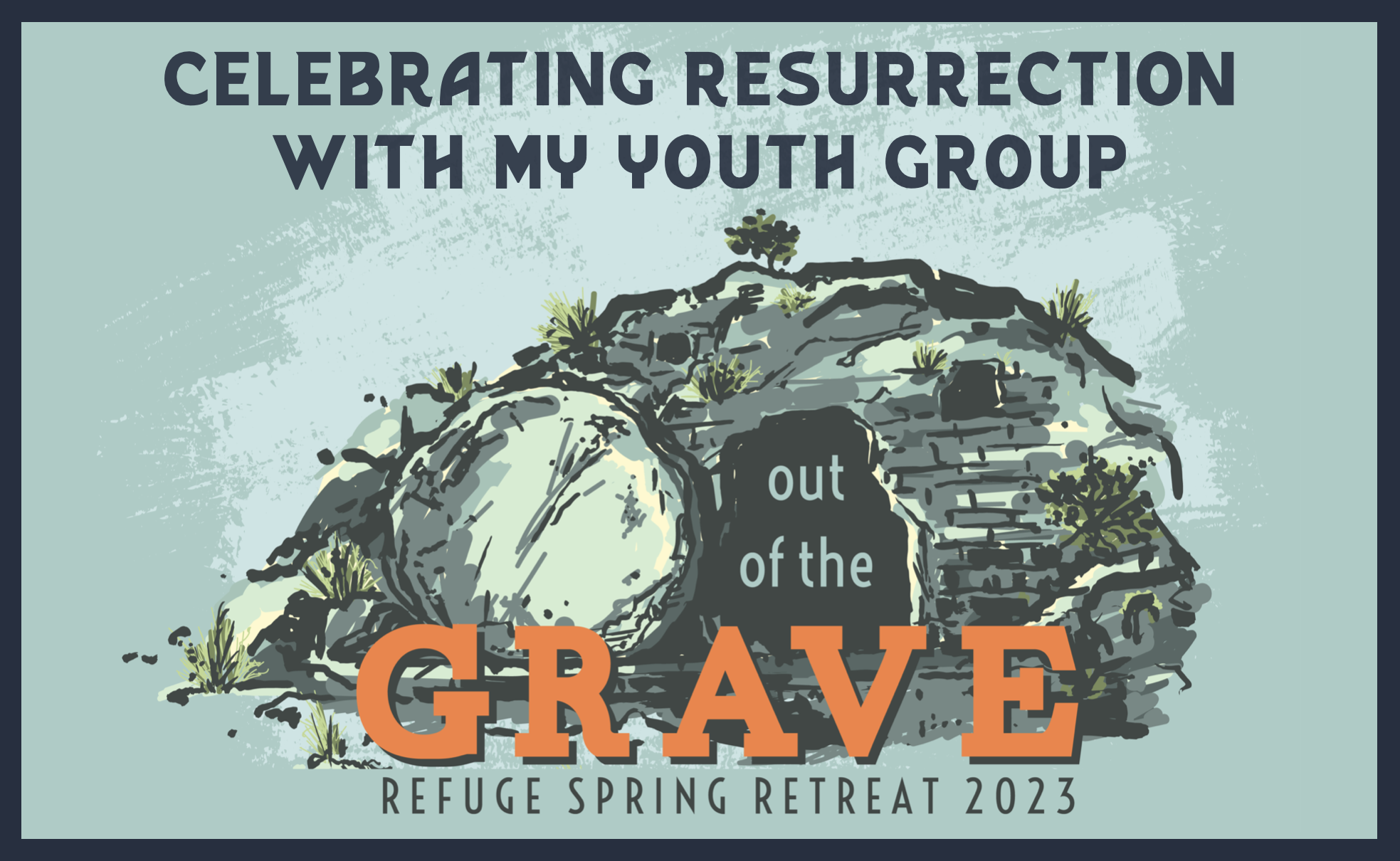
This past weekend (Friday evening through Saturday night) was our youth ministry’s Spring Retreat. Spring Retreat is our biggest event of the semester and, from my perspective, perhaps our most important event of the year, because of the cohesion and togetherness it gives to our group.
You may be thinking that Easter weekend is not the ideal time to schedule a youth retreat, and I would agree with you, but this was the only weekend we could make it work with my seniors’ schedules, and we still managed to have a really good turnout. And, since we happened to be meeting together on Easter weekend, I decided to theme the retreat around the resurrection of Jesus.
Really, the timing almost seemed providential. Currently, on Wednesday nights we are doing a series on doubt. A common misconception is that having doubts or questions in our faith is somehow sinful or shows that our faith is deficient, when the reality is that doubt is simply a part of the journey of faith. According to research, though, teenage Christians typically don’t have a space where they feel comfortable talking about their doubts, and they try to ignore them hoping they will go away. This is actually really detrimental to faith, though, as openly discussing doubts and questions during teenage years is correlated with long-term faithfulness.
Having said all that, while we want to be able to discuss our doubts and not be threatened by them, even more we want to trust God in our doubts, and also be confident in our faith.
Enter the resurrection.
Our theme for the weekend was “Out of the Grave,” and we examined the resurrection in three different sessions:
(1) Resurrection on Trial
Occasionally you will hear from people who consider themselves to be Christians, but reject the idea that Jesus physically rose from the grave. They believe that Jesus was a good man, a great teacher, that He had some great ideas, that in some sense He spiritually “saves” us and mystically “lives through us” but that whether or not He rose from the grave doesn’t really matter.
That’s not what Paul says, though. After describing the resurrection as “of first importance” in 1 Corinthians 15, Paul goes on to get even more specific. He says:
“…If Christ has not been raised, then our preaching is in vain, your faith also is vain…if Christ has not been raised, your faith is worthless; you are still in your sins…if we have hoped in Christ in this life only, we are of all men most to be pitied.”
(1 Corinthians 15.14,17,19).
What Paul is saying here is that you can’t have it both ways. You can’t hedge your bets. When it comes to the resurrection, there are only two choices:
- Jesus was not raised from the dead. If this is true, then all of us are, according to Paul, pathetic people who are wasting our time—we’re following someone who won’t lead us anywhere. If this is true then Jesus was a man, just like us, not unique in any way. He may have been a good man with great insight who people like to quote, but He is also someone who doesn’t have the answers to life’s questions and has no right to tell people how to live.
- Jesus was raised from the dead. If this is true, then it is the single most important fact in history. It means that Jesus was different; He was unique. He has power over life and death, He has the answers to life’s questions, He has the right to tell us how to live, and nothing in life is more important than following Him.
It is important, then, that we get this right, because the stakes are really high. Fortunately, though, there’s actually an abundance of evidence for the resurrection, and we put the resurrection “on trial” in our first session. We discussed the Physical Evidence of the empty tomb and the grave clothes of Jesus, we talked about the Eyewitness Accounts and reasons why the eyewitnesses could be considered reliable, and we discussed the Circumstantial Evidence of the sudden spread of Christianity and the change in the lives of both disciples and skeptics.
These different types of evidence all agree: after being crucified, Jesus of Nazareth was raised from the dead on the third day. And this is good, good news. The best news of all: it means that Jesus has power over life and death, the answer to life’s questions, and nothing in life is more important than following Him! Jesus Christ is the foundation of the Christian faith, and we shouldn’t build our faith or our lives on anything less than Him!
(2) Sharing in Resurrection
In our second session, we focused on the words of Paul in Romans 6.1-14, where he says that baptism is the time when we participate in the death and resurrection of Jesus. Jesus died, was then buried, and rose again, and Paul says here that, as Christians, we are buried in the act of baptism—we go under the water—and when that happens, our old self dies, and we are raised to walk a new life.
In the act of baptism, we unite our history and our destiny with Christ. Paul says that if we have been united with Christ in a death like His (by being buried in baptism), then we will also be united in a resurrection like His (v. 5).
In the act of baptism, we unite our history and our destiny with Christ. Share on XOf course, Jesus died a literal death, and then was raised, bodily, to a new life, and would then never die again, because death no longer had dominion over him (v.9). Our death at baptism is not a literal death, but rather a death to sin. Baptism represents a fresh start and a new life. No longer are we enslaved to the power of Satan, sin, and death; now, we have received God’s grace and God’s Spirit, and sin no longer is our master:
“So you also must consider yourselves dead to sin and alive to God in Christ Jesus.”
(Romans 6.11)
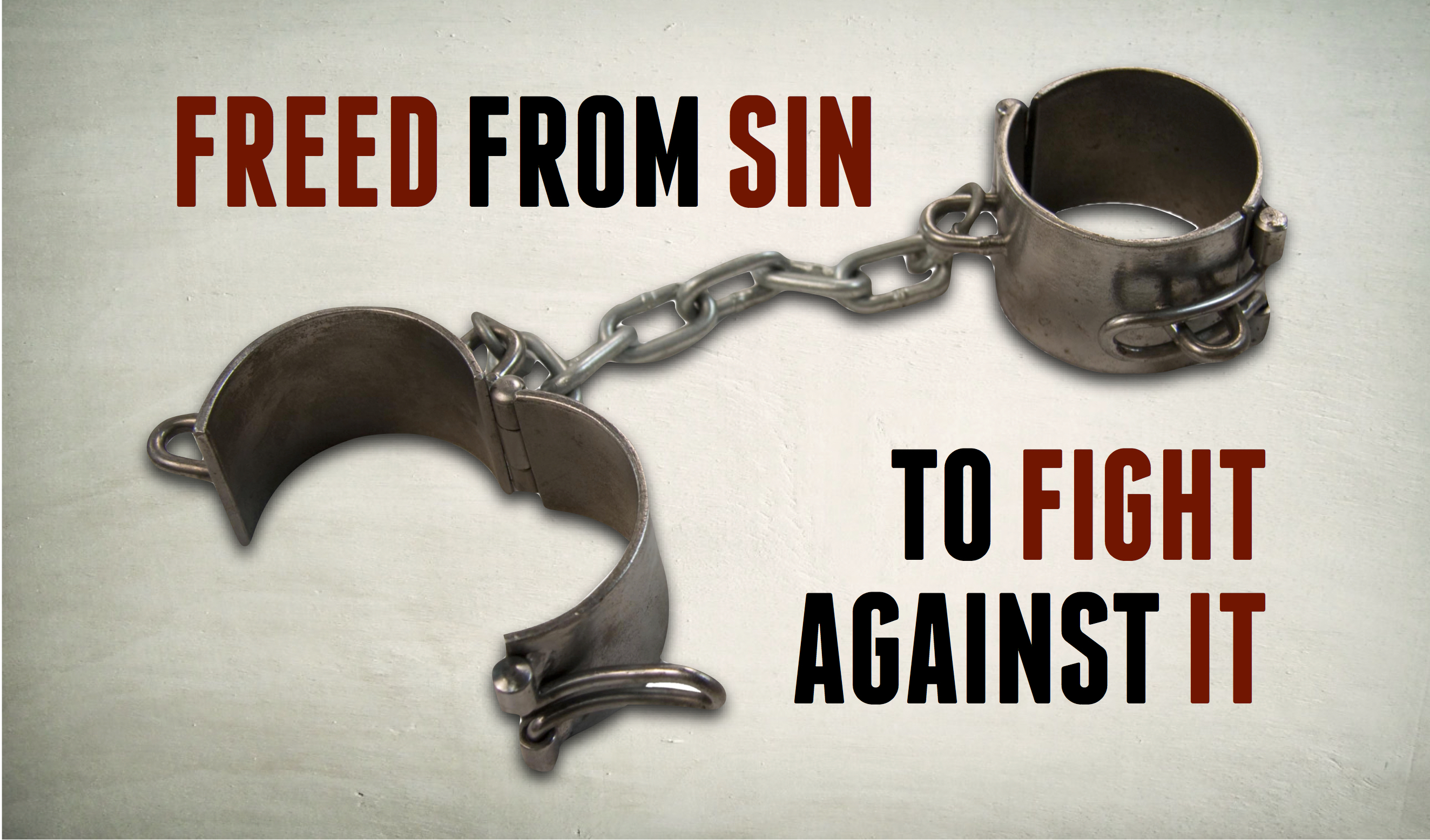
Of course, this doesn’t just happen automatically. Sin can continue to be a problem in our lives, and we must fight against it:
“Let not sin therefore reign in your mortal body, to make you obey its passions. Do not present your members to sin as instruments for unrighteousness, but present yourselves to God as those who have been brought from death to life, and your members to God as instruments for righteousness.”
(Romans 6.12-13)
Christ’s death and resurrection, and our sharing in His death and resurrection through baptism, provide us with the opportunity for a new life and a fresh start, but we still have to determine to live that way. It’s a fight and a struggle; we must present our bodies and our lives not to sin, but to God, not as instruments of righteousness. We are never going to be able to live the Christian life without effort. It’s going to require determination, struggle, and sacrifice.
But here’s the really important thing: what was once an impossible task—because sin was our master—is now possible! Because, through baptism, we have been united with Christ in His death and resurrection, we are now new creations. We have received God’s grace and His Spirit, and now, it’s actually possible for us to resist the temptation of sin.
We won’t do this perfectly, but we are given this promise:
For sin will have no dominion over you, since you are not under law but under grace.
(Romans 6.14)
Sin no longer has dominion; it is no longer our master. And in those times, when we struggle with sin and we fail, God’s grace is there, amazingly, to wash away that sin. We are new creations. We have died to sin, and been raised to a new life, like Jesus.
(3) Resurrection Hope
Finally, we looked at the rest of 1 Corinthians 15 and talked about the Christian hope that when Jesus returns, we will experience bodily resurrection.
It is clear from 1 Corinthians that the church in Corinth had a lot of problems, and one of the things they seemed to be struggling with was the idea of resurrection from the dead. Why did they struggle with this? Well, for the same reason people today struggle with it! People in the ancient world were not stupid or gullible, and they were much more familiar with death than we are today (where we do everything we can to distance and insulate ourselves from the reality of death). All sorts of illnesses and medical conditions that we can treat today were death sentences in the ancient world, so people saw a lot of death, and they knew that dead people stay dead and that dead bodies rotted.
This is what was so controversial about the claims of Christianity. It wasn’t controversial to say that people continue to exist in some way after death, or that our spirits leave the body at death and have an eternal existence somewhere—Greeks and Romans believed that already! But the Christian claim that Jesus rose from the dead and that His followers would be raised from the dead as well in their bodies was a shocking claim.
Paul taught about the resurrection in Athens, and people thought he was crazy (Acts 17). Apparently some of the Christians in Corinth did too.
But Paul emphasized that this matters—if Jesus was not raised from the dead, then our faith is useless, and we are still in our sins. But…
“But in fact Christ has been raised from the dead, the firstfruits of those who have fallen asleep.”
(1 Corinthians 15.20)
We can be confident in the resurrection of Jesus (see above), and Paul says that His resurrection is the “firstfruits” of our own. Firstfruits are the beginnings of a crop that point to a larger harvest later. What Paul is saying here is clear: If Jesus Christ was not raised from the dead, then our faith is useless, but if Jesus Christ was raised from the dead, then we will be raised too.
If Jesus Christ was not raised from the dead, then our faith is useless, but if Jesus Christ WAS raised from the dead, then we will be raised too. Share on XLater, Paul anticipates the question that he will get in response to teaching that our bodies will be raised: “How are the dead raised? With what kind of body will they come?” How can these dead, decaying bodies come back to life? Because they will be changed.
In this passage, Paul compares our physical bodies to a seed that is sown. This highlights a connection between our current bodies and our resurrection bodies, but also a change. Seeds are not the same as the wheat they produce, but they are closely related: they are made of the same “stuff”, and one has the necessary DNA for the production of the other.
Paul says that those who are in Christ will be raised with “spiritual bodies.” We need to think about both of these words. The Christian hope is not to be disembodied spirits floating around in a non-material existence, but neither is the Christian hope to have the same old bodies that we have right now, which are “natural” or “fleshly”.
Paul is clear in these verses that there are some major differences between our current bodies, and our future, resurrection bodies (15.42-44):
- Our current bodies are perishable, while our future bodies will be imperishable
- Our current bodies are dishonorable, while our future bodies will be glorious
- Our current bodies are weak, while our future bodies will be powerful
- Our current bodies are natural, while our future bodies will be spiritual
When Paul says “spiritual body,” the emphasis is on what provides the driving force for the body—it is powered by God’s Spirit. Just as the Holy Spirit raised Jesus from the dead, it will be God’s Spirit that raises us up from the dead and gives power and life to our resurrection bodies. The resurrection is not about us being freed from our bodies to live as spirits; it is about our bodies being transformed into something glorious that is both similar to and different from our current bodies, like seeds are both similar to and different from the plants that they produce.
This is the Christian hope: Just like Jesus, we too will come out of the grave!
Our bodies will be changed. They will be sown perishable, but raised imperishable; sown dishonorable, but raised glorious; sown in weakness, but raised in power; sown natural, but raised spiritual. Our resurrection bodies will be suited for an eternal existence with God.
We had a great weekend! We studied, discussed, worshiped, meditated, played, laughed, ate and even slept.
Most importantly, though, we thought about and celebrated the central claim of the Christian faith. The reality is that there are things that I struggle with and have questions about, but at the end of the day, I believe that Jesus was dead…and then He wasn’t. And if the resurrection is true, then that’s something that I can build my life on, and even though there are things that I don’t understand, those things don’t unsettle my faith because the truth is…Jesus came out of the grave.
The reality is that there are things that I struggle with and have questions about, but at the end of the day, I believe that Jesus was dead…and then He wasn’t. Share on X