The online journal of Luke Dockery

Tag: Spiritual Growth

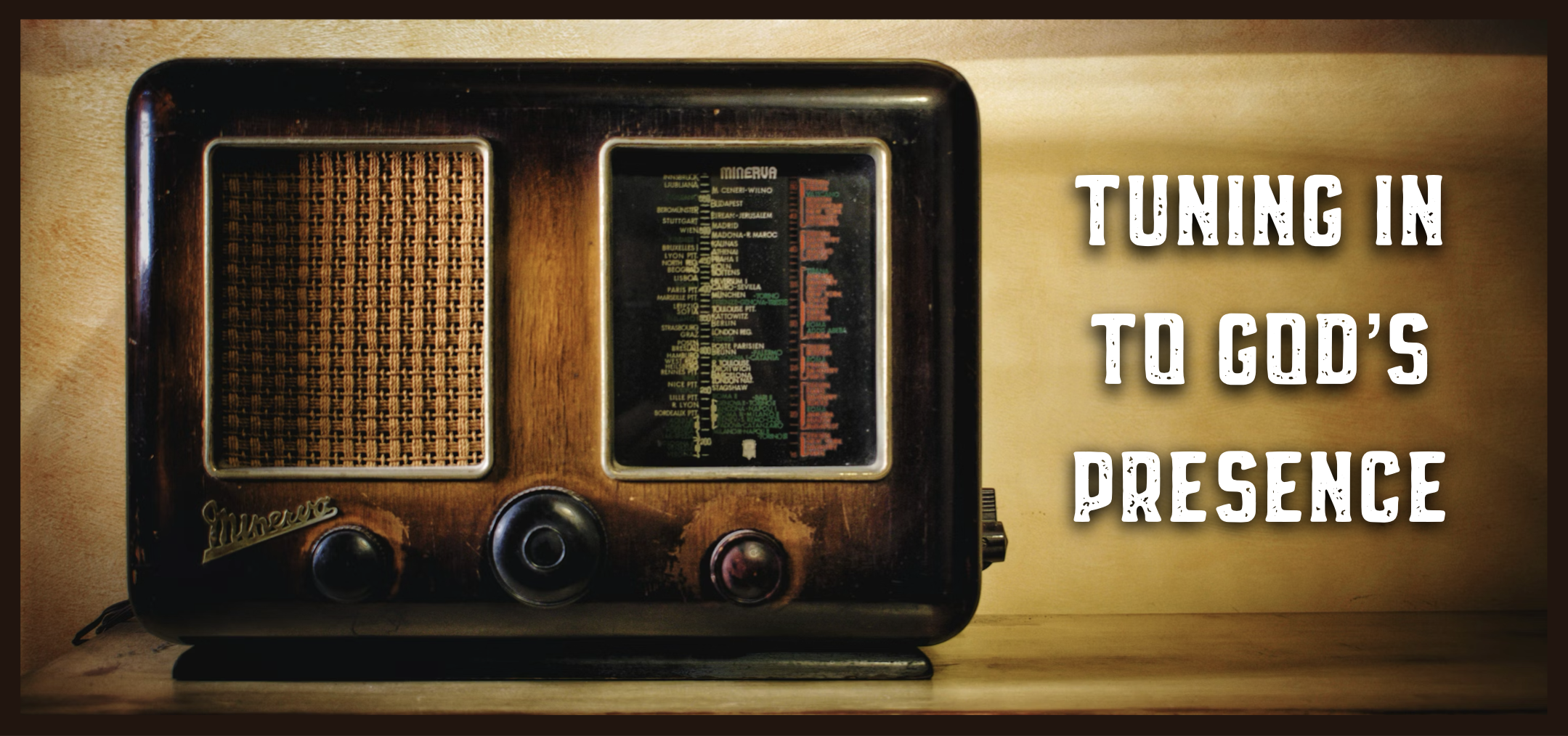
Tuning in to God’s Presence

As humans, we are constantly being influenced—or discipled—by the content and messaging we take in. That is true for all of us: children, teens, and adults.

A metaphor I have been using recently to help reflect on this reality is the idea of two volume controls. You might imagine that one volume control is labeled “God,” and this is the control that channels God’s truth into our lives. We turn up the God volume in our lives when we engage in practices like reading Scripture, praying, worshipping, spending time with Christian mentors and examples, reading thoughtful Christian books and listening to Christian music, and spending time in creation. The other volume control is labeled “World,” and this is the control that either distracts us from God or distorts our Christian worldview. This content may or may not be bad in and of itself, but it doesn’t help us align our lives with God’s mission.

The tension between these two volume controls has always existed, but a particular challenge in our current context is that the World control is turned up so loud—the messaging infiltrates our lives at every turn because of the ubiquity and constant connectivity of digital technology. By default, if you don’t take steps to prevent this, the God volume will tend to be low, while the World volume will be very high. Disciples of Jesus need to be thoughtful and intentional about how to reverse this—we cannot allow ourselves to float along in the current of the mighty stream of culture with the World volume blaring all along the way.

What this means for most of us is probably a combination of turning down the World volume and turning up the God volume. The former task—turning down the volume of the World—is essential. Depending on who you are, that may look like:

  • Watching and listening to less of the political content that makes your heart anxious and makes you suspicious of your neighbors.
  • Spending less time doomscrolling on social media and allowing algorithms to plan the trajectory of your thoughts and attention.
  • Cutting out music and shows in your life that promote behaviors and worldviews that are incompatible with Christianity.
  • Lowering the importance of things that are not necessarily bad—like devotion to a sports team—on the priority list of your life.

As you reflect on your own life, you probably have some specific ideas of how you might do this, and I encourage you to spend some time working on turning the World volume down. But that’s not actually the point of this post; instead, I want to reflect a bit on turning up the God volume, or to mix metaphors just a bit, tuning in to God’s presence.

I am in my 20th year of congregational ministry, and it may not surprise you to hear that, in many ways, the God volume has generally been pretty loud in my life. I spend quite a bit of time reading Scripture, teaching Bible classes, spending time with other believers, and having conversations about faith. But it is also true that many of those activities, while good, can easily trend toward the intellectual side of faith. I naturally gravitate toward learning and thinking, and there is nothing wrong with that, but following Jesus is ultimately relational, and staying firmly planted on the intellectual side of things is to miss a significant part of the picture.

With all that in mind, in 2026, I wanted to more intentionally tune in to God’s presence. Not just to know more about God, but to know Him better, and to approach this goal through repeated spiritual rhythms. Here are three practices that have become a significant part of my life this year.

Morning Renewal

Early in the year when I was at NCYM, I went to a session led by Dr. Jeremy Smith and Dr. Brandon Fredenburg from the Vocati Program, which is essentially a summer retreat for teens that leans heavily into spiritual practices. In this session, we learned a Morning Renewal, a daily prayer to be said (ideally) right when you wake up.

I have adapted their prayer slightly for my own use:

O LORD, open my lips, and my mouth will proclaim Your praise.
Open my ears to hear Your voice.
Open my eyes to see Your works.
Open my hands to wield Your strength.
Open my heart to embrace Your world.

Father God, you are here. Lord Jesus, you are here. Holy Spirit, you are here. And I am here.

I breathe today as one dead to sin and alive to God in Christ Jesus. I am here to do your will, O God.

For you are our compassionate, gracious God, slow to anger, abounding in steadfast love and faithfulness to all created things, in all ways, at all times.

Glory be to the Father, and to the Son, and to the Holy Spirit. As it was in the beginning, is now, and forever shall be—worlds without end. Amen.

Remembering to say this prayer first thing in the morning is still a work in progress for me, but I do say it most days early in the day, and it has been a helpful practice:

  • It starts my day by orienting my mind toward God and what He has already prepared for me to do.
  • It reminds me that God is already present in my life and in my world; I don’t have to seek Him out as much as I just need to pay attention.
  • It is a pledge that my purpose in life is to do God’s will.
  • It reminds me of the gracious character of the God I serve.

Beginning the day with the Morning Renewal helps me to start the day with purpose, encouragement, and determination.

Daily Remembrances

In early 2025 at the Harding Youth Ministers Workshop, I heard an excellent presentation on summer internships by Justin Hammond.[1] Although it wasn’t the main point of the presentation, Justin shared that he had written a “Personal Manifesto” of important truths that he needs to remember that he reads to himself every day. He has the student interns he works with engage in the same practice.

Inspired by this, I decided to make my own list. I call it my “Daily Remembrances,” and each day when I am in the office, I pray through the list. Here is my current list, with some comment/explanation:

  • Every day is a gift. I firmly believe that this statement is at the core of a contented life. My life is not a right; it is a gift. I need to remember to begin each day with gratitude and with wonder that I have been given another day to make the most of.
  • God is a generous giver. He has given me enough time, money, energy, and resources to accomplish what is needed. I have a busy life with a lot of accumulated responsibilities. I am inclined toward fatigue and anxiousness, concerned that I will never be able to do everything I need to do. However, I firmly believe that God is a generous Father, and because of that, I need to remember to live out of an abundance mindset rather than a scarcity mindset: God has given me what I need in order to accomplish what He wants me to do. It is enough.
  • It is a tremendous privilege to work with teens and point them toward Jesus. I have been a youth minister for 20 years. Sometimes, it can become routine. Sometimes, my students can get on my nerves and I can be cranky with them. Sometimes, I just want to do something else. I need to remember what a blessing and honor it is to do what I get to do.
  • I will choose to be positive and grateful rather than negative and complaining. People who know me well can tell you that I tend to fall on the pessimistic side. Being a negative complainer accomplishes nothing and benefits no one. It discourages others and saps my own resilience. I need to remember that when I am positive and grateful, I lighten the loads of those around me and foster contentment that allows for long-term sustainability.
  • I will be a strong, gentle, and supportive husband and father. I am confident that I am not the only one who is often not at my best around those I love the most. Too often I am tired and stressed by other things which means I can be passive, cranky, and withdrawn with my family. I need to remember that God has given me the sacred duty of leading my family, and that it is my responsibility to love them like Jesus does.
  • I will work hard AND value sabbath. I rarely need to be reminded to work hard; indeed, I am something of a workaholic (a familial trait). Sabbath is more of a struggle for me, however. I need to remember that sabbath is a gift and a commandment from God, and that I will do my work better and longer if I rest sufficiently.
  • God is good regardless of my emotions or circumstances in the moment. I am so limited in my perspective, bound by time and hostage to the emotions of the moment. Wrapped up in my own problems and my inability to perceive reality, sometimes God seems distant, arbitrary, or uncaring. I need to remember that God’s goodness is not dependent upon my emotional status, but is revealed in His faithful love throughout history.
  • Because of the resurrection of Christ, my labor is not in vain. Sometimes, I feel like a failure. My best efforts don’t seem to amount to much. Others seem to be so much more effective than I am. I want to give up. I need to remember Paul’s assurance that the resurrection of Christ has fundamentally altered the operating principles of the universe and that everything I do for Him always matters.

When I remember these truths, it transforms the trajectory of my day, making me more intentional, more resilient, more grateful, more content, and more loving.

Monthly Psalter

I mentioned earlier that Bible reading has generally been a big part of my life. Despite that, I have to confess that the reading of Psalms has been more peripheral. Of course, I had read through Psalms many times, but I never felt that I really appreciated the Psalms. And more than that, I felt that I was the worse for it—there was something I was missing out on until I improved my relationship with the Psalms.

So, this year I determined to change that. I purchased a nice, leather-bound Psalter and then began following a daily reading plan that goes through all 150 psalms each month. As I write this in late July, I have read through the Psalms six times so far this year and am nearing completion of a seventh, and I think I now have enough of a vantage point to say that this has been a deeply formative practice:

  • First, I generally read from Psalms in the morning and evening, and this has been an excellent way to bracket my day. The combination of the Morning Renewal, Daily Remembrances, and reading from Psalms has been such a significant way to “turn up the God volume” at the start of my day in a way that lingers throughout.
  • Second, it has helped me to greatly grow in the language of praise. It seems obvious to say that Christians should be good at praising God, but the reality is that this has been an area of needed growth for me for a long time, and the practice of reading through the Psalms over and over again has helped with this.
  • Third, the Psalms is a deep wellspring of biblical wisdom, and it’s like I am getting continual injections of a needed supplement in my life. I am constantly reminded of the goodness of God and His Word, the brevity of my life, and the necessity of turning over all vengeance and negative feelings to God.
  • Fourth, and perhaps most simply, I like the Psalms now. I don’t have all of the Psalms memorized or anything like that, but many of them have become like old friends that I look forward to seeing again on the next read-through. 

I’m not saying I will read through the Psalter every month for the rest of my life, but I do intend to continue the practice of regularly and repeatedly reading through the Psalms. I’ve simply seen too many benefits to stop.


I don’t want to give the impression that I have now spiritually arrived and that if you will follow the three life hacks I have outlined above, you, too, can become as spiritually advanced as I am! Far from it. I still have a long way to go, and by God’s grace, His Spirit will work within me to continue to transform me into the person He wants me to be. But these simple, repeatable practices have helped me to tune in to the presence of God in my life, and to orient myself to His purposes. My hope is that you will find something here to benefit your life of discipleship as well.


[1] Justin Hammond, “Purposeful Summer Internships,” presentation at the 2025 Youth Ministers Workshop, Harding University Center for Ministry, January 31, 2025, https://scholarworks.harding.edu/youth-conf/3
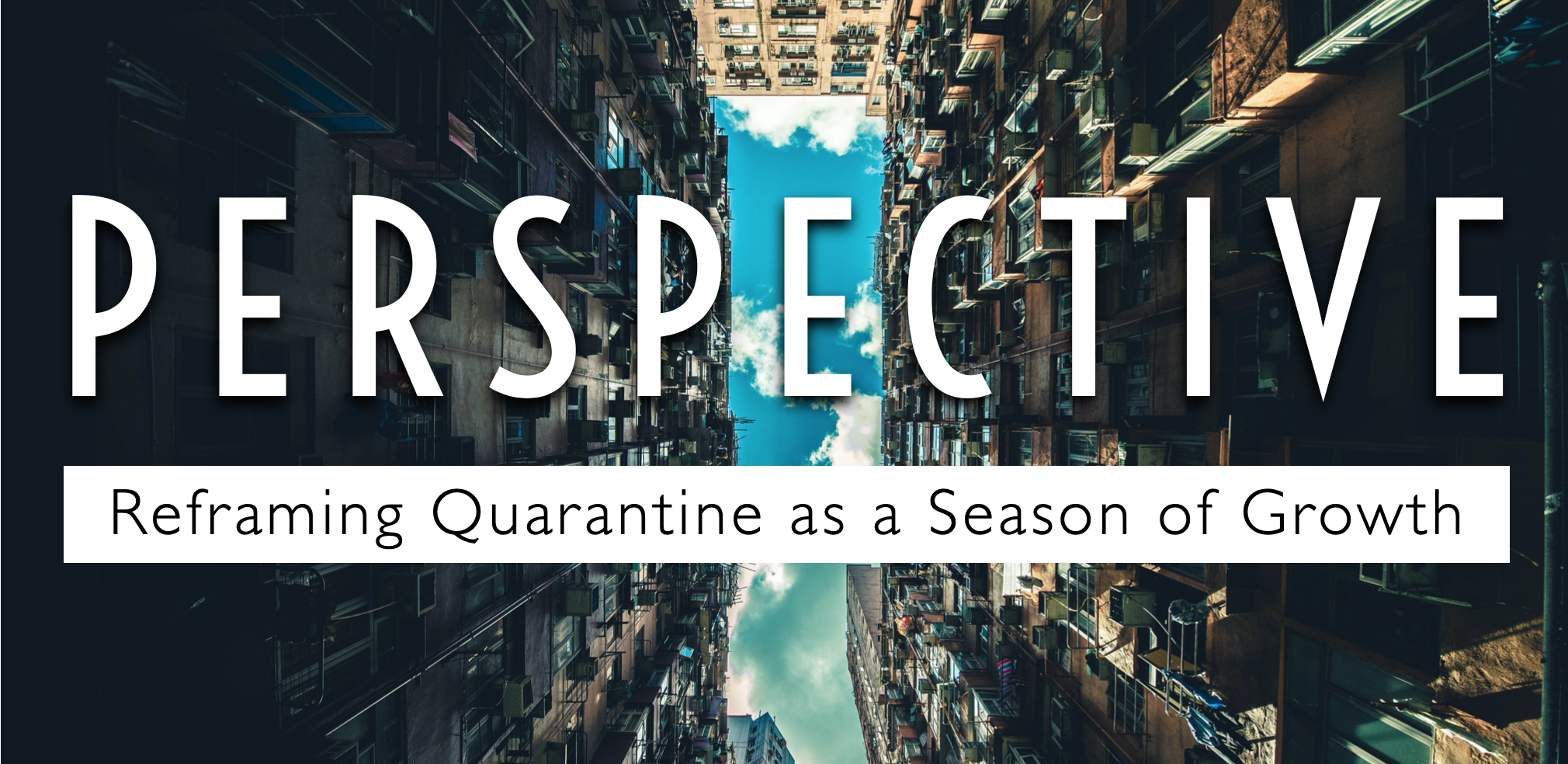
Perspective: Reframing Quarantine as a Season of Growth

Making the Most of our Trials

Consider it pure joy, my brothers and sisters, whenever you face trials of many kinds, because you know that the testing of your faith produces perseverance. Let perseverance finish its work so that you may be mature and complete, not lacking anything.

(James 1.2-4)

When James wrote these words nearly 2,000 years ago, he certainly didn’t have the worldwide effects of COVID-19 in mind, but once we realize that these aren’t directly about us, we can still see that they teach principles that do apply to us today.

First, in various ways, people all over the world (whether they are believers or not) find themselves facing trials. Some are grieving the loss of loved ones who have perished because of coronavirus. Others are worried about their health or the health of others they care about. Some people have lost jobs or are dealing with diminished income. Others are reeling from the negative mental and emotional effects of social distancing directives. So, it’s a trying time. That seems clear enough.

But I also think there is a significant point of connection in the way we view this current season of quarantine. At the heart of James 1.2-4 is James imploring his audience to reframe their situations. Rather than spend their time lamenting over the trials they face, he encourages them to reframe their trying experiences by viewing them as opportunities for growth, specifically in the sense that they can bring about perseverance and maturity.

It is only natural to respond to this current season with complaining, fear, laziness, selfishness, isolation, and mindless consumption. But here’s the thing: as a disciple of Jesus, I believed that I am frequently—no, constantly—called to rise above my natural inclinations and live a redeemed life, reflecting the reality that I am a new creation in Christ Jesus.

So, in this post, I want to share some practices that I have been working on (habits that I am trying to form) to help me rise above my natural inclinations and view this season as an opportunity for growth in various aspects of my life. I certainly don’t want to give the impression that I am doing this flawlessly; indeed, it is a constant struggle for me to reframe the COVID-19 quarantine as an opportunity for growth. But, that is the goal. Also, some of these practices may not be possible for everyone. However, my hope is that you will find some ideas in this post that will be helpful for you as you seek to grow in this season.

Changes in Perspective

I mentioned above several of the “natural” responses that I think a lot of us are currently experiencing. Although each of these could likely merit individual posts, briefly, here is how I am trying to reframe these responses:

  • From Complaining to Thanksgiving: Maybe you have felt the urge to complain at times during this current season of quarantine. I certainly have. Many of my plans have been altered or canceled. My routine has been changed. I am limited in the places I can go to and the things I can do. As a disciple of Jesus, I am not called to complain, however, but to give thanks. And really, I don’t have much to complain about, but have much to be thankful for: my family and I are healthy, we have a nice home in which to “shelter in place”, and we have plenty of food. In a time when millions of people have been laid off of work, my wife and I both have jobs where we can continue to work from home.
  • From Fear to Trust: The uncertainty in our world right now makes it easy to be fearful. We have to stay away from other people to limit the spread of disease. Economic forecasts are concerning. Future plans are up in the air. Even as we begin discussions of “opening America back up,” no one knows how long we will live in this limbo period before things are back to “normal”. As a disciple of Jesus, my life should not be characterized by fear or anxiety, but an unrelenting trust in the protection and provision of my heavenly Father.
  • From Laziness to Activity: Especially for those who are not working, or whose workload has diminished significantly, this can easily be a time of boredom and laziness. It can be hard to find the motivation to get up and do productive tasks. As a disciple of Jesus, I do not want to be lazy; I want to be healthy and productive. I want everything I do to be done as if I were doing it for the Lord (Colossians 3.23).
  • From Selfishness to Generosity: This is somewhat related to fear, but in times when it seems that there is not enough to go around, it can be very easy to hoard as much as we can, and keep what we have to ourselves. As a disciple of Jesus, though, I am not to place my confidence in material possessions, and I am to share what I have with others who need it.
  • From Isolation to Community: By necessity, we are physically isolated from one another right now, but that doesn’t mean that all of our relationships and interaction with people should be suspended. As a disciple of Jesus, I know that we were created for relationship, and it is important that I continue to cultivate and maintain relationships with others.
  • From Mindless Consumption to Thoughtful Consumption: Like many others, I am spending virtually all of my time at home right now, and much of it is spent on the computer or in front of a screen. There is an endless supply of content to be consumed. Some of it is actively harmful; some is perhaps less sinister but is still mindless and thus, not helpful. As a disciple of Jesus, I want to be more thoughtful in what I consume—I want to focus on that which is true, honorable, lovely, excellent, etc. (Philippians 4.8).

Helpful Practices

Here are some specific actions I have begun to do which reflect one or more of the changes in perspective mentioned above:

  • Morning Walks: Most days, I wake up and take a long (usually 60-90 minutes) morning walk, and while walking, I pray and also listen to audiobooks and/or podcasts. This accomplishes several objectives. The walks themselves help me stay active and healthy. The time in prayer helps produce an attitude of thankfulness within me, and moves me in the direction of trusting in God and thinking about the needs of others. Listening to books and podcasts is an example of thoughtful consumption, which I will mention more below.
  • Reading: Instead of binge-watching Netflix, I have tried to spend a lot of time reading and listening to books. I listened to Atomic Habits as an audiobook, which was outstanding, and provided me with the motivation to implement some of the habits I am attempting during quarantine. I am four books into The Chronicles of Narnia, which provides imaginative distraction from current reality, and also helps re-orient me from fear to trust. Listening to the After Class podcast and Seth Godin’s Akimbo have been helpful as well.
  • Careful Reading of COVID-19 News: It is an extremely unfortunate sign of the times in which we live that the COVID-19 crisis has become so politicized. There are a ton of people out there offering viewpoints on what is going on, and some of it is extremely dishearting, riddled with doomsday predictions, conspiracy theory rantings, or political ax-grinding. I try to limit how much of this I consume, period, and what I do read, I try to limit credible sources. Usually, I am looking for factual information; when I read analysis of the situation, I try to expose myself to well-written, if slanted, pieces from both sides of the political spectrum (like The Atlantic and National Review).
  • Workout Alarms: Monday-Friday, my cell phone alarm goes off 4-5 times per day on the hour as a reminder to get up from my chair and exercise. I have a routine of pullups, burpees, squats, and pushups that I have followed successfully (an evening routine of stair-walking, curls, and dips has been less successful). This helps me stay active during the day, and along with walks, has helped this to not be a season of sedentary weight gain. I’ve actually lost some weight over the last month, and I have gotten noticeably stronger—when I moved to Searcy last summer, I could barely do a pullup; I am now doing sets of 7-10 at a time.
  • Doxology Hand-washing: I confess that I am one of those for whom COVID-19 has completely altered my hand-washing habits. Unless my hands were coated in mud or paint or something like that, I never spend 20 seconds washing my hands, so that has been a massive adjustment. To help me wash for the appropriate amount of time, I sing Doxology while washing. In addition to helping me develop a healthy habit, this also means that every time I wash my hands for 20 seconds, my heart is inclined in grateful praise to God who provides all that I have.
  • Zoom Bible Study: I don’t really like Zoom; I look forward to the time when I do not use it regularly. But it has been a blessing in that it has enabled me to continue to teach Bible classes and participate in Bible studies. This is not only a crucial opportunity for connecting with other isolated people; it is also a constant re-ordering of my mind away from myself and my immediate circumstances and toward God.
  • Family Walks: Paired with my usual habit of morning walks, we usually take family walks in the evenings. This is another instance of exercise, but also helps our moods and attitudes (it is so nice to get out of the house), provides the opportunity for conversation, and also seeing and visiting with neighbors.
  • Driveway Church: Like many churches, our congregation has started sharing a lot of content online, including weekly worship services. We appreciate that and tune in each week, but there’s no denying that virtual worship misses the key component of fellowship that you get from being there in person. For the last few weeks, we have had Driveway Church, where we met with other members of our church who live in our neighborhood in our driveway, observing social distancing protocols. We sing, pray, read Scripture, and partake of the Lord’s Supper together. In one sense, it’s nothing profound or special; in another sense, it is incredibly profound and special.
  • Generosity: Caroline and I have both been blessed to keep our jobs and work from home, which means that we are not suffering financially as many are. We have looked for opportunities to give money to others, and also to support local businesses by getting more takeout and food delivered than normal (and, who am I kidding, I like Mexican food a lot!).

I am not going to pretend that I am enjoying everything about this current season of life; I certainly do not. But trying to change my perspective and reframe this as an opportunity for growth has been helpful for me. Whenever this ends and I am able to return to a more “normal” version of life, I hope to do so better than I was before: stronger, healthier, more generous, more thoughtful, and more dependent on God.

It is my hope that this season can be similarly beneficial for you.

Reaching Your Spiritual Potential: Read Your Bible!

This is the third post in an ongoing series (which I have neglected for a few weeks). See Part 1 and Part 2.

Bible Study in the Bible

Probably I don’t need to go into great detail about Bible study being a biblical idea, but briefly:

  • We know that Jesus had great command of Scripture.
  • He amazed the crowds, scribes, and religious leaders with His teaching  (even at a young age).
  • His beautiful Sermon on the Mount interacted significantly with the Law of Moses.
  • When He was tempted by Satan in the wilderness, He answered every temptation with Scripture.

Elsewhere in the Bible, we see an emphasis on the importance of studying, meditating upon, and teaching God’s Word:

  • Deuteronomy 11.18-23: “You shall therefore lay up these words of mine in your heart and in your soul, and you shall bind them as a sign on your hand, and they shall be as frontlets between your eyes. You shall teach them to your children, talking of them when you are sitting in your house, and when you are walking by the way, and when you lie down, and when you rise. You shall write them on the doorposts of your house and on your gates, that your days and the days of your children may be multiplied in the land that the Lord swore to your fathers to give them, as long as the heavens are above the earth. For if you will be careful to do all this commandment that I command you to do, loving the Lord your God, walking in all his ways, and holding fast to him, then the Lord will drive out all these nations before you, and you will dispossess nations greater and mightier than you.”
  • Joshua 1.8: “This Book of the Law shall not depart from your mouth, but you shall meditate on it day and night, so that you may be careful to do according to all that is written in it. For then you will make your way prosperous, and then you will have good success.”
  • Psalm 119.105: “Your word is a lamp to my feet and a light to my path.”
  • Acts 17.10-12: “The brothers immediately sent Paul and Silas away by night to Berea, and when they arrived they went into the Jewish synagogue. Now these Jews were more noble than those in Thessalonica; they received the word with all eagerness, examining the Scriptures daily to see if these things were so. Many of them therefore believed, with not a few Greek women of high standing as well as men.”
  • 2 Timothy 2.15: “Be diligent (KJV: study) to present yourself approved to God as a workman who does not need to be ashamed, accurately handling the word of truth.
  • 2 Timothy 3.16-17: “All Scripture is inspired by God and profitable for teaching, for reproof, for correction, for training in righteousness; so that the man of God may be adequate, equipped for every good work.”

There are a lot of other passages we could look at, but I think these give the idea: the Bible presents itself as a book of teaching that needs to be read, studied, and obeyed by the people of God.

Clueless Christians

I think perhaps that the greatest problem in American Christianity today is that Christians claim to live their lives according to the teachings of a book that, frankly, they know very little about!*

I truly believe that a lot of the division that exists in Christianity and a lot of the false teaching that abounds would be taken care of if people would simply spend more time reading God’s Word.

This is absolutely true in the Christian world as a whole and I believe it is also true within the fellowship of Churches of Christ. In classes I teach and in biblical discussions I have, I am firmly convinced that the vast majority of people who call themselves Christians are pretty ignorant when it comes to what the Bible actually teaches.

And if you know your history about the fellowship of Churches of Christ, that is both ironic and sad. Churches of Christ have direct historical ties to the American Restoration Movement, which occurred in the early 1800s in the United States when several men, independently and simultaneously, decided that they wanted nothing more and nothing less than to be members of the Church purchased by the blood of Christ and established by His apostles in the first century.

Men like Barton W. Stone and Alexander Campbell didn’t want to be called Baptists or Presbyterians or Methodists anymore; they just wanted to be known as Christians. These men didn’t want to have anything to do with manmade creeds or traditions; they wanted their beliefs and practices to be determined by the teachings of Scripture. They didn’t want people following them; they wanted people to follow Christ.

So, examining Scripture, these men came to the conclusion that local congregations should be organized under Elderships, that worship to God should consist of a cappella singing, that the Lord’s Supper should be observed every Sunday, and that baptism involves being immersed in water for the remission of sins. If you attend a church of Christ, that should all sound pretty familiar to you.

As I said earlier, the lack of biblical knowledge that we have today is ironic, because, in Churches of Christ, our big thing, our defining characteristic is supposed to be that we make every effort possible to be the New Testament Church, and to live our lives according to the teachings of the Bible. But how can we hope to do that if so many of us know so little about what the Bible actually teaches?

The simple truth is that there’s no way that we can become mature Christians and reach our spiritual potential if we are ignorant of the teachings of Scripture!

We believe that the Bible is a special book because it is God-breathed; it’s the only book that we have that came from God! What could be a more important use of your time than devoting yourself to the reading and study of such a book?

Unfortunately, somehow we’ve developed the idea that it’s the Church’s job to teach us all the Bible we need to know. Certainly part of the Church’s job is to teach Christians, but if the only exposure to the Bible you’re getting is at Church, it’s just not enough! At the congregation where I work, we have roughly 80 minutes of Bible class time per week. Add to that another 60 minutes of sermon time per week and then do the math, and it comes out to about 120 hours, or 5 days of biblical instruction per year. That, on it’s own is not nearly enough, and that assumes that you never miss a single class or sermon!

What all this means is that if we’re going to grow to become mature Christians and reach our spiritual potential, it is going to require that we read and study the Bible outside of church.

I realize that what I’m saying doesn’t apply to everyone who is reading this; there are some who have studied the Bible for decades, and who continue to make Bible reading a part of their daily lives. But for many of us, there is a lot of room for improvement.

I read the Bible a lot, but it had been several years since I had systematically read the entire Bible through in one year. I decided to do that this year, and have been astounded by the results: so often I will be reading something else or talking to someone about a biblical topic, and I’ll think to myself, “I just read that the other day!” It has been a tremendous blessing to see different parts of my life interconnected and woven together in the shadow of the Word of God.

Let me encourage you: make a commitment today to be a person whose life is characterized by a dedication to the reading and study of Scripture. Your spiritual growth and potential depends on it.

Read your Bibles!

*I say “perhaps” because sometimes I think that the greatest problem in American Christianity is the way that we spend our money. But maybe there’s no real disagreement here: if we actually read our Bibles and listened to what Jesus said about money, it might take care of that problem too.

Reaching Your Spiritual Potential: Pray!

This is the continuation of a series which began here.

Prayer in the Bible

The importance of prayer is a basic teaching of Scripture. In the life of Jesus Himself, we see the importance of prayer:

  • He often went off by Himself to pray.
  • He took time for the express purpose of teaching His disciples how to pray.
  • He prayed with His disciples and prayed for them in their presence.
  • In the night before His crucifixion, when He faced the most difficult time of His life, He spent the night in the Garden of Gethsemane in fervent prayer.

Elsewhere in Scripture we see the importance of prayer emphasized as well:

  • The apostles would use prayer to aid in the performance of miracles.
  • Philippians 4.6-7: “Do not be anxious about anything, but in everything by prayer and supplication with thanksgiving let your requests be made known to God. And the peace of God, which surpasses all understanding, will guard your hearts and your minds in Christ Jesus.”
  • James 5.14-16: “Is anyone among you sick? Let him call for the elders of the church, and let hem pray over him, anointing him with oil in the name of the Lord. And the prayer of faith will save the one who is sick, and the Lord will raise him up. And if he has committed sins, he will be forgiven. Therefore, confess your sins to one another and pray for one another, that you may be healed. The prayer of a righteous person has great power as it is working.”
  • 1 Thessalonians 5.17: “Pray without ceasing.”

Prayer and You

What is your prayer life like?

A lot of very different people read this blog, and there are probably some who are reading who have an outstanding prayer life…who truly pray without ceasing…who spend a great deal of time in conversation with the Father. That’s great—keep doing what you’re doing. But I think a lot of us probably need to increase our efforts.

Some people go through most of their day (or most of their lives!) ignoring prayer, unless something really bad comes up. For them, prayer is like a parachute—something you only use in an emergency.

Others might have regular times of prayer—before meals, when they wake up, when they go to sleep—and there’s nothing wrong with that. In fact, I think it’s a good and healthy thing to have regular times of prayer. But if we’re not careful, that can become just a pattern we fall into without much thought.

Sometimes we may struggle to pray because we feel like we don’t have a lot to say. You know, generally, when you look at your relationships, the closer you are to someone, the easier it is for you to talk to them (there are some people to whom it’s hard to say two sentences; with others you can go on indefinitely). I think the same thing is true when it comes to our prayer lives. At first, it might be hard to find things to talk about, but the more time you spend in prayer, the easier it gets.

And in the meantime, before you get “good” at it, there are plenty of things to pray for—the church, the leaders of your church, those who are sick, those whom you know who are lost, the government, the military, your family, that you avoid temptation, etc.

The Bottom Line

There’s no way that we can reach our spiritual potential and become mature Christians if we don’t regularly spend time talking to our Heavenly Father in prayer!

Make a commitment today to be a person of prayer. Set aside specific times to pray; be on the lookout for people and causes to pray for, and consider keeping notes or a journal to help you remember those things.

Pray!

Reaching Your Spiritual Potential: Introduction

Misunderstanding the Spiritual

The Gospel of John is one of my favorite books in the Bible. I took a course on it in undergrad and a second one in grad school. I’m also now teaching it for the second time.

One of the repeated themes in John’s Gospel, something that you see over and over, is the idea of misunderstanding—Jesus presents some form of teaching, and His audience completely fails to understand what He is talking about.

  • This is very apparent in John 3, where Jesus tells Nicodemus that he must be born again, and Nicodemus can’t understand Him because he’s trying to imagine a physical rebirth—re-entering his mother’s womb to be born again (which, admittedly, would be pretty difficult).
  • We see it again in John 4, when Jesus is talking to the Samaritan woman at the well; Jesus talks about “living water”, referring to something spiritual, but the woman assumes that He is talking about a special kind of water which can be seen, touched, and drunk.
  • Later on in John 6, Jesus says that He is the bread of life, and that those who eat His flesh and drink His blood have eternal life. This turns off a lot of the people, because they think He is literally talking about eating Him.

There are more examples that we could give, but I think you can see the point—over and over again in John’s Gospel, people misunderstand what Jesus is saying, and the reason for this is that Jesus is focused on spiritual teachings while His audience is locked in on the physical side of things.

You know, I think we have a very similar problem today.

Oftentimes I think we struggle to do the things that Jesus calls us to do and to live the way He expects us to live because we are so focused on the physical—what we can see and touch—that we tend to neglect the spiritual.

“Reaching your Potential”

There’s a lot of talk in our world today about “reaching your potential”.

You hear it a lot in the context of athletes and sports teams. A coach might talk about how his team has a lot of talent, but how they have to work to reach their full potential. You also hear it in the context of education—a particular student may have a lot of natural ability, but a lot of work is involved to be the best student he or she can be.

Potential involves raw talent and ability, but getting the most out of it requires hard work! No Hall of Fame athlete achieved that success without committing himself to long hours of exercise and practice. No Rhodes Scholar ever achieved that honor without committing herself to long hours of study and review.

I think the same thing is true in regards to spiritual potential.

For those of us who have committed our lives to Christ and have put Him on in the waters of baptism, it is our responsibility to mature and develop spiritually, to work to follow Jesus more closely and live increasingly holy lives. Another way of saying that is that it is our duty to reach our spiritual potential![1]

But how do we do that? I’d like to spend a few posts looking at practical ways in which we can develop our spiritual potential. These aren’t new or flashy ideas; they are simple steps which require hard work and diligence. But if followed, they are practices which will help us to reach our spiritual potential and serve God more effectively.


[1]Some readers will likely feel uncomfortable by some of the language in this paragraph which emphasizes our role in our spiritual growth and development. Isn’t it God’s work (though Christ) which saves us? Isn’t it God’s work (though the Spirit) which sanctifies us? Certainly. But neither of those truths eliminates the fact that we also have a role to play. Your own personal efforts can’t make you holy, but at the same time, the work of the Spirit won’t happen without your willingness and cooperation.

© 2026 The Doc File

Theme by Anders Noren — Up ↑







