The online journal of Luke Dockery

Tag: Summer (Page 1 of 2)

Hectic Youth Ministry

Things have been pretty quiet around The Doc File recently, largely because I am now squarely in the middle of the summer youth ministry grind. Looking back, I actually didn’t write a single post in the month of June, but that is not too surprising when I reflect on what my June looked like:

  • Portions of three different weeks were taken up by three different camps that we participated in: NWA Work Camp, Uplift at Harding University, and Green Valley Bible Camp.
  • Four different speaking engagements (one at Farmington, one at camp, one at a retreat, and one at an out-of-town summer series), all over different material.
  • A youth group lock-in the day after we got back from camp (I have been a youth minister for too long to make such a rookie scheduling mistake!).
  • Teaching two bible classes and/or making arrangements and leaving plans for substitute teachers on evenings when I have been away.
  • Making plans for our Vacation Bible School in July,  working toward several changes to our education program beginning in September, and organizing the 2017 Deeper Youth Conference in November.
  • In addition to these ministry responsibilities, we also made two trips to Little Rock in June for follow-up appointments related to Kinsley’s surgery.

It has been a busy month, and the reality is that things won’t slow down too much for a while. I am currently in Alabama for a few days of vacation surrounding Independence Day, but as soon as I return we will be back at it with 10 days or so of prepping and then doing VBS, followed by our summer youth trip.

I don’t say any of this to be whiney or to complain, and honestly, most of the youth ministers I know have summer schedules that are this bad or even worse. Spouses of youth ministers sometimes joke about being “youth ministry widows” or “summer widows” because they go so long without seeing their spouses who are continually jetting from one event to another. I do wonder, though: is having a hectic summer packed with constant activities the best way to do youth ministry? What I am about to say may seem self-serving since I would like to slow down a bit in the summer, but I am seriously starting to think that the answer is “no”:

Hectic summer youth ministry is expensive.

This is the most practical consideration on the list, but it shouldn’t be overlooked. I try really hard to keep our youth ministry activities affordable, but the reality is that, the more you do, the more you spend, especially when you start talking about camps and extended trips, or families with more than one student the youth group.

We have a policy in place where we never want a student to miss an event because of cost, and thus, we make provision for students who can’t afford a certain event; at the same time, just because we have that policy in place doesn’t mean that students and parents always take advantage of it, and I am confident that some students miss out on certain events due to cost without telling me.

Hectic summer youth ministry separates children from their families.

I have written before and also spoken many times about how I believe that youth ministry should be built upon the twin pillars of the physical family and the faith family (where “physical family” refers to moms, dads, brothers, sisters, grandparents, etc. and “faith family” refers to the church congregation), and that it is these two groups that, ideally, pass on faith to young people. This means that youth ministry should work hard to strengthen the ties between a student, that student’s physical family, and the student’s faith family.

Unfortunately, the hectic summer youth ministry model that we have been talking about doesn’t necessarily do a great job of that. Sure, constant youth activities can work wonders to strengthen ties within a youth group, but unless you are very intentional about about including parents and other adults from church in meaningful ways, what you can end up doing is providing a full list of activities that cause your students to largely check out on their families and their church family for a couple of months, which is never good.

Hectic summer youth ministry encourages activity without reflection.

When I think about it, having an overwhelmingly busy slate of summer youth activities makes perfect sense in light of our larger cultural problem of constant busyness. People seem to be busier now than ever before. We have made being busy in some sort of virtue or badge of pride, as if it is healthy to constantly be burning the candle at both ends, rushing around from one activity to another without time to catch our collective breath. A hectic brand of youth ministry fits right in with the surrounding culture.

Part of the problem with such busyness is that it deprives us of the time for reflection (and in time, I think it progressively deprives us of the desire to reflect and then even the ability to do so): how can you sit and process the experiences you have just had when you have to immediately turn around and run to the next thing? I don’t want to make too much of this, but isn’t it possible that continually going from one thing to the next without ever reflecting on what we have done actually makes us shallow, attention-deficient humans?

Concluding Thoughts

To be honest, at this point I have more questions than answers. Considering our own youth ministry schedule, I think we have done a pretty good job of not overloading students throughout the year, but I think the summer is undoubtedly hectic at times.

I have tried to mitigate that somewhat by providing some down times during the summer where there is not much going on. June is crazy, and July ends that way, so I intentionally don’t schedule much around the 4th of July (hence, me being on vacation for a few days!) or after the first few days of August, in hopes of giving students time to catch their breath and be around family. Perhaps these down periods are sufficient, but I am also planning on critically evaluating our summer schedule for next year, and seeing if it would be beneficial to pare down a little bit in an effort to make the summer a little less hectic for our students.

2013 Summer Trip Recap

Every year, one of the high points for our youth group is a summer trip. Generally, we combine some type of service project with some fun activities. This year, we went to Morrilton, Arkansas, and Memphis, Tennessee.
In Morrilton, we stayed at Southern Christian Home, where we helped to move a ton of furniture, get things organized for a huge yard sale they were having, and also did some painting. It was good to meet the people there and see the campus and the work they were doing, and to help out a little.

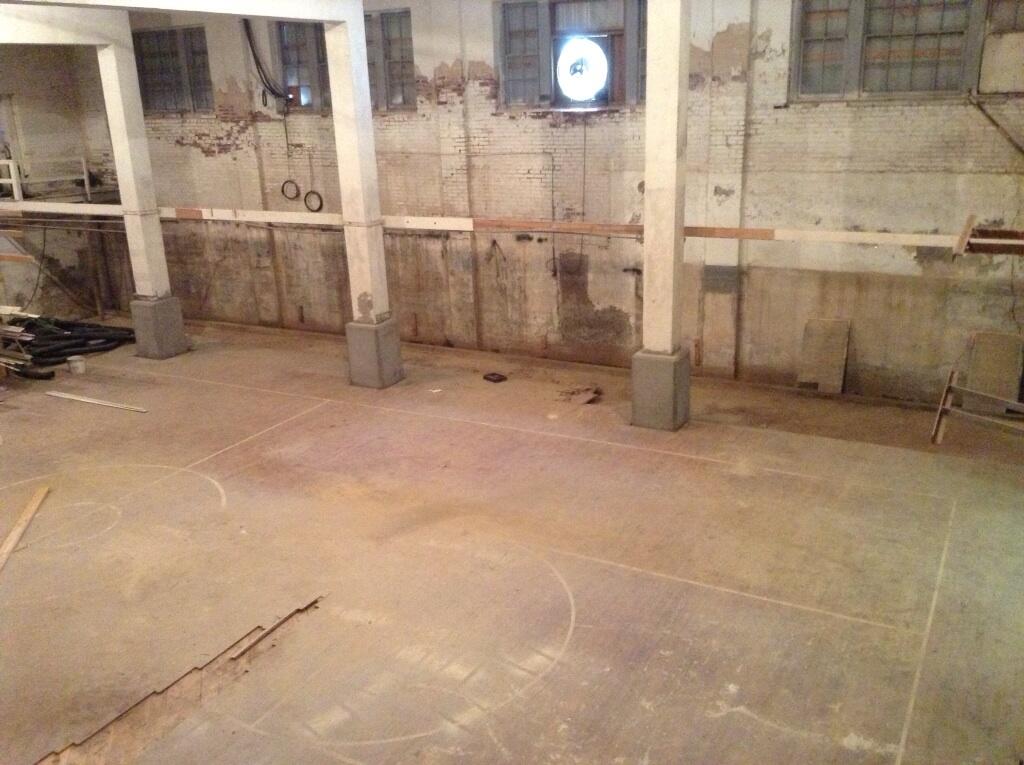
For me, one of the highlights of that part of the trip was getting to work in the main building on the campus, which back in the 1920s served as the campus of my alma mater, Harding University. Specifically, I was working down in the basement, which had originally been a basketball gymnasium. Though in need of a lot of work, it is an incredible building, and still has the original hardwood flooring from 1919!

Old Gym from the 1920s.

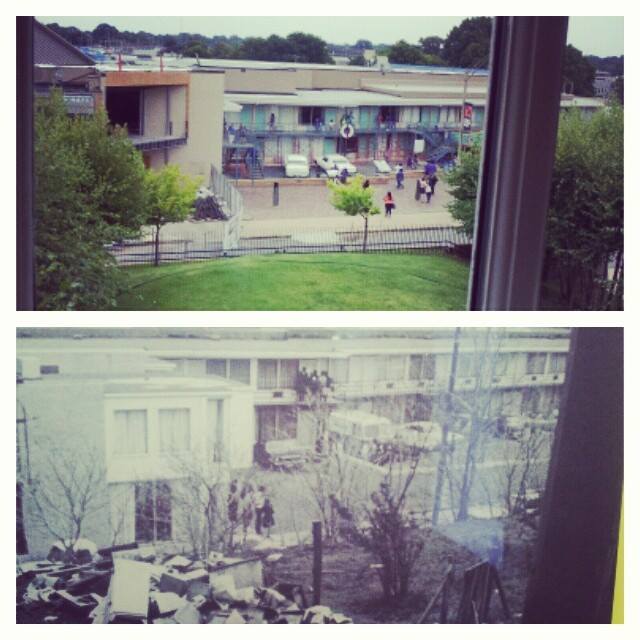
After a couple of nights in Morrilton, we headed to Memphis. While there, we visited the National Civil Rights Museum. I wasn’t sure how this part of the trip would go over, because teens don’t always appreciate educational experiences during their summer vacations, but several of them mentioned how cool it was and how much they enjoyed it. The museum itself is across the street from the Lorraine Motel where Martin Luther King Jr. was shot, and everything has been carefully preserved. The museum itself is actually the converted boarding house from which the shot was fired.

View from assassin‘s window today (top) and in 1968

I like museums and enjoyed the National Civil Rights Museum a lot (even though some of the exhibits were closed because of construction). I learned a lot of details about the assassination that I didn’t know before, and it was pretty neat to watch my teens grasp the significance (or at least some part of it) of what they were experiencing.

From there, we spent some time at a mall and then went back to our hotel to swim and hang out. The next morning, we went to Sky Zone Indoor Trampoline Park in Memphis. There we spent a couple of hours jumping, flipping, and playing dodgeball. It was a lot of fun, though exhausting as well (I am still sore a couple of days later).

Part of our group at Sky Zone Memphis.

After that, we loaded up and began the process of heading home. All in all, we had a great trip: we were able to accomplish some work at the Children’s Home, the teens had a great time and were well-behaved, and I had some really good chaperones who helped a ton. I think it was the most stress-free trip I’ve ever had, which was awesome.

Review: Hashtag Youth Series

Our youth group recently finished up the Hashtag Youth Video Series, which served as the summer curriculum for our Wednesday night Junior and Senior High Bible Class (we were gone a few Wednesday nights because of special activities, so we ended up getting behind and finishing in September).

Some dedicated youth ministers from Churches of Christ (primarily in Tennessee) put a lot of work into the conception and production of Hashtag, and I thought I would take a few moments to review the series now that we have completed it.

Strengths

To start with, I should mention that the Hashtag Youth Series was entirely free. Thirteen videos, usually 10-15 minutes in length, and all accompanied by discussion guides and manuscripts, all were available for download free of cost. If you have any experience in finding and ordering Bible class material, you know that it can be very expensive, especially if you’re looking for videos.

Furthermore, Hashtag is incredibly easy to use. Summer can be a crazy time for youth ministers. With students out of school, it seems to be a time for constant activity, ranging from summer camps, to mission trips, to Vacation Bible School, to summer fun trips, and all of that on top of all the regular activities a youth group participates in. In the midst of all the busyness, it’s nice to be able to show a video series where you don’t have to put a ton of time into preparation and basically are able to just focus on leading a group discussion based on the video which was seen. The ease of use is also a huge benefit when it comes to finding substitute teachers—I had to be away a couple of weeks for travel or to speak elsewhere, but it was easy to find someone to take my spot, show the videos, and lead the class in discussion.

Finally, the videos themselves were of high quality. Watching the videos, it didn’t seem like you were using a free product at all. The graphic design and typography was awesome, and the video production was very good too. Nothing about the videos seemed amateurish at all.

Suggestions for Improvement

The videos were basically in the format of a summer series, where each week you have a different speaker focus on a certain topic. What I have generally found to be true with summer series also applied to Hashtag: the speakers were somewhat hit and miss. The video topics included some theologically deep concepts (see the banner at the top of this post for the topics which were covered), and although most (if not all) of the speakers were youth ministers, some did a much better job of communicating the topic at a teenage level than others.* Furthermore, the basic format of the videos was lecture: the speakers sat in a room talking to a camera. Generally, the speakers who provided visual aids or incorporated a narrative style into their lessons were better received by the audience (at least, in our case).

Also, some of the discussion guides were better than others. Some of the guides were great, providing interesting ice-breakers to introduce the videos and excellent questions for discussing them. At other times, I felt like the majority of the questions were unhelpful as discussion starters and I had to basically generate my own questions.

Overall Assessment

All in all, I think the Hashtag Video Series was a significant accomplishment, and I would definitely recommend it to those who are looking for Bible class curriculum for teens. I’m sure that the work required to coordinate a project involving so many different ministers was extensive, and the developers should be proud of the completed project.

That the series was available free of charge meant that many congregations were able to use it which wouldn’t have been able to otherwise. The ease of use likely helped many youth ministers catch a breath in the middle of busy summers while still providing a quality Bible class (I know that was the case for me). And lastly, the technical quality of the videos went a long way towards keeping the attention of the audience—shoddy videos are easy to immediately write off, but the professional quality of the Hashtag series earned respect and attention.

Even those areas where there is some room for improvement should not be barriers to those who are considering using the videos. While some of the speakers were better than others, none of them were bad, and a few of them really were excellent. And although some of the discussion guides need work, it’s really not hard to flesh out that part of the lesson yourself, especially when you are mindful of the fact that you got all of the material at no cost in the first place.

Overall, I’m thankful that I stumbled upon Hashtag at the beginning of the summer, and am very grateful to those whose diligent work made it happen.


*To be fair, I know from personal experience that communicating at a “teenage level” is incredibly difficult. Middle schoolers who are 12 or 13 operate on a completely different level than juniors or seniors in high school. Something that is on the level of one group may not (and often won’t be) on the level of the other. Our youth group is currently skewed young, and I felt like some of the series speakers were talking over their heads.

Reflecting On A Busy Summer and Managing Time

We are now a week into August, which means that soon school will start back up, and my hectic schedule will calm down to some degree. As a minister who works with teens, my summers are always very busy, but this summer has been even more crammed full of activity than most—really, dating back to about April, I haven’t hardly had time to catch my breath!
In general, I think it’s good to be busy, but there’s also such a thing as being too busy. And the problem with being too busy is that it often leads, at least in my case, to things like burnout, irritability, and neglected relationships (in addition to much less frequent blogging!). I’ve already been thinking about some specific things I can do or not do to ensure that next summer is a little less crazy than this one, but in a general sense, I’ve also been thinking about Stephen Covey’s Time Management Matrix.
Covey presents his Matrix in his famous book The Seven Habits of Highly Effective People. As a disclaimer, I haven’t actually read the book, but I have been exposed to this part of it in a couple of different settings and have found it to be quite helpful.
Considering the different activities that occupy our time (and which, added together, constitute our busyness), Covey categorizes all activities according to how urgent and important they are. An urgent task is something that is inherently time-sensitive and must be dealt with quickly, while an important task is basically something that carries lasting value.
When these two qualities are charted, you end up with Covey’s Time Management Matrix (see below), which groups all tasks into one of four quadrants.
(My thoughts on these quadrants are based on Covey’s, but are somewhat different because my observations come from a ministry context rather than a business one.)
Quadrant 1: Important and Urgent– Items in this category are of crucial importance and must be dealt with right away. This would include things like:
  • When you get in a car wreck (even a minor one), contacting your insurance company and seeing about repairs becomes a major priority.
  • When two teenagers (or adults) are having some sort of conflict which is causing disunity or division within the youth group (or the church congregation as a whole), you deal with the problem sooner rather than later if you know what’s good for you.
  • When you have a term paper to write that is worth half of your overall grade and it is due in a week, you budget whatever time you need to get it done in time.
Quadrant 2: Important but Not Urgent– Items in this category are of great importance, but because they are not time-sensitive or attached to deadlines, a lot of times they end up getting neglected:
  • Talking to a teenager about problems he is having at home or at school.
  • Taking the time to sit down and plan a quality youth group event or church-wide fellowship activity.
  • Immersing yourself in the study of the Word of God.
  • Spending time with the most precious baby girl in the world.
Quadrant 3: Urgent but Not Important– Tasks in this category are really not important, but they are time-sensitive or somehow attached to a deadline:
  • Phone calls are inherently urgent, because the phone rings right now, and it’s hard to leave a phone call unanswered because it might be important. But so many times they are not important at all—“Would your youth group be interested in doing our fundraiser?” “Can I sign you up for a free trial ______?”
  • When you are in the middle of studying for a sermon or Bible class, and a church member comes in and interrupts just to shoot the breeze. Invariably the conversation starts with, “I know you’re busy, but…” (To be fair, sometimes church members stop by to talk about things that are actually important instead of just checking in on you out of boredom or curiosity. When church members are giving you important information or are in need of some sort of counsel, that would fall in a different category.)
Quadrant 4: Neither Important nor Urgent– Items in Quadrant 4 are not important, and don’t really have a deadline attached to them either:
  • Reading promotional mail about an activity that “maybe I should look into someday.”
  • Playing solitaire on the computer.
  • Checking Facebook or Twitter a dozen times a day.
  • Watching reruns of The King of Queens.
The reason that all of these categories matter is that where you spend the majority of your time determines, in large part, how effective and even how happy you are.
Some people live almost exclusively in Quadrants 3 and 4, spending time on things that are essentially unimportant. Covey says that people who live this way are basically irresponsible. You know people like this—they can’t hold down a job and you cannot rely on them for anything. It isn’t a good way to live.
If we have any feelings of responsibility at all, we have to spend some of our time in Quadrant 1, because there are certain things in life that pop up that you just can’t plan for. However, what happens to a lot of us is that we spend too much time in Quadrant 1, constantly shifting from one crisis or deadline to another. As I have discovered (again) this summer, that is a stressful way to live, and can easily lead to burnout.
And it’s also a vicious cycle—when we spend so much of our time dealing with matters that are urgent and important, that typically leaves us too exhausted to use our remaining time wisely. So, rather than spending that time planning for future events (and thereby preventing those events from becoming frantic, last-minute crises that we have to deal with), we tend to just sit down and watch TV, or doing something else that requires no effort (Quadrant 4).
According to Covey, the key is to spend the majority of your time in Quadrant 2. You deal with Quadrant 1 problems as they emerge, but you minimize the number of those problems by planning ahead (for example, knowing the deadline of your paper several months in advance, you budget your time so you are not working on it at the last minute). You recognize Quadrant 3 and Quadrant 4 activities as being essentially unimportant, so you seek to either delegate or eliminate as many of them as possible.
By spending the majority of your time in Quadrant 2, your relationships with other people are strengthened, important tasks are still tended to, and your stress level goes down.
All that’s left now is to put all that I just wrote into practice. 🙂

New Pictures

I’ve been gone a lot this summer, and I finally got some pictures up from some of my travels.


I am cautiously optimistic that my hectic summer will now begin to slow down, and that this post will signal an end to what has truly been a pathetic few months of blogging.


« Older posts

© 2026 The Doc File

Theme by Anders Noren — Up ↑