The online journal of Luke Dockery

Tag: Terrorism

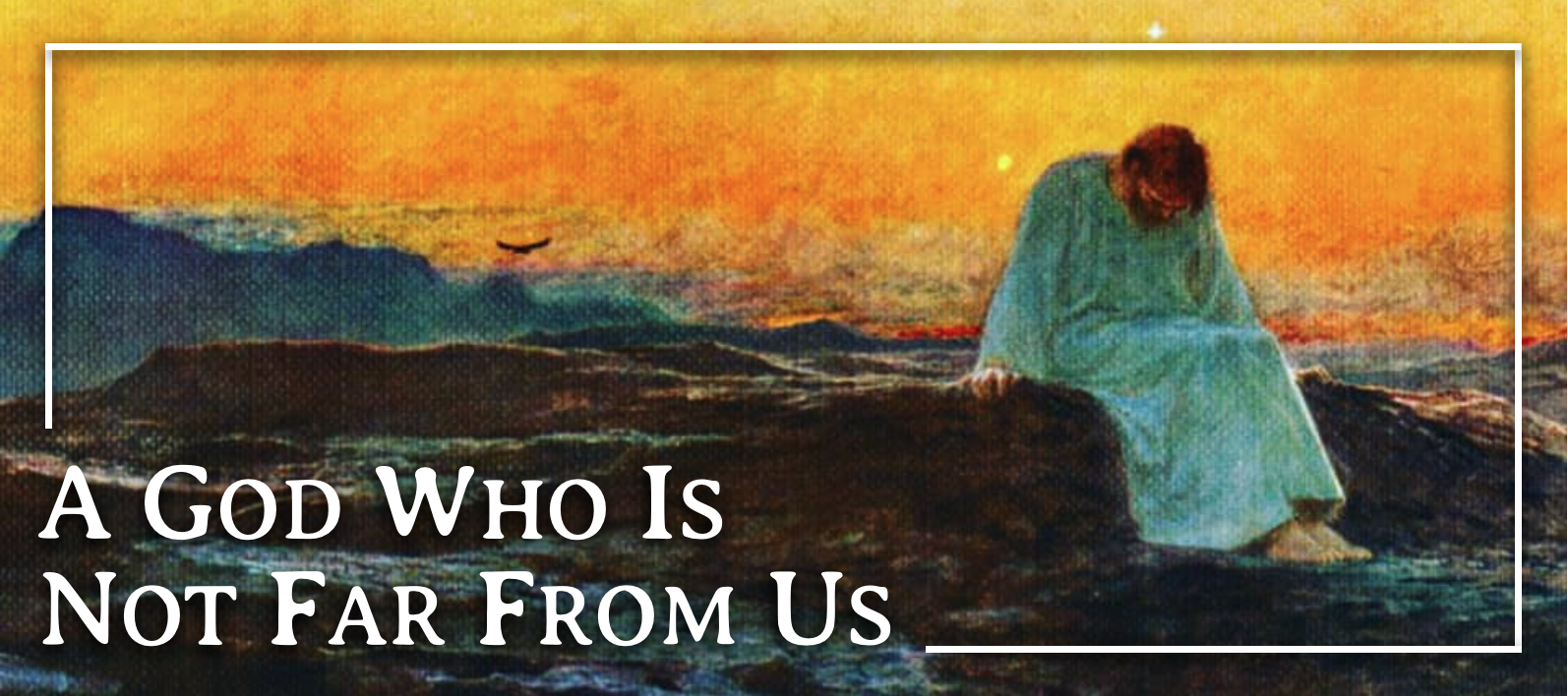
A God Who Is Not Far From Us

In a well-known passage in Acts 17, Paul addresses the Areopagus in Athens:

“Men of Athens, I perceive that in every way you are very religious. For as I passed along and observed the objects of your worship, I found also an altar with this inscription, ‘To the unknown god.’ What therefore you worship as unknown, this I proclaim to you. The God who made the world and everything in it, being Lord of heaven and earth, does not live in temples made by man, nor is he served by human hands, as though he needed anything, since he himself gives to all mankind life and breath and everything.”

The Greeks were a very religious people—I can remember studying in school about the various gods and goddesses in the Greek pantheon—and Athens was filled with temples, statues, and idols in honor of them. Apparently, in addition to these deities, they even worshipped an “unknown god”, apparently to ensure that they didn’t leave anyone out. But the point that Paul tries to make to the Athenians in Acts 17 is that they did leave Someone out—the most important Someone of all—the God who made the world and everything in it. Of this God, the Greeks were ignorant.

Being ignorant of God—what He is like and what He desires of us—is a problem that was not specific to the Greeks. It’s a recurring problem that has appeared throughout history. And when it’s up to us to determine what God is like and what He wants, we frequently end up in some pretty dark places.


Chichén Itzá was a pre-Columbian Mayan cultural center located on the Northern Yucatán peninsula in modern-day Mexico. Today it is a popular tourist attraction and every year thousands of people go and visit the ruins.

The Yucatán is a dry area with no rivers above ground, but despite this, Chichén Itzá was able to thrive as a major Mayan city because of the existence of a certain type of geological formation called a cenote. A cenote is a sinkhole which had formed in the limestone foundation and contained groundwater. There are several cenotes throughout the Yucatán, and at Chichén Itzá, there were two cenotes that were substantial in size and would likely have contained adequate drinking water year-round for the people of the city.

Cenote Sagrado, believed to be the home of the Mayan rain god, Chaac.

However, of the two cenotes, only one was used for drinking water, because one of them was believed to be the home of the Mayan rain god, Chaac. In order to keep Chaac happy and the rain plentiful (and plentiful rain was a big deal in such a dry area), the Mayan people would offer human sacrifices. These sacrifices—often children—would be weighted down with gold and silver jewelry and then tossed down into the cenote where Chaac was thought to live. Hundreds of years later when the area was excavated by archaeologists, many tiny skeletons, as well as the treasure that dragged them to their deaths, were found.

Senseless deaths…sacrifices made in order to appease a god they didn’t understand, whose will they had to guess at.

We hear that and perhaps it’s easy for us to dismiss that example as being far removed from our own circumstances, something done long ago by “primitive” people. It’s not an isolated incident, though. People have often justified terrible actions because they thought they were doing what God wanted: fighting in the Crusades…buying and selling people based on the color of their skin…blowing up abortion clinics…flying airplanes into skyscrapers. When it’s up to us to determine what God is like and what He wants, sometimes we end up in some pretty dark places.

When it’s up to us to determine what God is like and what He wants, sometimes we end up in some pretty dark places. Share on X

But reading further in Acts 17, Paul says that it doesn’t have to be this way—we don’t have to be ignorant of God. He tells the people of Athens that God is “not far from each one of us”, and that we are His offspring. And then, speaking of Jesus, Paul goes on to say that God “has fixed a day on which he will judge the world in righteousness by a man whom he has appointed; and of this he has given assurance to all by raising him [Jesus] from the dead.”

Paul’s claim that God is not far from us finds fuller expression in the classic passage on the Incarnation in John 1. There, in verse 14 we read, “The Word became flesh and made his dwelling among us.”

A lot of times when speaking about the Incarnation, we talk about that first part: the Word becoming flesh. That’s certainly an important concept, but I want to focus on the second clause: the Word made His dwelling among us. Here John is using tabernacle language to explain how God came down to be among His people in a new and special way. A more literal translation would be something like, “He pitched His tent among us.”

In The Message, Eugene Peterson says that “the Word became flesh and moved into our neighborhood”, and I love that sentiment—through Jesus, God is no longer a mysterious stranger Whom we don’t understand, because He lives right down the street from us—we can see what God is like for ourselves!

The wonderful news of the Incarnation is that the God who does not wish to be far from each of us put on flesh, and Jesus took up residence in our neighborhood. From that proximity, we can see Jesus clearly, and we are never left to wonder what God is like, or what He wants from us.
The Fall of Man and the Sociological Consequences of Sin

In our continuing discussion of the Fall of Man in Genesis 3 and the widespread devastation of sin, we have already covered the theological and personal consequences of Adam and Eve’s misdeed; in this post we turn to the sociological fallout of that sin, or the way that sin affects our relationships with one another.

Returning to our text, we can see this dimension clearly played out in verses 11-13:

“[God] said, ‘Who told you that you were naked? Have you eaten of the tree of which I commanded you not to eat?’ The man said, ‘The woman whom you gave to be with me, she gave me fruit of the tree, and I ate.’ Then the Lord God said to the woman, ‘What is this that you have done?’ The woman said, ‘The serpent deceived me, and I ate.’”

People were created to live in community with one another. Specifically, Eve was created to be the perfect partner for Adam (Genesis 2.18-25). But when God confronts Adam and Eve with their sin, something very significant (and unfortunate) happens: the unity that had previously existed between Adam and Eve is shattered as Adam immediately blames his wife for the sin which they had committed together.

This brings a conflict and disharmony between them that would be passed down over time (Genesis 3.16), and we can see it unfold in the pages of Genesis in the accounts of numerous broken relationships—Cain’s murder of his brother, the depraved society of Sodom and Gomorrah, the distorted relationships between Sarah and Hagar, Jacob and Esau, Jacob and Laban, Joseph and his brothers, and more. But the problems certainly don’t stop there—this same conflict and disharmony continue to darken and distort our world today.

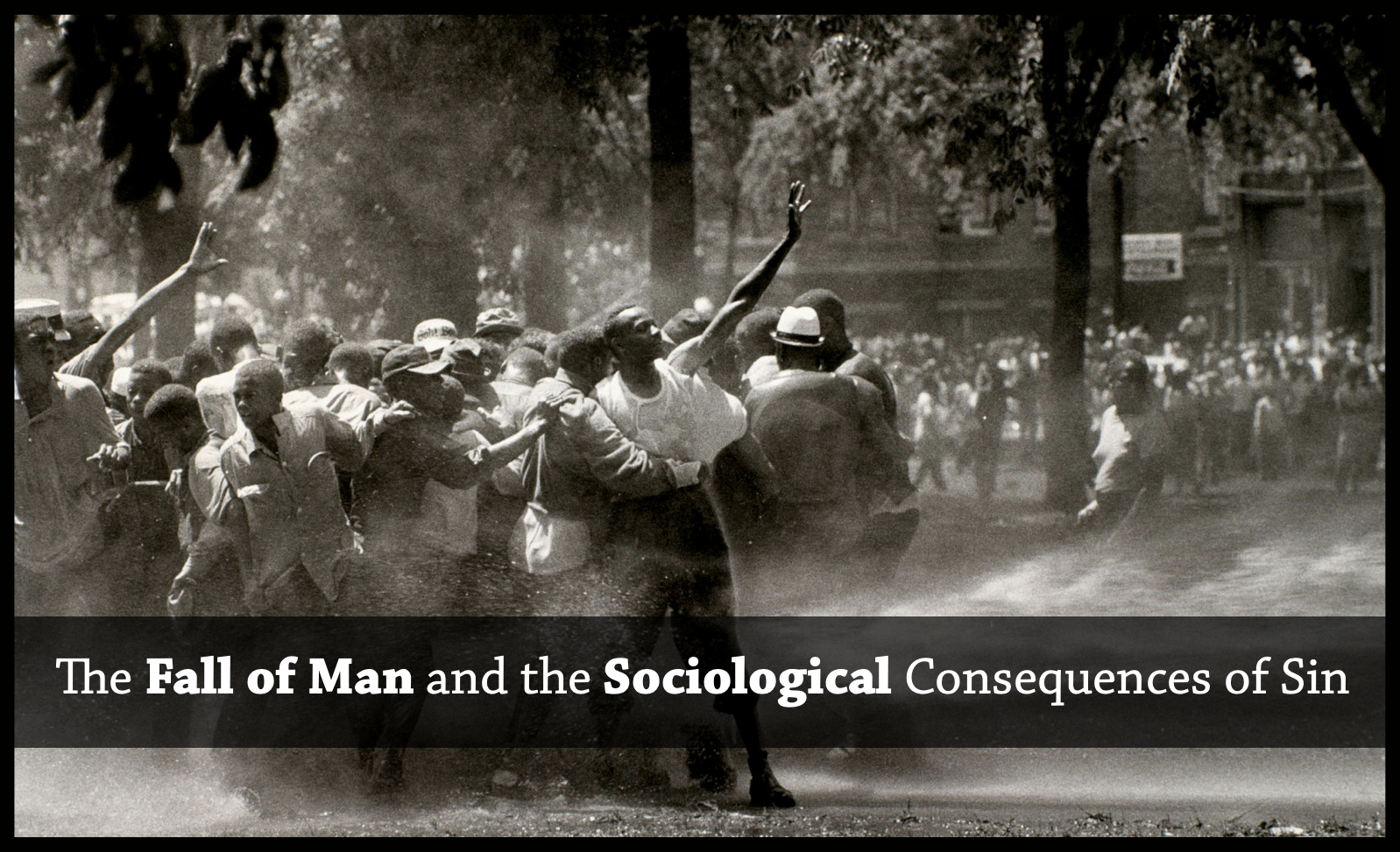
Our world is deeply flawed by sin, and this manifests itself everyday sociologically, as we treat one another in a wide array of horrible, messed up ways:

  • On an international level, countries wage war and kill because of conflict over ideology or resources.
  • Systemic evils such as poverty, abortion, racism, sex trafficking, government corruption, lotteries, and more stem from our exploitation of our neighbors in order that we might obtain our own selfish desires.
  • Horrific acts of incomprehensible violence fill our news cycles. Mass shootings at elementary schools, the use of passenger airliners as terrorist missiles, bombings at marathon finish lines and incomprehensible barbarity at soccer matches shock and dismay us and cause us to weep.
  • Our interpersonal relationships are also a mess. Dishonesty, reckless ambition, and violence abound. The (supposedly) lifelong bonds of marriage are broken on a whim.

And the sum result: our society as a whole stagnates and decays, as people live lives marked by self-interest and fear of one another. The community for which we were created is broken.

Sin destroys our relationships with one another.

Destroying the Works of Satan

A couple of weeks ago I had the opportunity to speak at a youth rally and my topic was the purpose of the church. I talked about how the church is God’s vehicle for saving the world today (through the preaching of the gospel), for influencing the world and trying to make it a better place (through service), and equipping Christians for those first two tasks (through education and discipleship).

And those are all pretty standard ideas—we hear about those things a lot when we talk about what the church should do. But the church has another important purpose that is often neglected in such discussions: the mission of the church is to oppose and destroy the works of Satan.

In 1 John 3.8, John said that Jesus came to earth so that “He might destroy the works of the devil.” In Ephesians 6.12, Paul says that our struggle as Christians is not against flesh and blood, but against the forces of darkness.

These verses make it clear that as the church, we are a part of a spiritual battle against Satan and his influence. Moral corruption and sin are the works of the Devil (and we focus on things like that a lot),  but so are things like disease, starvation, poverty, terrorism, and racism.

When you look at all the sad and messed up stuff that happens in our world—do you think God likes that stuff? Of course not! Children starving to death in the developing world, or innocent people being killed because of racial wars, or bombs going off at marathon finish lines—those are works of Satan, and when we take part in efforts to fight against those things, we are fulfilling the purpose of the church in opposing and destroying the works of the Devil.

To me, realizing that when we fight against evil, we’re part of a cosmic struggle and are fighting against Satan himself gives us a whole new level of motivation for doing it. The decisions we make each and every day are important because we have the opportunity to stand up against evil.

A cosmic struggle against evil: think about that the next time one of your friends tells a racist joke—are you going to sit there and laugh at the works of Satan, or realizing that God loves all people regardless of race and that racism comes from Satan, are you going to speak up and put a stop to it?

Or the next time you have an opportunity to give to people, maybe people living on the other side of the world who have less than you do—are you going to be willing to use what you have to fight against the works of Satan like poverty and starvation, or are you going to hold onto those things so you can continue to pursue the idolatry of the “American dream”?

Studies show that a whole bunch of teens leave the church after high school, and I think a big reason for that is because it just doesn’t seem like the work of the church is all that important. After all, if we narrow down what church is to only a couple hours of activity a week, of course its importance is going to be diminished. But when we realize the cosmic nature of the struggle we are involved in—saving the world, serving the world, training Christians to do those things, and opposing the works of Satan—we see that the church is absolutely a cause worth giving our lives to.

Great Love Hath No Man…

Despite having 10 of its members murdered by the Taliban last week, a Christian Charity group has declared that it will stay in Afghanistan and continue its work.

This article lists the responses of various Washington Post readers, many of whom are incapable of understanding why these crazy Christians would be there in the first place. I guess that wouldn’t be too surprising to the Apostle Paul:

“For the message of the cross is foolishness to those who are perishing, but to us who are being saved it is the power of God.”

Six Years


It’s hard for me to believe that 9/11 was six years ago today.

I can still remember the events of that morning clearly. I got up and went to class at 8:00, just like any other day, and it wasn’t until right before chapel that I bumped into a friend who told me what had happened. Incidentally, that friend joined the military after the fall semester, and last I heard, was on his way to Iraq.

His life, and those of many others in similar situations, has changed greatly over the last six years.

But what about regular people? People who aren’t in the military? Has your life changed substantially since 9/11/2001? I know mine hasn’t—not like it should have.

Sure, some things have changed. Flying on an airplane is more of an ordeal these days with security being a lot tighter. I certainly know a lot more about Islam than I did six years ago. And any desire I had to visit the Holy Lands has decreased considerably. But really, my life hasn’t changed so much.

For example, I still read these words of Jesus in Matthew 5.43-44 and know that I don’t live them any better than I did before:

“You have heard that it was said, ‘You shall love your neighbor and hate your enemy.’ But I say to you, love your enemies and pray for those who persecute you…”

Nor these words of the Apostle Paul in Romans 12.17-18:

“Never pay back evil for evil to anyone. Respect what is right in the sight of all men. If possible, so far as it depends on you, be at peace with all men.”

Is your life any different than it was? If not, then maybe you’re like me, and it’s time for a change.

© 2026 The Doc File

Theme by Anders Noren — Up ↑