The online journal of Luke Dockery

Category: Bible Study (Page 37 of 40)

Reading in 2013

For several years now, I have kept track of the reading I do and then, at the beginning of each year, posted the list of the previous year’s reading. For some reason, keeping track of stuff like this is fun for me, and shockingly, this is always one of my more popular posts each year, so apparently it is interesting to others as well.

Without further ado, here is my reading list for 2013:

  1. Scandalous: Lessons in Redemption From Unlikely Women, by Sean Palmer
  2. When To Leave: How To Know It’s Time To Move On (Before You Stay Way Too Long), by Wade Hodges
  3. Soul Work: Confessions of a Part-Time Monk, by Randy Harris
  4. The Mission of God’s People: A Biblical Theology of the Church’s Mission, by Christopher J.H. Wright
  5. Understanding the Love Chapter, by Adam Faughn
  6. The Shepherd’s Pipe: Songs from the Holy Night, by Georg Johannes Gick
  7. Size Transitions in Congregations, edited by Beth Ann Gaede
  8. 25 Questions Every Youth Minister Should Ask, by Chad Landman
  9. The Good News from North Haven: A Year in the Life of a Small Town, by Michael Lindvall
  10.  The Middle-Sized Church: Problems & Prescriptions, by Lyle E. Schaller
  11.  The Rechurching of Rural America: A report of the restudy of rural churches in America, by Gary Farley, John Bennett, Jere Giles, and Arnold Parks
  12.  Effective Youth Ministry: A Congregational Approach, by Roland D. Martinson
  13.  Building Together: Developing Your Blueprint for Congregational Youth Ministry, by Carol Duerksen
  14.  Small, Strong Congregations: Creating Strengths and Health for Your Congregation, by Kennon L. Callahan
  15.  Technology in Youth and Family Ministry, by Joey Sparks and Scott Bond
  16.  Turnaround and Beyond: A Hopeful Future for Small Membership Churches, by Ron Crandall
  17.  The Indispensable Guide for Smaller Churches, by David R. Ray
  18.  Thriving Youth Ministry in Smaller Churches: Secrets for Cultivating a Dynamic Youth Ministry, by Rick Chromey and Stephanie Caro
  19.  The Churches of Christ in the 20th Century: Homer Hailey’s Personal Journey of Faith, by David Edwin Harrell, Jr.
  20.  Family-Based Youth Ministry, revised edition, by Mark DeVries
  21.  Grandpa was a Preacher, by Leroy Brownlow
  22.  Reading the Gospels Wisely: A Narrative and Theological Introduction, by Jonathan T. Pennington
  23.  Know Who You Are: Discover Your Identity in the Book of Ephesians, by Robbie Mackenzie
  24.  Prima Scriptura: An Introduction to New Testament Interpretation, by N. Clayton Croy
  25.  1 Peter, by David G. Horrell
  26.  The Blockade Runners, by Jules Verne
  27.  Gorky Park, by Martin Cruz Smith
  28.  Star Wars: Jedi Academy, by Jeffrey Brown
  29.  Sing His Praise! A Case for A Cappella Music as Worship Today, by Rubel Shelly
  30. Why They Left: Listening to Those Who Have Left Churches of Christ, by Flavil R. Yeakley Jr.
  31. The Noticer, by Andy Andrews
  32. The Epic of God, by Michael Whitworth
  33. Crispin: The Cross of Lead, by Avi
  34. City of Darkness, by Kim Wright
  35. Polar Star, by Martin Cruz Smith
  36. Sequels: Love After First Sight, by Jonathan Storment
  37. Muscle and a Shovel, by Michael Shank
  38. The Derision of Heaven, by Michael Whitworth
  39. Calico Joe, by John Grisham
  40. Centered: Christ in Colossians, by Joseph Horton
  41. Exegetical Fallacies, by D.A. Carson
  42. Moonwalking with Einstein: The Art and Science of Remembering Everything, by Joshua Foer
  43. Bible Wines, or The Laws of Fermentation, by William Patton
  44. 1 Peter: A Handbook on the Greek Text, by Mark Dubis
  45. Genesis in Space and Time, by Francis A. Schaeffer
  46. The Story of Churches of Christ, by Douglas A. Foster
  47. The Complete Calvin and Hobbes Book One, by Bill Watterson
  48. Almost Christian: What the Faith of Our Teenagers is Telling the American Church, by Kenda Creasy Dean
  49. The Christ of Christmas: Readings for Advent, by Calvin Miller
  50. Glorious Ruin: How Suffering Sets You Free, by Tullian Tchividjian

One thing about 2013 that was a little different than years past is that I got into eBooks more. Some eBooks are pretty short, which makes for quick reading, while others are longer. One thing that’s nice about them either way is that if you have them on an iPad/tablet or even your smart phone, you can read them in all sorts of places where you just have a few minutes of extra time and didn’t have the foresight to bring a book with you. This is a cool thing. In general though, I much prefer reading out of a book with pages than on a tablet.

You’ll notice from the list above that 2013 was a year where I read a lot about ministry (I think 16 in all). Of course, this is greatly influenced by the fact that I am a minister, and that I took a ministry grad school class early in the year that required a ton of reading. Of these books, some were poor, most were helpful, and two were outstanding. First,  Family-Based Youth Ministry by Mark DeVries has become a youth ministry classic, and with good reason. I would highly recommend it to any youth ministers reading this, or anyone who may not technically be a “youth minister” but is interested in working with young people and helping them to become disciples of Jesus Christ. And also, Why They Left: Listening to Those Who Have Left Churches of Christ was really, really good.

In addition to the ministry books, I read several good books on theology and the Bible (if you search for these titles in my blog you’ll see that I quoted from many of them): The Mission of God’s People: A Biblical Theology of the Church’s Mission, Reading the Gospels Wisely: A Narrative and Theological Introduction, The Epic of God, The Derision of Heaven, Exegetical Fallacies, and Glorious Ruin: How Suffering Sets You Free (I hope to write reviews of the last two soon).

Concerning other books in no way related to ministry, grad school, or theology, City of Darkness was a fun mystery placed against the backdrop of the Jack the Ripper killings in 1880s London. Gorky Park is, in my opinion, a masterpiece: in addition to providing a thrilling and thoughtful mystery, it also provides a brilliant look at the USSR during the decline of the 1980s. Polar Star, a sequel to Gorky Park, was good, but not as good. And for Christmas I got the Complete Calvin and Hobbes and read the first volume by year’s end; it was glorious, as Calvin and Hobbes always is.

My overall book total increased from 45 in 2012 to 50 in 2013. I pushed hard to get to the 50-book mark, and honestly, I think is about my limit with all of the other things I have going on. In fact, I expect to read less in 2014 than I did in 2013.

I have already started reading in 2014, and my to-read shelf already has over 30 books on it (these are books I already own; there’s even more on my Amazon wish list), but I always like to hear the recommendations of others. What were your favorite books from 2013 (or whenever you read them)?

For comparison’s sake, you can see the books I read in 2012, 2011, 2010, 2009, and 2008.
A Difficult Birth, Part 3: The Danger of Christmas

This week I’ve been discussing why the Birth of Jesus was a difficult one, and how we tend to smooth out the rough edges of the Christmas story. But ultimately, it’s a good thing for us that it was a difficult birth, because it helps us to see how to better live our difficult lives.

The first post addressed the element of scandal in Christ’s birth, and yesterday’s post focused on the discomfort of Christmas.

The Danger of Christmas

In those nice Hallmark cards it sure seems like Jesus is plenty safe, but Matthew 2 shows us the danger that was involved in this story. There we learn about the visit of the wise men and there is a lot about the wise men that we don’t know, a lot of things we commonly think of that might not have been true.

Were there three wise men? We don’t know; we often assume that there were three because there were three gifts mentioned, but the Bible doesn’t actually give us the number. Also, if you read carefully, the wise men weren’t there with Jesus right when he was born. Matthew 2.11 says “And going into the house they saw the child with Mary his mother…”, so by the time the wise men saw Jesus, he was no longer in the manger and was instead in a house.

The wise men were from “the east”, probably Babylon or Persia; they would have been astrologers, followers of the stars.

These men come to King Herod in Jerusalem and they ask him, “Where is he who has been born king of the Jews?”

And Herod is troubled by this, because he kinda thought that he was the king of the Jews, and he certainly didn’t want to have any rivals for the throne. In fact we know from history, Herod was actually a pretty terrible guy, and to protect his power, he murdered his own wife, several of his sons, and some other relatives as well. And so it’s no surprise that he wants to eliminate this baby king that had been born.

So Herod brings the chief priests and scribes together in order to learn where the Christ, the Messiah, was supposed to be born, and they point him to Micah 5.2 and say that he’s supposed to be born in Bethlehem.

Then Herod calls the wise men back, encourages them to search for Jesus, and then to return and let him know where He is when they find Him. And the wise men do find Jesus, but they’re warned in a dream not to tell Herod anything, and so they go home a different way. At the same time, an angel of the Lord appears to Joseph in a dream in Matthew 2.13 and warns him that Herod wants to kill Jesus, so in the middle of the night, Joseph scoops up his wife and infant son, and they flee to Egypt. They leave the country.

At some point, Herod realizes that the wise men aren’t coming back and that they’ve tricked him. Enraged, he decides to kill all the male children in Bethlehem and in the whole surrounding region who are 2 years of age and under, just to make sure.

And so tragedy and heartbreak enters homes all over, as mothers have their baby boys torn from their arms, fathers watch helplessly, and soldiers draw their weapons, carrying out the orders of a murderous madman.

You don’t see all this in the Christmas cards, but the birth of Jesus was a dangerous time.

Danger in Our Lives

Just like we try to smooth over the danger in the Birth of Jesus, a lot of times we try to do that in our lives as well.

To be honest, most of us don’t actually face a lot of danger in our lives. It might be different if you are in the military or serve as a policeman or fireman, but those are careers; rarely do we face danger in the world today for the cause of Christ, unless you’re a missionary (where danger can be a very real thing).

What we do face though, is the reality of living in what is called a post-Christian society. Living in a society like this doesn’t put us in the path of the same kind of life-and-death danger we talked about in conjunction with the birth of Jesus, but it does mean that Christians can face social and perhaps economic fallout for trying to live according to the teachings of the Bible and sharing those teachings with others.

If you’ve followed the Duck Dynasty saga this past week you know exactly what I’m talking about. I don’t want to get off topic here by addressing that issue in detail, but I don’t think there’s any denying that some of teachings of the Bible cause a great deal of backlash with our society today. At times in can be easy for us to feel like we get picked on just for believing what the Bible says.

But I think Christians of the first century would look at the “persecutions” we go through in our country today and kind of chuckle, because it’s nothing like what they had to deal with. At least for now, no one here is in danger of being fed to lions in the Colosseum or being beheaded and having their heads used as lanterns in the emperor’s garden.

And to those Christians, our brothers and sisters of two millennia ago, the writers of the New Testament didn’t tell them to smooth over the dangers of the Christian life:

They didn’t tell them to avoid persecution at all cost…

They didn’t tell them to fight against it…

They didn’t tell them to run to Facebook in protest…

They told them to be ready for it, to be prepared, because it was coming…

These early Christians were reminded that Jesus was persecuted and killed, and that if that happened to Him, then surely His followers could expect to face trials and persecutions as well. And the same goes for us. But if we do face trials and persecutions for the cause of Christ, that’s okay: it’s a sign that we’re doing it right.

Don’t try to avoid the dangers of the Christian life. Don’t run from the persecutions. Be prepared for them, and glorify God when they come. Be a living sacrifice for Him.

Conclusion—A Difficult Birth Indeed

The birth of Jesus—as it really was—was a difficult birth. It doesn’t really fit in a children’s story or on a Christmas card. But for us, that’s good news! It shows us how to live our difficult lives!

The scandal of Jesus’ birth reminds us that we don’t have to fear the scandal in our lives or the sin in the world. Jesus has overcome sin! He wants to take it away from you if you’ll let Him! His blood can cleanse the sin of the world, if we’ll share it!

The discomfort of Jesus’ birth reminds us that comfort is not all it’s cracked up to be. It’s not God’s goal for your life. Seek to live a life that is uncomfortably devoted to God!

The danger of Jesus’ birth reminds us of the possibility—nay, the likelihood—that we’ll face trials and persecutions as we strive to follow Jesus. Don’t try to avoid them, don’t fret about them; glorify God through them.

Praise be to God for the oh-so-difficult birth of His Son!

A Difficult Birth, Part 2: The Discomfort of Christmas

In case you missed it, yesterday’s post introduced the idea of why the Birth of Jesus was a difficult one, and how we tend to smooth out the rough edges of the Christmas story. But ultimately, it’s a good thing for us that it was a difficult birth, because it helps us to see how to better live our difficult lives.

Yesterday’s post specifically addressed the element of scandal in Christ’s birth.

The Discomfort of Christmas

We know from Luke 2.1-7 that Joseph and Mary had traveled to Bethlehem because a census was being taken. Joseph had to return there because it was the city of his ancestors, and so that’s where they were when it was time for Jesus to be born.

As travelers, and especially as travelers expecting a birth, they needed a place to stay. It would have been ideal to stay with relatives, and considering that they were traveling to Joseph’s ancestral home, this is almost certainly what the young couple sought to do. 

Famously, we know that there was “no room at the inn” but it is unlikely that this is a reference to the first century equivalent to the Hilton; rather, the Greek word kataluma generally refers to a small upper room in a private dwelling that was used for showing hospitality to guests. In addition to this guest room, the main portion of the house would be divided into the living area and a separate compartment where animals might be kept, especially overnight.[1]

In the Nativity story, there was no room for Joseph and Mary to stay in their relatives’ guest room (perhaps because other family members were already there), and so they stayed in the main portion of the house instead with the host family and also likely with animals as well.

This perhaps seems nicer than being born in a barn, but make no mistake: the King of kings was born in humble circumstances, in a crowded cottage in a backwater village, surrounded by the smells of livestock. Not a comfortable place.

Discomfort in Our Lives

Just like we try to smooth over the discomfort in the Birth of Jesus, a lot of times we try to do that in our lives as well.

I believe the Bible teaches that God wants a lot of things for your life. He wants you to be saved, he wants you to holy, he wants you to be joyful (which is different than you being “happy”, but that’s a post for a different day); I don’t think that God wants you to be comfortable.

Comfort is a big part of what we want—a nice warm house, nice things, the latest technology to make life easier, relationships with our friends and families that make us feel good, nice vacations and lots of money set aside for retirement, sermons that put a smile on our face and don’t call us to sacrifice—we like comfort, but God doesn’t call us to be comfortable.

If you take the teachings of Jesus seriously, they don’t lead to a comfortable life. A fulfilling life? Yes. A purposeful life? Sure. A blessed life? Absolutely! But not a comfortable one.

Love your enemies…

Seek first the kingdom…

Care for the poor…

Preach the gospel…

Deny yourself, take up your cross and follow Me…

If you take them seriously, the teachings of Jesus will turn your life upside down—they will disrupt your goals, re-arrange your priorities, and change the very lenses through which you view life.

Don’t shy away from discomfort!

Give of your means (to the church, to those in need, to charities) to the point that it hurts, that it makes you less comfortable.

Study the parts of Scripture that are difficult and unsettling.

Force yourself to be around that Christian brother or sister who drives you crazy and figure out how to love them.

Share your faith, even if—especially if— it makes you nervous and makes your heart race.

Don’t shy away from the discomfort of life.


[1] This post has been updated from its original form as I have learned more about the meaning of kataluma and the nature of first-century dwellings. See more at https://www.psephizo.com/biblical-studies/once-more-jesus-was-not-born-in-a-stable/?fbclid=IwAR3WvFDTJw_5SSSCPMjk_T9ZDp4OrSlRC2gSjhs-o3kgGs0IhNPlsO0d6BU

A Difficult Birth, Part 1: The Scandal of Christmas

For some people, Christmas is all about spending time with family, and the giving and receiving of gifts, but for others, Christmas is also a celebration and remembrance of the birth of Christ.

When thinking about the birth of Jesus, I think it’s important to remember that it isn’t a fairy tale in a story book. The birth of Jesus was a real historical event with real historical people, and it’s an event with a lot of rough edges to it. A lot of times in our minds I think we like to smooth out those rough edges and turn the story of Christ’s birth into something from a Hallmark greeting card, but it really wasn’t like that.

It was a difficult birth, but I think it’s a good thing for us that it was a difficult birth, because it helps us to see how to better live our difficult lives.

The Scandal of Christmas

The birth of Jesus—the Incarnation, God becoming flesh—was amazing. It was miraculous, and it was unthinkable until it happened. It was the first step in Jesus becoming our High Priest, Someone who knew what it was like to live as a human, but to do so perfectly, without sin.

And a big part of this miraculous event was the fact that Mary the mother of Jesus was a virgin when she became pregnant.

Now for us, this is history. We believe that it happened, we accept it as fact, and we commonly hear her referred to as the Virgin Mary (growing up I knew that Mary was a virgin loooong before I knew what that word actually meant). What I’m trying to say is that we are so familiar with the idea of Mary being an unwed virgin that I think we tend to overlook how big of a scandal this would have been for her.

The angel Gabriel appears to Mary in Luke 1.26-38 and tells her that she is going to give birth to Jesus. The Bible says that Mary is troubled, and she’s also confused as to how she’s going to give birth while she is still a virgin, so Gabriel tells her that it will happen by the power of the Holy Spirit.

I think we get the first hint of scandal in Luke 1.39, where it says that Mary “went with haste” to visit her relative Elizabeth, who is six months pregnant with John the Baptist. It’s almost like Mary is trying to get out of town to hide her pregnancy. She spends three months with Elizabeth, presumably until the time that John is born, and I get the impression that while there, Mary is encouraged by Elizabeth and comes to terms with what it going on and begins to glorify God for it.

Then she returns home. And if going out of town to visit Elizabeth had successfully hidden her pregnancy to this point, it’s probably not hidden any longer. At this point, people can likely see that Mary is pregnant.

And we’re not really sure of the timeline, but maybe it’s at this point that we have Matthew 1.18-19:

“Now the birth of Jesus Christ took place in this way. When his mother Mary had been betrothed to Joseph, before they came together she was found to be with child from the Holy Spirit. And her husband Joseph, being a just man and unwilling to put her to shame, resolved to divorce her quietly.”

Now, there is some background information here that we need to know. In Jewish culture at that time, a man and a woman would be engaged to one another, and this would be considered to be a binding engagement. They would be referred to as husband and wife, even though they weren’t technically married yet, and even though it would have been considered immoral for them to have sexual relations.

If a woman like Mary was discovered to have had sexual relations during this time of engagement, it would have been considered adultery, and under the Law of Moses, she could have been stoned to death.

That’s the gravity of the situation that Mary would have been in when she was “found to be with child.” And just stop for a moment and imagine the conversation that must have happened between Joseph and Mary when he found out. Remember, these were real people, in many ways not so very different from you and me. They were likely both fairly young (some estimate that Mary would have been between 14-16):

Joseph…I’m pregnant.

What?!? Mary, I can’t believe this! How could you? Who, who is the father?

Well, the Holy Spirit. I’m still a virgin, Joseph! I haven’t been unfaithful to you!

(And I can just picture the look on Joseph’s face)

The Holy Spirit?! Yeah, right.

And then, we get to see the character of Joseph. You know, I think God chose the earthly parents of Jesus carefully. He didn’t pick rich parents or powerful parents, or members of the social elite, but he chose carefully. He selected quality people to raise His Son. Joseph, despite all the disappointment and heartbreak he must have been feeling, decides to show Mary compassion and divorce her quietly so she won’t be put to shame and face the punishment for adultery.

And then an angel appears to him in a dream and says, “No really, this is a special birth, a special child who has been conceived by the Holy Spirit.” And from that point on, Joseph’s on board.

But even then, in a small town like Nazareth, I’m sure that the gossip and the rumors of scandal would have persisted.

Scandal in our Lives

Well, just like we try to smooth over the scandal in the birth of Jesus, a lot of times we try to do that in our lives as well.

Sometimes we do this by putting on a brave face and trying to pretend like we have it all together, like we don’t have any sin or problems in our lives that we need help with. But really, all of us are a mess. We all have issues and problems in our lives. The key to dealing with the scandal, with the mess in our lives, is not to smooth it over and pretend it’s not there, but rather to address it, repent of it, and leave it behind.

But sometimes we also try to remove scandal from our lives by having nothing to do with people we consider to be sinful or scandalous. And let’s be clear, it’s true that bad company corrupts good moral and that we shouldn’t tolerate sin in the church, but Paul is clear in 1 Corinthians 5.9-10 that in order to be out in the world and point people to Christ, we’re going to come in contact with some scandalous things (because that’s how the world is).

Don’t misunderstand me—none of what I am saying here is meant to downplay the importance of holiness in our lives, or to downplay the seriousness of sin. But our world is a sin-ridden, scandalous place, and sometimes that sin and scandal can even creep into the church.

And if we’re going to mature as Christians, if we’re going to help our world, if we’re going to save souls, we can’t be afraid of the scandal.

Book Review: The Derision of Heaven

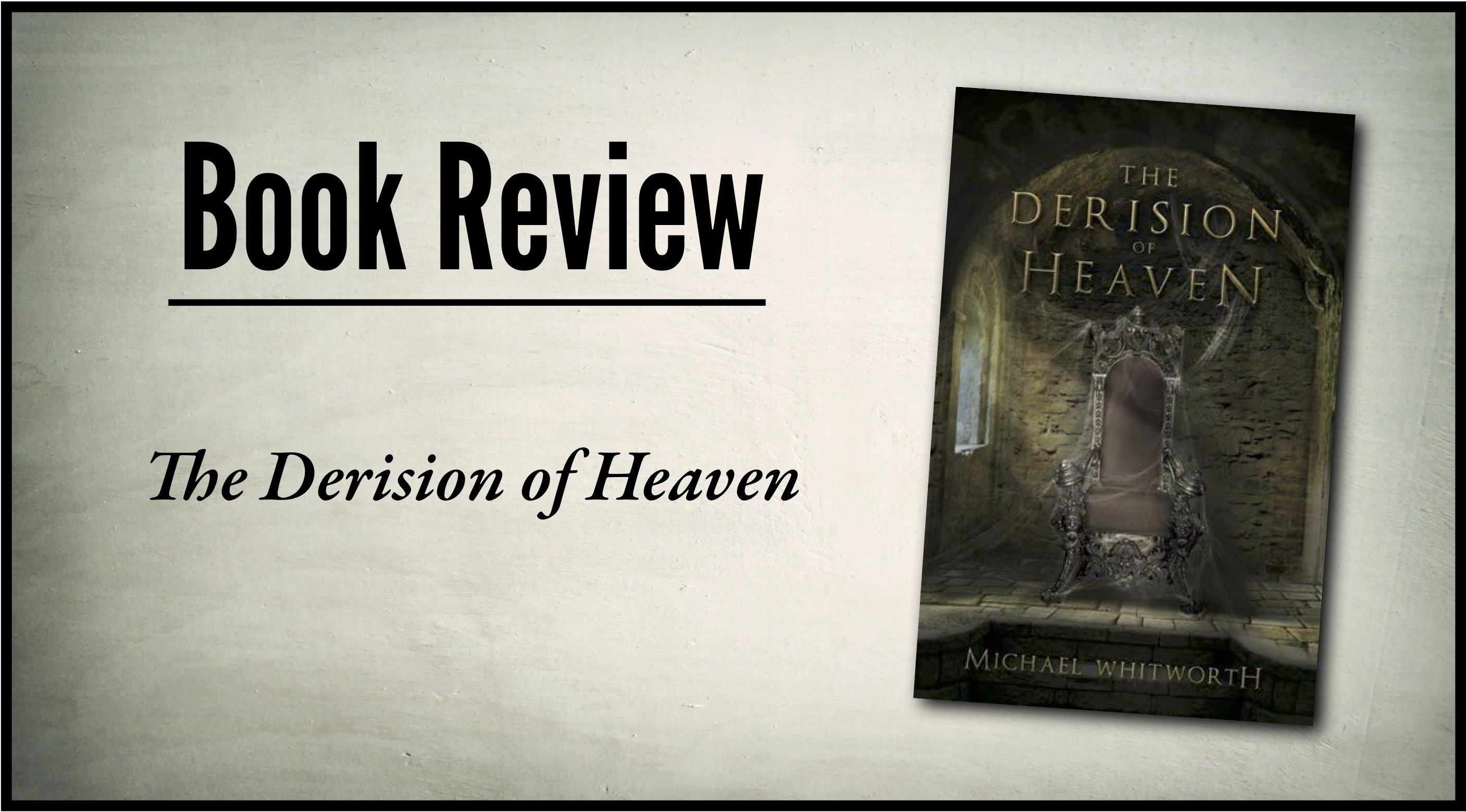
I am a little behind on posting this because I had a very busy week last week, but I just wanted to share The Derision of Heaven by Michael Whitworth. I had previously read and reviewed The Epic of God, Whitworth’s book on Genesis, and since I enjoyed that book so much, I made sure to check out The Derision of Heaven, which focuses on the Book of Daniel.

If anything, I think I liked Derision even more than Epic. Part of this may have been because I read it in paperback rather than a digital version (I am old school when it comes to reading), but it was a really good book, and possessed the same tandem of qualities that made its predecessor such a joy to read as well: a balance between style and substance. By that, I mean that the book is very readable while still being very well-researched.

Before I get into the good stuff (sharing my favorite quotations), let me just add one point. The Book of Daniel is 12 chapters long. The first six chapters consist of relatively straightforward historical narrative, while the last six are filled with wild apocalyptic prophecy. Based on those last six chapters, all sorts of people have predicted all sorts of things, usually with little success. One of the things I appreciated most about this book was the author’s humility in interpreting these difficult passages while still covering them thoroughly and repeatedly emphasizing their main theme: God is at work behind the scenes, and is in control of the universe.

Now, on to the quotations (with my comments in brackets):

“As long as God lives and reigns, his people have hope. Christians should never fear the state; the book of Daniel assures us God has numbered the days of every wicked leader who wields power irresponsibly.” (6)

“Whether in times of disaster or disorientation, we can navigate turbulent waters, not by being the strongest, savviest, or most obnoxious, but by being faithful to God and bringing him glory as Daniel did.” (25)

“Being a light in the darkness doesn’t require our being a burr under the saddle.” (27)

“To pretend that our own political leaders hold office by the will of the people and not also by the will of God is to foolishly assume that these two things are mutually exclusive. They are not.” (38)

“Our personal talents and abilities matter less than our humble willingness to be used by God for his glory.” (39)

“Empires and superpowers rise and fall at God’s will. It’s this realization that causes me to be quite concerned about those Christians who seem prouder to be an American than a member of the church, God’s eternal kingdom, one that cannot be shaken…it’s not a sin to be a patriot unless patriotism becomes your idol. I wonder if some Christians aren’t bigger fans of the Constitution than the gospel.” (48-49) [I agree with his concern and frustration. Many who claim to be Christians take to social media with more passion over some political issue than they ever show on behalf of Christ. Sad but true.]

“Our attitude and behavior when under trial is a powerful testimony to the glory and love of God.” (65)

“In God’s way of working, progress and success often occur so slowly that they are unobservable.” (98)

“I want you to appreciate the tension that exists between “God can” and “God will.” We live our lives within that tension. We know God can do something about our suffering, but will he? In this tense area of in-between is where Satan thrives. In this soil, he plants seeds of doubt in our hearts and nurtures them until they have borne the ugly fruit of indignation, rebellion, and death. But there is something we can place in that gap to frustrate Satan’s schemes—not faith in God’s deliverance, for he does not always do so, but confidence that God will do what’s ultimately best for us. God always does whatever will bring him glory, and God glorifying himself is what is ultimately best for us.” (111) [This is such an important idea, I think, that I gave it its own post. The sooner we can understand and embrace this tension, the better it will be for our spiritual maturity and our own peace of mind.]

“You and I would be better off if we spent less time worrying about gun control, runaway deficit spending, and where/how long the president spends his vacation. We would be better served worrying less about how Liberals, Conservatives, Muslims, Atheists, or others not like us are destroying America. Instead, how would things be different if we confessed daily that Jesus, even now, held dominion over all the earth? What would it look like if we spent more time urging people to willingly kneel before King Jesus now before being compelled to do so on the final day? What would it look like if more Christians spent less time griping about earthly empires destined for history’s trash heap, and celebrated instead Jesus’ indestructible and eternal kingdom?” (132) [This is kind of a soapbox, but a much needed one. I completely agree with him.]

“In the dark days that lie ahead, let us resolve to fight God’s way, not the world’s way.” (185)

 Hopefully, these quotations give you a taste of the book, and make you want to get a copy to read yourself. It would be an invaluable resource for anyone preparing to teach or preach on Daniel, but also beneficial for personal Bible study as well.

« Older posts Newer posts »

© 2026 The Doc File

Theme by Anders Noren — Up ↑