The online journal of Luke Dockery

Category: Christianity (Page 54 of 64)

Life’s Busyness and God’s Peace

Yesterday and today have been a couple of particularly busy days in what seems like an unending stream of busy days.

In addition to my regular Friday duties (working on getting the bulletin published, preparing for Bible class on Sunday), there is a lot going on right now which is combining to stress me out:

  • This weekend I have the opportunity to teach and speak at a youth rally. That’s great, but it means preparing two lessons and the accompanying presentations to go with them.
  • Since I’m taking my youth group to the aforementioned youth rally, that also means making all the preparations necessary before leaving on a trip.
  • I have a lot of reading to do for my grad school class. I always seem to have a lot of reading for grad school, and it is one of the first things that gets squeezed out when I have other tasks to accomplish.
  • Next weekend is the Ark Retreat, a combined youth retreat with several area churches, and one of our big spring events. It’s always a lot of fun, but demands a lot of planning ahead of time.
  • The weekend after the Ark is our church’s Day of Service and Friends & Family Day—a great weekend, but a busy one that requires a lot of work beforehand from me.
  • The weekend after that is our youth group Camping & Canoe Trip—more fun, and more planning as well.
  • The weekend after that will be our Graduation Banquet at church for our High School kids. More fun and fellowship, more busyness.
  • Somewhere during the time span I have just referred to, I have two papers due for grad school and a final exam to take as well!
  • What about the stuff going on in our broken world? Bombs and shootouts in Boston? Deadly explosions at fertilizer factories in Texas?
  • And, to be honest, all of this is overshadowed somewhat by the constant concern I have for my little girl, who continues to have seizures and deal with the daily realities of congenital muscular dystrophy. Daily realities that are physically and emotionally draining.

Sometimes, when I’m really, really busy, I remember the benefits of taking a deep breath, slowing down, and remembering that God does not call me to a life of frantic, breathless activity.

I love the words from the hymn penned by Edward H. Bickersteth:

Peace, perfect peace, in this dark word of sin:

The blood of Jesus whispers peace within.

Peace, perfect peace, by thronging duties pressed:

To do the will of Jesus this is rest.

Peace, perfect peace, with sorrows surging round:

On Jesus’ bosom naught but calm is found.

It is enough: earth’s struggles soon shall cease,

And Jesus calls us to heav’n’s perfect peace.

Perspective is a wonderful thing. I am seeking perfect peace today, and wishing it for you as well.

Historical World Cultures + Christianity

A good quotation on the interaction of Christianity with the dominant cultures of Western Civilization from Richard Halverson, former chaplain of the U.S. Senate:

“When the Greeks got the gospel, they turned it into a philosophy; when the Romans got it, they turned it into a government; when they Europeans got it, they turned it into a culture; and when the Americans got it, they turned it into a business.”

Don’t Be A Know-It-All!

People tend to dislike know-it-alls. It’s bad enough to be around people who are extremely intelligent and knowledgable and arrogantly let you know that all the time—it’s even worse to be around someone who acts like they are extremely knowledgable when in reality they are clueless. Being around people like this is one of my pet peeves.

Four brief stories on this topic:

The first story is youth ministry-related. Going back to my summer interning days, I have now been in youth ministry for over 10 years now (yikes!). In that time I have learned a lot, but I still have a lot left to learn. One time a couple of years ago, I was chatting with a college youth ministry student online, and he asked me to describe how I felt about my job. I remember I was dealing with some frustrating issues at the time, and so I told him that while youth ministry was very rewarding, it was also difficult and challenging at times to watch teens who you had poured yourself into make poor decisions that could potentially derail their entire lives.

This particular youth ministry student (who I think was a freshman at the time), proceeded to lecture me, basically saying that I should just love my teens rather than being disappointed by their poor decisions (as if these two things were mutually exclusive) and suggesting that I just wasn’t quite committed enough.

It was an annoying conversation, but one which gained a lot of comic value when I learned later on that this youth ministry student ended up changing his major…

The second story centers on an interaction between two guys I knew well in college. One guy was complaining to the other about his classes—how boring they were and how he struggled to make himself sit through class and listen to his teachers.

“What’s so special about them [his teachers] that I should have to listen to and respect what they say?” he asked.

The second guy couldn’t believe his ears. “Are you kidding me? Your teachers deserve your respect because they went to school for years and years and studied for hours and hours to accumulate the knowledge they are sharing with you in class! Who are you to think you can’t learn from them?”

As you can probably tell from the interaction, the first guy was pretty full of himself, while the second guy was one of the humblest guys I’ve ever known. As it turned out, the first guy struggled through college, bounced around from job to job, and honestly, I have no idea what he’s doing now. Meanwhile, the second guy went on to earn his Ph.D. and is now a college professor.

The third story comes from Monday night, when I had the privilege of hearing Jimmy Allen speak at a gospel meeting. If you are unfamiliar with Jimmy Allen, he is a long-time preacher, teacher and Bible scholar whose life has greatly influenced untold thousands of people. He’s now in his eighties, and on Monday night, he discussed how he needed to study the Bible more because there were some topics he just didn’t understand.

And the fourth story comes from yesterday afternoon. I am in Bethesda, Maryland this week at the National Institutes of Health for consultations and evaluations for my daughter Kinsley, who has a rare form of congenital muscular dystrophy. Yesterday we got to meet with a world-class pediatric neurologist and neurological researcher who is so respected that he was repeatedly referred to as a “rock star” by other doctors we met with. He was able to give us some new information and insight that no one else has had, but he was also very upfront about telling us the things he did not know and could not predict.

Pulling all of these random stories together, here are the summary points of this post:

(1) Know-it-alls drive me crazy (see stories 1 and 2), and because of that, I try hard not to be one myself.

(2) A big part of not being a know-it-all is being upfront about the things you don’t know (3, 4).

(3) Even in those areas where you do know a lot, there’s always more to learn (3).

(4) Humble people tend to be impressive, and impressive people tend to be humble. I think the two are inherently related (2, 3, and 4).

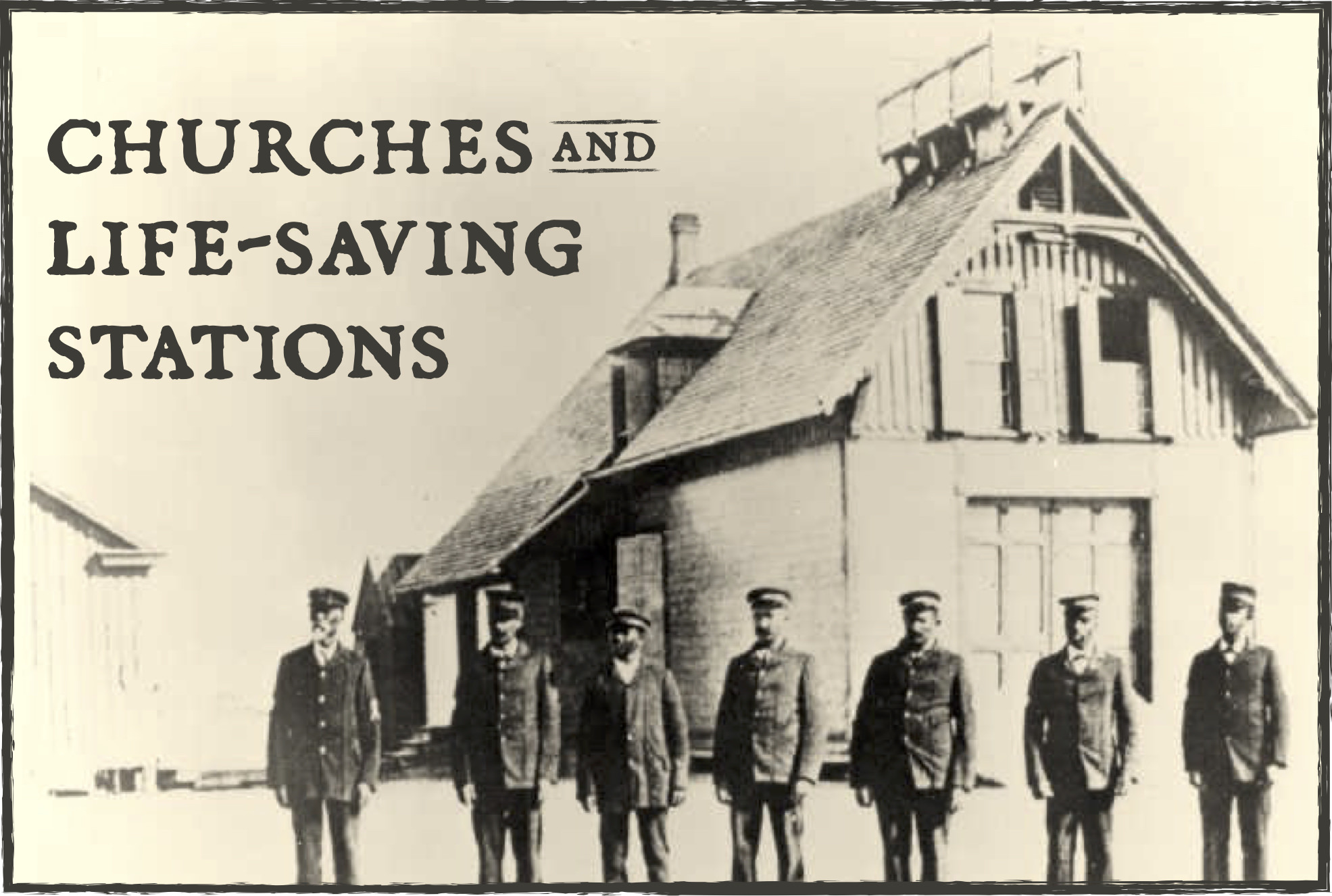
Churches and Lifesaving Stations

A cautionary parable from Managing the Congregation: Building Effective Systems to Serve People, by Norman Shawchuck and Roger Heuser, pp. 78-79:

On a dangerous seacoast where shipwrecks often occur there was once a crude little lifesaving station. The building was just a hut, and there was only one boat, but the few devoted members kept a constant watch over the sea, and with no thought of themselves went out day and night tirelessly searching for the lost. Many lives were saved by this wonderful little station, so that it became famous. Some of those who were saved, and various others in the surrounding area, wanted to become associated with the station and give of their time and money and effort for the support of its work. New boats were bought and new crews trained. The little lifesaving station grew.

Some of the members of the lifesaving station were unhappy that the building was so crude and poorly equipped. They felt that a more comfortable place should be provided as the first refuge of those saved from the sea. So they replaced the emergency cots with beds and put better furniture in the enlarged building. Now the lifesaving station became a popular gathering place for its members, and they decorated it beautifully and furnished it exquisitely, because they used it as a sort of club. Fewer members were now interested in going to sea on lifesaving missions, so they hired lifeboat crews to do this work. The lifesaving motif still prevailed in this club’s decorations, and there was a liturgical lifeboat in the room where the club initiations were held. About this time a large ship was wrecked off the coast, and the hired crews brought in boatloads of cold, wet, and half-drowned people. They were dirty and sick, and some of them had black skin and some had yellow skin. The beautiful new club was in chaos. So the property committee immediately had a shower house built outside the club where victims of shipwreck could be cleaned up before coming inside.

At the next meeting, there was a split in the club membership. Most of the members wanted to stop the club’s lifesaving activities as being unpleasant and a hindrance to the normal social life of the club. Some members insisted upon lifesaving as their primary purpose and pointed out that they were still called a lifesaving station. But they were finally voted down and told that if they wanted to save the lives of all the various kinds of people who were shipwrecked in those waters, they could begin their own lifesaving stations down the coast. They did.

As the years went by, the new station experienced the same changes that had occurred in the old. It evolved into a club, and yet another lifesaving station was founded. History continued to repeat itself, and if you visit that seacoast today, you will find a number of exclusive clubs along that shore. Shipwrecks are frequent in those waters, but most of the people drown!

Churches would do well to consider what happens when they lose their sense of purpose. Without a purpose and reason for existence, churches become nothing more than social clubs.

Jesus: God In Our Neighborhood

Who is God? What is He like? What does He want from me? What does He expect of me?

These are ancient questions, asked by countless people over thousands of years, but they are also modern questions that people still wrestle with today. We can get answers to those questions and can learn things about God by looking at nature, and by reading about Him in Scripture, but the fullest and clearest expression of what God is like was made available to us through the Incarnation of Jesus.

The word “incarnation” comes from Latin and literally means “to make into flesh” or “to be made flesh”. The Incarnation is one of the central teachings regarding Jesus, and says that Jesus was the Son of God, but that he “became flesh” and lived life as a man. Jesus was both God and human.

For many of us, that idea is pretty straightforward because it’s what we’ve been taught for a long time, but it’s an idea that was debated and argued about for a long time in the early church, and a lot of false teachings came up to try and explain who Jesus really was:

  • Adoptionism said that Jesus was an ordinary man who followed and obeyed the Law so carefully that he became the Messiah and that God “adopted” Jesus as His Son at baptism. So basically this view says that Jesus was a man, but was not really God—it stressed His humanity, but not His divinity.
  • Docetism said that Jesus was a divine being that took on human appearance but not flesh. It comes from a Greek word which means “to seem”, so basically this view says that Jesus seemed like a man but really wasn’t one. Docetism stresses the divinity of Jesus, but not His humanity.
  • Arianism said that Jesus was divine in some sense, but that He was created by the Father, so that He wasn’t an eternal being—He wasn’t God in the same sense that the Father was.
  • Nestorianism said that the Son of God and the man Jesus shared the same body, but were two separate beings within that body with different natures. Almost like Jesus had a split personality.

That all might start to sound somewhat confusing, and that’s okay, because it is confusing, and I think it illustrates an important point—sometimes we get ourselves into trouble by trying to explain things that we really can’t explain. The Bible really doesn’t try to explain in detail how the Incarnation “worked”—how it was that Jesus was both God and human at the same time—it just affirms that that’s who He was. He wasn’t part human and part God, he was completely human and completely God at the same time. So while I can’t fully explain how the Incarnation worked, I can say that the “isms” that we mentioned before are not true, because they deny that Jesus was both fully human and fully God.

What I think is more important than completely understanding how the Incarnation worked is understanding what the Incarnation means to us as Christians—how Jesus living as a human shows us what God is like and what He expects from us.

The classic passage on the Incarnation is in John 1. There in v. 14 it says, “The Word became flesh and made his dwelling among us.”

A lot of times when speaking about the Incarnation, we talk about that first part, “The Word becoming flesh” and that’s an important concept (all of arguments and debates and “isms” mentioned above are based on the first part of the verse), but I want to focus on the second clause, “The Word made his dwelling among us”.

Here John is using Old Testament language from the time when the Israelites wandered in the wilderness and God dwelt in the tabernacle to explain how God, through Jesus, came down to be among His people in a new way. A more literal translation of the end of John 1.14 would be something like, “he put up his tent among us.”

The Message, which is a paraphrase translation of Scripture in modern language, says in John 1.14 that the Word became flesh and moved into our neighborhood, and I love that idea—through Jesus, God is no longer Someone who is unknowable or impossible to figure out, because He lives right down the street from us—we can see what God is like for ourselves!

Shah Abbas the Great

There’s an old story about Shah Abbas, the great king of Persia who came to the throne in the late 1500s. Shah Abbas was beloved by his people, and he loved them in return, and in order to understand them better, historically we know that he would often disguise himself as a common man and mingle among them.

The story goes that one day, while visiting a bathhouse, Shah Abbas went down into the cellar and sat down next to the poor man whose job was to keep the furnaces burning to heat the baths. The king quickly struck up a friendship with this lowly laborer, who welcomed his company without having any idea who he was. They became friends and the king returned often to visit the furnace keeper. When mealtime came, the peasant would share his meager food with the king, and the two came to be close.

At last, one day the king revealed his true identity to the man. Shah Abbas expected the keeper of the fire to ask him for a special gift or some favor. Instead, when the man recovered from his shock, his request of the king was for neither wealth nor favors. He simply said:

“You left your palace and your glory to sit with me in this dark place, to eat of my coarse food, to care whether my heart is glad or sorry. To others you may give rich presents, but to me you have given yourself, and all I can ask is that you never withdraw the gift of your friendship.”

Like the Shah of the story, God put on a lowly disguise and through Jesus, moved into our neighborhood. From there, right down the street, He offers the gift of friendship and as our friend, we are never left to wonder what He is like, or what He wants from us.

Through Jesus, we can know what God is like, and how He wants us to live.

« Older posts Newer posts »

© 2026 The Doc File

Theme by Anders Noren — Up ↑