The online journal of Luke Dockery

Category: Christianity (Page 62 of 64)

Abortion, Part 4: Why Abortion Is A Deal Breaker

The original question that got this series kicked off (well over a month ago—I really am sorry it has taken me so long) was, “What makes abortion a deal breaker as opposed to the other moral issues?”

I’m really just now getting around to answering that question, but in order to really do it justice, I thought it was necessary to first lay some groundwork about what I believe abortion really is, and about how I vote.

To succinctly sum up what we’ve discussed so far, I firmly believe that life begins at conception, and that abortion is, therefore, nothing less than the taking of an innocent human life. I realize that some people disagree with me on this, but in order to reach the conclusion that an unborn infant isn’t a human being, I think you have to reject Scripture, science and logic.

Having established (at least, in my mind) exactly what abortion is, the next question is how that should affect our voting behavior. Abortion is a moral issue, and when it comes to voting I think moral issues are the most important, but as we discussed in the last post, there are a bunch of moral issues.

Neither major party lines up perfectly with my views on the many different moral issues, which should leave me gridlocked, unable to decide how I should vote—unless one issue overrides all the others. And that brings us to this post.

So why does abortion trump other issues?

The Severity of Abortion

To start off, I’m going to ask you to attempt to do something which is actually quite difficult.

I said in an earlier post that abortion is an important issue because it is either the equivalent of brushing off skin cells, or it is the equivalent of shooting your next door neighbor. Since I believe that human life begins at conception, I think it is the latter.

And yet, here’s the scary part: while I can intellectually equate abortion with killing a next door neighbor, emotionally, even to me, it doesn’t seem as bad. Why is that?

It’s because of the culture we live in. Our values, our opinions, the way we look at things are all tremendously influenced by the culture that surrounds us. For a moment (and this is the difficult part), I want you to try to step outside of that culture.

Step outside of the word fetus. It’s a word which really just means baby. An unborn, human baby, with a beating heart, and a world of potential. It’s a word that our culture likes because it sounds so scientific, and because it helps us avoid the annoying problem of granting personal rights to the object in question.

Step outside of the word abortion. It’s a word which really just means murder.[1] It is the act of intentionally ending a human life. It’s another word that we like because it sounds so clean and clinical—it becomes just a medical procedure from which any question of morality is removed.

These words are euphemisms. Toss them aside.

Now think about the procedure. The methods differ significantly,[2] but really, the same thing happens each time—a mother goes to see a doctor for the purpose of ending the life of the child she is carrying inside her.

Two lives enter the doctor’s office, but only one leaves. A baby has been killed.

That’s what abortion is. No other issue exceeds the severity of abortion. It’s a matter of life and death.

The Magnitude of Abortion

You may argue that there are other “matters of life and death,” and you’d be right—but all of them pale in comparison to the damage to human life caused by abortion. I’ll apologize in advance for all the statistics, but sometimes numbers really do tell the tale.

First of all, consider that there are 17,000 murders each year in the United States.[3] That may seem like a large figure, until you compare it to the number of U.S. abortions each year—approximately 1,200,000.[4]

That’s the equivalent of the Holocaust every five years—and we’re legally doing it to our own children.

Since Roe v. Wade in 1973, over 48,000,000 infants have lost their lives via abortion in the United States. That’s roughly equal to the combined total populations of the states of California and Illinois, or the population of Texas two times over.

Those are staggering numbers. However, I don’t think you can fully grasp the magnitude of abortion (I know I didn’t) until you compare it with the other leading causes of child deaths worldwide (these are yearly totals):

  • Number of children who die of HIV/AIDS: 290,000[5]
  • Number of children who die of easily preventable diseases: 8,000,000[6]
  • Number of children who die of hunger and malnutrition: 6,000,000[7]
  • Number of children who die as a result of war: 2,000,000[8]
  • Number of children who die of abuse or neglect (widely considered under-reported): 53,000[9]
  • Number of abortions: 45,000,000[10]

It isn’t even close—abortion kills far more children each year than all the other main causes combined.

There may be other issues that are literally a matter of life and death, but none of them even approaches the scale that abortion is on. No other issue matches the magnitude of abortion. It is the great evil of our time.

A Historical Perspective: Slavery

My basic premise—the notion that one particular issue can be more important than all others—is derided by a lot of people as being inherently flawed. However, when you look through the lens of history at the issue of slavery, I think it’s clear that the premise is perfectly sound—sometimes an evil can be so widespread and prevalent that it dims other issues by comparison.

It took a Civil War, but eventually, we got the slavery issue right, and looking back with our 21st century eyes, it’s hard for us to imagine that people could have ever justified it in the first place.

Yet interestingly, the issues of slavery and abortion bear striking similarities:

  • Consider that in both cases, the suffering of the victims was allowed on the basis that they were considered to be sub-human. This thinking was furthered by the use of words like slave and fetus.
  • In both cases, the victims were treated as the property of others, without rights of their own.
  • In both cases, an evil practice was justified because of its economic benefit. Slavery was the backbone of Southern economy, considered by many to be a necessary evil. Similarly, proponents of abortion often describe it as a necessary evil, sometimes the “only option” for impoverished mothers.
  • And in both cases, good but misguided people made the mistake of refusing to condemn the unacceptable behavior of others. Slavery continued for as long as it did because too many people who would never consider owning a slave themselves refused to take that “right” away from others. Think about the typical Pro-Choice bumper stickers and protest signs you see and translate them to the slavery issue: “Opposed to slavery? Don’t buy one!” It seems ludicrous to us today, but until we as a culture can realize that with abortion—as with slavery—humans are being denied basic human rights, such flawed thinking will continue.

One last similarity between the two issues that I’ll mention is that the road to abolition was a long and tough one, with many setbacks. Sometimes I grow very discouraged about the state of abortion in America. I think that laws and opinions will never be changed, and that most politicians (even Pro-Life politicians) don’t really care about changing them. But on my better, more optimistic days, I believe that some day, long after abortion has been outlawed, we’ll look back as a culture and shake our heads in shame at what we once allowed (as we now look back at slavery).

Conclusion

This is the reality of our world: currently, U.S. law allows mothers to legally kill their own children via abortion. It happens 1.2 million times each year, or once every 26 seconds. Worldwide, abortions kill more children each year than all the other leading causes combined.

The original question was, “Why is abortion a deal breaker?” In all humility and sincerity, my response is, “How could it not be?”


[1] In a few instances, I guess you could argue that abortion isn’t exactly murder. For example, if the life of the mother was endangered, then maybe it would be self-defense. Or in the case of a woman who had been raped, maybe her emotional state would lessen the charges. But these are exceptions which just help to prove the general rule that abortion is murder.

[2] Sometimes drugs are taken which kill the infant, other times the tiny growing child is sucked out of the mother via syringe, sometimes harmful chemicals are injected into the amniotic fluid, and sometimes the baby’s head is crushed and then manually removed. See more at http://en.wikipedia.org/wiki/Abortion#Abortion_methods

[3] http://www.disastercenter.com/crime/uscrime.htm

[4] http://www.nrlc.org/ABORTION/facts/abortionstats.html

[5] http://www.unicef.org/aids/

[6] Easily preventable diseases includes things like diphtheria, tetanus, pertussis, measles, polio, tuberculosis, hepatitis A & B, yellow fever, mumps, malaria, diarrhea, respiratory infections, etc. (Source: The Lancet).

[7]http://www.fao.org/newsroom/en/news/2005/1000151/index.html

[8] http://www.unicef.org

[9] http://www.unicef.org/sowc06/

[10] http://www.wpro.who.int/sites/rph/data/abortion.htm

Thanks to Jonathan Reinhardt for help with many of the statistics and their sources.
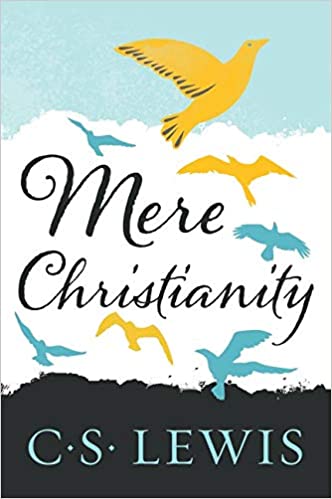
Mere Christianity

So I’m a little embarrassed to admit that I just finished reading Mere Christianity by C.S. Lewis for the first time. I was disappointed with parts of it, and completely blown away by other parts of it. It certainly is a very quotable book, and I thought that rather than offer any sort of in-depth review, I would instead share a good quotation from time to time.

One of my favorite quotations in the book actually comes from the preface, where Lewis explains that his purpose in writing the book isn’t to get people to join a particular church, but rather to accept the basic tenets of Christianity. To make his point, he describes Christianity as a hall with several rooms, and says that his goal is to get people to enter the hall, and to figure out which room to enter on their own.

On choosing which “room” to enter into, he says:

“And above all you must be asking which door is the true one; not which one pleases you best by its paint and paneling. In plain language, the question should never be: ‘Do I like that kind of service?’ but ‘Are these doctrines true: Is holiness here? Does my conscience move me towards this?’ When you have reached your own room, be kind to those who have chosen different doors and to those who are still in the hall. If they are wrong they need your prayers all the more; and if they are your enemies, then you are under orders to pray for them. That is one of the rules common to the whole house.”

I like that a lot.

Abortion, Part 3: How I Vote

This is the third part in a series on abortion, and specifically on why I feel abortion is the single most important issue when it comes to voting. My views on abortion are based on certain philosophies and premises, which you can catch in Part 1 and Part 2.

In this post, I’m going to shift gears a bit and try to explain how I vote in general. It’s been a difficult post to write in a lot of ways, but it’s been good for me to flesh out my thoughts.

Abstaining From Politics

As a quick note, I should mention that there are some who believe that Christians should abstain from politics and voting altogether. After all, our true allegiance is to Christ, not some earthly office or entity, and Christianity is about being salt and light, not about getting others to do what God wants via legislation.

While I respect that view, I also believe that the thinking behind it is flawed—I’m confident that God wants us to use every avenue we have to influence others for good and inject the values of His Kingdom into the world, including our political voice.

Political Parties

On my Facebook profile, my political views are listed as “Inconsistent”. I described them as such not because I consider them to be inconsistent with each other, but because I consider them to be inconsistent with either of the two major parties that dominate our political landscape today.

Generally, I have conservative views on economic issues. As a product of (among other things) Harding University’s Belden Center for Private Enterprise, I believe that capitalism, low taxation, and limited government regulation of business are generally good things.

That being said, those views (some of which are pretty strong) don’t really impact my vote that much because at the end of the day, no matter which party is in control, as Americans, we are among the wealthiest people in the world. If our economic recession lasts longer than expected and cuts deeper than expected, as Americans, we will still be among the wealthiest people in the world.

Instead, the side of politics that matters more to me are the “social” issues, or maybe a better term (which I’ll use for the rest of this post) would be “moral” issues. From a Christian perspective, it’s fundamental that morality is more important than money—how good you are is more important than how rich you are.

And that’s my major problem with the Republican Party—while they may agree with me on many moral issues, when push comes to shove, they just don’t consider those issues to be as important as money. And worse, I think some Republican candidates don’t care about them at all, but just pay lip service to them in order entice me to vote for them.

Of course, on the other hand, you have the Democrats, who I disagree with on a lot of moral issues and disagree with on economic policies.

So here I am, inconsistent with both major political parties, determining my vote based on the issues that I think are most important—the moral ones.

Moral Issues

Christians (and others) who support pro-choice candidates are quick to point out that there are a lot of moral issues besides just abortion—and they’re right. There’s a bunch of them, and I could probably do weeks’ worth of posts covering them all, but instead, I’ll just briefly mention a few in order to illustrate that my views are somewhat scattered across the political spectrum (I won’t mention abortion, since that’s the subject of the next post).

As I’ve mentioned before in a previous post, the teachings of Jesus on the “Least of These” influence my thinking on a lot of these issues:

“Then He will also say to those on His left, ‘Depart from Me, accursed ones, into the eternal fire which has been prepared for the devil and his angels; for I was hungry, and you gave Me nothing to eat; I was thirsty, and you gave Me nothing to drink; I was a stranger, and you did not invite Me in; naked, and you did not clothe Me; sick, and in prison, and you did not visit Me.’ Then they themselves also will answer, ‘Lord, when did we see You hungry, or thirsty, or a stranger, or naked, or sick, or in prison, and did not take care of You?’ Then He will answer them, “Truly I say to you, to the extent that you did not do it to one of the least of these, you did not do it to Me.’ These will go away into eternal punishment, but the righteous into eternal life.”

(Matthew 25.41-46.)

Environment

God created this world for us to use, and also for us to take care of. This idea of stewardship represents a balance that I think a lot of people miss.

Having said that, I think the case for Global Warming (or, “Global Climate Change” now that statistics show that we’re not warming as originally predicted) is unconvincing, and has become overly politicized, as evidenced by the fact that the significant number of scientists who have refuted global warming have been silenced and ridiculed.

Gay Marriage

God defined marriage as being between one man and one woman, and as Christians, I think we should do what we can to support that definition. To me, that certainly includes opposing gay marriage, but at the same time acknowledging that, with the divorce rates we have, American heterosexual couples are doing a good enough job of destroying marriage without help from anyone else. Let’s protect marriage, but let’s also admit that homosexuals aren’t the only ones who are bringing damage upon it.

Immigration

The Bible is pretty clear as to how we are to treat the foreigner—with hospitality. Because of this, I have very little patience with the general position of the Right on immigration.

I realize that we have a lot of illegal immigrants in this country, but I’m also virtually certain that the vast majority of them would choose to become legal if it were easier for them to do so. That’s what I call the iTunes Effect: when the iTunes store gave people an affordable, legal alternative to stealing music, many, many people immediately took advantage of it. I may be naive, but I think immigration would work in much the same way.

Furthermore the U.S. has always been a country of immigrants. It’s how we got our beginning, and it’s what gives us our identity. The Statue of Liberty actually says, “Give me your tired, your poor, your huddled masses yearning to breath free…” but all too many people seem to want to add an “unless they’re from Mexico” clause to the end. I think that’s ridiculous. And sad. And not biblical.

Poverty

I feel convinced in my own mind that ideally, it should be the job of the Church, not government, to take care of the poor, but considering that Christendom as a whole hasn’t done a very good job of that, government helping out might not be a bad idea.

I question whether or not the typical policies of the Democratic Party really help out the poor that much, but at least, in theory, their heart is in the right place. And to those with more conservative views who think that taxation basically amounts to stealing (a view I’m sensitive to), I think it’s important to remember that Jesus didn’t say, “Render unto Caesar what is Caesar’s—unless he asks for more than you want to give him.”

At the same time, I see a lot of inconsistency regarding political views on poverty. If poverty was such a big deal to the Left, you would think they would also oppose things like state lotteries (which statistics have shown feed off of the poor) and alternative fuel sources such as ethanol, which take food (corn) and turn it into fuel when thousands of people around the world starve every day. It makes me wonder if poverty is the Left’s lip service issue just as abortion is the Right’s.

War

I know that this is a major issue with some people, so I may not do it justice in my brief comments, but I’ll try.

I’m not a pacifist. I think war is a terrible thing, and should be avoided when possible, but I also think it can be justified. I think that’s a Biblical view, although I respect the opinions of those who disagree.

Regarding our current war, I know it’s very unpopular, but if we’re honest, I think we’d acknowledge two things. First, back when war was declared, the vast majority of politicians (although our President-Elect is a notable exception) and the vast majority of American citizens were in favor of it. I think too many people are trying to deny responsibility for that. Secondly, having made the decision to go to war, it’s incredibly irresponsible to just pack up and leave in the middle when all indications are that things will get worse if you do. That might be the case now, and it certainly was the case back when the Left first started demanding a pullout.

Having said that, if all the Iraq War accomplished or all it was about was removing a dictator from power who had committed genocide on his own people, then I think it was justified. Similarly, if Hitler had decided not to invade every country in Europe but had still gassed every Jew he could get his hands on, I think war would have been justified in that situation as well.

Conclusion

Once again, my point in bringing up all these issues is not so much to convince anyone on any particular subject, but rather to illustrate what I believe is a consistency among my views on different moral subjects, but an inconsistency between the moral views I hold and the views generally held by either major political party.

So what does that leave me with? Since there are clearly a lot of moral issues, and my views on these issues don’t all line up neatly with a specific party, how can I ever choose to vote for one candidate or another?

Well, if all issues were created equal (you can see where I’m going with this), I wouldn’t be able to—I’d be locked in a stalemate of conscience. But that’s not the case. Sometimes, the magnitude of a particular issue can make it so important that it should take preeminence over all others.

Slavery was such an issue, and abortion is another.

Abortion, Part 2: What Is It?

It is my firm belief that human life begins at conception. I’ll explain why I believe that in this post, but it’s on that premise that I oppose the practice of abortion.

After all, if that premise is not true, then the abortion debate is much ado about nothing. But if it is true, then abortion is nothing less than government-sanctioned, premeditated murder. To put it bluntly, abortion is either the equivalent of brushing off skin cells, or it is the equivalent of shooting your next door neighbor.

There’s a big difference there, so figuring out exactly when human life begins is important.

The Scriptural Argument

As I mentioned in the introductory post to this series, I’m a Christian, and that influences my views on abortion. I think Scripture clearly teaches that life begins at conception, and frankly, that alone would be enough for me (though I think there are other arguments as well).

There are a lot of verses that I could reference and a lot of points that could be made, but I’ll narrow it down to just a couple.

First, the same Greek word, BREPHOS, is used in the New Testament to describe an adolescent child (2 Timothy 3.15), a newborn child (Luke 2.2), and an unborn child (Luke 1.44). New Testament writers didn’t seem to make a distinction between children before and after birth.

Like the Greek of the New Testament, the Hebrew of the Old Testament makes no distinction between an “infant” and a “fetus.” The Hebrew word, GEHEVER, is used over 60 times in the Old Testament, usually to refer to an adult male (Psalm 34.8, Job 3.23, Psalm 125.7). But in Job 3.3, this same word is used to refer to an unborn child at the moment of his conception.

I think an even stronger argument concerning the beginning of life comes from the incarnation of Jesus. Concerning the incarnation, the Bible teaches that the Son of God emptied Himself, became flesh, and dwelt among us (Philippians 2.5-8, John 1.1-14).

The question then arises, “at what point did the Son of God become flesh, and begin His life as a human?” There’s only one answer that makes sense: Jesus didn’t begin His humanity on the night He was born in Bethlehem; the Messiah of the Jews and Savior of the World became flesh at the point that the Holy Spirit caused Mary to become pregnant (Luke 1.35)!

The Scientific Argument

Science is certainly not my area of expertise, and I won’t pretend otherwise. Certainly there are scientists and doctors who would argue that life doesn’t begin at conception, but many of them argue that it does.

And consider: the day before an infant is born and the day after an infant is born, the infant is almost identical in terms of development. The significant difference is in terms of environment (out in the world as opposed to inside the womb).

A few years ago, I had to write a paper on Embryonic Stem Cell Research for an Ethics class, and I came across this article which suggests that we can more clearly determine when life begins by comparing it to when life ends. I would suggest that you take the time to read the article, but the author, who is a professor of Neurobiology and Anatomy at the University of Utah, points out that:

Death occurs when the body ceases to act in a coordinated manner to support the continued healthy function of all bodily organs. Cellular life may continue for some time following the loss of integrated bodily function, but once the ability to act in a coordinated manner has been lost, “life” cannot be restored to a corpse-no matter how “alive” the cells composing the body may yet be.

Applying that same definition of life, it’s clear when life begins:

From the earliest stages of development, human embryos clearly function as organisms. Embryos are not merely collections of human cells, but living creatures with all the properties that define any organism as distinct from a group of cells; embryos are capable of growing, maturing, maintaining a physiologic balance between various organ systems, adapting to changing circumstances, and repairing injury. Mere groups of human cells do nothing like this under any circumstances.

The Common Sense Argument

If life doesn’t begin at conception, then when does it begin? Other “starting lines” seem arbitrary:

Is life determined by viability? An infant isn’t a person until it can survive outside the womb? That’s problematic, because with advances in medicine, that date continues to change. For that matter, if humanity is determined by how well someone can survive, a lot of toddlers, people in nursing homes and paraplegics are in trouble—are they less human than the rest of us?

Does life begin at birth? That seems like more of a concrete dividing line, but if that’s the case, why are there restrictions on late-term abortions? And why does Barack Obama not support the lives of infants who survive abortion attempts and emerge from the womb living (For the record, I’ve pointed out before that at least Obama is consistent on this issue—if it’s okay to abort an infant right before birth, it should also be okay to let the infant die immediately afterwards.)?

It seems that our gut tells us that humanity begins prior to birth. Consider the following example. When a couple who is pro-choice and has no problem with the practice of abortion decides to start a family and conceives, their view of the unborn changes dramatically. No longer is a fetus just a bundle of cells; instead, it is an unborn infant. It is considered to be a member of the family and the parents plan for it accordingly. They get excited when it moves and are concerned about its health. They don’t wait for the moment of birth to bestow personhood upon it!

So what do we make of this inconsistency? Is life determined by the feelings of the parents? Is an unborn infant a human only if the parents consider it to be so, only if it is wanted? This is the most ludicrous position of all, but it’s the position where many end up.

Conclusion

There’s much more to be said, but the point of this post was to put forth reasons why I believe human life begins at conception, and why, therefore, the issue is an important one. There are more arguments that could be made, but I think I’ve said plenty.

At this point, I’m still laying the foundation for later posts and not really anticipating a lot of disagreement from most of my readers, but if you do take issue with something I’ve said, let me know.

Abortion, Part 1: Introduction And Disclaimer

In the comment section of a previous post, I was asked, “What makes abortion a deal breaker as opposed to the other moral issues?”

It’s a good question, and a fair one, because abortion is a deal breaker for me—it’s certainly not the only issue I care about, but I do care about it more than any other issue.

As I began to answer the question, I realized that I really couldn’t do it justice in one post—it’s just too important—so this will be part one of a multi-part series on abortion. I originally hoped to have all this posted prior to Election Day, but there’s just no way I’ll be able to. That’s okay though—unfortunately, abortion is an issue that will continue to be with us after November 4.

I don’t expect to get many comments on these posts, because I rarely do when I write about the more serious side of life. But that’s okay—these will likely be some of the more important posts that I ever write.

First, a disclaimer, of sorts:

I’m a Christian, and that’s why I feel the way I do about abortion—I’m trying to live out what Jesus said was important. If you’re reading this and you’re not a Christian, I hope you’ll keep reading, but I want you to be aware of the perspective from which I am coming.

But if you are a Christian, I’m writing this especially for you.

I’m aware of a surprisingly large number of Christians (some of whom I respect a great deal) who will vote or have voted for Obama in 2008, seemingly without regard for the fact that he is the most abortion-friendly candidate we have ever seen from a major party (I’ve linked to this article before, but if you haven’t read it yet, you owe it to yourself).

I hope you’ll weigh and consider the next few posts, and of course, your feedback (negative too) is always welcomed.

« Older posts Newer posts »

© 2026 The Doc File

Theme by Anders Noren — Up ↑







