The online journal of Luke Dockery

Category: Culture (Page 4 of 14)

A Different King Named Jesus

Today’s reflection comes from Acts 17, where Paul and Silas travel to Thessalonica as part of the Second Missionary Journey. As was Paul’s custom, they head first to the synagogue and tell the Jews there about Jesus, using the Hebrew Bible. This method is successful, at least with some:

“Some of the Jews believed Paul and Silas and joined them. In the synagogue there were many Greeks. They worshiped the one true God. There were also many important women. They joined Paul and Silas too.

(Acts 17.4, IEB)

But there are also some Jews who reject Paul and Silas’s message and who, out of jealousy (v.5), hire some men to stir up trouble against them. A mob ensues, and cries out:

”[These men] do things against the laws of Caesar. They say that there is a different king named Jesus.”

(Acts 17.7b)

This proclamation (from a mob, no less!) highlights one of the central truths of Scripture, but one that needs to be carefully nuanced: Jesus is the King of the world.

This idea, that Jesus is King, is what the most popular titles used for Jesus are getting at. When we say that Jesus is Messiah or Christ (the same term in two different languages), the idea is that He is the promised king from the line of David, the One to whom the narrative of the Hebrew Bible points. When we say that Jesus is Lord, we are moving from Hebrew to Roman thought: Lord was the title given to Caesar, the presumed king of the known world. To say that “Jesus is Lord” is to necessarily imply that Caesar is not.

And, indeed, this is the very notion proclaimed in the verse quoted above—the mob was right. Jesus is the King of the world, seated at the right hand of God the Father since His resurrection and ascension. Followers of King Jesus owe ultimate allegiance to Him, and this will invariably put them at odds with various other would-be kings from time to time. For those who are desperate to cling to worldly power and demand ultimate allegiance from their subjects, citizenship in God’s kingdom is an inherent threat. May we never forget that King Herod sought to eliminate the baby Jesus who He viewed as a rival, that Jesus was ultimately crucified with “King of the Jews” nailed above His head as the charge of which He was guilty, and that Peter and Paul would ultimately be martyred under the authority of a rival king (Nero) because of their allegiance to Jesus.

But, the mob was also wrong. While Jesus is certainly King, He is a different kind of king. He wasn’t seeking Herod’s throne, control of the Jewish establishment in Jerusalem, or even the overthrow of the Roman Empire. Such prizes were much too petty for the rightful King of the Universe. This is why Jesus can clearly state that His kingdom is not of this world and that His followers will not use violence to bring it about. It is why early Christians were at pains to show that they were good citizens who sought the welfare of the communities in which they lived (cf. Jeremiah 29.7), loved their neighbors, and submitted to government authorities.

The nuanced kingship of Jesus must lie at the center of the lives and identity of Christians today. On the one hand, Christians should be the best neighbors and citizens around. We are willing to help and sacrifice for our communities because we love others (including our enemies!). We seek to be at peace with all people, so we avoid controversies and quarrels. We appreciate the value of submission, so we obey the laws of our land whenever we can do so in good conscience, even when we find those laws irksome.

On the other hand, our ultimate allegiance is to King Jesus, and our primary citizenship lies in His kingdom, not in whatever earthly nation that we happen to inhabit. This means that we are all-too-aware of the fallenness of our earthly nations. We should not hesitate to critique them when they are in the wrong, and we should not be surprised when they demand from us more allegiance than they have a right to (after all, this is what fallen earthly kingdoms invariably do).

And if and when we are ever placed in a position where we must choose where our loyalties lie, there is no choice: our allegiance is to a different King, and His name is Jesus.

If and when we are ever placed in a position where we must choose where our loyalties lie, there is no choice: our allegiance is to a different King, and His name is Jesus. Share on X

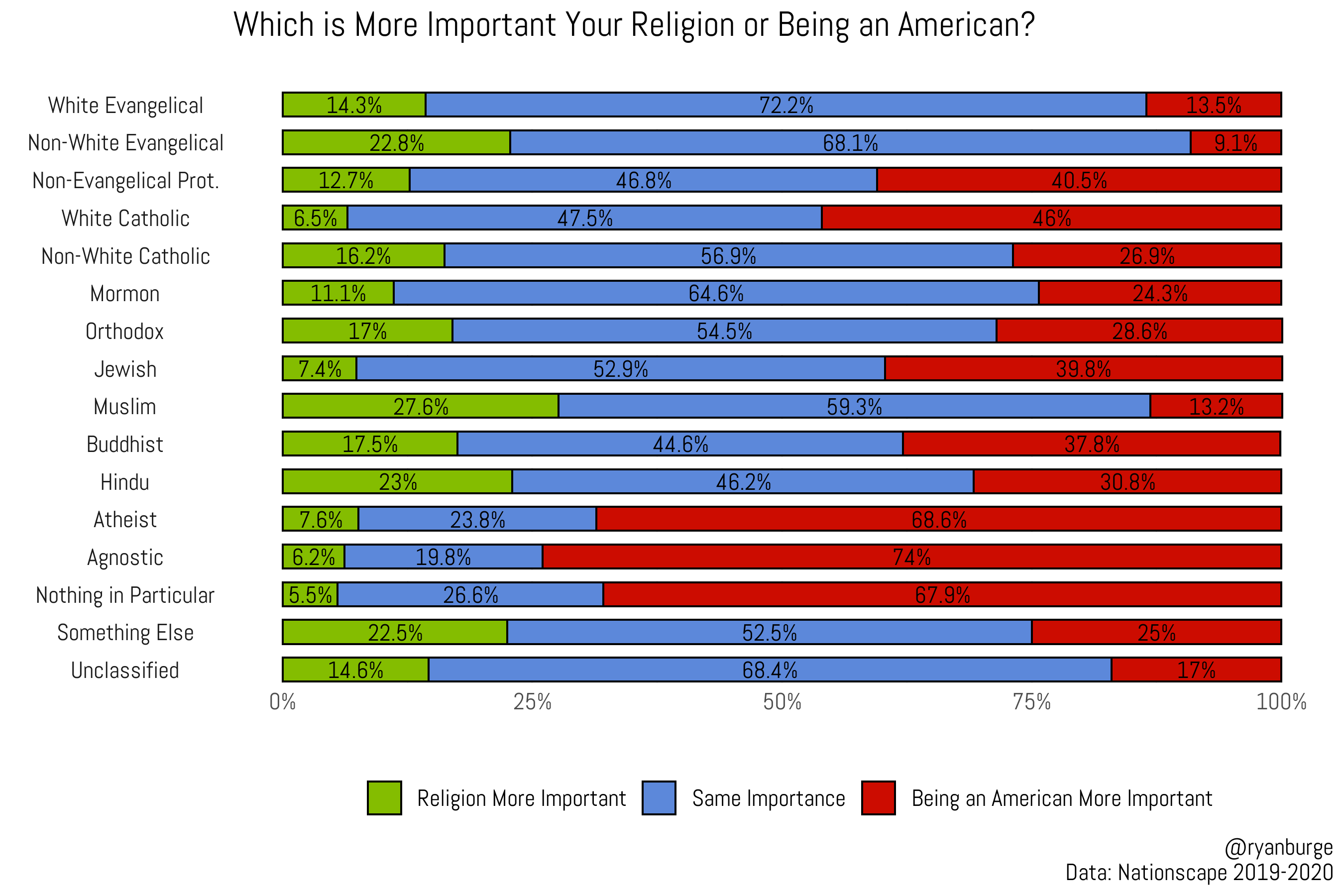
The point of this post—that Jesus is the King of the universe and it is to Him that Christians owe ultimate allegiance—may seem like an obvious point, and, indeed, I think it should be obvious. Sadly, though, research proves otherwise. Consider the following survey results (sourced at the bottom of the graphic):

Obviously, there are many, many people who claim to be “Christian”, but do not embrace the reality at the center of the Christian faith: Jesus is Lord, and that means that no one else is.


This image, drawing inspiration from the book of Revelation, is one of my favorite images depicting Jesus as King. The artist is Chris Koelle, and it comes from a graphic novel of the Book of  Revelation that I highly recommend.


In this loose series of Scripture Reflections, I am sharing brief thoughts spurred on by my Bible reading this year. By way of reminder, my goal for these brief posts is two-fold:

(1) To remark on aspects of the biblical text that I find to be of interest that the reader may or may not have thought about previously.

(2) When possible, to point ahead to the work and person of Jesus Christ. I believe the Bible is a unified story that points to Jesus, which means that He is frequently alluded to or foreshadowed in some way throughout the biblical canon.

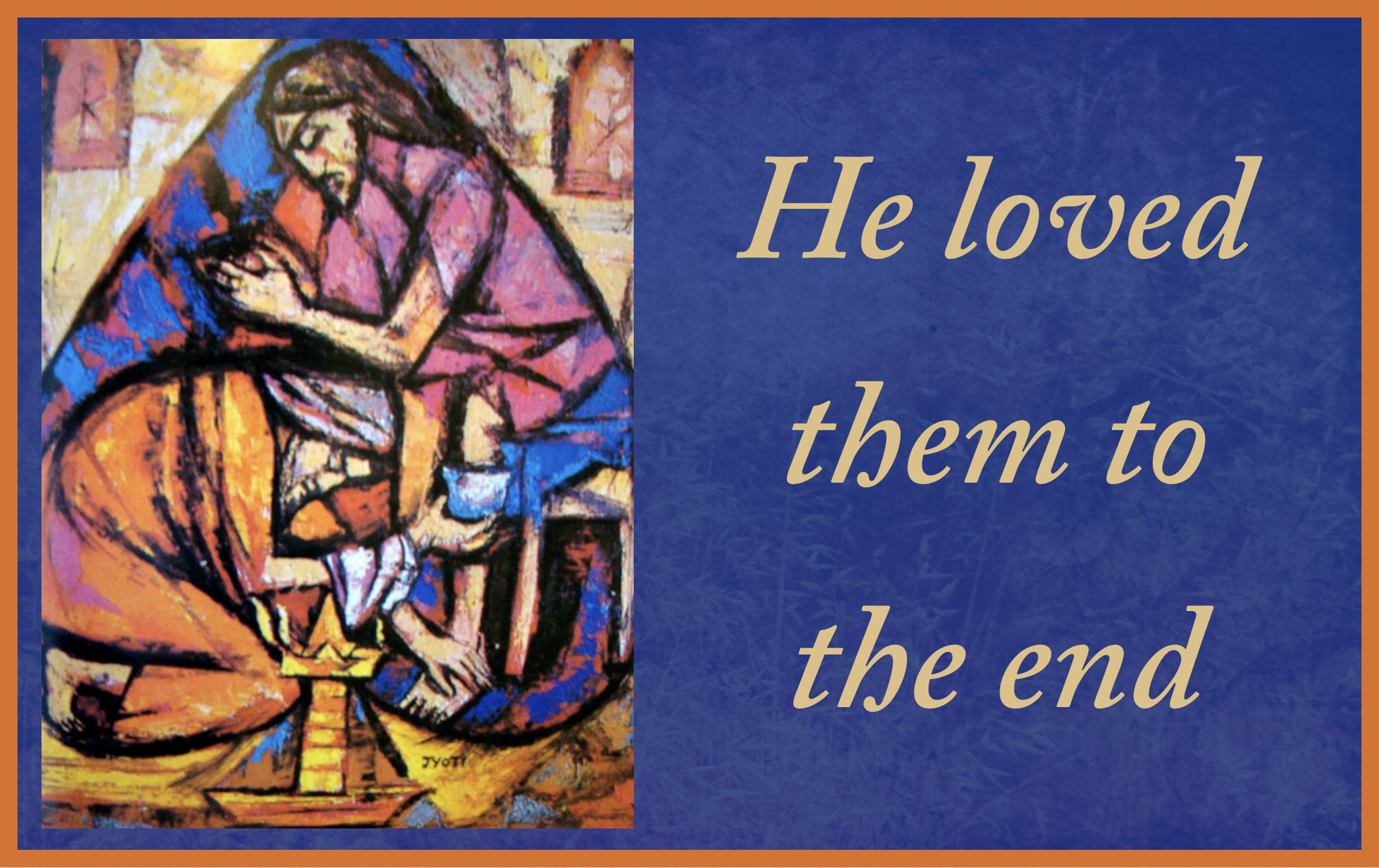
“He Loved Them to the End”

Today’s reflection comes from John 13 (the daily Bible reading format I am following this year involves readings from both testaments each day), the beginning of what is typically referred to as Jesus’ “Farewell Discourse”—teachings from John 13-17 that Jesus delivers to His disciples on the night that He was betrayed.

The content of John 13 is introduced to us in verse 1 with these interesting words:

“Now before the Feast of the Passover, when Jesus knew that His hour had come to depart out of this world to the Father, having loved His own who were in the world, He loved them to the end.”

Jesus knows He is about to die, and with this knowledge in mind, how does He spend His last evening? He chooses to spend it with “His own”, the disciples He had led and lived with for years, whom He loved. This seems straightforward enough, right? If you knew that you were about to die, I suspect that you would want to spend your remaining time with those you love. I would too.

But there is more to the story. John 13 is all about love, and the introductory verse we just read sets us up to examine the love that Jesus shows for His disciples compared to their response to Him.

The chapter looks something like this, in outline form:

13.1: Jesus loved His own to the end [Summary Statement]

13.2-20: Jesus shows His love by washing the disciples’ feet [Exemplary Love of Jesus]

13.21-30: Jesus predicts the betrayal by Judas [Disciples’ Failure to Love]

13.31-35: Jesus encourages the disciples to love like He has loved them [Exemplary Love of Jesus]

13.26-38: Jesus predicts the denial by Peter [Disciples’ Failure to Love]

With this outline in mind, the last night of Jesus becomes remarkable rather than straightforward. Jesus spends His last night washing the feet of those who will betray, deny, and desert Him hours later. He knows that this will happen, and this is still how He chooses to spend His last evening: loving those who will fail to love Him.

If you knew you were about to die, is this what you would do? Neither would I.

As I look around in the world in which we live, I see a desperate need for love. I witness all sorts of people cutting off ties and cancelling relationships with “their own”—family members, longtime friends, brothers and sisters in Christ—rather than “loving them to the end.”

I think we find God’s answer to the bitter division and rancor of our times in this text and the example of Jesus: we are to love as Christ has loved us. Jesus loved His disciples even when He knew they would fail to love Him in return. He loves us even when we forsake Him. And He calls us to love in the same way.

In a society that normalizes and encourages the dissolution of relationships when we disagree over a whole host of issues, Jesus offers—commands, actually—another way.

It is not easy, but it is clear: “He loved them until the end.”

Jyoti Sahi, Jesus Washing the Feet of Peter, Oil on Canvas


In this loose series of Scripture Reflections, I am sharing brief thoughts spurred on by my Bible reading this year. By way of reminder, my goal for these brief posts is two-fold:

(1) To remark on aspects of the biblical text that I find to be of interest that the reader may or may not have thought about previously.

(2) When possible, to point ahead to the work and person of Jesus Christ. I believe the Bible is a unified story that points to Jesus, which means that He is frequently alluded to or foreshadowed in some way throughout the biblical canon.

The Very Political Book of Revelation

Recently at Cloverdale, our preaching minister completed an excellent series of lessons on the Book of Revelation. Not only was the series well done, it was also incredibly encouraging in a very difficult season (the worst statistical days of the pandemic and the bitter presidential election and its aftermath).

Revelation is somewhat of an infamous book: as an example of apocalyptic literature, to modern readers it comes across as strange, unfamiliar, and notoriously difficult to understand. Efforts at understanding the book have been further complicated by long traditions of treating Revelation as some sort of crystal ball that gives detailed geopolitical predictions about the time period of the interpreter in question. This has led to all sorts of fantastical claims—Christians needing to support the modern nation of Israel in building a third Temple to hasten the return of Jesus, references in Revelation to the USSR, or the COVID-19 vaccine being the mark of the beast—that would have been absolutely unimaginable to John, the author of Revelation, or the first-century Christians to whom he was writing.

Although the imaginative imagery and apocalyptic genre of Revelation are challenging to us as modern readers, it remains an intelligible book if we seek to understand it on its own terms. John is writing to seven congregations of Christians in Asia Minor about things that actually would have been relevant to them in their time and place. He peels back the curtain to allow his audience to see the spiritual realities that lay behind their daily experiences.

Specifically, he addresses the pressure that Rome, the great beast (itself under the influence of Satan, the great dragon), is placing upon Christians to deny their allegiance to King Jesus and instead succumb to the social, economic, and religious demands of Caesar. To those faithfully resisting Roman pressure, John encourages them to persevere with the assurance that Jesus has already claimed the victory over Satan, and that His followers will be vindicated. To those who have already compromised their faith and acquiesced to the demands of Rome, John’s message is one of warning and judgment: they must repent before they are destroyed along with the rest of God’s enemies.

The message of Revelation would have come across as strikingly political to the original audience. Share on X

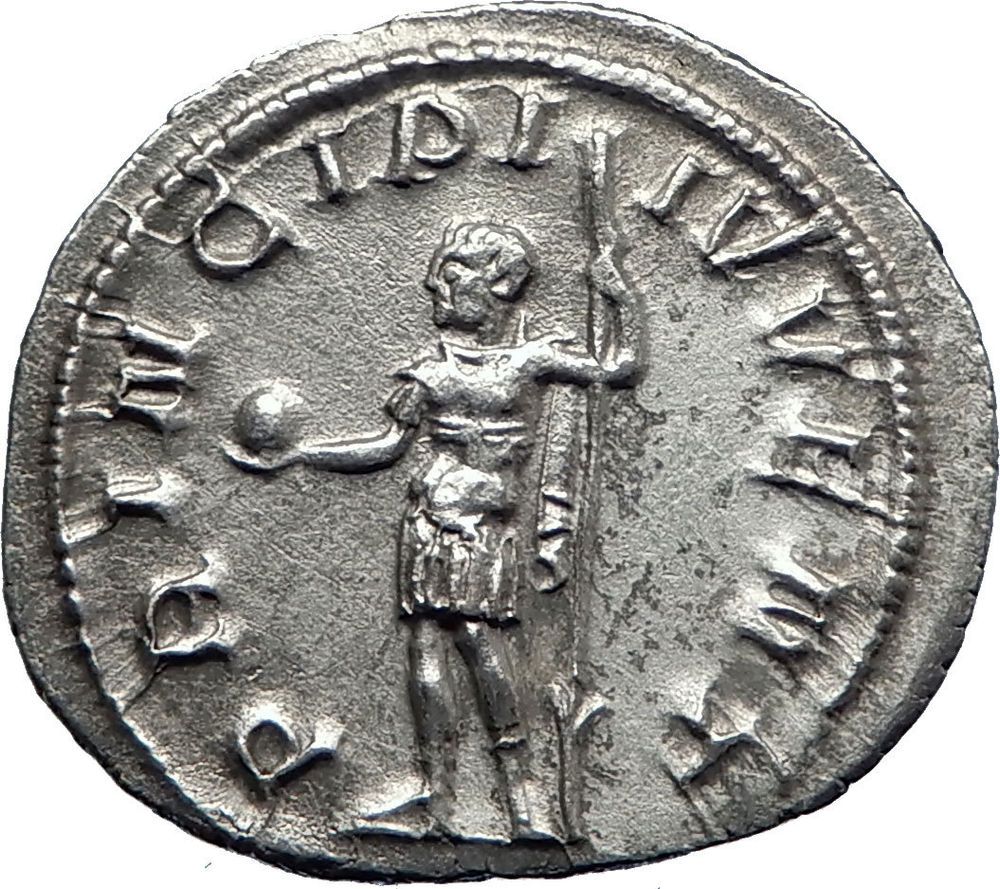
A third-century Roman coin (AD 244) depicting Emperor Philip II holding the earth in the palm of his hand.

Though challenging to us, this message would have been easily understood by John’s original audience(s), and it would have come across as strikingly political. After all, the Mediterranean world of the New Testament time period was all about Rome. Propaganda proclaimed that Rome was good news (“gospel”) for the world and the bringer of peace. Rome deified its emperors and depicted them as omnipotent rulers whose dominion extended over the entire earth. So interconnected was Roman government, Roman religion, Roman military might, and Roman society that it was impossible to be considered a good citizen or a good neighbor if one resisted the expectation to sacrifice to the gods or pledge allegiance to Caesar above all else. And in such a context, John depicts Rome as a hideous beast under the influence of evil spiritual forces! This is a deeply political text.

In light of this reality—the evil and corruption of the world around them, what are Christians to do? Before we answer that question, we should first note what they are not encouraged to do:

  • They are not encouraged to obsess over how beastly Rome is and constantly rail against it because of this. After all, it should be expected that beasts will act in beastly ways. Rome is a beast, not the Bride of Christ! 
  • Furthermore, they are not encouraged to “Make Rome Great Again”, hearkening back to some fictitious history when the beast was somehow not a beast. 
  • On the other hand, neither are they encouraged to revolt against Rome or tear down all the pillars upon which society is built and work to create a utopian society where justice reigns.

Instead, John encourages those to whom he is writing to remain faithful to Jesus, their Lord, at all costs. Keeping with the political nature of Revelation, as I have discussed before, the statement “Jesus is Lord” is an inherently political claim:

“Lord” is an interesting word; to us, it is almost exclusively a religious term. We tend to think of it as a synonym for “God”, but really, “Lord” was a favorite title of Jesus in the early church. And it’s not primarily a religious title, either; it was a title with distinctly political overtones. “Lord” was the official title for the Roman Emperor: laws, edicts and decrees were signed “Lord Caesar.” This means that when early Christians called Jesus “Lord”, they were making a political statement: by saying that Jesus was Lord, they were simultaneously saying that Caesar was not. Jesus was the One who had absolute authority over their lives, He set the standards by which they were to live, He was the One to whom they owed primary allegiance, and it was He who sat on the throne of the universe.

The Book of Revelation may not tell us when Jesus will return or what will happen in the Middle East next year, but it is incredibly relevant. It makes the striking political claim to Christians that, rather than worry about the kingdoms of this world—which are beastly and will one day come to nothing—we are to “return to our first love” and live out the confession that Jesus is Lord in our daily lives. Instead of trying to reform or uphold or overthrow the society in which we live in order to make it better, our focus should be on living as citizens of God’s kingdom, the better reality that already exists. It is a kingdom that will never be destroyed and will one day supplant and replace all earthly kingdoms. It is a kingdom that subverts worldly understandings of power and wealth, led by a King who laid down unparalleled power and unimaginable wealth to live as a servant and die as a sacrifice to save His subjects.

I have frequently said that I am not a very political person, but that is not technically accurate. Certainly, I am not very political in the sense that I do not focus on partisan loyalties in the American political spectrum, but I confess that Jesus is Lord, and seek to place my allegiance to Him at the center of my life.

As the Book of Revelation shows us, that is a very political claim.

I confess that Jesus is Lord, and seek to place my allegiance to Him at the center of my life. As the Book of Revelation shows, that is a very political claim. Share on X

Politics From A Christian Perspective: Voting Strategies

In this post, the last in this series, I want to take the principles we talked about in the last post and see how they might be practically applied. I will certainly not attempt to tell you who to vote for, but I will take a look at various voting strategies employed by Christians, and attempt to briefly evaluate them. This post is very much built upon the ideas of the last one and assumes you are familiar with them, so you should really read that post first.

I’ll go ahead and tip my hand at the beginning: I don’t think there is a single, correct Christian voting strategy. If there were, Scripture would teach it to us. Instead, Scripture gives us an abundance of biblical principles and it is a matter of wisdom and conscience as to how best to apply those principles in a voting booth. As long as Christians are doing their best to operate as citizens of God’s kingdom in all things—including voting—I think this is a clear Romans 14 issue.

Having said that, I do think it is worth reflecting on the wisdom of various voting strategies, and that is what this post is about. As with the post on biblical principles, this post will not be exhaustive, and I am sure there are other Christian voting strategies that I will overlook, but I believe this is still a helpful exercise. For each voting perspective, I will offer what I see as worthy of praise about it, but also, what gives me pause about fully endorsing it. Furthermore, there are a couple of strategies I hear from Christians that I don’t actually believe meet the litmus test of “operating as citizens of God’s kingdom” and, thus, need to be rejected. I’ll talk about those last.


Abstaining from Voting

As we discussed in the last post, Christians declare that Jesus is Lord, which is a political claim. Furthermore, Christians are, first and foremost, citizens of God’s kingdom, and owe their primary allegiance to that kingdom rather than to earthly kingdoms or nations. With those perspectives firmly in mind, some Christians abstain from voting altogether. In Churches of Christ, this perspective was perhaps best represented by David Lipscomb, the longtime Gospel Advocate editor and a major leader in Southern churches in the decades following the Civil War. Lipscomb was a pacifist who didn’t think Christians should serve in the military or even vote.

  • Praise: Honestly, there’s a lot about this view that is appealing to me. Since I believe that the Bible teaches that earthly kingdoms are different versions of Babylon under the influence of “the ruler of this world”, it makes a lot of sense to me to keep politics and voting at arm’s length. Everytime I hear a Christian (from one political persuasion or the other) encourage fellow believers to “choose the lesser evil”, this is driven home to me again: as a Christian, I’m not supposed to choose evil at all, in greater or lesser varieties! Instead, this perspective allows you to wash your hands of the entire process.[1]
  • Pause: This strategy can easily come across as indifferent to the problems and issues of the world and the suffering of others. People with this apolitical perspective can also sometimes be judgmental toward those who do engage with the political process.

Ultimately, Scripture never demands that followers of God be actively involved in world politics, and there are other ways (and I would say, better ways) in which we can “seek the welfare of our cities” besides the voting booth. As long as those who abstain from voting do not judge fellow Christians who are politically active,[2] I think this is a legitimate political strategy.

Protecting the Least of These

A key biblical principle for followers of Jesus is the commandment to love our neighbors as ourselves, and Jesus extends this particularly to the “least of these”: people who, for a variety of reasons, find themselves on the margins of society and unable to speak up for themselves. I have heard from Christians who employ this strategy and actually vote against their own best interests to instead seek to benefit those who are struggling and who, for whatever reason, are lacking in political voice or representation.

  • Praise: The desire to protect and help the least of these is certainly praiseworthy: Jesus says that when we do this, it is as if we are protecting and helping Jesus Himself! Furthermore, the willingness to ignore one’s own self-interests in order to help others is close to the heart of the gospel.
  • Pause: The least of these is not a monolithic group; what do you do when the needs and interests of different oppressed groups come in conflict with one another?  For example, two “least of these” groups are the poor and the unborn. Unfortunately, the political party that pays most attention (or, at least, lip service) to the poor is also pretty unconcerned with the rights of unborn infants (the opposite argument could be made as well). Also, how do you determine what is in the best interest of a given group?[3] For example, I know religious conservatives and religious liberals who both care about the poor and want to help them, but are widely divided in their views of how best to do that.

Despite my own struggles to discern how to apply this strategy consistently, I want to affirm the importance of its central value. I would hope that Christians would always be concerned with protecting the least of these, even if we disagree over how to do that.

Religious Freedom

The practice of Christianity and obedience to the Great Commission (preaching Jesus to people throughout the world and making disciples) is greatly aided by religious freedoms that we sometimes take for granted in the United States. However, we appear to be living at a hinge of history: the US, like countries in Western Europe, is increasingly a post-Christian society, and with that comes a loss of the privileged position that Christianity has so long enjoyed in the West.[4] In response to that reality, a prevailing political strategy for many Christians is to vote in such a way that religious freedom is upheld.

  • Praise: I really enjoy religious freedom. There are believers in many parts of the globe who are persecuted for exercising their Christian beliefs and who pray for the freedoms that we enjoy and often take for granted. Although we can see times in the history of Christianity where persecution brought about the spread of the faith and the refining of the church, it seems clear to me that spreading the Gospel is more easily done when governing authorities are not antagonistic to those efforts.
  • Pause: I am concerned that the strategy of seeking religious freedom can sometimes make Christians too cozy to human governments and to place their trust in them rather than in God. For example, the Trump administration has been very friendly toward Christian groups, but this benevolence has led to many Christians being hesitant to critique other aspects of the administration that are decidedly unChristian. Furthermore, this perspective easily leans into fear: what will happen if a different administration comes and takes away all of our religious freedoms? Christians are not to be fearful people, however, and we are to place our confidence in the provision and care of our Heavenly Father: if He be for us, who can be against us?

Religious freedom is important (though not essential) to the mission of God, and is, therefore, worth pursuing. But let us not do so in isolation of other biblical principles, and, from a kingdom perspective, let us make sure that we are actually taking advantage of our religious freedoms to be about God’s business of evangelizing the world, rather than just basking in the comfort of a privileged status in society.

Good for the Most People

Recently, I have repeatedly heard Christians (on both sides of the American political spectrum) urge others to “vote for policies rather than personalities” or to focus on the total vision of a political party rather than the specific shortcomings of that party’s chief representative. People using this line of argumentation (in addition to acknowledging the basic indefensibility of their chosen candidate) are really arguing for a form of utilitarianism: which candidate or party will enact policies that will bring about the most good for the most people?

  • Praise: This strategy, with its desire to look at the big picture and bring blessing to as many people as possible, can easily reflect the biblical principles of seeking the welfare of the communities in which we live and striving to love our neighbors as we love ourselves.
  • Pause: Policies that seek what is best for most people can easily lead to an environment of majority rule where the wealthy and powerful are benefitted while the least of these (see above) are marginalized and ignored. For example, severely disabled individuals represent an extreme minority in our society that presents a massive economic burden to those who are healthy. From a purely utilitarian perspective, it makes no sense to provide care for individuals in this category.

It seems self-evident that good governments should seek to bless as many people as they can, and this is a value that Christians should be able to get behind. It is essential, however, that this value be balanced with special concern for the least of these (a special concern that Jesus commands) rather than taken to utilitarian extremes.

Kingdom Principles

A central biblical teaching is that we are to glorify God in all that we do, with all the talents that we have, and in all the opportunities that we are given. In ways that have not been possible in many nations throughout history, Christians in the United States are given a political voice, and proponents of this strategy argue that Christians should use their political voice to reflect kingdom principles. In some ways, this strategy is related to the utilitarian strategy above, but more specifically holds that kingdom principles reflect the wisdom that God built into the very fabric of the universe, and that we, as a society, will be blessed when we uphold them. Imagine: in a society that held to the teachings of the Sermon on the Mount, murder, rape, and poverty would be no more! It is to our own detriment to ignore God’s instruction and seek to go our own way.

  • Praise: Obviously, those who walk in the way of the Lord will be blessed. When given the opportunity to reinforce kingdom values, it seems wise and appropriate for Christians to do so.
  • Pause: If we are not careful, however, this strategy can easily devolve into waging culture wars (see below), where we see our primary kingdom mission as “winning our nation back for God” through political power. We must remember that, while earthly nations are blessed when they follow godly principles, they will not consistently and ultimately do this because they are inherent rivals to God’s kingdom and His governance.

By all means, may Christian voters reflect kingdom principles with our vote. But as we do this, let us remember that all we are really doing is slowing down the decline and decay that inevitably comes to human nations, and that this is not the mission that Jesus left to His disciples.


There are two voting strategies I have heard Christians use that I think must be rejected as Christian strategies:

Waging Culture Wars

As I mentioned above, I think it is good and appropriate for Christians to reflect kingdom values with our political voice when given the opporutnity, but attempts to win culture wars so that we can “win our nation back for God” are misguided and, I believe, antibiblical.

Such attempts are rooted in a failure to properly distinguish between the United States and the Kingdom of God. Remember, if we want a biblical parallel for the US, it’s not Israel; it’s Babylon, so it should not surprise us that the nation in which we live doesn’t look like the Kingdom of God, because it is fundamentally not that. As Christians, our task is not to remake the kingdoms of this world into the Kingdom of God, but rather, to call people out of the world and into the Kingdom of God.

On a related note, this strategy also fails to take into account that the means that Jesus gave His disciples to influence the world was the leaven of our personal examples as salt and light in a dark and decaying world; it was not coercive political power. There are many examples throughout history of Christian authorities using their power in an attempt to force those around them to be Christian; this is not what Jesus told His followers to do, and it doesn’t work.

Kingdom Disengagement

I mentioned earlier that the inherent tension between God’s kingdom and earthly nations makes disengagement from earthly politics appealing to me (although I have not, yet, truly adopted that strategy). I do not understand, however, what I occasionally hear from Christians that seems to stem from the opposite motivation.

This is sometimes hinted at when someone makes the claim that “we are electing a president, not a preacher/pastor/Pope.” This statement generally is meant to suggest that we shouldn’t expect political candidates to be especially virtuous, but more subtly, it suggests the impropriety of comingling Christian virtues with politics in general.

I heard it more flatly stated recently (by a preacher of all people!): “The vote is not a religious action, it is a civil action.”

I was floored. Although this gentleman correctly discerned the difference between faith and politics, the Kingdom of God and the United States of America, he incorrectly concluded that this difference meant that his faith and his citizenship in God’s kingdom had no bearing on his actions as a US citizen! Effectively, his allegiance to King Jesus and His principles waited patiently outside the voting booth.

Truly, there is no place for this sort of compartmentalization in our lives. On the contrary, our entire lives are to be a living sacrifice, which leaves no place for certain areas of life where we are free to disregard kingdom principles in favor of other concerns and desires.


As you can see, I don’t actually believe that any of the voting strategies used by Christians are foolproof. With the exception of the two strategies I rejected at the end, I believe all of them have strengths, but, alongside those strengths, also possess other characteristics that bring me pause. Reflecting on these different strategies for the last few weeks has helped me to see that I use a combination of them in my own approach to voting, but that, too, requires wisdom and discernment.

I will close this post by echoing something I said at the beginning. I truly believe that voting is an area of Christian freedom. As in many areas of life, we are not given explicit biblical instructions on how (or whether) to vote. Instead, we are given a variety of biblical principles and, with wisdom and discernment, in accordance with the dictates of our conscience, and as citizens of God’s kingdom, we must seek to apply those principles as we vote (or not vote).

In this series, I have not tried to tell you which candidate you should vote for. I have, however, tried to reflect on how we should vote as Christians. The reality is that Scripture provides us with an abundance of principles that should influence the way we approach earthly politics, but how we apply those principles still comes down to discernment.

May God grant us wisdom as we seek to discern His will, humility as we recognize our own limitations in doing so, and a lack of judgment for fellow believers who arrive at different conclusions.

May God grant us wisdom as we seek to discern His will, humility as we recognize our own limitations in doing so, and a lack of judgment for fellow believers who arrive at different conclusions. Share on X

Read the entire series:


[1] This may be a good time to quickly refute claims such as, “Not voting is the same as voting for _________.” That is nonsense. A non-vote is quite literally not the same as a vote. Although this post is not about third party voting, the same response could be given to those who claim, “A vote for a third party is the same as voting for ___________.” Again, that is nonsense, and it is largely this sort of uncreative (and manipulative) thinking that keeps our country locked in unproductive, binary choices.

[2] As mentioned in the last post, we have positive biblical examples of people like Daniel, Esther, and Joseph who faithfully served God through their political positions. With this being the case, I do not believe it is justified to categorize voting as an inherently inappropriate action for God’s people.

[3] Some would suggest that my question—how do you determine what is in the best interest of a given group—is stupid: just ask them! I don’t think it is that simple, however. After all, I routinely do not know what is best for me. I don’t think that is because I am particularly unwise or unintelligent, but because I am human. Scripture is pretty clear that we are not reliable when it comes to knowing what is best for us.

[4] From where I sit, this seems like an unquestionable reality. You don’t have to be an alarmist who sees the spectre of persecution lurking everywhere to notice significant cultural shifts in how Christianity and certain Christian beliefs are perceived, especially in the fields of higher education, politics, and business. For example, the level of scrutiny that a Supreme Court Justice nominee recently received for her religious beliefs would have been unthinkable a few decades ago.

Politics From A Christian Perspective: Biblical Principles

As I mentioned in the introductory post to this series, I am working on ironing out some of my thoughts on Christian faith and political engagement. I laid out several reasons why I think this is a complicated issue, but ultimately, I do believe that Scripture has much to say that should inform the way that Christians view and interact with politics. My goal is to briefly review several biblical principles that should influence Christian political views and, when appropriate, discuss these how principles interact with our current political situation.


Jesus Is Lord

I touched on this in the last post, but I believe that all Christian interaction with politics must begin here, with what is, perhaps, the central statement of Christianity: Jesus is Lord. This is an inherently political claim, and if we miss that truth, we not only start off on the wrong foot politically, but we are also disconnected theologically from the story of Christianity and the church that we read about in the New Testament.

“Lord” is an interesting word; to us, it is almost exclusively a religious term. We tend to think of it as a synonym for “God”, but really, “Lord” was a favorite title of Jesus in the early church. And it’s not primarily a religious title, either; it was a title with distinctly political overtones. “Lord” was the official title for the Roman Emperor: laws, edicts and decrees were signed “Lord Caesar.” This means that when early Christians called Jesus “Lord”, they were making a political statement: by saying that Jesus was Lord, they were simultaneously saying that Caesar was not.[1] Jesus was the One who had absolute authority over their lives, He set the standards by which they were to live, He was the One to whom they owed primary allegiance, and it was He who sat on the throne of the universe.

As a Christian, it is really important that I remember that, regardless of who claims worldly positions of power—Nero in Rome, Napoleon in France, Hitler in Germany, or whoever wins the US Presidential election—Jesus is still Lord. His reign is secure, His victory is certain, and it is to Him that I pledge my primary allegiance, and in Him that I place my hope and trust. All of this may sound like a no-brainer to Christians, but it is easily forgotten anytime a well-meaning Christian suggests that “This is the most important election in history because X” or “If X wins the election we are in trouble because Y.”

Jesus is Lord. That reality helps me to view the human political arena in a different light, and should free me from the hysteria that plagues it.

Citizens of the Kingdom

If Jesus is Lord, that means that He has rule and authority, and the Bible describes this in terms of a “kingdom.” Jesus came preaching about His kingdom, describing what it is like and how citizens of His kingdom should live. The kingdom of God is not bound by place, time, or ethnicity, but rather, encompasses all those who have submitted to His Lordship and seek to live according to His will. It is a multi-ethnic, supra-national reality that confounds the sovereignty of earthly nation-states.

That means that Christians—citizens of God’s kingdom—living in earthly nation-states occupy a peculiar position. One ancient Christian describes it this way:

“[Christians] live in their own countries as though they were only passing through. They play their full role as citizens, but labor under all the disabilities of aliens. Any country can be their homeland, but for them their homeland, wherever it may be, is a foreign country.”[2]

In other words, Christians live all over the world, and while they may hold citizenship in any nation, their core identity should be as citizens of God’s kingdom.

I am an American, and I value my American citizenship, but my citizenship in God’s kingdom should be more central to my identity than my American-ness. That means that I should feel more kinship with a fellow Christian living in Russia, China, or Iraq than an unbelieving fellow American who lives on my own street. It also means that, from a Christian perspective, American values are not inherently good, and must be weighed against the standards of God’s kingdom.

So, for example, from a Christian perspective, “America first” policies—while they may be politically expedient and bring blessing to those residing within the borders of the United States—must inherently be viewed with skepticism. Also, the American love for (obsession with?) freedom and rights must be tempered by the kingdom value that the exercise of our rights must not come at the expense of our neighbors (1 Corinthians 8); love is more important than liberty.

As a Christian, I must seek first God’s kingdom, and apply myself to live by the values of that kingdom. When I do so, I can rest content in the knowledge that I am living as salt and light in the world and bringing glory to my Father who is in Heaven.

Love Of Neighbor

The previous value leads naturally to this one, that Christians are called to love our neighbors. Jesus says that the greatest commandment is that we love God with all that we have,[3] and the second is like it, that we love our neighbors as ourselves. In further teaching in the Sermon on the Mount and in the Parable of the Good Samaritan, Jesus makes clear that all people count as our neighbors (even our enemies!). Of course, the importance of loving our neighbors is not an idea that was novel to Christianity; it was taught in the Hebrew Bible as well. As Paul says in Galatians 5.14, “For the whole law is fulfilled in one word: “You shall love your neighbor as yourself.”

Furthermore, while we are called to love everyone, the Bible teaches repeatedly that we are to give special care and attention to those who are marginalized and oppressed. The Hebrew Bible frequently discusses the need to make special provision for the triad of the widow, the orphan, and the foreigner/stranger. Israelite farmers were to tend their land in such a way that they left some of their harvest for the poor. Jesus tells His followers that they will be judged for the way they treat the hungry, the thirsty, the stranger, the naked, and the prisoner. Paul tells Corinthian Christians that those without honor should be treated with special honor.

This is all closely related to the idea of justice. Justice has become a charged word in our current cultural climate, but that’s too bad, because it is an important biblical concept. In both Hebrew and Greek, the word justice is closely related to the word righteousness, and a simple (but, I believe, accurate) way to understand these words is that righteousness refers to us having a right relationship with God (characterized by loving God with all that we have) and justice refers to us having a right relationship with others (characterized by loving our neighbors as ourselves).

While there may be a host of disagreements about how best to show our love for neighbor and bring about justice through good policy, Christians should absolutely be able to agree on the principle of neighborly love.

Love of neighbor and showing special concern for the marginalized and oppressed should absolutely cause us to oppose abortion and work for that tragic practice to be ended. But it should also cause us to apply the “Pro-Life” label more broadly than it often is: Christians don’t care for babies only when they are in the womb![4] We care for infants who need adopting. We care for children who need healthcare. We care for families living in poverty who consider abortion to be their only option. We care for men and women from poor backgrounds (or, from any backgrounds) who make bad decisions and end up in prison. We care for men, women, and children from other nations who yearn to enter our nation in search of a better life. We care for people of all races and ethnicities and lament when some suffer from inequities. We care for elderly adults who want to live dignified and valued lives.

And—don’t miss this!—we care for those who disagree with us, whether about this, or any other biblical principle.


We have already established that, as Christians, we are fundamentally citizens of a different sort of kingdom, and that Jesus is our Lord. As kingdom citizens, we live out kingdom values, and a primary kingdom value as we live in a society and interact with other people is love of neighbor.

At the same time, the reality is that I am also a citizen of the United States, and with that comes certain opportunities and responsibilities. The next several principles reflect that reality and relate to how we are to view the nation(s) in which we live and our role as “dual citizens”.


Character of Leaders

The moral perfection, abounding love, and abiding wisdom of Jesus means that Christians do not have to worry about the character of our King, but when it comes to earthly leaders, all of them have their failings and shortcomings. That doesn’t mean, however, that the moral character of leaders does not matter or should not be taken into account.

In the Hebrew Bible, we can think of men like Pharaoh in the days of Moses who, in addition to his wickedness in oppressing the Israelites in slavery, also brought untold suffering upon his own people through his pride and stubbornness. Pharaoh’s lack of moral character certainly mattered; a leader with a more pliant heart would have spared his people much pain.

But we can see even clearer examples when we look at the kings of Israel.[5] Repeatedly, kings are evaluated in Scripture based on their faithfulness to God and whether or not they led their people toward devotion to Yahweh, or toward the worship of pagan idols. A few kings received sterling marks, others were a mixed bag, and others were condemned for their wickedness. Jeroboam receives special notoriety: as the first king of the Northern Kingdom of Israel, Jeroboam was given special opportunity by God but squandered it. He was known as the king who “made Israel to sin”, and became the standard by which other bad kings were measured. The principle seems clear: the Bible does not shy away from evaluating the character of kings, and associates bad moral character with bad results for the nation.

From a Christian perspective, the character of our leaders should matter, because it matters to God.

My first formative political memories came at a time when Bill Clinton was the President of the United States. While in office, President Clinton was involved in a sex scandal, and the resounding cry from conservative Christians was that Clinton’s moral failings had negative effects upon the entire nation, and rendered him unfit for office. The argument went: If this sort of thing is winked at in the White House, what message does it send our children? I was a young teenager at the time, but the argument totally made sense to me. It seemed valid.

Imagine my feelings of whiplash when 20 years later, a candidate with similar moral failings came to prominence, but now represented the opposite party. Instead of repeating the argument that had been made two decades earlier, many of the same conservative Christians were now singing a different tune: Everyone is a sinner; who are you to judge? We are electing a President, not a preacher/pastor/Pope! 

This blatant hypocrisy has done so much damage to the esteem and moral authority of religious conservatives (especially in the eyes of people of my generation and younger), but beyond that, it is biblically false. The Bible simply doesn’t teach that we are powerless to evaluate moral character since everyone sins! In fact, not only does the Bible not teach that all sins are the same in God’s eyes, Jesus tells us that, while it is not our place to judge the eternal destinies of people, we are to evaluate people’s character, which can be known by their fruits.

Now, it’s certainly possible that there are times when we may find ourselves in a position where we look at two candidates and simply cannot discern any significant difference in their character.[6] But the notion that policies matter while personal character does not is not a biblical principle.

Babylon, Not Israel

In the Hebrew Bible, God called a man named Abraham to follow Him, made a covenant with him, and promised him that his descendants would become a great nation and that all peoples of the earth would be blessed through him. Abraham’s descendants—the Israelites—are God’s chosen people, and much of the story of the Old Testament is God’s faithful love for His people despite their own faithlessness. In the New Testament, God does not abandon His people, but the story of Israel does take an exciting plot twist. Jesus—the descendant of Abraham and God in the flesh—bursts onto the scene, a King from the line of David who fulfills the law and shows just how it is that all peoples of the earth will be blessed through Abraham’s descendants: Israel itself is renewed and restored, but no longer will the identity of God’s people be determined by ethnicity, but rather by faithful allegiance to Lord Jesus.

Since it is Abraham’s spiritual descendants who comprise God’s people, in plain terms, this means that the United States of America is not the heir of the Kingdom of Israel. It is not the Kingdom of God. In fact, if we want a biblical parallel for the US, it’s not Israel; it’s Babylon. This statement, though perhaps shocking to some, is a well-known and often repeated teaching of Scripture: the kingdoms of men, which rise and fall, are distinct from God’s kingdom, which will never be destroyed. This is the point of prophecies in Daniel where one great nation after another topples into oblivion. This is the point of the Revelation of John, which, though dripping with anti-Roman imagery and sentiment, refers to “Babylon” as a way of saying here we go again: earthly kingdoms are oppressive, are in opposition to God’s kingdom, and are corrupted by the influence of the ruler of this world.

That doesn’t mean that all earthly kingdoms are equally bad, or that it is wrong to care about the nation in which you live, or that it is inherently wrong to serve in government or the armed forces. In my view, the United States of America is one of the kindest and most benevolent forms of Babylon that has ever existed; but it is still Babylon.

This realization, in addition to tempering whatever loyalty or allegiance we feel to our earthly nations (see “Citizens of the Kingdom” above), should also help us to observe those nations at arm’s length, and evaluate their history and current practices from a Christian perspective. In my case, I should not feel the need to defend everything the US does or has done; if a practice is just and brings blessing to people, I should feel free to praise it. On the other hand, if a practice is oppressive and brings harm, I should feel free to critique it.

And more than that, realizing that America is not the Kingdom of God frees me from a great deal of anxiety. As I look around in the country in which I live, I am struck by how un-Christian it is in all sorts of ways, but that’s what I should expect, because I live in Babylon. Why should I expect the country in which I live to look like the Kingdom of God? Because it’s not that. As Christians, we need to quit being surprised when lost people act like they’re lost. How else are they going to act? 

Once we realize this, we can quit wringing our hands about how bad things are and get busy doing God’s business: living as part of a counter-culture kingdom and spreading it throughout the world as we introduce people to Jesus.

Seek The Welfare of the City

The fact that our primary allegiance is to another King and another kingdom does not mean that we are to disdain the “Babylons” in which we sojourn during our earthly lives. In Jeremiah 29, Jeremiah delivers a message from God to Israelites who have been taken into captivity in Babylon. He does not tell them to foment rebellion or withdraw from society and isolate themselves. Instead, he says:

4 “Thus says the Lord of hosts, the God of Israel, to all the exiles whom I have sent into exile from Jerusalem to Babylon: 5 Build houses and live in them; plant gardens and eat their produce. 6 Take wives and have sons and daughters; take wives for your sons, and give your daughters in marriage, that they may bear sons and daughters; multiply there, and do not decrease. 7 But seek the welfare of the city where I have sent you into exile, and pray to the Lord on its behalf, for in its welfare you will find your welfare.”

(Jeremiah 29.4-7)

While living in Exile, God’s people were to put down roots and do what they could to benefit the city in which they lived. We see this principle lived out in the lives of Daniel, Shadrach, Meshach, and Abednego, who served as government officials in Babylon. We see it in the life of Queen Esther, who used her royal position to save her people. And although he lived in a different time period, we see the same principle lived out in the life of Joseph, who in his high position in Pharaoh’s administration served his country, saved his family, and enriched his master.

This principle is important to keep in mind, especially for people who tend to be cynical about politics (like me!). Perhaps because I see political systems as so tainted and imperfect and because I seek to place my hope in Jesus instead, it can be easy for me to disdain politics altogether, forgetting that political policies actually impact people’s lives for better or worse. The biblical testimony is that we are to seek the welfare of the society in which we live and the neighbors who live around us, and that God’s people sometimes are called to do this through political involvement. 

Render to Caesar

In Matthew 22, Jesus’ enemies sought to entrap Him by asking whether or not it was lawful to pay taxes to Caesar. After Jesus pointed out that it was Caesar’s image that appears on coins, he said, “Render to Caesar the things that are Caesar’s, and to God the things that are God’s.”

This response indicates that, while our ultimate allegiance belongs to God, we are still obligated to the state in a lesser sense. In addition to paying taxes, this means that we are to “be subject to governing authorities”, that we are to “honor the emperor”, and that we are to pray for “kings and those in authority” (Romans 13.1-7; 1 Peter 2.13-17; 1 Timothy 2.1-2).

Although there are challenging aspects to these passages,[7] taken together, they suggest that our allegiance to Christ and His kingdom doesn’t mean that Christians are bad citizens of the nations in which we live. On the contrary, as people who love our neighbors, seek the welfare of our communities, live in subjection to our governments, and pray for and honor our leaders, Christians are ideal citizens. We live that way, though, not in blind allegiance to the state, but rather because our King tells us to do so.


As I said in the opening paragraph of this post, Scripture has much to say that should inform the way that Christians view and interact with politics, and in this post, I have tried to briefly review several relevant biblical principles.[8] Here’s the problem, though: in the US, neither of our two major political parties consistently upholds these biblical principles, so how do we take a Christian perspective with us into the voting booth? In the final post of this series, I won’t try to give a  definitive answer to that question, but I will seek to provide a brief overview and evaluation of several different voting strategies that Christians often use.

At the end of the day, voting is a matter of conscience, but I believe that thoughtful reflection on biblical principles can help us to be more confident that we are engaging in politics from a Christian perspective.


Read the entire series:


[1] Some may want to push back against the notion of some sort of rivalry between Jesus and earthly rulers, but it is clearly present in the biblical text. Herod the Great wanted Jesus killed as an infant because He saw the prophesied “King of the Jews” as a rival. It was ultimately the accusation hurled at Pontius Pilate by Jewish leaders that if he released Jesus he was “no friend of Caesar” that motivated him to sign off on Jesus’ crucifixion. “King of the Jews” was written on Jesus’ cross as He was crucified—the charge for which He was executed.

Certainly, Jesus was and is a different sort of King than earthly rulers, but that doesn’t mean that there is no conflict between their respective claims of authority.

[2]  Epistle to Diognetus 5.5. This anonymous, early Christian document likely dates to the second or third century AD.

[3] The declaration that “Jesus is Lord”—properly lived out—is a reflection of the greatest commandment.

[4] Republicans (including Christians) often come under fire for being “Anti-Abortion” rather than truly being “Pro-Life”. I think there is some validity to that claim, and I think Christians would do well to consciously and vocally support a consistent Pro-Life ethic, “from womb to tomb”. Having said that, I have very little patience for Democrats who lecture Republicans about their inconsistency on this point while still supporting the practice of abortion themselves. Put differently, “Pro-Life” must mean more than “Anti-Abortion”, but it cannot mean less than that.

[5] As I mentioned in the first post, the Kingdom of Israel represents a context distinct from our own (it was a theocracy, and Israel represented God’s chosen people), but through the lens of Israel, I think we can still learn about how God views human leadership.

[6] In fact, that’s where I found myself in 2016.

[7] For example, as the Book of Acts makes clear, our obligation to the state is always held in relative position to our allegiance to God. When there is a conflict between the two, “we must obey God rather than men.”

[8] By no means is this intended to be an exhaustive list. As I was finishing up this post, it occurred to me that I could have also included creation care or generosity or stewardship—all of these are also biblical principles that interact with politics as well. And, surely, there are many other relevant biblical principles besides these. The point of this post was not to attempt to discern every biblical principle that might inform a Christian’s political perspective, but rather to prompt some reflection on a few major principles, and also to illustrate the fact that Scripture has much light to aid us before we enter into the murkiness of the political realm, if we will just avail ourselves to it.

« Older posts Newer posts »

© 2026 The Doc File

Theme by Anders Noren — Up ↑