The online journal of Luke Dockery

Category: Grad School (Page 1 of 11)

Reflections on 25 Youth Ministry Summers

In August, I wrapped up my 20th year of youth ministry. When you take into account summer internships from my college days, though, that’s actually 25 years of youth ministry summers. As I am currently on sabbatical[1] from both ministry and teaching responsibilities, I have had some much-appreciated time for reflection on this ministry milestone.

What follows is, by definition, somewhat self-indulgent—these are reflections on my own life in ministry after all. I process things best by writing, though, and additionally, thought this might be of interest for those who know me, might be encouraging for others in youth ministry, and who knows, maybe my kids will read this one day!

Overview

It’s hard to believe now, but I never intended to go into ministry. My dad was a preacher when I was growing up. He was (and still is) an excellent preacher and I have the utmost respect for him, but I also saw the way that he carried stress from ministry and I didn’t want that in my life. I ignored promptings and encouragement from others to consider ministry and ultimately ended up double majoring in International Business and Spanish (I had no idea what I wanted to do). I did need work in the summer though, and the summer after my freshman year of college, I began doing youth ministry internships (the first of which I was offered based on my father’s reputation).

It’s not like I was immediately hooked on youth ministry from my first internship, and there were certainly some twists and turns in my journey, but the simplified summary is that I gradually began to discern a calling to ministry. What began as summer jobs to help me earn some money until my “real” career started actually ended up as my real career. Chronologically, that career has looked like this:

Youth Ministry Internships:

  • Farmington Church of Christ (2002)
  • Center Street Church of Christ (2003)
  • Farmington Church of Christ (2004–2006)

Youth Ministry (this is where the 20-year clock starts):

  • Farmington Church of Christ (August 2006–May 2019)
  • Cloverdale Church of Christ (June 2019–Present)

Things Change; Things Stay the Same

It’s interesting; a lot has changed in youth ministry over the last 25 years:

  • When I began, I had a flip phone, I hated teaching, I was single, my teens thought of me as a cool older brother, and I had no clue what I was doing (but didn’t realize it at the time).
  • Now, AI is trying to take over the world, teaching Bible class is one of my favorite things, I am married with three wonderful children, my teens think of me as some sort of hybrid uncle/professor/washed up athlete who is decidedly middle-aged and not-so-cool, and I know much more than I once did, but am also aware of how much I don’t know.
  • I spend less time cramming the calendar full of youth events, but the events that we have are much more focused and intentional.
  • I spend less time playing basketball with teens (though I still do!).
  • I spend more time trying to equip parents to disciple their kids.
  • I spend more time investing in younger youth ministers and college students who are training for ministry.

Other things are still very similar:

  • I still find myself sleeping on air mattresses and bunks at student retreats and weekend trips.
  • I still find myself riding roller coasters with students as part of my job (helping nervous students overcome their fear of thrill rides is something of a specialty at this point!).
  • I still find myself feeling so very privileged that I can point teens to Jesus on a regular basis and play a small part in their spiritual journeys.
  • I still love my students.
  • I still hate lock-ins.

Other Things I Might Have Done with My Life

By definition, when you spend your life doing a thing, you necessarily exclude other things that you could have done. I am a youth minister, I feel called to youth ministry, and I don’t regret the path that I have chosen (or, maybe more accurately, that I have found myself on). I have no current plan to leave youth ministry, and intend to do this as long as I believe God is calling me to do so.

At the same time, if I could clone myself, here are some other things I would have liked to do:

  • Remained as a youth minister at my first church: I worked for 13 years at the Farmington Church of Christ (not counting internships; see above), and I deeply love that church. Although our move to Searcy has been a blessing for our family in so many ways and we love the Cloverdale Church, I also wish that I could have stayed and continued this long-tenured and fruitful ministry.
  • Preaching: I used to greatly dislike preaching, but have come to enjoy it. It is such a special opportunity to plan and craft the biblical teaching that a family of believers receives on a regular basis, and it is a profound responsibility. There are aspects of the typical preaching job that are less appealing to me, and I do not currently feel called to preach, but maybe someday.
  • University Professor: It was once my life ambition to be a Bible Professor at Harding University. I now work at Harding part-time as an Adjunct Instructor of Youth Ministry, and I love the combination of doing youth ministry full-time and teaching a class on the side. But I could imagine myself as a full-time teacher in a college setting.
  • Full-Time Author/Publisher/Editor: Two significant side projects that I have devoted time to are Deeper Youth Ministry and Regnum Media. Essentially, both of these are publishing endeavors. Deeper works to provide resources and curriculum for youth ministries, while Regnum seeks to provide high-quality adult Bible class material for churches. I am humbled by the way God has used these efforts to bless so many churches, but cannot help but wonder how much greater the reach could be if I could devote myself to one or both of these efforts full-time.
  • Church Planting: By nature and personality, I tend to have strong views about the way things should be. In this regard, planting a church that I think aligns closely with biblical teaching and pulls from the best of the Christian tradition is something that has appealed to me for many years. Dispositionally, though, I think I would make a terrible church planter.
  • Associate Minister: I love congregational ministry and in addition to youth ministry or preaching, could see myself in some sort of Associate or “Third Minister” role (Education, Involvement, Administrative). In 20 years of ministry I have had opportunity to dabble in lots of different kinds of ministry and grow as an administrator. The combination of not having to leave my family for youth trips or receive the spotlight attention of preaching makes a role like this appealing.
  • Medicine/Medical Research: This is totally different from all the rest! I was always a really good student in school, but enjoyed subjects like history, geography, literature, and writing so much that I never really considered going into math or science fields. Now, having a daughter with a significant genetic illness has changed my perspective. Part of me wishes that I had stewarded the gifts God has given me differently and gone on to practice medicine or some sort of research that seeks to alleviate the suffering of people.
  • Second Baseman for the Atlanta Braves: Obviously.

A Special Summer

This summer, my 25th in youth ministry, was a special one. It was not easy, or always smooth. I like to tell my youth ministry students that some youth ministers live for the summer, and others hope to be alive at the end of the summer; I belong to the latter group! I enjoy extra time with my youth group students and some of the special things we get to do when they are out of school, but summer is also exhausting, it requires me to be absent from my family more than I would like, and it disrupts my regular routines that I have for the rest of the year (and miss when they are gone!).

It was special because we had a good summer doing the significant things that happen in a youth ministry summer: I got to work with and invest in two great interns, we got to go to camp, we got to host an outreach camp for kids in our community, we got to plug our teens into meaningful service and intergenerational connection, and we got to equip parents to disciple their own kids. All of these are great.

Additionally, there were some personal milestones this summer:

  • With my youth group, I got to summit Mt. Elbert, the tallest mountain in Colorado, and my very first 14er.
  • I learned to swim! People who know me well know that I never learned to swim as a kid, and this has brought me shame for my entire life. A youth group mom and family friend convinced me to let her give me lessons in her pool, and this was one of the greatest gifts of my life. We kept it a secret from the youth group, and surprised them at a pool party. When they saw me swim across the pool for the first time, I came up out of the water and they were all cheering—it was a special memory. (Note: I am still not good at swimming, and have a lot of work to do to improve. But I am in a fundamentally different category than I have been in for my entire life.)
  • I published another book, my first attempt at a devotional book.

Gratitude

The older I get, the more I am convinced that gratitude is the key to contentment in life. I have much to be grateful for, but as I reflect back on 25 youth ministry summers, here is a partial, imperfect list:

  • My parents, who raised me in faith and modeled a life of ministry for me.
  • A church that took a chance on an 18 year-old kid and kept inviting me back, and elders who gave me space and opportunity to grow and loved me despite my mistakes.
  • Thursday lunches in Fayetteville with my dad, Robb Hadley, and a rotation of others. I never realized it at the time, but these lunches where we would talk about life, ministry, and the challenges and frustrations of ministry (without ever a hint that we might leave ministry despite those challenges and frustrations) were a significant contributor to my longevity in ministry.
  • The excellent training I received at Harding School of Theology.
  • The two preachers I worked with at Farmington: Larry Krudwig and Mike Raine. Larry tried to convince me that I had gifts for ministry early on, but I did not have ears to hear. He also taught me how to deeply love a church. Mike is the most generous man I have ever met, and taught me so much about ministry.
  • Dear friends in Northwest Arkansas who we hated to leave.
  • My friend and current preacher, Karl McLarty, who (without me knowing it) prayed for me to come to Cloverdale to be their youth minister. The prayer of this righteous man availed much, and led to God funneling blessings in my life in new and unexpected ways.
  • My bosses at Harding who allow me to teach youth ministry.
  • The youth ministers I have helped train in class, and especially through internships and apprenticeships at Cloverdale. There are many now working in churches, and I am so proud of them.
  • Generations of youth group parents who have entrusted their kids to me.
  • Dear friends in Searcy, including old college friends that God in His grace has seen fit to bring back together, along with spiritual mentors that I didn’t know I needed.
  • An eldership that sees the value in giving sabbaticals to ministers.
  • My youth group students over the years: “I have no greater joy than to hear that my children are walking in the truth” (3 John 4). Special bonus to those students who have helped me bridge the difficult divide and have become friends in adulthood.
  • My wife Caroline, who has been my greatest encourager, supporter, rebuker, example, and co-worker. Whatever success I have had in youth ministry, she is significantly responsible for.

I have thought a lot recently about the song, “The Goodness of God.” As I reflect on the last 25 years and look at the list above (knowing that there is so much more in addition to this to be grateful for), I am overwhelmed by God’s goodness and benevolence in my life. Looking ahead, perhaps I will have another 25 youth ministry summers. Perhaps I will spend time in one or more of the other career paths I listed above. Either way, I will seek God’s leading and be thankful for His gracious provision. When has He not been faithful?


[1] At Cloverdale, ministers are eligible for sabbaticals after seven years. Our elders are also encouraged to take them. These are intended to be times of rest and renewal where we take a break from regular responsibilities and come back refreshed and ready for continued service. For ministers, we are encouraged to have a project we work on during sabbatical (it’s not just an extended vacation). In my specific case, I am using my 10-week sabbatical to do research and writing on a youth ministry textbook that I hope to publish next year.
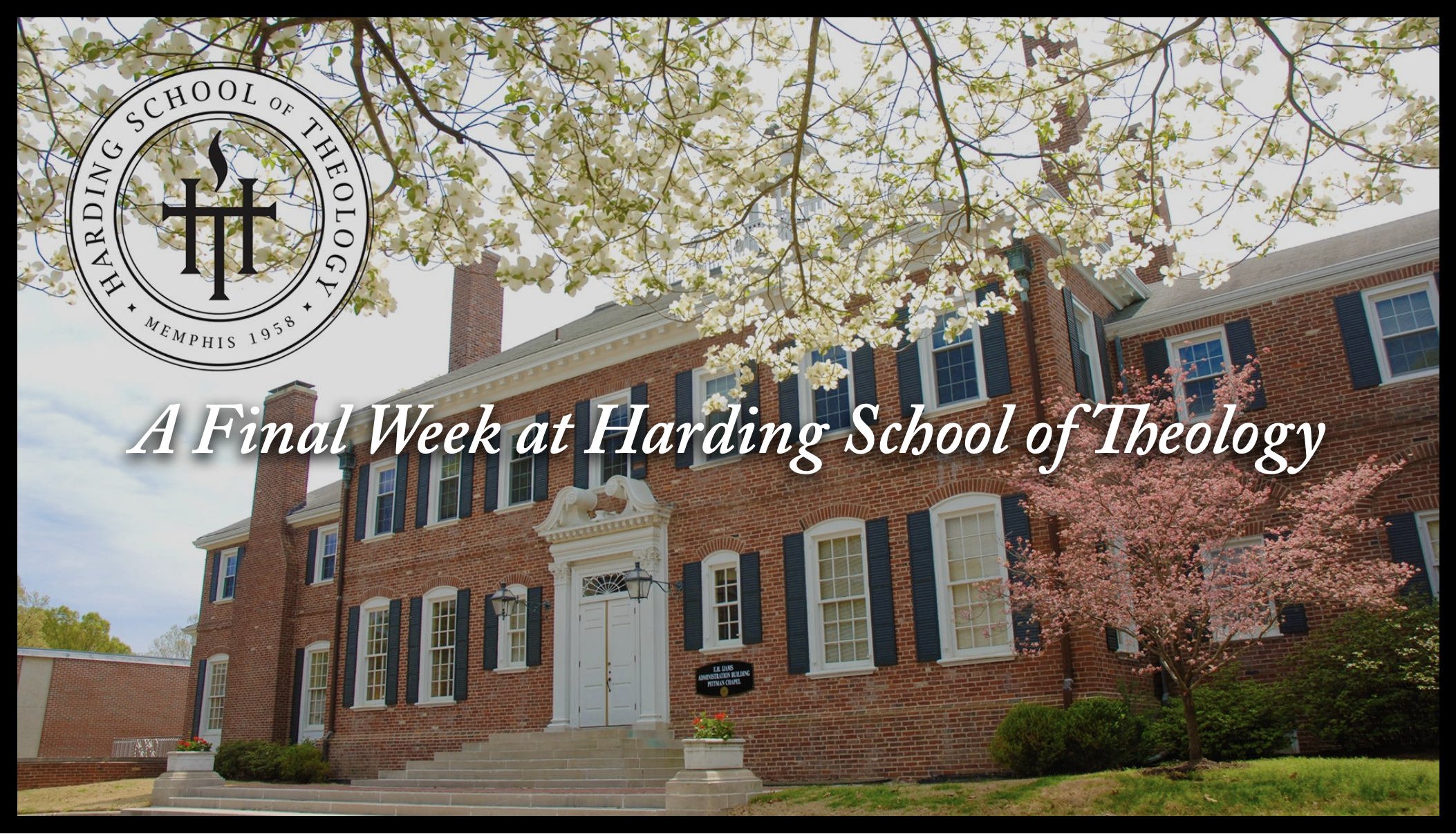
A Final Week at Harding School of Theology

Back in October, I was blessed to be able to spend a week on the campus of Harding School of Theology in Memphis, where I audited a week-long intensive course, “Christian Formation of Children.” This was a great blessing to me for multiple reasons.

First, I was a student there from 2010-2018 (yes, I know it was a long time) before receiving my MDiv, and it was an incredibly formative place for me (more on that below). Second, I got to spend the week with my wife Caroline, who was enrolled in the same class as a credit student. In all my time as a student at HST, I always left my wife at home with the kids while I would go to Memphis for intensive course weeks, and I felt like I finally got to share this part of my life with her. We sat next to each other in class during the day, ate at all my favorite Memphis restaurants, did homework in the library, and walked through the neighborhoods around campus together. Third, it seems quite possible that this will be my last opportunity to spend any significant time on the HST campus in Memphis, with the announcement that HST will be moving to Searcy in Fall 2024. Finally, it was a great class!

Much has been written and said about HST moving from Memphis to Searcy, and I’m not sure I have anything of significance to add to that conversation. I remain personally unconvinced that this move is what is best for the school, but I also acknowledge that I am not an insider in this discussion and that there are many factors and variables of which I am probably unaware. I do know that, in a climate where seminaries associated with Churches of Christ are closing (see Austin Graduate Seminary and Oklahoma Christian Graduate School of Theology), I am grateful that HST is not closing its doors, and I am confident that God will continue to use the school to bless churches and train ministers in its new location.


As I mentioned above, HST was a deeply formative place for me. I went to Harding University for undergrad and had a wonderful experience there. I met Caroline there as many lifelong friends. It was at Harding that I developed my deep love for ultimate frisbee, and also where I began to make my faith my own. I learned a lot of things in various classes, but I would also say that I didn’t make deep connections with faculty members or older mentors (largely my own fault). I entered and graduated HU with very little idea of what I wanted to do in life.

Harding School of Theology was different. I began there later in life (I was 27), and had already been in youth ministry for a few years. Honestly, I began my degree because I was seeking credentials so I could teach at the college level someday. My plan was to get in and get out as soon as possible and move on to the next thing. That is not at all what happened, but I got so much more in the bargain:

  • I have very fond memories of my intensive course weeks in Memphis, which were some of the most challenging weeks of my life, but also some of the best weeks of my life. There I met a new set of lifelong friends, and many of these were friends who were similarly “in the trenches” of ministry and knew about its challenges, but also its value. Somewhere along the way, I largely forgot about the dream of teaching, and developed my love for congregational ministry. More specifically, it was work for classes at HST that led to the youth ministry-related research that would ultimately change my life in profound ways.
  • There, I met a set of mentors who would pour into me both in and out of the classroom. They would push me academically, spiritually, and theologically, but always in ways that were respectful and affirming to my faith. I have written before about the idea of “deconstruction,” which is a very slippery concept, but it would be fair to say that HST significantly contributed to the deconstruction of my faith in the healthiest sense: it became my own, mature faith.
  • When I began at HST, Caroline and I were still relatively newlyweds and weren’t parents yet. Life would get real for us soon after, though. My HST community would mourn a miscarriage with us, celebrate the birth of our first daughter, and then pray faithfully for her and us as we learned that she had a rare genetic condition and began the life-altering journey of being parents to a precious daughter with special needs.

As I was reflecting on my time at Harding School of Theology, I realized that, through all of what I mentioned above, HST gave me the twin gifts of humility and confidence. That may seem like a strange pair, but they actually fit together quite well. Regarding humility, my graduate school training helped me to understand how little I really knew and convinced me of the need to be a lifelong learner. Regarding confidence, my time at HST helped me to develop a really solid foundation of biblical, theological, and ministerial skills. I didn’t know everything, but there were some things I did know, really important things that I could build my life around. And even though I’m never going to master Scripture or ministry, I developed skills to study Scripture well and do ministry faithfully. Humility and confidence are wonderful gifts that I received and which I have tried to use faithfully in service of God’s Kingdom, and I can confidently say that I wouldn’t still be in ministry without my training at HST.

For all these reasons and more, the HST campus in Memphis is hallowed grounds for me. It was a great blessing, albeit a bittersweet one, to spend a week there with my wife whose sacrifices made it possible for me to attend graduate school in the first place, and who has been my partner in ministry and in all things.


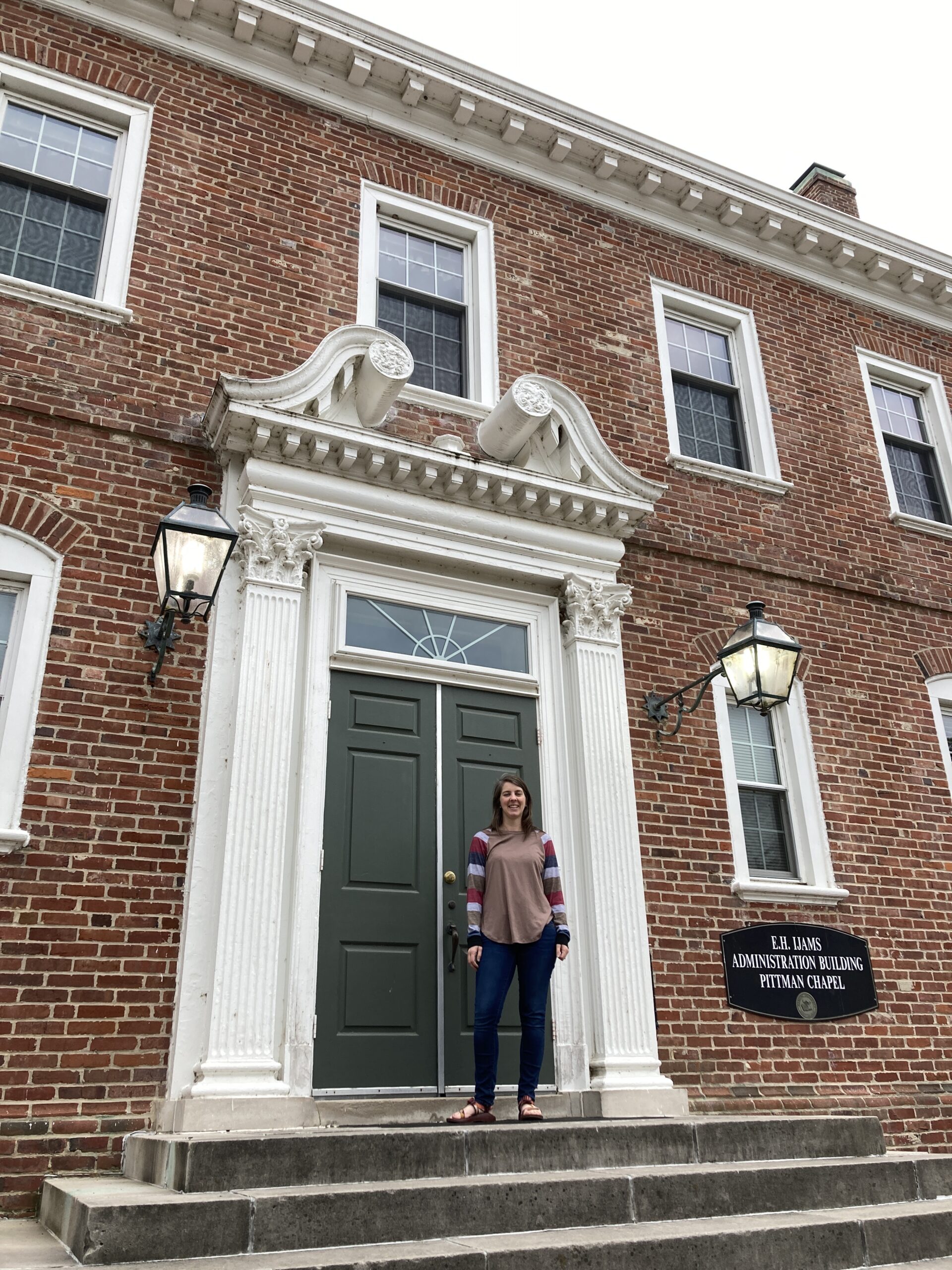
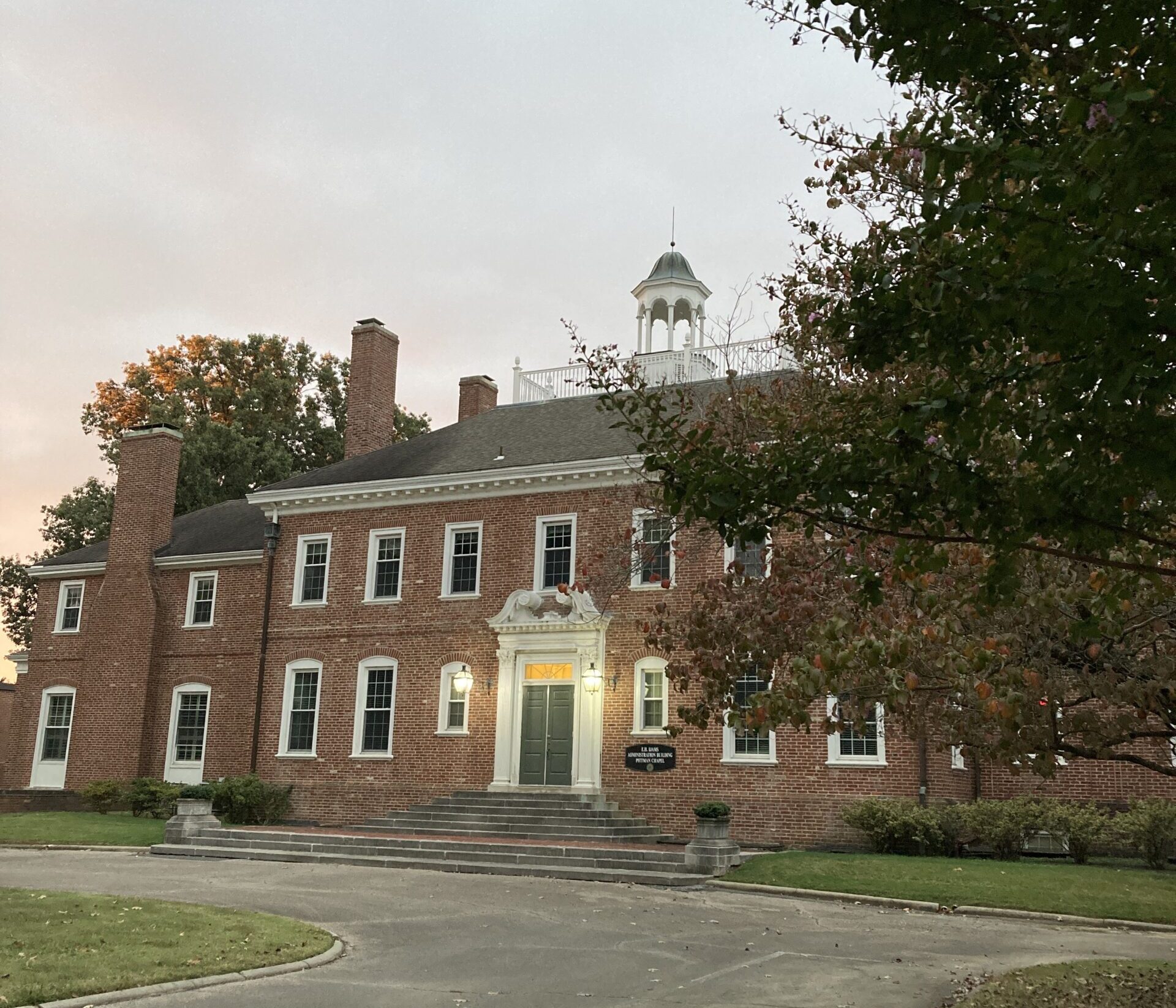
The HST Mansion serves as the administration building of the school and is also where chapel is held. I took this photo after one of my early morning walks before class. October was a beautiful time to be in Memphis.

My very favorite person in one of my very favorite places!

Restorationism and the Very Flawed Church at Corinth

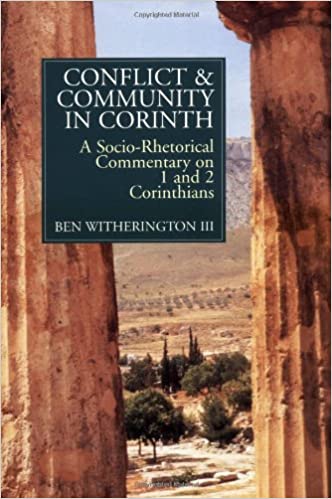
A few years ago, I had the opportunity to take a graduate school class on 1-2 Corinthians, and as part of that class, read several commentaries and lots of articles. One of my favorite reads was Conflict & Community in Corinth: A Socio-Rhetorical Commentary on 1 and 2 Corinthians by Ben Witherington III.

Here is one particularly insightful quotation from Witherington:

Careful attention to the historical and social matrix of the Pauline communities makes it clear that the early ekklesia [church] was far from perfect. As often as not, Paul was busy exhorting Christians to change their ways. If we believe that the Christian community of today should in some sense be biblically shaped and if we hold up the example of the Pauline communities, then we must say “go and do otherwise” at least as often as we say “go and do likewise.”

One reason we tend to commit the fallacy of idealism when we reflect on the early ekklesia is that we have assumed that the “determining factors of the historical process are ideas and nothing else, and that all developments, conflicts and influences are at bottom developments of, and conflicts and influences between, ideas.” Such a premise too often leads to the false conclusion that if we get our ideas about the faith right or if we emulate “the pattern” of the early ekklesia, then our Christian community will be what it ought to be.

But if we read Paul’s letters carefully, they reveal that right living and proper social interaction both within the Christian community and with the larger world were at least as much of a concern as right thinking, and evidently the early Christians had difficulties with all these matters.

Ben Witherington III, Conflict & Community in Corinth, p. xv

As many readers know already, and as I have written about before, I am a spiritual descendant of the American Restoration Movement, which is based on the premise that Christians should seek unity in God’s church by emulating the teachings of the New Testament and following the example of the early church. I believe that such an approach is fundamentally valid, but I think Witherington provides some important words of caution.

When we read about different congregations of the early church in the pages of Scripture, we come across some like the church at Corinth or some of the seven churches of Asia in the Book of Revelation that serve better as negative examples of what not to do rather than examples that we should try to follow today. So, when we say that we want to be like the church of the New Testament, we need to understand that we don’t exactly mean that, because the various New Testament congregations of which we are aware varied greatly in practice, and not all of them are worth emulating. Because of that, sometimes we might clarify our restorationist goals by saying that we want to be the church of the New Testament as conceptualized and instructed by apostolic teaching. But Witherington provides a caution here too, since having the right ideas and beliefs does not necessarily lead to right practices. And after all, what does it matter what we think if we don’t live right?

To me, none of this discredits the validity of the Restoration principle, but it does mean that we should be careful when we talk about it and as we seek to apply it. For example, rather than seeking to emulate the practices of the early church in wholesale fashion, we should examine biblical texts carefully to see where and how first century congregations were affirmed or reproved for their beliefs and practices, and choose to emulate them accordingly. Furthermore, we need to realize that faithful Christianity is about more than simply believing the right things; it also entails living in a certain way. As Witherington points out, the latter does not necessarily follow the former. At the same time, while it is true that right ideas do not guarantee right practices, it’s also true that wrong ideas make right practices nearly impossible.

While it’s true that right ideas don’t guarantee right practices, wrong ideas make right practices nearly impossible. Share on X

God is concerned with both: He wants us to believe certain things, which in turn empower us to live a certain way. And from this perspective, the positive and negative examples of the early church, along with apostolic teachings preserved in the New Testament, are incredibly helpful.

Two Graduations: What My Special Needs Daughter Taught Me About Following Jesus

It’s June, which means that we have just completed another graduation season. As a youth minister, I go to a lot of graduations, but this year there were a couple of graduation ceremonies that were more significant to me.

First was my own graduation from Harding School of Theology. This one was a long time coming. It was an extensive program (a 78-hour degree, which is more coursework than many master’s and doctorate programs combined), and add to that the fact that I completed it while working full time, figuring out how to be a dad, and living hundreds of miles away, and I can say with only minimal chagrin that I started the program way back in 2010. Finishing a program that you have been engaged in for so long is certainly an accomplishment of sorts, and I’ve had a lot of people ask me how it feels to be done. I definitely feel grateful for all that I have learned and for all who made it possible (HST faculty and staff, my wife, my elders at church, etc.). I am also pleased to be done. But my overwhelming emotion is a little more difficult to explain, and that’s what this post is about.

About 10 days after my graduation, I went to another graduation ceremony—Kinsley’s Kindergarten graduation. I have written in different places about how the last 18 months or so have been very difficult for my little girl. Increased seizure activity has been hard to control and has led to several regressions (i.e., she has lost abilities that she once had). Nevertheless, during this past school year, she started Kindergarten in a self-contained class. Kinsley’s academic goals were made with her special needs in mind and were very modest by the standards of “typical” children, but still, due to the regressions, she didn’t hit those goals. In some sense, you could even say that her graduation from Kindergarten was something of a formality. But I can tell you this: I am far prouder of her graduation than my own.


I have always been a high achiever. I have always gotten good grades and done well in school. I was involved in a bunch of extracurricular activities to beef up my college résumé. I was a good (not great) athlete who worked hard and was, at times, pretty successful.

When I started grad school, I began to work even harder. I had become convinced that doing my best was a spiritual requirement (I still believe this, by the way), but “doing my best” easily became a justification for obsessive perfectionism. In school, I wanted every research paper to be perfect. In ministry, I wanted every teenager to be faithful and every sermon to be excellent. In my personal faith and theology, I wanted to be right on every issue and know the answer to every question. Some of this obsessive perfectionism I come by naturally (it runs in my family), but also, it was a core component of my faith. To be clear, I was never taught works righteousness growing up, or that God’s love for me was tied to my achievements and accomplishments, but somewhere along the way this became a big part of what following Jesus was for me.

When Kinsley came into my life (and more specifically, when she began to miss developmental milestones and we received her diagnosis), everything began to change for me. The reality is that I have a beautiful, wonderful daughter who, from a worldly perspective, will never achieve much of anything. And while I lament the ways in which her horrible disease has placed limitations upon her life, the reality is this: I don’t care about her achievements. I love her because she is my daughter, and I delight in her.

This realization and the implications of it have significantly affected my life. I don’t really care about achievement anymore. I don’t care about intelligence or talent. When parents talk about how clever their children are, or when friends speak of their accomplishments, I smile and try to be affirming, but it simply doesn’t matter much to me. And from that perspective, my own graduation doesn’t matter much to me either.

I still work hard, because I believe it is a spiritual imperative to do so—in all things I work as if I am working for Jesus because, really, I am. But I don’t work hard so God will love me more, or because my value is tied to my achievements. God loves me because I am His child, and that is enough.


I grew up in the church, have been a Christian for 20 years, a minister for 12, and I have a graduate degree in theology. But it was my daughter who taught me about grace simply by being her perfect, disabled self.

On second thought, that’s quite an achievement.


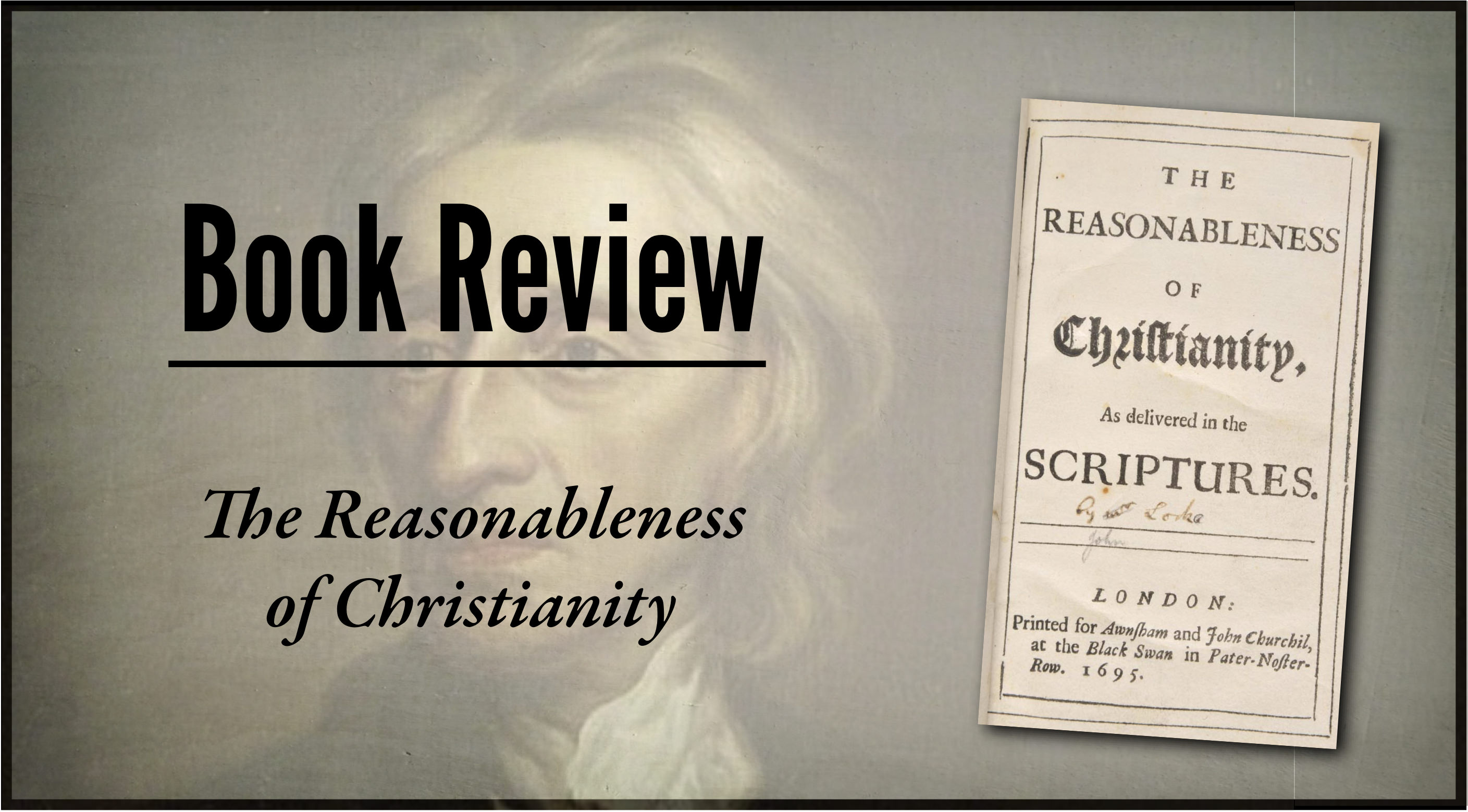
Book Review: The Reasonableness of Christianity

This semester I am in a church history class for grad school and as part of my reading for that class I recently finished John Locke’s The Reasonableness of Christianity. Locke is well-known to many people as a key thinker in the Enlightenment and specifically in the school of thought known as empiricism. His thoughts were very influential to the founding fathers of the United States, and he was also a great influence on Alexander Campbell, one of the leading early figures of the Stone-Campbell Restoration Movement.

In The Reasonableness of Christianity, Locke basically sets forth the Christian faith as he sees it. Scripture teaches that Adam sinned in the Garden of Eden and, as a result, lost bliss and immortality. Humanity inherits Adam’s immortality, although we are punished only for our own misdeeds. Unfortunately, all sin and fall short of God’s glory and thus, are in need of a Savior. Jesus Christ is this Savior, the Messiah of whom the prophets spoke.

God judges us according to the law of faith, and considers believers to be righteous, granting them life and immortality. Specifically, the faith that is necessary for justification is the belief that Jesus is the Messiah, and obedience to the moral and ethical standards that he set forth. Beyond this, Locke is open to differences of opinion on a variety of doctrines, and emphasizes the importance of tolerance in view of the fact that we have limited abilities and make mistakes about what we believe.

Here are some quotations that I particularly enjoyed and would like to share, along with some of my own thoughts:

“Nay, if God afford them a temporary, mortal life, ’tis his gift they owe to his bounty, they could not claim it as their right, nor does he injure them when he takes it from them.” (27)

We frequently pay lip service to the notion of our lives being a gift from God, but do we really believe that? I wonder, sometimes, when you hear the language we use when someone dies prematurely—it seems so unjust and tragic to us. I think Locke’s perspective is a better one: each day that we live is a gift from God, and from that perspective, however long we live is more than we have any right to expect or deserve.

“For if they believed him to be the Messiah, their King, but would not obey his laws, and would not have him reign over them, they were but the greater rebels…” (46)

This seems to me to be particularly relevant to the legions of nominal Christians that exist in our society who profess Jesus as Lord with their lips but deny Him with their lives. Those who reject Jesus live in rebellion to Him, but this is only to be expected. How much greater is the rebellion from those who claim Him as Lord but ignore His demands on their lives?

“‘Tis too hard a task for unassisted reason, to establish morality, in all its parts, upon its true foundations, with a clear and convincing light.” (60)

“…But yet some parts of that truth lie too deep for our natural powers easily to reach, and make plain and visible to mankind, without some light from above to direct them.” (65)

I expected Locke to hold human reason up as the ultimate source of knowledge and truth, but as the quotations above clearly show, he doesn’t do this. Rather, he is candid about the limitations of human reason, and ultimately holds that something greater that reason—revelation—is required for the establishment of universal moral truth.

Perhaps I approached The Reasonableness of Christianity with caricatures of Deism in my mind, but I was pleasantly surprised and impressed by what I read. There are certainly points I would quibble with, but on the whole, I thought Locke gave a succinct and fairly orthodox summation of the Christian faith. He does place significant value on reason, but this was actually less than I expected, and did not seem excessive to me. Locke does not dismiss Jesus’ miracles, but instead holds them to be essential (and reasonable) evidence that Jesus is exactly who He claims to be—the Messiah. Locke also asserts that Jesus’ ethical teachings are reasonable, but even these teachings ultimately required revelation. Left to its own reason, humanity had never been able to produce a universal moral law on its own.

Finally, although it was not the focus of this writing, I appreciated Locke’s emphasis on tolerance and the allowance for some diversity of opinion while at the same time upholding key fundamental doctrines about which all Christians must be in agreement. For Locke, the essentials are faith in Jesus as the Messiah and living a good moral life in accordance with His teachings.

In the context of the bitterly divided religious world in which Locke lived (and in which we still live today), such a call for tolerance seems like a hopeful basis for unity in God’s church. Of course, the difficulty always comes in determining which doctrines are fundamental and which are matters of opinion.

« Older posts

© 2026 The Doc File

Theme by Anders Noren — Up ↑