The online journal of Luke Dockery

Category: Ministry (Page 10 of 17)

Bible Class: Bringing Teens and Parents Together

A couple of weeks ago I published a review of the book Sticky Faith, and described how much I liked it and how influential it has been in my thoughts about youth ministry. In that post, I mentioned that I had been teaching a Bible class on that book, and I wanted to briefly share some thoughts and information about that class.

What We Did

For a quarter (roughly the beginning of January to the end of March), we had our teens and their parents combined in one class together. Each family received a copy of Sticky Faith, and was encouraged to read one chapter each week in preparation for class.

When we met together each week, the class would be divided into smaller groups—sometimes we had parent groups and student groups, and sometimes we grouped families together. Each week we would review that week’s chapter and try to cover the main points which the book had presented, and then give discussion question to our small groups to talk about.

Our small groups would then share what they had discussed with the entire class.

What Was Good About It

At times I felt that our class struggled with continuity and momentum because we missed a few weeks because of bad weather, but on the whole, I felt that the class was very beneficial for our youth group and our parents. I am glad that we did it for at least a few reasons.

First, it helped our parents become much more informed about what was going on in our youth ministry. I spend a significant amount of time trying to communicate and publicize the things we are doing as a youth group (trips, devotionals, youth rallies, etc.):

  • Every week I write an article in our church bulletin which announces and emphasizes these events.
  • A calendar of upcoming events is posted on our youth group bulletin board.
  • Events are announced publicly in our worship assemblies.
  • I tell the students over and over and over again about upcoming events.
  • On a fairly regular basis, I send out text reminders to students and parents about certain events.
  • Less regularly, I post information on our youth group Facebook page.

Despite all of these efforts, I routinely have students and parents act like they have no idea what is going on. It is a frustrating thing. But those concerns were largely eliminated, at least for one quarter. It was nice each week to be able to mention upcoming events directly to parents when I had their attention, and I noticed increased participation as a result.

This was certainly not the purpose of the class and it’s not something that I can do every week, but it was a nice side effect.

Secondly, it was good for our parents and teens to learn practical ways to build a lifelong faith. That is what Sticky Faith is all about—practical things that parents and families can do each day that help to build a faith that lasts for a lifetime instead of getting shelved after high school.

As I mentioned in my book review, there is a ton of helpful information in Sticky Faith, and a class like this was a very helpful way to ensure that our teens and especially their parents were exposed to this material.

Third, it was good for our parents to hear from their kids. It’s no secret that it can be hard for parents and their teenage children to communicate with one another. One of the nice things about this class was that it provided an environment for that to happen. As our student small groups reported out the results of their discussion, parents got to hear about things that were important to their kids and learn more about how they think.

Fourth, it was good for our kids to hear from their parents. The reverse was also true. Teens do get to hear from their parents, but a lot of times it is in the form of a lecture after they’ve messed up somehow. Getting to hear their parents publicly express their love, concern, faults, and ideas was a powerful thing for our students.

Overall, this was a class model that I enjoyed, and I plan on using it again. It won’t become our primary educational model (there’s a lot to be said for developmentally appropriate, age-based instruction), but having our students and their parents learning side by side and learning from one another is an important thing, and one that we want to continue to develop as part of our educational program.

One final, but important note: lest you think that I came up with all of this on my own, I want to give full credit to my friend Joseph, who taught a similar class at his church and was gracious enough to give me pointers and share his (excellent) class notes and resources with me. Joseph is a great youth minister, and his thoughts have been helpful and influential for me.

Book Review: Sticky Faith

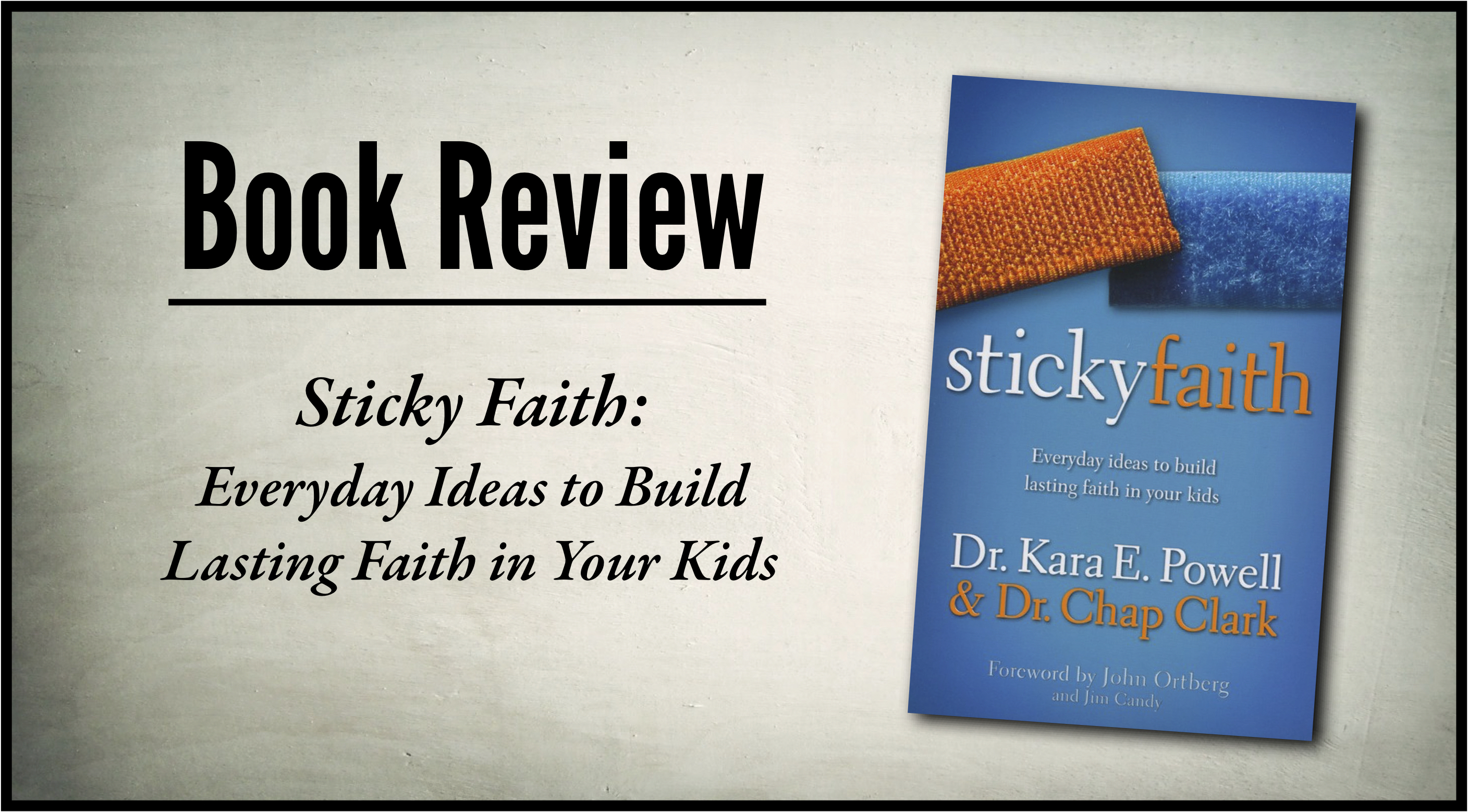
I have just finished reading Sticky Faith: Everyday Ideas to Build Lasting Faith in Your Kids for the second time. Looking back, I was surprised that I hadn’t reviewed it here on my blog previously (though I have referenced it several times), so I thought I would quickly do so today. Quite simply, Sticky Faith is an outstanding book, and it’s one that I think all parents should read. I’m actually co-teaching a class on it right now at church, and along with 2-3 other sources, it forms the core of my youth ministry library.

Sticky Faith is written for parents (though there are other versions for youth workers and students), and is all about helping you to instill a lasting faith (or a faith that “sticks”, hence the title) in your children. And I’m sure there are a lot of books like that, but what I really like about Sticky Faith is that (1) it is based on extensive research, and (2) it offers incredibly practical suggestions of tangible things you can do to help faith development in your kids.

Like any book, there are some ideas and suggestions in Sticky Faith that I disagree with, and I’m sure it will be that way for you too. But that doesn’t change the fact that, overall, it is an incredibly helpful resource for Christian parents.

Here are some of my favorite quotations from the book [my comments are added in brackets]:

“…Our conclusion is that 40 to 50 percent of kids who graduate from a church of youth group will fail to stick with their faith in college…only 20 percent of college students who leave the faith planned to do so during high school. The remaining 80 percent intended to stick with their faith but didn’t.” (pp. 15-16) [There are a lot of other alarming statistics which they gather from their research. These helpful numbers describe a big problem, which the rest of the book then sets about trying to address.]

“How you express and live out your faith may have a greater impact on your son or daughter than anything else.” (p. 25)

“…A performance-based Christianity can last only so long.” (p. 36)

“The greatest gift you can give your children is to let them see you struggle and wrestle with how to live a lifetime of trust in God.” (p. 46)

“If I had to choose between living out my faith or talking about my faith in front of my kids, I’d choose the former every time. But I don’t have to choose. And neither do you. We can do both.” (p.70)

“The closest our research has come to that definitive silver bullet is this sticky finding: for high school and college students, there is a relationship between attendance at church-wide worship services and Sticky Faith.” (p. 97) [Parents, this should make you think twice before missing church for a hunting trip, or a baseball tournament, or some other family outing. It matters. Youth ministers, this should make us think twice before frequently removing our youth groups from our congregational worship gatherings. A big part of being the Body of Christ is being present with the Body of Christ.]

“Over and over, students have told us that the first two weeks at college are when they make key decisions about drinking and other high-risk behaviors, right along with choosing whether to go to church or to a campus ministry.” (p. 151)

“It’s okay to go through periods of doubt and distrust and disillusionment. It’s okay to go through periods of questioning and confusion. Don’t run away from them. At the same time, don’t go off the deep end. Do the intellectual and spiritual soul searching within the context of a secure community of people who truly love you.” (p. 172) [This quote actually came from a student who was part of the research study—a lot of wisdom here!]

“But [kids] soon come to know that faith is ultimately meaningless unless they choose it for themselves.” (p. 179) [Yes. We must own our faith, rather than simply inherit the faith of our parents.]

“Especially during their lowest times, your kids need to know that, above all else, you are there for them, regardless of what they are going through.” (p. 180)

“If your family has served Christ through much of your child’s life, the seeds you have planted are potent and real.” (p. 187)

I could go on and on—large sections of my copy of Sticky Faith are highlighted or underlined—but these quotations should give you an idea of what the book is like. In short, I would recommend it to any Christian parent, or anyone who works closely with teens.

Slow Down

Icy roads, basketball games, running errands.

Studying, taking tests, writing sermons.

Planning events, loving teenagers, weekend travel.

Life passes by.


Growing daily, too-small clothes, new milestones.

Fun games, singing songs, sneezing and laughing.

Random sleeping, daily medicine, therapy and therapy and therapy and therapy.

Her life passes by.


Pause. Stop. STOP. Deep breath.

Watch her. Listen. Enjoy.

Time won’t slow down, so you must.


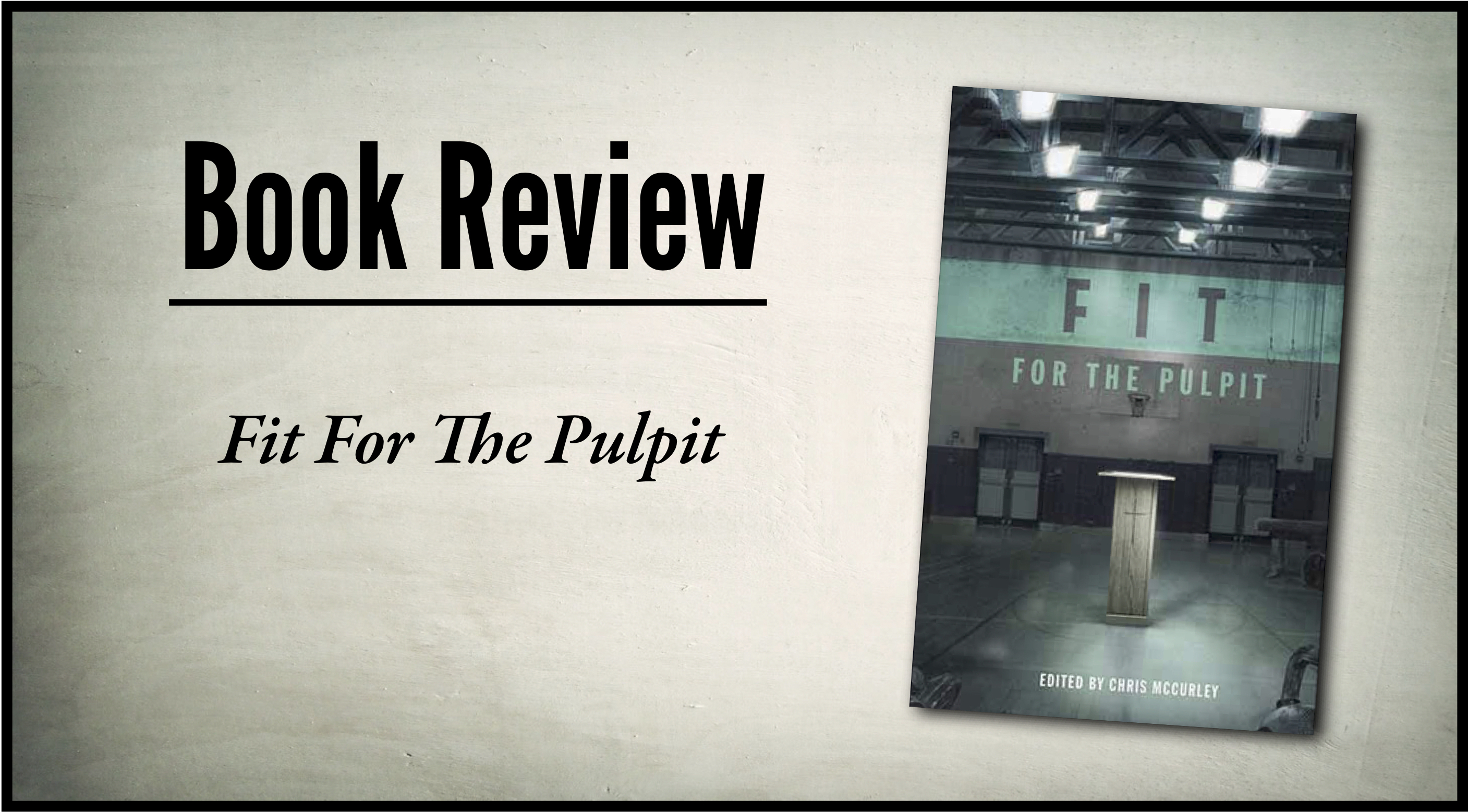
Book Review: Fit for the Pulpit

I recently finished reading Fit For The Pulpit: The Preacher & His Challenges, a book written for preachers, by several preachers, and edited by Chris McCurley.

As the title would indicate, this little volume (138 pages of actual text) focuses on different challenges faced by preachers, and offers guidance and advice on how to deal with each. The topics of time management, relationships, discouragement, stress, criticism, family, finances, sin, attitude, laziness, and the “core” of the preacher are covered.

Technically, I am not a “preacher,” but I am a minister who preaches on occasion, and virtually all of this material applied to me in some way. I have read a lot of books on ministry of one sort or another, and while I wouldn’t consider this to be a great book (more on that below), it is still a good book, and fits in well alongside other books on ministry.

I’ll share three gentle criticisms of this book that I had, and then share some good quotations.

First, the book is an anthology, with ten different ministers writing the eleven chapters. I’m sure the idea was to get the voices and perspectives of several different experienced preachers on the various topics which were covered, but honestly, the cumulative effect for me was that the writing was somewhat choppy and disjointed. Some chapters are better than others in large part because some writers were better than others. Also, one particular biblical story regarding Elijah was used as an illustration in three different chapters, which seemed pretty repetitive. I don’t think this would happen with one author.

Secondly, there is a very practical chapter on the preacher and his family which provides some valuable suggestions and insights on how a preacher can care for and be the spiritual leader of his family. This was definitely a needed chapter: there are a lot of good, well-meaning men who have devoted their lives to ministry but who forgot to devote much of anything to their families and as a result, have a variety of tragic issues to deal with (divorce, faithless children, addiction, etc.). What I disliked about this chapter was that I thought it too easily glossed over the inherent tension between our devotion to Jesus and our devotion to our families. Jesus said some tough things about the importance of our families relative to Him, and part of the true difficulty of being a minister is identifying those things which are “just” work and should therefore be a lower priority than our families, and those things which are directly tied to our answer to the call of Christ and therefore are of the utmost importance. Certainly not everything in ministry should come before our families, but I think the clear biblical teaching is that some things should. Unfortunately, this chapter didn’t address this crucial topic.

Finally, on a book about preaching, I wish there would have been a chapter devoted directly to the practice of Bible study and putting a sermon together. Look, preachers do a lot of things and wear a lot of hats in their jobs, but none of them compares to the public proclamation of God’s word. Unfortunately, we have gotten to the point where too often, the preacher is so busy with other things that he has to squeeze in his sermon preparation into a couple hours at the end of the week, which is just not enough. Even worse, the ready availability of hundreds or thousands of free sermons online has made it easy for some preachers to frequently skip Bible study altogether. This is a real problem, and though the importance of preaching and Bible study was mentioned multiple times throughout the book, a good chapter explicitly focused on the centrality of preaching and the task of sermon preparation would have been a good feature.

Here are some of the good quotations from the book [with my comments added in brackets]:

“The local preacher’s primary responsibility is to preaching; therefore, he must give the proper amount of time and attention to study of God’d Word.” (p.13) [As you can surmise by my statements above, I am in full agreement with this quotation. I just wish it would have been fleshed out more in a full chapter devoted to sermon preparation.]

“Time management must include the ability to say “No!” to some things…Many things are important, but not everything is a priority or a must.” (p.20) [This is a ministry lesson I am still learning!]

“…In establishing a long stay with a church, the preacher should also choose his battles carefully. Every issue that arises in ministry is not worth “going to the mat” for.” (p.51)

“[Preachers] live with the realization that everyone who accomplishes anything worthwhile will face criticism.” (p.60)

“We are rich in our country, and we were not blessed to increase our comfort, but to bless others.” (p.85)

“Watching for Satan starts with knowing our personal weaknesses.” (p.97)

“We can seek to restore New Testament Christianity in our worship, our leadership structures, or in any other category. But if we don’t have love, we have no legitimate claim to be the “of Christ” designation on our church signs.” (p.107) [It would probably benefit me, and you too, to read this statement every day of our lives.]

Despite the criticisms I mentioned above, Fit For The Pulpit is a good book with helpful, practical advice. I would recommend it to other ministers, but also to church members, who would do well to get a better idea of “what the preacher does all week” and the challenges he faces.

The Current Crisis in Youth Ministry

It is well documented that a large percentage of teenagers who are active in church life and have committed their lives to Christ walk away from that commitment after graduating from high school and their youth groups. A study done in conjunction with the Fuller Youth Institute suggests that 40-50 percent of teenagers will leave their faith behind during their college years[1], and statistician Flavil Yeakley, who focuses in particular on Churches of Christ, presents a similar figure, saying that only 58 percent retain their church affiliation after growing up and leaving home.[2]

Extending Society’s Problems To The Church

Although there are certainly several factors at play in this low retention rate, one problem which ministry experts and researchers have cited repeatedly is age segregation, or, the way “…churches have systematically isolated young people from the very relationships that are most likely to lead them to maturity.”[3]

This is part of a larger societal issue, where teens have less frequent contact with adults than ever before (including their parents), and what contact they do have tends to occur in “…role-specific ways with adults who are paid to spend time with them.”[4] One particularly disturbing study illustrates the extreme unavailability of adults in teenagers’ lives, revealing that teens spend less than seven percent of their waking hours with any adults.[5] In churches, this age segregation is played out in a number of ways, including Bible classes divided by age group, having separate worship for children and teenagers (sometimes in a separate building), paying a youth minister to interact with teens so parents and other adults do not need or have to, and frequent youth trips which physically and emotionally remove young people from the rest of the congregation.

The net result is that by the time teens have graduated from high school, they have spent a vast amount of time doing “church activities” with the youth group, but have had little real interaction with the church at large.[6] In a sense, the youth group becomes almost a parallel congregation,[7] so it is no great surprise that when teens graduate from the youth group, they struggle to remain loyal to the larger congregation or to their faith. As John Roberto observes, “Teenagers do not leave the church; the church and teens were never introduced!”[8]

In most traditional youth ministry programs, this age segregation extends to families as parents are typically separated from their teens and the task of spiritual formation is outsourced to a youth minister. This divorce of parents from the task of discipling their children is extremely unfortunate: it is not only a departure from biblical example, but also research overwhelmingly indicates that parents are the “primary spiritual influencers of their children.”[9] Parents do not simply have more spiritual influence on their kids than the church does; they have more influence over them than any group does.[10] To put it another way, regardless of the efforts of a youth minister to help the process of spiritual formation in teens, if parents are not also engaged in the process they are unlikely to be effective since children are so greatly influenced by what their parents do.

No Youth Ministry At All?

Observations and realizations such as those mentioned above have led some to conclude that youth ministry should be done away with altogether, and I’ve seen some go as far as to say that these results aren’t surprising since the Bible doesn’t authorize youth ministry in the first place.

But I don’t buy that. From a sociological and developmental perspective, adolescence didn’t even exist when the Bible was written, and the reality is that teenagers are developmentally very different from adults, and therefore, need special attention.

So the solution to the problem of bad youth ministry isn’t no youth ministry, it’s good youth ministry!

And I think good youth ministry would seek to disciple children by combining the strengths and efforts of the local congregation (including the youth minister) and the family. If we can learn to work together to do that, I think we’ll see a dramatic change in the long-term faith of our young people.[11]


[1] Kara E. Powell and Chap Clark, Sticky Faith: Everyday Ideas to Build Lasting Faith in Your Kids (Grand Rapids: Zondervan, 2011): 15. Other sources suggest different percentages. Kendra Creasy Dean, “Proclaiming Salvation: Youth Ministry for the Twenty-First Century Church,” Theology Today 56, no. 4 (January 2000): 525, states that “more than half of those confirmed as adolescents leave the church by age seventeen.” Wesley Black, “Youth Ministry That Lasts: The Faith Journey of Young Adults,” Journal of Youth Ministry 4, no. 2 (Spring 2006): 19, cites a Southern Baptist Convention study which found that “88 percent of the children raised in evangelical homes leave church at the age of 18, never to return.” Although the findings of these studies differ, they all point to the fact that an alarming number of young Christians are leaving the church after high school.

[2] Flavil R. Yeakley, Jr., Why They Left: Listening to Those Who Have Left Churches of Christ (Nashville: Gospel Advocate, 2012): 39. Yeakley’s findings are somewhat more hopeful than the others upon closer examination: while fifty-eight percent remain affiliated with Churches of Christ, only twenty percent abandon their faith in Christ, with an additional twenty-one percent joining denominational groups. Even still, these findings are less than ideal.

[3] Mark DeVries, Family-Based Youth Ministry, Rev. ed. (Downers Grove, IL: InterVarsity Press, 2004): 36.

[4] Don C. Richter, Doug Magnuson, and Michael Baizerman, “Reconceiving Youth Ministry,” Religious Education 93, no. 3 (Summer 1998): 349. This would include the specific roles played by teachers, coaches, and youth ministers.

[5] DeVries, 37-38. Later, speaking of this same trend, DeVries, 91, astutely and sadly observes, “It has become a novelty for a teenager and an adult to have more than a passing conversation.”

[6] There is certainly a place for age-specific groupings, but they need to be kept in balance with intergenerational interaction.

[7] Carol Duerksen, Building Together: Developing Your Blueprint for Congregational Youth Ministry (Newton, KS: Faith & Life Resources, 2001): 42.

[8] John Roberto, “Our Future Is Intergenerational,” Christian Education Journal 3rd ser., 9 (Spring 2012): 110.

[9] Brenda Snailum, “Implementing Intergenerational Youth Ministry Within Existing Evangelical Church Congregations: What Have We Learned?” Christian Education Journal, 3rd ser., 9 (Spring 2012): 173.

[10] Reggie Joiner, Think Orange: Imagine The Impact When Church And Family Collide (Colorado Springs: David C. Cook, 2009): 85-88, estimates that churches only have about forty hours of influence a year with a young person, while the average parent has approximately 3,000 hours a year to spend with their children. Wesley Black, “Youth Ministry That Lasts: The Faith Journey Of Young Adults,” Journal of Youth Ministry 4 (Spring 2006): 20, “Many facts contribute to the development of religious involvement among youth, but parents easily constitute the strongest influence, whether positive or negative.”

[11] Joiner, 24-27.

« Older posts Newer posts »

© 2026 The Doc File

Theme by Anders Noren — Up ↑