The online journal of Luke Dockery

Category: Ministry (Page 11 of 17)

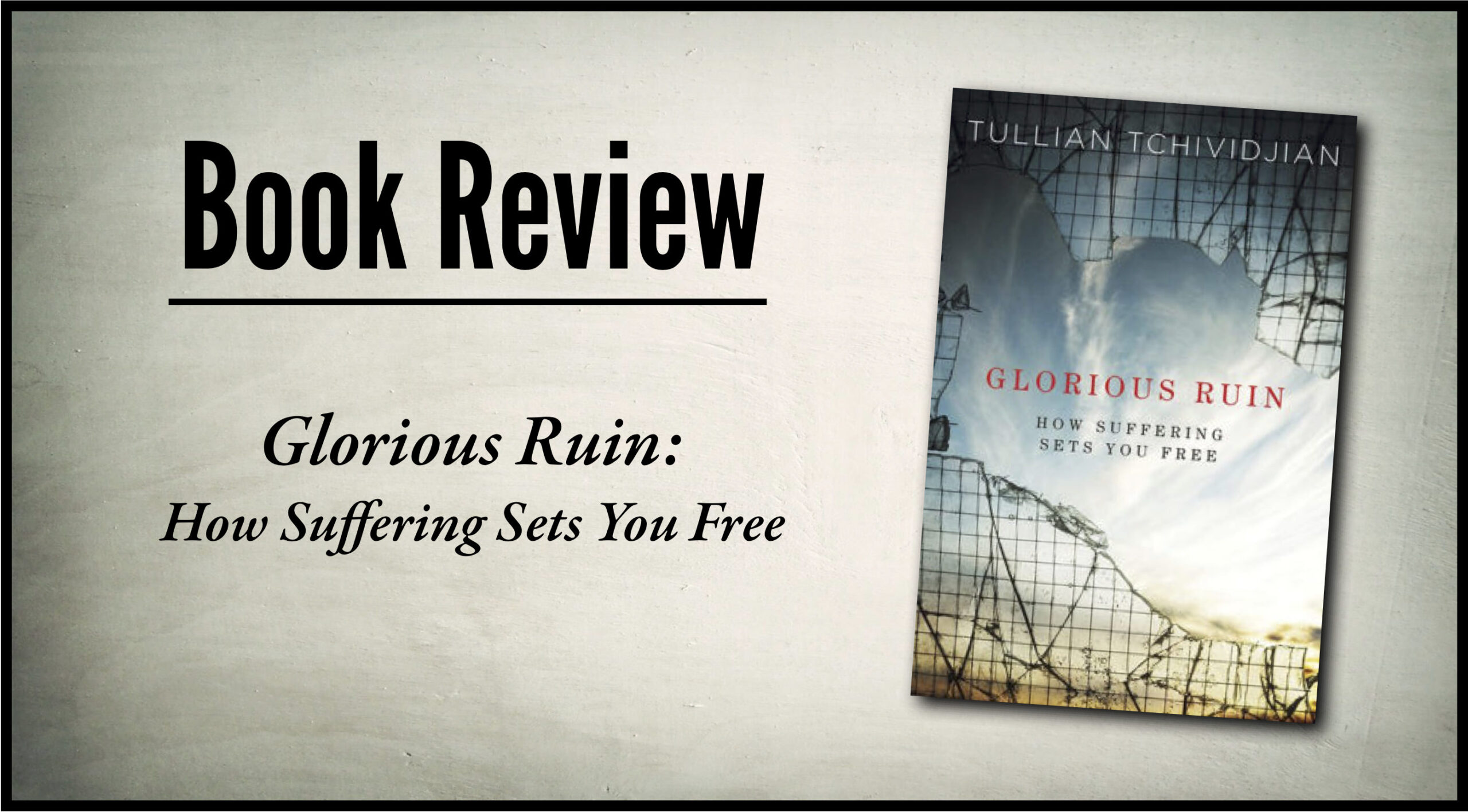
Book Review: Glorious Ruin

At the very end of last year, I read Tullian Tchividjian’s Glorious Ruin: How Suffering Sets You Free. The topic of suffering  has been on my mind a lot over the last year or so, and I was interested in seeing what Tchividjian (who is Billy Graham’s son-in-law, by the way) had to say.

In many ways, this was a challenging read for me that pushed my thinking, but I thought it was helpful. Again and again, Tchividjian (type that name five times fast!) argues that the answer to suffering is not stoicism or seeking some silver lining; rather it leaves us broken and therefore more open to meeting Jesus.

And here are some of my favorite quotations from the book [with my comments added in brackets]:

“The required cheerfulness that characterizes many of our churches produces a suffocating environment of pat, religious answers to the painful, complex questions that riddle the lives of hurting people.” (p.7) [Of all places, people should feel safe to share their hurts at church!]

“…This side of heaven, suffering often points to a deeper reality, an indicator of both personal and cosmic discord.” (p.8) [I think suffering is the only wake-up call that some people ever hear.]

“So what would a God who was present in suffering look like? First and foremost, He would be a God who suffers Himself. Maybe even dies. A God who meets people in their suffering, rather than on the other side of it. Pain might even be one of His primary avenues for reaching people.” (p.11)

“…The gospel is not ultimately a defense from pain and suffering; rather, it is the message of God’s rescue through pain.” (p.21)

“While God does indeed use the suffering in our lives, He is interested in much more than improvements in your personality or circumstantial happiness. He is interested in saving you.” (p.44)

“Contrary to popular belief, Christianity is not about good people getting better. If anything, it is about bad people coping with their failure to be good.” (p.51)

“The gospel is not a means to an end, it is an end in itself.” (p.52)

“When the bottom falls out of our lives, we don’t necessarily find it comforting when people try to cheer us up. No matter how well intended, such overtures create pressure that adds to our distress. Not only are we suffering, but we now feel bad about how we make those around us feel or, at least, about the disconnect between where they would like us to be and where we actually are.” (p.82) [From a pastoral perspective, this is huge: ministers (and anyone, really) need to take it easy on always trying to cheer up those who are suffering. Sometimes, we just need to let them grieve.]

“There’s nothing like suffering to remind us how not in control we actually are, how little power we ultimately have, and how much we ultimately need God. In other words, suffering reveals to us the things that ultimately matter, which also happen to be the warp and woof of Christianity: who we are and who God is.” (p.96) [Yes, absolutely.]

“The Lord mercifully put to death Job’s final idol—the idol of explanation. God liberated Job from the prison of Why. He liberated Job from himself. It was a glorious ruin.” (p.103)

“Brokenness precedes usefulness. It just does. Who reaches out to parents who have lost children to drunken driving accidents? Other parents who have lost children to drunken driving accidents. When we go through something painful and when God breaks us, it makes us both more useful to others and more willing to be used.” (p.120) [I am firmly convinced that we become better witnesses for God when we have suffering in our pasts.]

“Suffering…has a way of liberating us from the petty concerns and worries that bog down our everyday existence.” (p.121)

“Perhaps the only solace you can draw from suffering is that you begin to see that we were truly made for another world.” (p.132)

“And yet, our hope does not ultimately lie in our present liberation. There is no guarantee that we will experience relief from pain. I wish I could say there was. This life may feel like one long, painful death. All you can do is hang on, and sometimes you can’t even do that. Fortunately, the good news of the gospel is not an admonition to hang on to God with all your strength and willpower and you’ll be okay. The good news of the gospel is not some gnostic encouragement to view your suffering in the right way, or understand the theology of the cross more deeply. No, the good news is that God is hanging on to you. He’s not waiting for you to save yourself or mature into someone who no longer needs Him. He will not let you go, come what may. Jesus will never, ever leave you or forsake you.” (p.138) [He brings it all home here; this was really powerful to me.]

Sadly, we live in a fallen world, and as a result of that, suffering is all around us. Because of this, it is easy to find books on how to deal with suffering, or how to grow or improve yourself through suffering. What sets Glorious Ruin apart is that it suggests that, ultimately, suffering leads us to God, not a better version of ourselves.
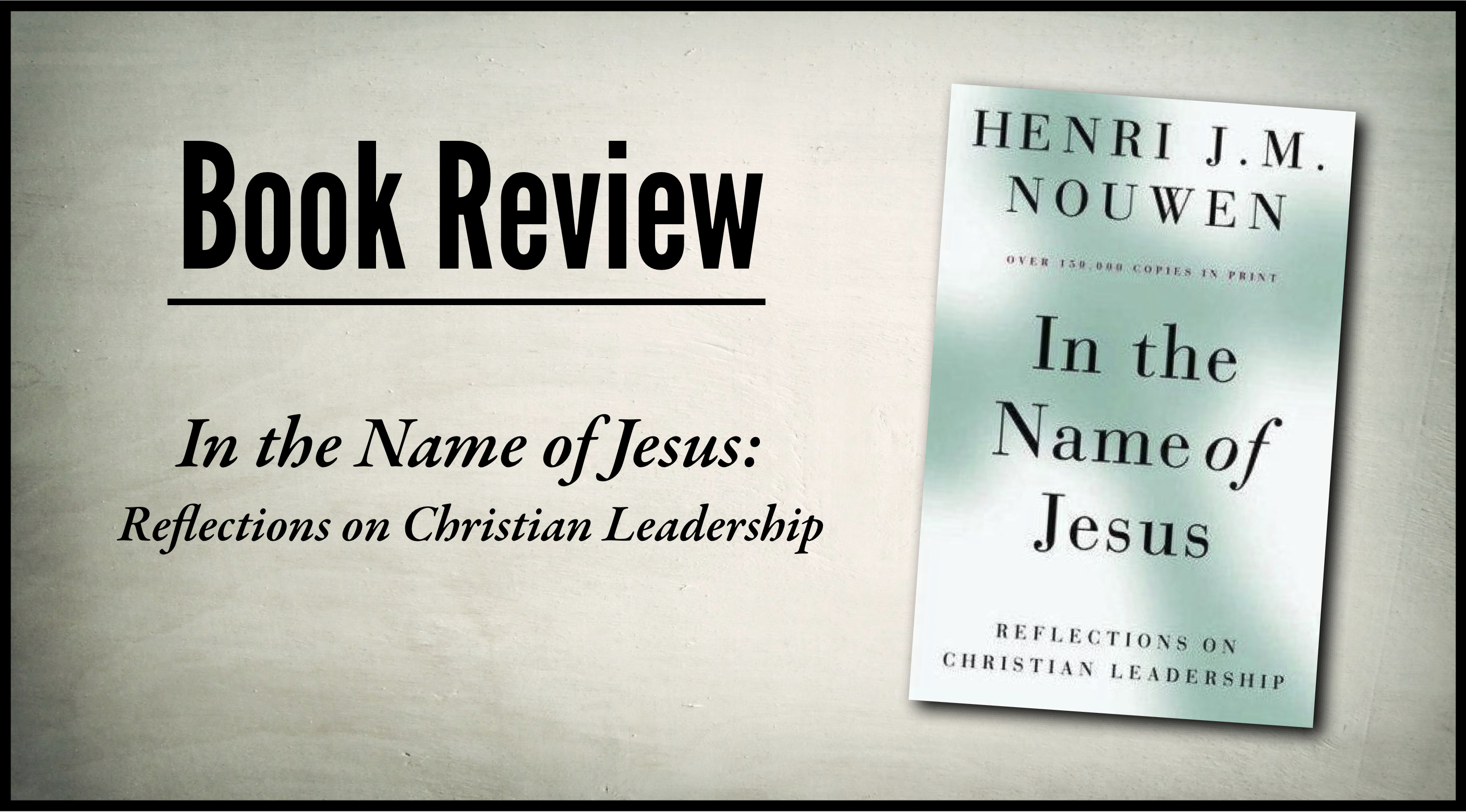
Book Review: In the Name of Jesus

Last month I posted my reading list for 2013, and in the comment section an old college friend recommended In The Name of Jesus: Reflections on Christian Leadership by Henri Nouwen. I was interested, because (a) it was on leadership, and (b) Nouwen, a Catholic priest, was a well-known writer whom I had never read before.

Furthermore, I was interested to read what he had to say because of what I assumed would be an interesting perspective. Nouwen was a respected professor at Notre Dame, Yale, and Harvard, but he chose to leave that behind to live and work with developmentally disabled people.

And I was correct—he did have an interesting perspective. In the Name of Jesus offers some radical views on Christian leadership, and by that, I mean that it takes seriously the things that Jesus says in Scripture.

Here are some quotations [my comments in brackets]:

“I am deeply convinced that the Christian leader of the future is called to be completely irrelevant and to stand in this world with nothing to offer but his or her own vulnerable self. That is the way Jesus came to reveal God’s love. The great message that we have to carry, as ministers of God’s word and followers of Jesus, is that God loves us not because of what we do or accomplish, but because God has created and redeemed us in love and has chosen us to proclaim that love as the true source of all human life.” (p. 18) [The message of irrelevance is hard to hear in our success-driven society. But to the degree that we emphasize and prop up our successes, how much do we alienate ourselves from the downtrodden who are most in need of God’s Good News?]

“Indeed, whenever we minister together, it is easier for people to recognize that we do not come in our own name, but in the name of the Lord Jesus who sent us.” (p. 36)

“We are not the healers, we are not the reconcilers, we are not the givers of life. We are sinful, broken, vulnerable people who need as much care as anyone we care for. The mystery of ministry is that we have been chosen to make our own limited and very conditional love the gateway for the unlimited and unconditional love of God.” (p. 37) [I love that—“the mystery of ministry.” As someone who is very aware of my own faults, I have certainly been struck by that irony before.]

“The way of the Christian leader is not the way of upward mobility in which our world has invested so much, but the way of downward mobility ending on the cross.” (p. 50) [Wow. Gut check.]

“Powerlessness and humility in the spiritual life do not refer to people who have no spine and who let everyone else make decisions for them. They refer to people who are so deeply in love with Jesus that they are ready to follow him wherever he guides them, always trusting that, with him, they will find life and find it abundantly.” (p. 50) [This is a helpful perspective: the Christian is not called to be listless or apathetic, but so trusting in God that we can appear to be unconcerned at times.]

“The task of future Christian leaders is not to make a little contribution to the solution of the pains and tribulations of their time, but to identify and announce the ways in which Jesus is leading God’s people out of slavery, through the desert to a new land of freedom.” (p. 54)

This was an easy read (only about 80 pages including a delightful personal story that was woven throughout the book), but it was also very challenging. There are a lot of leadership books out there, but not many of them follow the model of our Leader, who emptied Himself and became lowly on our behalf.

Book Review: Exegetical Fallacies

Of all the books I read in 2013, D.A. Carson’s Exegetical Fallacies was near the top of the list. It has a rough title and a terrible cover design, but the content is outstanding.

As readers of this blog know, in addition to being a full-time minister, I am also a theology graduate student. In the course of those studies (and my less formal studies as a minister) I have spent hours and hours learning the original biblical languages of Greek and Hebrew, as well as other skills to help me to better interpret (or exegete—see the book’s title above) the text of the Bible.

In the course of those studies, as I have grown better skilled and more careful about interpreting the Bible. At the same time, I have become dismayed by witnessing so frequently what I would consider to be ill-informed, haphazard, and shoddy biblical work. Sometimes this is done by people who have never studied original languages and yet presume to teach about them, and other times it is done by brilliant people who make careless errors. But either way, it happens all the time (and to be fair, I’m sure I do it too, but hopefully I do it less frequently than I once did).

Written by respected New Testament scholar D.A. Carson, Exegetical Fallacies addresses a lot of these interpretative problems, and I strongly believe that it is a book which should be read by all preachers, teachers, and studious Christians (a heavy recommendation, I know). The book is divided into four main sections.

Word-Study Fallacies

In my opinion, this section was vitally important because preachers and authors so frequently appeal to Hebrew and Greek words to make their arguments, and they so frequently do it poorly. Here are a couple of good quotations, some of which will refer to some ideas that you may have heard before [with my comments in brackets]:

“There is nothing intrinsic to the verb ἀγαπαω (agapao) or the noun ἀγαπη (agape) to prove its real meaning or hidden meaning refers to some special kind of love.” (p. 32) [How many times have you heard that Christians are supposed to exhibit agape love, which is a higher and purer kind of love than what is described by other Greek words?]

“Our word dynamite is etymologically derive from δυναμις (dynamis, power, or even miracle). I do not know how many times I have heard preachers offer some such rendering of Romans 1:16 as this: “I am not ashamed of the gospel, for it is the dynamite of God unto salvation for everyone who believes…”—often with a knowing tilt of the head, as if something profound or even esoteric has been uttered. This is not just the old root fallacy revisited. It is worse: it is an appeal to a kind of reverse etymology, the root fallacy compounded by anachronism. Did Paul think of dynamite when he penned this word? And in any case, even to mention dynamite as a kind of analogy is singularly inappropriate. Dynamite blows things up, tears things down, rips out rock, gouges holes, destroys things.” (p. 33-34) [And the implication is that it is not dynamite or a similar force that raises us from the dead and transforms us into the likeness of Christ. It is power of an entirely different sort.]

“It is methodologically irresponsible to read the meaning of a Hebrew word into its Greek equivalent without further ado. The case must be argued.” (p. 62) [You should be a little suspicious when someone refers to a word from the Old Testament and says “The same word in the New Testament is…” or vice-versa.]

“As important as word studies are, it is very doubtful if profound understanding of any text or of any theme is really possible by word studies alone.” (p. 64) [Words ultimately derive their meaning from context; you can’t divorce words from their context without also stripping away much of the meaning.]

Grammatical Fallacies

Again, this is an important part of the book, for similar reasons to those mentioned above. Often times, the biblical languages are abused in ways that misunderstands the grammar of those languages rather than specific words.

I won’t include any quotations from this part of the book, but as an example of this type of problem, it is common to hear or read the claim that the aorist tense of the verb in Greek refers to a “once for all” or “completed” action, and then some grand theological point is made from this. The problem is that the aorist tense is incredibly flexible and means a great variety of things. Frequently in the New Testament aorist verbs are used to described ongoing or repeated actions.

Carson provides examples of several other types of grammatical fallacies as well.

Logical Fallacies

I found this section to be less helpful, just because I had studied logical fallacies multiple times before in communication classes. I would imagine that this chapter would still be very helpful if this was a subject you hadn’t previously studied before.

Carson covers a variety of fallacies including appeal to selective evidence, purely emotive appeals, the non sequitur, and simplistic appeals to authority.

Presuppositional and Historical Fallacies

This was another very important section for me. Increasingly, I have witnessed preachers and scholars use their historical reconstruction of the supposed setting of a biblical text (i.e. something which might have influenced the text but which we don’t actually know for sure) to trump what the text actually says. This is poor exegesis.

“The fallacy is in thinking that speculative reconstruction of first-century Jewish and Christian history should be given much weight in the exegesis of the New Testament documents…a little speculative reconstruction of the flow of history is surely allowable if we are attempting to fill in some of the lacunae left by insufficient evidence; but it is methodologically indefensible to use those speculations to undermine large parts of the only evidence we have.” (p.131-32)

Concluding Thoughts

Again, I think this is a really important book, and so I’ll just repeat what I said above: I strongly believe that it is a book which should be read by all preachers, teachers, and studious Christians.

Having said that, reading about so many potential exegetical problems can have its drawbacks: (1) It will make you more critical of the sermons you hear (and, if you’re not careful, in an unhealthy way), and (2) It will make you more hesitant about your own biblical interpretation and exegesis. But, helpful as always, Carson has good words on this topic as well:

“A little self-doubt will do no harm and may do a great deal of good: we will be more open to learn and correct our mistakes. But too much will shackle and stifle us with deep insecurities and make us so much aware of methods that we may overlook truth itself. I have no easy answer to this dilemma. But we will not go far astray if we approach the Bible with a humble mind and then resolve to focus on central truths. Gradually we will build up our exegetical skills by even handed study and a reverent, prayerful determination to become like the workman ‘who correctly handles the word of truth.’” (p. 142)

Reading in 2013

For several years now, I have kept track of the reading I do and then, at the beginning of each year, posted the list of the previous year’s reading. For some reason, keeping track of stuff like this is fun for me, and shockingly, this is always one of my more popular posts each year, so apparently it is interesting to others as well.

Without further ado, here is my reading list for 2013:

  1. Scandalous: Lessons in Redemption From Unlikely Women, by Sean Palmer
  2. When To Leave: How To Know It’s Time To Move On (Before You Stay Way Too Long), by Wade Hodges
  3. Soul Work: Confessions of a Part-Time Monk, by Randy Harris
  4. The Mission of God’s People: A Biblical Theology of the Church’s Mission, by Christopher J.H. Wright
  5. Understanding the Love Chapter, by Adam Faughn
  6. The Shepherd’s Pipe: Songs from the Holy Night, by Georg Johannes Gick
  7. Size Transitions in Congregations, edited by Beth Ann Gaede
  8. 25 Questions Every Youth Minister Should Ask, by Chad Landman
  9. The Good News from North Haven: A Year in the Life of a Small Town, by Michael Lindvall
  10.  The Middle-Sized Church: Problems & Prescriptions, by Lyle E. Schaller
  11.  The Rechurching of Rural America: A report of the restudy of rural churches in America, by Gary Farley, John Bennett, Jere Giles, and Arnold Parks
  12.  Effective Youth Ministry: A Congregational Approach, by Roland D. Martinson
  13.  Building Together: Developing Your Blueprint for Congregational Youth Ministry, by Carol Duerksen
  14.  Small, Strong Congregations: Creating Strengths and Health for Your Congregation, by Kennon L. Callahan
  15.  Technology in Youth and Family Ministry, by Joey Sparks and Scott Bond
  16.  Turnaround and Beyond: A Hopeful Future for Small Membership Churches, by Ron Crandall
  17.  The Indispensable Guide for Smaller Churches, by David R. Ray
  18.  Thriving Youth Ministry in Smaller Churches: Secrets for Cultivating a Dynamic Youth Ministry, by Rick Chromey and Stephanie Caro
  19.  The Churches of Christ in the 20th Century: Homer Hailey’s Personal Journey of Faith, by David Edwin Harrell, Jr.
  20.  Family-Based Youth Ministry, revised edition, by Mark DeVries
  21.  Grandpa was a Preacher, by Leroy Brownlow
  22.  Reading the Gospels Wisely: A Narrative and Theological Introduction, by Jonathan T. Pennington
  23.  Know Who You Are: Discover Your Identity in the Book of Ephesians, by Robbie Mackenzie
  24.  Prima Scriptura: An Introduction to New Testament Interpretation, by N. Clayton Croy
  25.  1 Peter, by David G. Horrell
  26.  The Blockade Runners, by Jules Verne
  27.  Gorky Park, by Martin Cruz Smith
  28.  Star Wars: Jedi Academy, by Jeffrey Brown
  29.  Sing His Praise! A Case for A Cappella Music as Worship Today, by Rubel Shelly
  30. Why They Left: Listening to Those Who Have Left Churches of Christ, by Flavil R. Yeakley Jr.
  31. The Noticer, by Andy Andrews
  32. The Epic of God, by Michael Whitworth
  33. Crispin: The Cross of Lead, by Avi
  34. City of Darkness, by Kim Wright
  35. Polar Star, by Martin Cruz Smith
  36. Sequels: Love After First Sight, by Jonathan Storment
  37. Muscle and a Shovel, by Michael Shank
  38. The Derision of Heaven, by Michael Whitworth
  39. Calico Joe, by John Grisham
  40. Centered: Christ in Colossians, by Joseph Horton
  41. Exegetical Fallacies, by D.A. Carson
  42. Moonwalking with Einstein: The Art and Science of Remembering Everything, by Joshua Foer
  43. Bible Wines, or The Laws of Fermentation, by William Patton
  44. 1 Peter: A Handbook on the Greek Text, by Mark Dubis
  45. Genesis in Space and Time, by Francis A. Schaeffer
  46. The Story of Churches of Christ, by Douglas A. Foster
  47. The Complete Calvin and Hobbes Book One, by Bill Watterson
  48. Almost Christian: What the Faith of Our Teenagers is Telling the American Church, by Kenda Creasy Dean
  49. The Christ of Christmas: Readings for Advent, by Calvin Miller
  50. Glorious Ruin: How Suffering Sets You Free, by Tullian Tchividjian

One thing about 2013 that was a little different than years past is that I got into eBooks more. Some eBooks are pretty short, which makes for quick reading, while others are longer. One thing that’s nice about them either way is that if you have them on an iPad/tablet or even your smart phone, you can read them in all sorts of places where you just have a few minutes of extra time and didn’t have the foresight to bring a book with you. This is a cool thing. In general though, I much prefer reading out of a book with pages than on a tablet.

You’ll notice from the list above that 2013 was a year where I read a lot about ministry (I think 16 in all). Of course, this is greatly influenced by the fact that I am a minister, and that I took a ministry grad school class early in the year that required a ton of reading. Of these books, some were poor, most were helpful, and two were outstanding. First,  Family-Based Youth Ministry by Mark DeVries has become a youth ministry classic, and with good reason. I would highly recommend it to any youth ministers reading this, or anyone who may not technically be a “youth minister” but is interested in working with young people and helping them to become disciples of Jesus Christ. And also, Why They Left: Listening to Those Who Have Left Churches of Christ was really, really good.

In addition to the ministry books, I read several good books on theology and the Bible (if you search for these titles in my blog you’ll see that I quoted from many of them): The Mission of God’s People: A Biblical Theology of the Church’s Mission, Reading the Gospels Wisely: A Narrative and Theological Introduction, The Epic of God, The Derision of Heaven, Exegetical Fallacies, and Glorious Ruin: How Suffering Sets You Free (I hope to write reviews of the last two soon).

Concerning other books in no way related to ministry, grad school, or theology, City of Darkness was a fun mystery placed against the backdrop of the Jack the Ripper killings in 1880s London. Gorky Park is, in my opinion, a masterpiece: in addition to providing a thrilling and thoughtful mystery, it also provides a brilliant look at the USSR during the decline of the 1980s. Polar Star, a sequel to Gorky Park, was good, but not as good. And for Christmas I got the Complete Calvin and Hobbes and read the first volume by year’s end; it was glorious, as Calvin and Hobbes always is.

My overall book total increased from 45 in 2012 to 50 in 2013. I pushed hard to get to the 50-book mark, and honestly, I think is about my limit with all of the other things I have going on. In fact, I expect to read less in 2014 than I did in 2013.

I have already started reading in 2014, and my to-read shelf already has over 30 books on it (these are books I already own; there’s even more on my Amazon wish list), but I always like to hear the recommendations of others. What were your favorite books from 2013 (or whenever you read them)?

For comparison’s sake, you can see the books I read in 2012, 2011, 2010, 2009, and 2008.

Selling God Short

Being A Pessimist Realist

My wife likes to say that I am a pessimist; I argue that I am a realist. For example, when I’m watching an Arkansas Razorback football game, it doesn’t take me long to decide that we aren’t likely to win. To me, that’s not pessimism, it’s realism, based on the reality that the Razorbacks have only won 7 games over the past two combined seasons.

And I’m that way about other things too. As a minister, I’ve had ample opportunity to become very familiar with a lot of really good people, and in the process see how flawed they are. So when it comes to most people, I really don’t have very high expectations. Again, Caroline would call me a pessimist; I would argue that I’m a realist. Either way though, it’s really just an issue of semantics.

My realism/pessimism is useful in a lot of situations because it keeps me from getting my hopes up only to be disappointed by the end result. However, it’s neither helpful nor particularly faithful when it comes to my expectations of what God can do.

Which brings me to the Elf Party.

The Elf Party

A few years ago, a sweet lady at church came up with the idea of an “Elf Party” for our youth group, where our teens would play the role Santa’s elves by purchasing and wrapping gifts for the kids of a needy family. Generally, we would “adopt” a family from one of the local schools (anonymously), and our 10-15 teens would get a bunch of gifts for 3-4 kids who otherwise wouldn’t get much of a Christmas. It was great.

In addition to this, several adult members from our church would also “adopt” a child from one of the local schools on their own, and purchase gifts for them.

Well, during my study and practice of youth ministry, I have become increasingly convicted that young people need to spend a lot of time with older Christians. Developing relationships with older Christians is key ingredient to building a faith that lasts, and furthermore, serving alongside older Christians helps younger Christians to learn that service is an inherent part of the Christian life rather than an isolated youth group project.

With all that in mind, we decided that this past Christmas, we would expand the Elf Party to a church-wide event, and invite those adults who had participated on their own in the past to join in. We would all meet together, split up in groups to shop, and then come back and wrap the gifts together. Teens (and kids) working alongside adults all along the way. Also, since we were expanding our numbers, we decided to expand the number of kids we would adopt, so instead of the usual one family (of 3-4 kids) that I was used to, we adopted 26 kids (a large increase, I know).

And so we were all set. We picked a date on a Monday night, made a series of announcements about it at church, and got ready. For my part, I started worrying. Had we taken on too many kids? What would we do if we didn’t have enough people show up and volunteer to spend their money buying presents for others?

Then a winter storm came, a good bit of ice with six plus inches of snow on top (which is significant for here). Schools were closed on the Thursday and Friday before the Elf Party. Church services were cancelled on Sunday. It stayed so cold that the roads didn’t improve much—they would melt a little during the day and then refreeze at night and become hazardous again. School was cancelled again on Monday, and we decided to push the party back one day, to Tuesday night.

As Tuesday came around (and school was cancelled once again), I began to get really nervous. I received calls and texts from people who I had expected to be there who weren’t going to be able to make it because of the weather. The roads were still really bad in some places. By not having worship services on Sunday, we had missed our opportunity to push the event one last time to the whole congregation. Donations I had expected to receive in advance were minimal.

I really wasn’t sure what we were going to do when we had a dozen or so kids not get presents. I figured I would just go and pay for a bunch of stuff personally, which would have been a real concern—now that Caroline doesn’t teach and we are basically living on one salary (she has a small part-time job), there’s not a lot of extra money to go around.

And in the process of all of my worrying, I basically sold God short. I should’ve known better than to think that He would let us fail in an effort to show our love for our neighbors.

Because then Tuesday night came, and it was awesome. We filled up our 21-seat bus with people who had braved the roads to come help, and had to take several other vehicles besides. We all headed to Wal-Mart, and what a fun experience it was to bump into shopping groups from our church around every corner! We returned to the church building, and our fellowship hall was overflowing with happy, cabin fever-crazed people (this was the first time some of them had been out of their houses in days because of the storm). We spent the next hour or so in fellowship, sharing a quick meal together and then wrapping the gifts we had purchased.

And, as it turned out, we had just enough volunteers and funds to cover all of the needs. Our church family came together on an icy night and provided a Christmas for 26 kids who might not have had one otherwise.

Our Elf Party gifts filled the stage in the auditorium.

An Important Lesson for a New Year

The point of this post is not to highlight what we did, or to emphasize how amazing we are. I was proud of and thankful for my brothers and sisters who came out to help, but that’s not my focus here. My focus is on how faithful God was at a time when my faith proved to be pretty weak. When I was full of worry and doubt and could see no way that we would be able to live up to the commitment that we made, God was faithful, providing all that we needed and teaching me a helpful lesson that I will remember.

Although our Elf Party was almost a month ago, it’s fitting that I share this story with you at the beginning of a new year. Because in 2014, I am determining (or resolving, if you will) that I am not going to sell God short. I am going to make big plans, and attempt big things (doing my best, of course, to make sure that those plans and things are in accordance with His will), and let God provide results that glorify Him.

« Older posts Newer posts »

© 2026 The Doc File

Theme by Anders Noren — Up ↑