The online journal of Luke Dockery

Category: Ministry (Page 13 of 17)

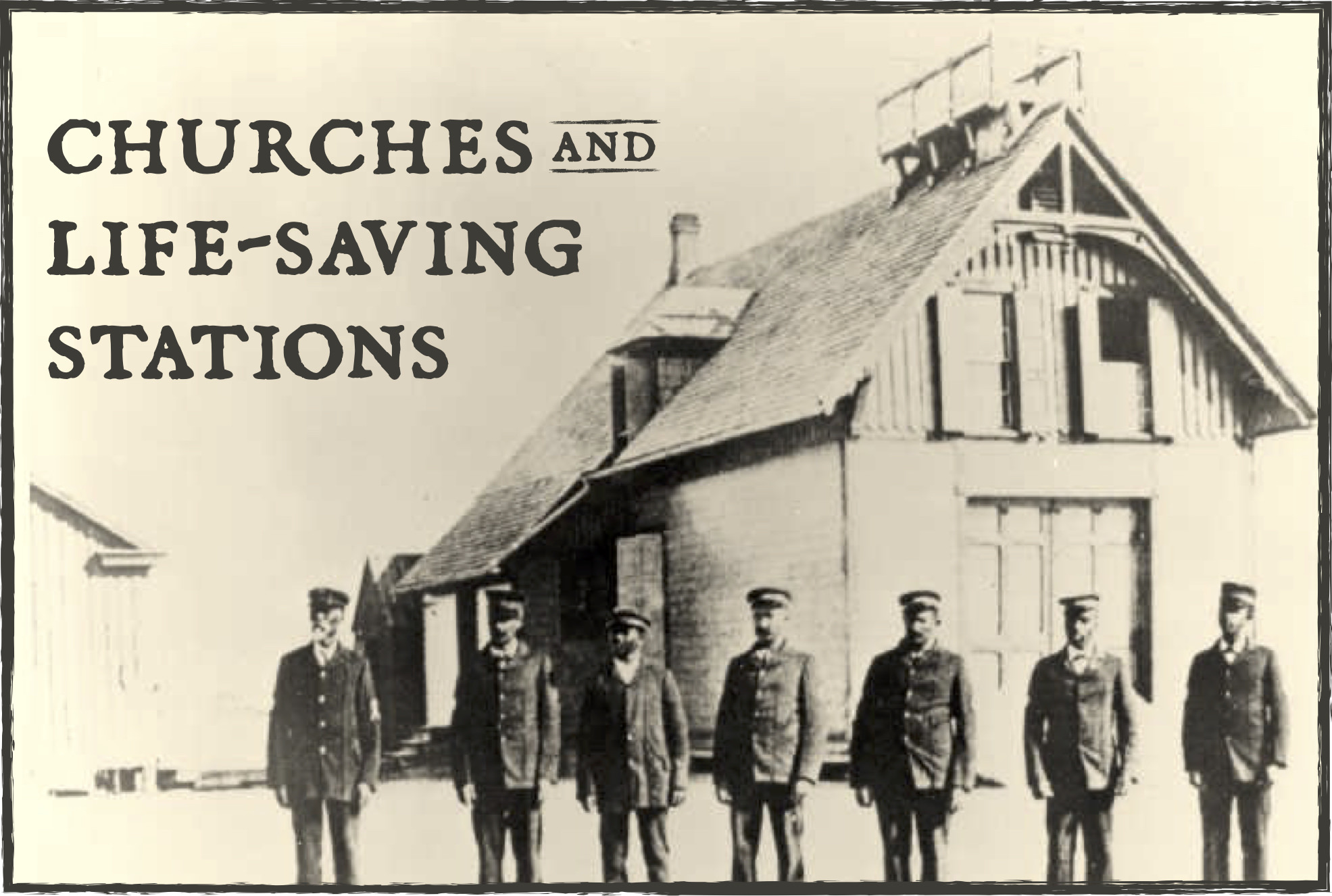
Churches and Lifesaving Stations

A cautionary parable from Managing the Congregation: Building Effective Systems to Serve People, by Norman Shawchuck and Roger Heuser, pp. 78-79:

On a dangerous seacoast where shipwrecks often occur there was once a crude little lifesaving station. The building was just a hut, and there was only one boat, but the few devoted members kept a constant watch over the sea, and with no thought of themselves went out day and night tirelessly searching for the lost. Many lives were saved by this wonderful little station, so that it became famous. Some of those who were saved, and various others in the surrounding area, wanted to become associated with the station and give of their time and money and effort for the support of its work. New boats were bought and new crews trained. The little lifesaving station grew.

Some of the members of the lifesaving station were unhappy that the building was so crude and poorly equipped. They felt that a more comfortable place should be provided as the first refuge of those saved from the sea. So they replaced the emergency cots with beds and put better furniture in the enlarged building. Now the lifesaving station became a popular gathering place for its members, and they decorated it beautifully and furnished it exquisitely, because they used it as a sort of club. Fewer members were now interested in going to sea on lifesaving missions, so they hired lifeboat crews to do this work. The lifesaving motif still prevailed in this club’s decorations, and there was a liturgical lifeboat in the room where the club initiations were held. About this time a large ship was wrecked off the coast, and the hired crews brought in boatloads of cold, wet, and half-drowned people. They were dirty and sick, and some of them had black skin and some had yellow skin. The beautiful new club was in chaos. So the property committee immediately had a shower house built outside the club where victims of shipwreck could be cleaned up before coming inside.

At the next meeting, there was a split in the club membership. Most of the members wanted to stop the club’s lifesaving activities as being unpleasant and a hindrance to the normal social life of the club. Some members insisted upon lifesaving as their primary purpose and pointed out that they were still called a lifesaving station. But they were finally voted down and told that if they wanted to save the lives of all the various kinds of people who were shipwrecked in those waters, they could begin their own lifesaving stations down the coast. They did.

As the years went by, the new station experienced the same changes that had occurred in the old. It evolved into a club, and yet another lifesaving station was founded. History continued to repeat itself, and if you visit that seacoast today, you will find a number of exclusive clubs along that shore. Shipwrecks are frequent in those waters, but most of the people drown!

Churches would do well to consider what happens when they lose their sense of purpose. Without a purpose and reason for existence, churches become nothing more than social clubs.

Youth Ministers: Don’t Move Around So Much!

From Mark DeVries’ Family-Based Youth Ministry, Rev. Ed., p. 87 (emphasis added):

“When a student makes it to mature Christian adulthood, he or she can almost always point to either the influence of godly parents or that of at least one available, durable, nonexploitive Christian adult who modeled for them what being an adult Christian was all about. Sometimes twenty-something youth directors can make this kind of long-term, ongoing investment in a handful of students, but by and large, their age-driven transience severely limits their long-term availability.”

Youth ministers: try to put down roots and invest in the lives of a congregation’s kids for a number of years. If you have to go sooner, keep yourself available to those students with whom you have forged relationships.

This is important stuff we do; it’s not to be entered (or exited) lightly.

Controlling the Flames of our Tongues

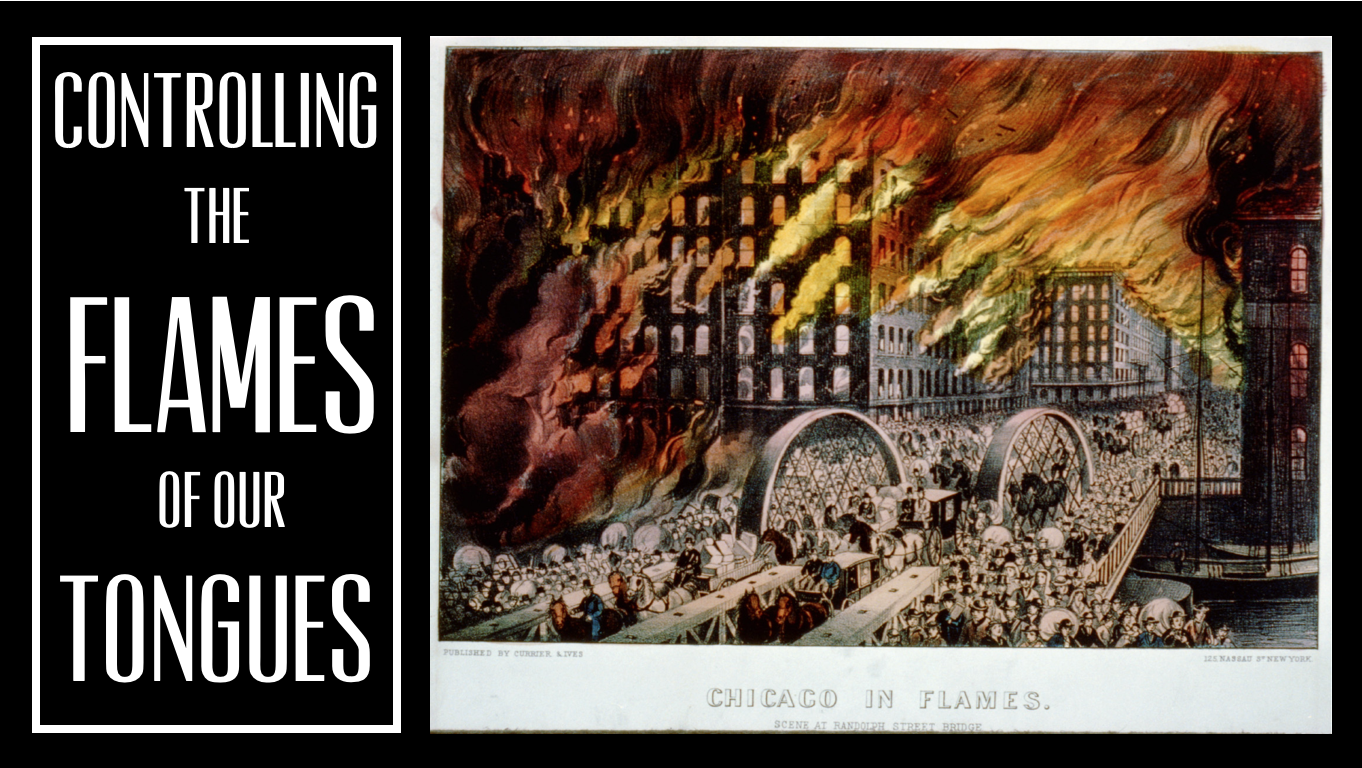
On Sunday, October 8, 1871, a fire broke out in Chicago, Illinois. It started in a small shed (no one really knows how) and quickly spread throughout the city. The heavy use of wood for construction at that time, a drought that had occurred prior to the fire, strong winds from the southwest that carried burning rubble toward the heart of the city, and poor reaction by city officials and citizens all combined to create a devastating inferno. The fire burned for two days, but even when it was over, the smoldering remains were still too hot for a survey of the damage to be completed for days.

Eventually, the vast destruction from the fire was determined:

  • An area four miles long by three-quarters of a mile wide, or more than 2,000 acres
  • More than 73 miles of roads and 120 miles of sidewalks
  • 17,500 buildings
  • $222,000,000 in property, which was about 1/3 of the city’s total value
  • Of 300,000 inhabitants, 90,000—30% of the city’s population—were left homeless
  • 200-300 people were killed

What began as such a small flame was transformed into a catastrophe.

In James 3.5-10, James compares the human tongue to a raging fire:

“Likewise the tongue is a small part of the body, but it makes great boasts. Consider what a great forest is set on fire by a small spark. The tongue also is a fire, a world of evil among the parts of the body. It corrupts the whole person, sets the whole course of his life on fire, and is itself set on fire by hell. All kinds of animals, birds, reptiles and creatures of the sea are being tamed and have been tamed by man, but no man can tame the tongue. It is a restless evil, full of deadly poison. With the tongue we praise our Lord and Father, and with it we curse men, who have been made in God’s likeness. Out of the same mouth come praise and cursing. My brothers, this should not be.” 

James compares the tongue to fire because just like fire, if our tongues are out of control, they can cause a great deal of damage. Gossiping, talking behind people’s backs, saying hurtful things, putting others down, spreading falsehood…all of these actions of the tongue can cause far-reaching damage. When we’re careless with our words, we can destroy a friendship or a reputation.

A lot of times when we talk about moral problems, especially with teens, we tend to focus on the “big” issues: things like drinking, drugs, sex, etc. Those issues need to be talked about, but the harm we do with what we say is a much more common problem—I hear people using their fiery tongues all the time (even in church!) with little regard for the collateral damage they could be causing.

Read James 3.9-10 again:

“With the tongue we praise our Lord and Father, and with it we curse men, who have been made in God’s likeness. Out of the same mouth come praise and cursing. My brothers, this should not be.” 

Our speech can be a problem or it can be pleasing to God. What’s it going to be for you? Your tongue can be as dangerous and destructive as a fire. Use it carefully.

The Doc File: 2012 Blog Review and Plans for 2013

The past year was a significant one for my little blog, primarily because at the beginning of 2012, I began to view it as an outlet for ministry rather than a random hobby and this led to some significant changes.

First, it provided more motivation for me to post regularly. Last year I wrote 103 posts, which is the most I’ve ever done in a year, and was the first time I had made it to 100 since 2008 (for the sake of comparison, I blogged only 35 times in 2011). As I continue to blog as a means to teach and provide encouragement in 2013, I am hopeful to continue with a similar level of output, roughly 8-12 posts per month.

Secondly, it occurred to me that if I wanted people to actually read what I write, I needed to be more proactive about promoting my blog. This was (and continues to be) unnatural for me, as I generally don’t like attention or the idea of self-promotion. But since it’s hard for my writings to do much good if no one reads them, at the beginning of the year I started sharing posts on Facebook and Twitter. This, along with the increase in the frequency of my posts, led to a huge jump in my web traffic. By web traffic, here are the three most popular posts of 2012:

(1) What To Do When Your Hard Drive Crashes. Although I primarily write about theology and ministry, I do occasionally branch into other areas, and early in the year I shared some lessons that I learned when the hard drive on my laptop failed. As computers become more and more a part of our lives, obviously this is a problem that a lot of people have to deal with, so I guess I shouldn’t have been surprised by how much traffic this post got, but I was.

(2) The Fall of Man and the Widespread Devastation of Sin: An Introduction. This post was an introduction to a series on the widespread negative consequences of sin in our world. Regrettably, I got distracted by some things at the end of last year and didn’t finish the series, but I plan on returning to it soon.

(3) Is All Sin The Same In God’s Eyes? I like this post, partially because it was this post in large part that helped me to see the teaching potential of having a blog. It sparked quite a discussion both in the comments of the blog and also on Facebook, and led to me being branded as a “false teacher” for the first time. Exciting stuff.

Looking ahead to 2013, I do tend to share many (but not all) of my posts on social networking sites, so if you haven’t done so already, feel free to add me as a friend on Facebook or follow me on Twitter.

Thanks for reading in 2012. I hope it was worth your time and that you will continue to do so in the new year.

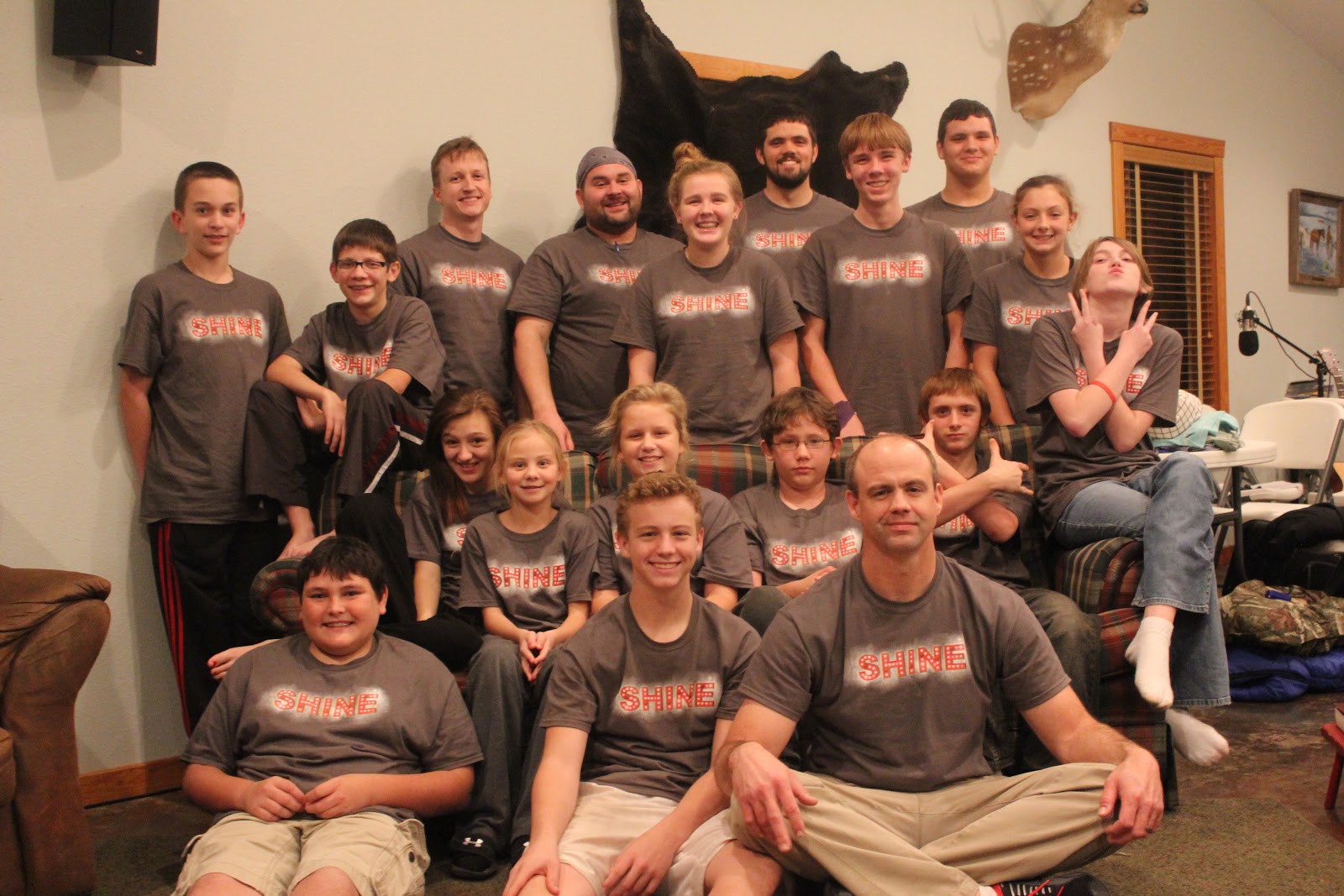
Winter Retreat Recap: SHINE

This past weekend was our annual youth group Winter Retreat. This is one of my favorite youth group events of the year, because we are able to take a break from our regular schedules for a weekend and focus on other things instead. It is always a time where the kids in our group grow closer together, get spiritually re-engergized, and have a ton of fun.

This year, the theme of our retreat was “SHINE,” and we talked about light and darkness from a spiritual perspective. Throughout Scripture, God is consistently portrayed using the metaphor of light, and as followers of God, Christians are to be people of light as well.

Our teachings on this topic were organized around three lessons which showed the progression of the theme throughout the weekend:

(1) The Shining Face of Moses (Exodus 33.18-23; Exodus 34.28-35). After Moses leads the people out of Egypt, he spends 40 days and 40 nights with God on Mt. Sinai while God gives the Law to him. Moses is protected in the crevice of a rock, and is only able to see the back of God’s glory as He passes, but the glory of God is so bright that it leaves Moses with a face that literally shines. He even wears a veil to cover his face. Being in the presence of God changes us.

(2) The Shining Light Comes to Earth (John 1.1-14; The Nativity Story). With the birth of Jesus, God reveals His glory and brings His Light to the earth in a new and special way. Jesus was fully God and fully man at the same time, and this means that the life of Jesus gives us the perfect example of how we can live in our dark world and still shine God’s Light.

(3) Shining God’s Light to Others (John 8.12; John 9.5; Matthew 5.14-16; Philippians 2.14-15; 1 John 1.5-7). After talking about the greatness of God’s glory and how that glory was brought to earth in a special way through the Incarnation of Jesus Christ, our last lesson brought all this together, and focus on our main task as Christians: shining the light of God into our dark world.

Instead of presenting this material in a traditional lecture format, our teens were broken into discussion groups based on age, and processed and learned the material that way. We then combined the separate groups for a larger group discussion, which (hopefully) helped to reinforce the material.

It was a great weekend! We had a lot of fun, and I am optimistic that the teens learned a lot as well.

« Older posts Newer posts »

© 2026 The Doc File

Theme by Anders Noren — Up ↑