
The online journal of Luke Dockery

Category: Politics (Page 6 of 13)

Syria, Obadiah, and Us

If you have paid any attention to the news over the last several days, you are aware that there is a country in the Middle East plagued by civil unrest and violent atrocities, and the United States finds itself in the position of determining if and how to intervene. Sounds like a story that we’ve heard several times before, doesn’t it?

Knowing the proper response to the messy situation in Syria is difficult. I am not a foreign policy expert, and I don’t pretend to have all the answers. This helpful article has made the rounds on the internet, and basically suggests that although there is no good solution and military action is likely to be unhelpful in the long term, it is unacceptable for a brutal regime to attack its own citizen population with chemical weapons and not be punished for it (I recommend that you read the article linked to above if you haven’t already).

As I think about the situation in Syria (and similar conflicts in other parts of the world in which the U.S. has sometimes intervened in and sometimes not), I can’t help but think about the little Old Testament Book of Obadiah.

We don’t talk about Obadiah all that often. It is short—only one chapter long—and is hard to find tucked away in the minor prophets. Basically, the Book of Obadiah is a judgment against the people of Edom which proclaims their coming downfall. The Edomites were the descendants of Esau, and thus cousins of the Israelites. Obadiah’s suggestion is that, as close relatives of the Israelites, the Edomites should have come to the aid of Judah during its conflict with Babylon, but they didn’t, and will be punished as a result (Obadiah 1.10-14). I find verse 11 to be particularly haunting (emphasis mine):

“On the day that you stood aloof,
on the day that strangers carried off his wealth
and foreigners entered his gates
and cast lots for Jerusalem,
you were like one of them.”

Now, I am aware that the situation of Edom and Judah (and Babylon) in Obadiah’s time and the situation today in Syria and the U.S. response to it are not direct parallels. I am further aware of the need for caution when it comes to seemingly removing a passage of Scripture from its context and applying it elsewhere.

But at the same time, I’m also aware that Scripture teaches certain principles that seem to apply regardless of context, and I think this is one of them. The Bible teaches repeatedly that God blesses people not so they can hoard those blessings, but so that they can be a blessing to others. The Bible teaches that we are supposed to consider others to be our neighbors, and rather than ignoring their plight, to step in and help them as we can. The Bible teaches that when we come to the aid of the “least of these,” we are coming to the aid of Jesus Himself.

So, that brings us back to Syria. What are we to do? Again, I am not a foreign policy expert, and in a real sense, I’m not qualified to give an answer. But at the least, it seems that we should consider tactical missile strikes against chemical weapons stockpiles (as the article above suggests).

But maybe a different question that I am (somewhat) more suited to answer: what would the Bible suggest that we do? Biblically, I think we have to do something. At least try to help. Something more than standing aloof and being like one of them, which is the response I have unfortunately heard from several Christians. They give excuses like:

  • We shouldn’t get involved because it will be expensive.
  • We shouldn’t get involved because it’s none of our business.
  • We shouldn’t get involved because we have problems of our own to deal with.
  • We shouldn’t get involved because it will make other countries more annoyed with us than they already are.

Are those good enough reasons to justify standing aloof on the sidelines? I really don’t think so. In fact, I think the Edomites could have used some of those same excuses, and God wasn’t too pleased with them.
God and Government

I go back and forth quite a bit in my thoughts on the relationship between God, government, Christians, politics, etc. I read this yesterday in a journal article and found it helpful:

“Jesus lived in a conquered province in an empire whose imperialistic ruler stood for everything that was antagonistic to the revealed faith of the Jews. Jesus was not a revolutionary but instead conformed to the laws of civil government. Nowhere did he denounce the legitimate power of the state. Jesus paid his taxes (Matthew 17.24-27). He recognized the authority of Pontius Pilate, even when Pilate unjustly delivered him over to his enemies (John 19.11). Jesus reminded him, however, that his authority was not autonomous (John 19.10-11) but that it was delegated from the One who was above. Thus, in practice and precept Jesus recognized that the government under which he lived was ordained of God.”

–David Plaster

Grace Theological Journal 6 (Fall 1985), p. 437.

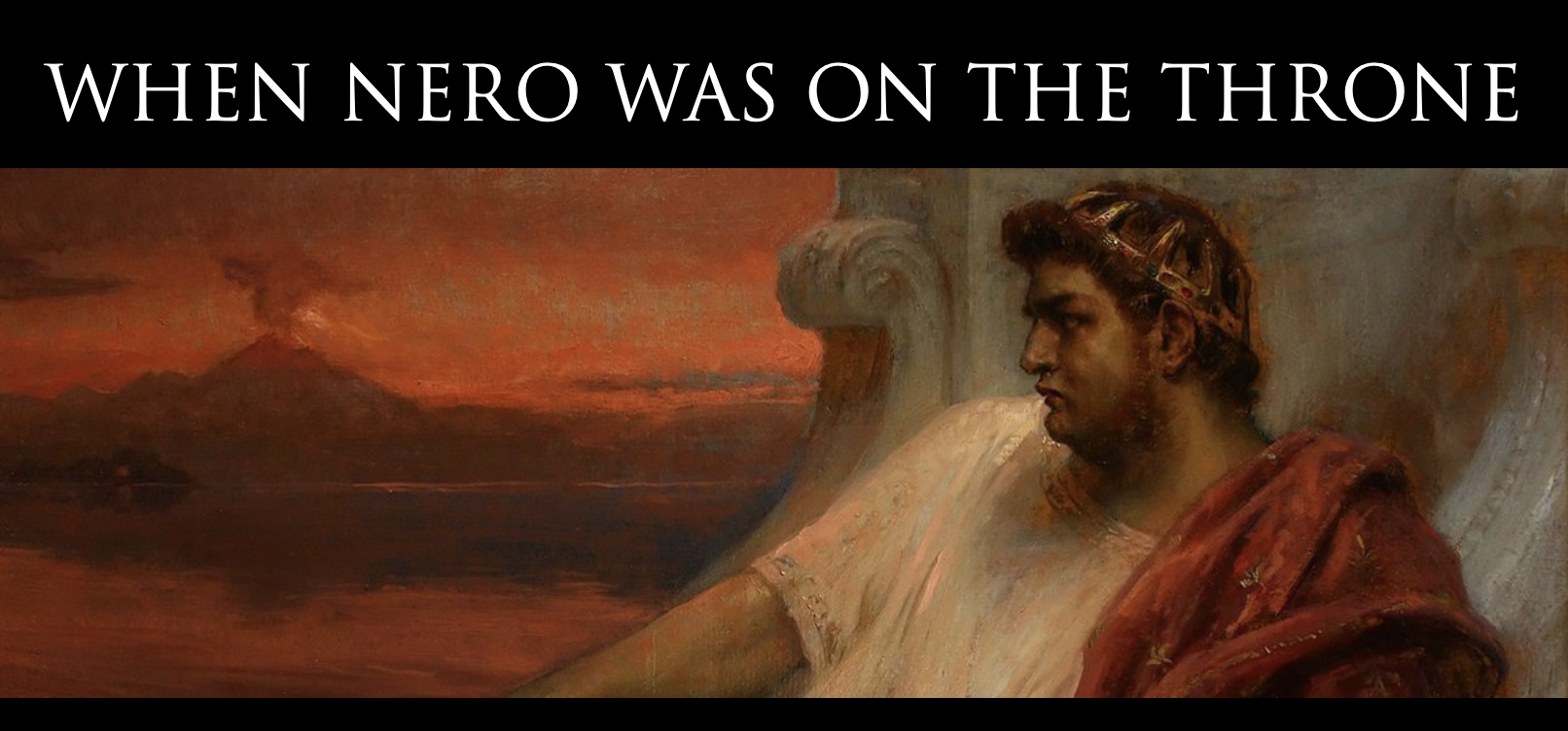
When Nero Was On The Throne

It has been interesting to me over the last 12 hours or so to read Facebook status updates and tweets from my Christians friends about yesterday’s presidential election. The fact that some of these Christians are celebrating the reelection of President Obama while others are lamenting it tell me that either:

  1. Applying Christian values to voting is a difficult and murky process.
  2. Christians aren’t very aware of what “Christian values” actually are.
  3. Both 1 and 2 are partially true.

But I digress. If your candidate won yesterday, be happy, be thankful, and try not to gloat too much. If your candidate did not win yesterday (and if you are in this group, you are the real audience for this post), remember that as a Christian, you can glorify God by showing respect to the one who is in authority, even if he wasn’t your choice:

“Let every person be subject to the governing authorities. For there is no authority except from God, and those that exist have been instituted by God. Therefore whoever resists the authorities resists what God has appointed, and those who resist will incur judgment. For rulers are not a terror to good conduct, but to bad. Would you have no fear of the one who is in authority? Then do what is good, and you will receive his approval, for he is God’s servant for your good. But if you do wrong, be afraid, for he does not bear the sword in vain. For he is the servant of God, an avenger who carries out God’s wrath on the wrongdoer. Therefore one must be in subjection, not only to avoid God’s wrath but also for the sake of conscience. For because of this you also pay taxes, for the authorities are ministers of God, attending to this very thing. Pay to all what is owed to them: taxes to whom taxes are owed, revenue to whom revenue is owed, respect to whom respect is owed, honor to whom honor is owed.”

(Romans 13.1-7)

Paul’s words here are pretty hard to swallow for Christians who struggle to respect and submit to their leaders. When we think about leaders that we don’t like much, it can be difficult for us to affirm statements like, “the authorities are ministers of God” and that resisting them means that we are resisting “what God has appointed”. But that’s exactly what Paul says.

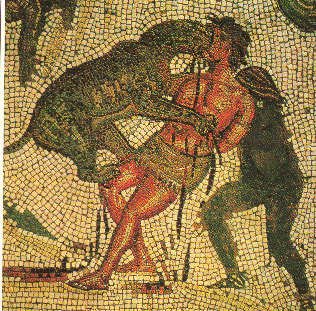
Mosaic depicting a Christian martyr

And to those who are inclined to think that Paul just didn’t understand about bad leaders, realize that he wrote these words to the Christians in Rome while Nero was Emperor. Nero was a vile man and a dedicated persecutor of Christians who was known for using the bodies of captured Christians as fuel for the fires which lit his garden at night. No President that our nation has ever had could hold a candle to Nero when it comes to sheer wickedness*, and it was most likely during the reign of Nero that Paul himself was executed. And yet, to a man such as this, Paul urges Christians to be in subjection.

If your candidate didn’t win yesterday, it’s okay to be disappointed. It’s okay to disagree with the policies of the current President, and it’s okay to hope for a better outcome next time. But respect your President, and be in subjection to him. Even if it is hard.


*Please do not interpret this to mean that I am suggesting that President Obama is somehow equivalent to Nero. I am not.

God Is The One Upon Whom We Should Rely: Lipscomb On Human Government

David Lipscomb was a very influential leader within Churches of Christ in the late 19th and early 20th centuries. Lipscomb served as a minister, an educator (a co-founder of the Nashville Bible School, which exists today as Lipscomb University), and an editor of the very influential Gospel Advocate.

Lipscomb was also a pacifist, and in some sense, a Christian anarchist: he believed that Christians had no business interacting with government, including voting in elections or serving on juries. My own views on government are not as extreme as Lipscomb’s, but I do think his thoughts serve as a helpful corrective to what I see from a lot of people.

It has been distressing to me during this election cycle to see so many Christians who (based on their comments on Facebook or Twitter) seem to be placing so much of their hope for the betterment of our world in political candidates (regardless of which party they happen to support). To these folks, Lipscomb offers some helpful words:

“Everyone who honors and serves the human government and relies upon it, for good, more than he does upon the Divine government, worships and serves the creature more than he does the Creator.”

On Civil Government, 50

With all due respect to Lipscomb, I believe that it is appropriate for Christians to vote and that, ideally, Christians should use their vote to reinforce the values of the Kingdom. And sometimes it can be easy to get pretty wrapped up in the political process because those values can mean a lot to us.

But I think he is right on the money about this: let us never think that the president we elect or the government we put into place is the ultimate source to which we should look for guidance, protection, or good. Those things come from God, and He still sits firmly on His throne, in control of all the things we debate and worry about.

Friday Summary Report, September 7

I don’t have anything too exciting to report on this Friday morning, but here are some interesting/good/important links from around the worldwide web:

  1. First, a story from Louisiana, where, in the aftermath of Hurricane Isaac, a father and son teamed up to rescue 120 people over a 12-hour period with boats. Jesse Shaffer, the father, insisted that he and his son are not heroes, but their neighbors would disagree. A great story, and a glimpse of what Jesus meant by “Love thy neighbor.”
  2. Here’s a cool story (with picture) about Clemson wide receiver DeAndre Hopkins getting baptized after football practice.
  3. The last couple of weeks have been dominated by politics, with both the Republican and Democratic National Conventions taking place. I am not a fan of politics, in large part because it takes place in some weird twilight zone where the truth neither matters nor is really expected. I heard a ton of people raving about President Clinton’s speech, but was it accurate? Similar articles could probably be (and probably have been) written about every other speech that was given at either convention.
  4. Matt Dabbs wrote a really good blog post on the heinousness of abortion. The fact that abortion has been relegated to the political arena and has been turned into a mere talking point by both parties shows how warped and skewed our society has become. I mentioned this in the comments section of the blog I linked to above, but I’ll repeat it here: I am convinced that the legalized genocide against our own unborn is the greatest evil of our society. It is all too often discounted as ‘just another political issue’, but it far transcends politics. I sometimes wonder how long a nation that shows such little value for life will be allowed to continue.
  5. For those who are involved in youth ministry, here is a great post with some very practical suggestions for ways to get your students involved as leaders within your youth group. As Joseph points out, student leadership doesn’t have to be part of some big, elaborate, complicated program.
« Older posts Newer posts »

© 2026 The Doc File

Theme by Anders Noren — Up ↑